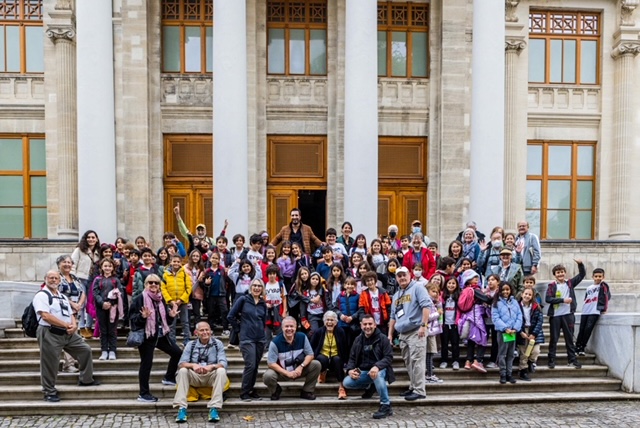
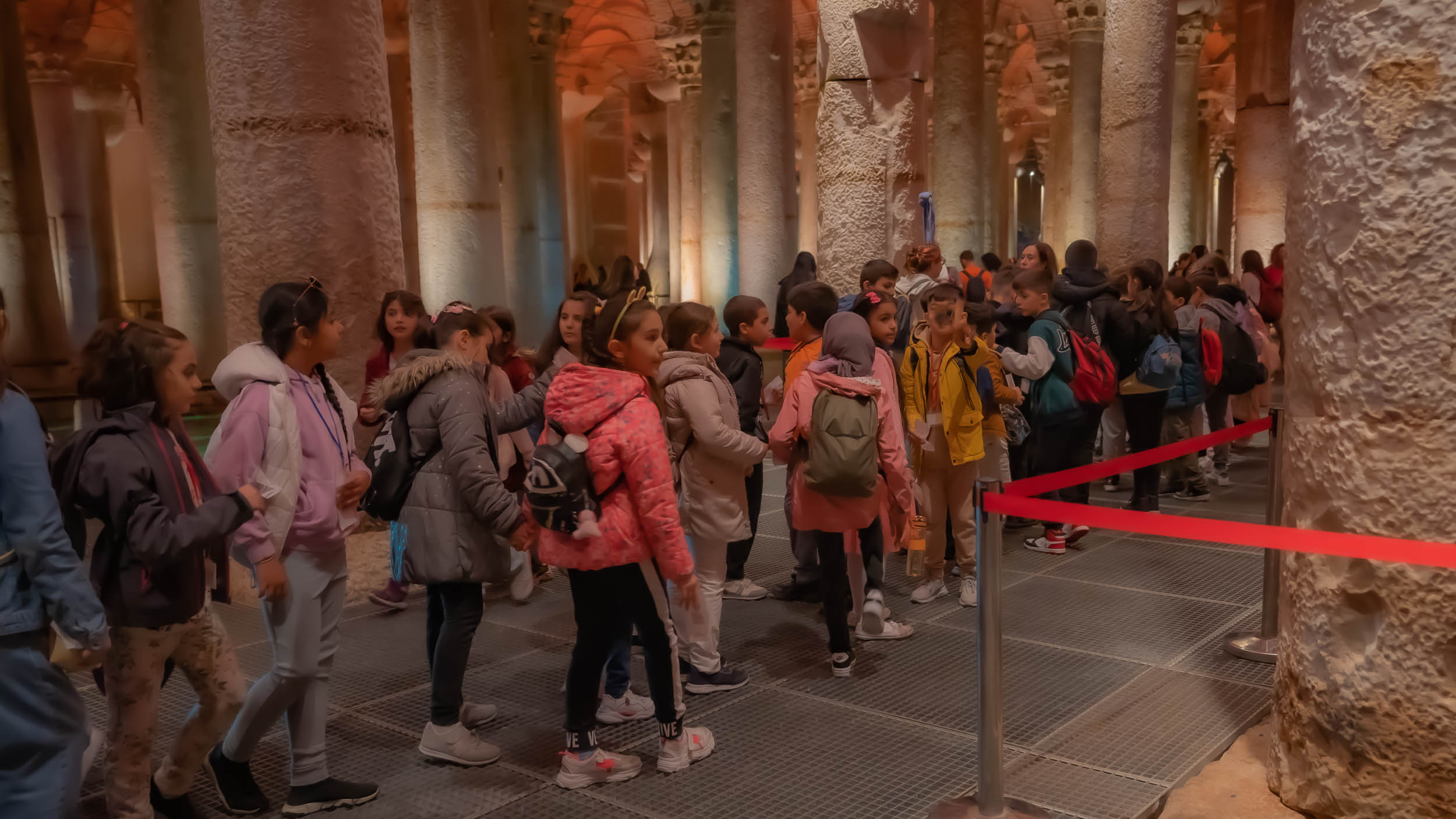
Istanbul is located on both sides of the Bosphorus Strait, one in Europe and the other in Asia. Eddie and I visited the European side of the city on a Road Scholar cruise in 2022, and we loved it! We found Istanbul’s vibrant streets full of life and energy! The city’s sophisticated atmosphere was a lively blend of friendly people, including many children, extraordinary history, and delicious food. This story provides a glimpse of what we love about Istanbul.
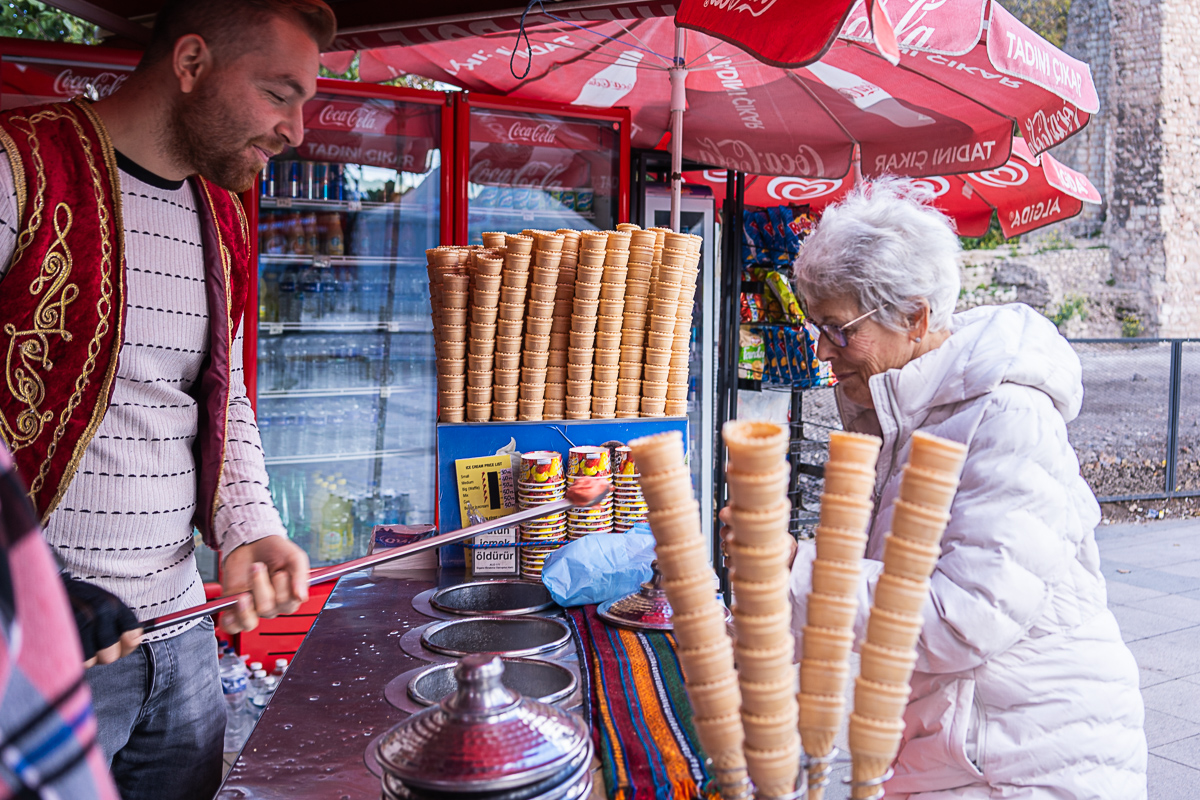
Ice cream is sweet, creamy, chewy, and stretchy, making it easy for prankish vendors to tease unsuspecting customers. They are often dressed in traditional costumes from the Kahramanmaras region, where the ice cream was born.
Ice cream vendors spin the ice cream on a spoon, turn it upside-down, and pull it back just as you reach for your frozen treat.
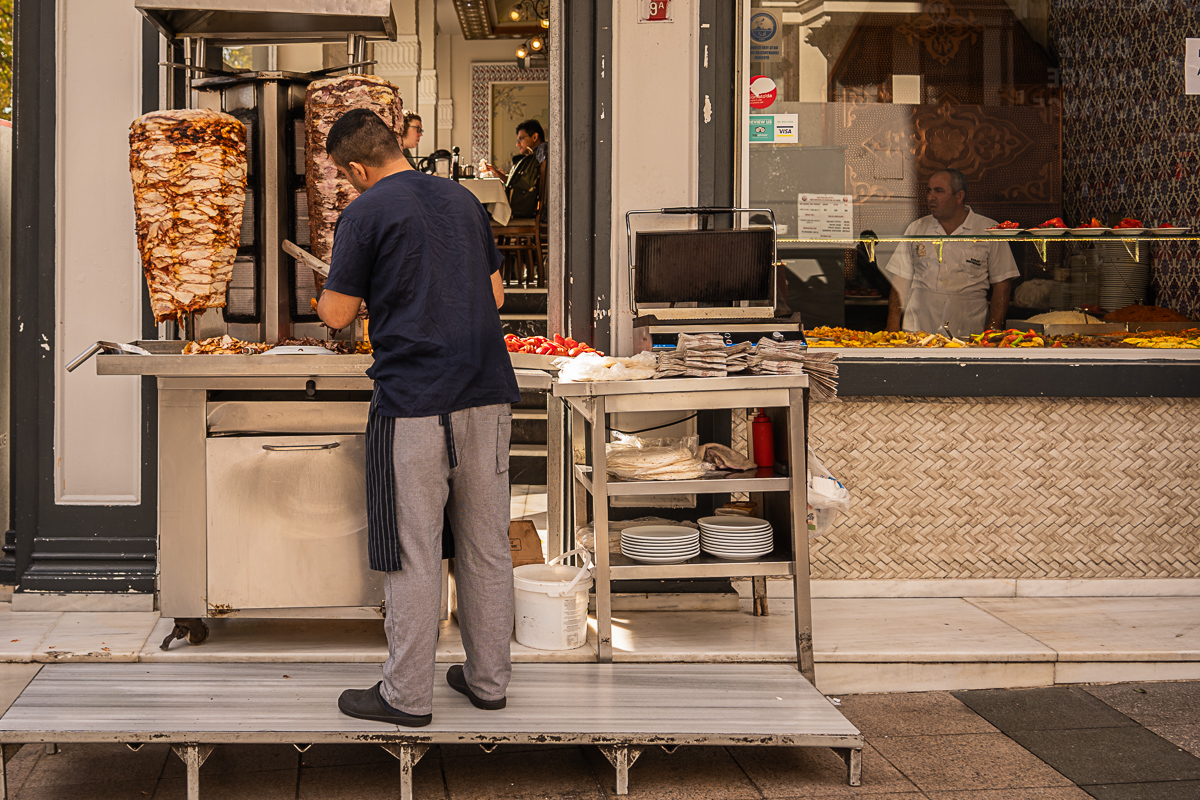
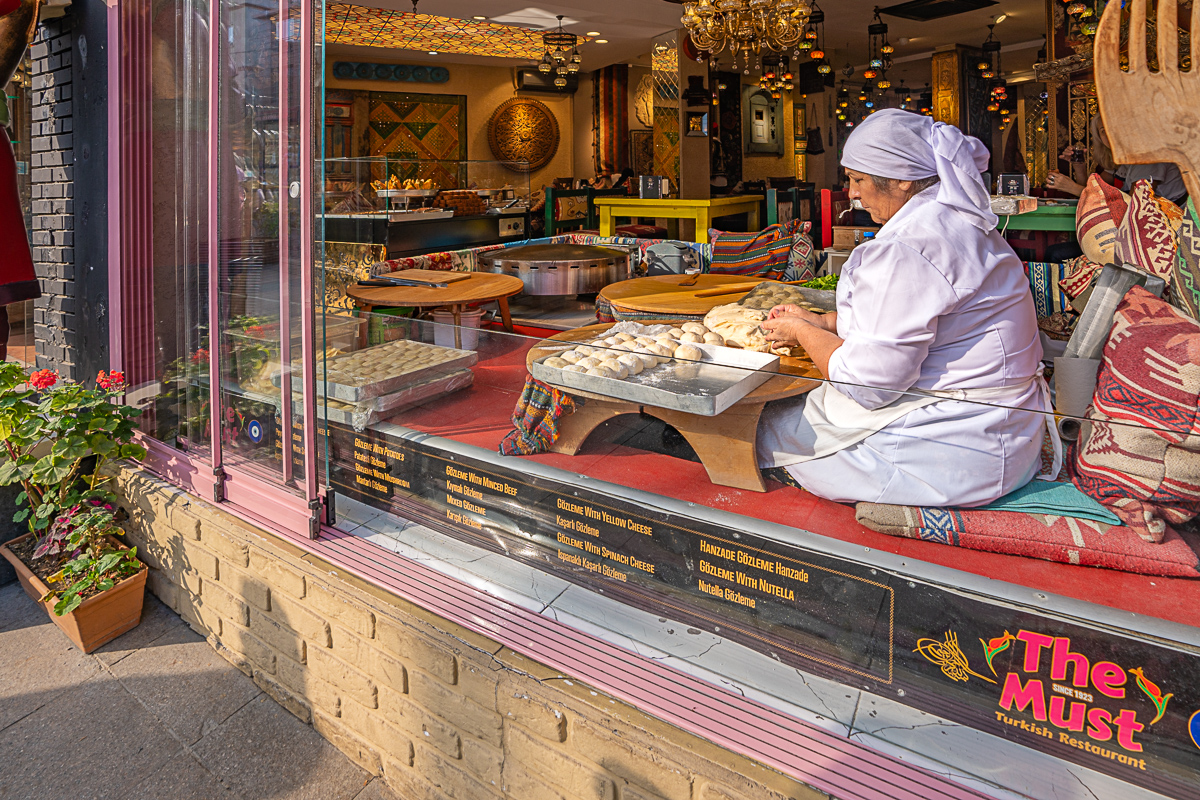
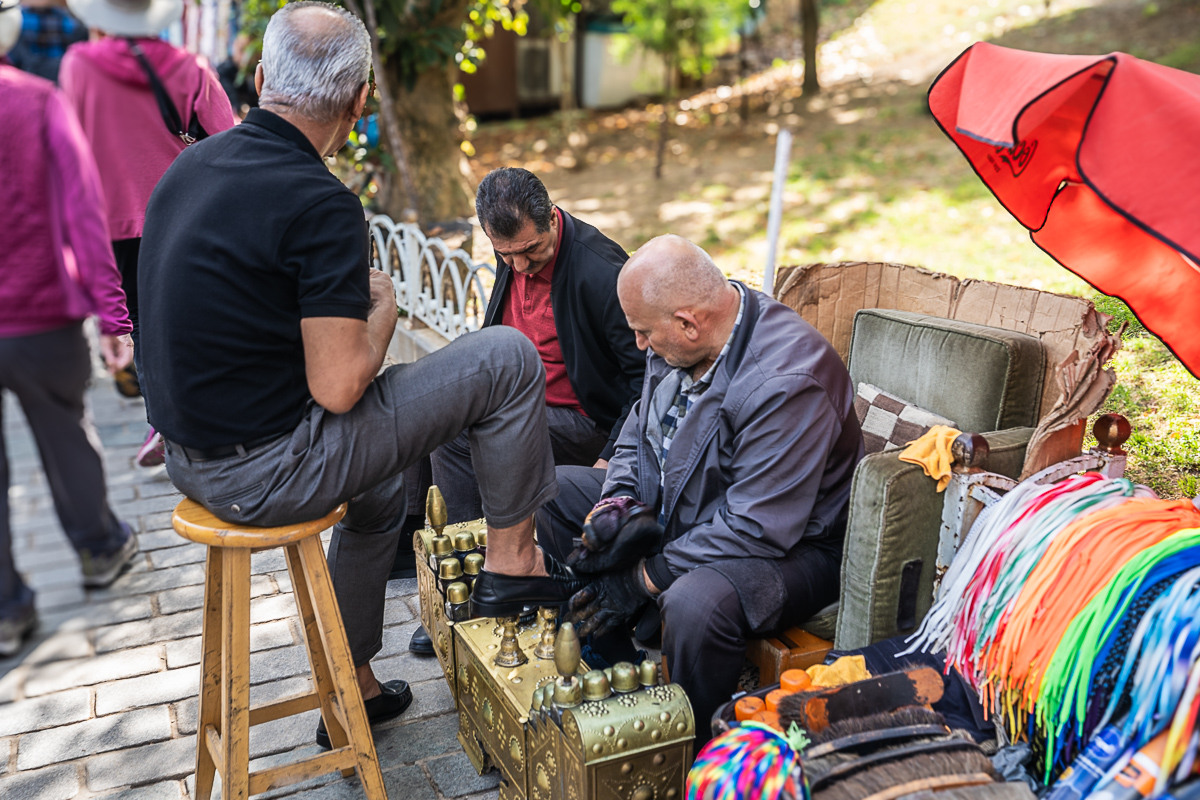
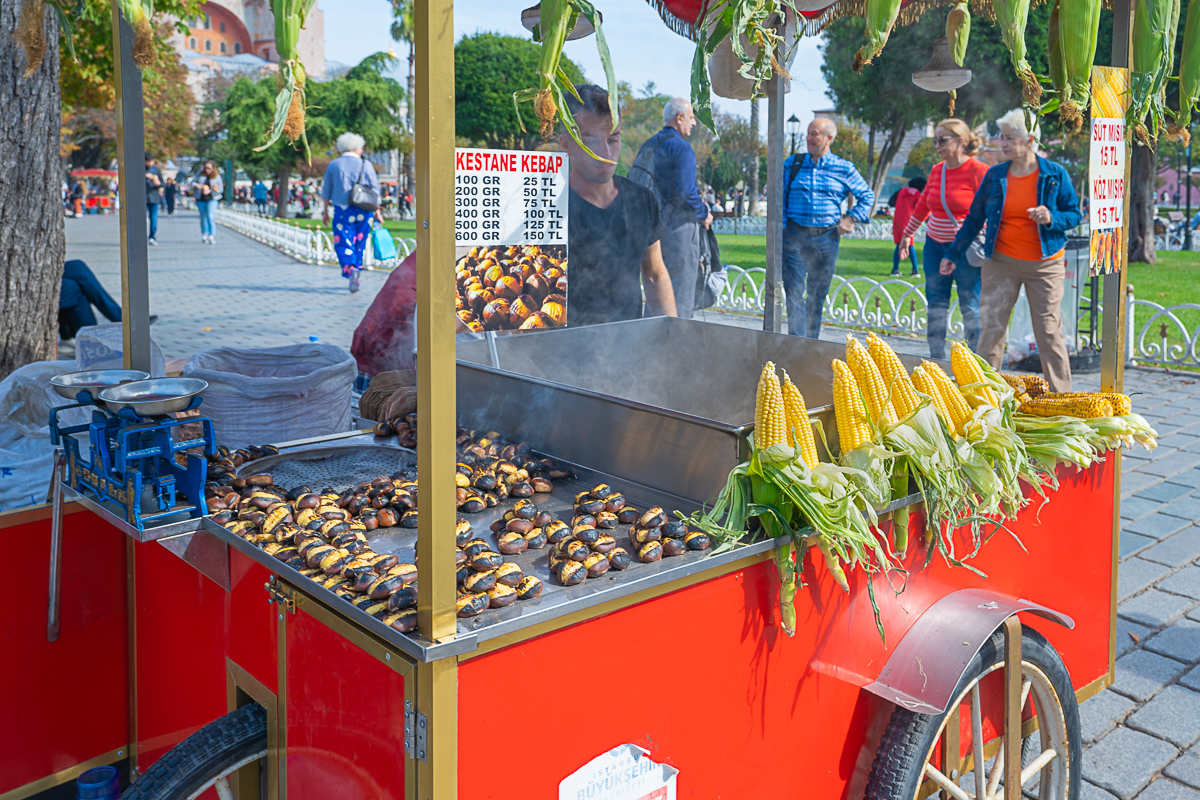
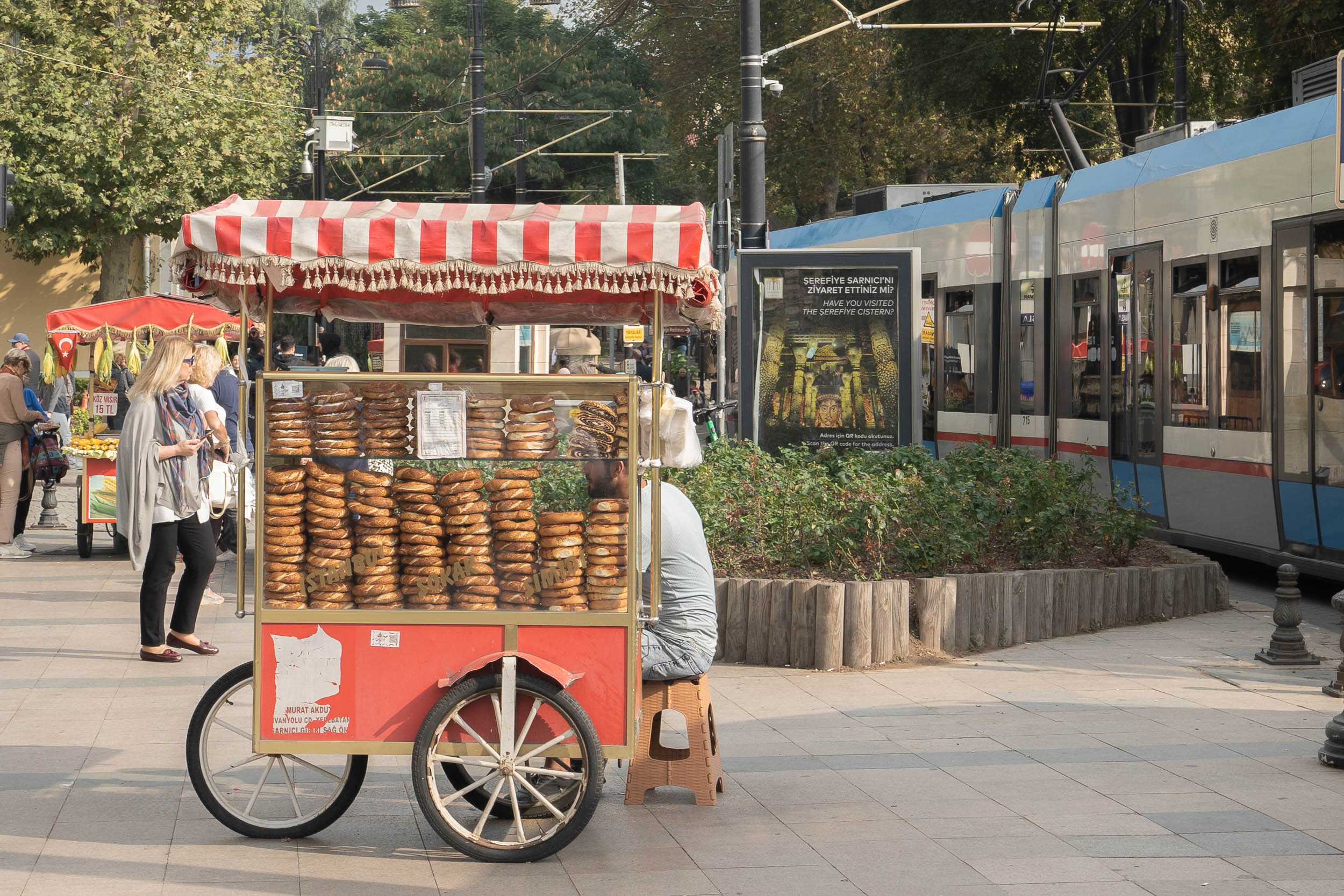
Chefs on Istanbul’s restless streets often carve meat outside on tall, vertical spits in front of the restaurants. Restaurants, like The Must Turkish Restaurant, are beautiful inside and out, where we took pictures of breadmaking in the window. Lamb, beef, and chicken marinated with secret herbs and spices make the food in Istanbul world-famous. If you are hankering for a quick bite, street vendors are the way to go. Some are familiar, like corn on the cob. We tied it all, including new ones like the mouth-watering sesame-coated bread pretzels and chestnuts dipped in chocolate.
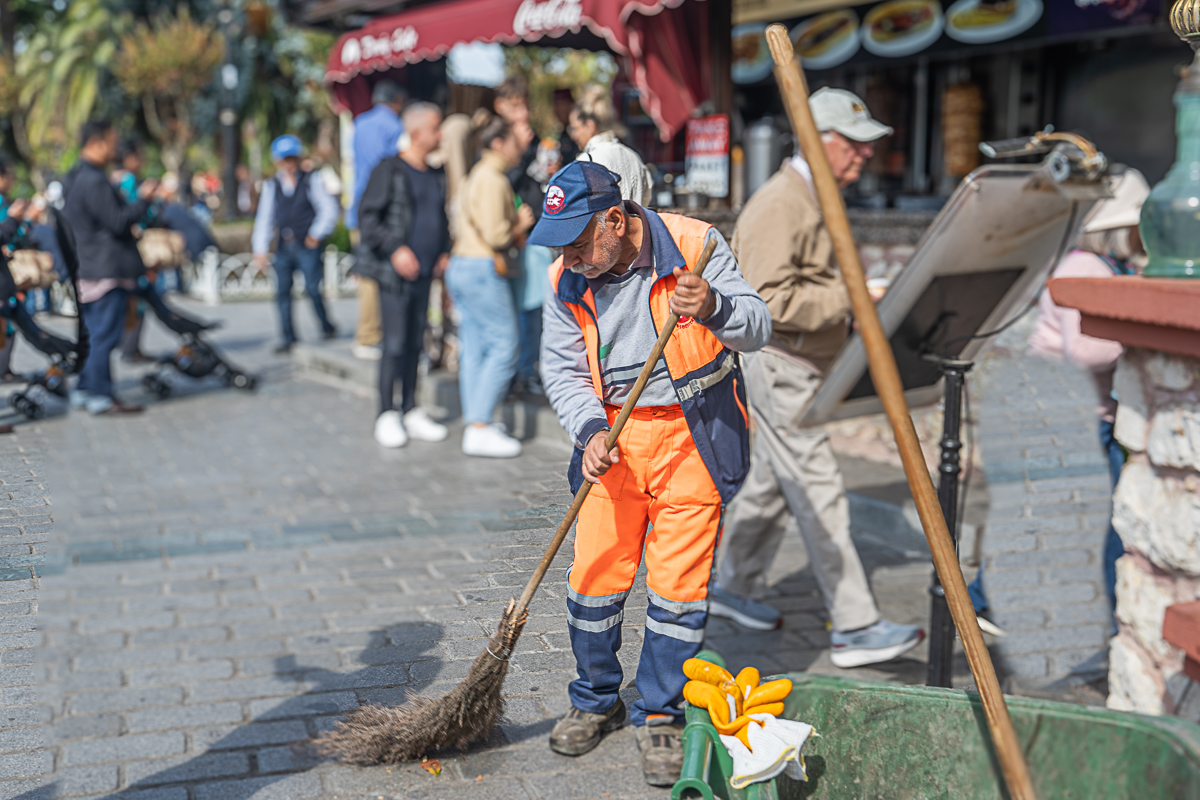
Istanbul’s vibrant streets continue in a commotion that persists even as the muezzin’s voice echoes through the streets from loudspeakers five times a day.
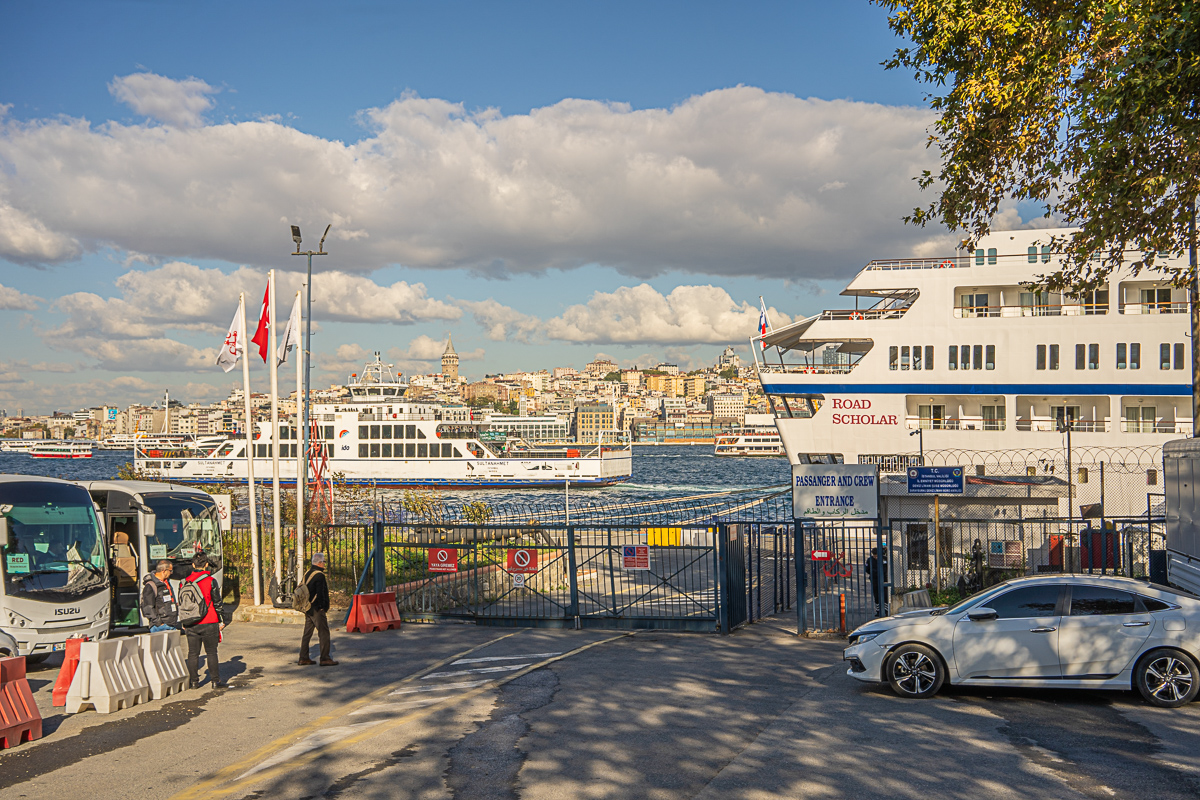
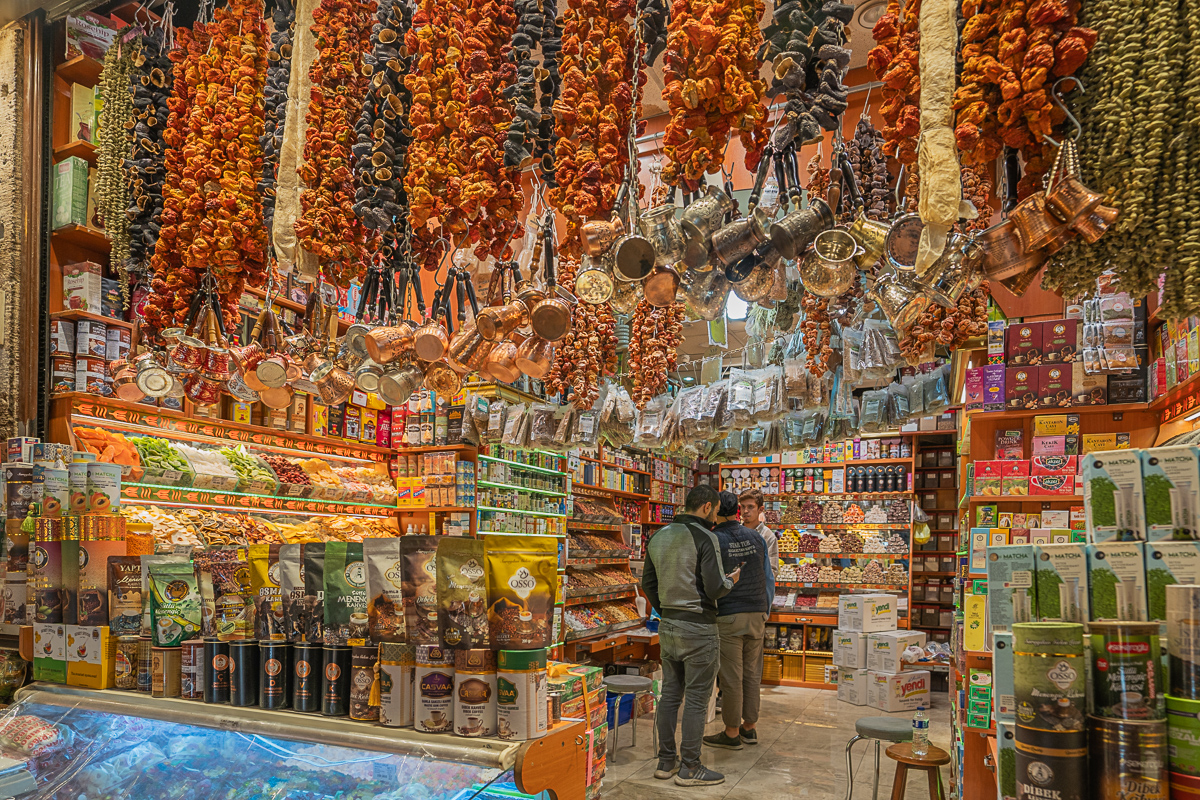
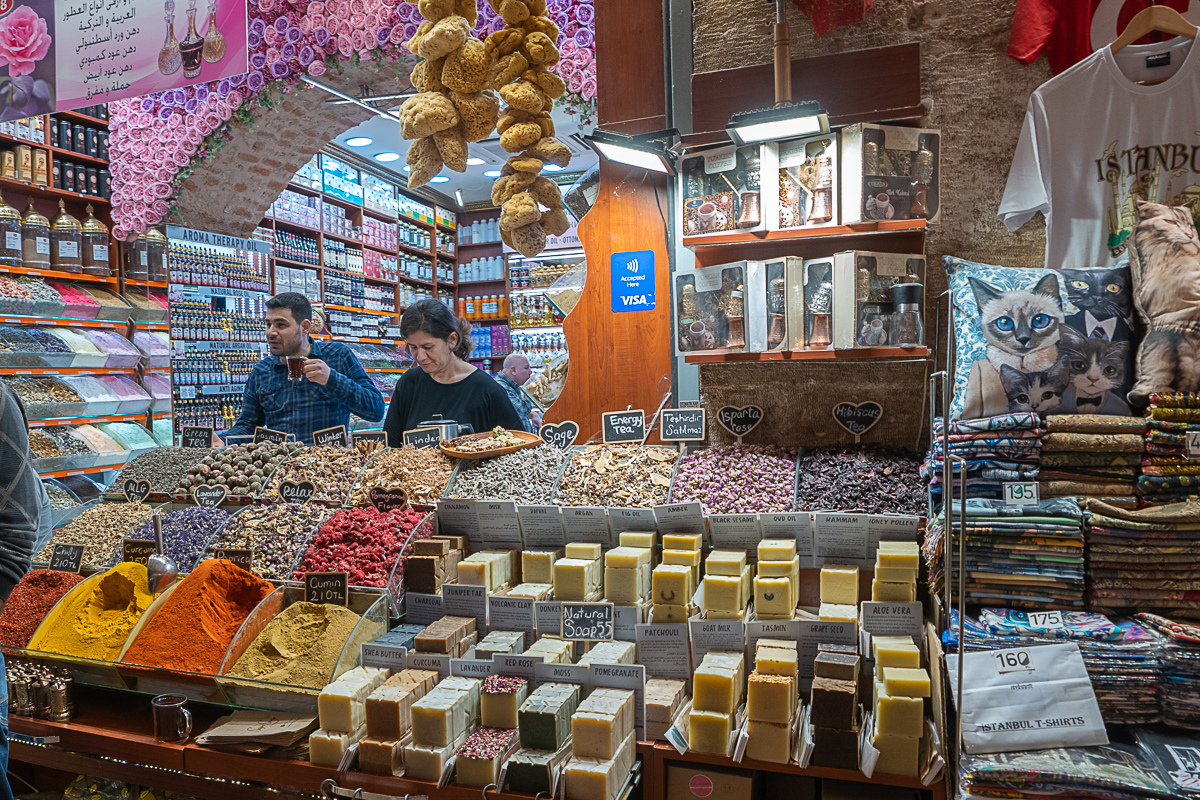
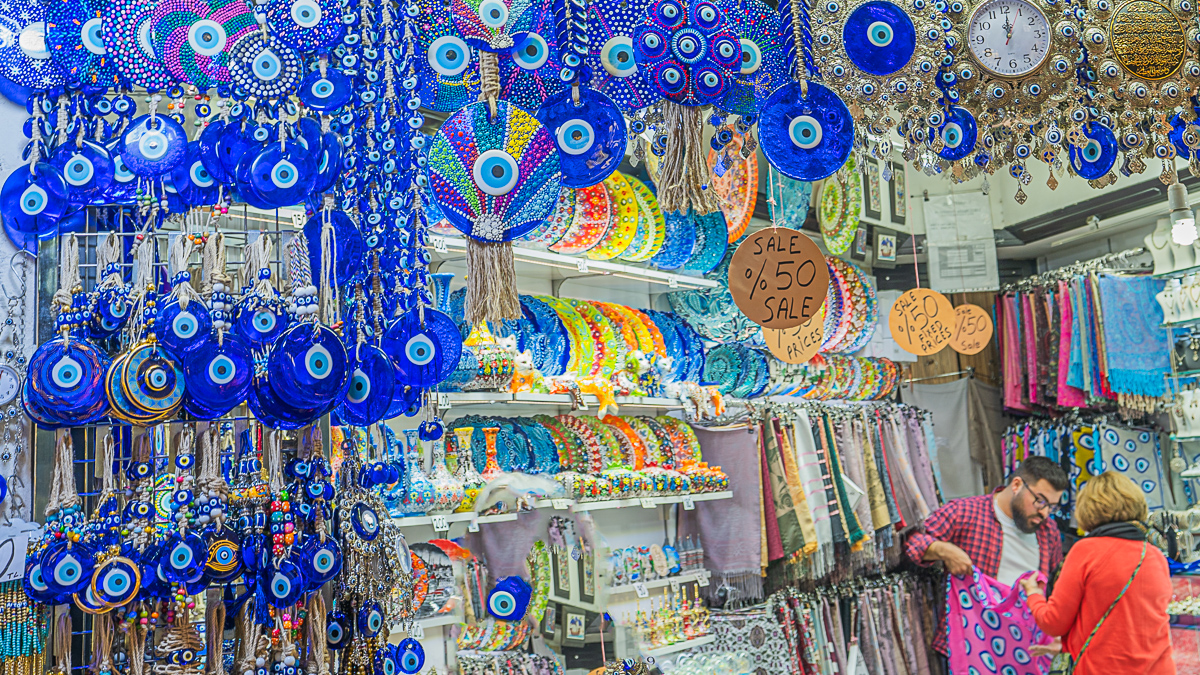
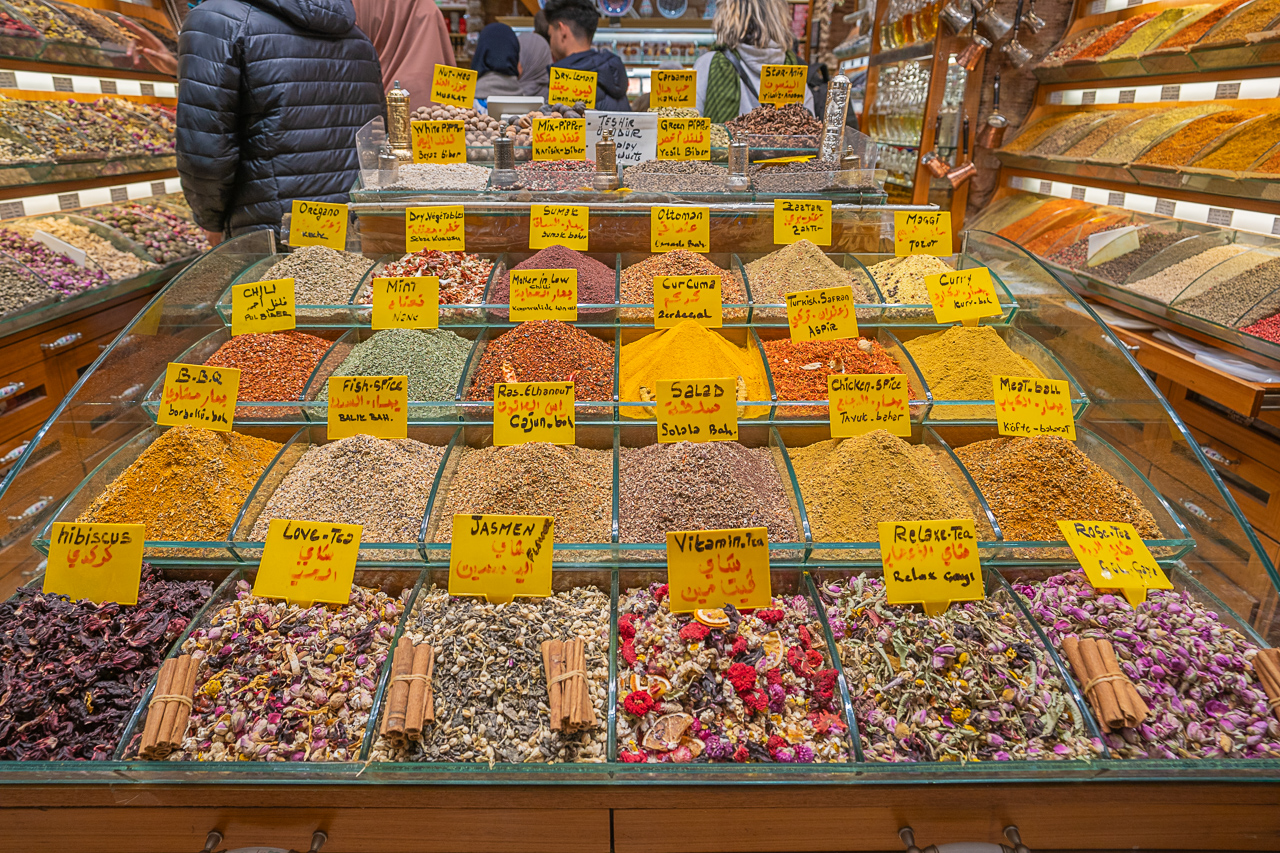
Inside the markets are a treat, with beautiful colors of spices piled high, glittering merchandise, and delectable confessions of every sort. We visited the Grand Bazaar and the Grand Spice Bazaar. Oh my! What to do?
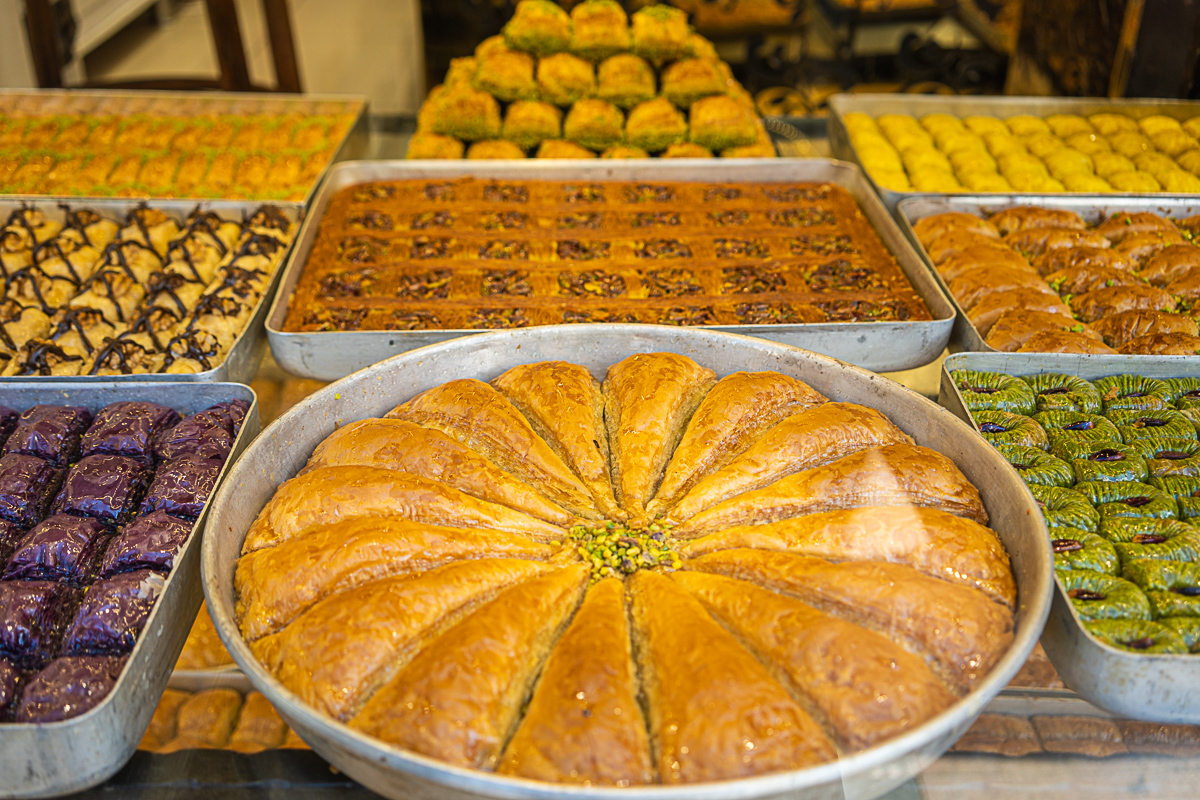
Turkish baklava is divine. I could have it for the appetizer, main course, and dessert! The syrupy, buttery concoction is layered between thin Fillo dough similar to the Greek version, but with pistachios instead of walnuts.
Historic architectural marvels anchor Istanbul’s vibrant streets; many are UNESCO World Heritage Sites.
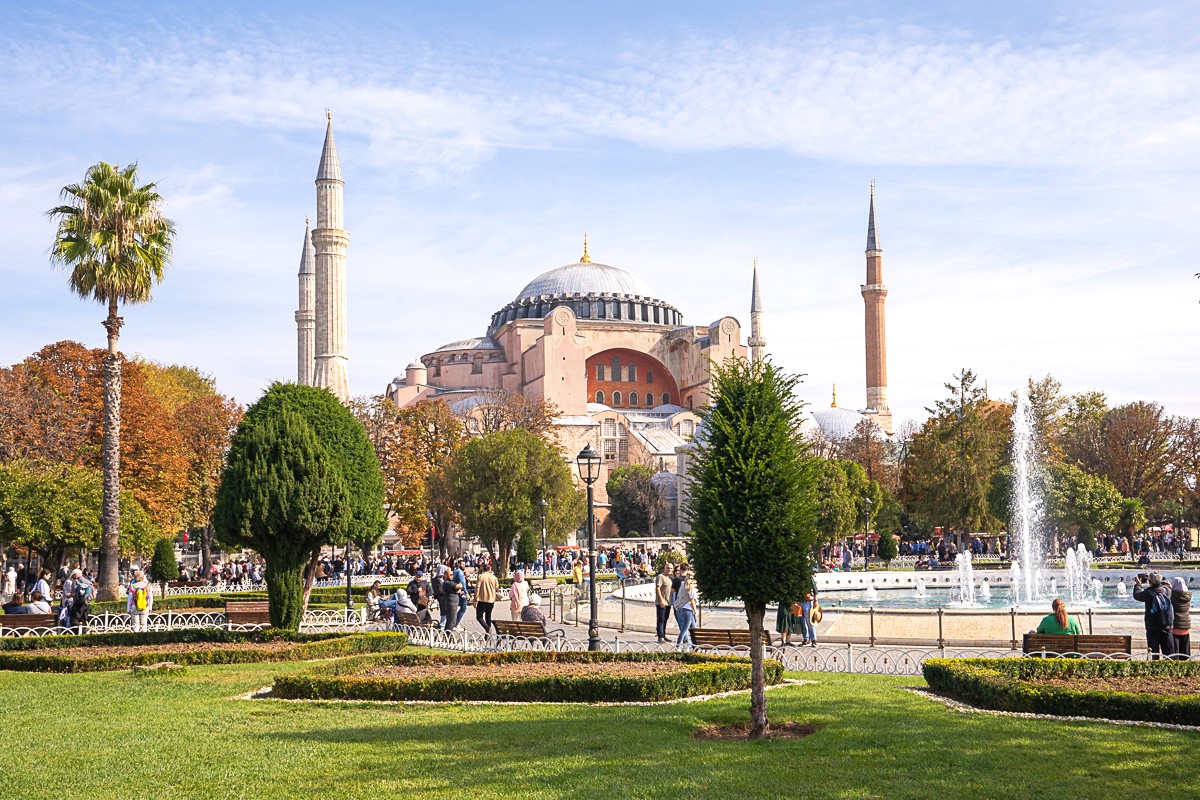
Hagia Sophia (Holy Wisdom, Ayasofya)
The Hagia Sophia is an architectural marvel renowned worldwide for its beauty. Completed in 537 C.E., the cathedral served Constantinople as an Orthodox Christian church for fifteen hundred years, withstanding earthquakes, pillaging, and numerous makeovers. The Ottomans converted the church into a mosque in 1453. 1934, the cathedral became a museum and is now a mosque again. Changes in the Hagia Sophia reflect this remarkable structure’s complex and diverse history.
Sultan Ahmed Mosque (The Blue Mosque)
Completed between 1609 and 1616, it is called “Blue” for a reason. The inside of the mosque is covered with over 20,000 handmade ceramic tiles in rich blue colors. Marvel at this, too; 260 stained glass windows with verses from the Qu’ran in calligraphic art complement the brilliant tiles.
Topkapi Palace
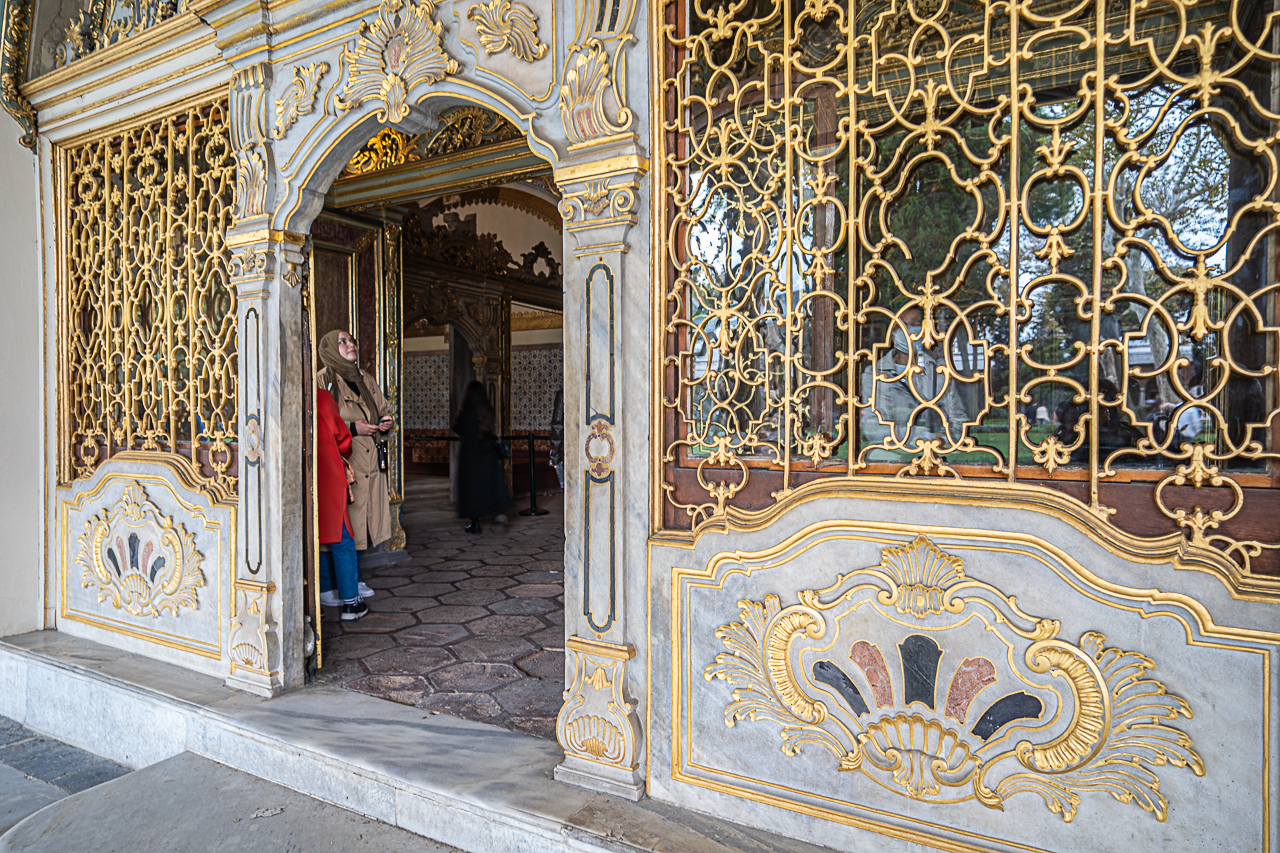
The Topkapi Palace was the Ottoman Sultans’ imperial residence and the government seat for 400 years (1465 -1856.) The series of pavilions that make up the palace is a testament to the rich cultural heritage of the period. The Harem at Topkapi Palace includes an astonishing 300 chambers lined with stunning Turkish mosaic tiles. Today, the historic palace is beautifully preserved as a museum and library, offering a glimpse into the opulence and grandeur of the Ottoman Empire.
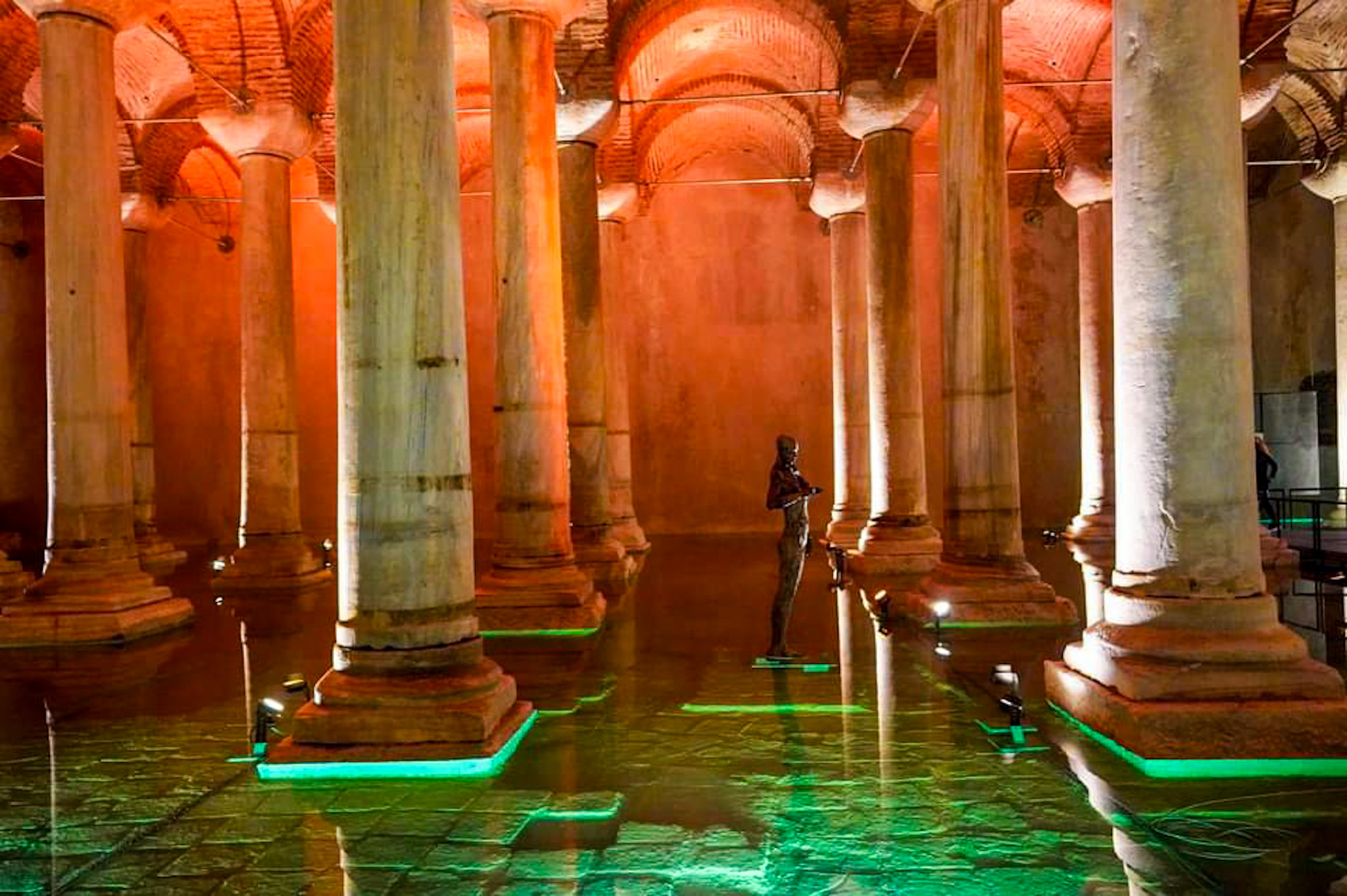
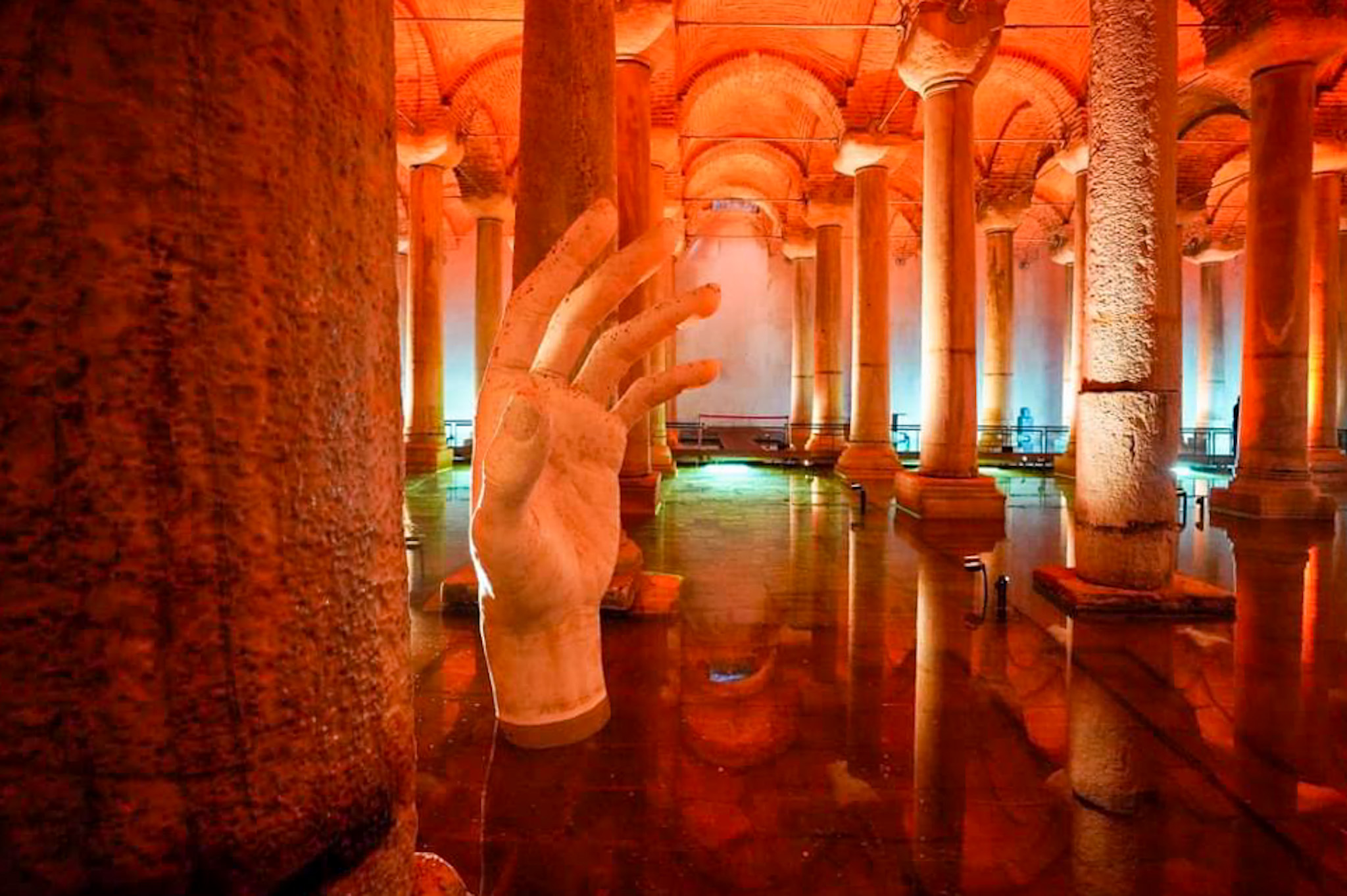
Basilica Cistern
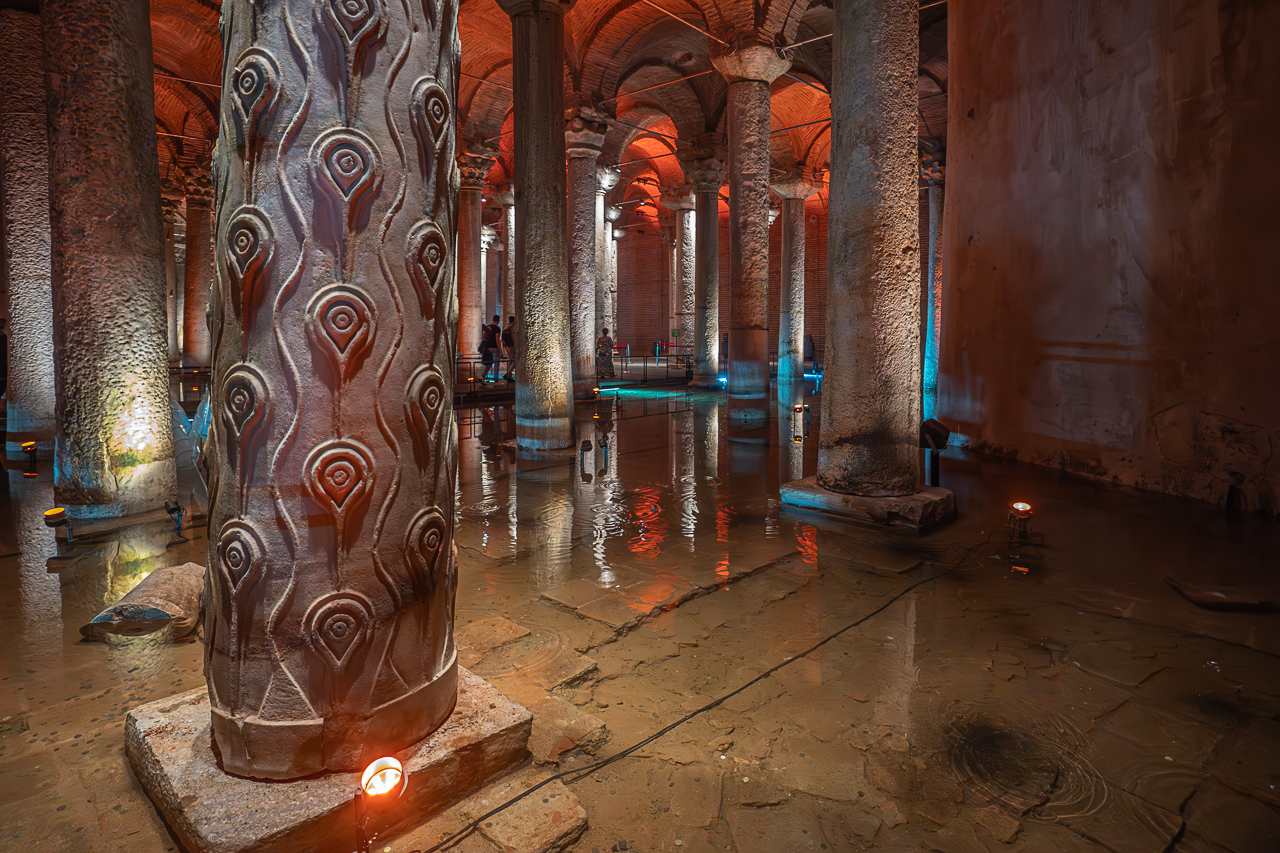
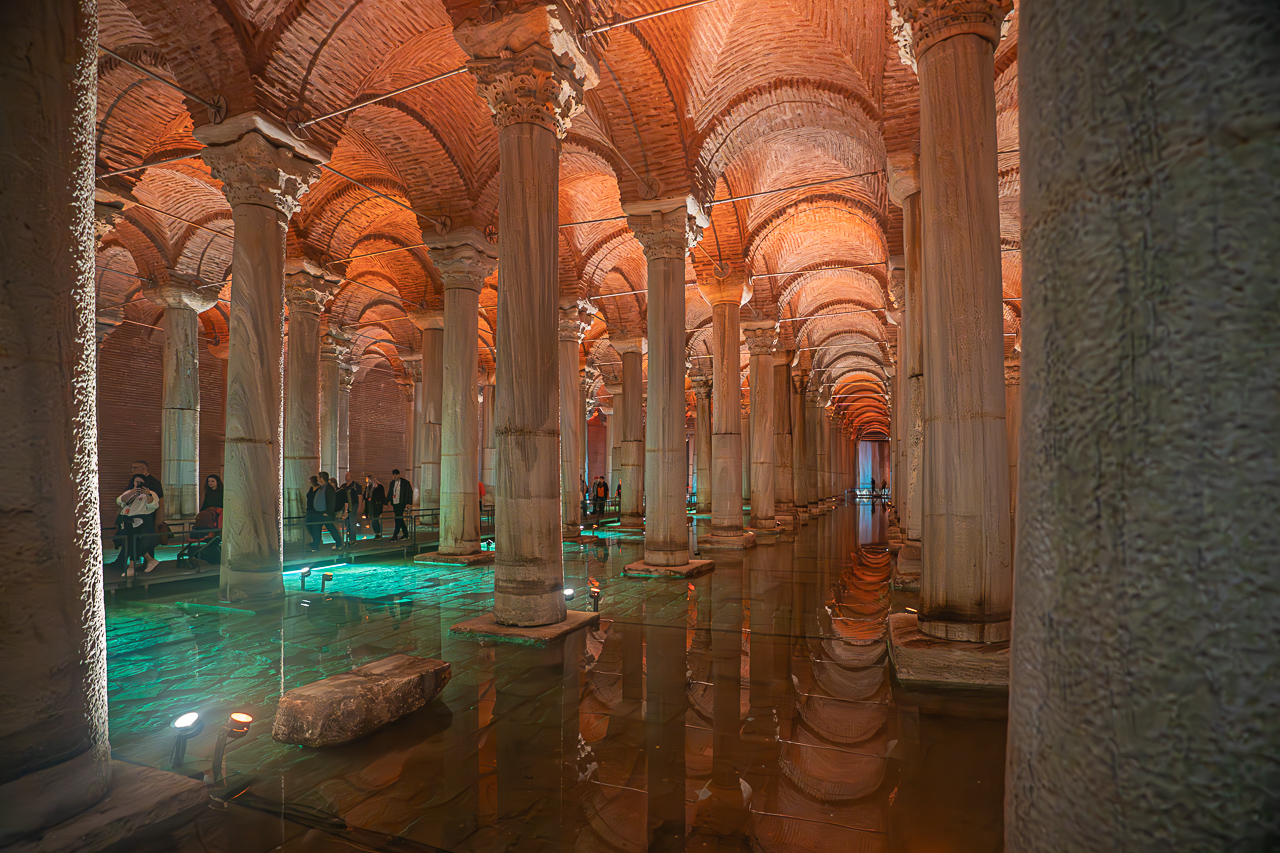
Emperor Justinian I directed the construction of an underground cistern (10,763.9 square feet) around 532 C.E. It held a whopping 21,000,000 US gallons of water.
The quiet, almost dark underground cistern contrasted with Istanbul’s vibrant streets. Moisture dripped from the high ceilings, and an occasional fish swam under the platform. Before reconstruction in 1985, people toured the cistern by boat!
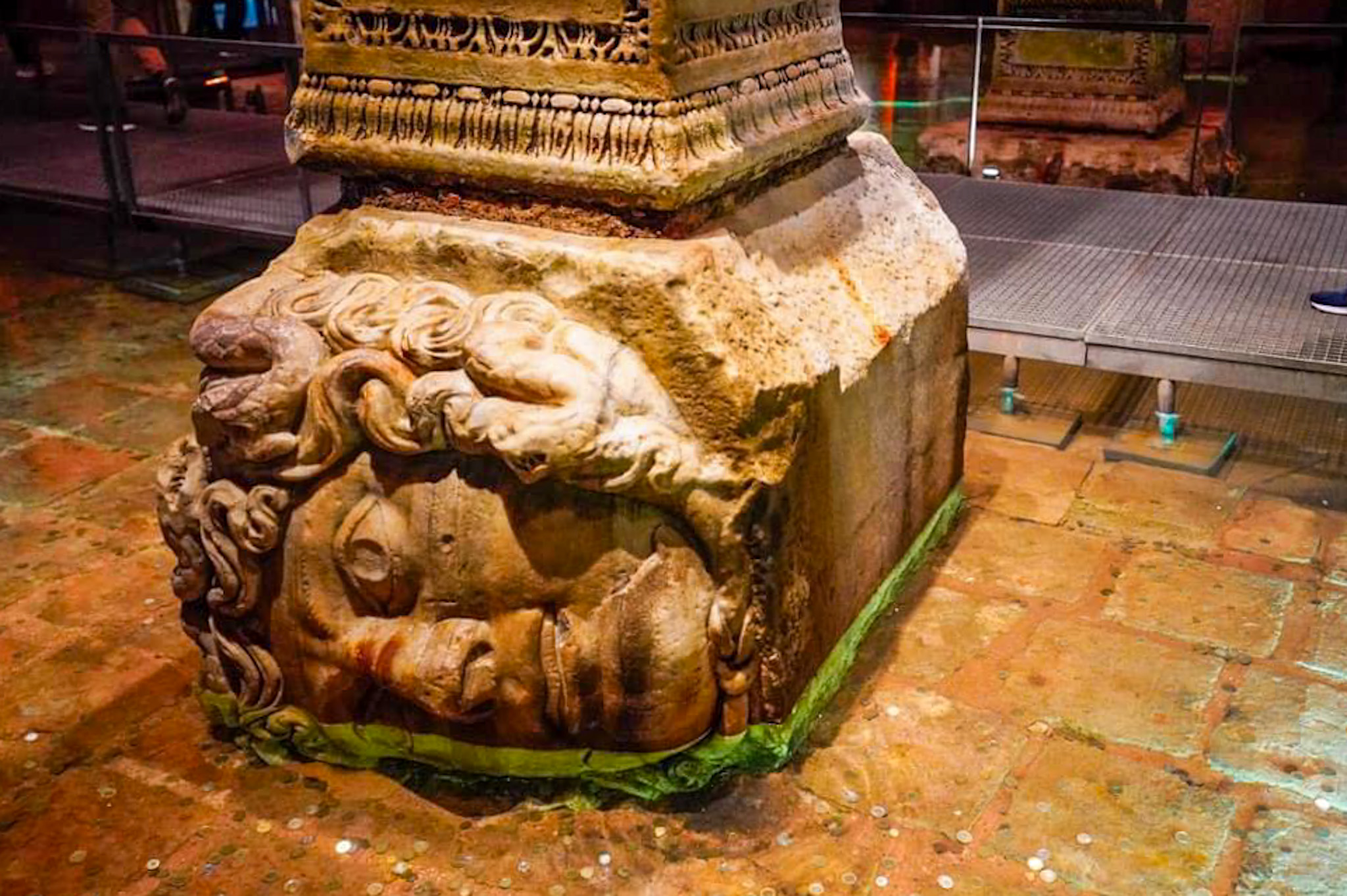
Archaeologists believe construction workers used materials from the Roman period to construct the cistern. The 336 columns vary in architectural detail, and the heads of Medusa form the base of two.
Other Historical landmarks along Istanbul’s restless streets.
Obelisk of Theodosius
The 62-foot Obelisk of Theodosius towers over Istanbul as people come and go along the ancient Hippodrome. Two-thirds its original size, it’s a miracle that it survived. A marker at the site tells of its remarkable travels.
“It was in his father’s honor that Tutmoses erected an obelisk at Karnak [Egypt] and a monument in Mesopotamia [(present-day Iraq]. Constantine the Great displaced this one to decorate his new capital, but delivery took long for unknown reasons and during the reign of Theodosius I, the obelisk was re-erected in its current place.”
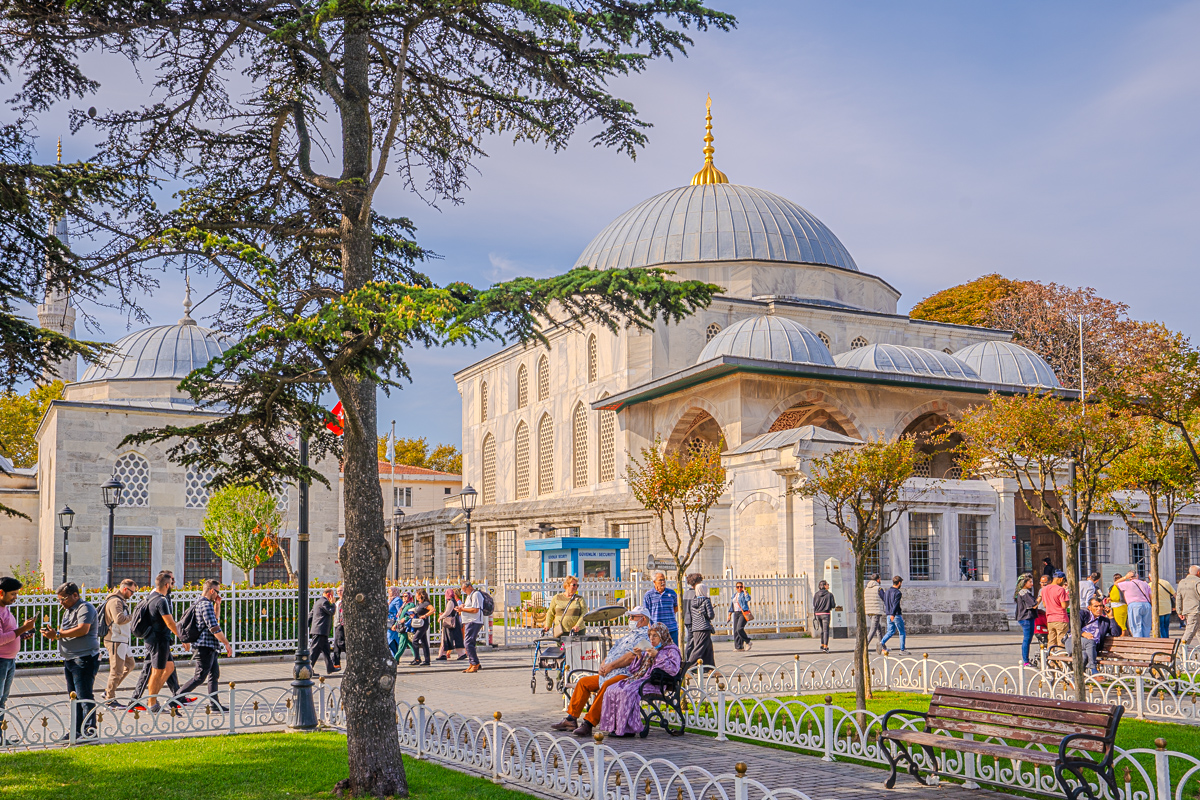
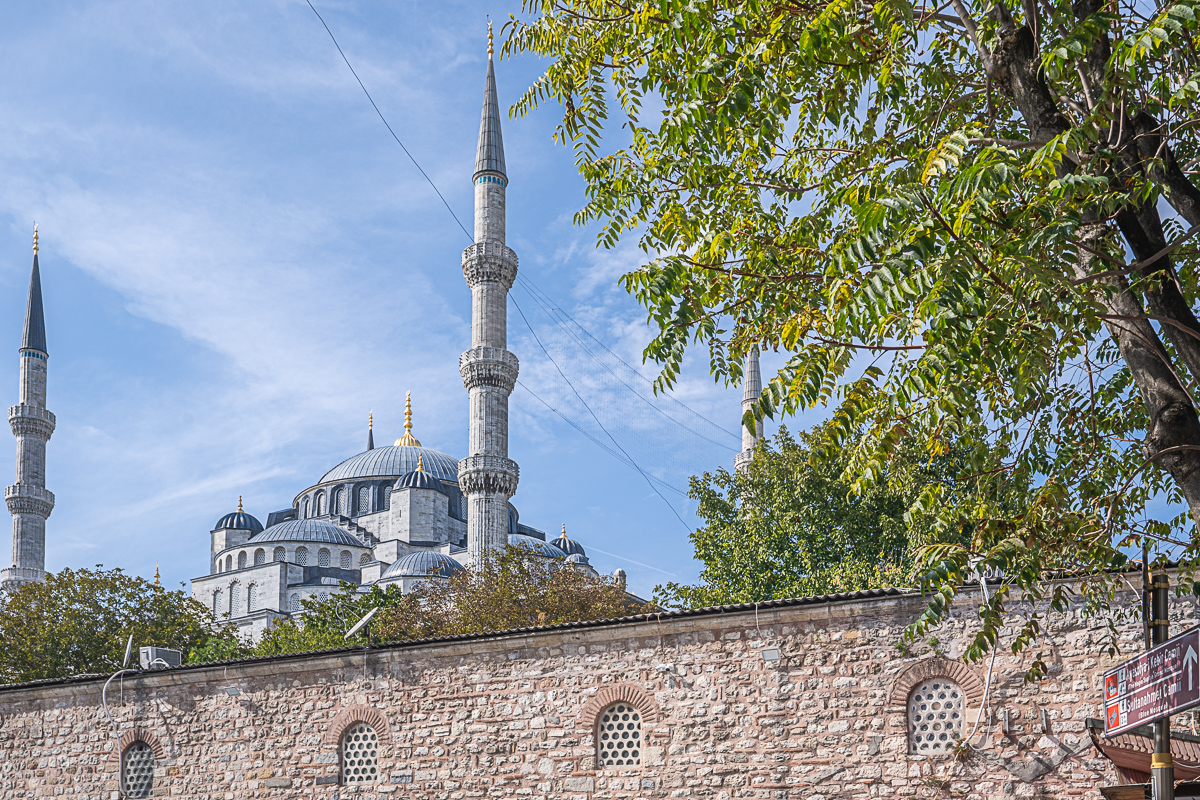
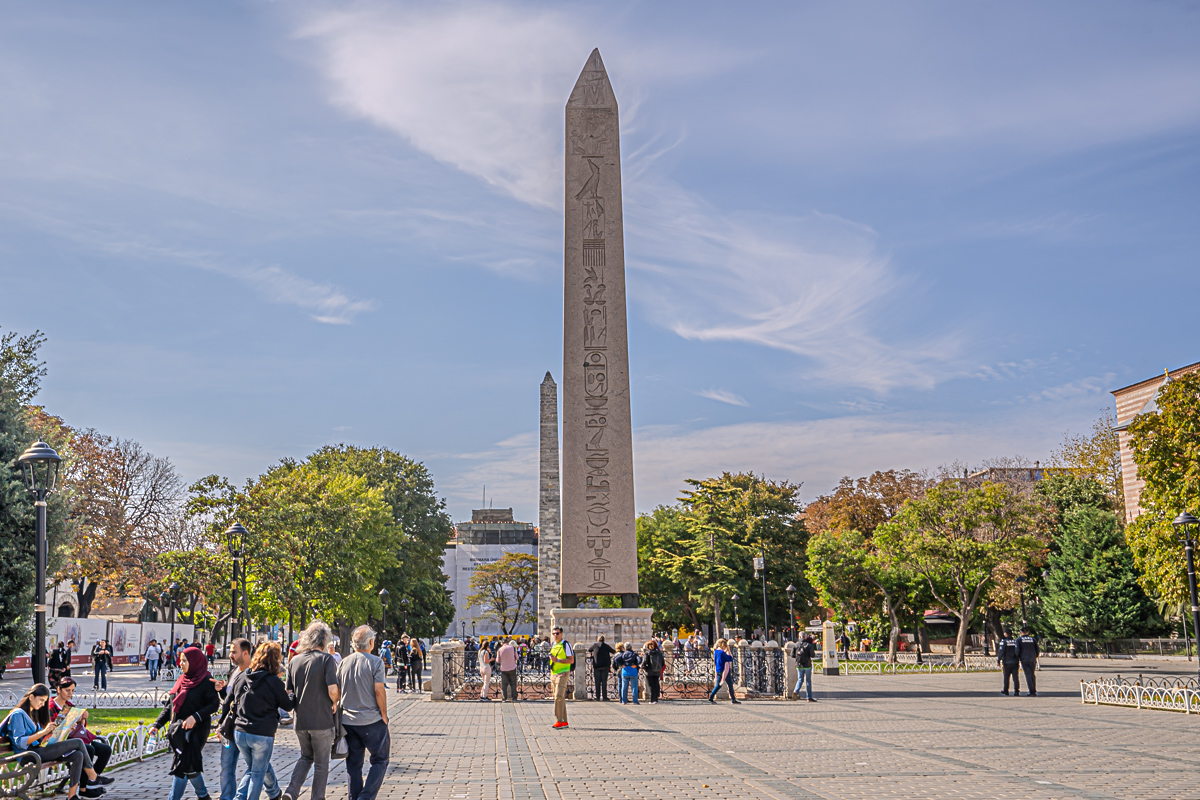
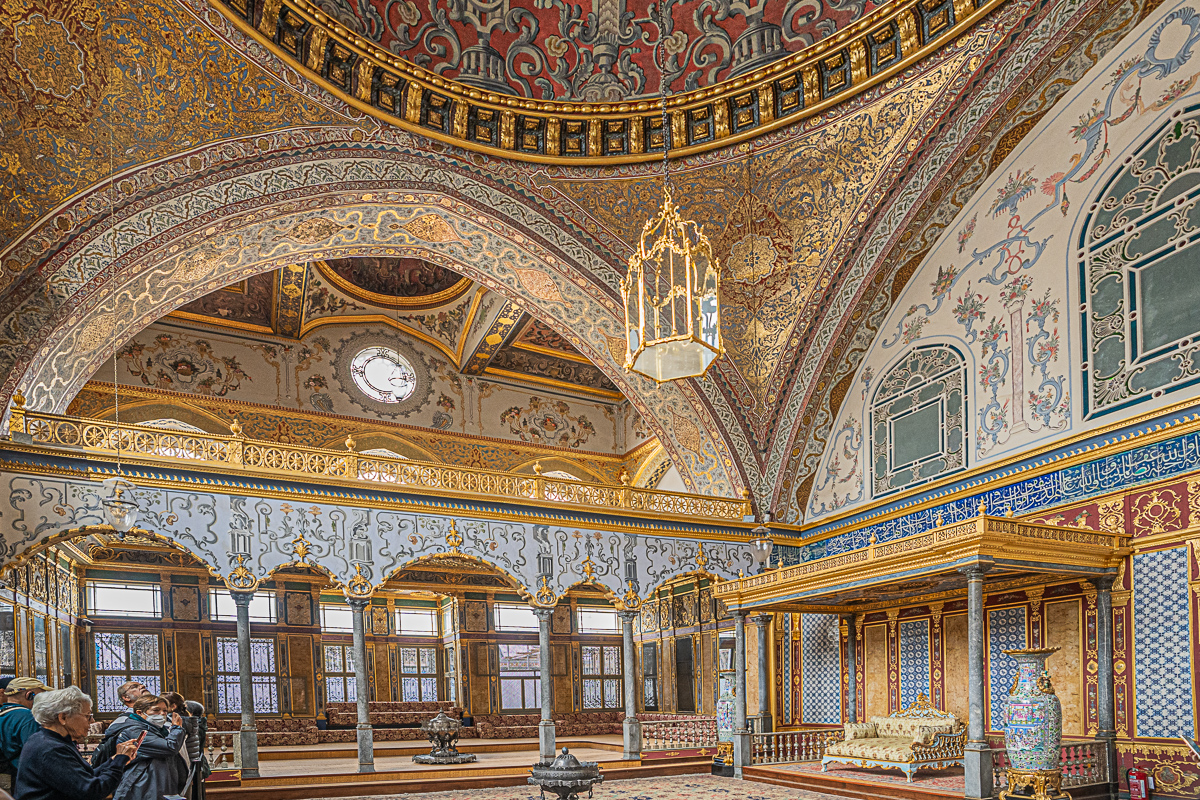
Hippodrome of Constantinople.
Imagine the chariot races, gladiator competitions, ceremonies, and other public events at the Hippodrome. It was the place for public activity for three successive empires: the Roman, Byzantine, and Ottoman Empires; it is the ancient legacy of Istanbul’s vibrant streets.
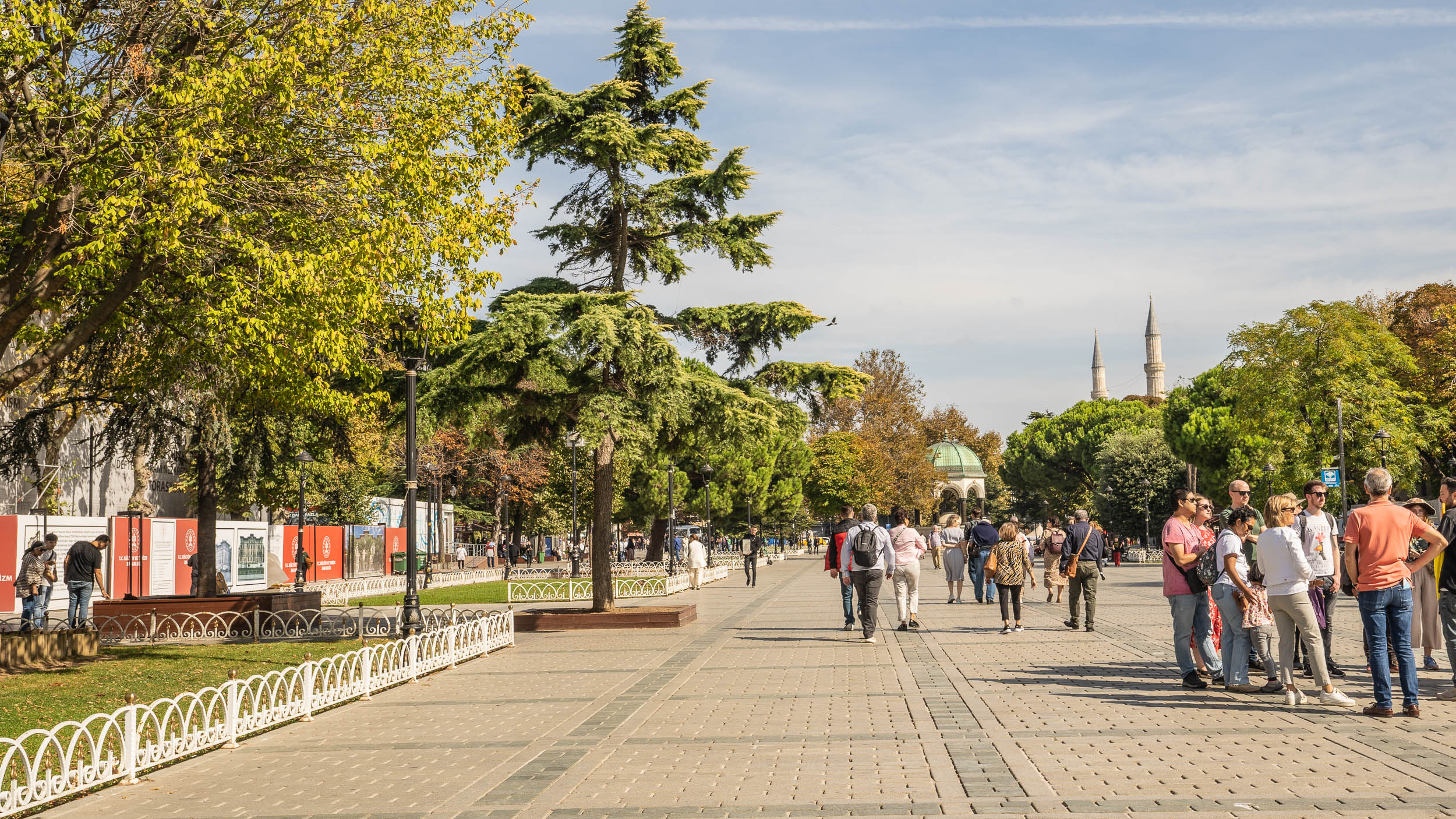
Our Guide
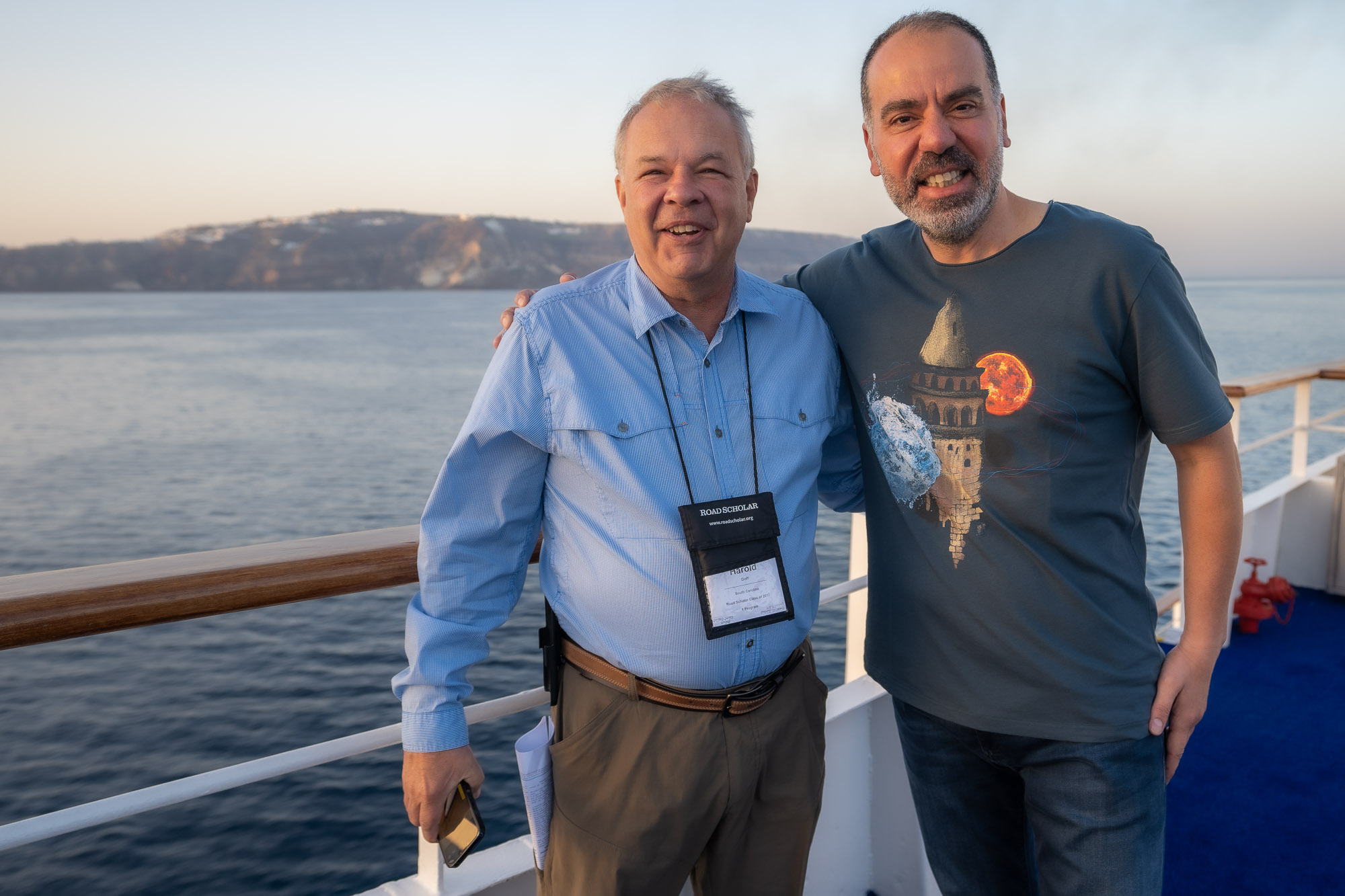
Eddie is with our Istanbul Guide, Sami Ozcini, on the right. Sami’s love of Turkey and his home city of Istanbul is contagious. His onsite lectures illuminate rich history and beauty. Sami is a graduate of Marmara University with a degree in literature and travels extensively.
Travel Note
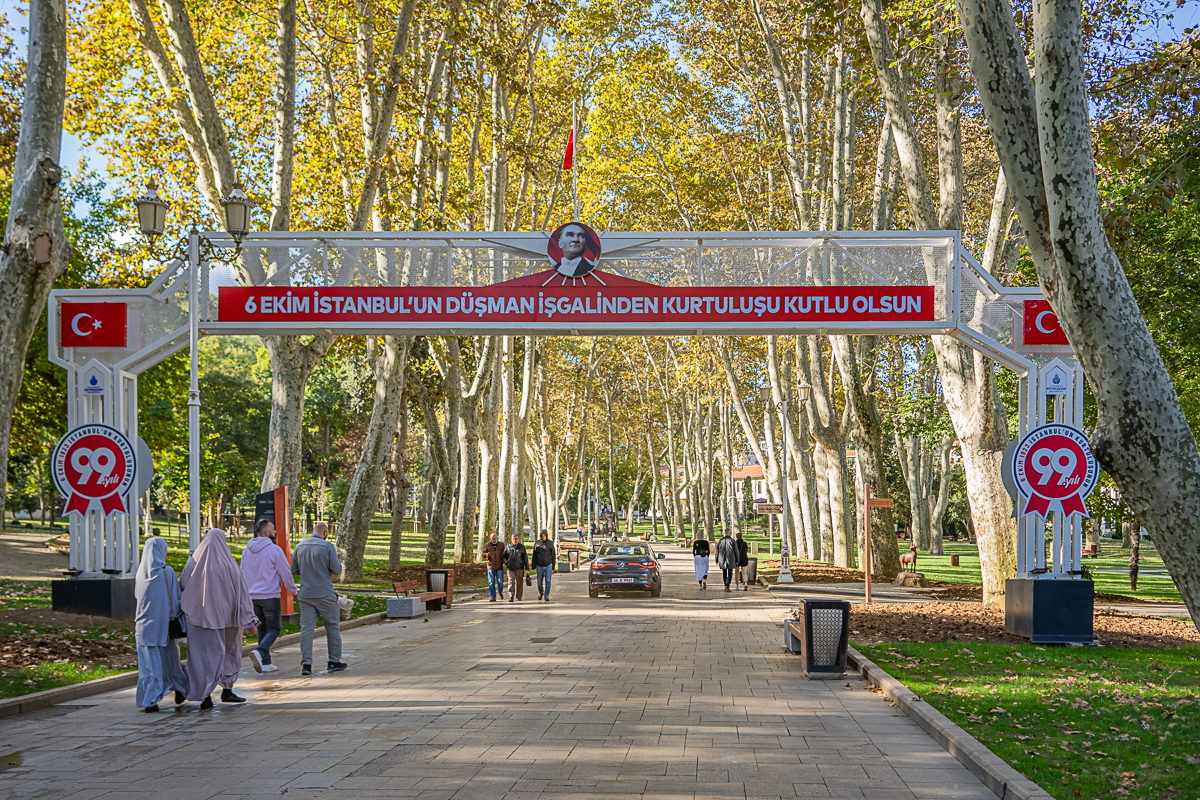
The sign above the street in Gülhane Park anticipates the celebration to come. It is translated into English to read “Happy 6 October Liberation of Istanbul from enemy occupation, 99 years.” In 2023, Turkey celebrated the 100th anniversary. In 1923, it became the independent Republic of Turkey.
Eddie and I felt welcome and secure in Istanbul. I fondly recall brilliant Turkish tiles, sesame-coated bagels, schoolchildren, baklava with pistachios, and the call to prayer echoing throughout the city.
We enjoyed seeing Istanbul with our guide, Sami. He has a wealth of knowledge and a sense of humor, as with his telling of the origins of Byzantium.
Origins of Byzantium
According to Tradition.
In the 7th century B.C., the Greeks expanded their colonies. Nisos, the King of Megara, on the advice of the oracle of Delphi, sent his son Byzsas to “locate land opposite the city of the blind.” Nisos reached the point where the Sea of Marmara meets the Bosphorus, which marks the borders of Europe and Asia. The Asian side was already populated, and he realized the significance of the prophecy.
According to our amiable and witty guide.
“Byzsas saw the green foliage on the European side, looked at the other side, and said, those people must be blind!” – Sami.
The green side became Byzantium. In 330 C.E., Emperor Constantine split the Roman Empire, and Byzantium became Constantinople.
Books
Birds Without Wings by Louis de Bernières
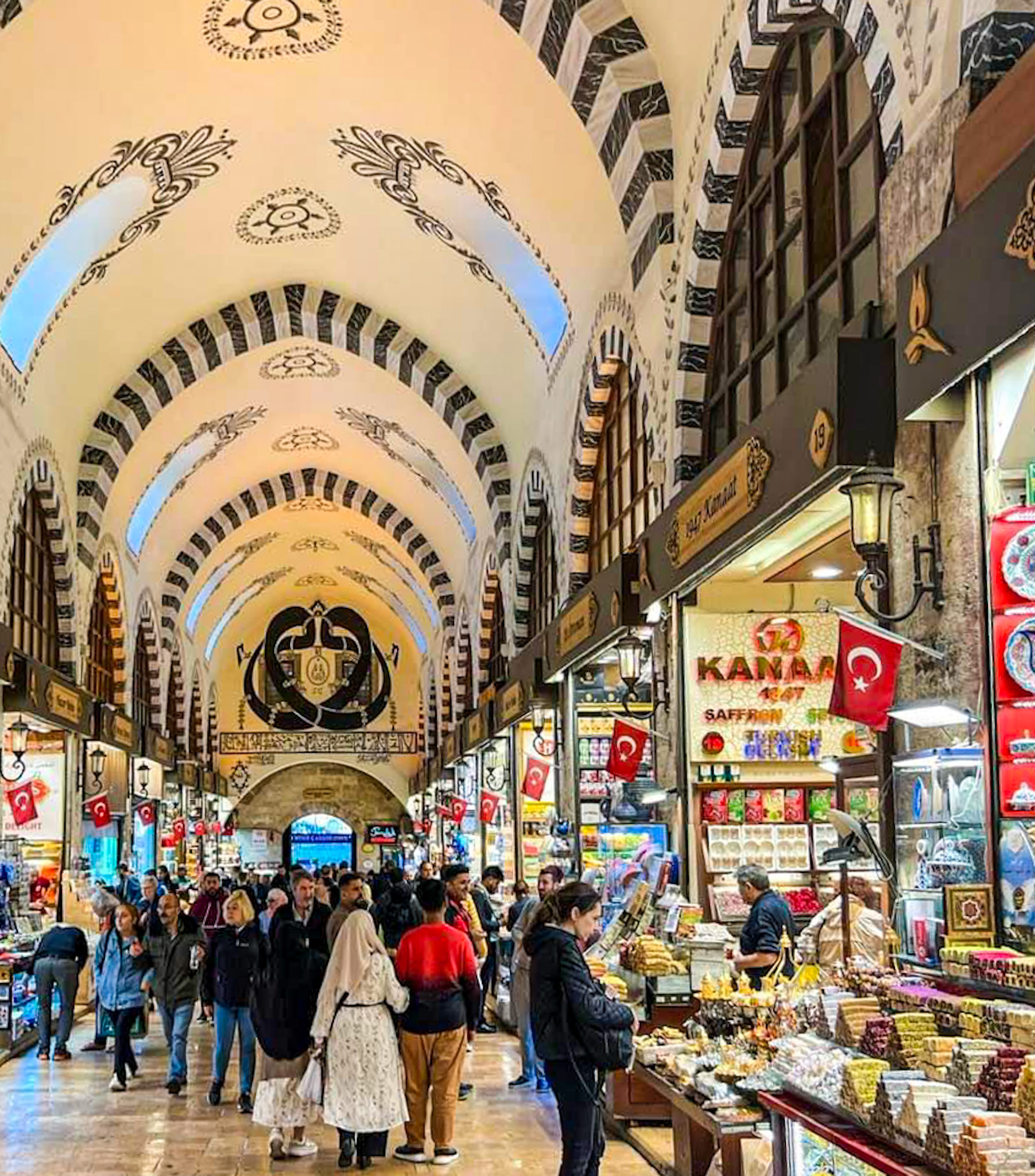
This picture shows just a part of the spectacularly beautiful Grand Bazaar. The hustle and bustle inside the market rivals Istanbul’s vibrant streets outside. Servers scurry along with tea service on a hand-held hanger with the tiny iconic Turkish glasses filled with hot tea.
Other stories surrounding the Aegean Sea.
You must be logged in to post a comment.