I settled into bed in a luxurious tent and listened to the night sounds: a hyena whooped, and a lion grunted in low huffs. My love of the wild took me to Tanzania. The distant sounds seemed close, as if on the other side of my tightly zipped tent flap. They filled me with anticipation and excitement.
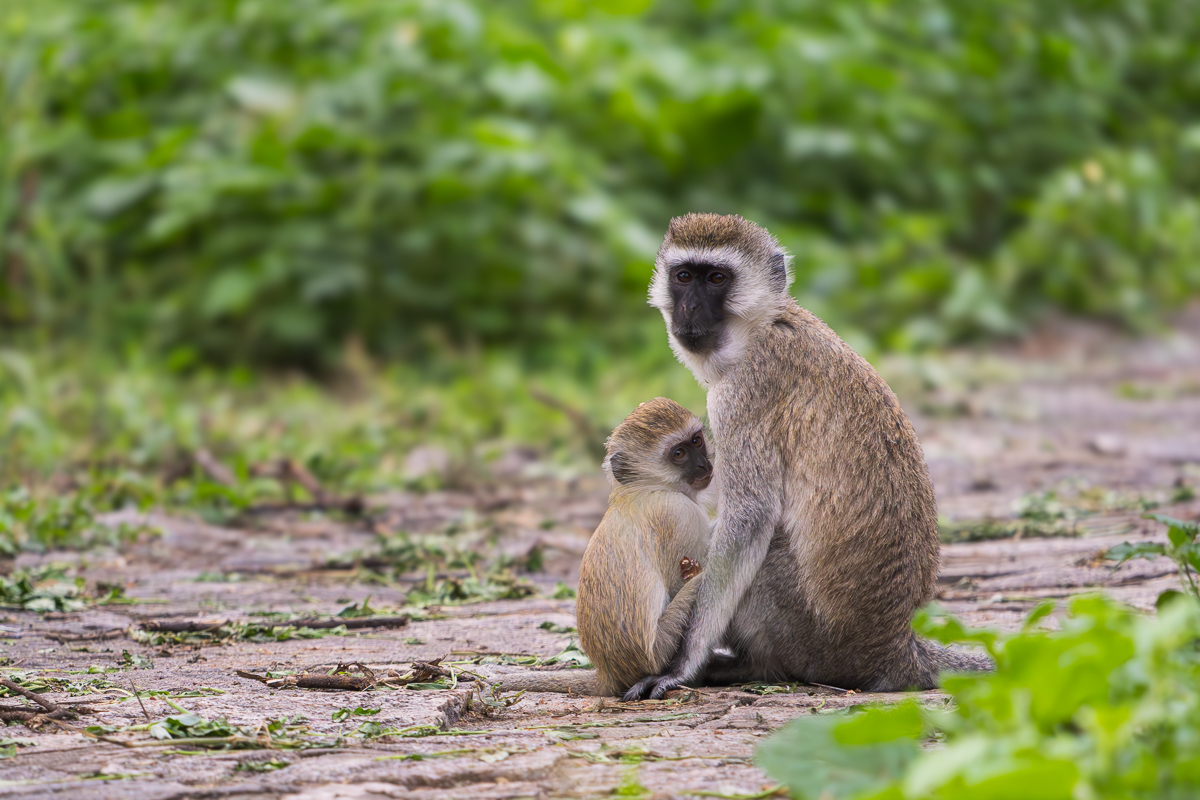
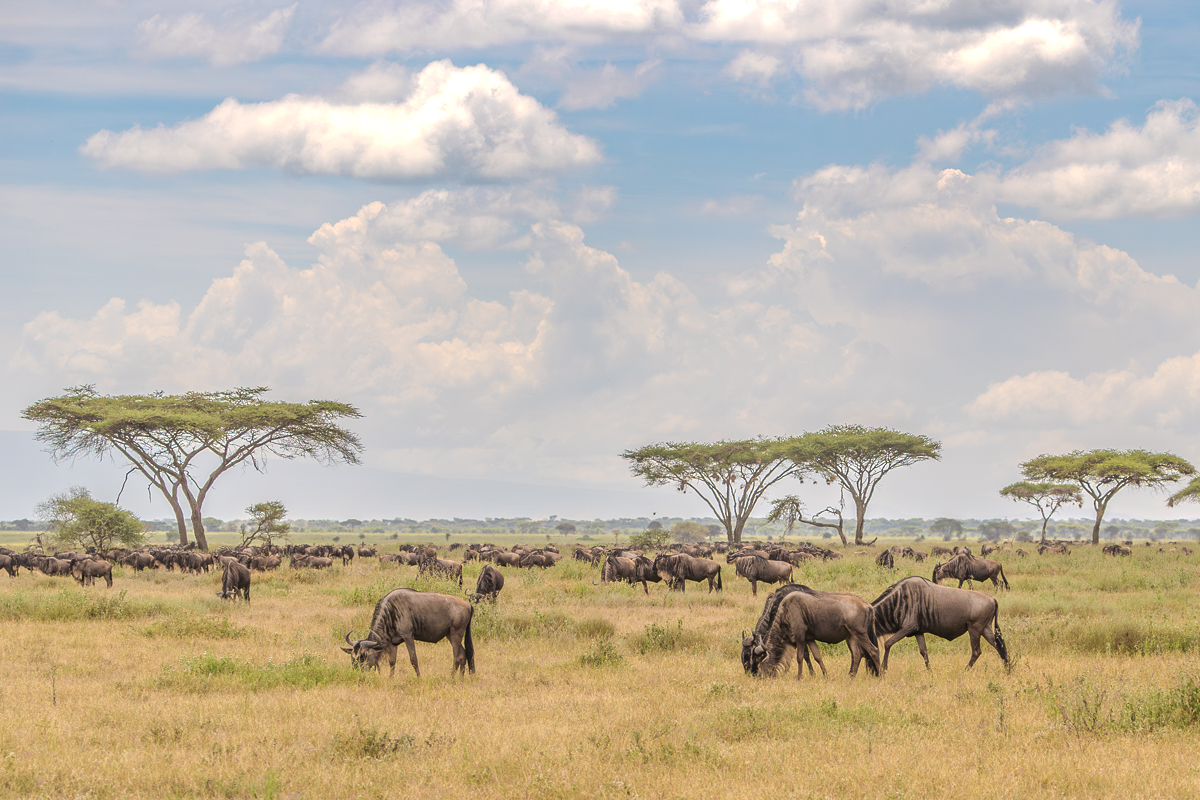
Arusha City is the gateway to Tanzania’s national parks. Over the next week, we’d photograph animals in the Serengeti and Tarangire National Parks and the Ngorongoro Conservation Area. As we drove through town to begin the 300-kilometer (186-mile) drive, we saw a troop of monkeys along the road. Babies straddled the mother’s backs, riding comfortably. This was only the beginning! As the city gave way to open plains, we began to see hundreds of wildebeests and zebras.
The Serengeti ecosystem is the world’s largest and longest land migration of animals, the last Great Migration on Earth. (30,000 km, 12,000 sq mi). Serengeti National Park and the Ngorongoro Conservation Area are two of the seven Wonders of Africa.
The beauty of the landscapes, the animals, and the people filled me with awe-inspiring wonder.
Animals
Over two million animals move across vast plains from Tanzania to Kenya twice yearly for grazing and water. In addition to the Big Five, which includes elephants, lions, leopards, buffaloes, and rhinoceroses, other animals are moving, too. Zebras, wildebeests, gazelles, giraffes, hippos, leopards, hyenas, and many more are all moving.
Large herbivores like zebras, wildebeests, and smaller gazelles move one after the other, sometimes mingling. Their grazing habits may benefit one another in avoiding predators: the zebra’s good eye-sight and the wildebeest’s good hearing. The African buffalo is a herbivore that sticks close to the water. Never domesticated, they are considered very dangerous, as deadly as the hippos and crocodiles. The grazing swath of the larger animals makes it easier for smaller ones, such as gazelles and dik-diks (small antelopes), to graze the lower and softer vegetation.
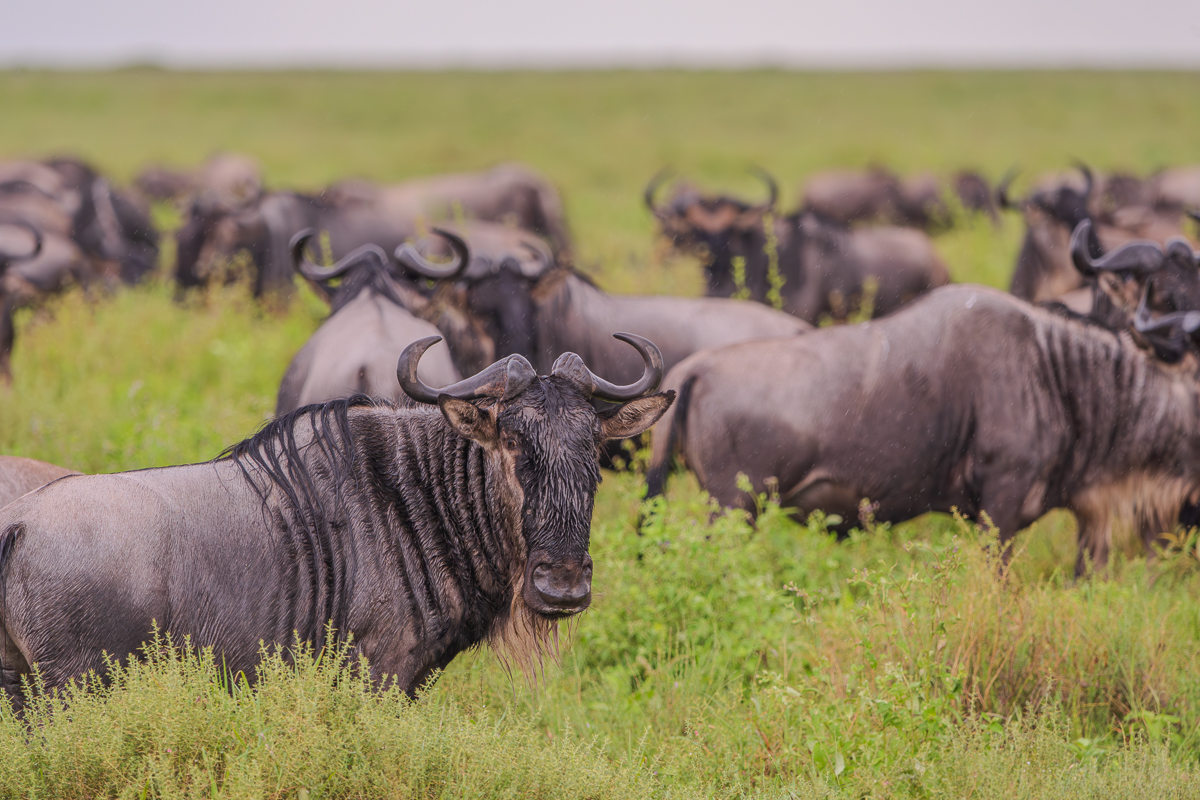
Wildebeests 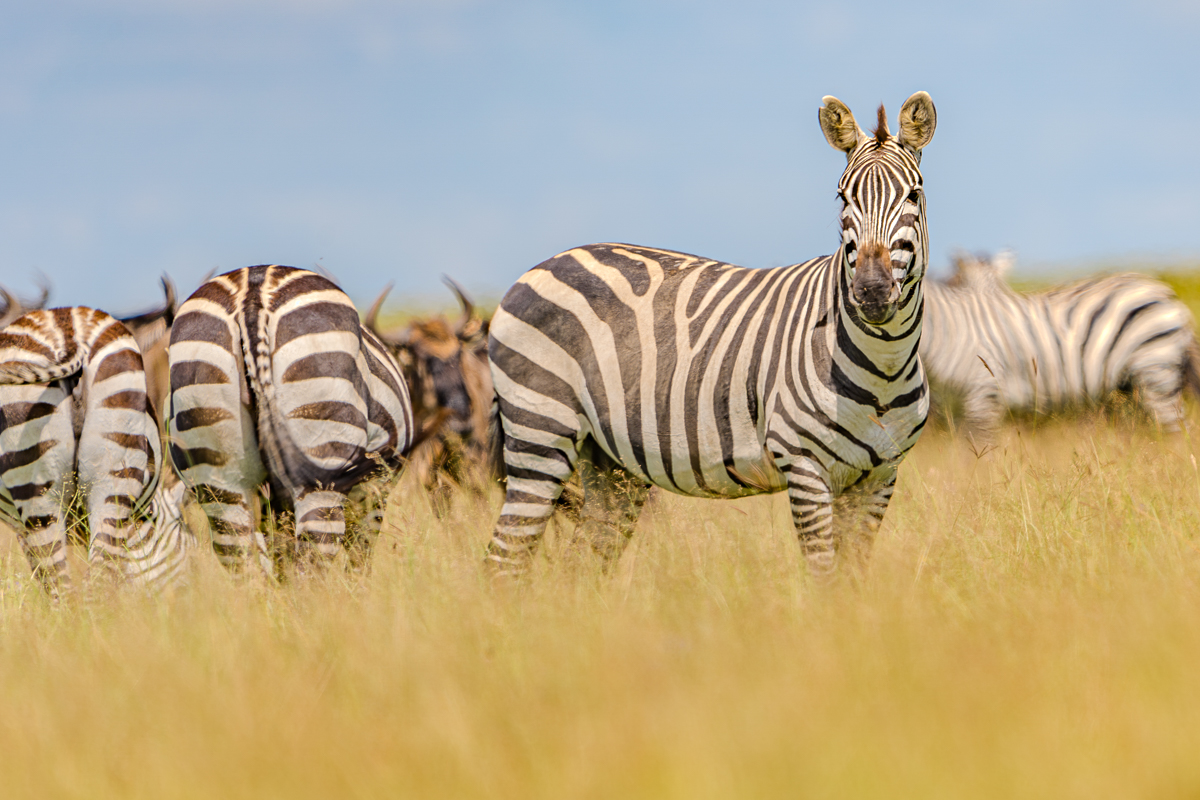
Zebras have excellent vision and with large eyes positioned to see well, even while grazing. 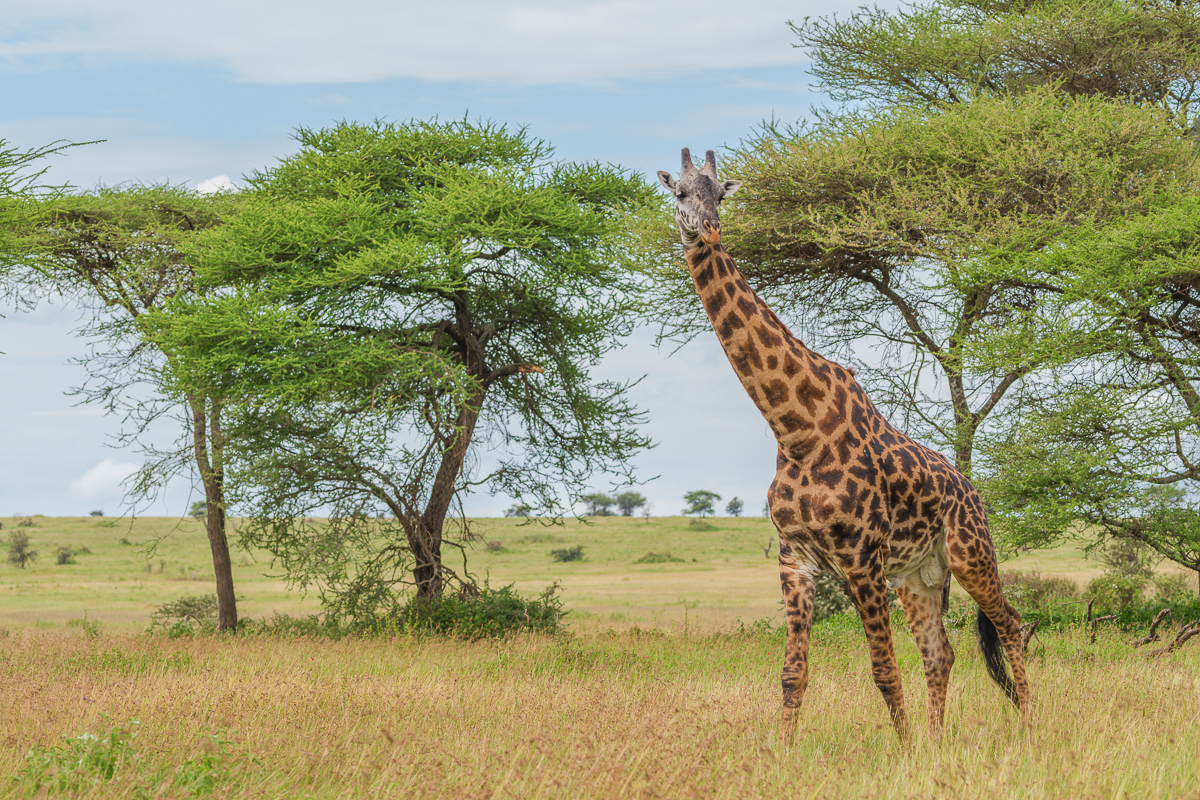
The giraffe towers above the landscape. 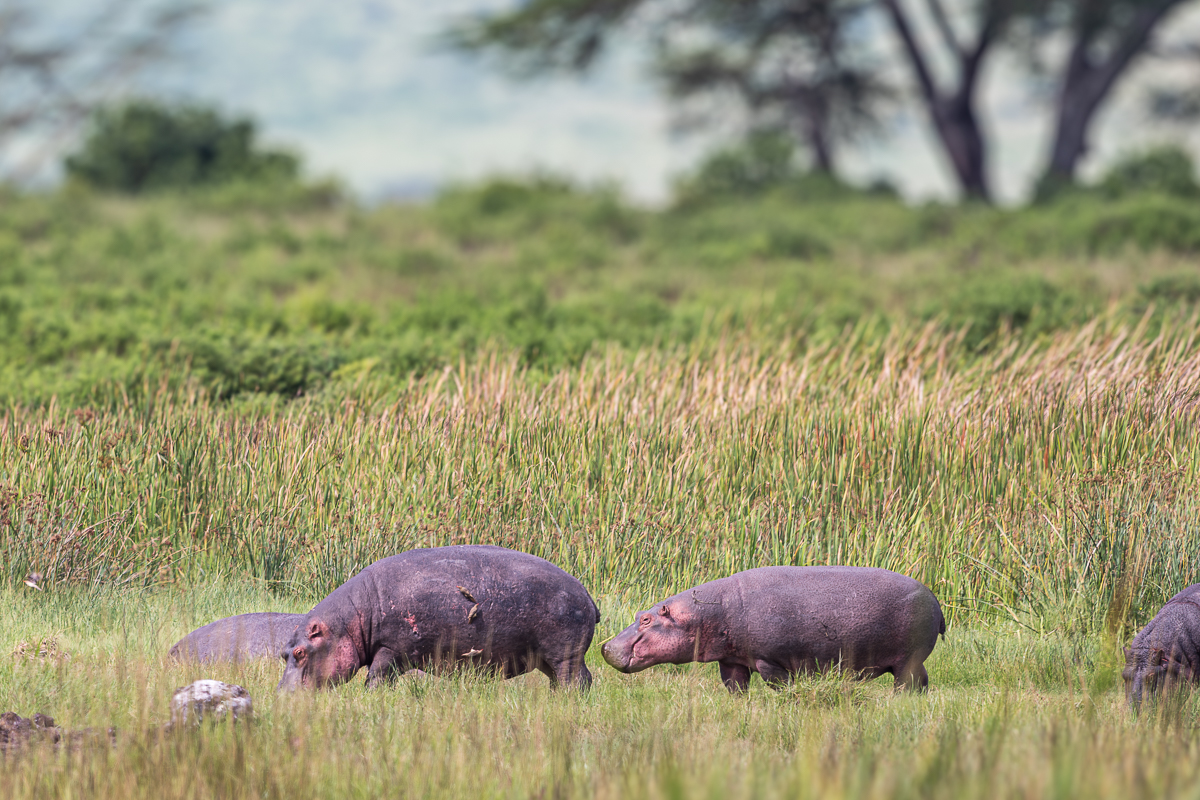
Hippos usually graze at night, prefering to spend the day in water. 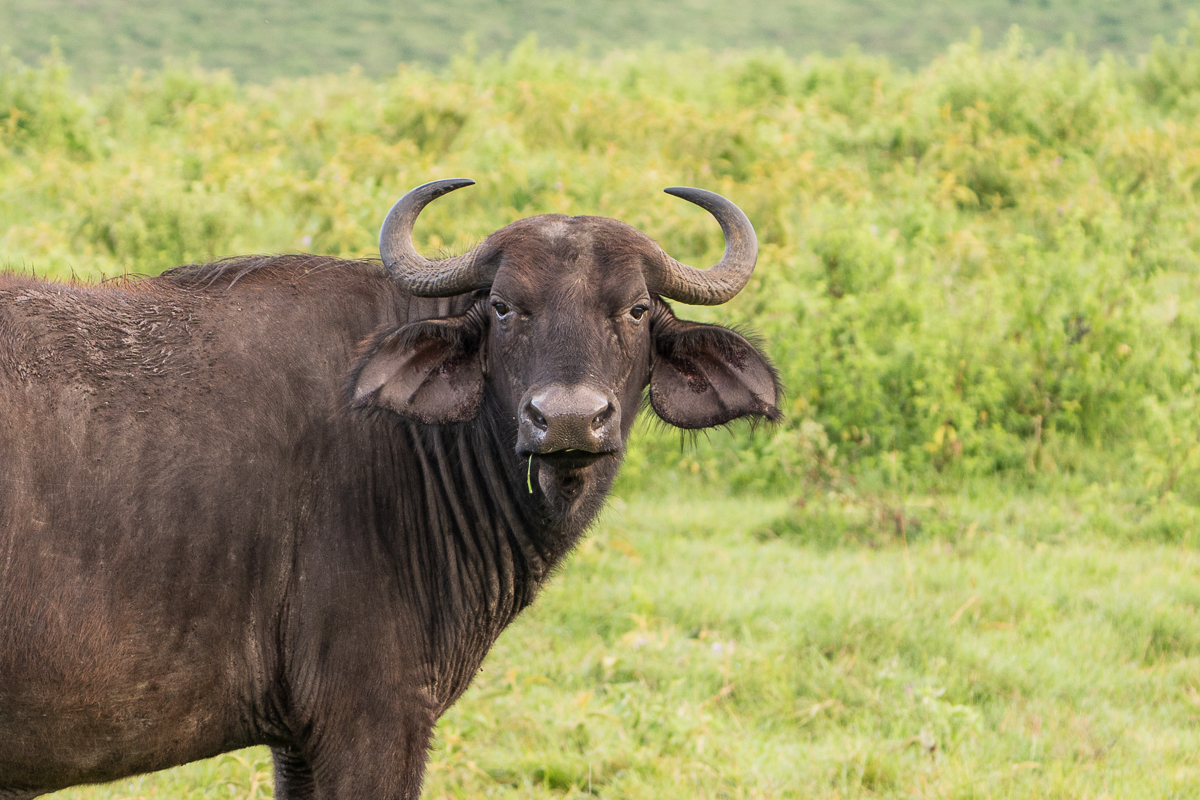
The Cape Buffalo can resist lion and crocodile attacks. 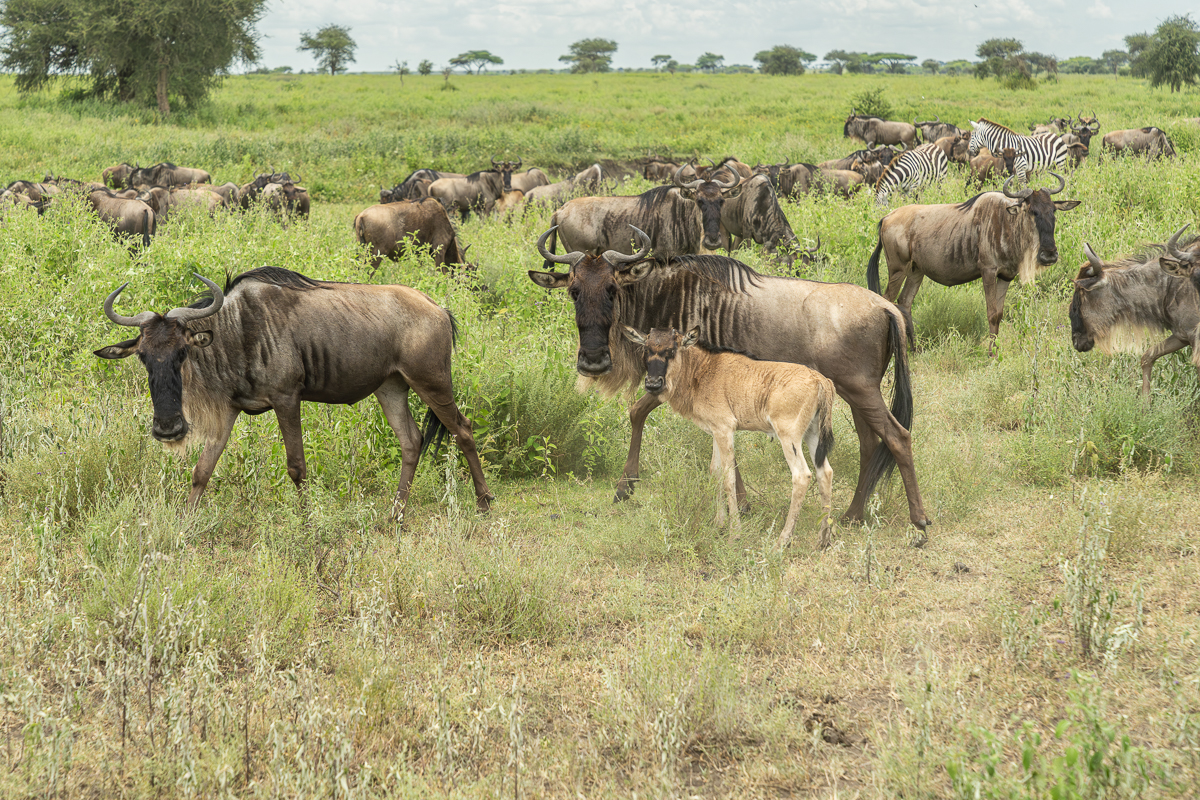
Wildebeests 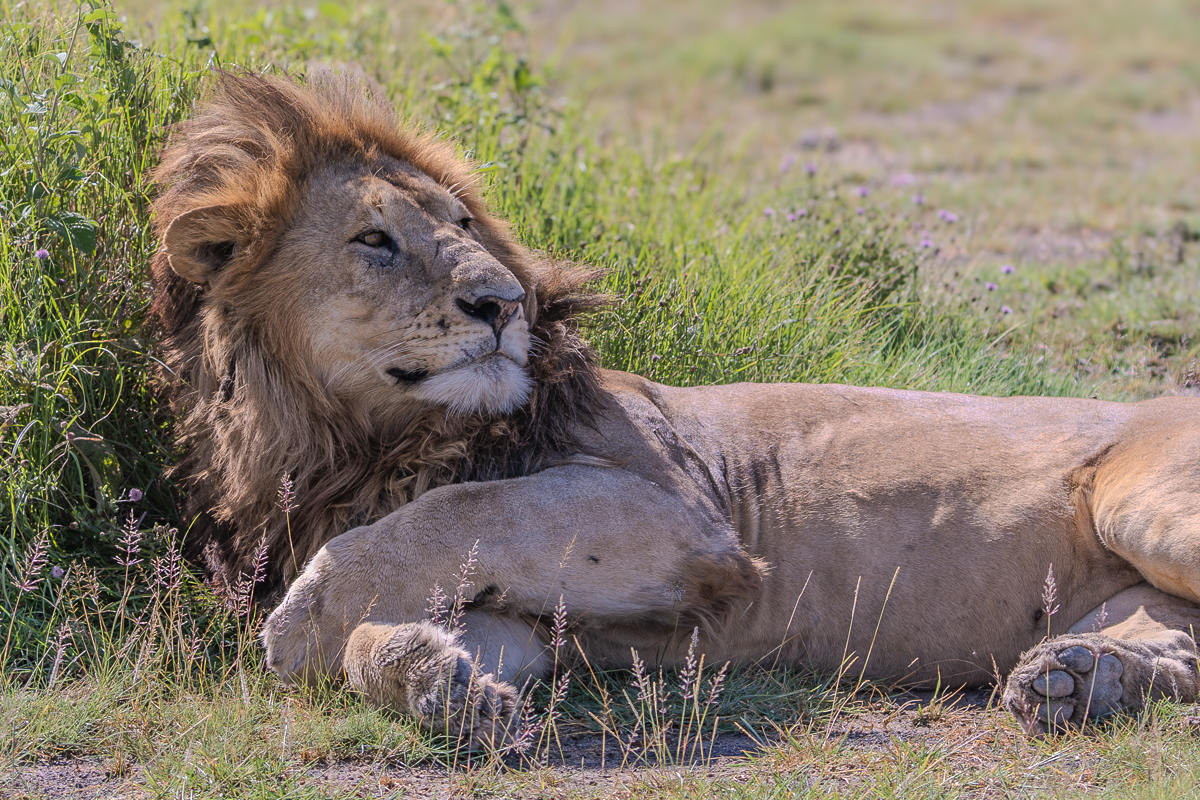
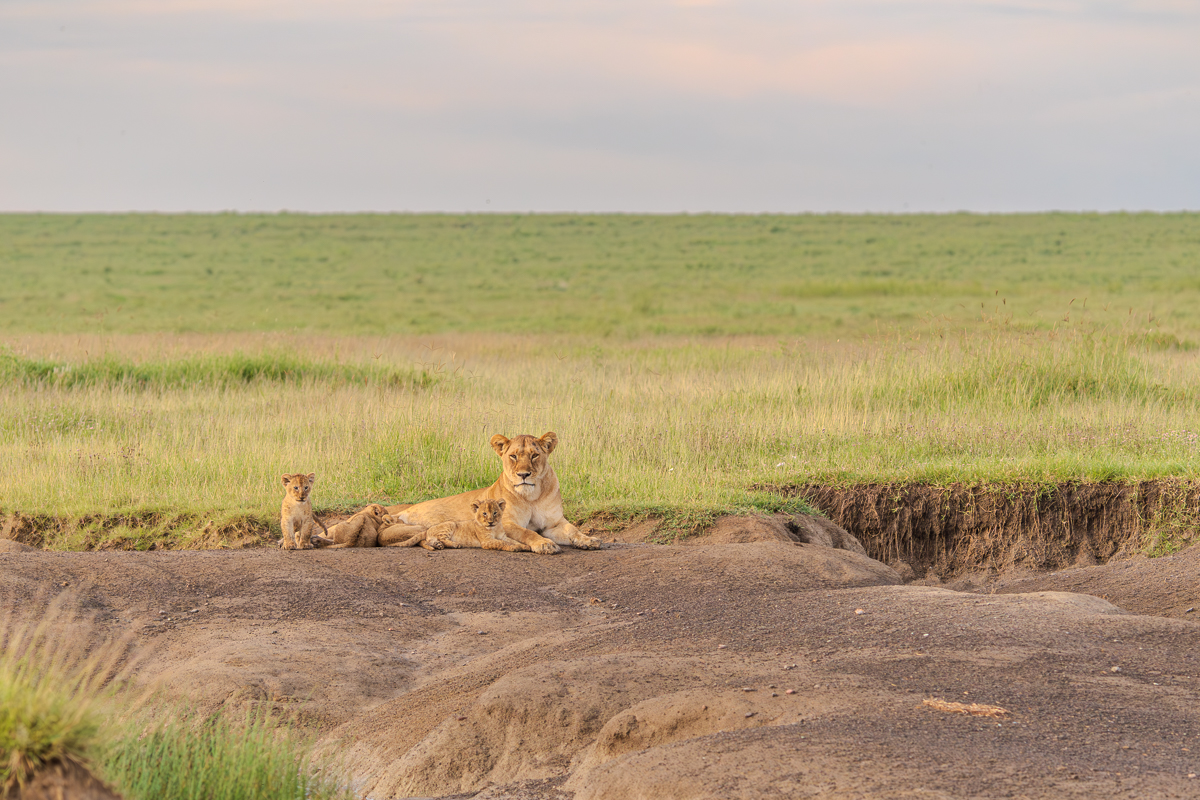
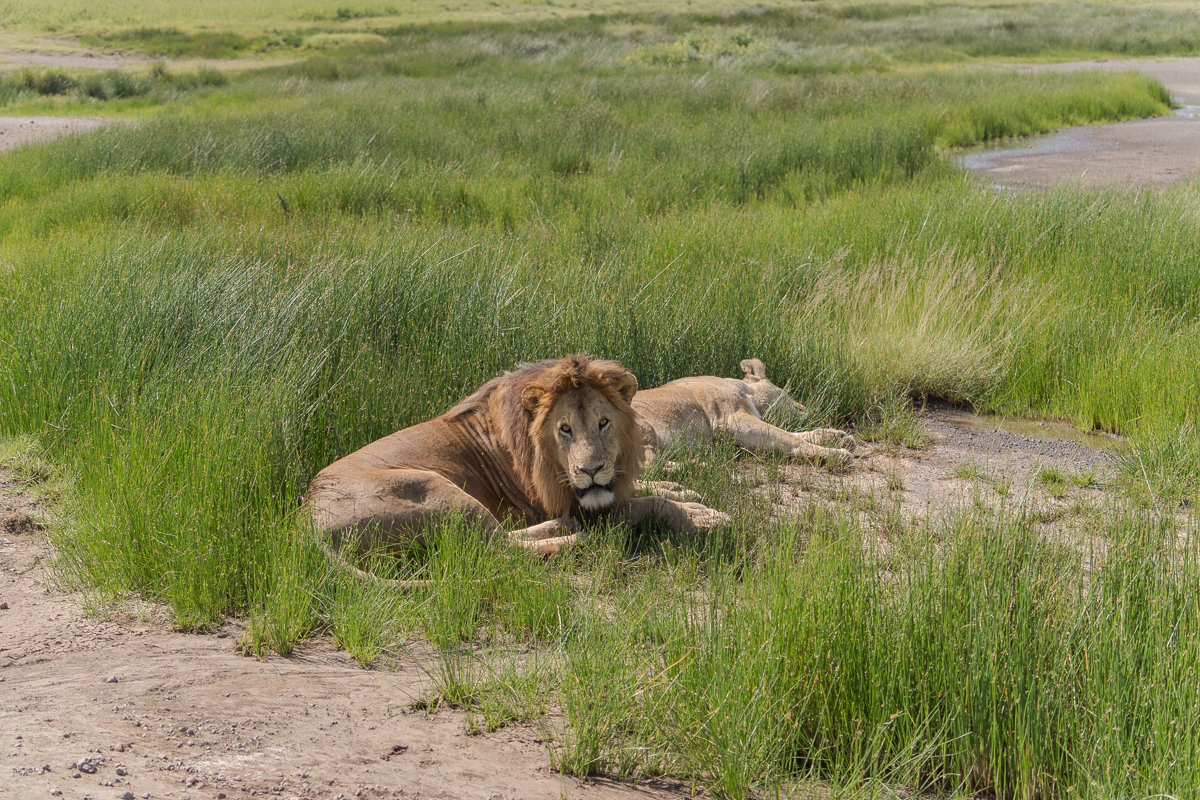
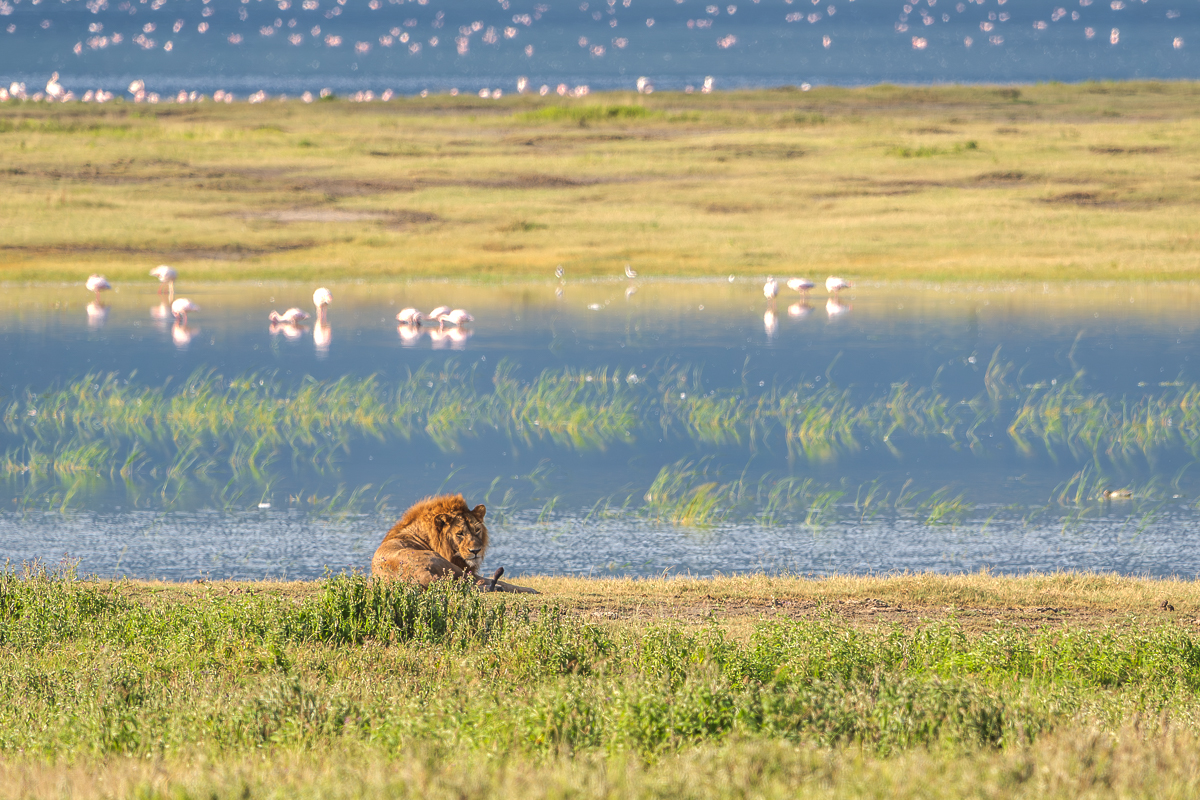
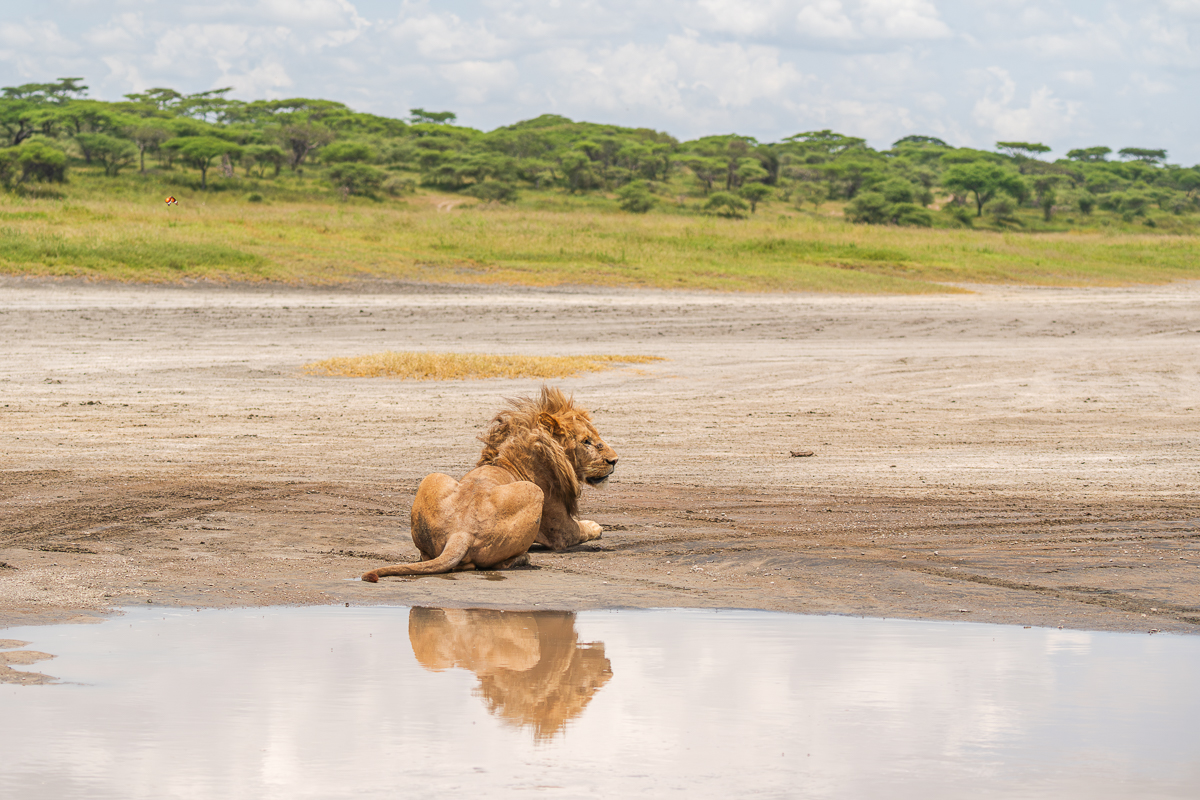
Nocturnal lions rest during the day
Animals of all sizes eat, drink, bathe, mate, give birth, teach their young, learn, and rest while moving. I was an intruder observing the ordinary habits of wildlife, but the scenes were epic.
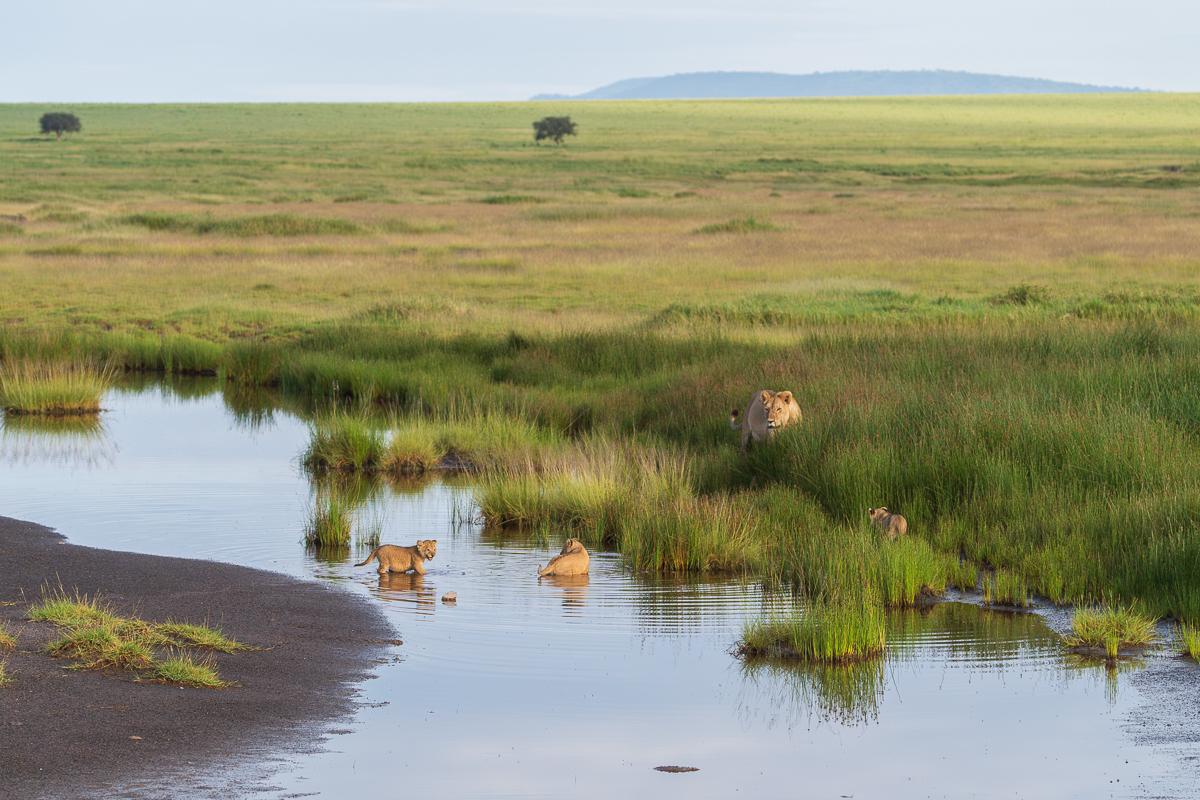
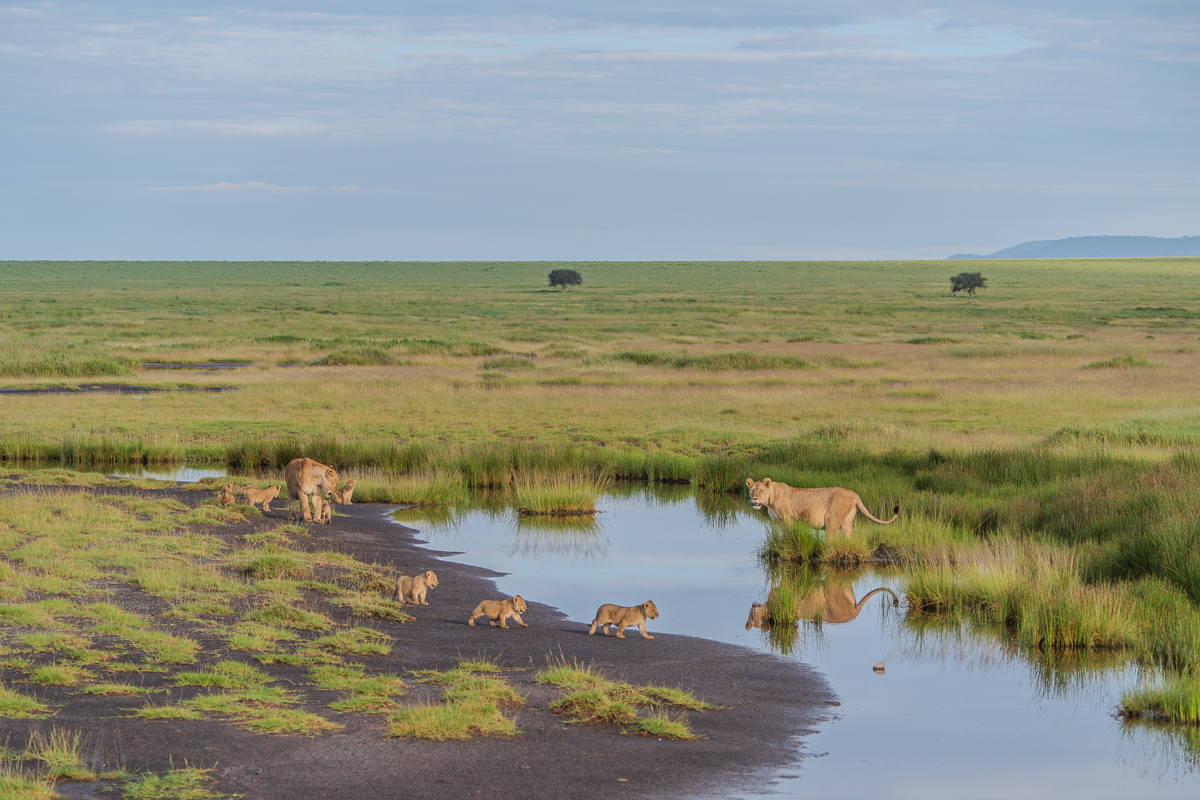
One day, we encountered a group of cubs standing at the edge of shallow water. On the opposite side, a lioness peeked out of the tall grass, encouraging them forward. Another lioness turned a group of cubs away as if to say no; it’s too soon.
Finally, one brave cub ventured across the water, and they all followed.
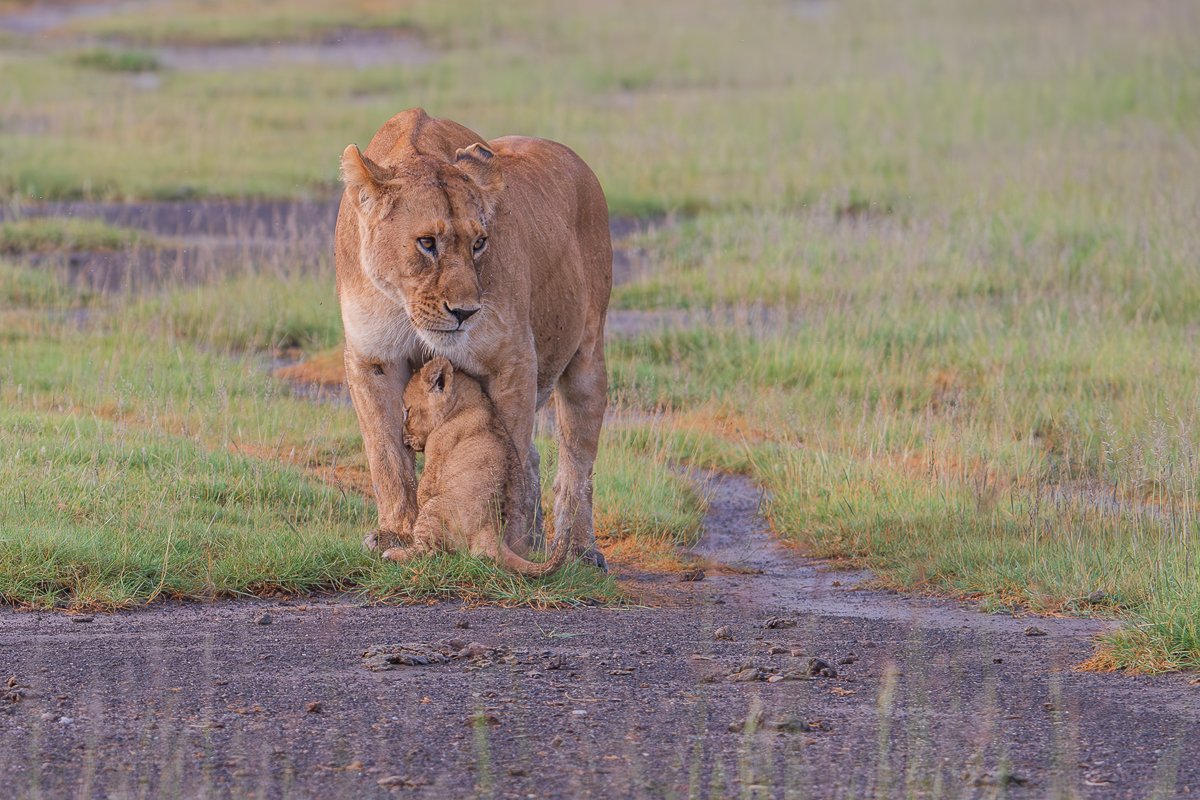
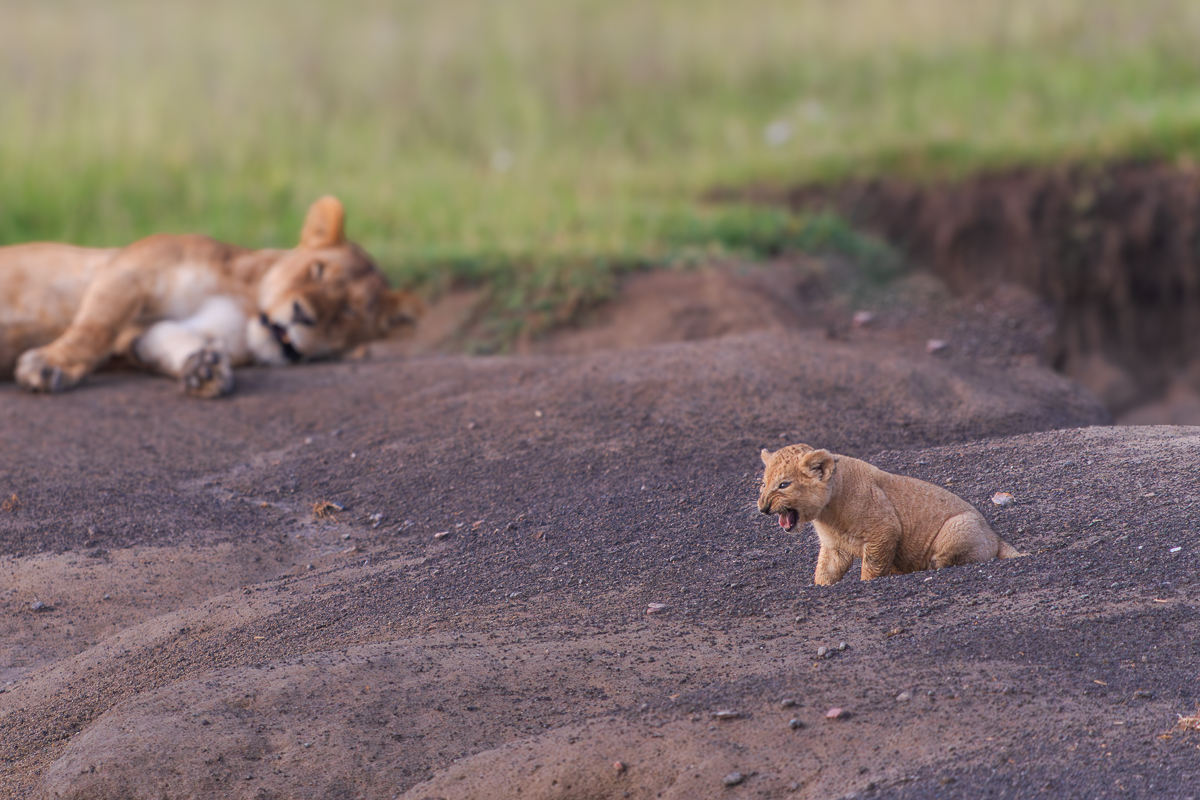
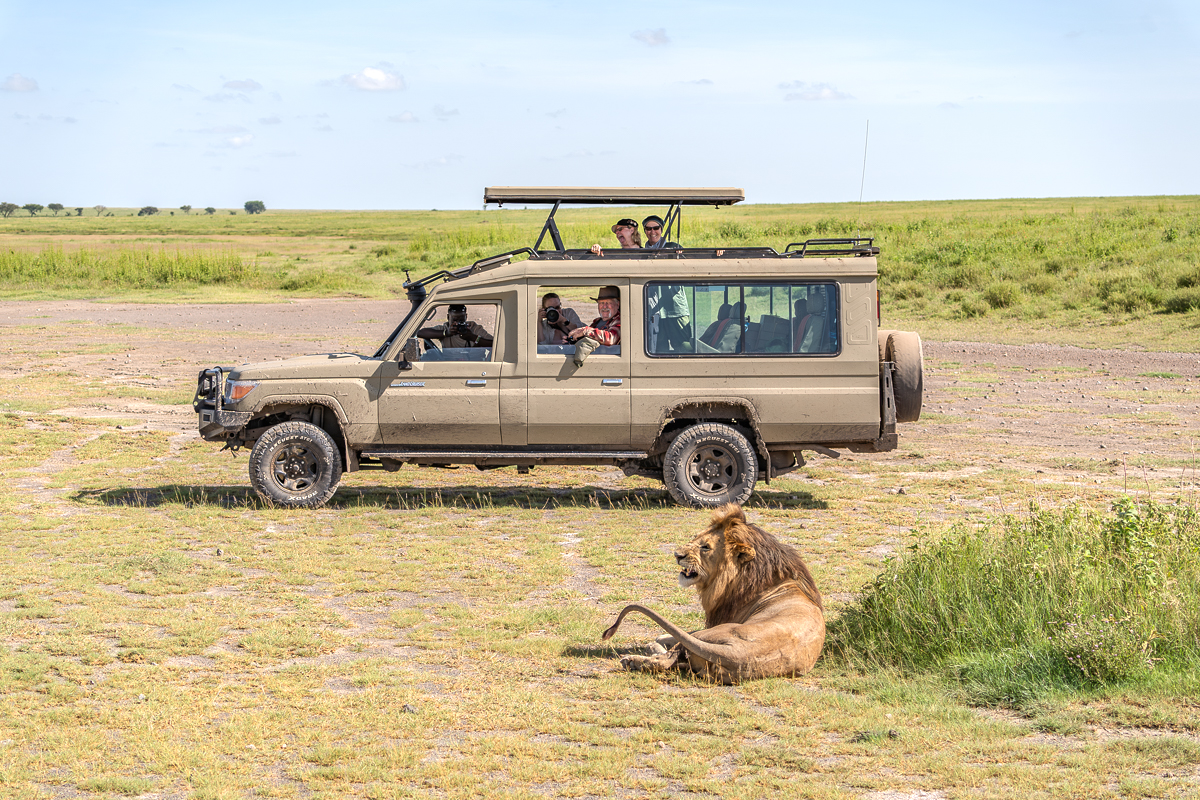
While the rest of the pride was busy during the day, the lions rested. They are mainly nocturnal but active anytime. The lioness searches for food at night, and the lion patrols and marks territory but hunts as well. Our guides said it was likely the females we heard huffing near the tents at night.
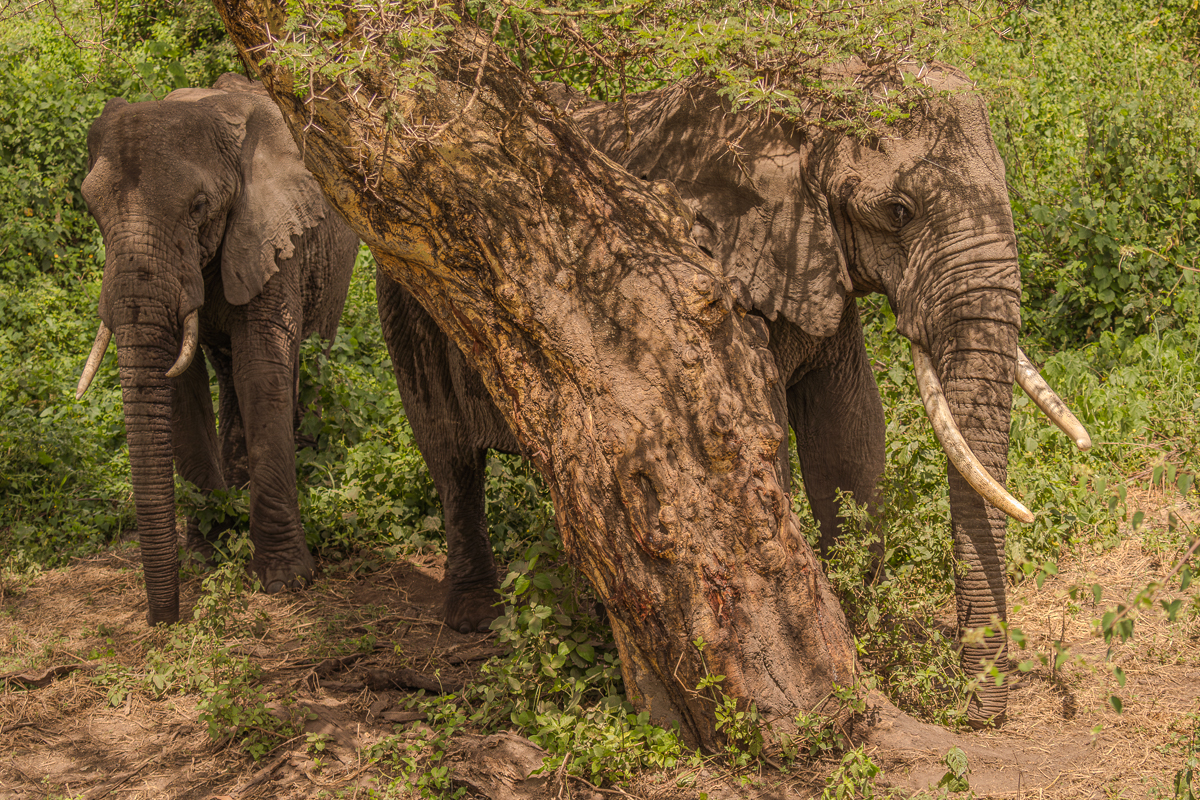
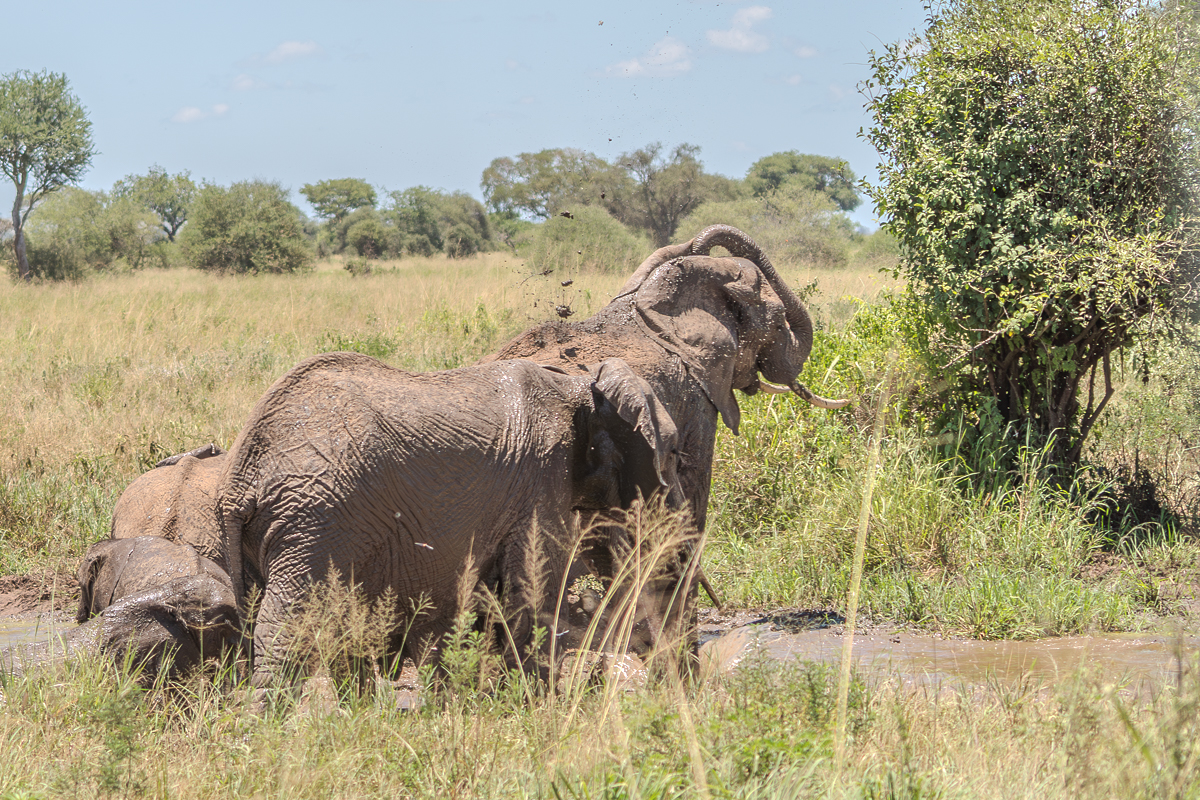
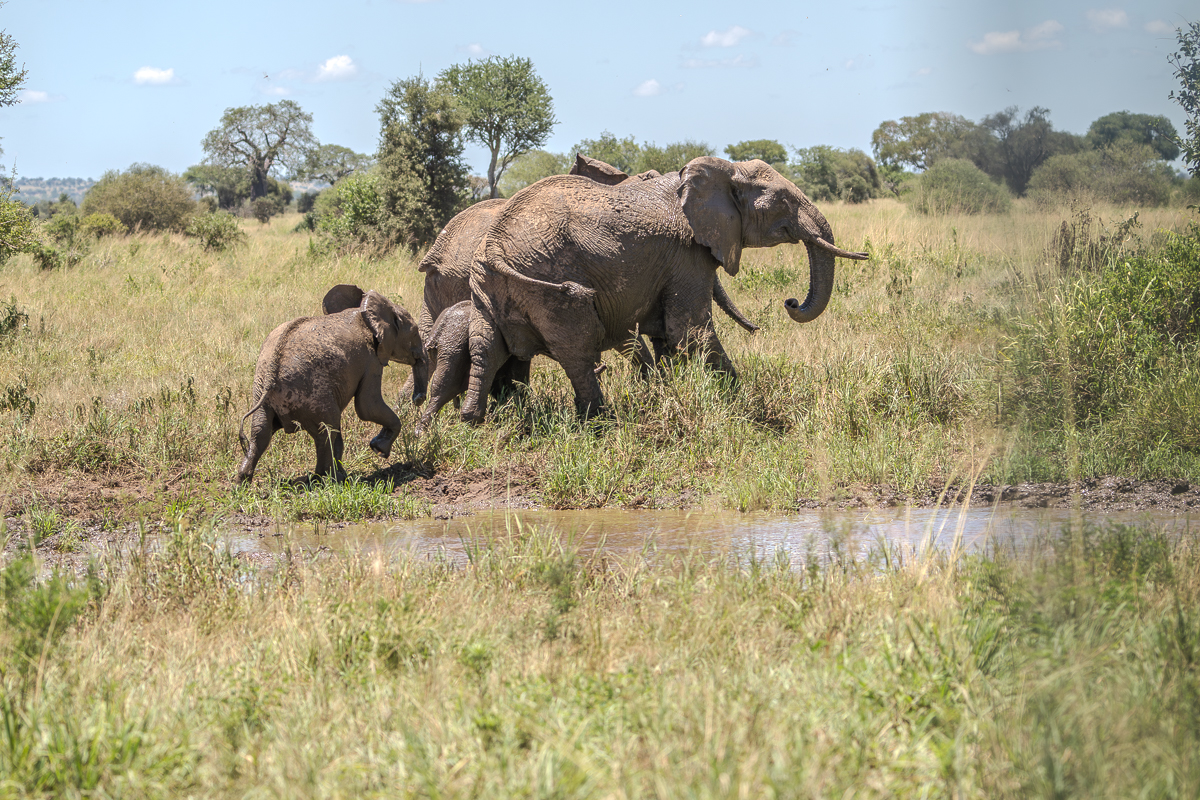
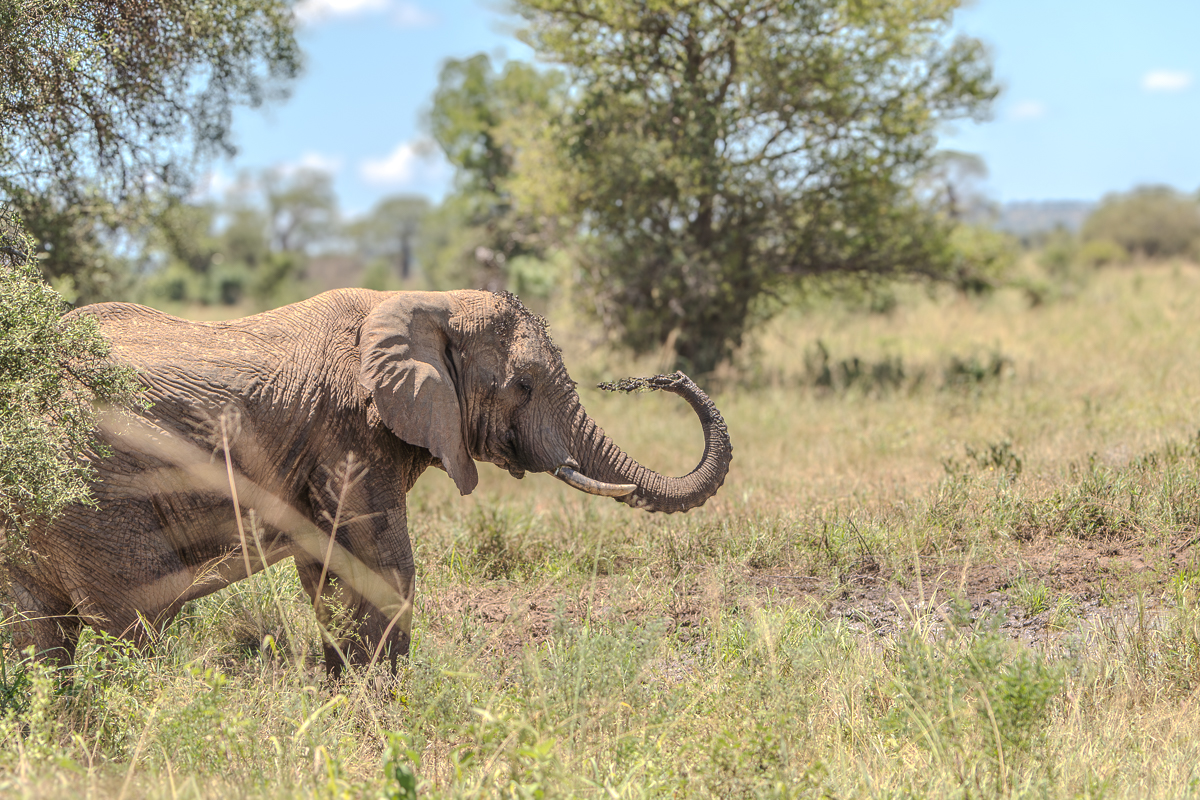
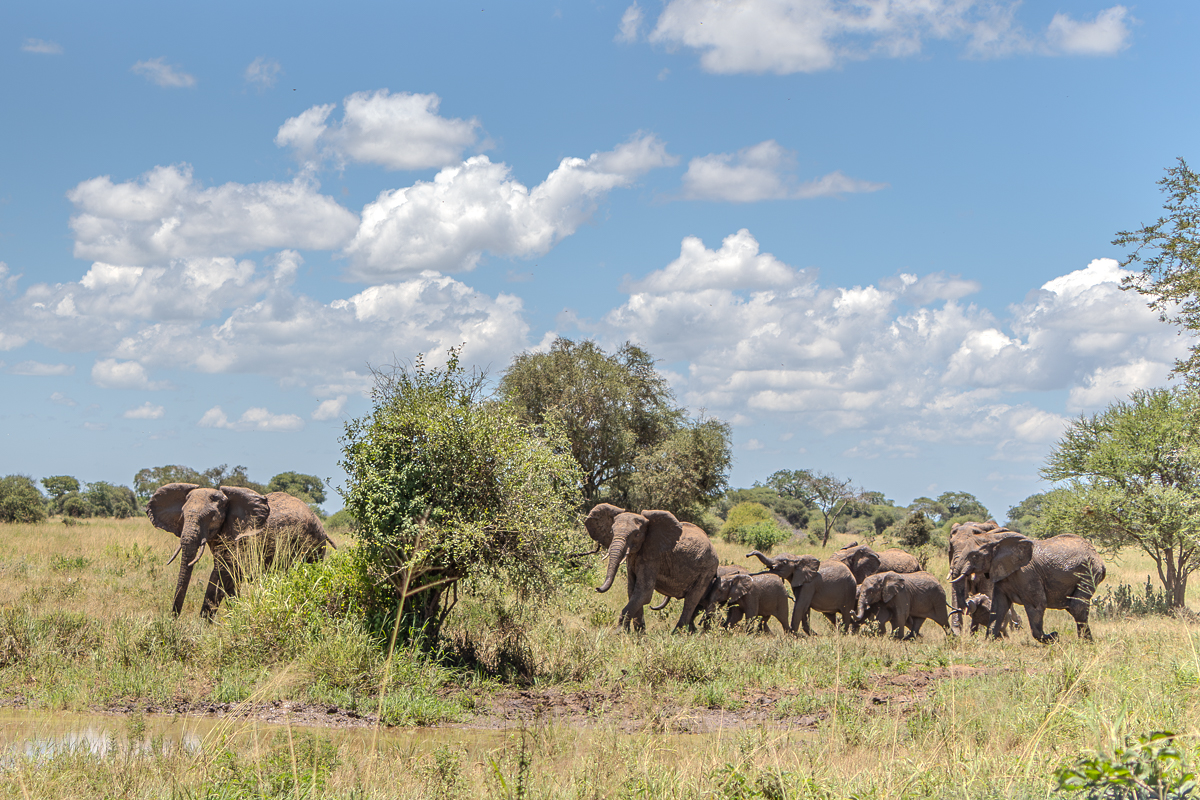
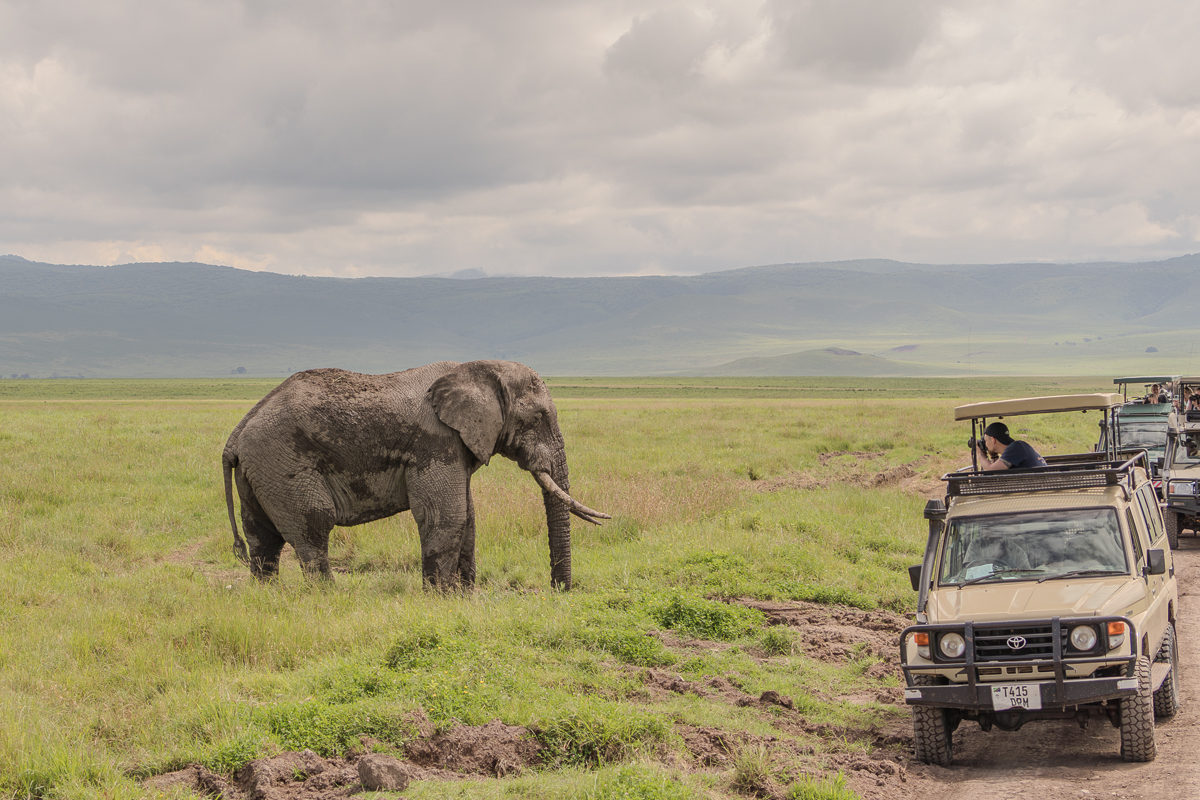
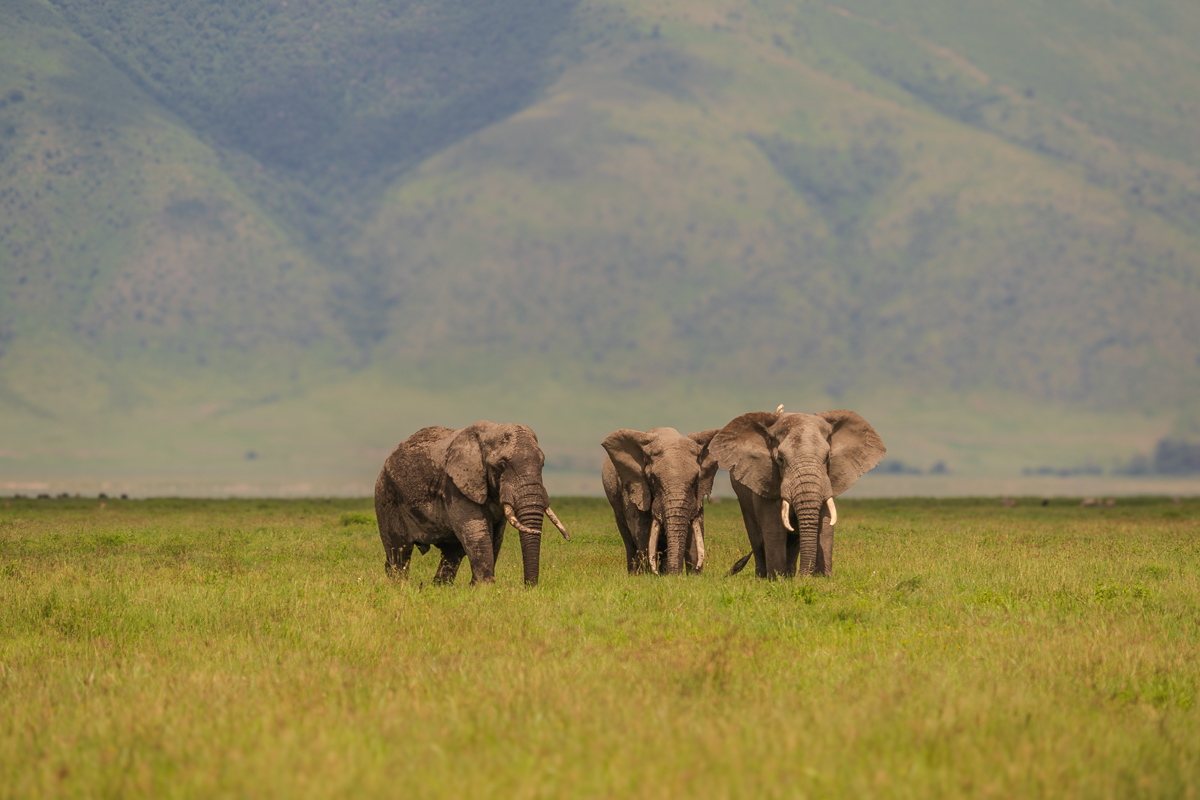
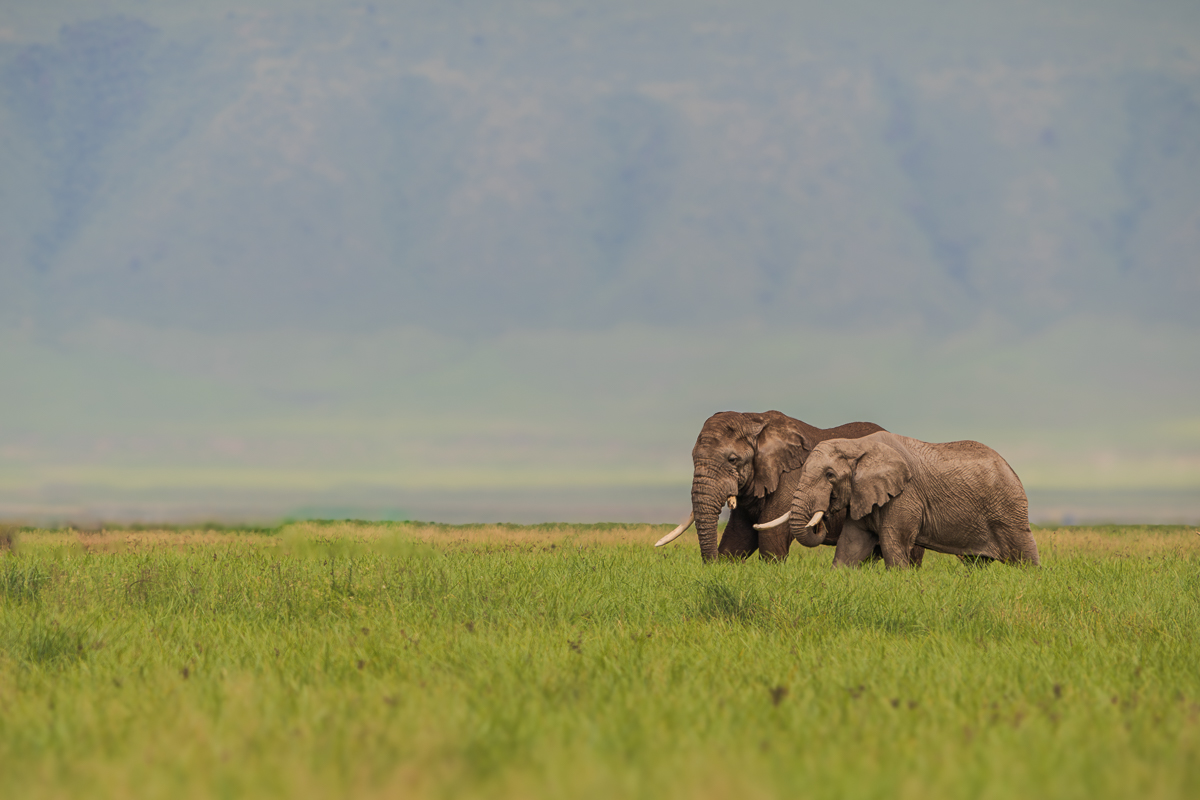
Even elephants, the largest animals, try to camouflage themselves. While editing photos, I caught it. The elephants stood still among the branches and shadows, their trunks straight down like trees. Failing that, they are not shy when threatened. They trumpeted a male elephant who intruded on a family mud bath. They trumpeted our vehicles, too, and we moved on, no match for a riled elephant.
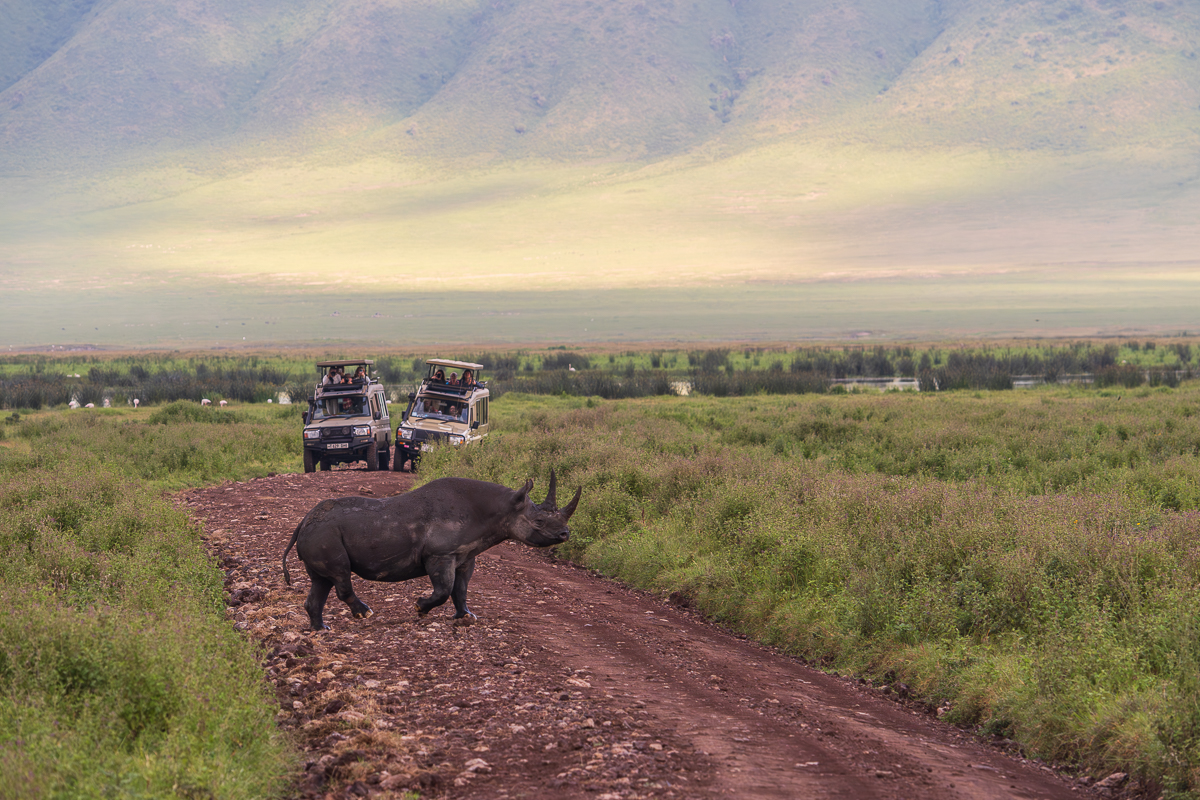
We encountered a rhinoceros crossing the road in the Ngorongoro Conservation Area. Sadly, many rhino species are critically endangered due to poaching for their horns, as the elephants are for their tusks.
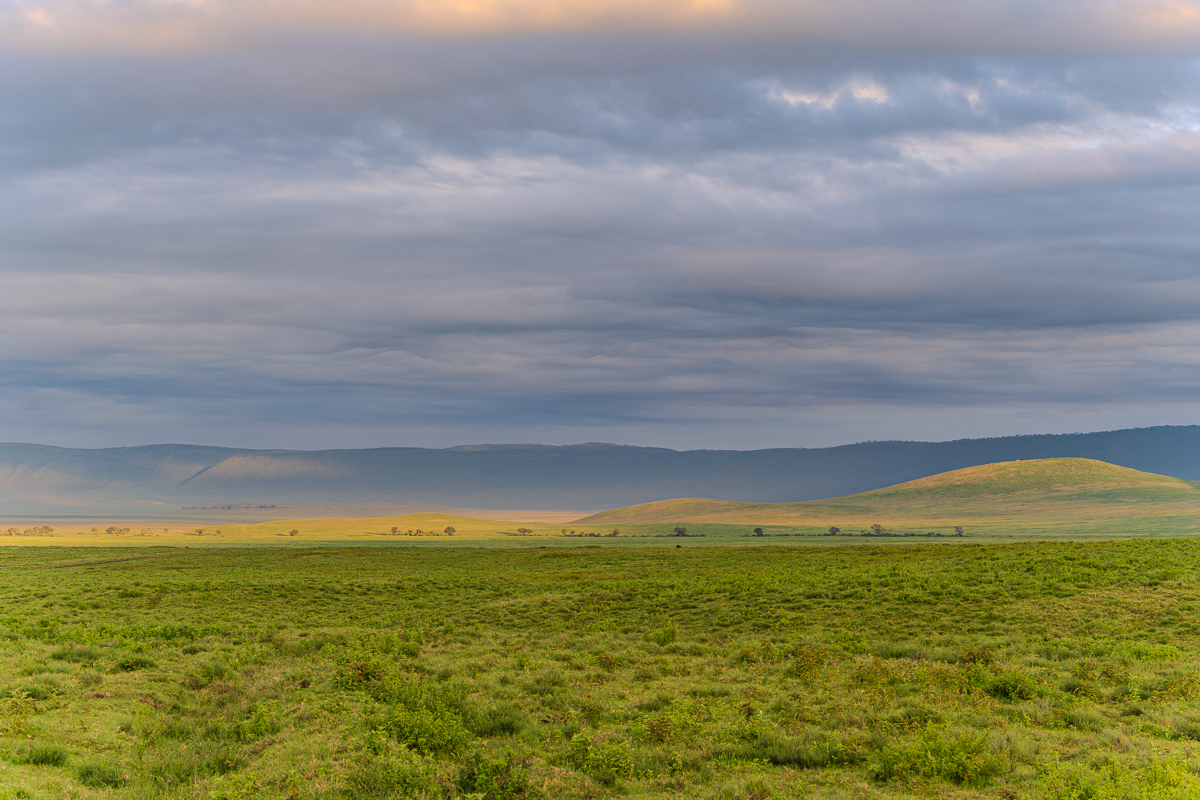
Other animals in the Ngorongoro Crater include elephants, lions, hyenas, and buffalo. The volcanic caldera is a protected UNESCO World Heritage Site.
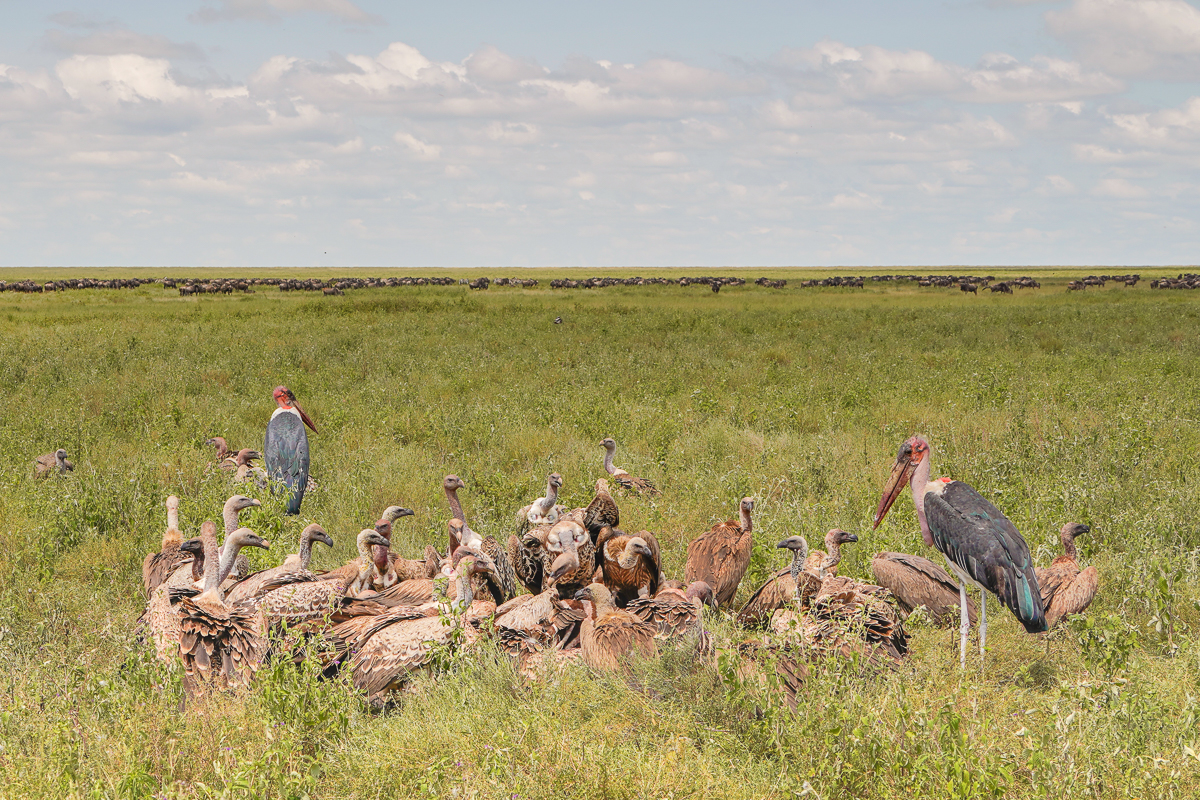
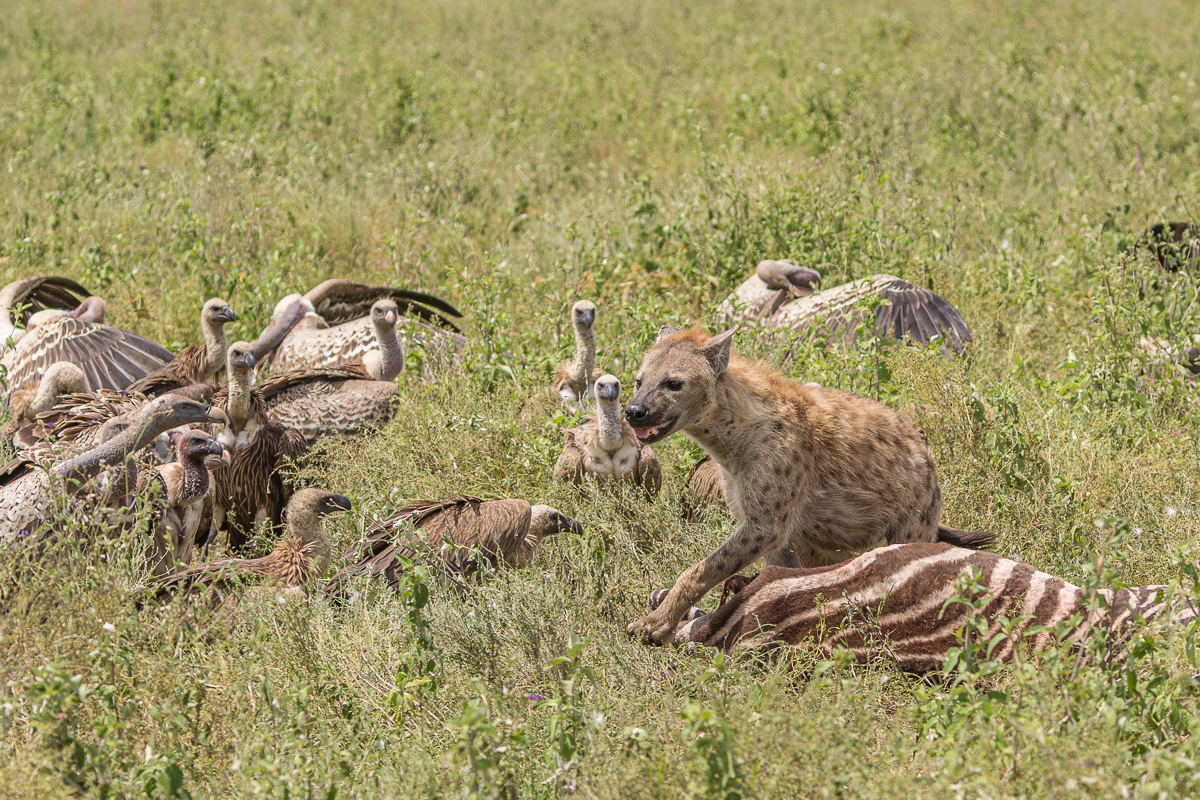
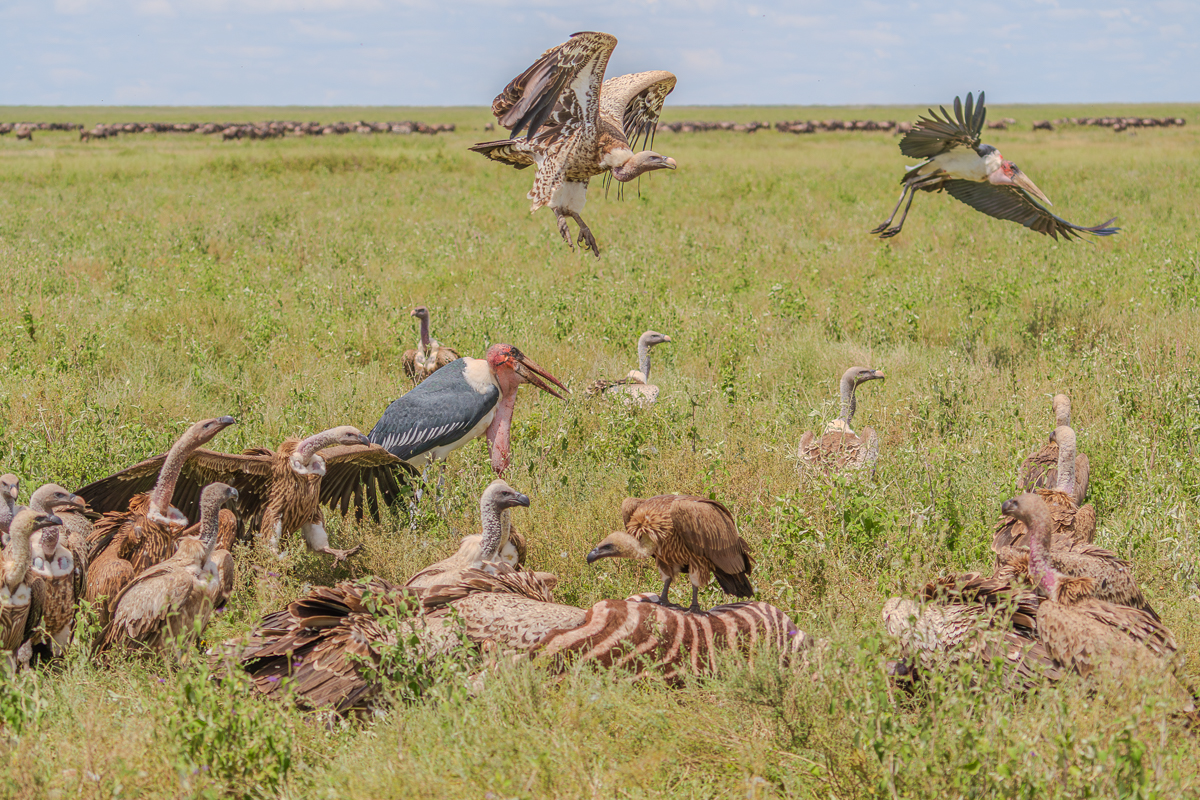
Hyenas seemed omnipresent across the plains. Usually nocturnal, they were always watchful, either for a meal or for competing predators. Vultures covered a fallen zebra in a pecking order arranged by their size and the strength of their beaks. Storks looked on like waiters at a dinner party. Incapable of tearing the meat, they waited for scraps. As they do for all larger predators, the bickering vultures reluctantly stepped aside when the hyena moved in. Even this poignant scene doesn’t deter my love of the wild.
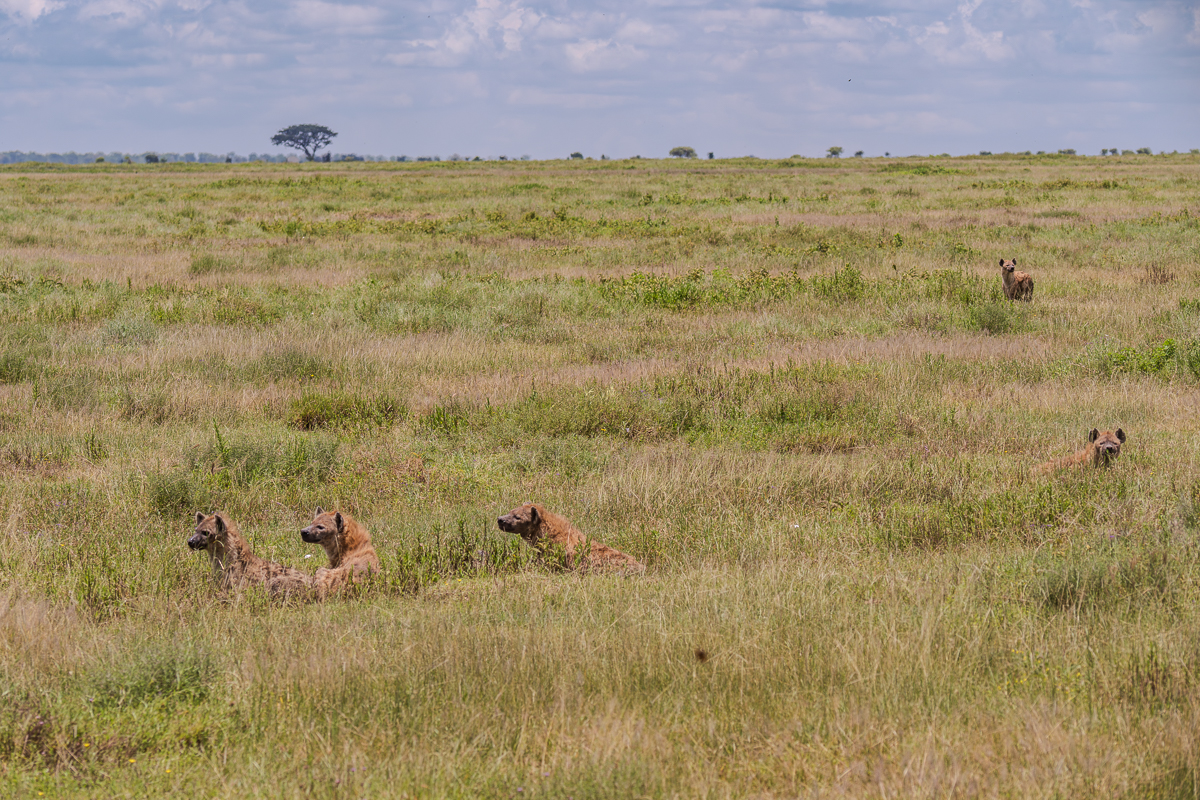
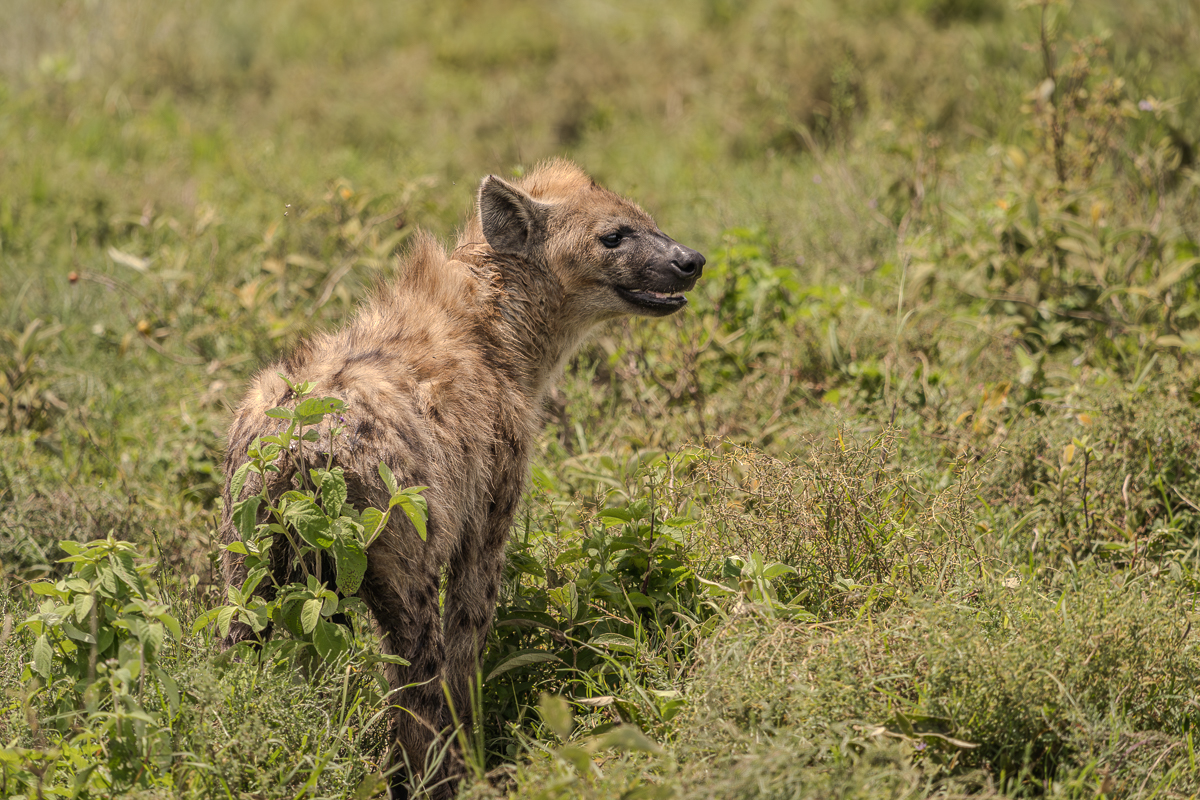
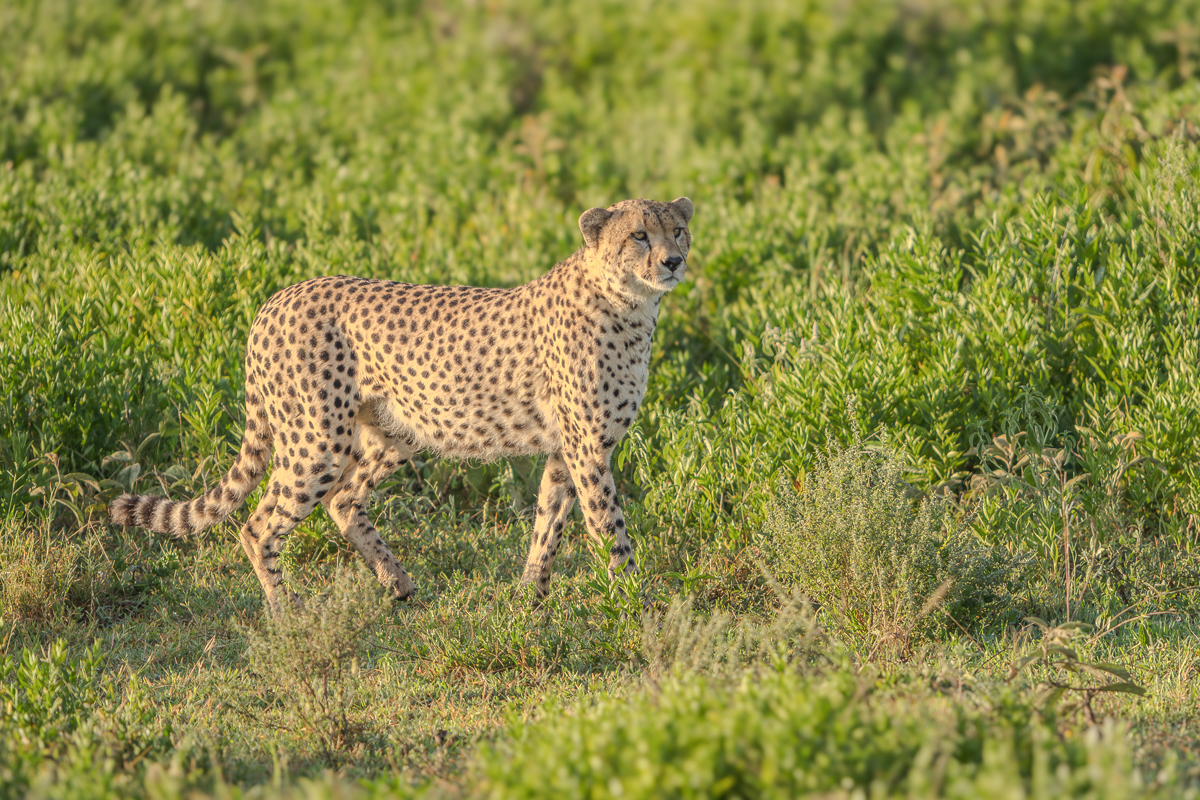
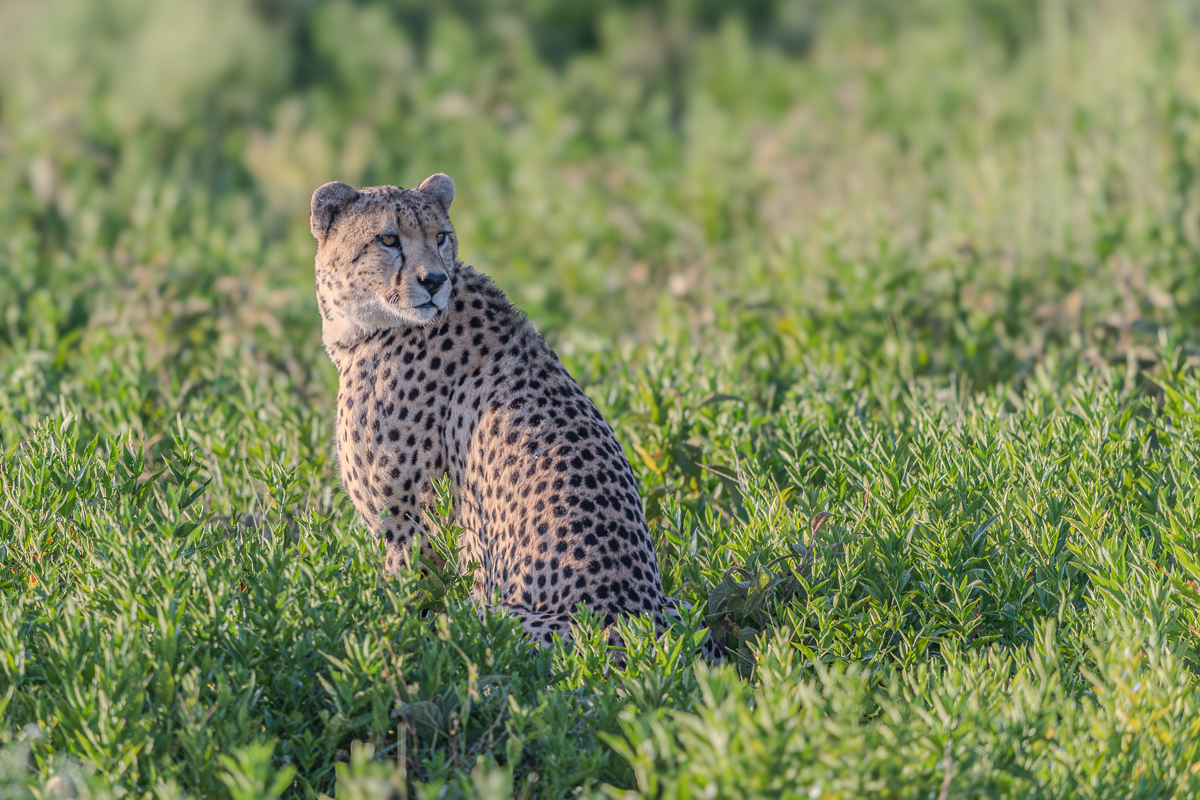
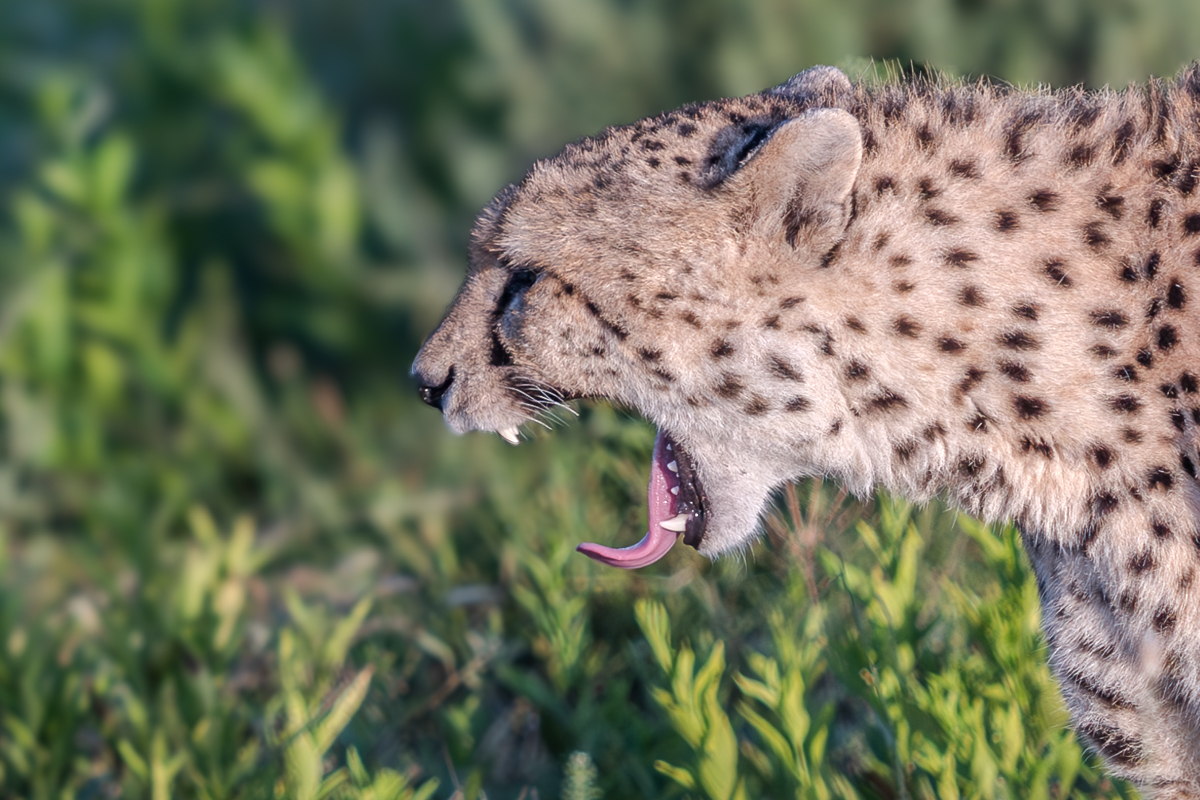
Carnivores like lions, leopards, cheetahs, and hyenas are always nearby, alert for food sources and the potential for mating. They influence the activity of the other animals.
Young male cheetahs have many lessons to learn. We encountered two of them in pursuit of a female. As they raced across the plains from different directions, the female ran into a thicket, growling in a high pitch. The two cheetahs paced around, growling. Finally, one of them jumped boldly into the thicket and promptly jumped back out. The female was not quite ready for romantic advances.
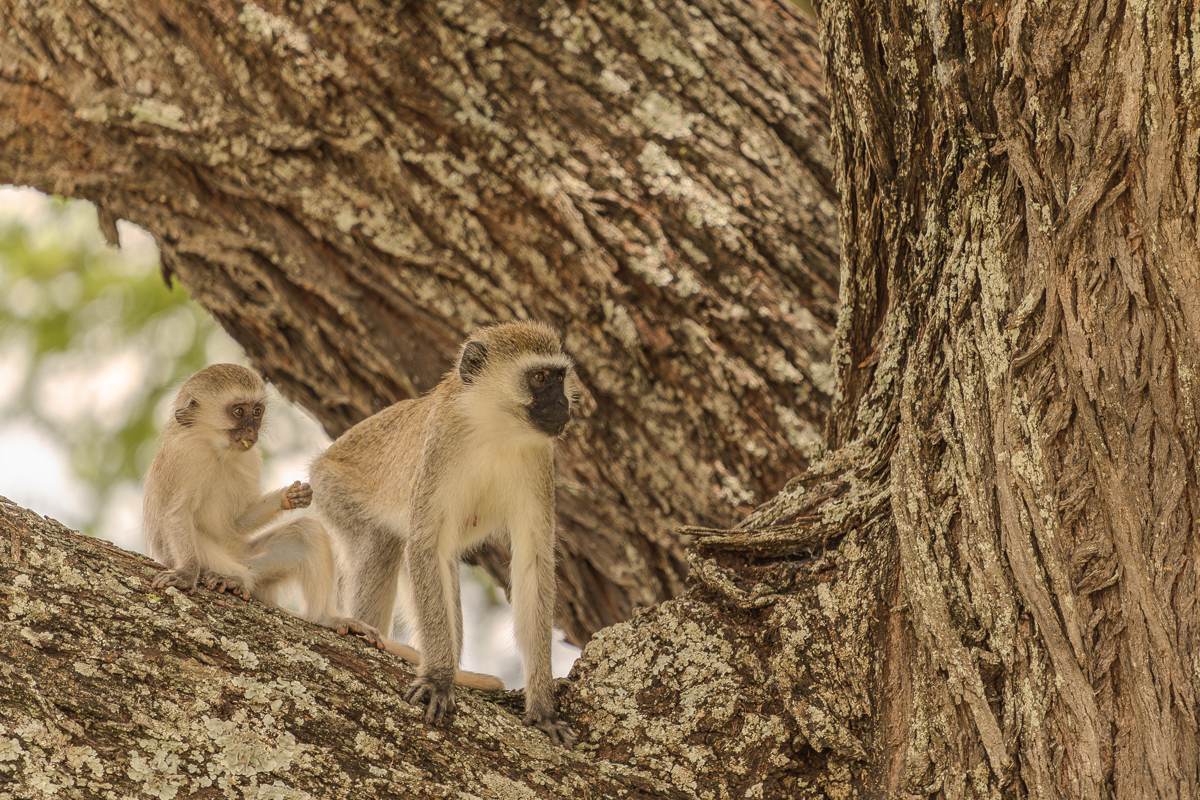
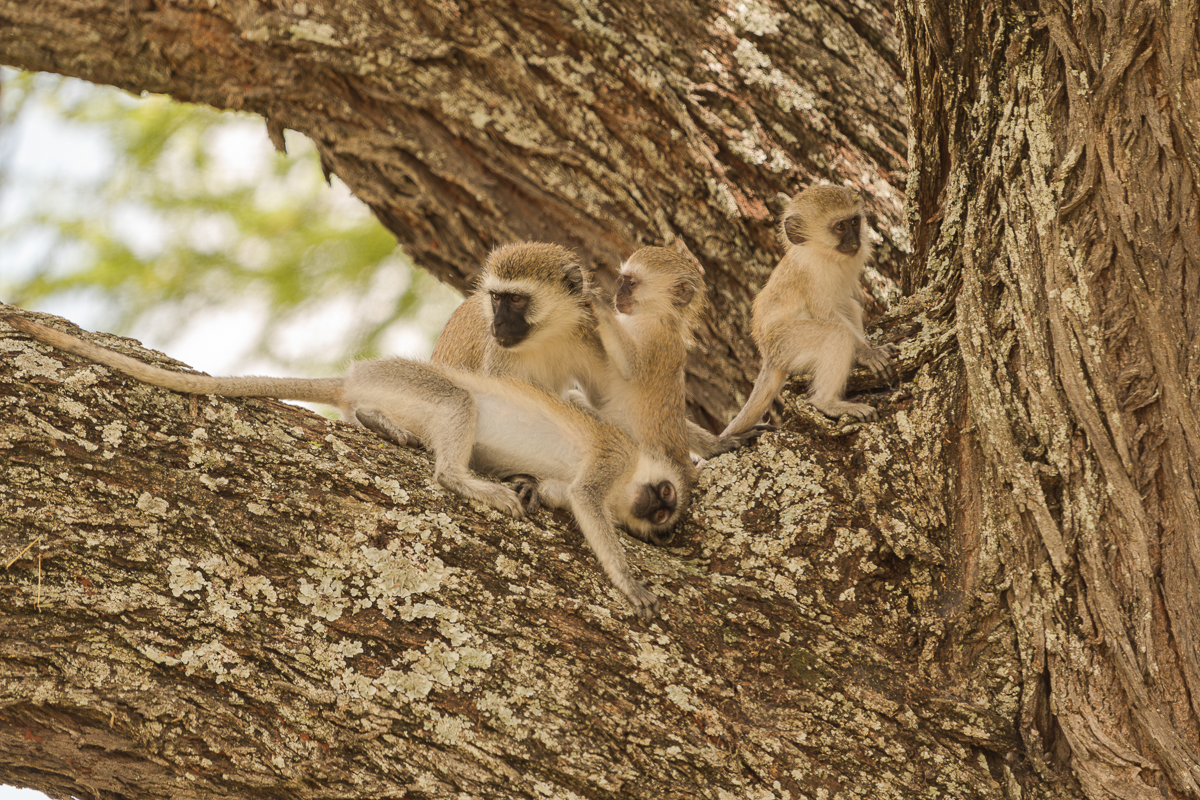
Monkey life is the epitome of creature comfort. High up in the trees, a mother groomed a baby, then the baby groomed the mother. In the meantime, a third monkey came over, lay down before them, and waited his turn.
My love of the wild had me looking for even the most unpopular creatures.
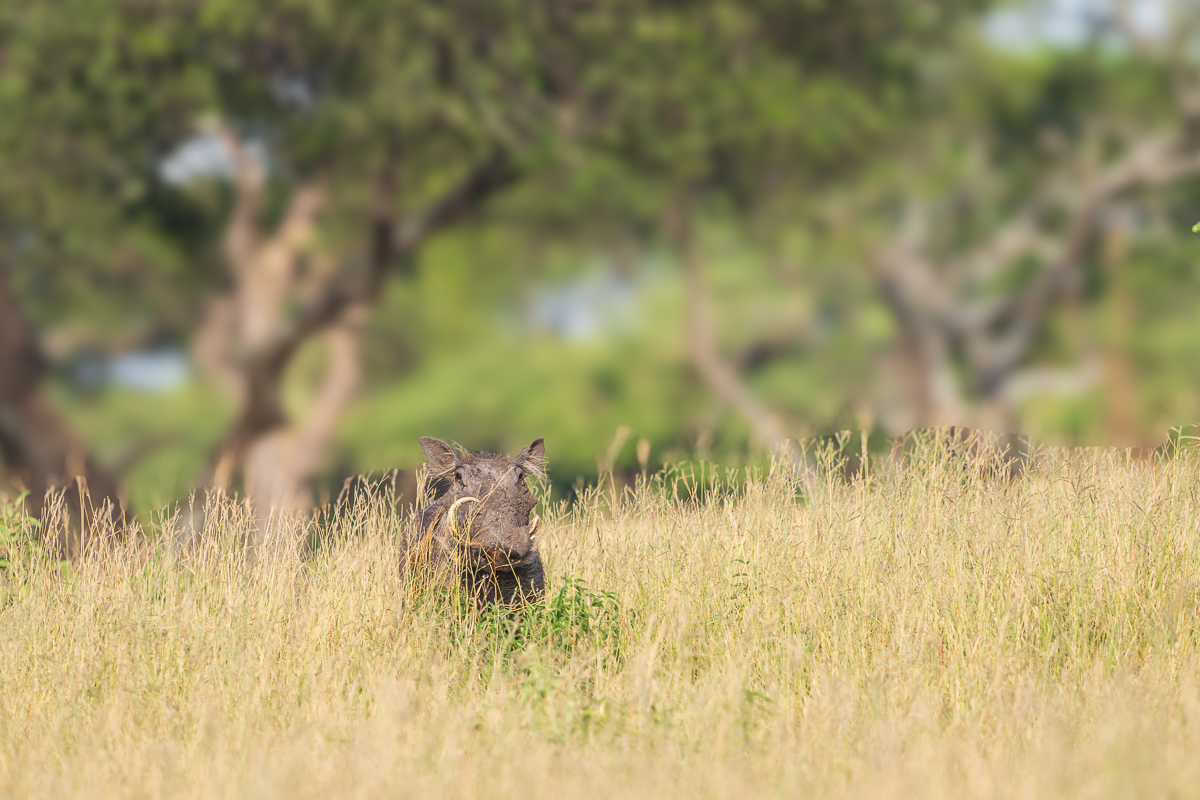
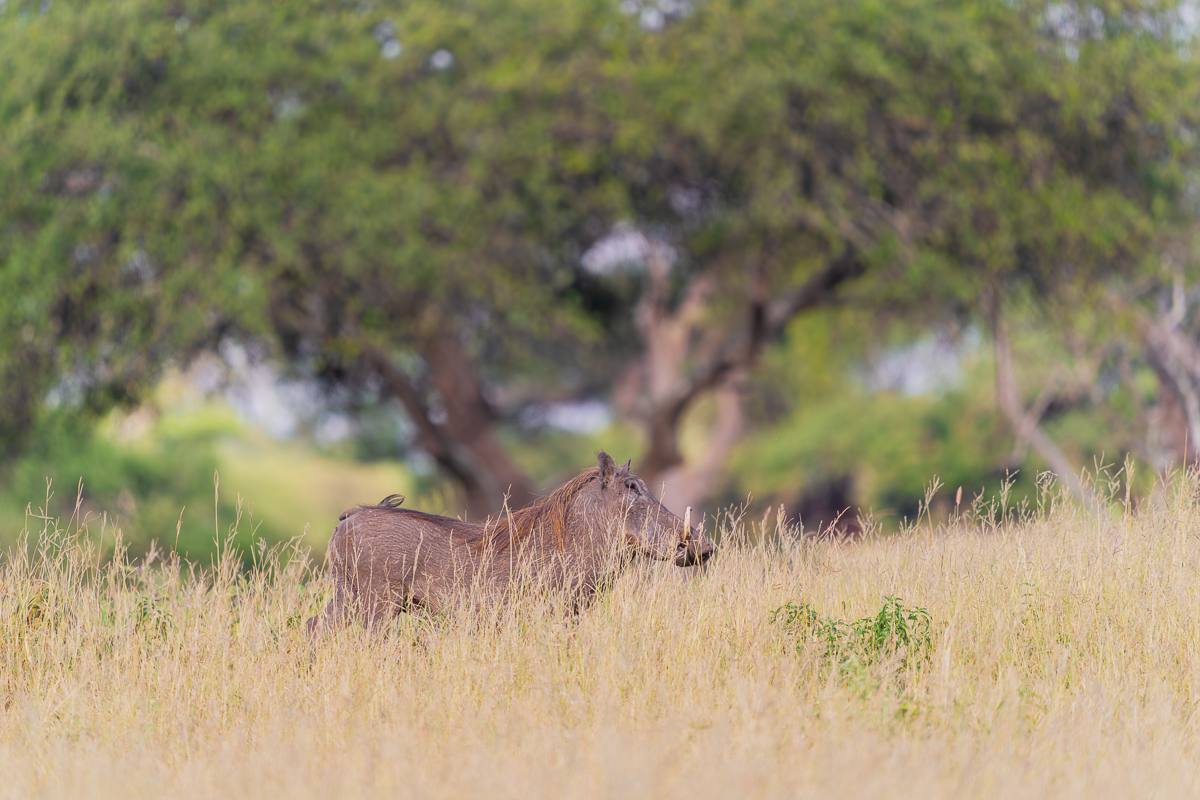
The French word jolie laide perfectly describes the warthog. It means attractive despite not being conventionally pretty. As we say it, he is so ugly that he is cute! One day, we saw a sounder of wild swine trotting down the road in front of our vehicles. I couldn’t get a picture, but I got a few images from a distance later. The warthog’s name comes from his warty facial features, but check out his handsome profile on the next slide.
Birds
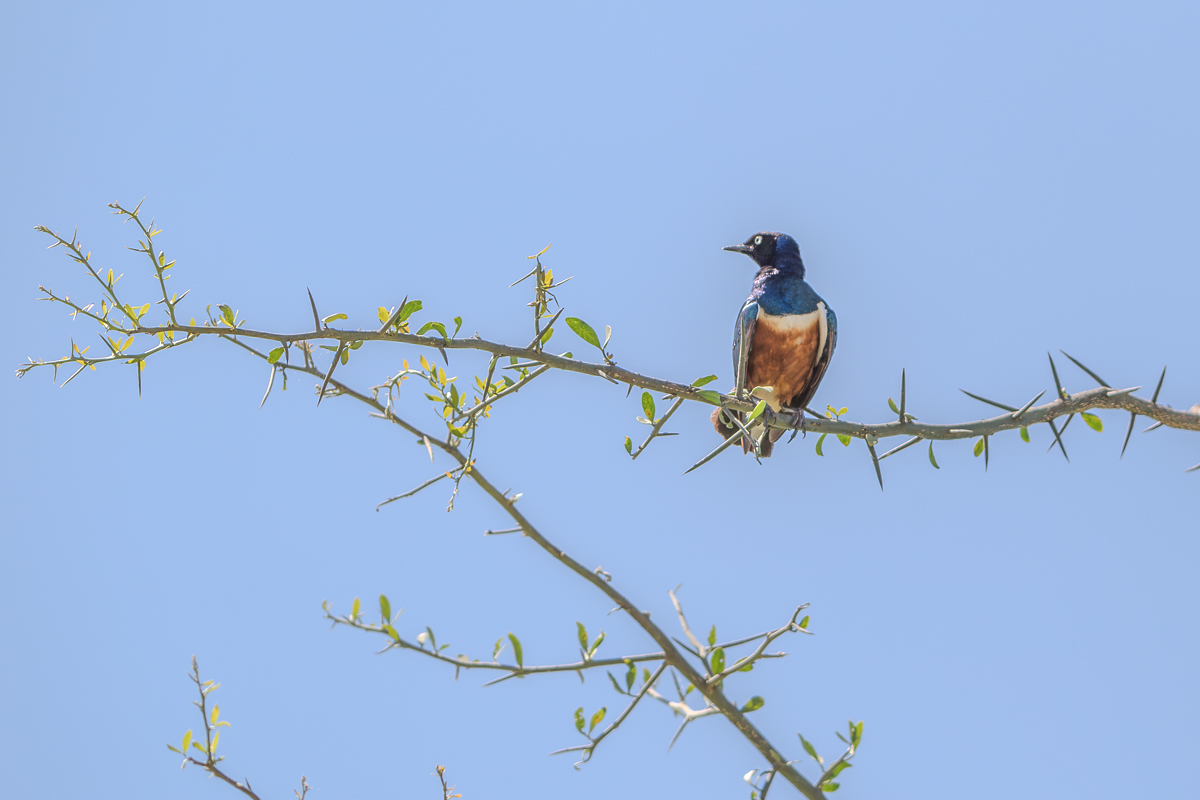
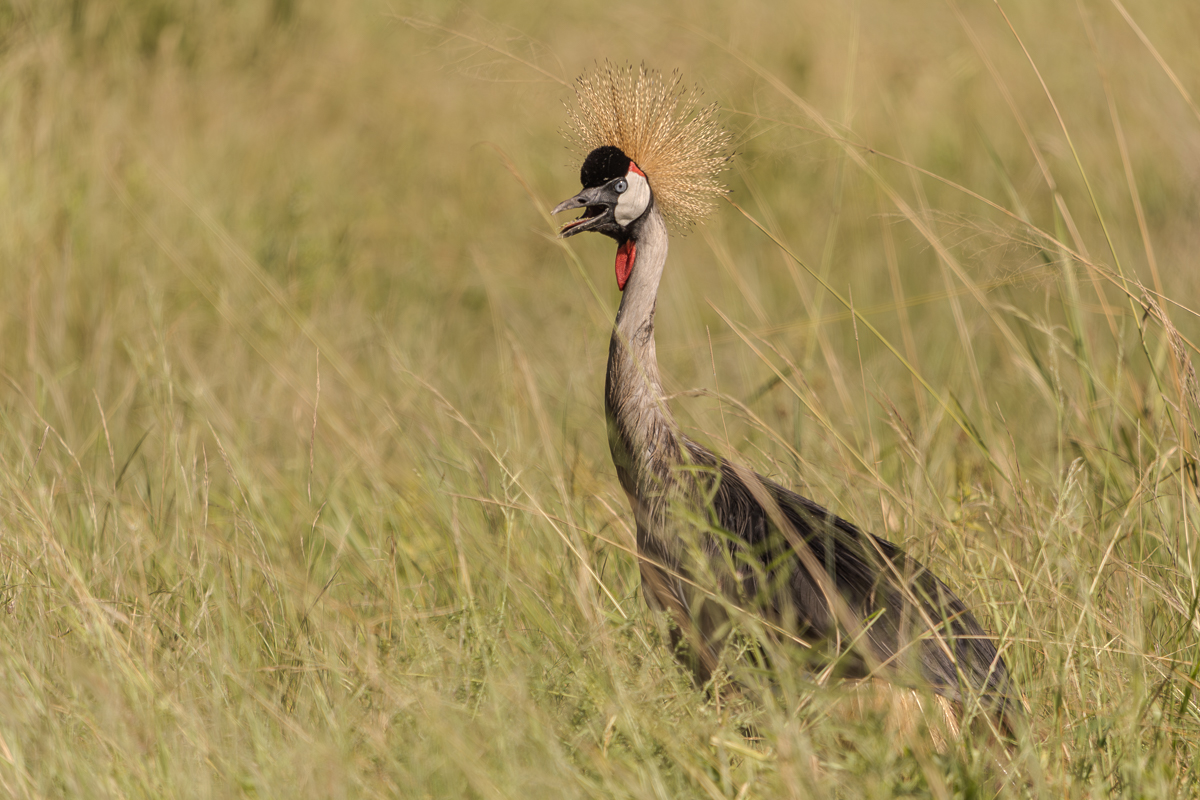
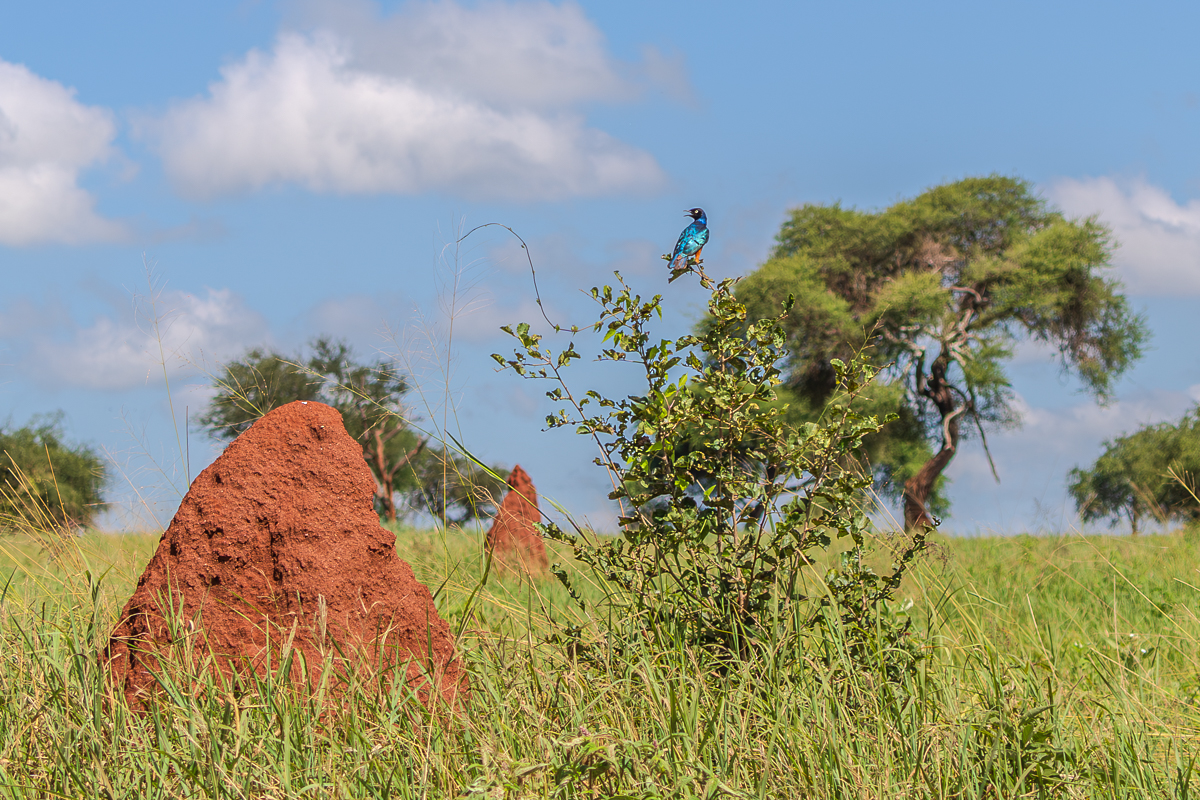
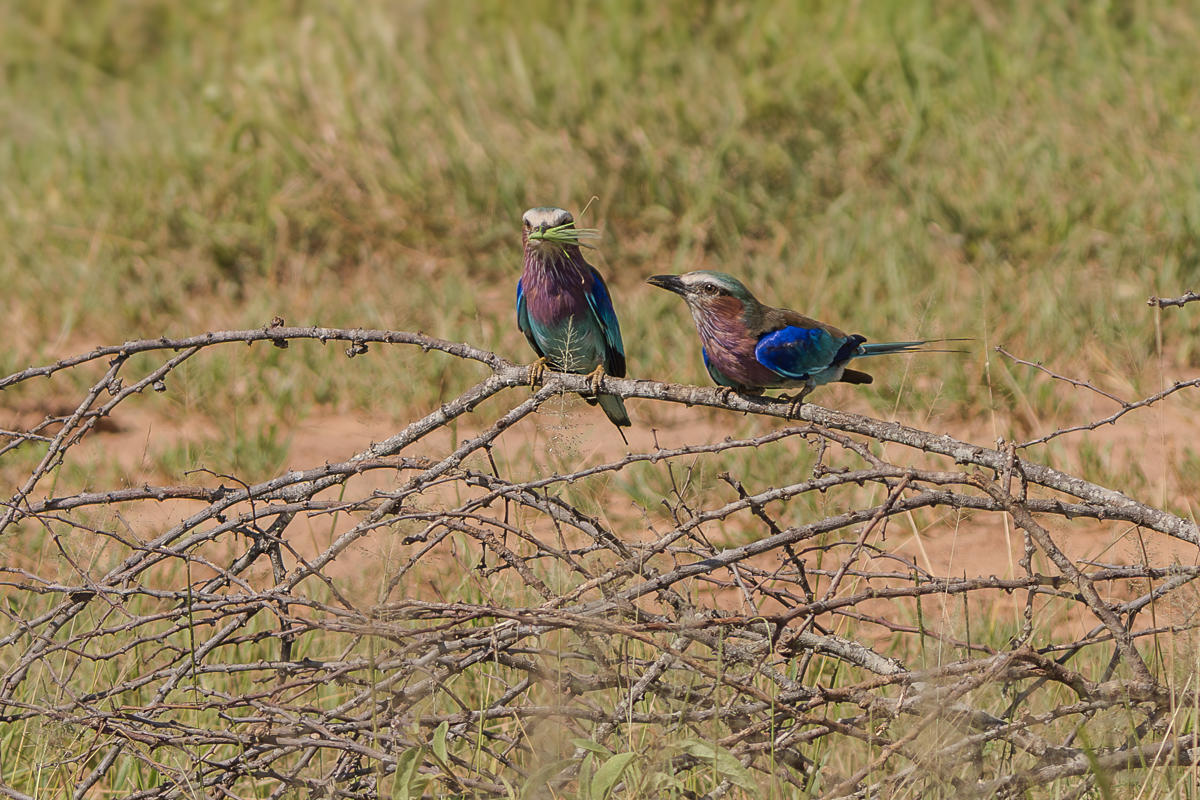
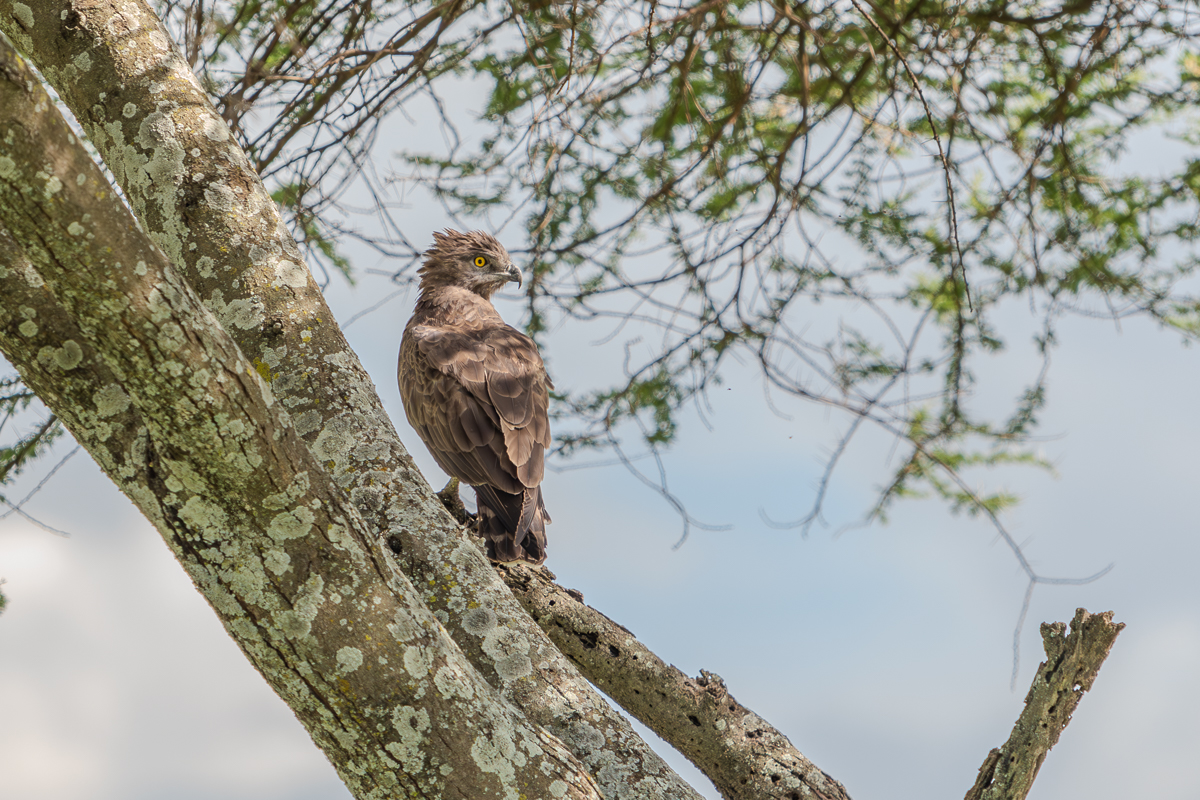
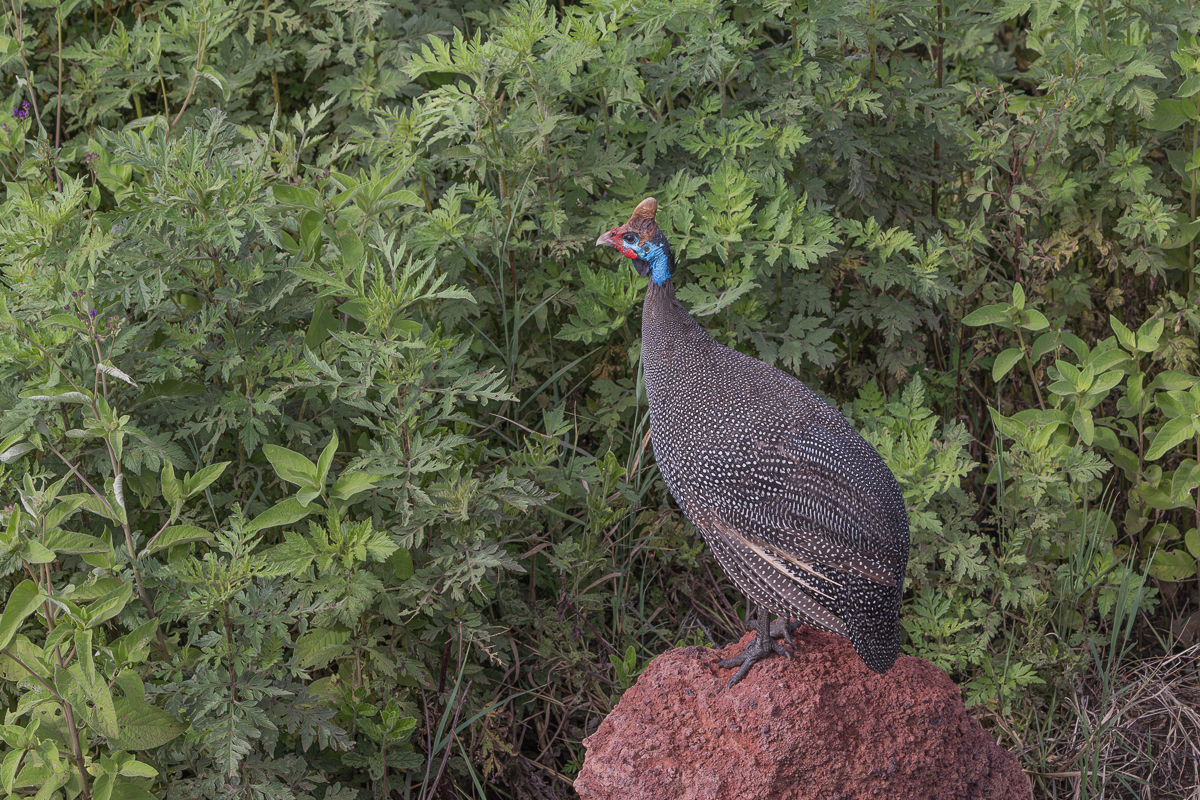
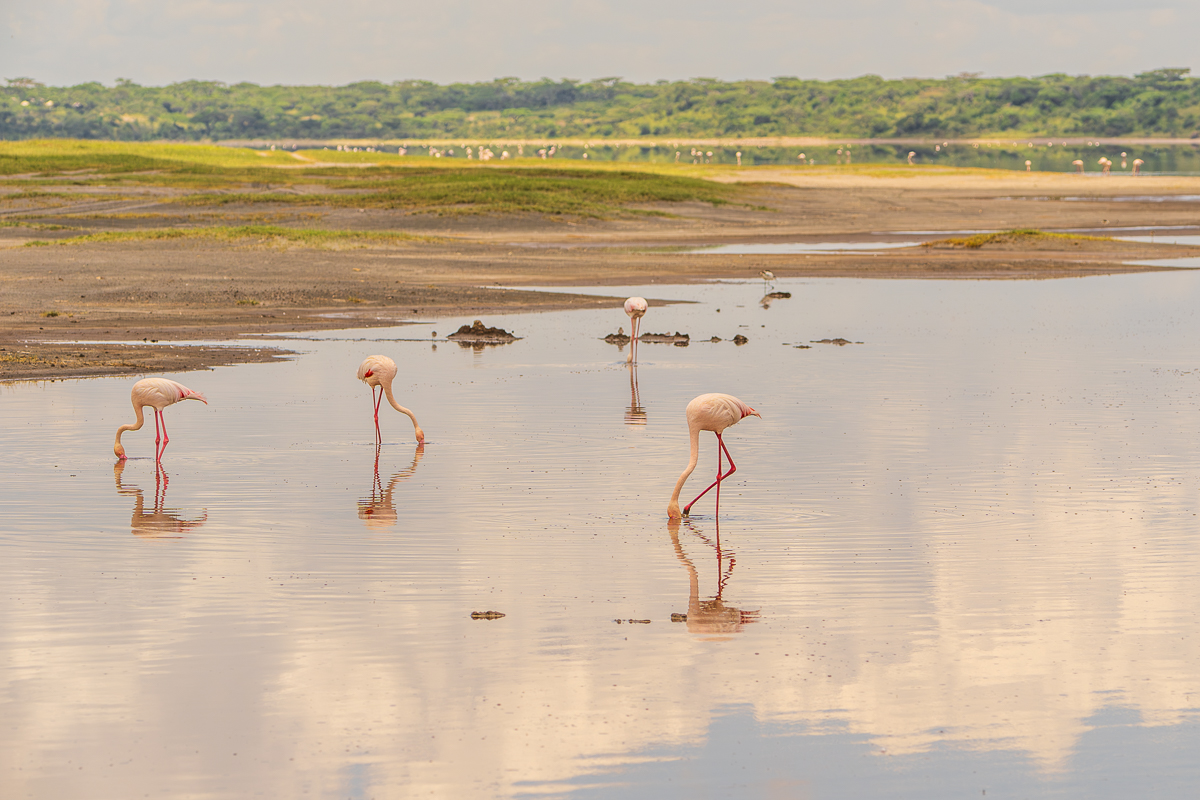
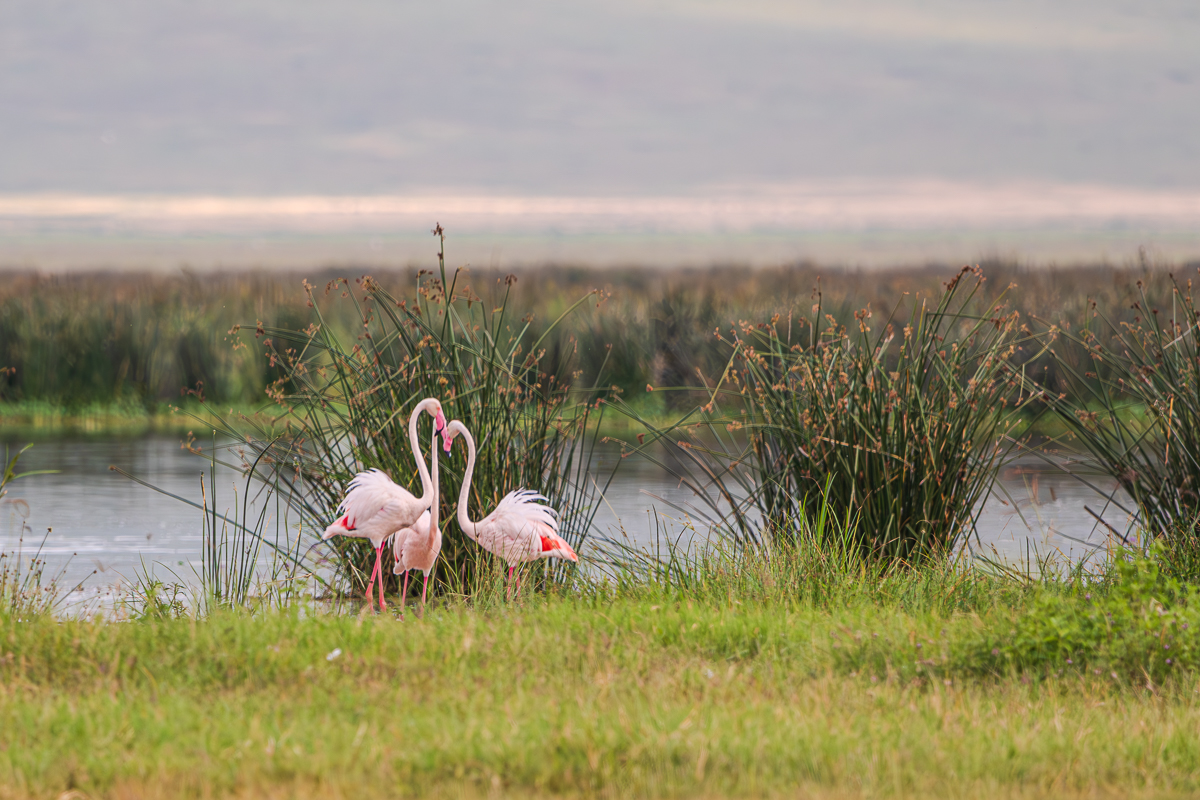
We were on the go, and I had my camera’s three custom buttons set for action, landscape, and low light. Occasionally, we got the chance to capture pictures of birds, and I was lucky to get a few. With a long lens, I’m constantly amazed at the surprising things I see. It gives me an even greater love of the wild.
Travel Notes
My first experience seeing large animals in the wild was in South Africa. We saw Thandi, the poster child for rhino poaching. Thandi miraculously survived a poaching attack and continues to live in the wild. See my story “I Saw Thandi.” Rhinos and elephants are being poached to extinction. In 2018, the last northern male white rhino died. His caretakers affectionately referred to him as Sudan, and his story caught the world’s attention.
People
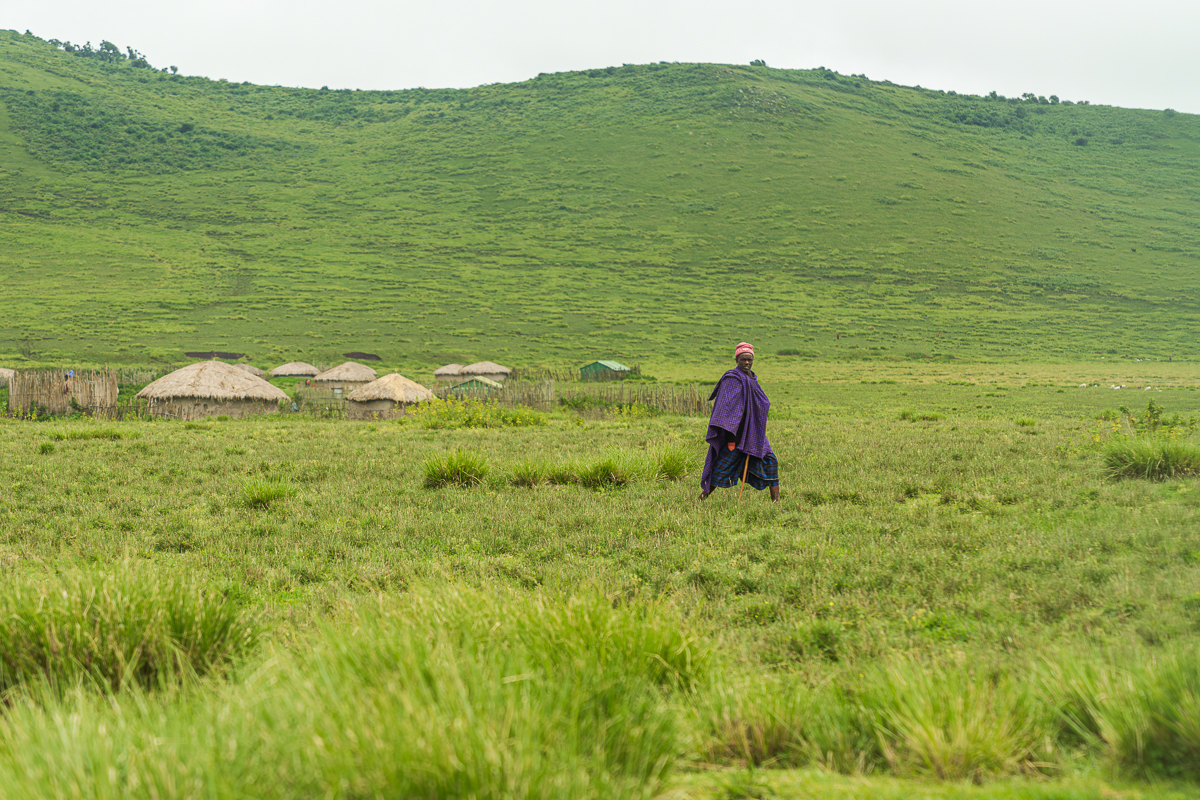
Interacting with people is an enriching travel experience. Along our route, the Maasai people were ready to negotiate the sale of beautiful handcrafted jewelry. Their homes are round structures called Enkaji. These form a Boma, which is a circle around a center. It protects people and livestock from predators. Even with large predators, they find a way to live in these extraordinary landscapes.
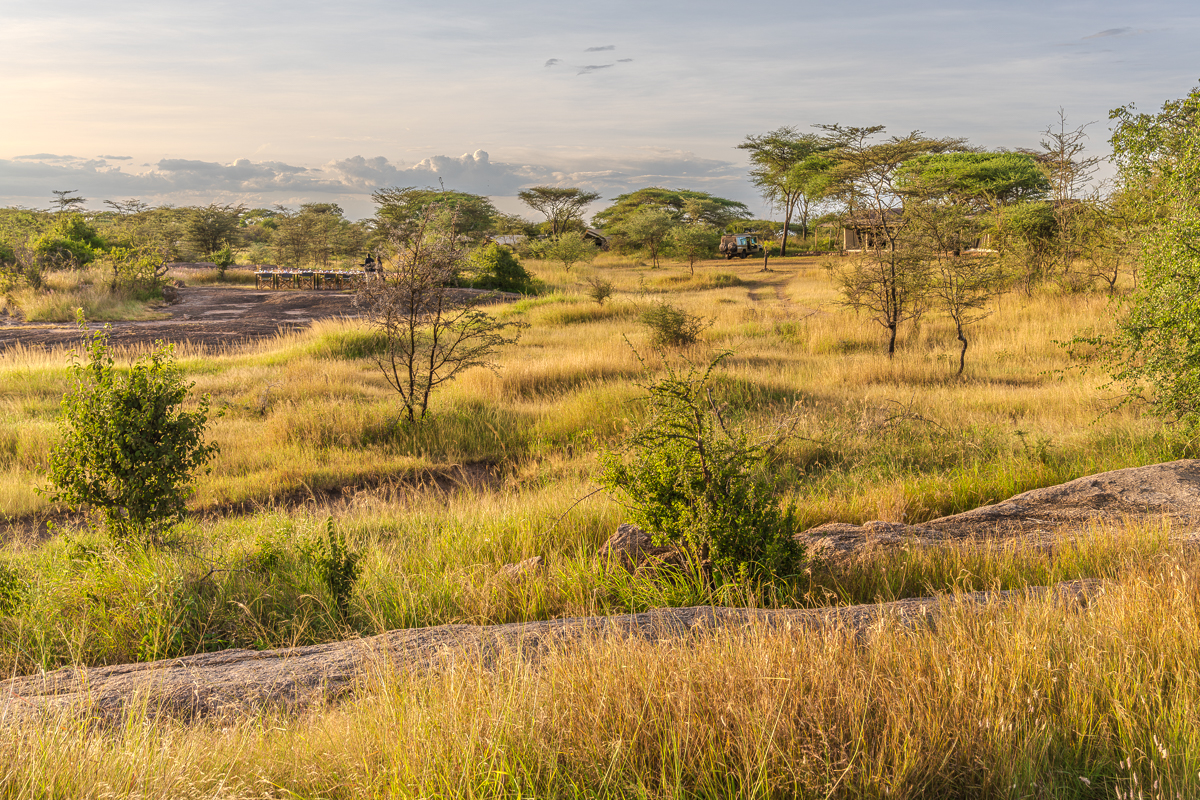
At night, escorts walked with us to and from our tents at the bush camps. I felt safe but wondered what would stop a hungry lion.
Hadzabe Bushmen
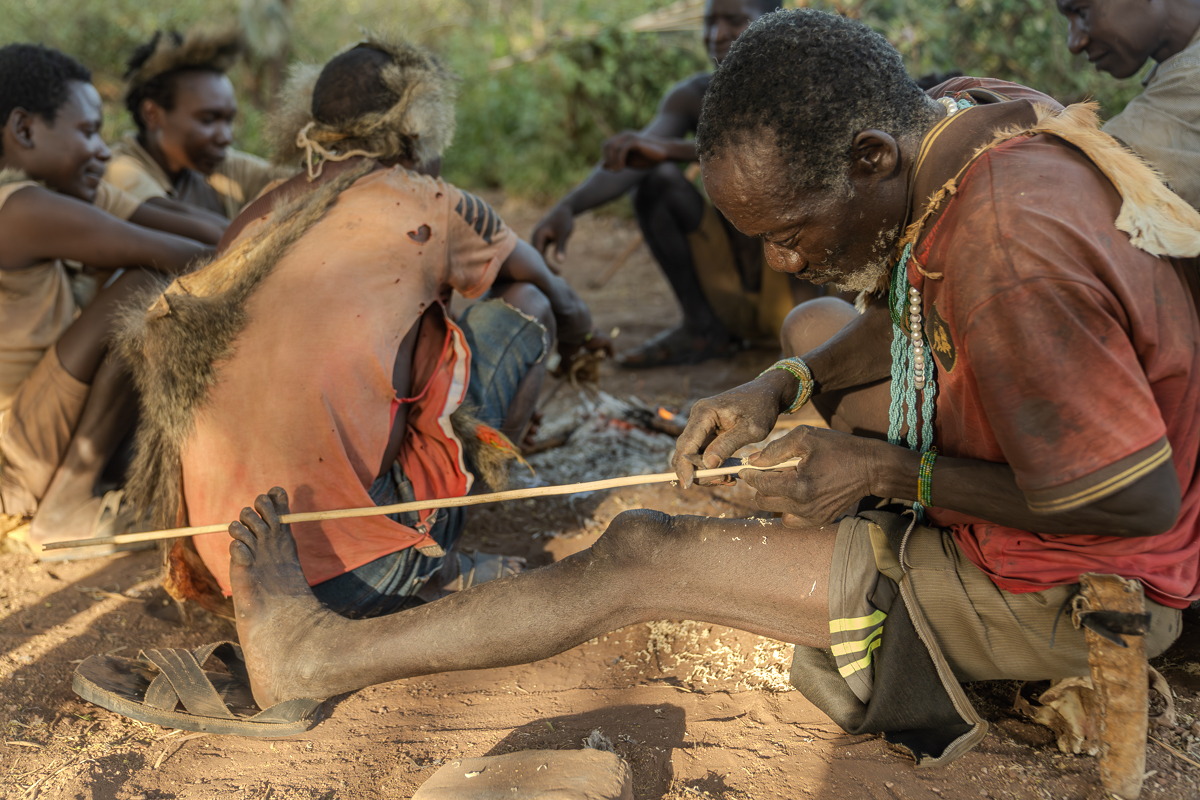
We hunted with the Hadzabe Bushmen and found a dik-dik. They deftly cleaned the animal, blazed a fire from sticks, cooked, and ate the internal organs. These hunter-gatherers are semi-nomads who cover a 4,000-square-kilometer area, hunting only what they need for the day. They are part of the oldest cultures in Africa, living in their current location for an estimated ten thousand years. Changing little in that time, they continue to reject possessions and leave a light footprint on the Earth.
After rising from their shelters of dried branches and grass, the Hadzabe warmed themselves with small fires. The men are skilled at making arrows and other hunting tools. Women create beaded jewelry to wear and sell to tourists. Through an interpreter, an animated Bushman described how they use various arrow tips to hunt large and small animals. They often use popping and clicking sounds in their language, which is a fascinating mystery to outsiders.
Hadzabe children welcomed us by bumping fists, a post-COVID-19 greeting. Like all children, they love seeing pictures of themselves on cell phones.
After our visit, members of our group reflected on philosophical questions. Is it beneficial or detrimental that our encounters impact other cultures? Will the Hadzabe people make it another ten thousand years? Is change not inevitable now? Doesn’t the meeting also change us? Should we use pictures on social media? Pondering these questions, I decided against using images of children, even though they are beautiful. Instead, I tried to convey the story with the people’s faces wholly or partially hidden or at a distance.
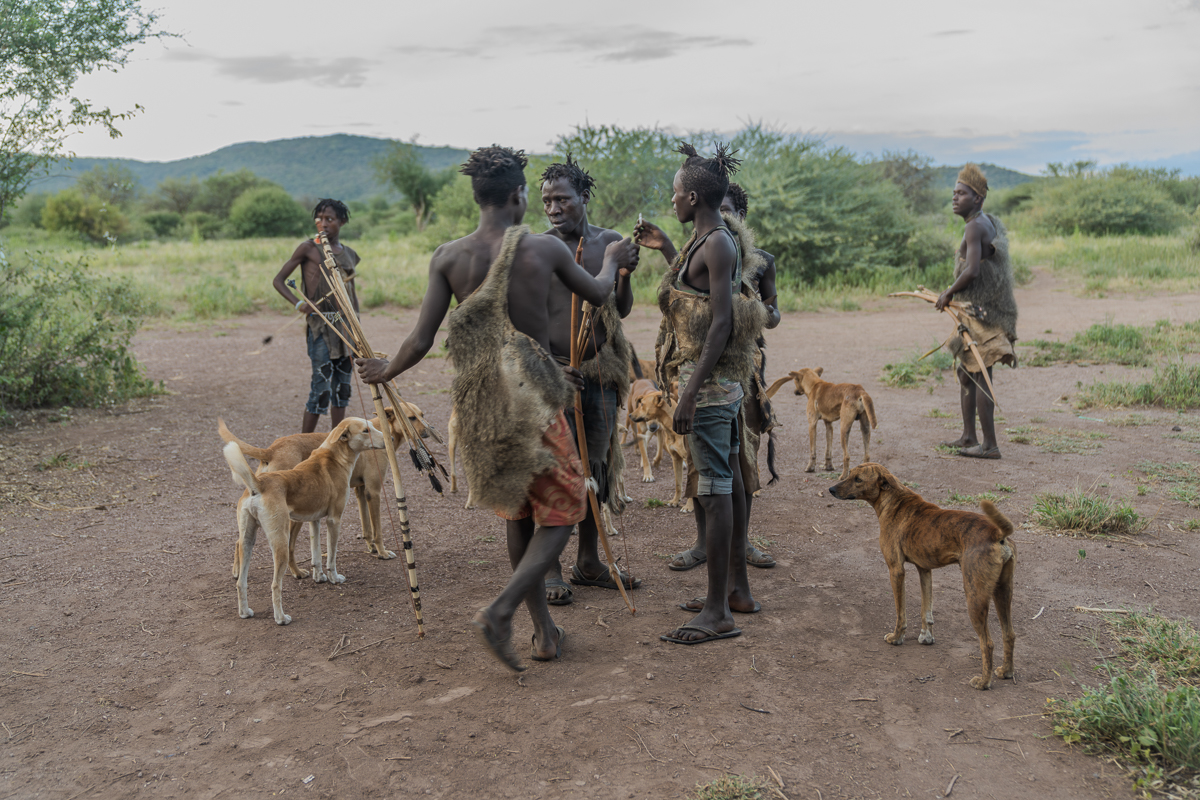
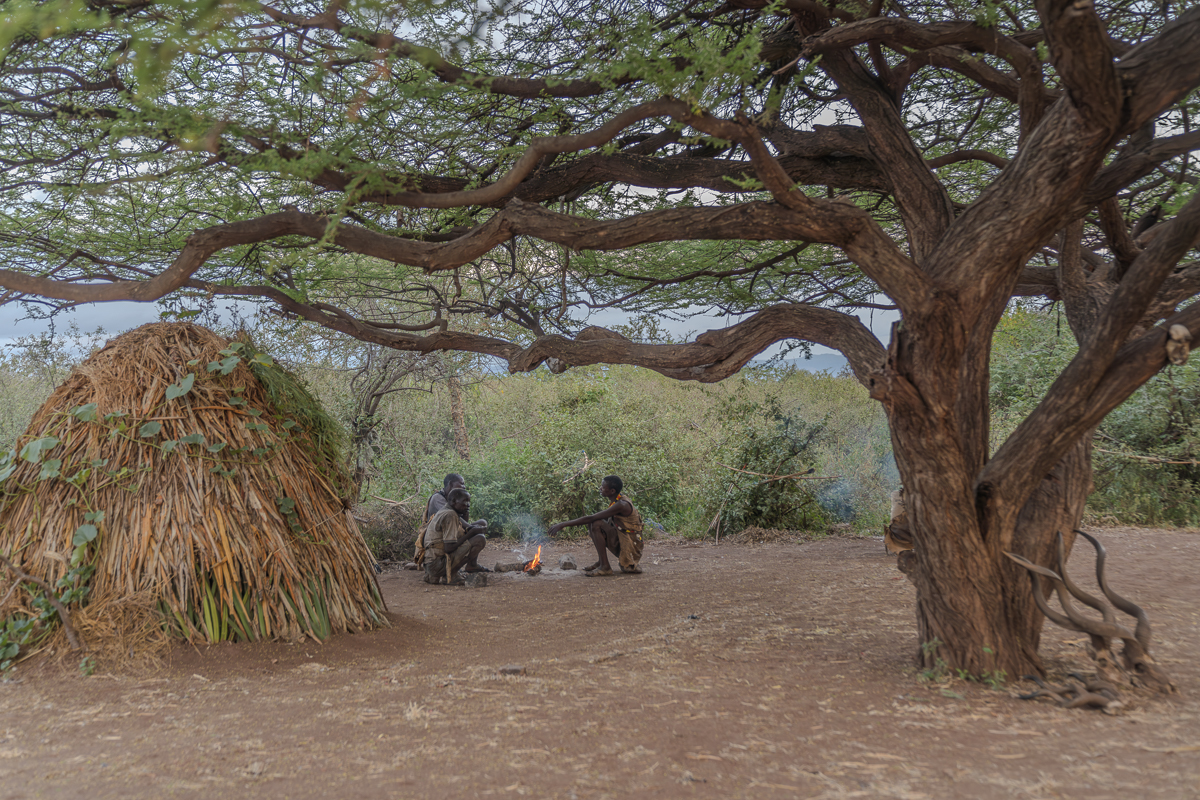
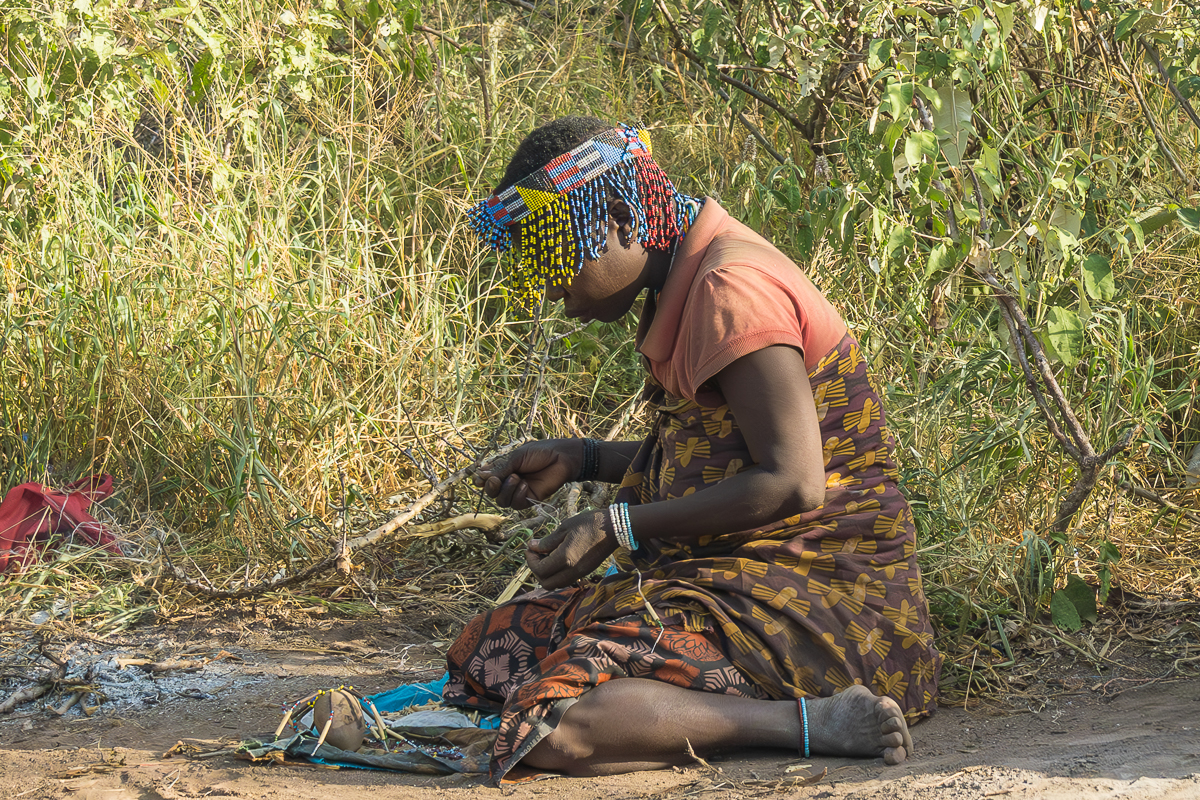
Information about the Hadza comes from The Nature Conservancy, “Stories in Africa The Hadza.”
Datoga Tribe
Talented blacksmiths and craftsmen, the industrious Datoga people turn scrap metal into stunning jewelry and precision hunting tools. The bracelets are formed to a perfect, pliable consistency so the wearer can close and open them around their wrist.
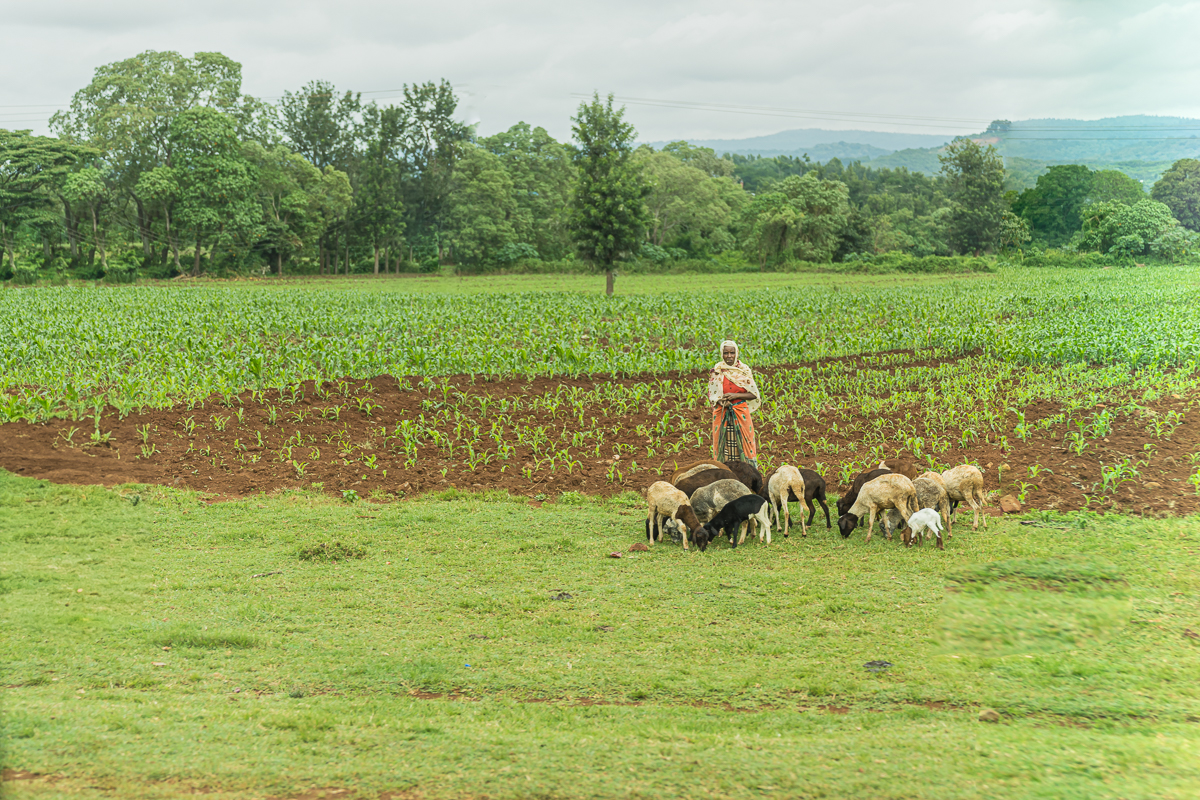
Datoga are semi-nomads who descend from another long line of warriors. They live in mud huts reinforced with branches. In addition to Blacksmithing, they tend livestock, including cattle, goats, and sheep.
A relaxed discussion with the Datoga women revealed more about their customs. Their tradition continues with male authority over social and political life. They have multiple wives who live in separate rooms and raise their children as siblings. We wanted to know what women look for in a potential mate. They look for intelligence, good looks, and strength, which they want to see carried into the future. Sounds familiar, huh?
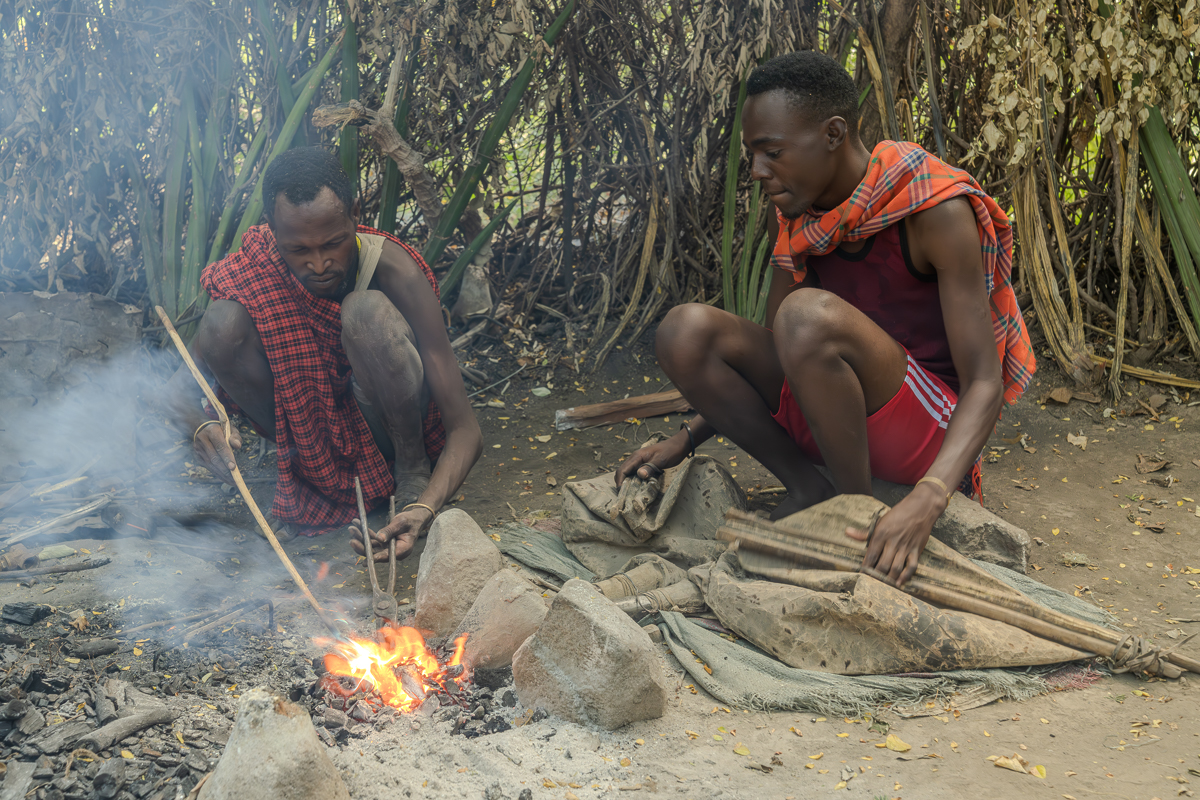
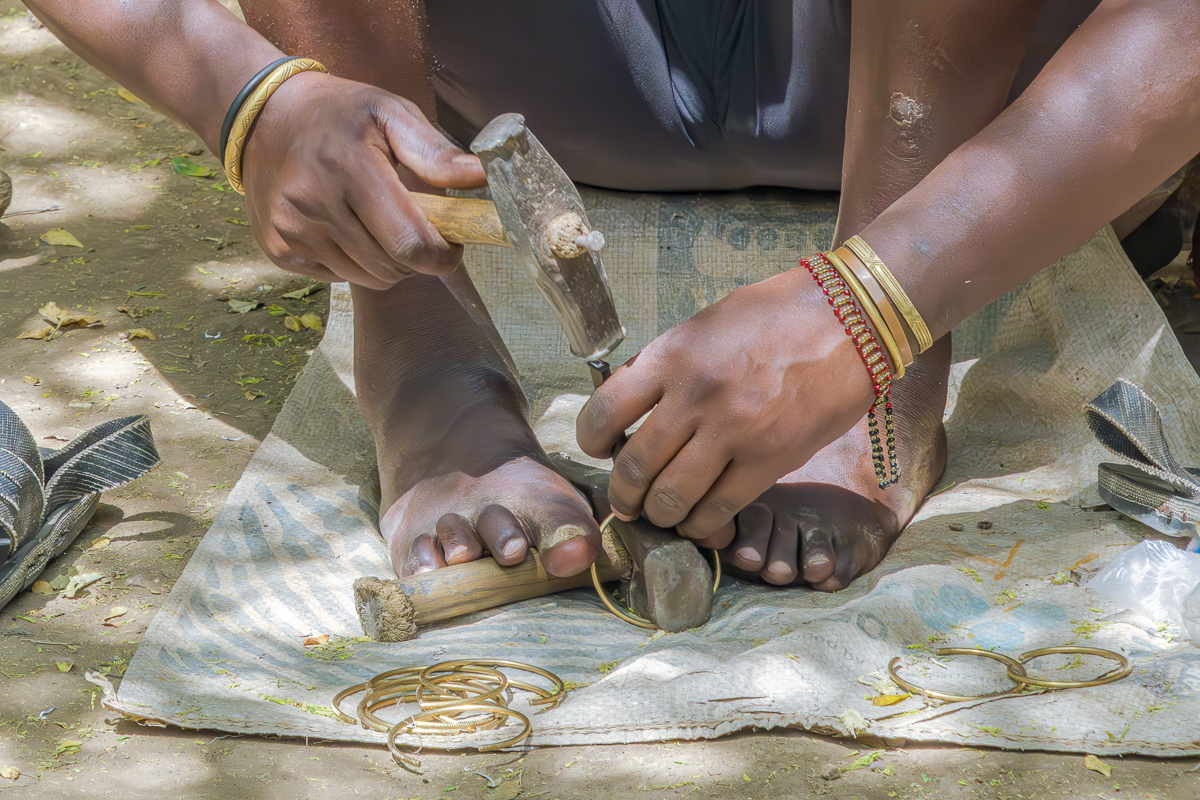
Information about the Datoga Tribe comes from “Africa 101 Last Tribes.”
Our Guides
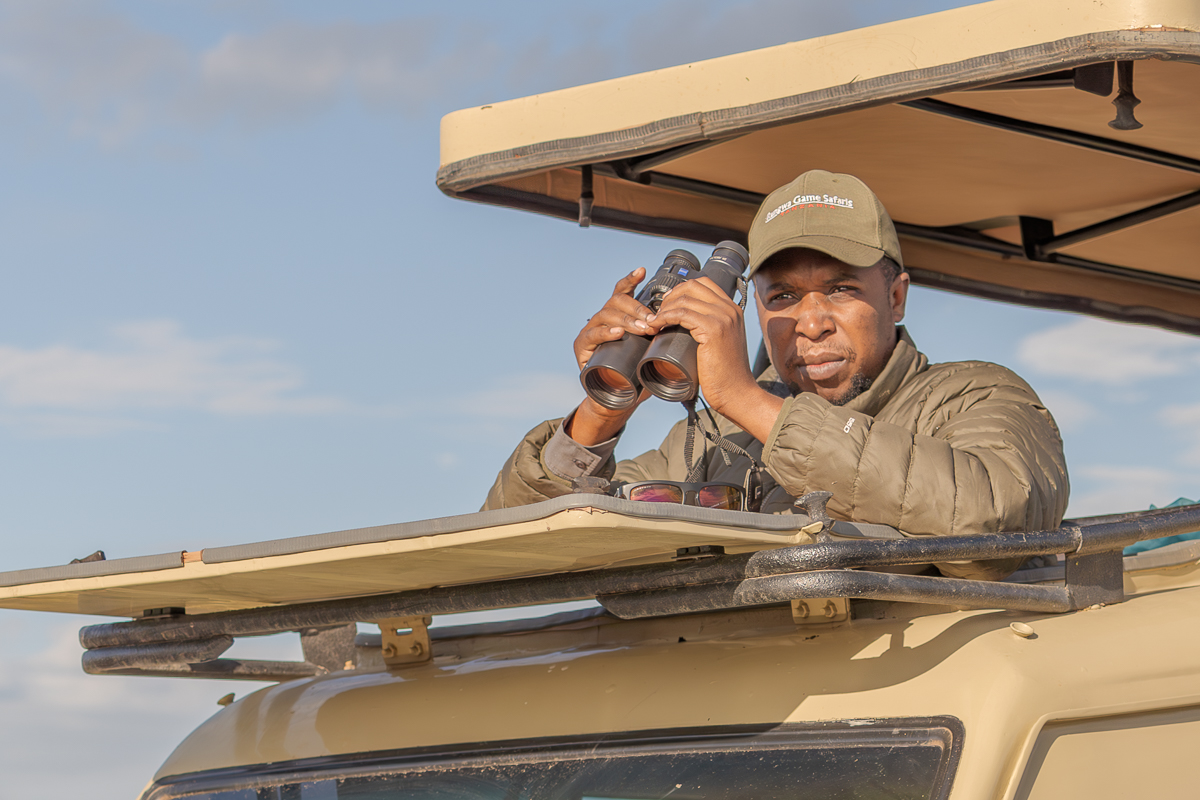
Victor Nyakiriga is the founder and leader of Topguides Safaris. Growing up at the edge of the Serengeti, he learned how to track animals with his Grandfather. These experiences gave him a love and understanding of the wild.
“On a safari, it’s not what you see that matters, it’s how you see it.” – Victor.
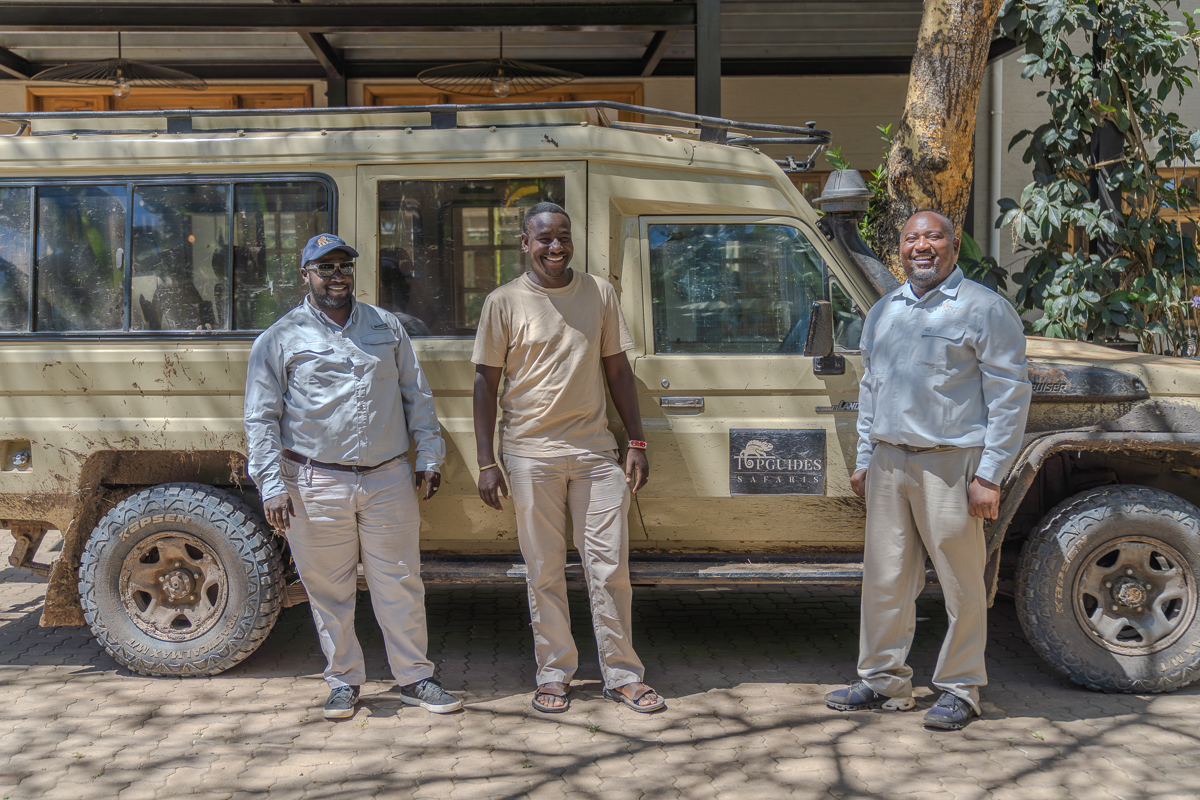
The Topguides team’s self-possessed confidence comes from their vast knowledge of the area and the animals’ behavior.
See Topguide’s luxurious Bush Camps here.
How We Got There
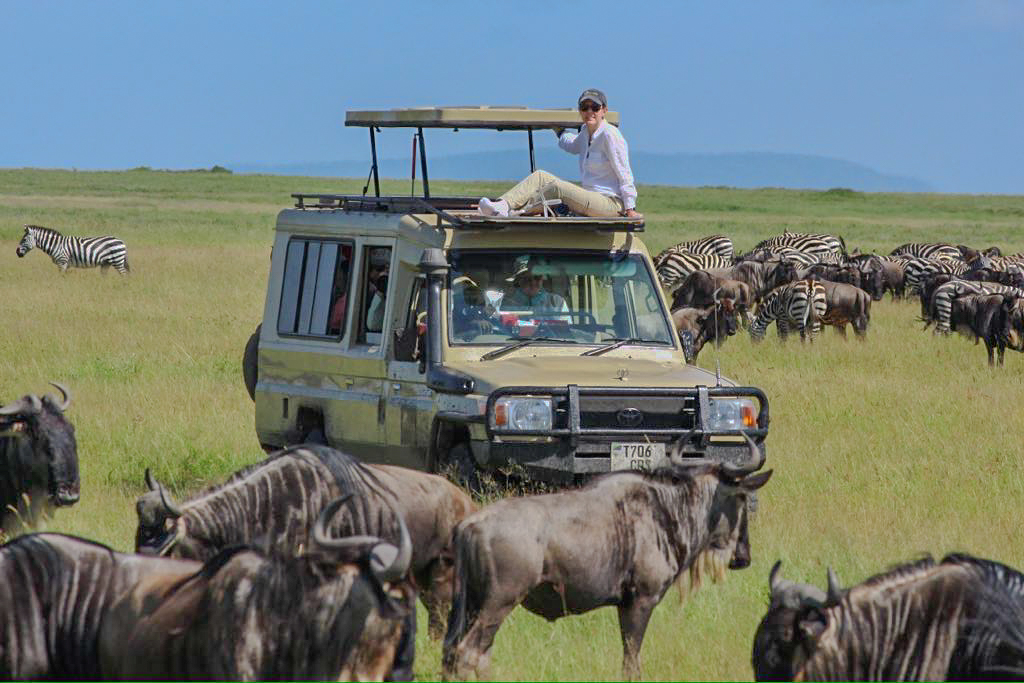
Lori Allen is the preeminent mastermind behind Focused Escapes. Click here to meet Lori and hear firsthand how Focused Escapes differs from the rest.
Camera Equipment
- Sony a7 III (1.43 lb)
- Sony FE 24-70mm f/2.8 GM II (1.9 lb)
- Sony a7 rIV (Lensrentals) (1.46 lb)
- Sigma 60-600mm f/4.5-6.3 DG DN OS (Lensrentals) (5.94 lb)
I tested the Sony a7 rIV (61.0MP full-frame) for landscapes. The larger sensor let in more light and captured beautiful colors. Plus, it allowed a larger file size to crop. I loved it, especially for pictures of birds.
The Sony a7 III with a Sigma 60-600mm lens captured shots of animals in distant landscapes. But I found that much glass too heavy and unnecessary for this trip, not with the second camera. Traveling across the terrain for wildlife photography, weight matters; the Sony 200-600mm lens would have been much lighter (4.66 lb) and easier to handle. One of my fellow travelers let me hold theirs, and the difference in feel was significant.
Some adventurers captured as many memories with their cell phones. All it takes is a love of the wild!
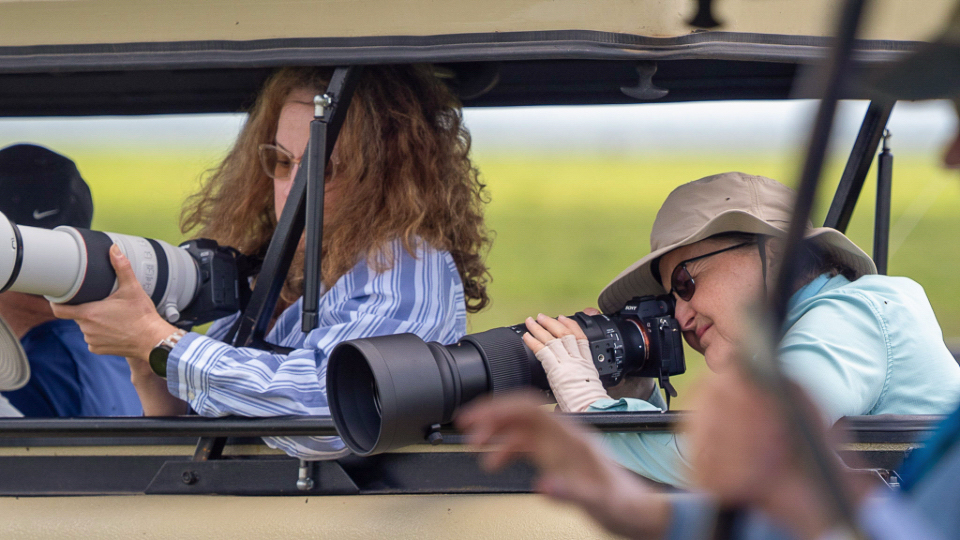
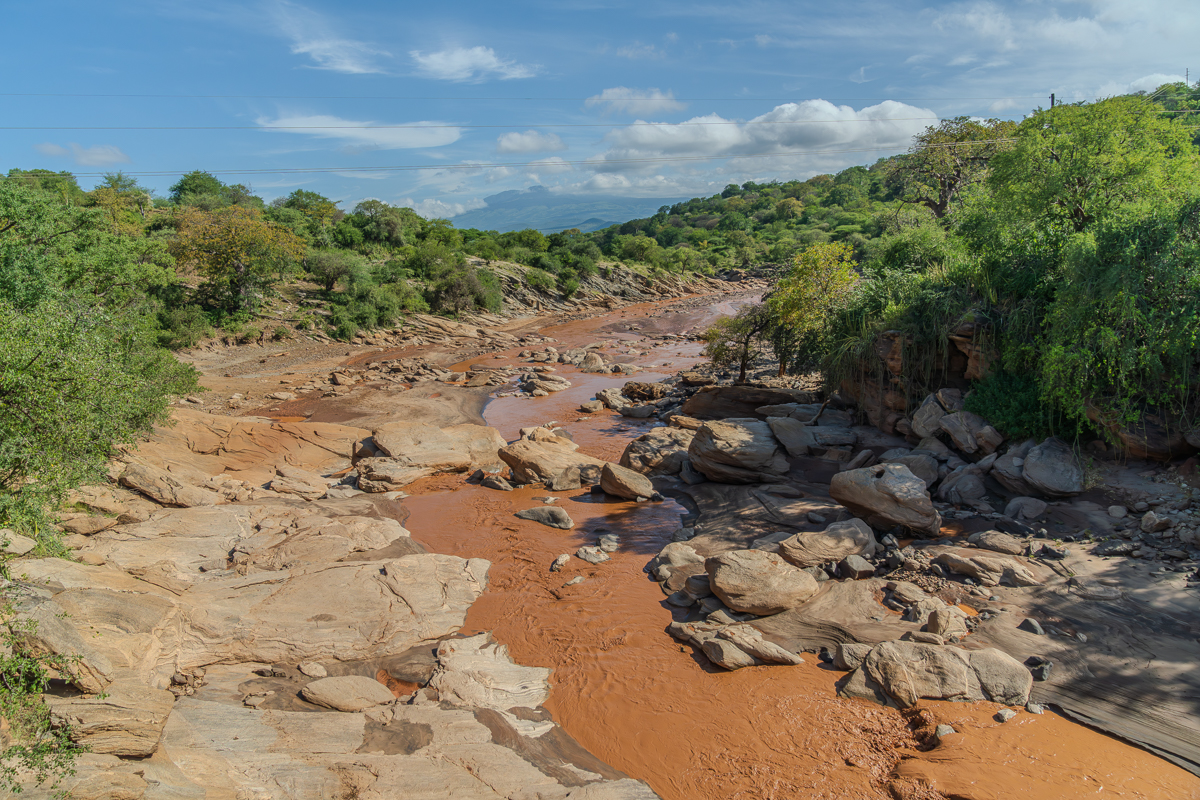
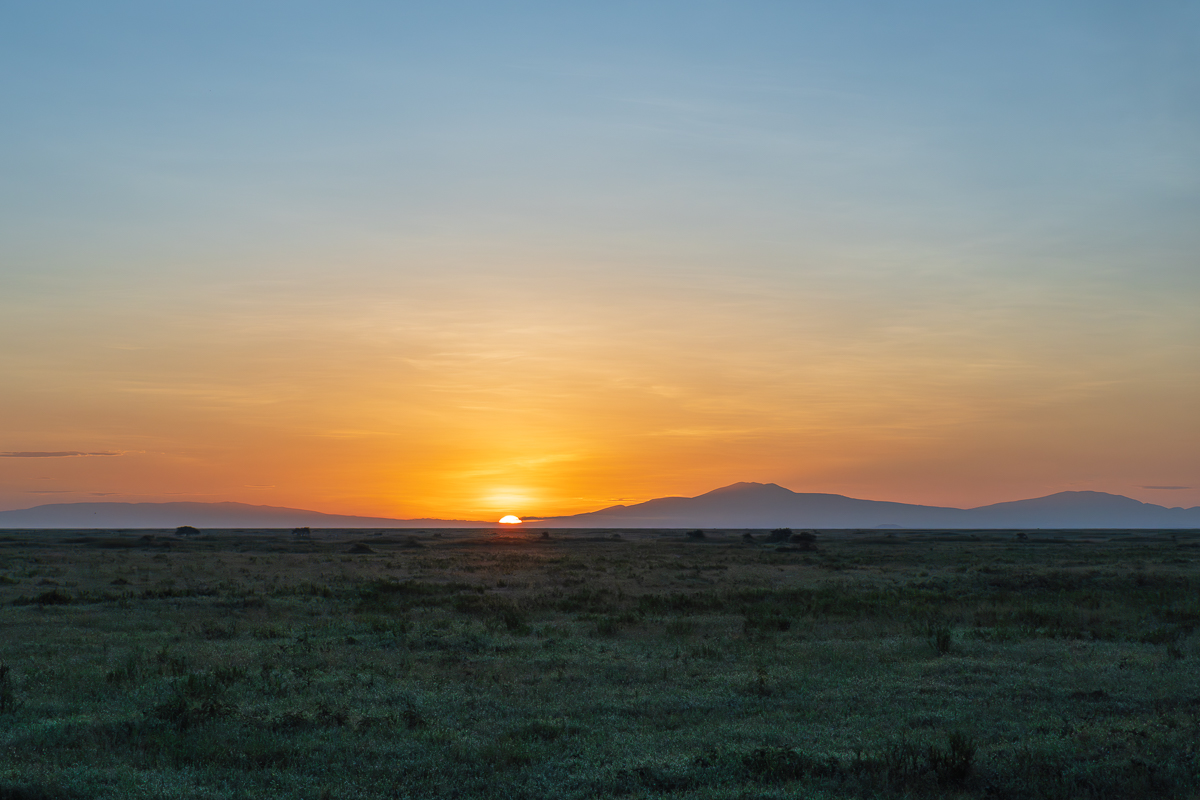
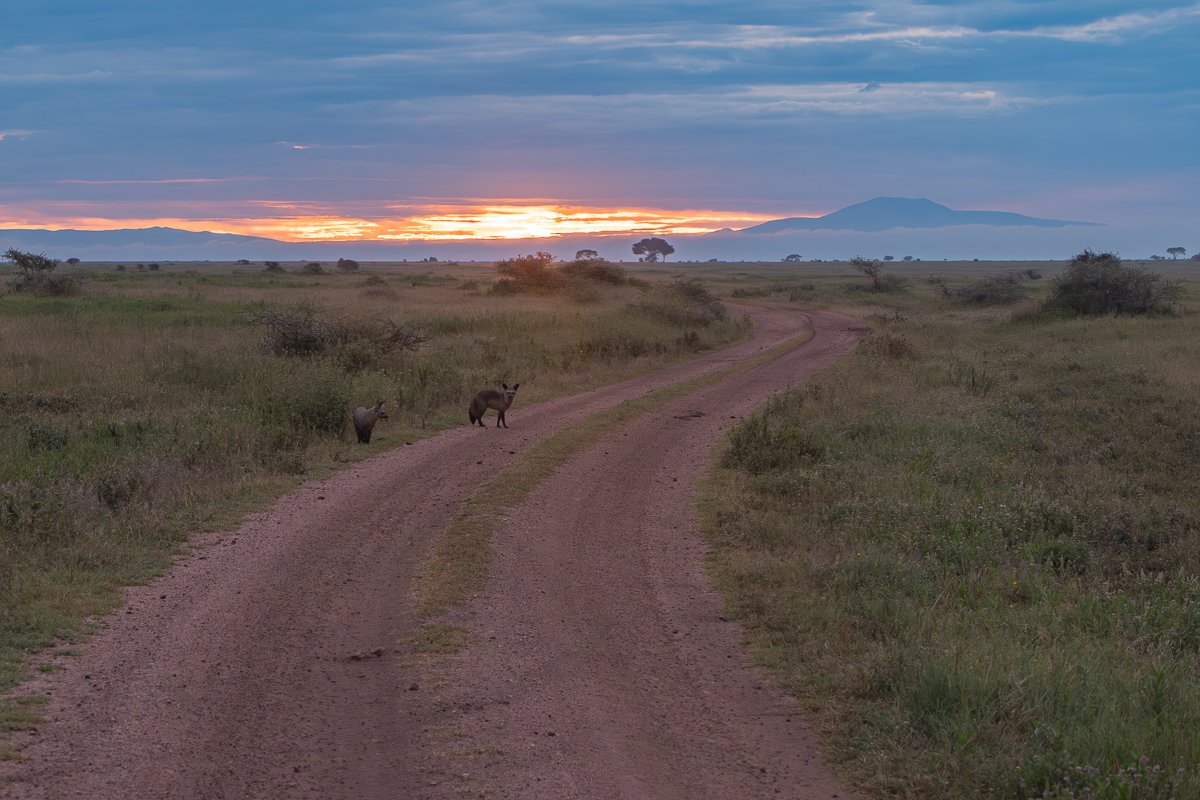
We saw and photographed the animals as complements to the jaw-dropping landscapes. Together, they inspire a greater love of the wild.
Landscapes
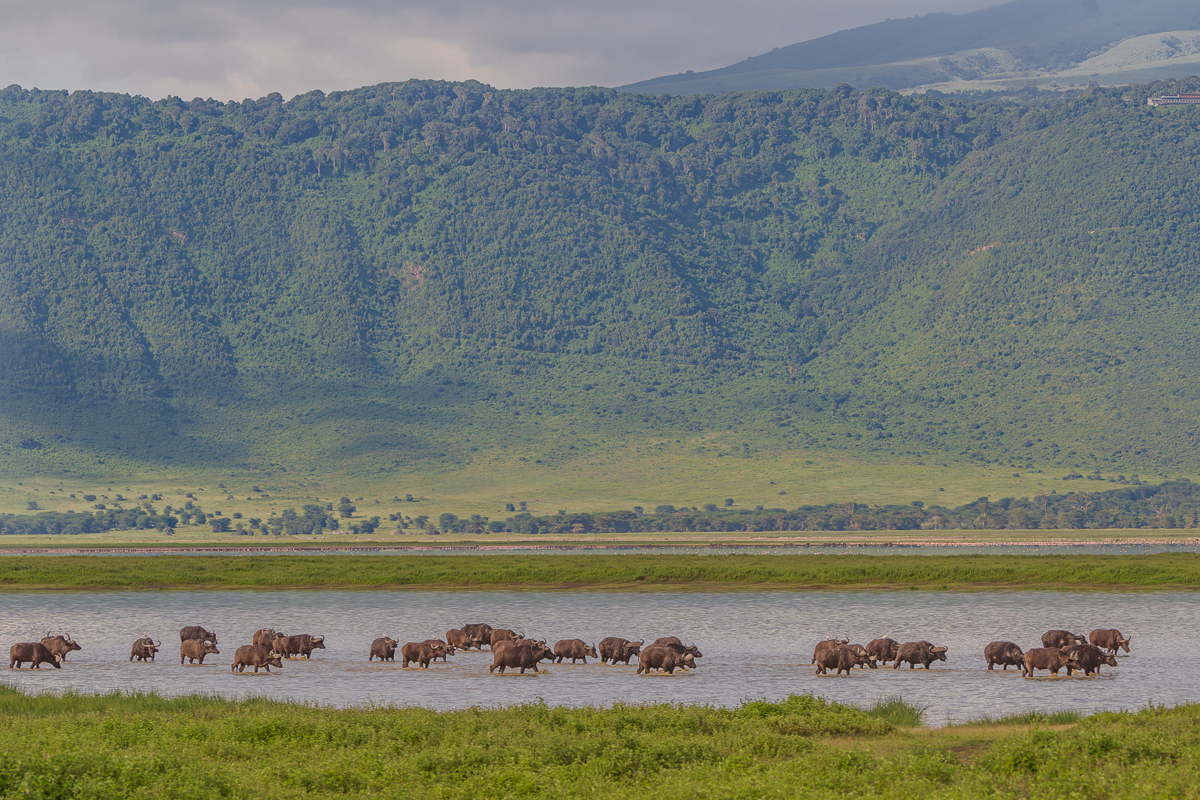
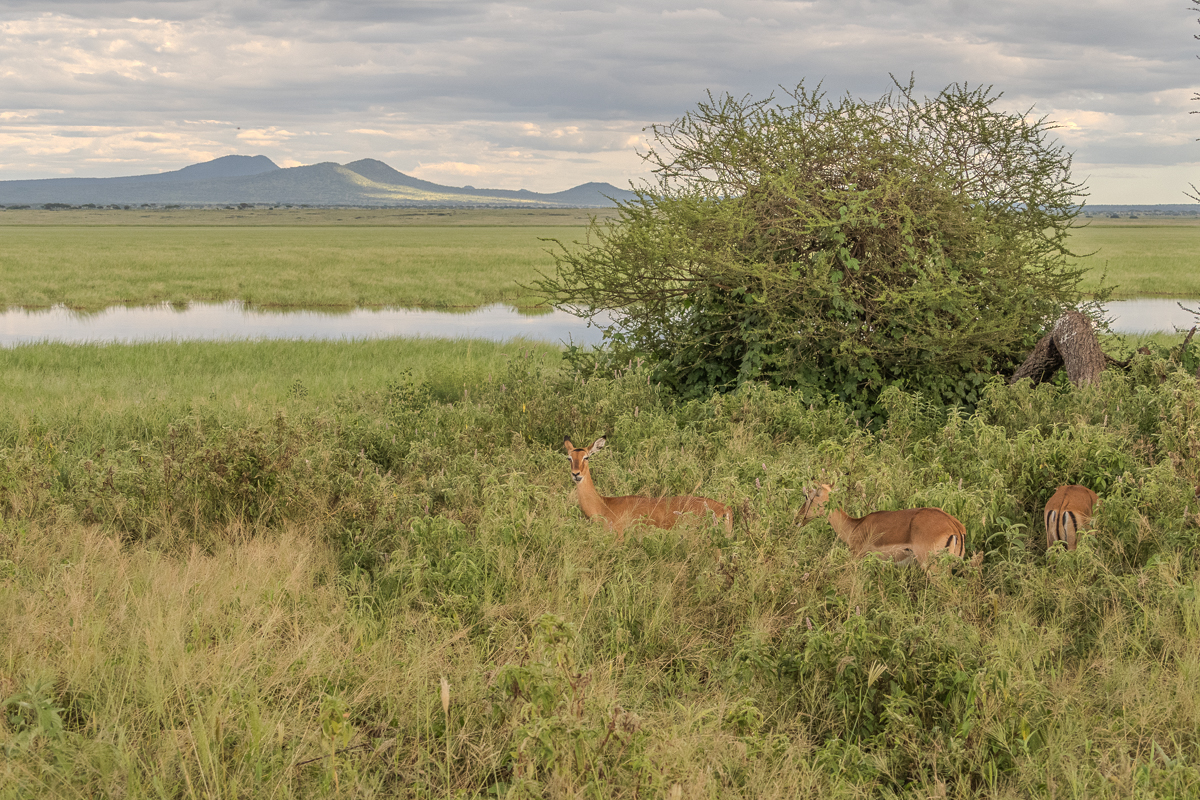
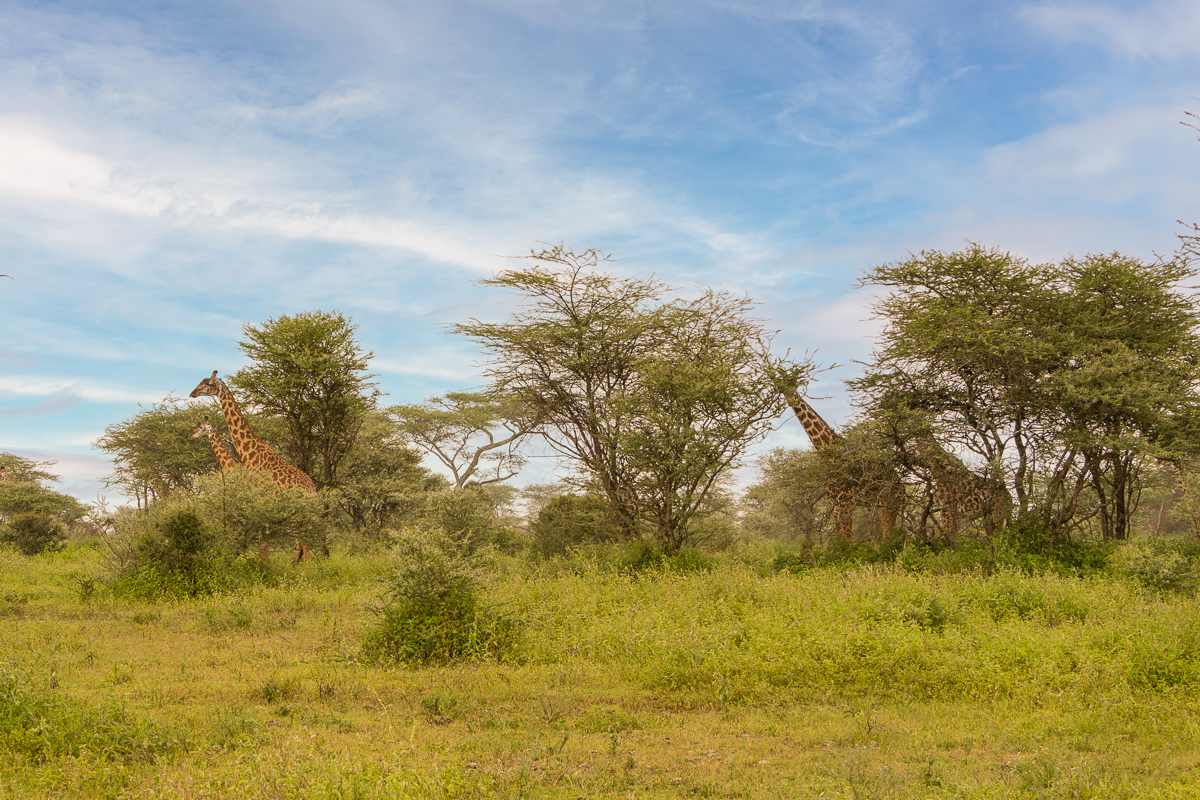
We all wanted a glimpse of the leopard. Our guides spotted one high up in the branches, but even our giant lenses couldn’t reach it. I should have rented the Sony FE 2x Teleconverter. Next time, I said!
The love of the wild is addictive; go once, and you’ll go again and again!
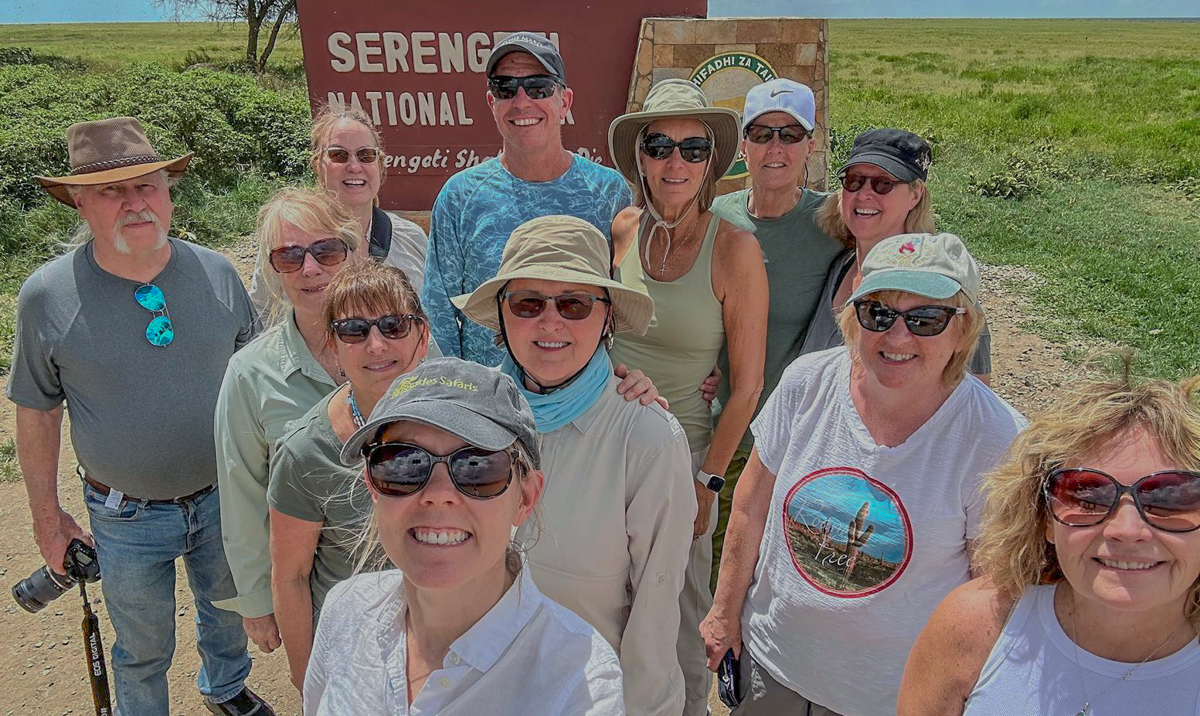
The best way to see these stunning landscapes is with great friends. Our Focused Escapes group was the best!
You must be logged in to post a comment.