The Great Pyramid of Giza gleamed in the distance as we arrived at our hotel. From there, we began an extraordinary two-week journey with Archaeological Paths. We explored the treasures of ancient Egypt by air, land, and river and were amazed and inspired by breathtaking scenery and incredible history. This photo journal documents an unforgettable experience in Egypt.
Two Museums on the first day – the treasures of ancient Egypt!
In 1979, thousands of people in the U.S. waited in line for hours to see the “Treasures of Tutankhamun.” Now, finally, it was my turn! On a privately guided tour, I saw the treasures of ancient Egypt, including some of the most significant of over 5000 treasures discovered in the tomb of King Tutankhamun. Afterward, I had lunch at the famous Cairo Flefela Restaurant. The waiter delivered plate after plate of delicious food as my mind raced through the images I’d seen – gold coffins, dazzling burial masks, and sarcophagi in brilliant colors.
Egyptian Museum
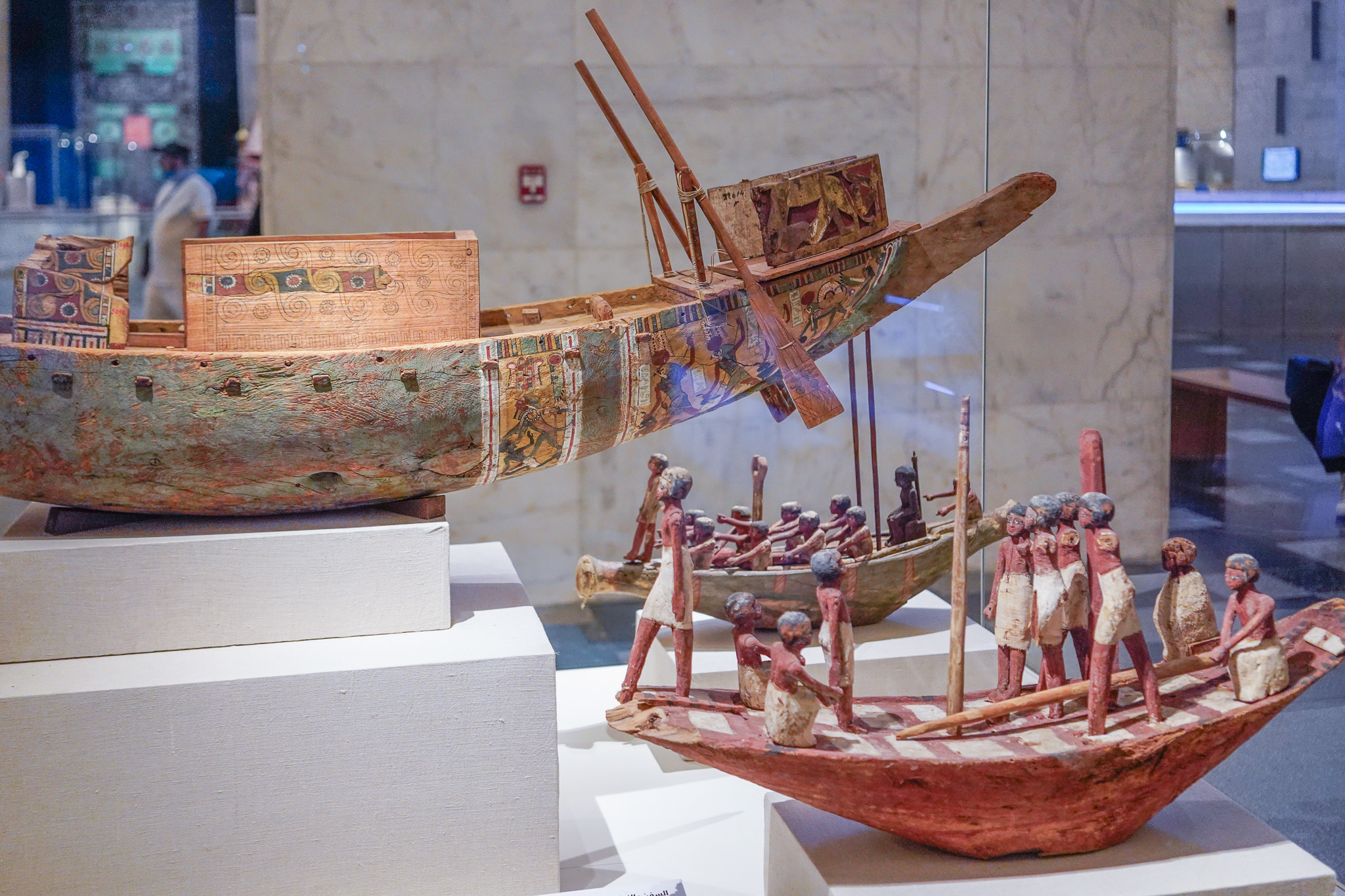
The Royal Mummies Hall was deep and dark, except for each mummified royal set apart and well-lit. Each of the 18 Kings and 2 Queens was encased as if they were still in their tombs at the Valley of the Kings and Queens. They seemed vulnerable without their elaborate adornments. During their lifetimes, these Kings and Queens went to extraordinary lengths to demonstrate their power and achieve equal measure in the afterlife. They took everything they needed, including full-sized boats, chariots, and furniture. As I progressed through the hall, I felt overwhelming gratitude. We cannot know whether they succeeded in the afterlife of their vision, but because of their beliefs, they left behind an indelible legacy. In this way, they allowed us to know them and their unfathomable knowledge, skills, and abilities.
If, on the divine scale, the heart is lighter than a feather, then the Pharaohs had lived and ruled with a good heart and would make it into the afterlife.
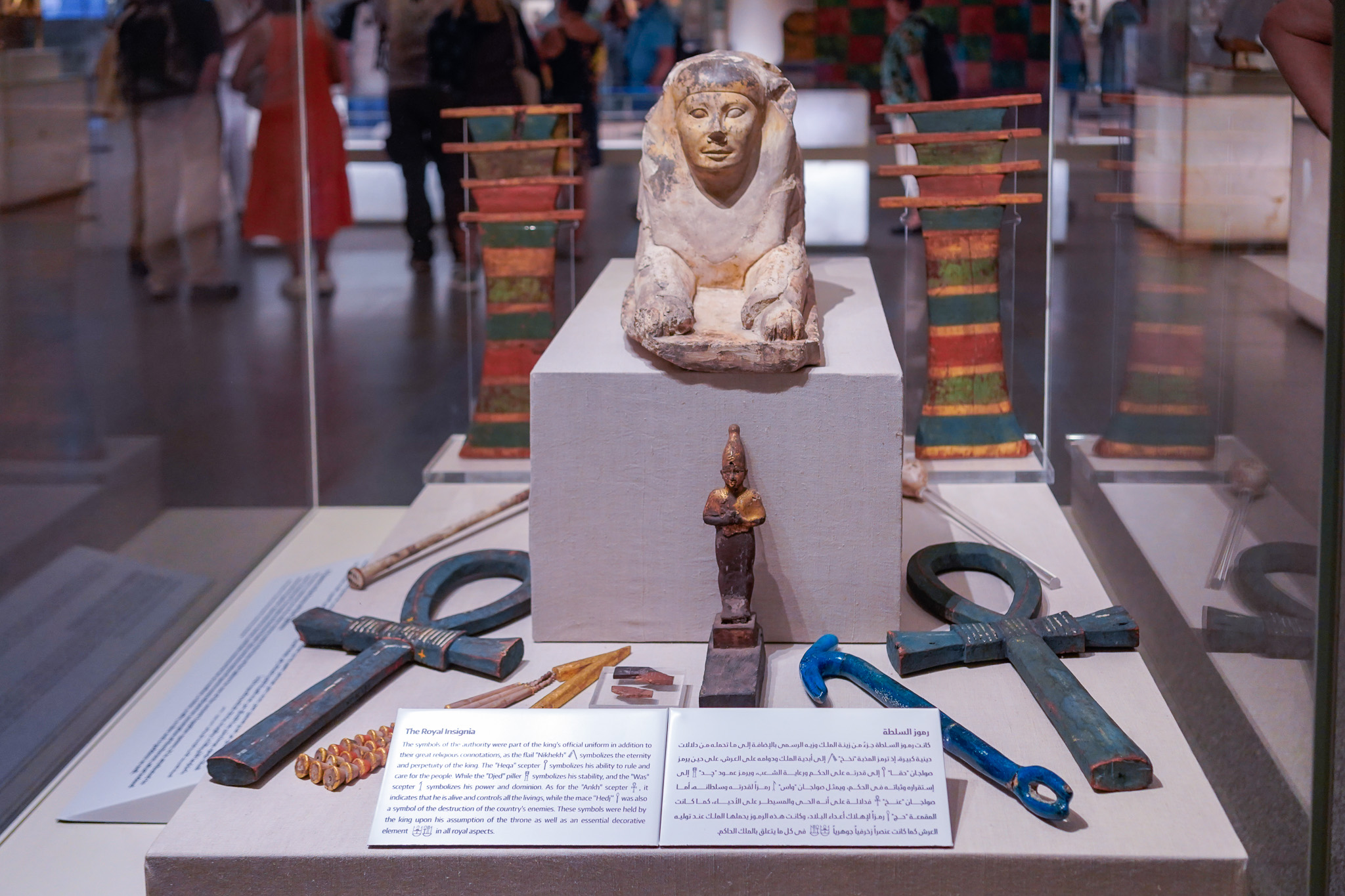
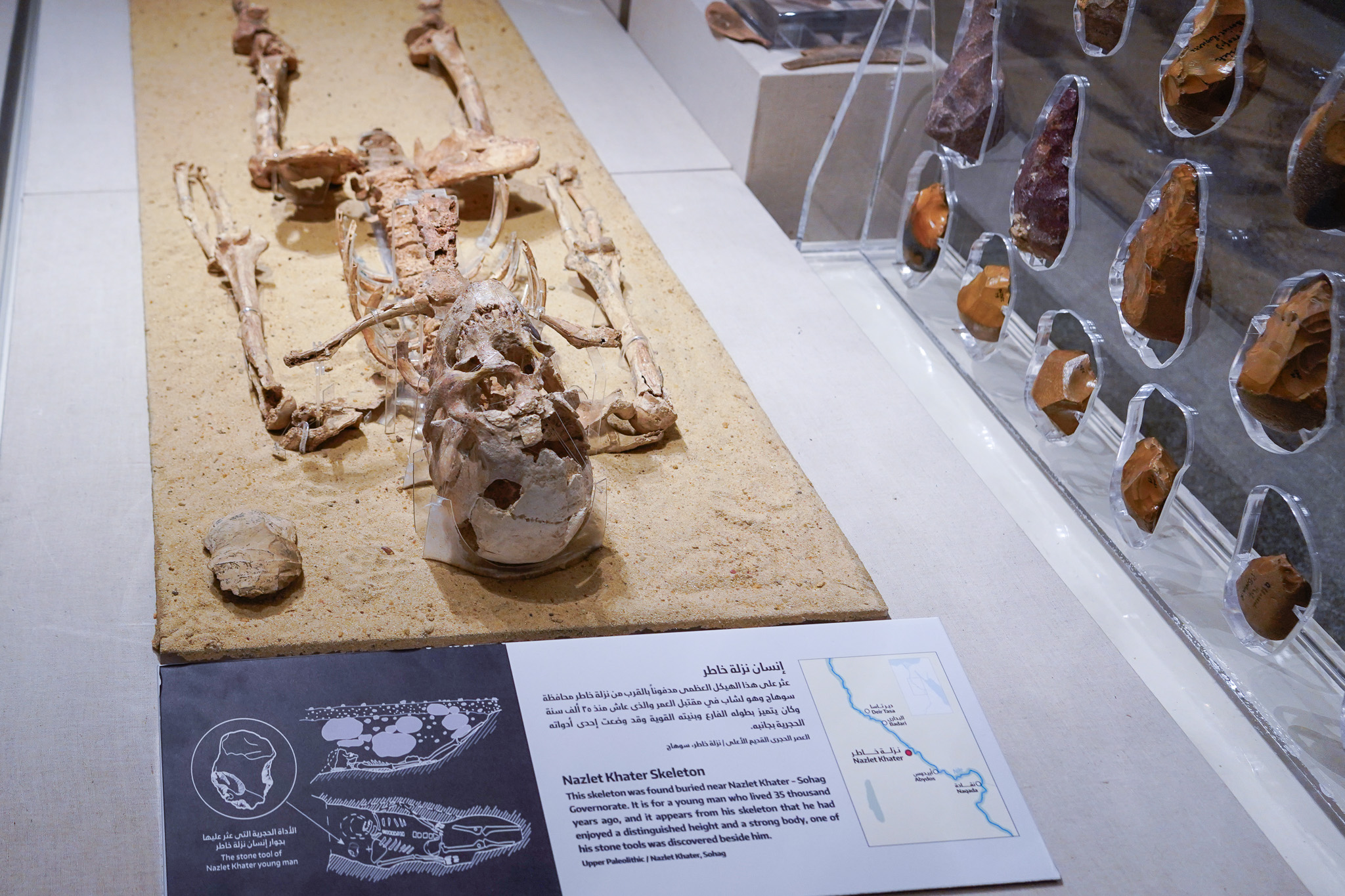
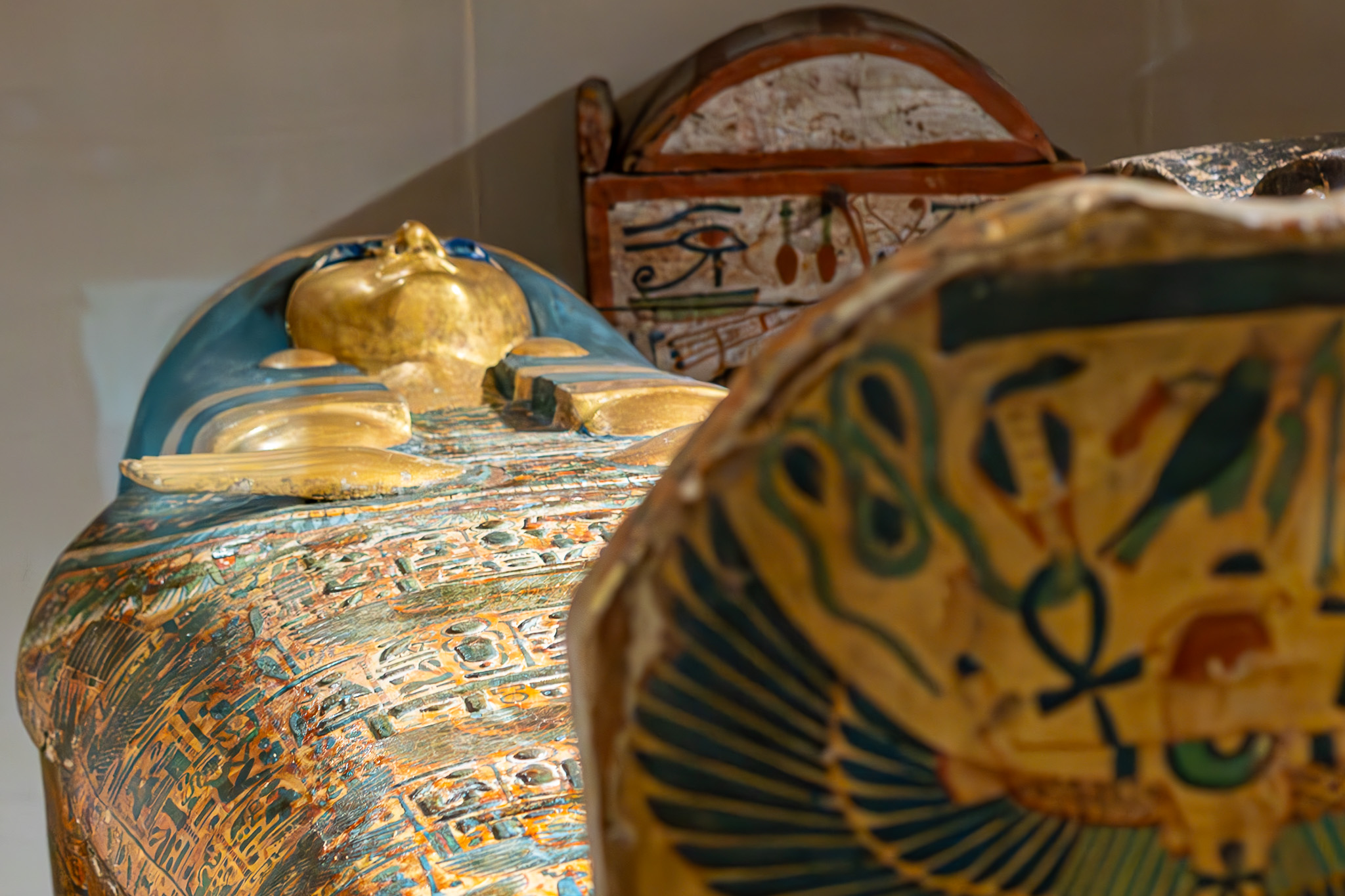
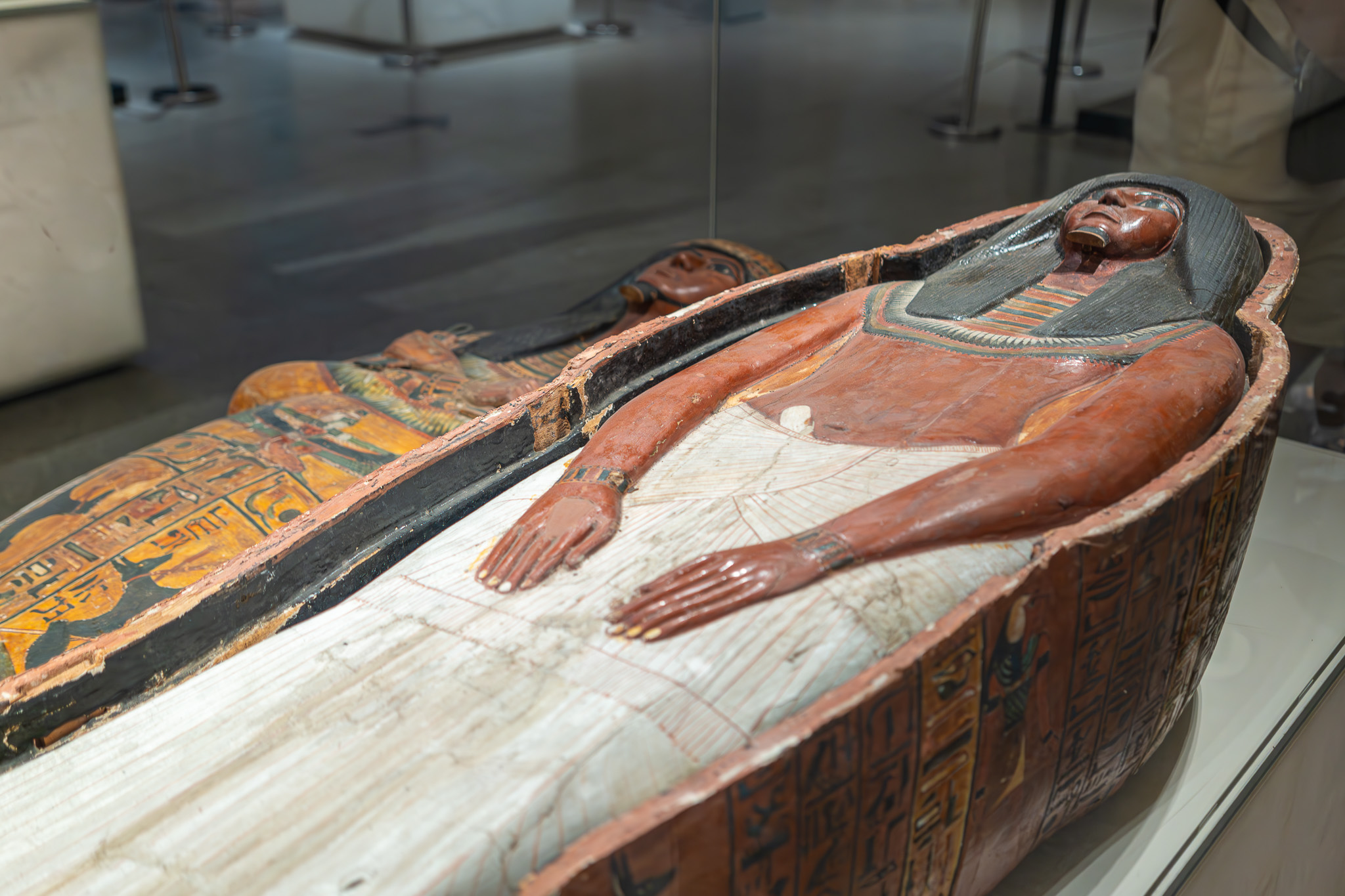
The museum does not allow pictures inside the Royal Mummies Hall or the King Tut Hall. Although I couldn’t bring home pictures of King Tut’s elaborate death mask, gold coffins, and precious jewelry, I will never forget the awe I felt upon seeing them. As for the rest of the treasures of ancient Egypt, I enjoyed taking pictures all the way.
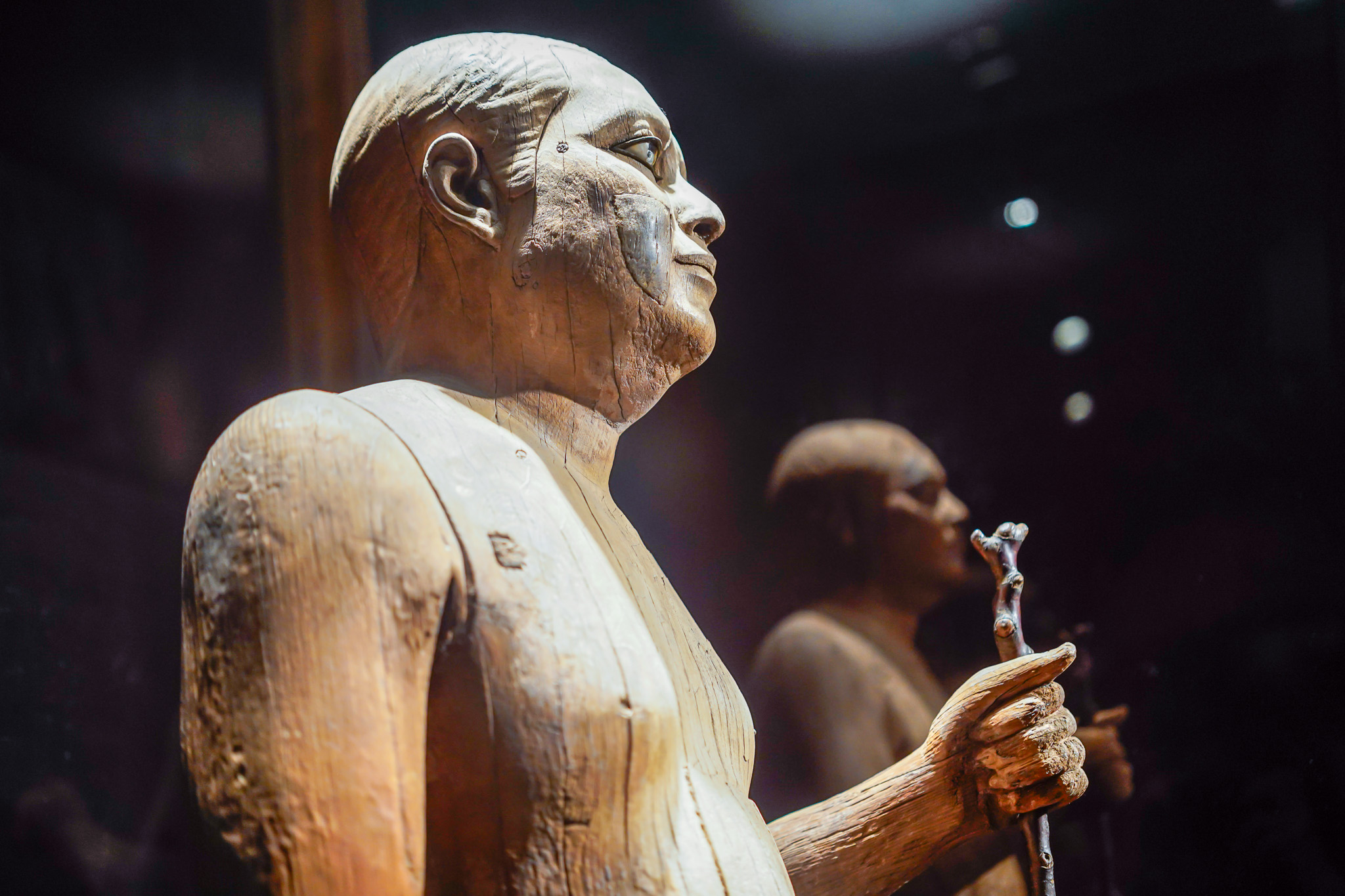
Wooden staute of Egyptian scribe and priest Ka’aper circa 2500 BCE. The realism of he eyes is uncanny, made of rock crystal and small copper plates 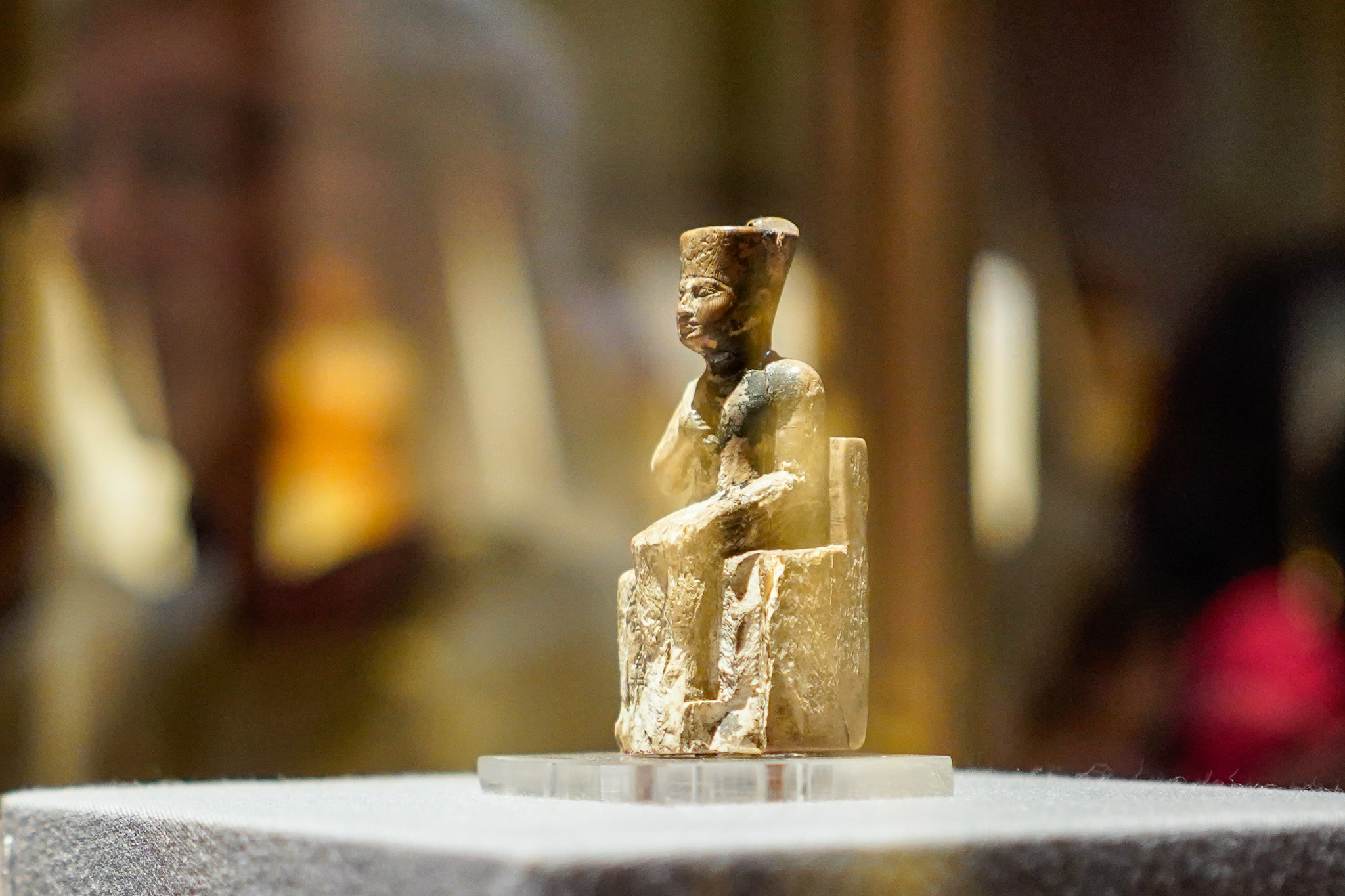
Ivory figure of the Pharoah Khufu c. 2613 to 2494 BCE or carved later in 664 – 525 BCE 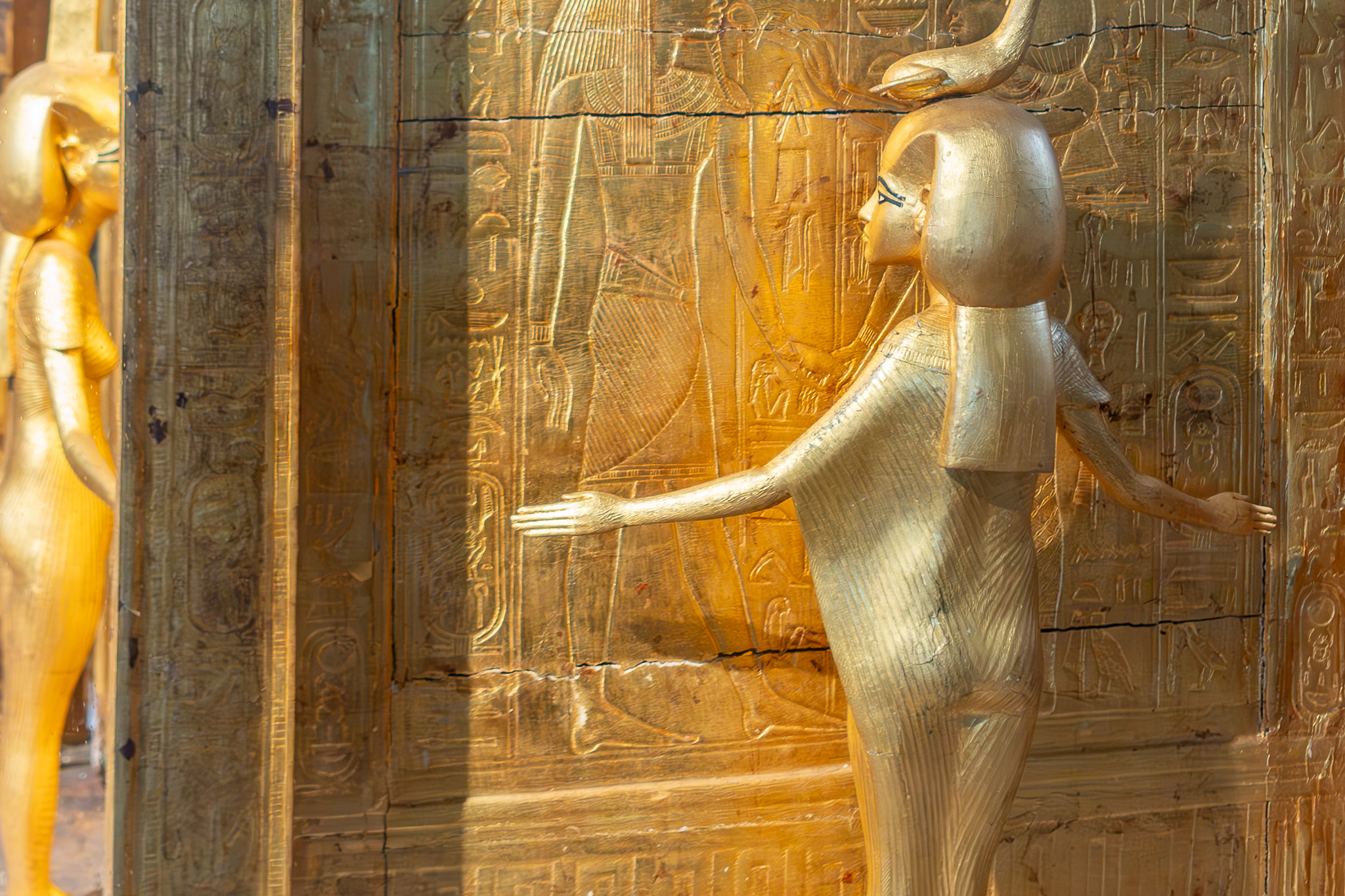
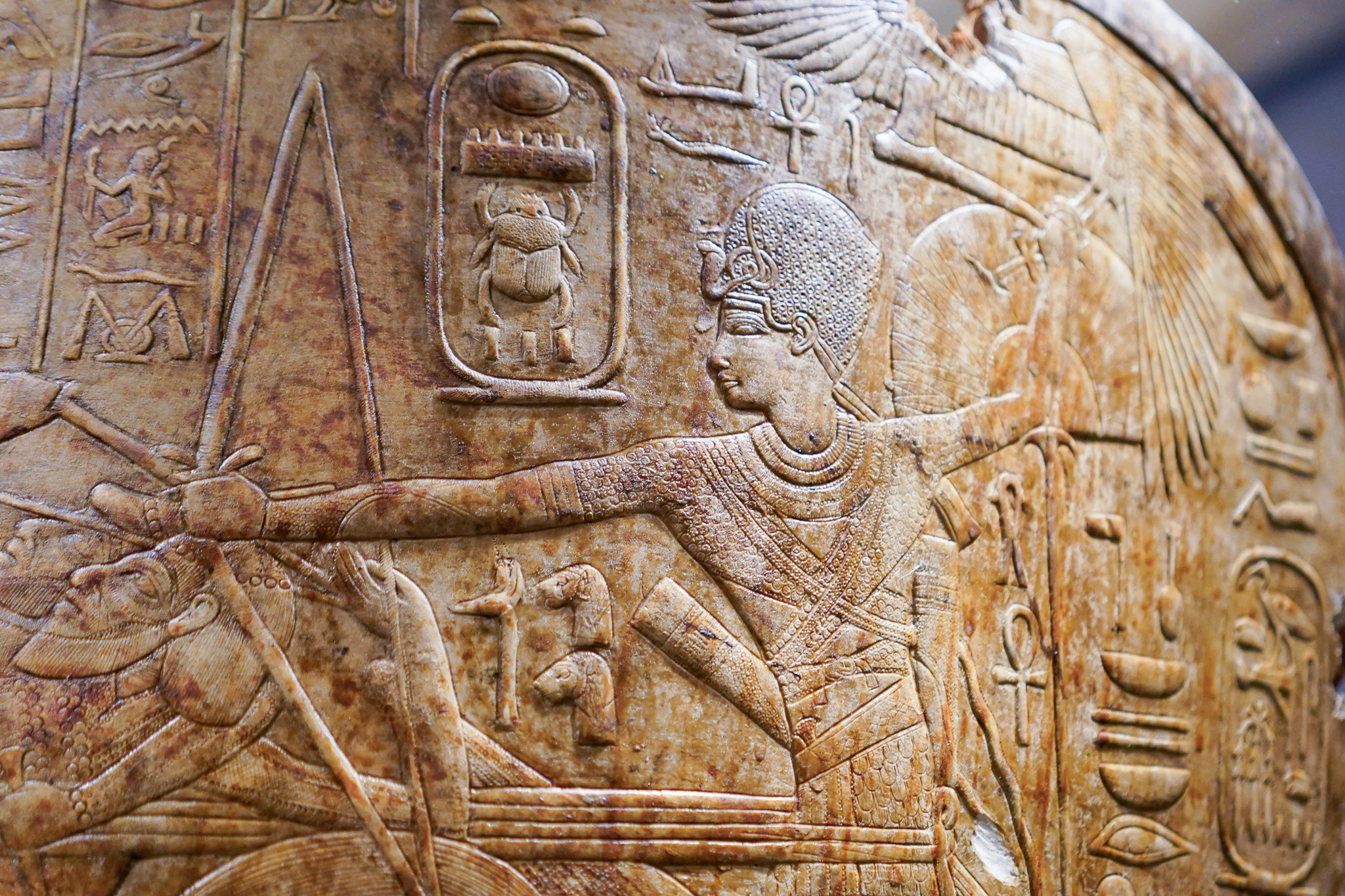
One side of Pharoah Tutankhamun’s gilded wooden canopic shrine. 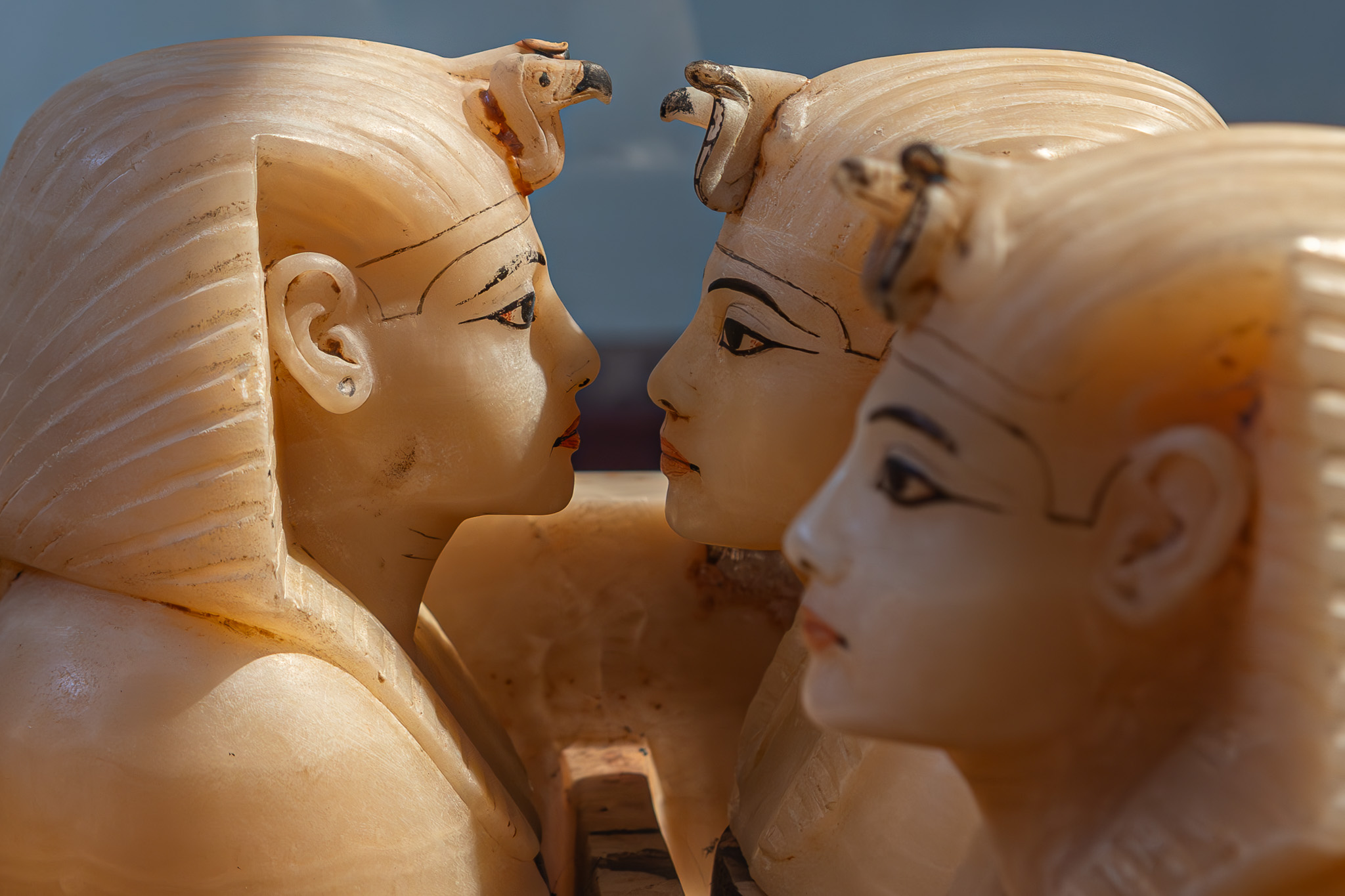
Jars in Pharoah Tutankhamun’s canopic chest were used to contain internal organs removed during mummification. 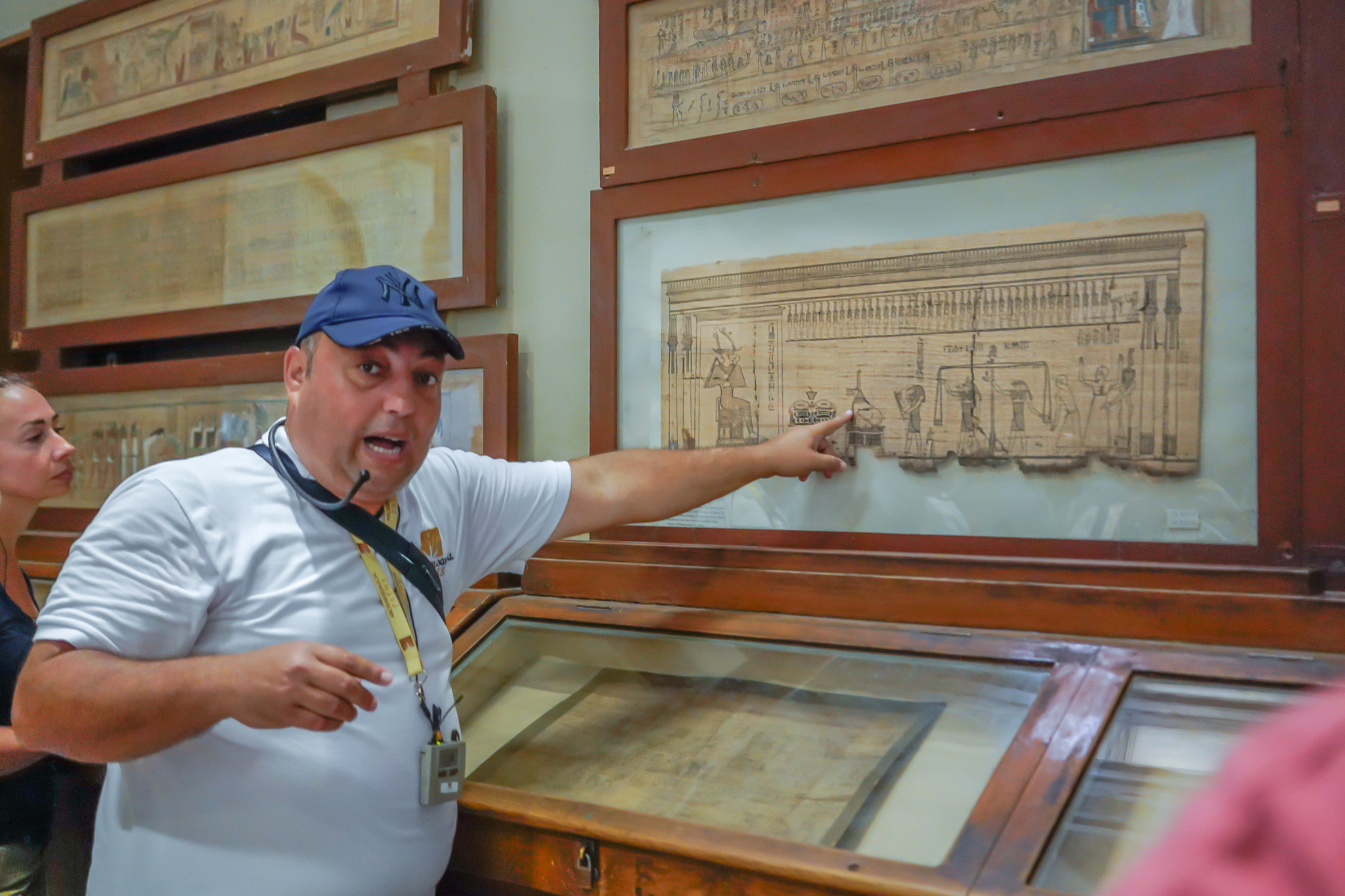
Archeological Paths Guide Bahgat Galai Sobeh points to an ancient scroll that depicts the divine scale.
National Museum of Egyptian Civilization
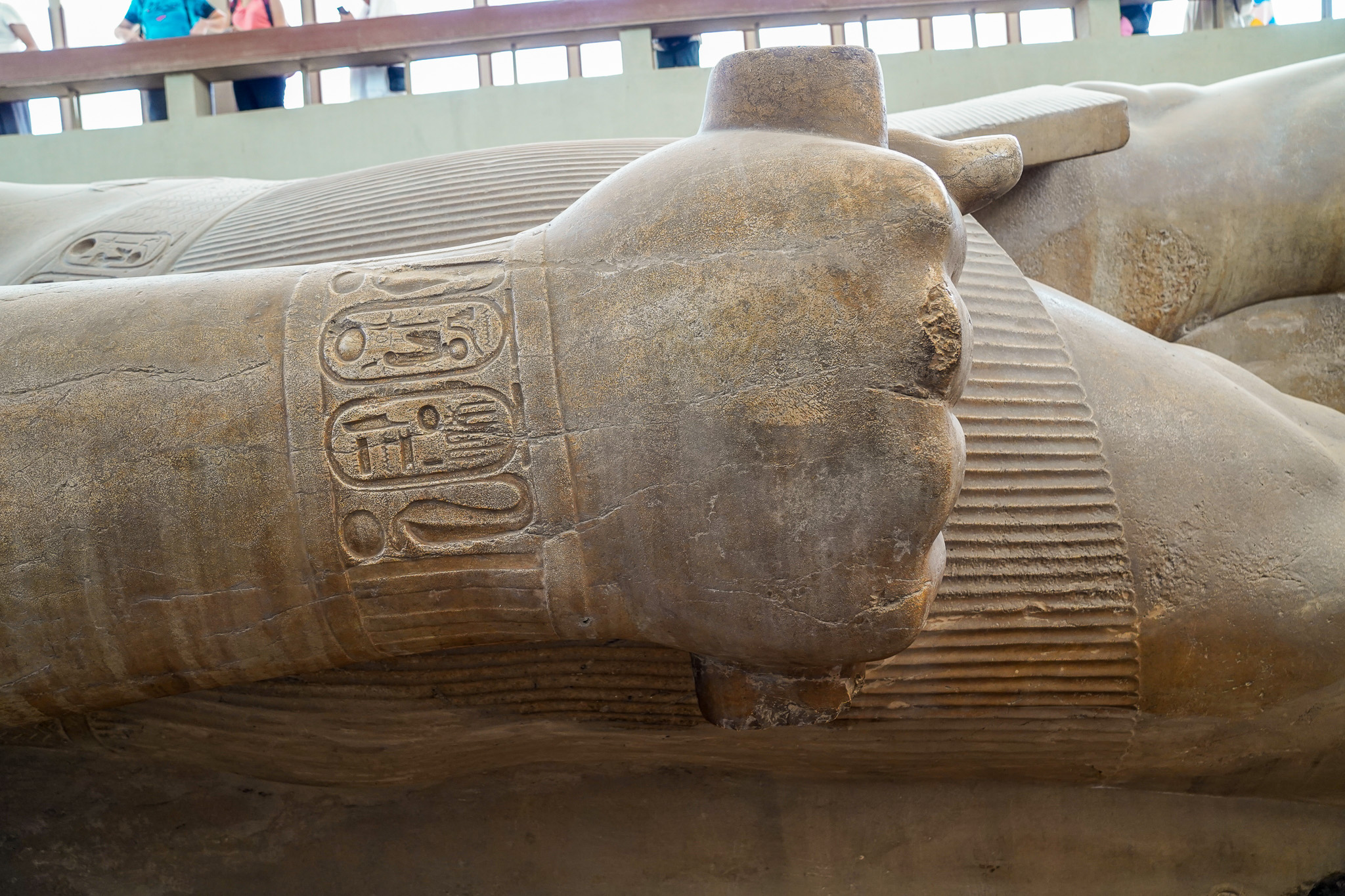
Memphis is the ancient capital of Egypt. It is part of the Necropolis (cemetery) of Pyramids and tombs that cover 19 miles of desert. Today, Memphis is an open-air museum and home to the colossal statue of Pharoah Ramesses II, which was recovered and relocated to the site. Ramesses II is easily identified by two cartouches (royal and personal names) carved into the monument in several places.
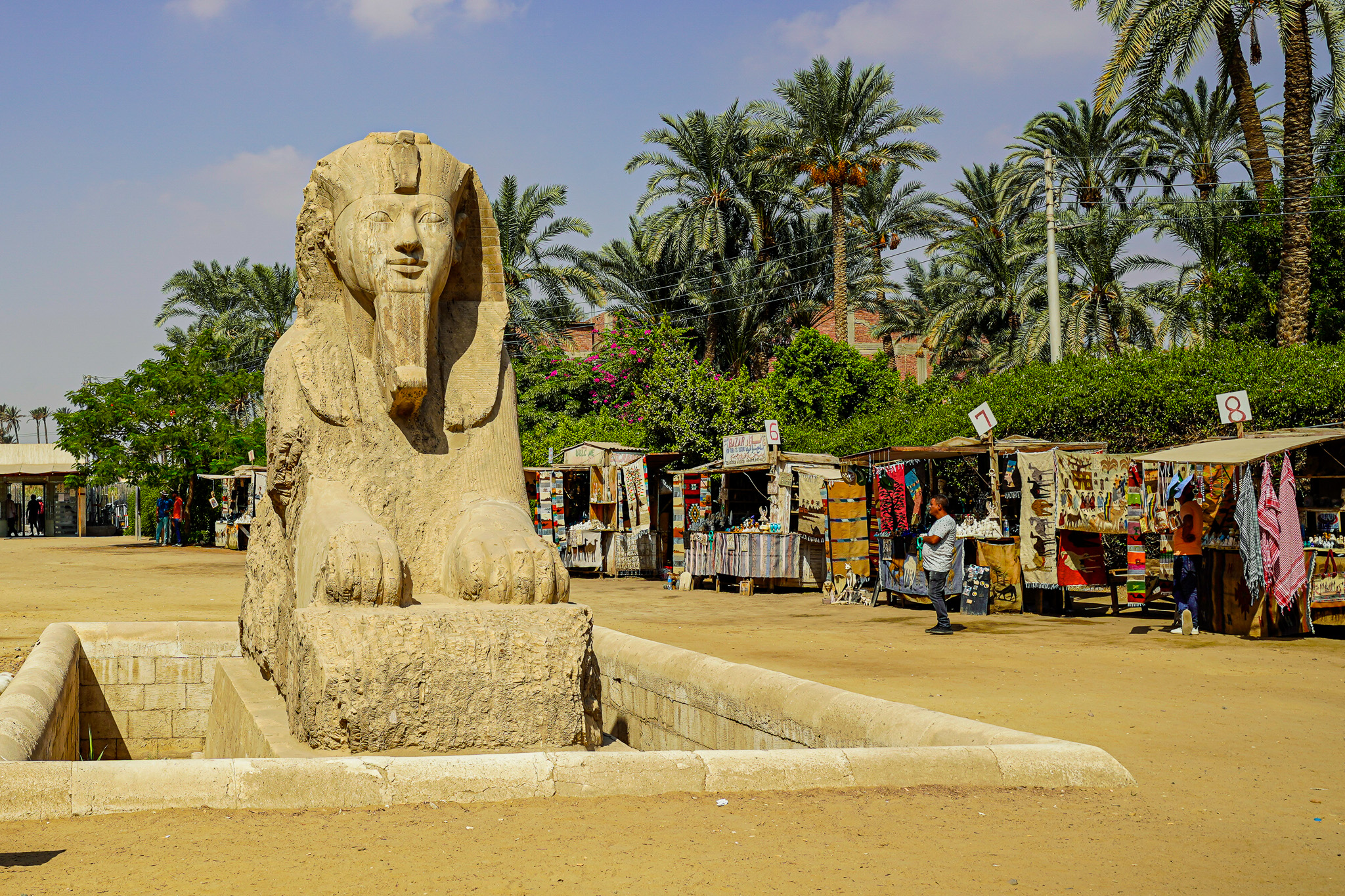
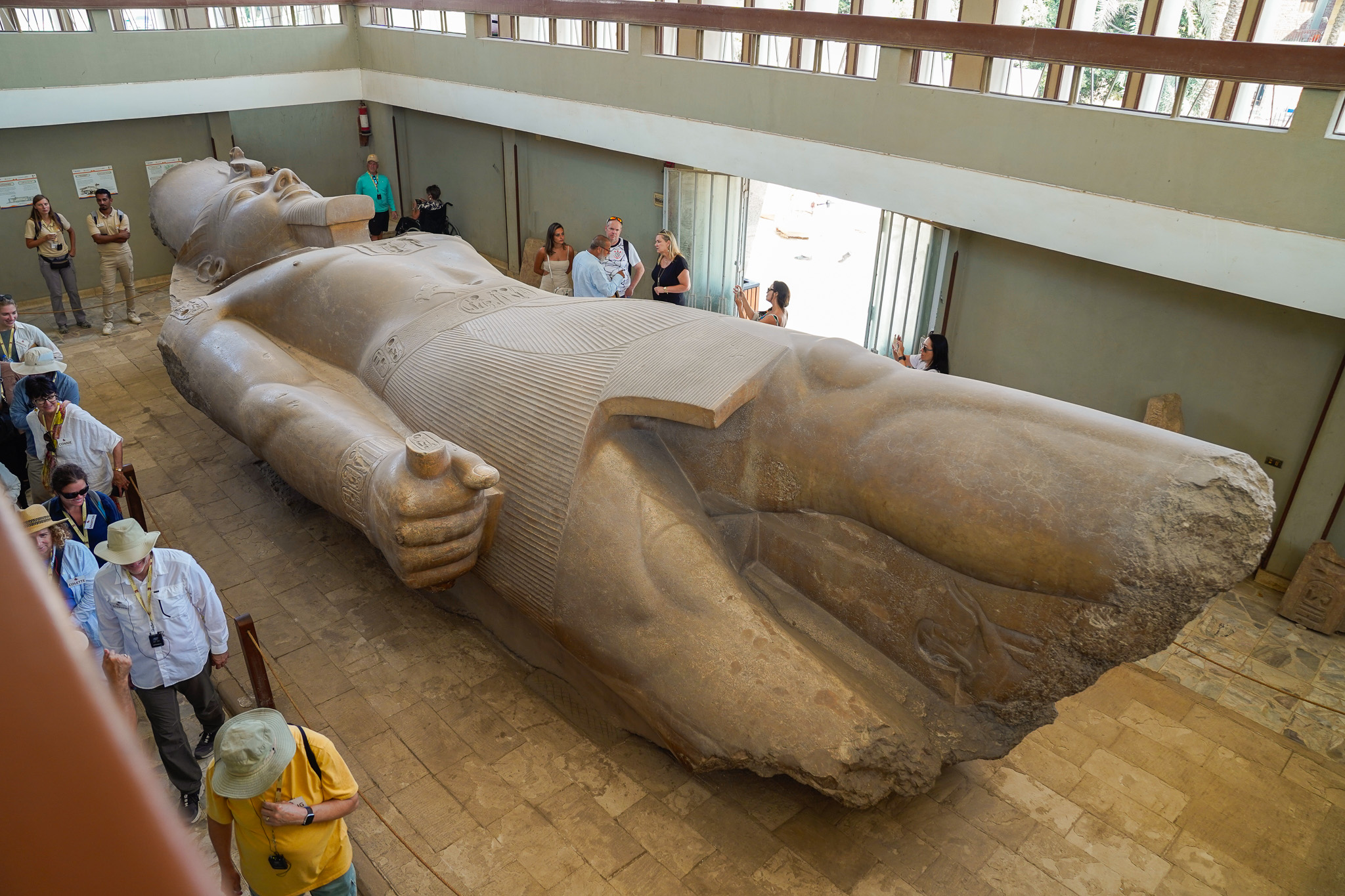
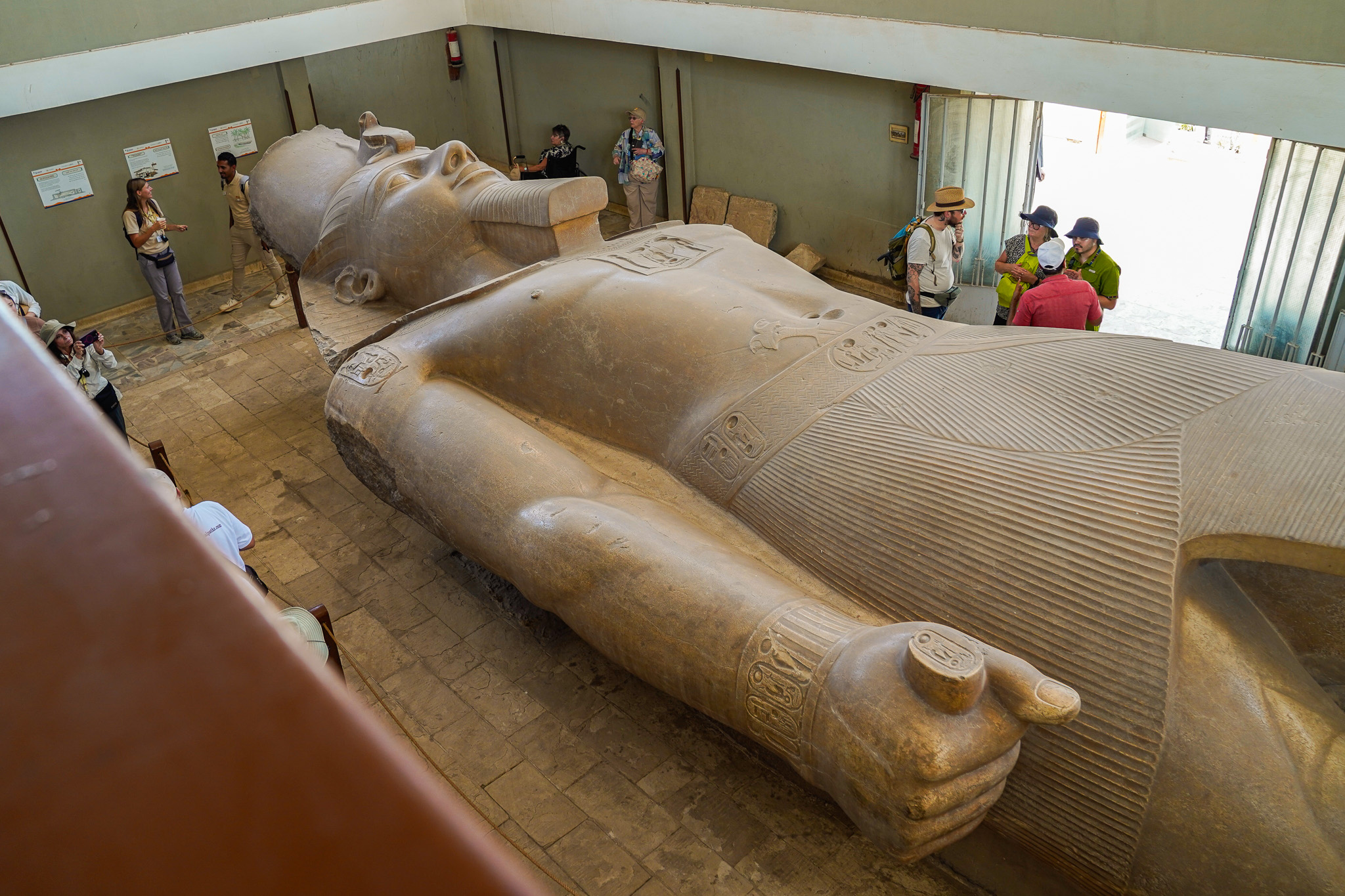
Lower Egypt – Memphis and the Pyramid Fields – UNESCO World Heritage Site
Pharaohs of the Old Kingdom (c. 2,700-2,200 B.C.E.) built the pyramids, starting with the Pharoah Djoser. It was time to check them out! Arriving before daylight heightened my intrigue. As I entered the small opening near the base, my imagination got the better of me. We’re entering into the belly of 6 million tons of granite, I said to myself! An overwhelming sense of claustrophobia turned me around. Outside in the fresh air, I began capturing sunrise pictures as camel caravans, horses, and donkey carriages arrived. As our group headed for the Great Sphinx of Giza, people were still coming by every means of conveyance.
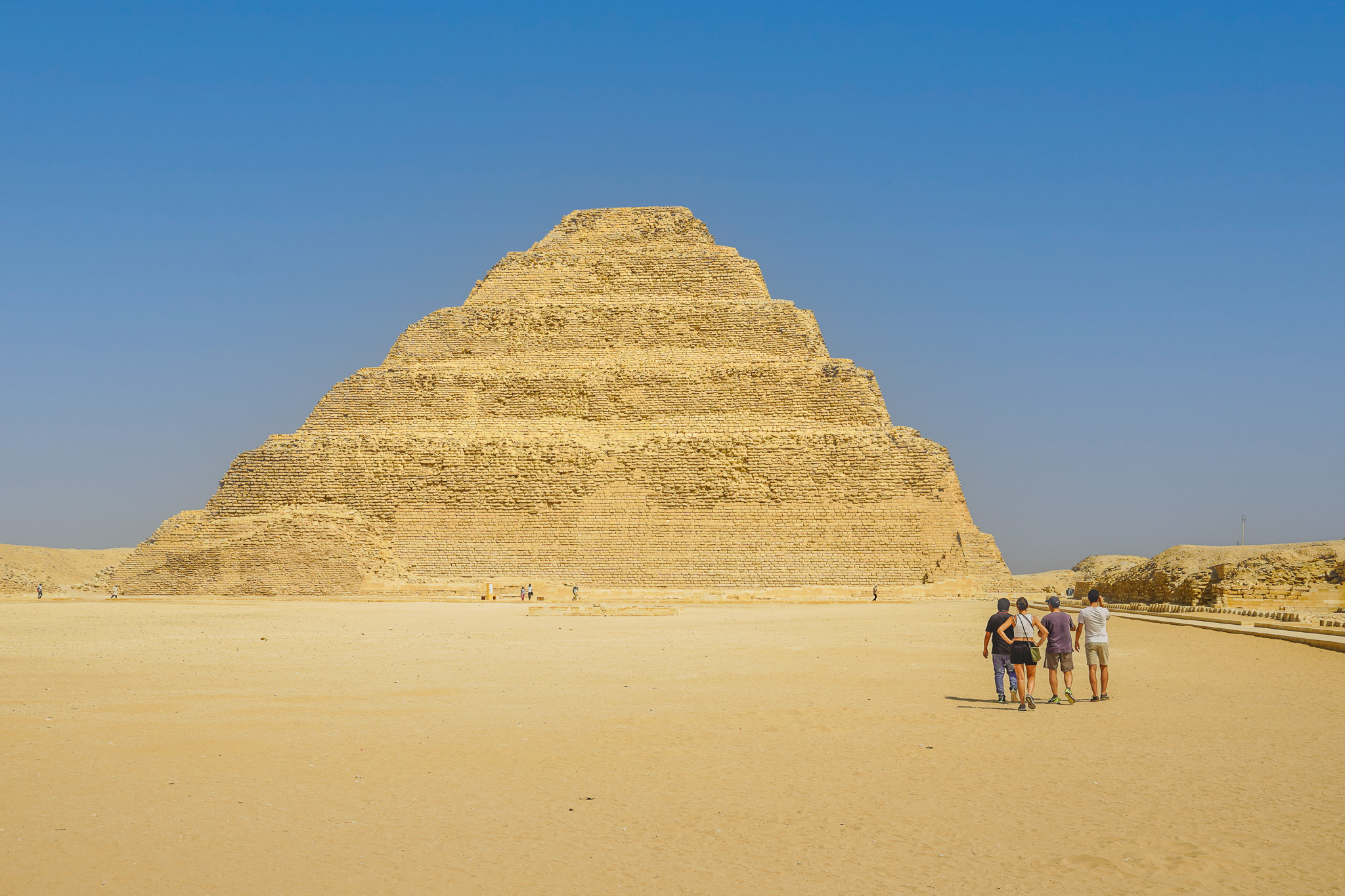
The Step Pyramid – tomb of Djoser 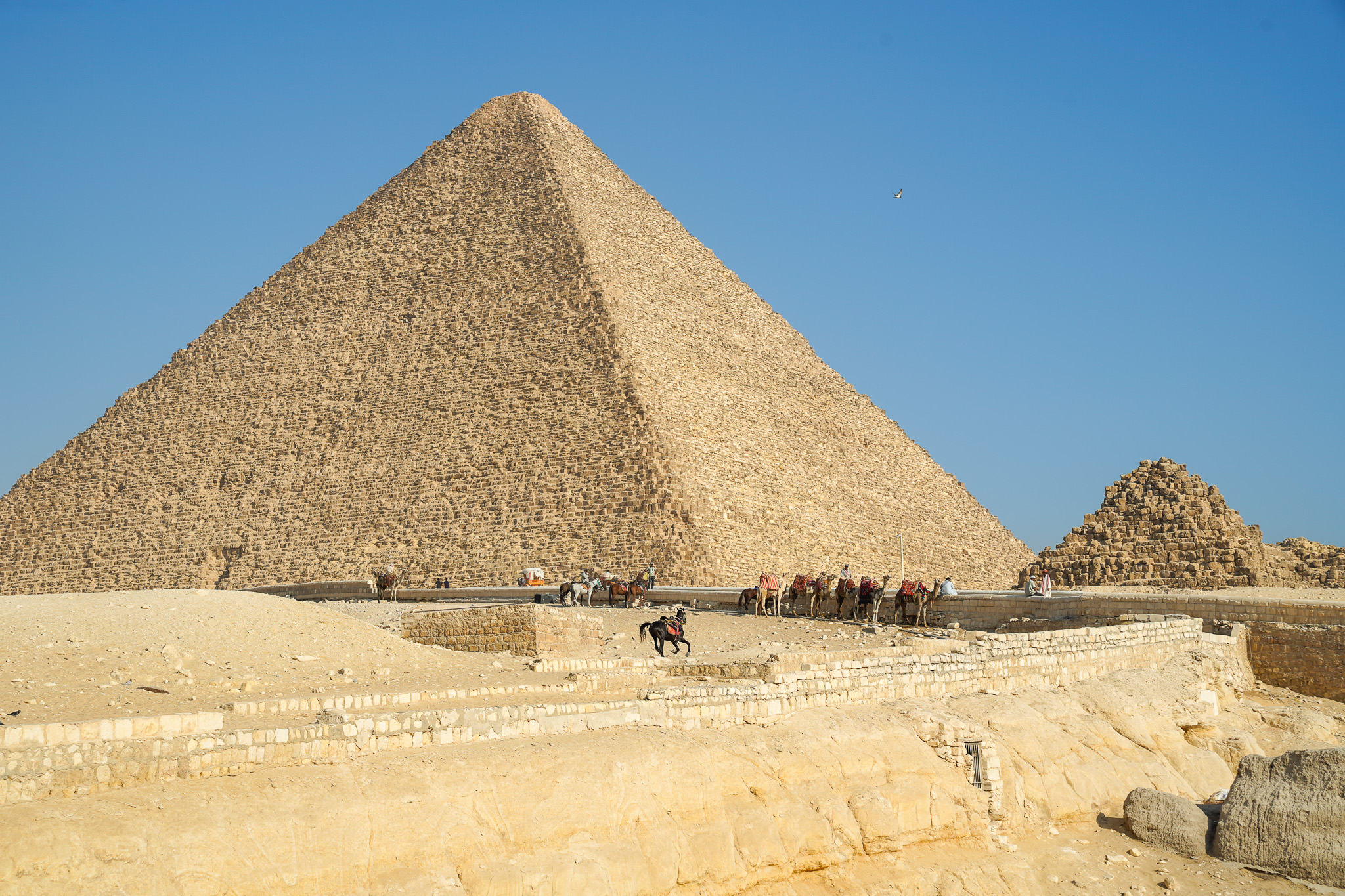
Great Pyramid of Giza – tomb of Khufu 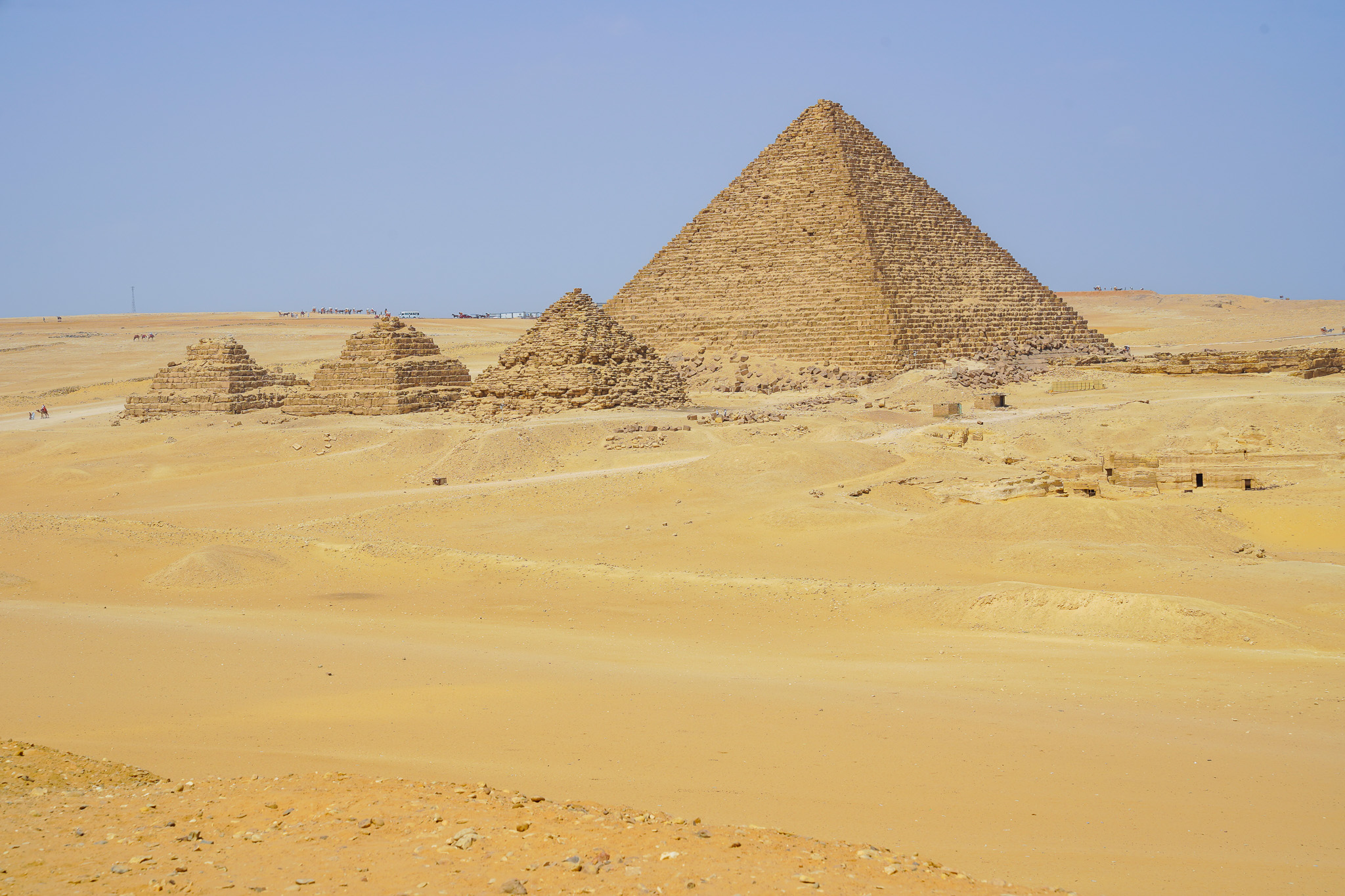
Great Pyramid of Giza with smaller tombs of the Queens 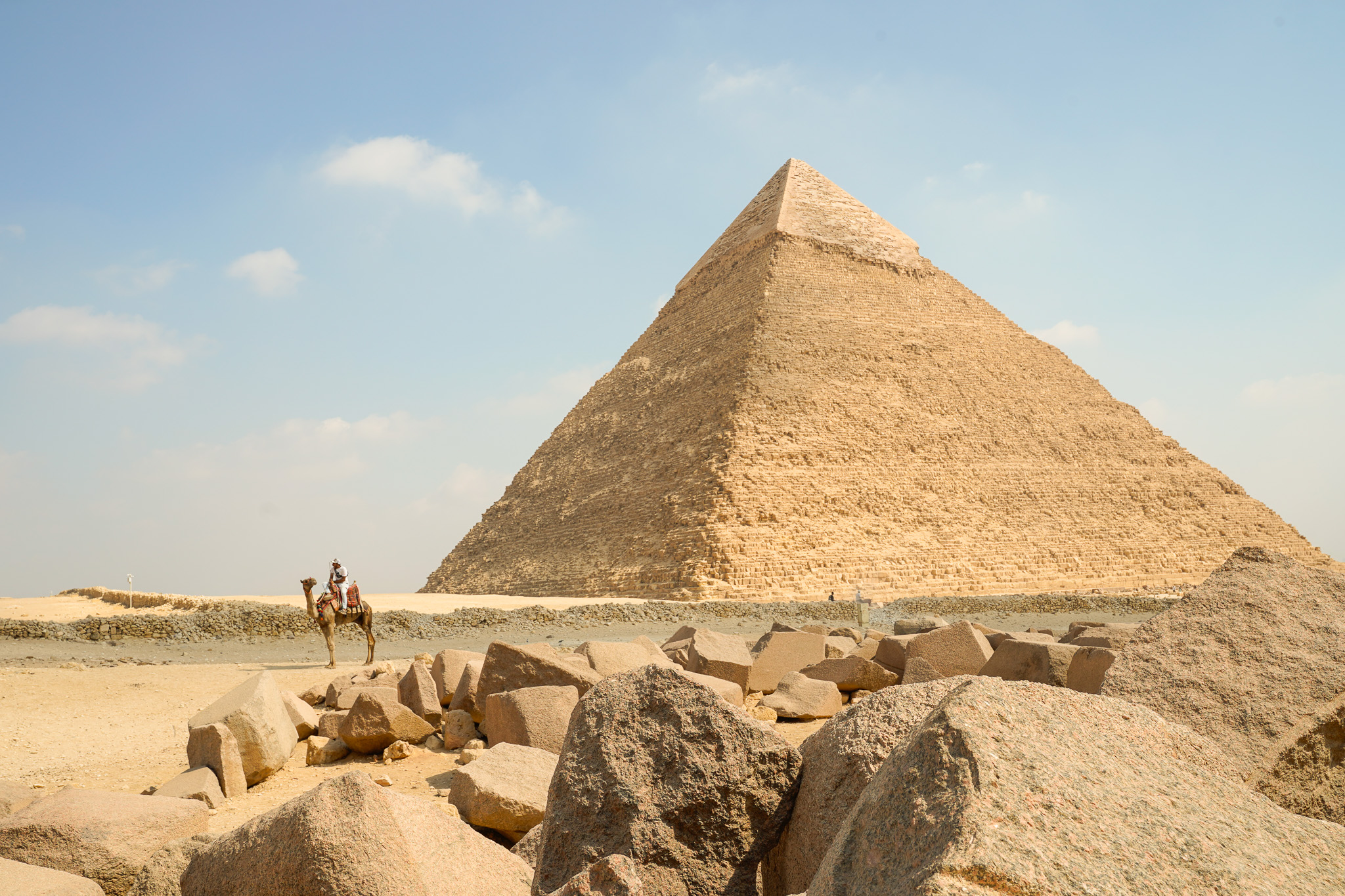
Pyramid of Khafre 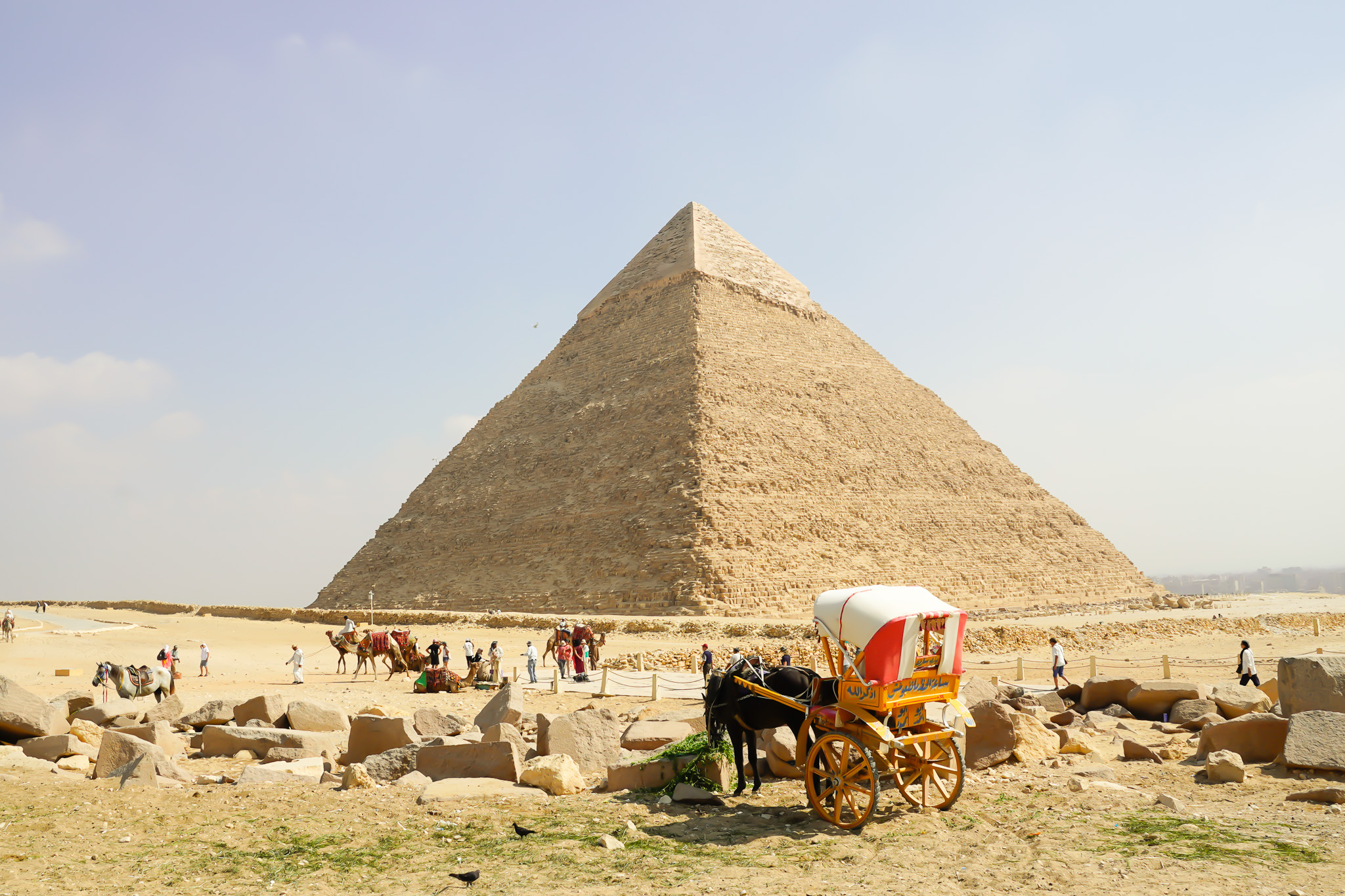
Pyramid of Khafre 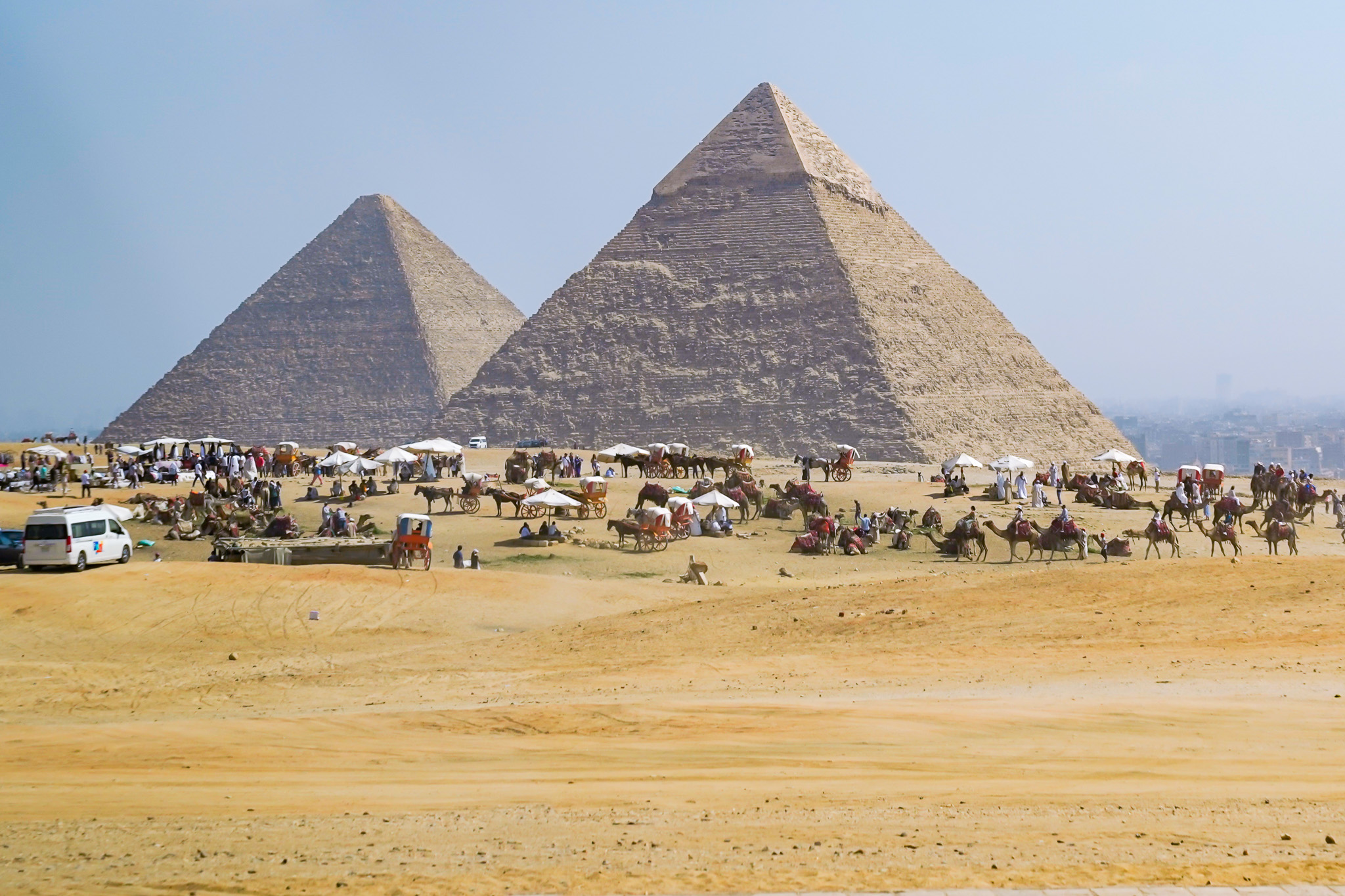
Transportation around the pyramids 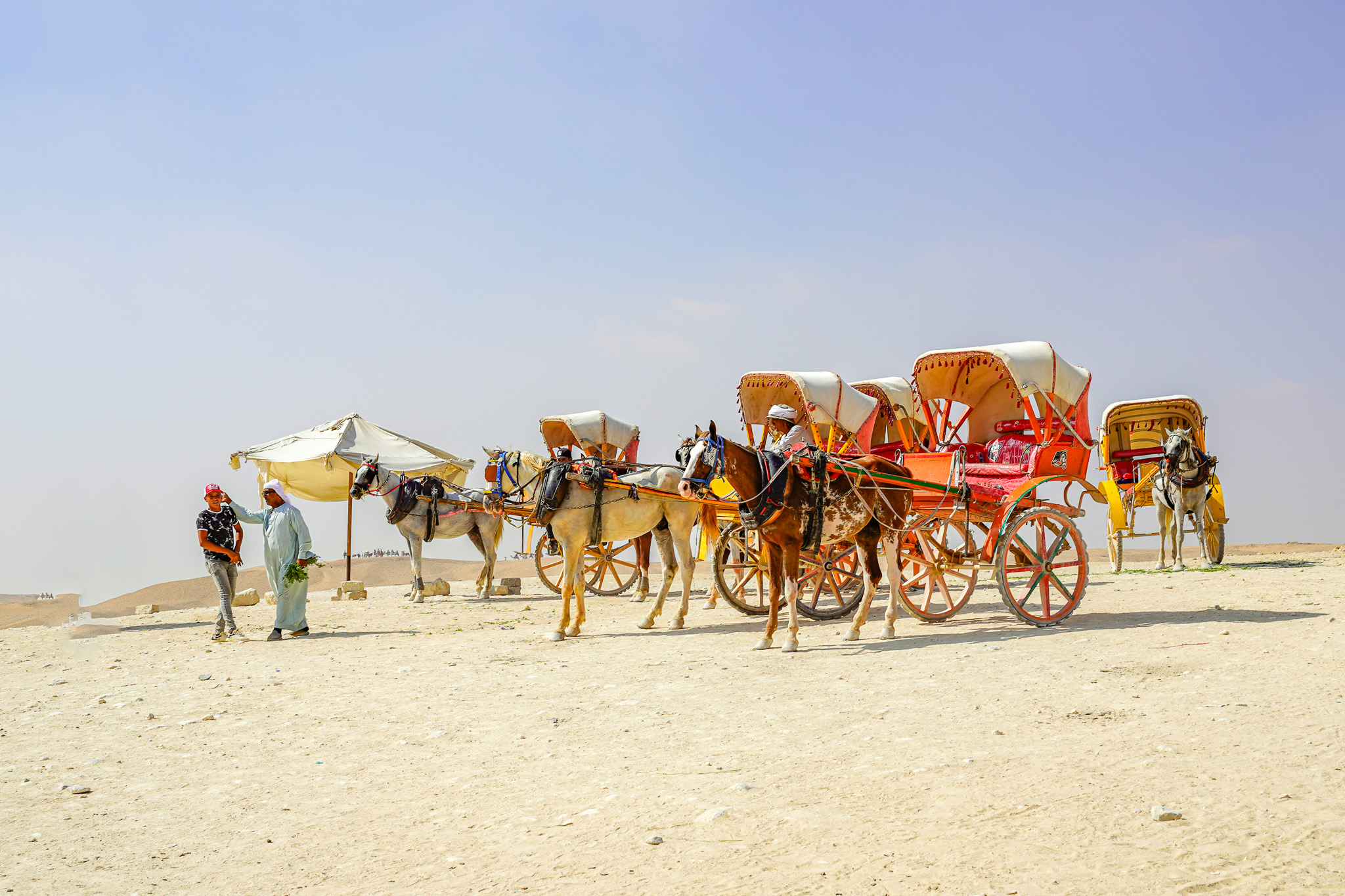
Horse drawn carriage 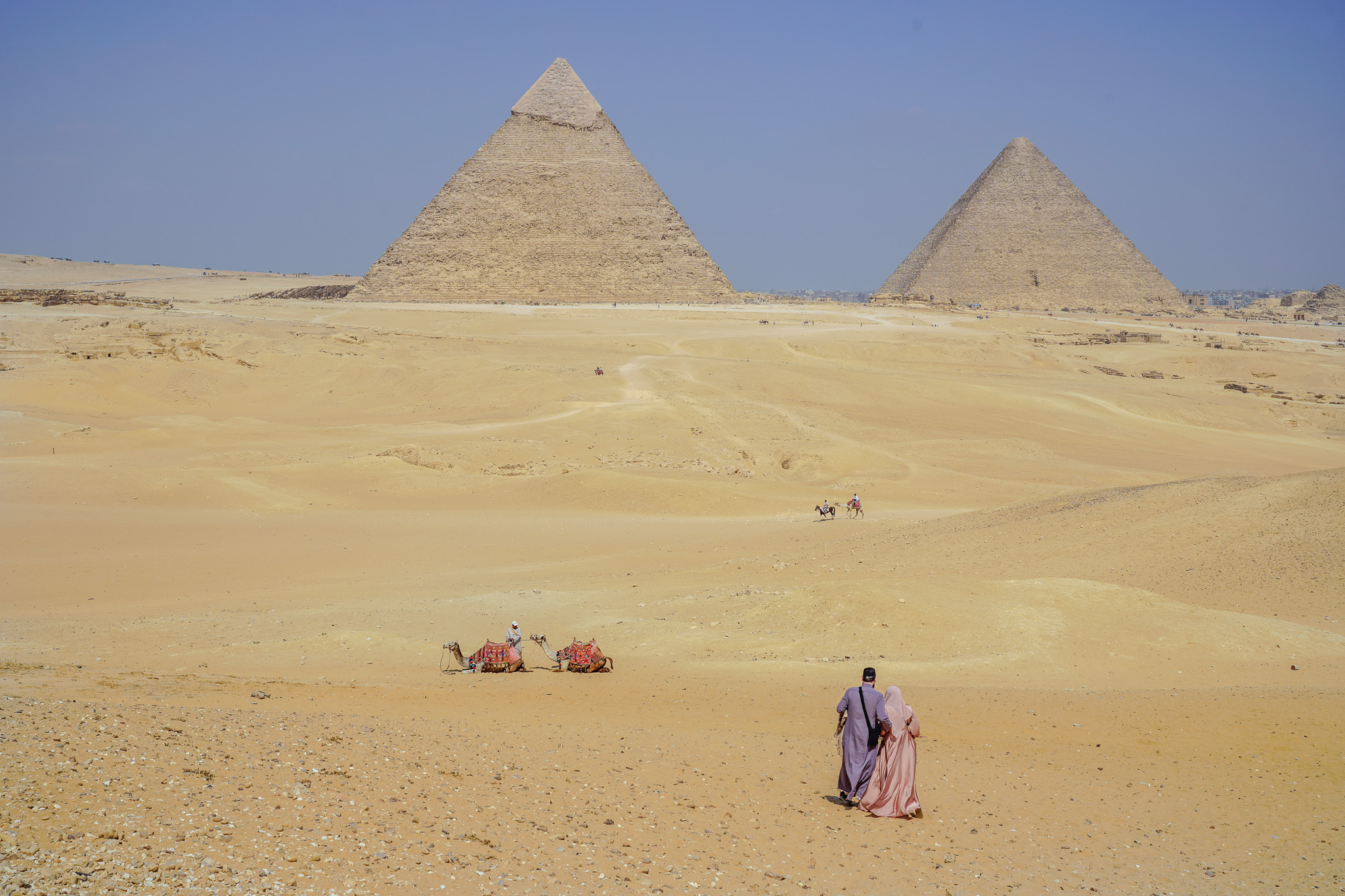
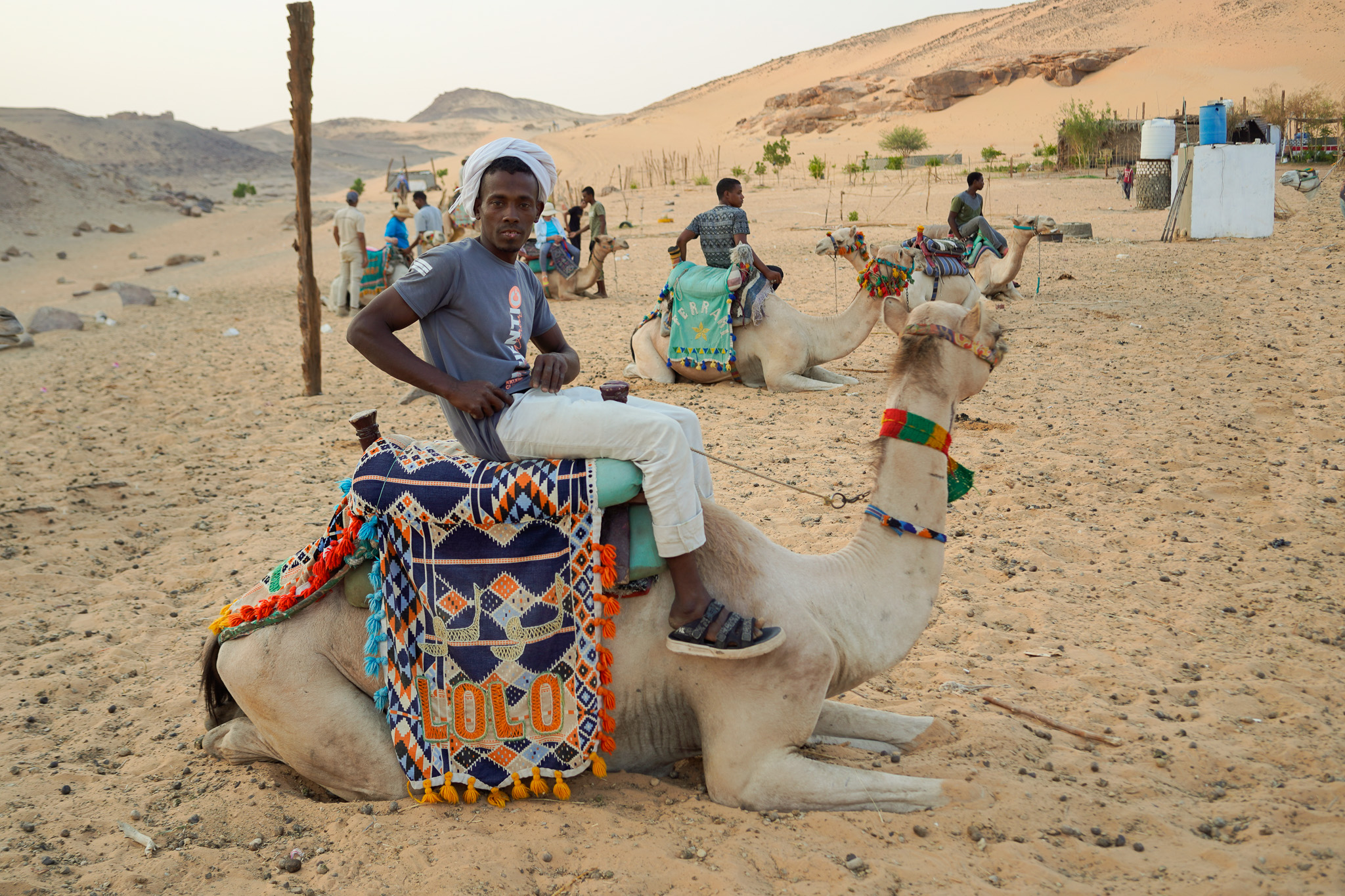
Camel rides awaits passengers 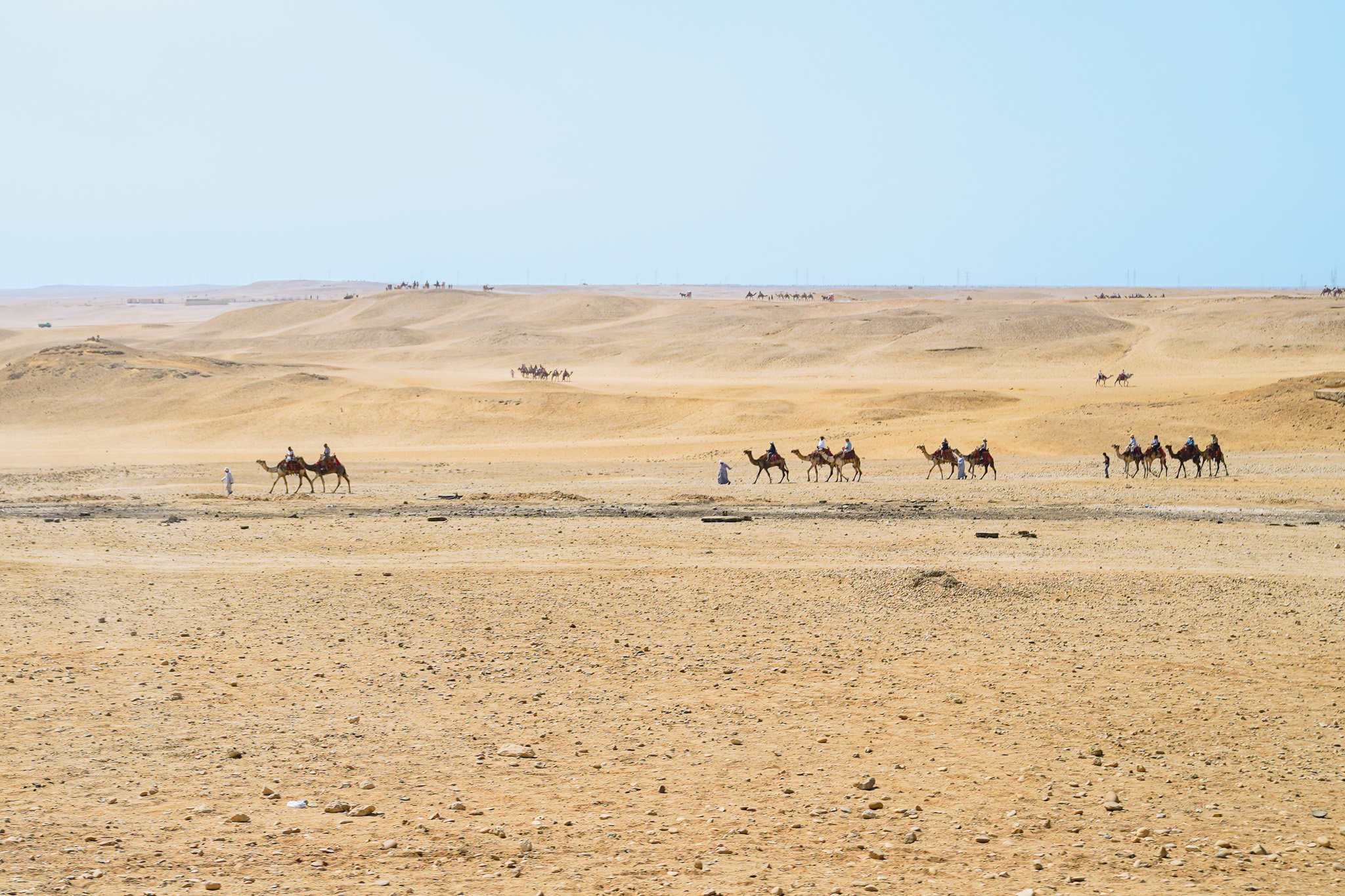
Camel caravans 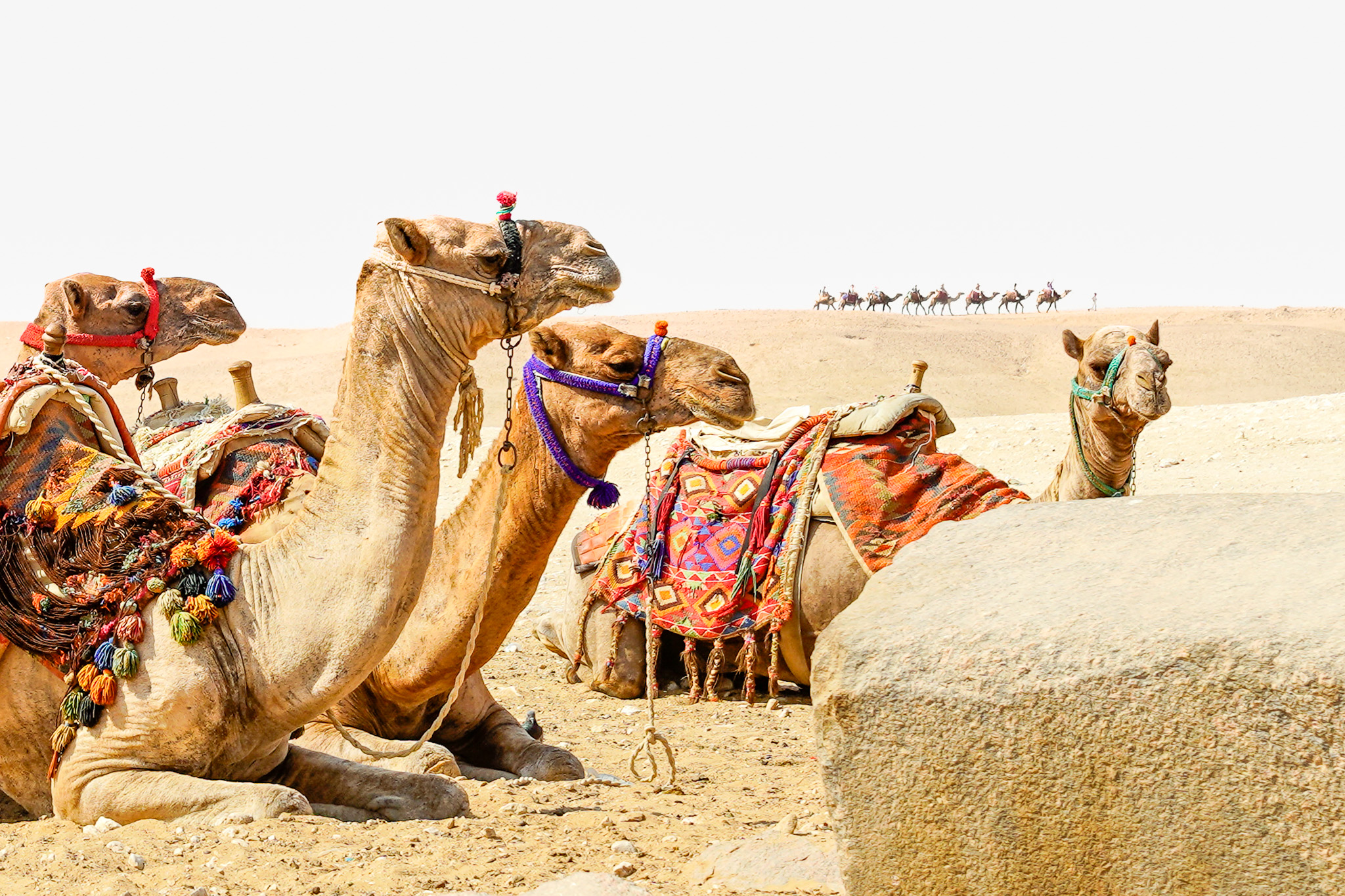
Camels awaiting a passenger 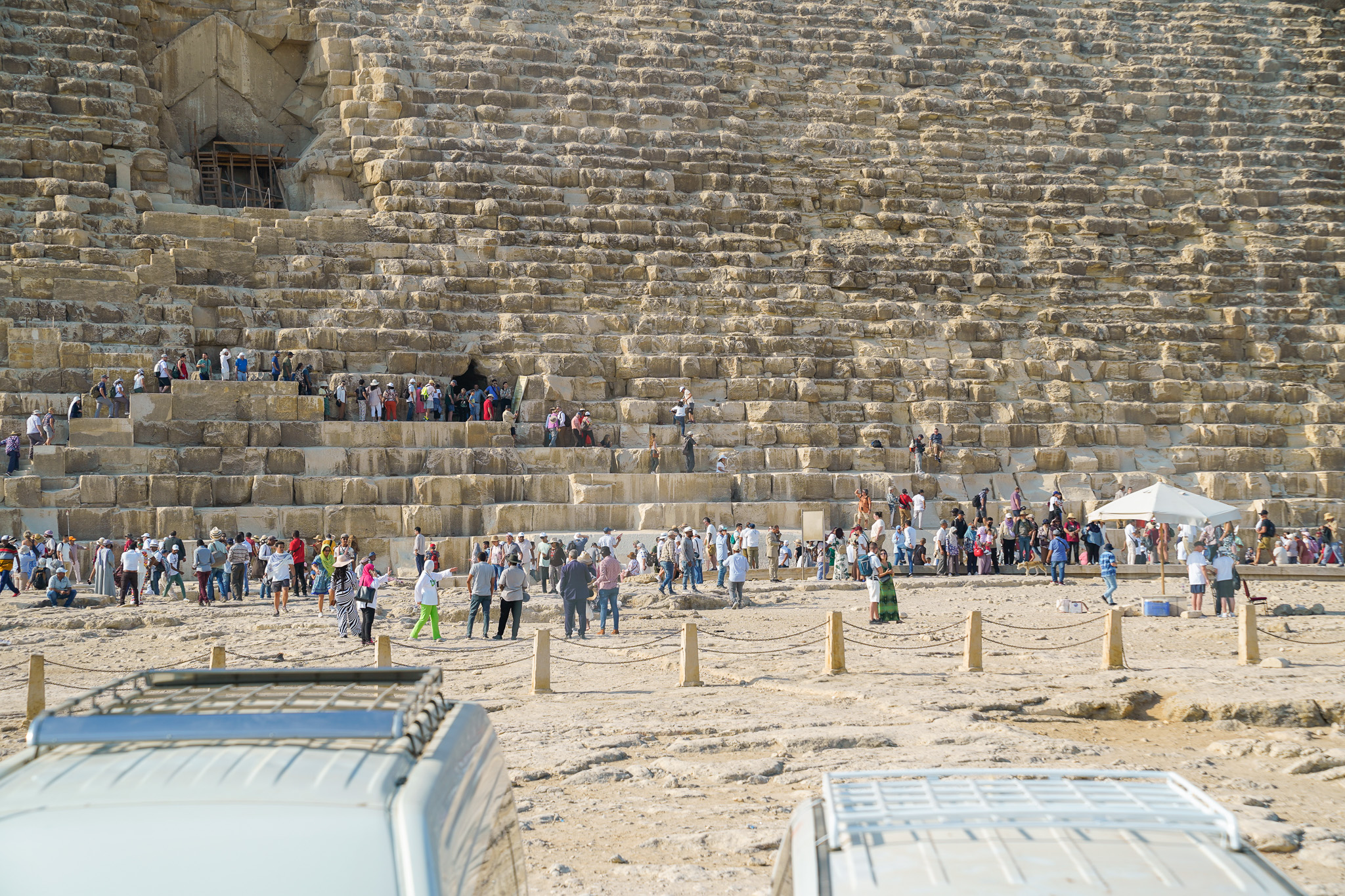
Entrance to the Great Pyramid of Giza 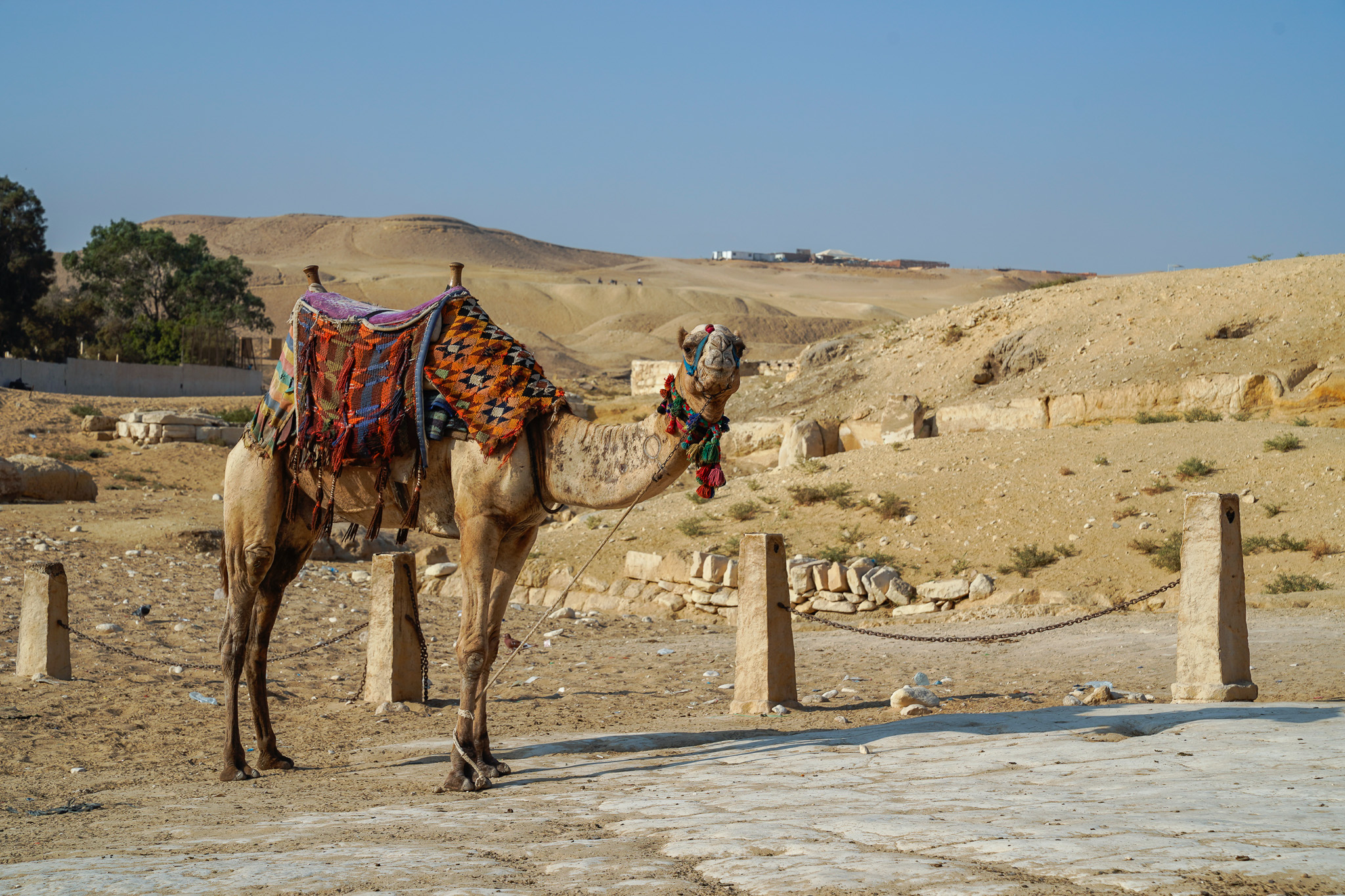
Camel awaits a passenger 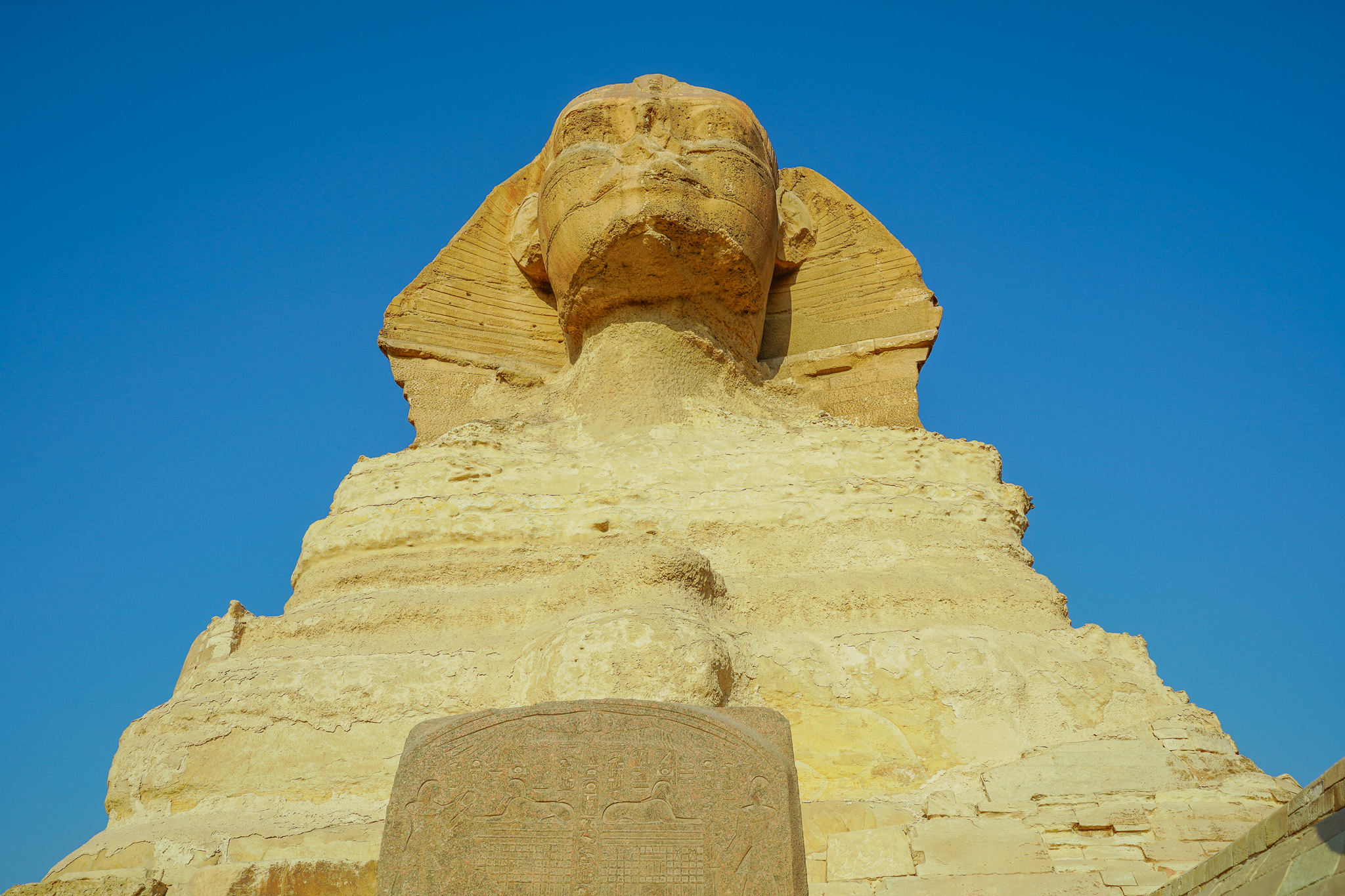
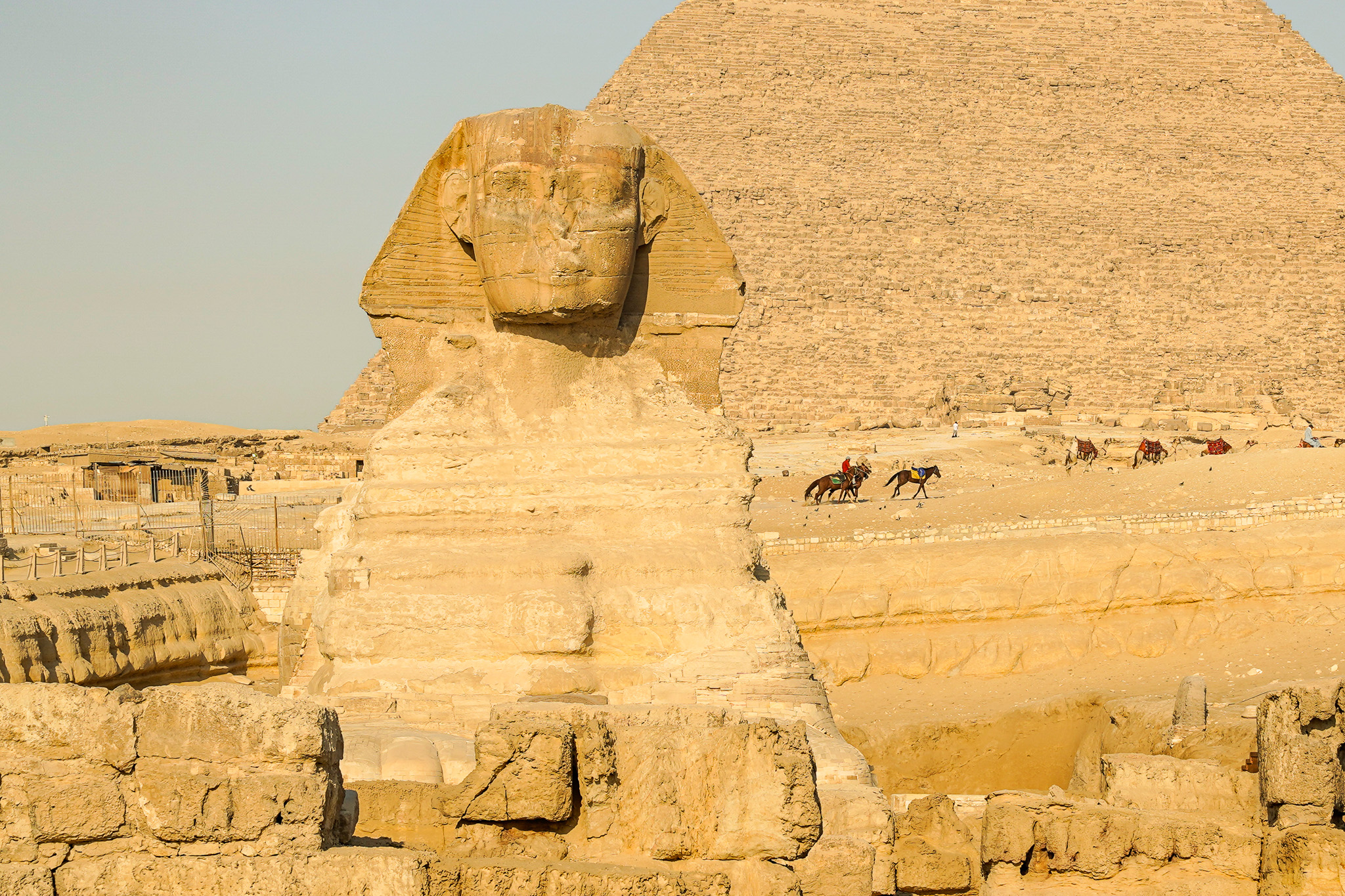
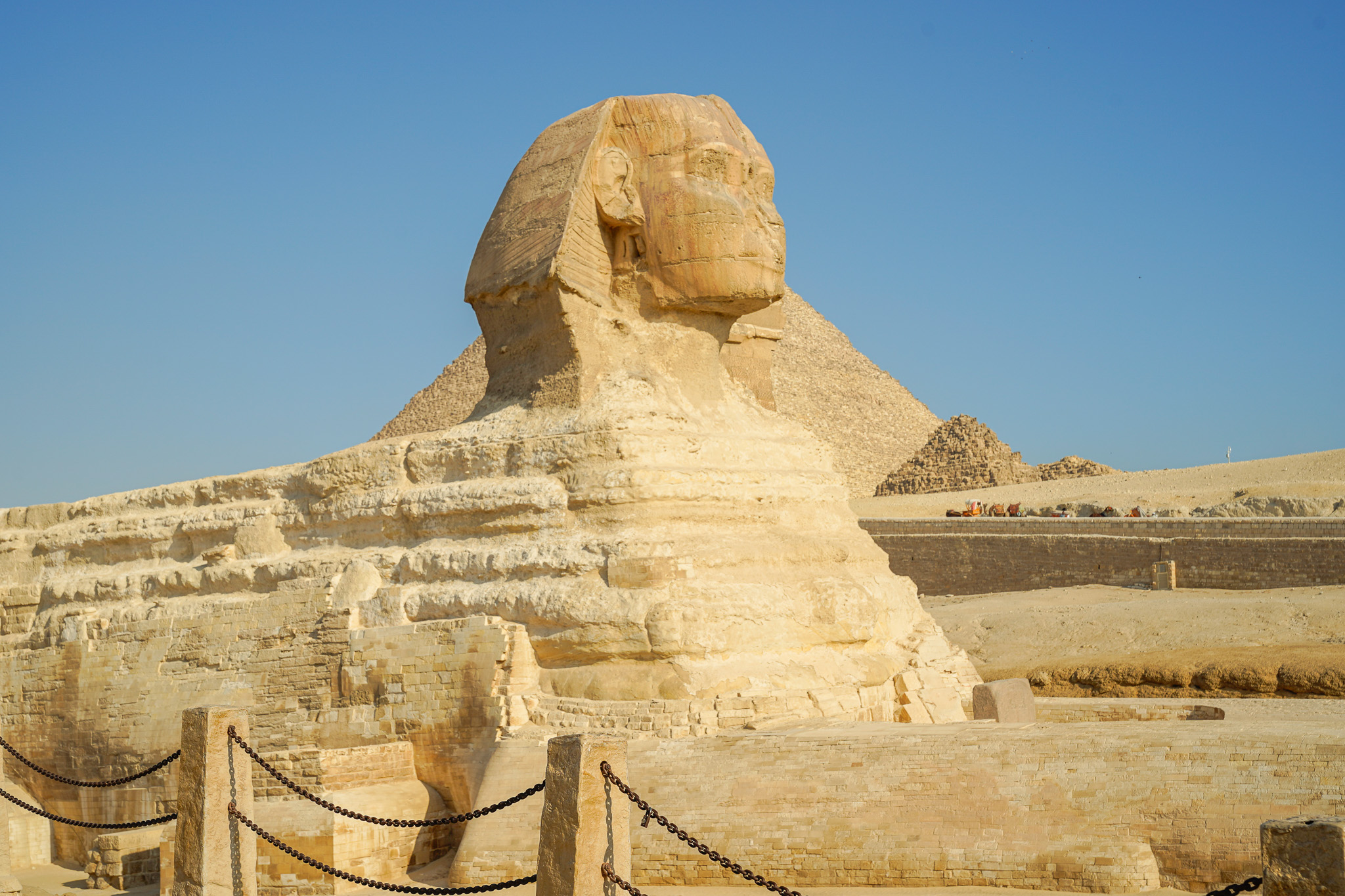
The Great Sphinx of Giza 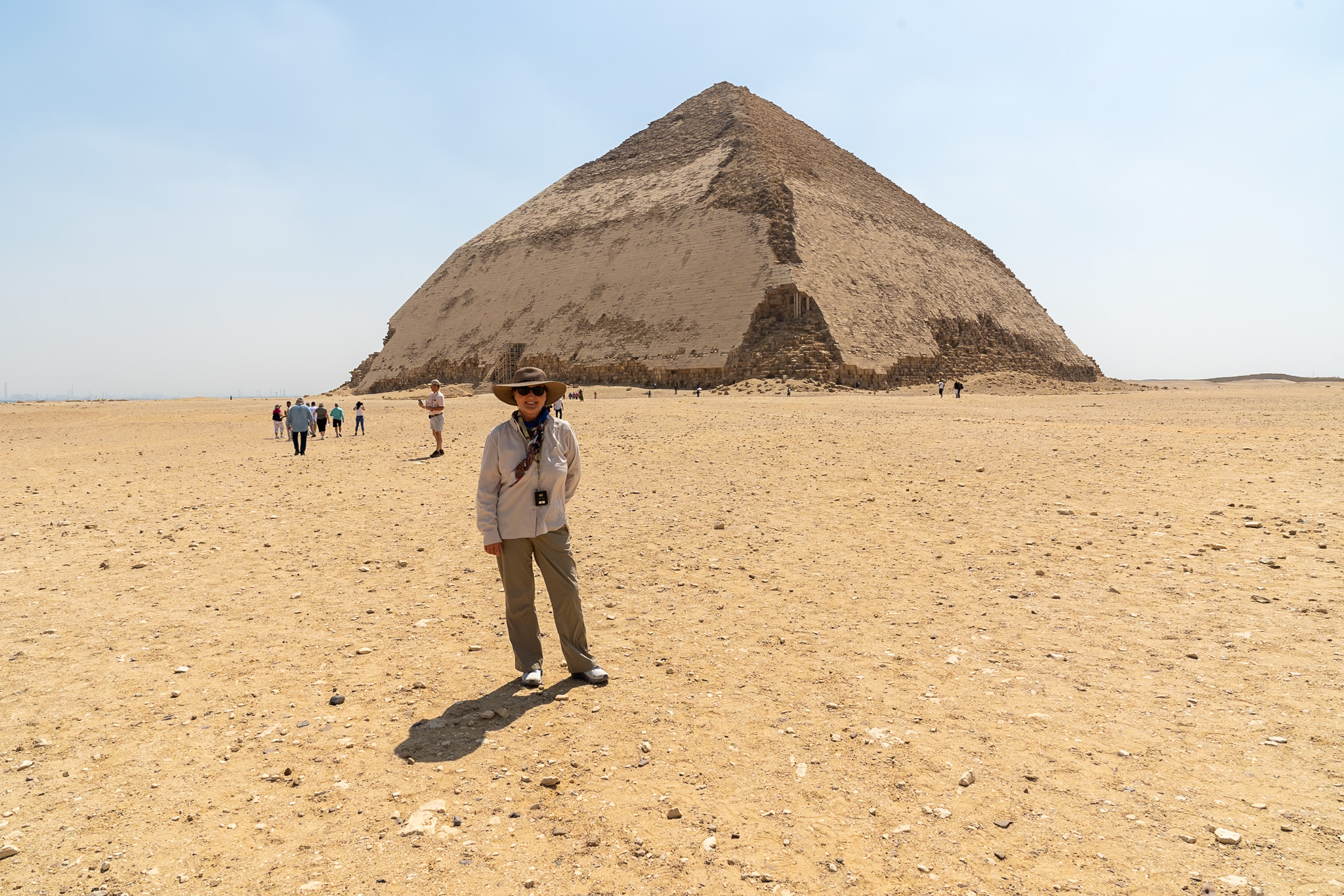
Bent Pyramid at Dahshur
Dr. Zahi Hawass was standing between the paws of the Sphinx when we arrived. The renowned archeologist looked like he’d just stepped out of the Archeological Paths ads, wearing his world-famous Stetson hat and blue jeans. He gave a captivating lecture about his study and restoration of the Sphinx. For centuries, people pondered whether the monument held more treasures of ancient Egypt inside its colossal body. However, the enigmatic Sphinx hid nothing but the extraordinary history it witnessed throughout the ages. Dr. Hawass spoke endearingly of Egypt’s treasures as if they were his family.
“The Sphinx wore a sad expression before I began its restoration, but afterward,” he said, “it appeared to smile.” After a photo op with Dr. Hawass, we all got to stand underneath the Sphinx, look up in awe, and smile back.
Upper Egypt – Luxor – Valley of the Kings, the Valley of the Queens, Karnak – UNESCO World Heritage site.
The modern city of Luxor is the site of the ancient city of Thebes. Thebes was the capital of Egypt during part of the Middle Kingdom (circa 2040 to 1750) and New Kingdom (circa 1550 to 1070 B.C.)
Luxor Temple
The lit statues glowed otherworldly against a dark sky—like ghosts. We were at the entrance to Luxor Temple, the Pylon of Ramesses II. Dr Hawass arrived as we studied the scene. In Luxor, he said, we were in the heart of the Egyptian Golden Age, the New Kingdom. As we entered the temple, the foot of the colossal statue was at my eye level. I saw Queen Nefertari tucked in behind the Pharoah’s leg, her hand resting on the back of his leg in a symbolic gesture of support.
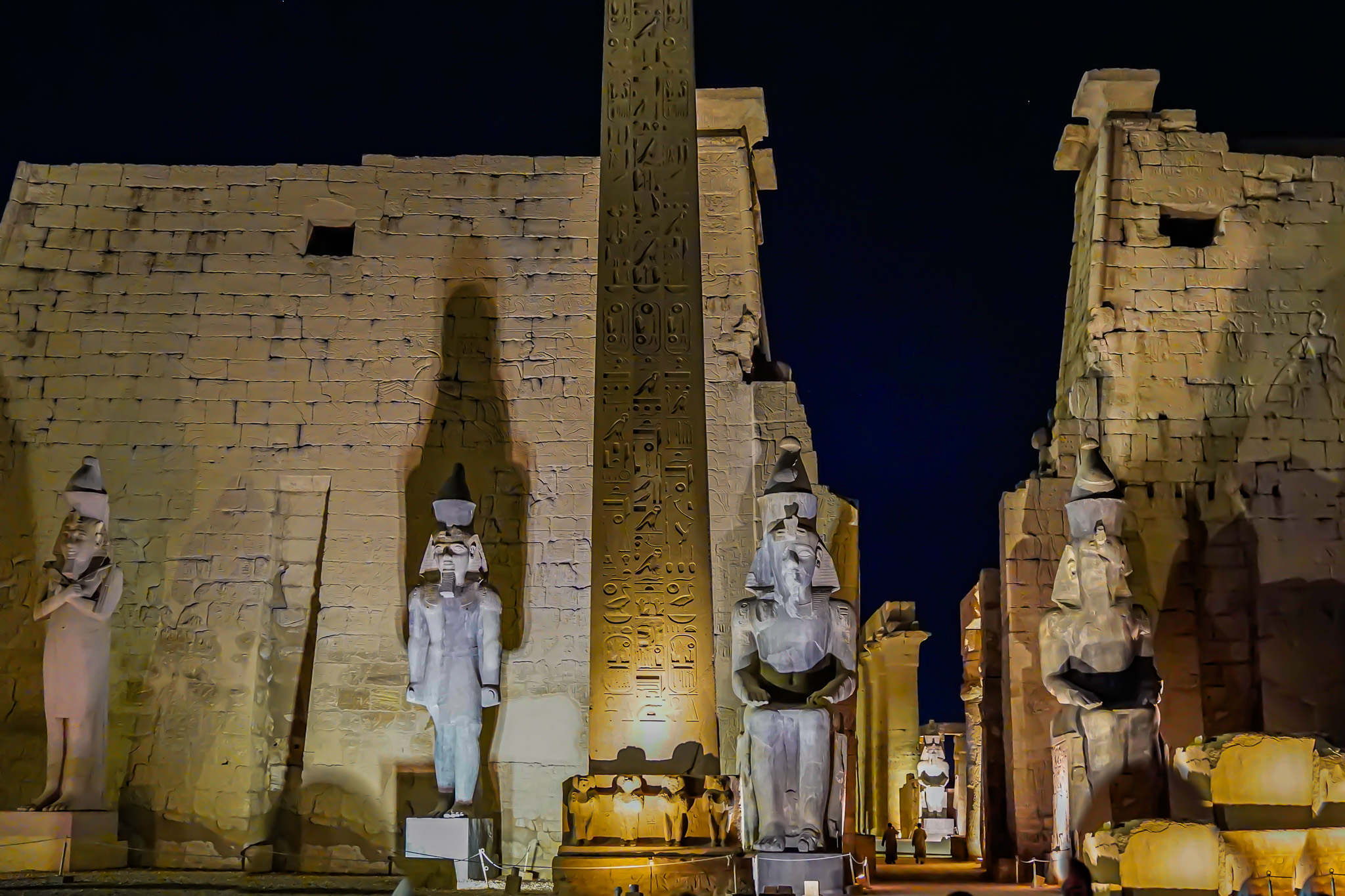
Luxor Temple – Pylon of Ramesses II with Obelisk 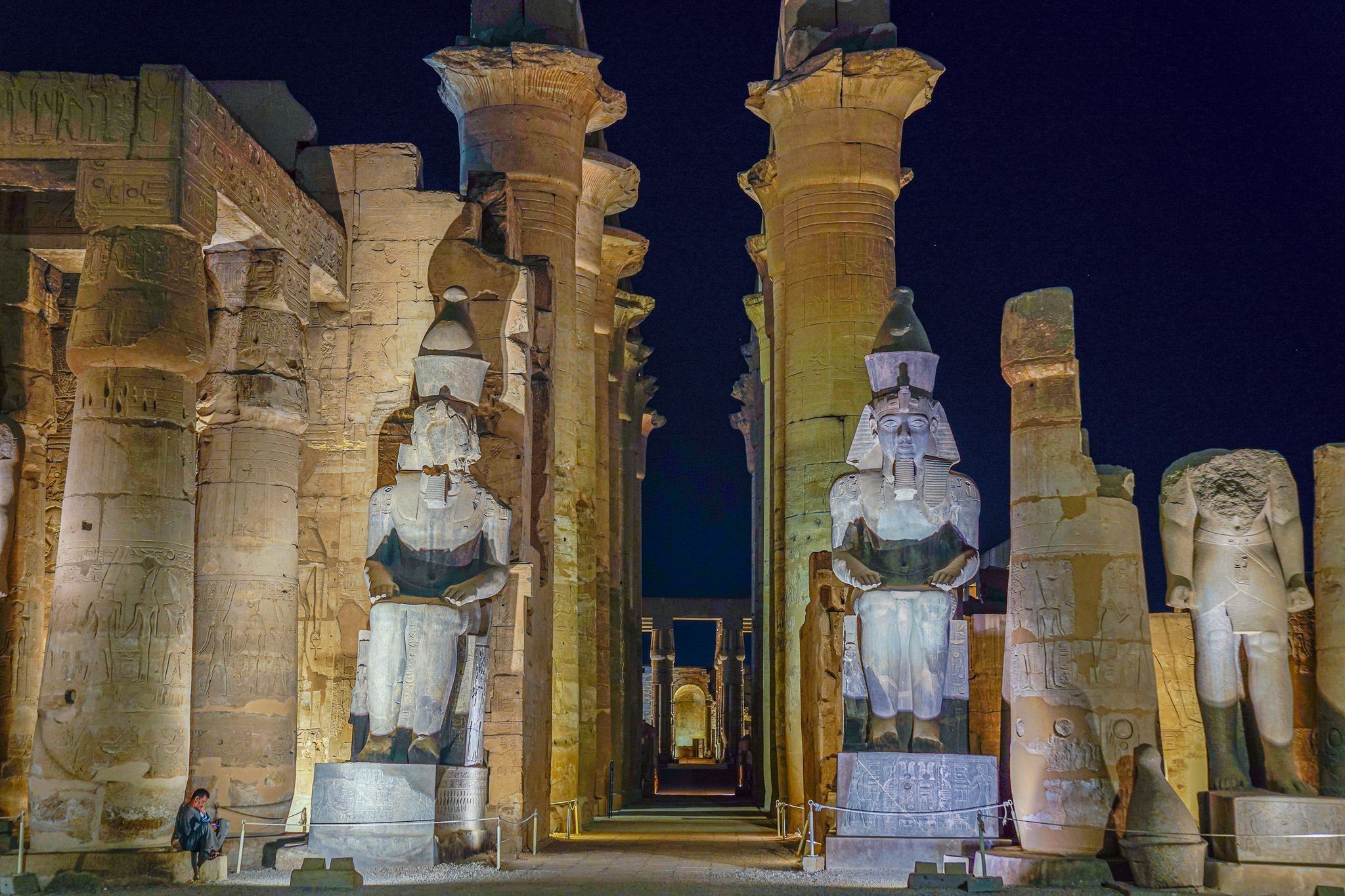
Luxor Temple – Pylon of Ramesses II 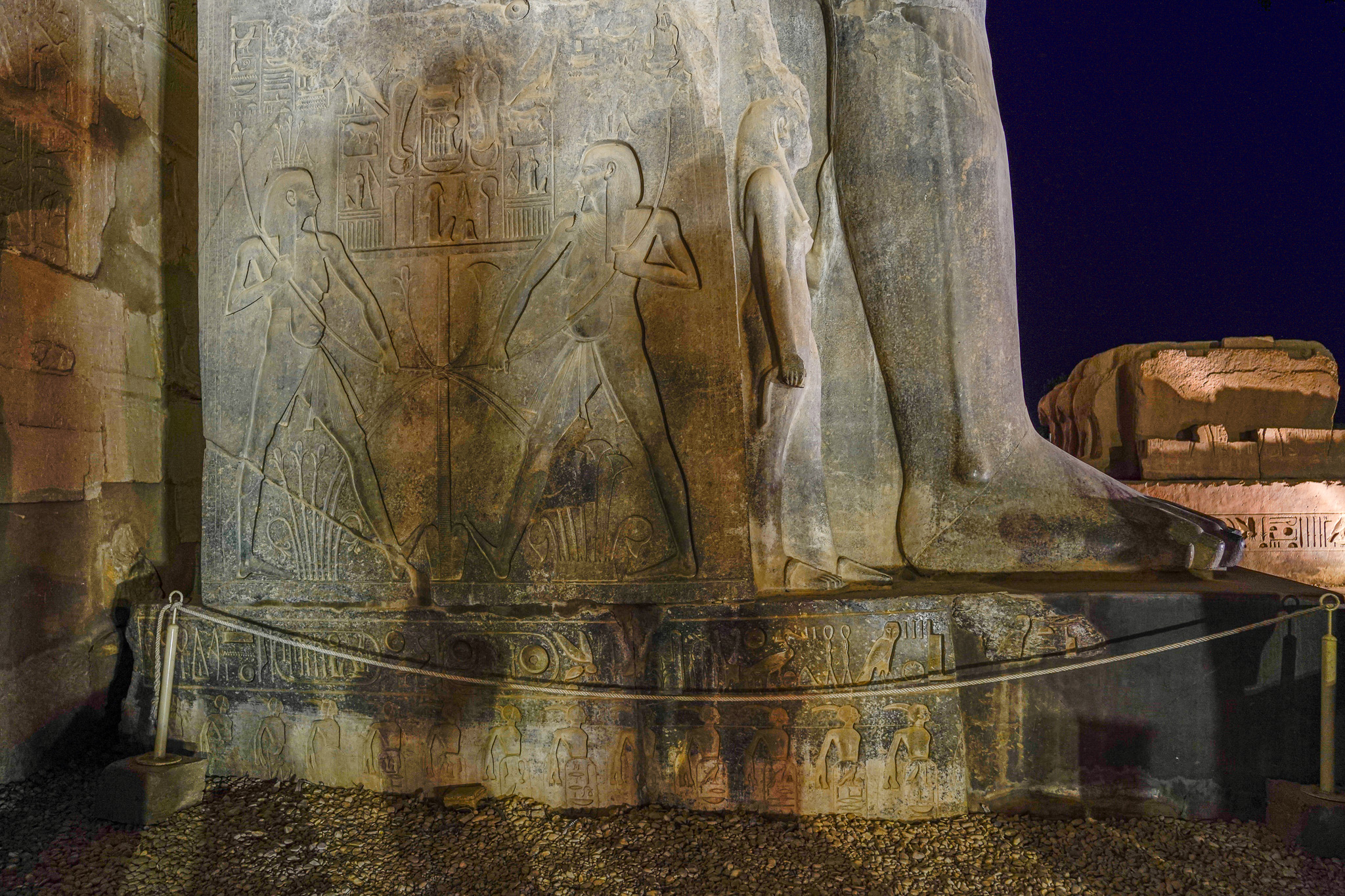
Foot of Ramesses II and Queen Nefertari 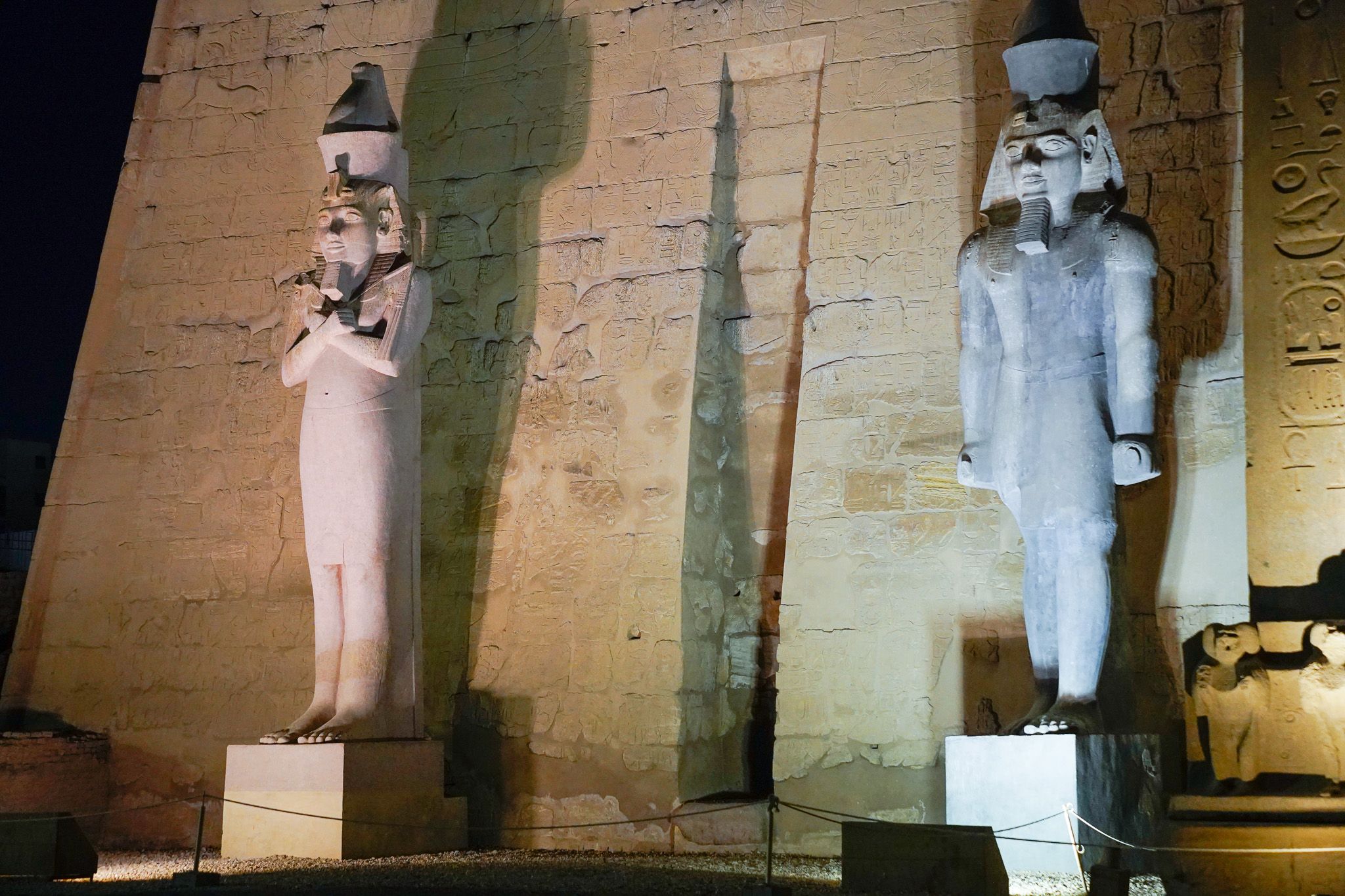
Ramesses II statues at the Luxor Temple 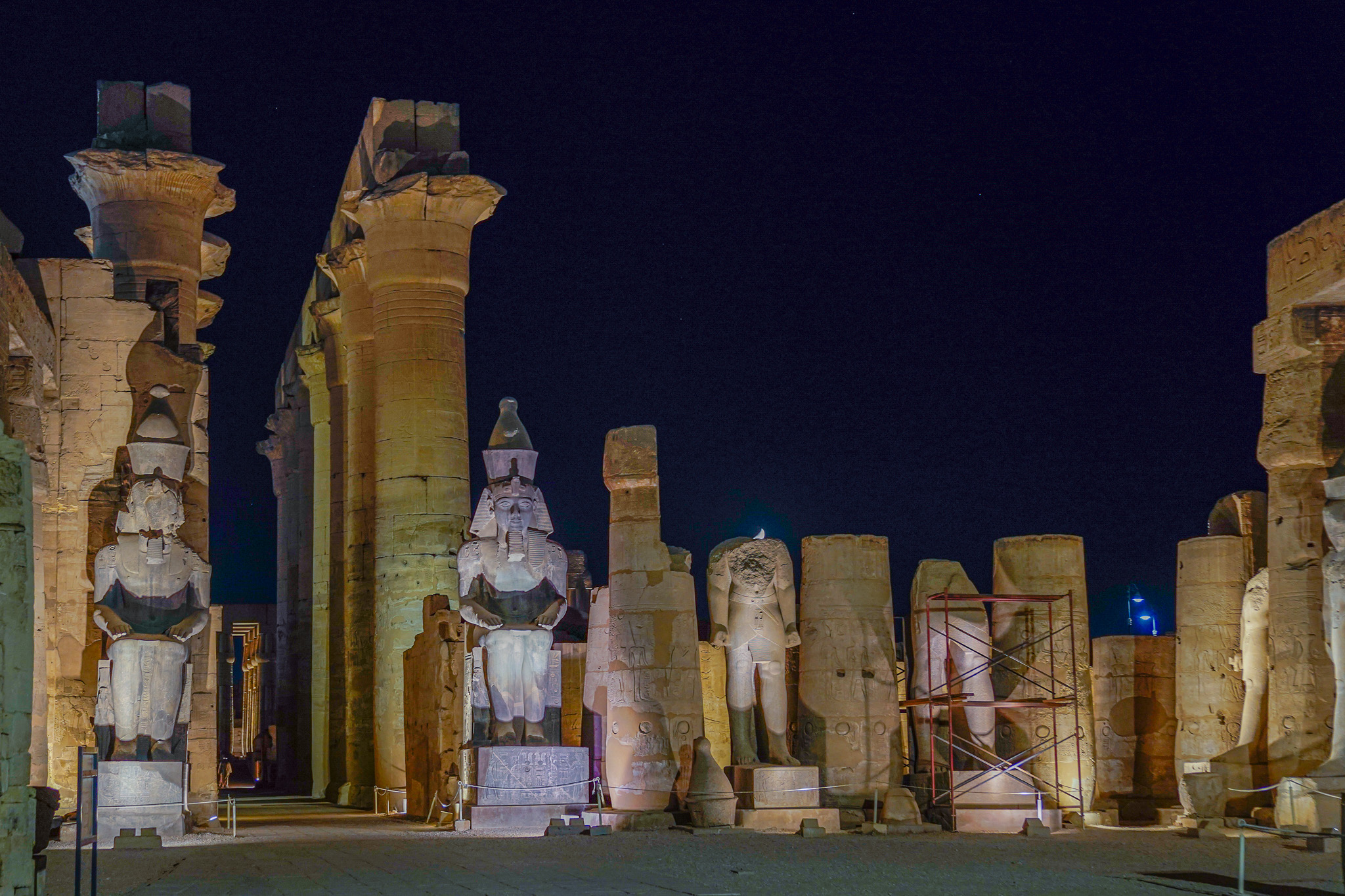
Luxor Temple 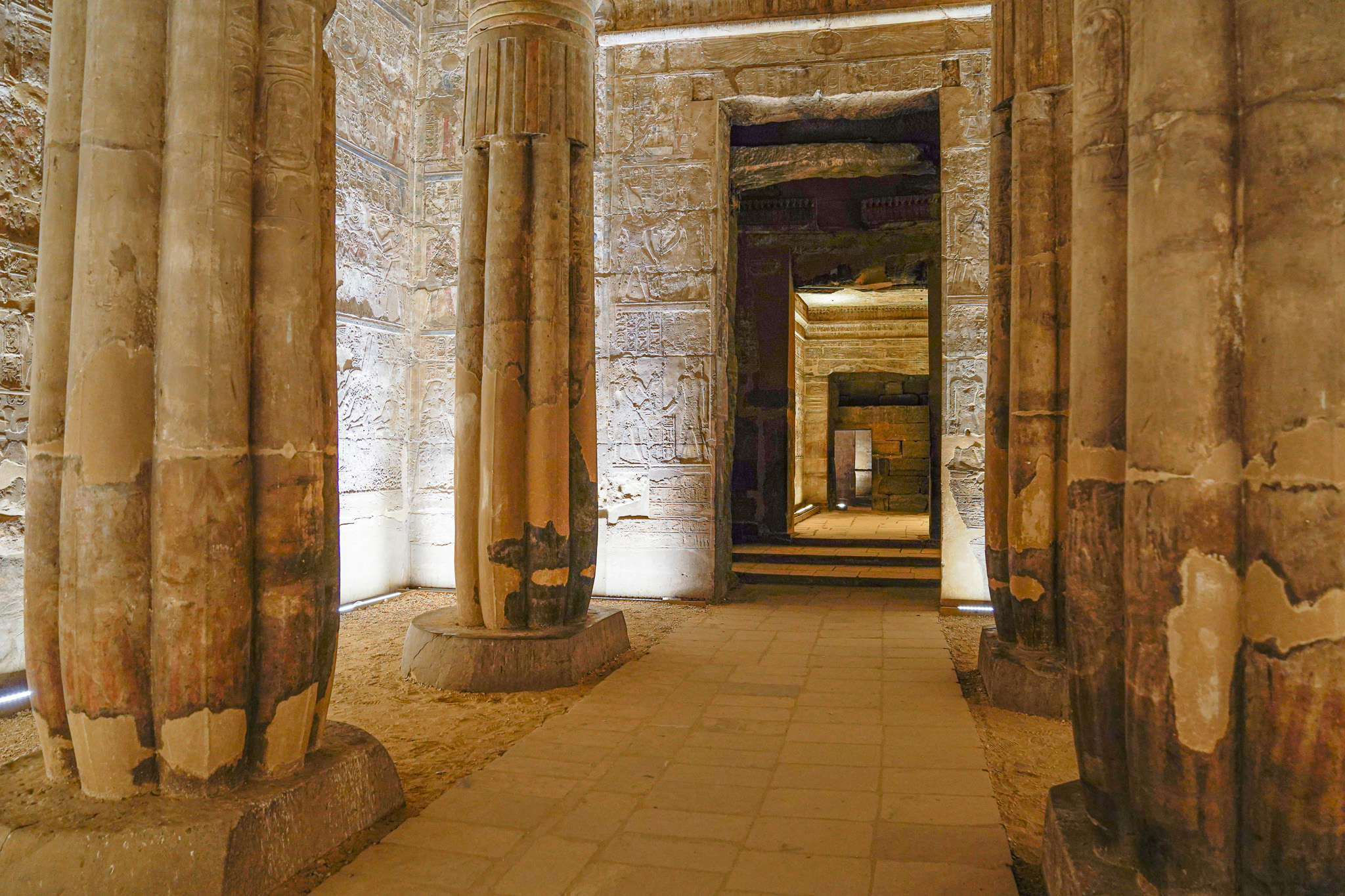
Luxor Temple 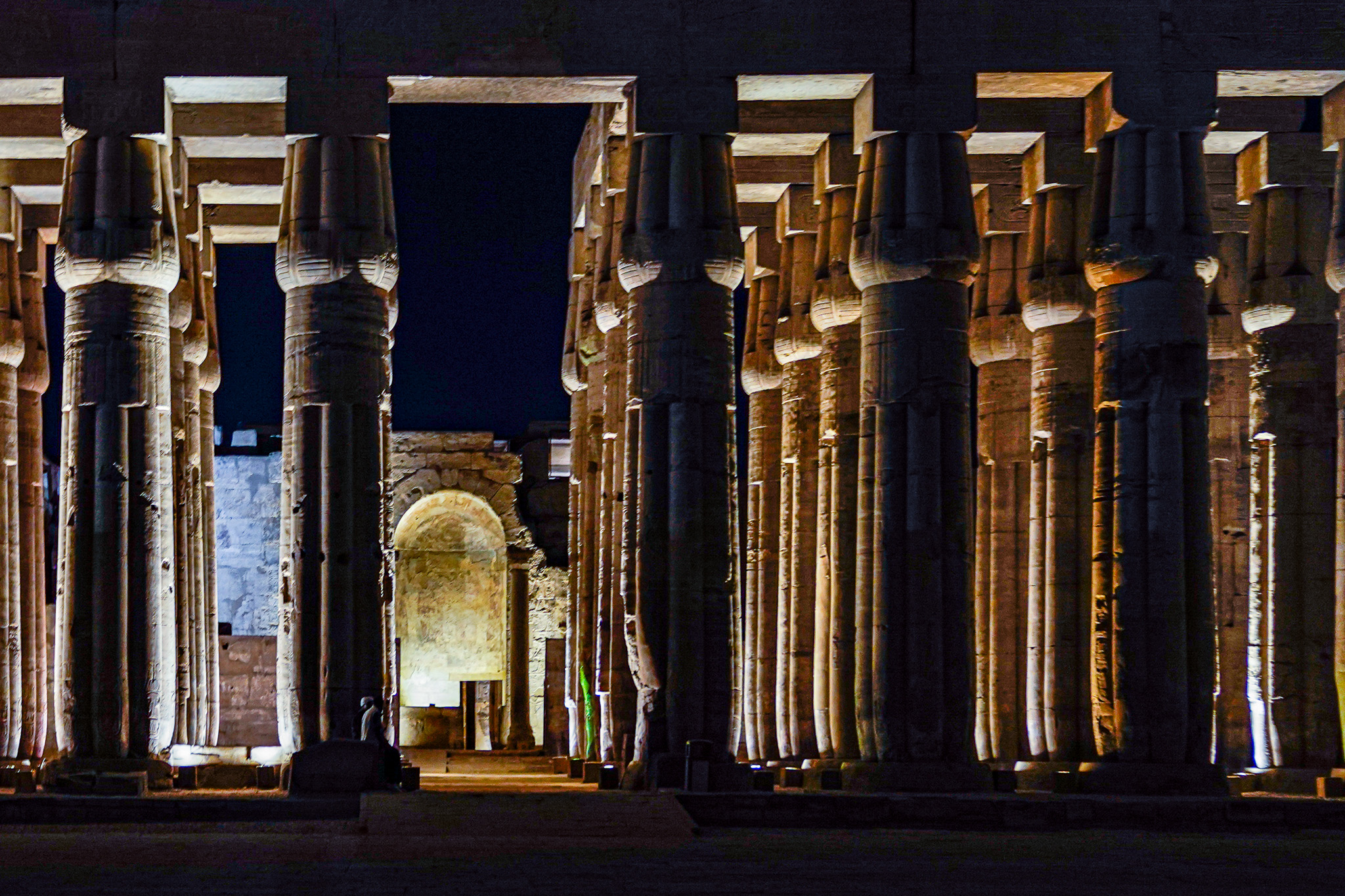
Luxor Temple 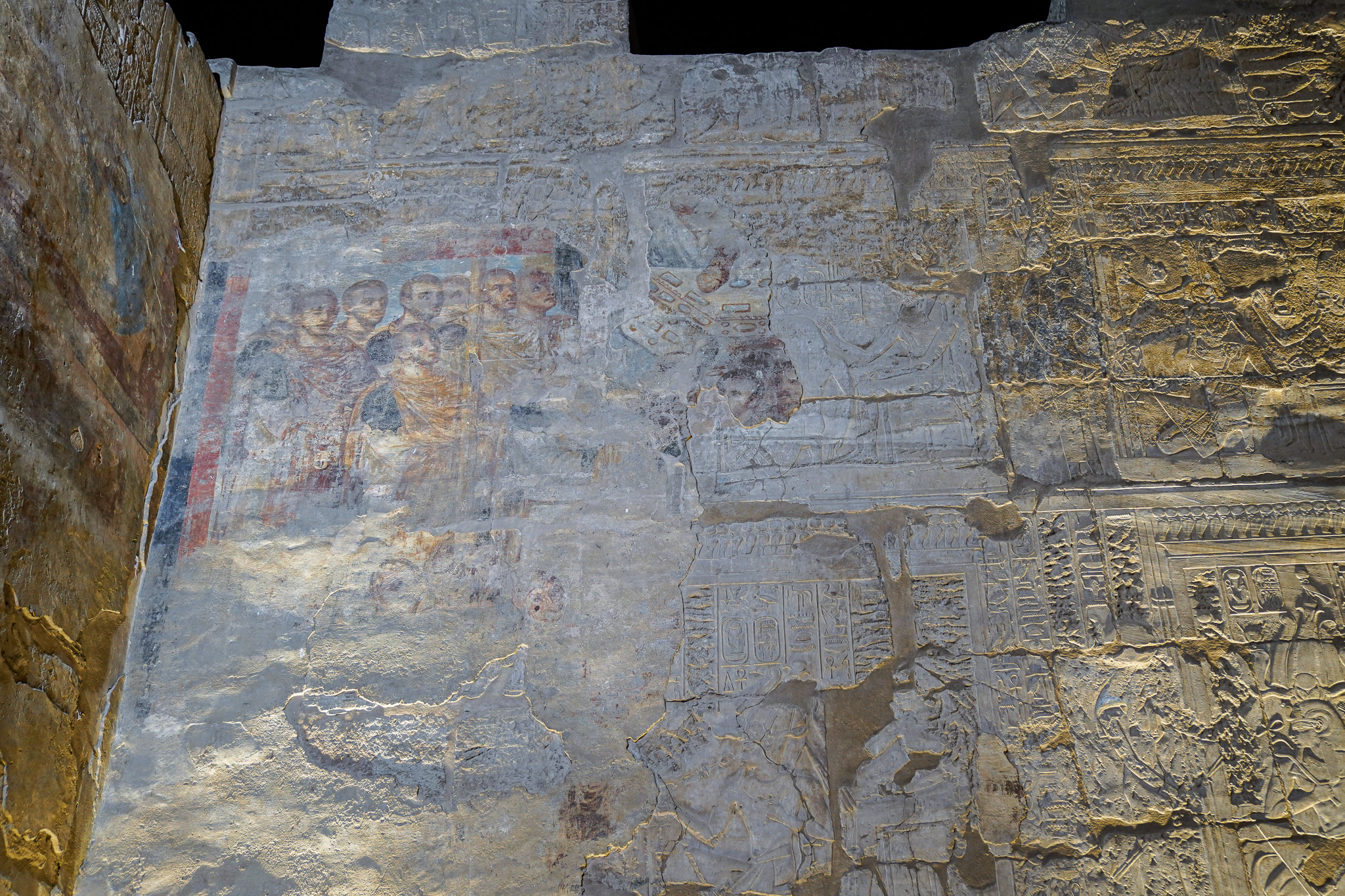
Roman painting on the southern wall – Roman occupation 3rd Century AD at Luxor Temple 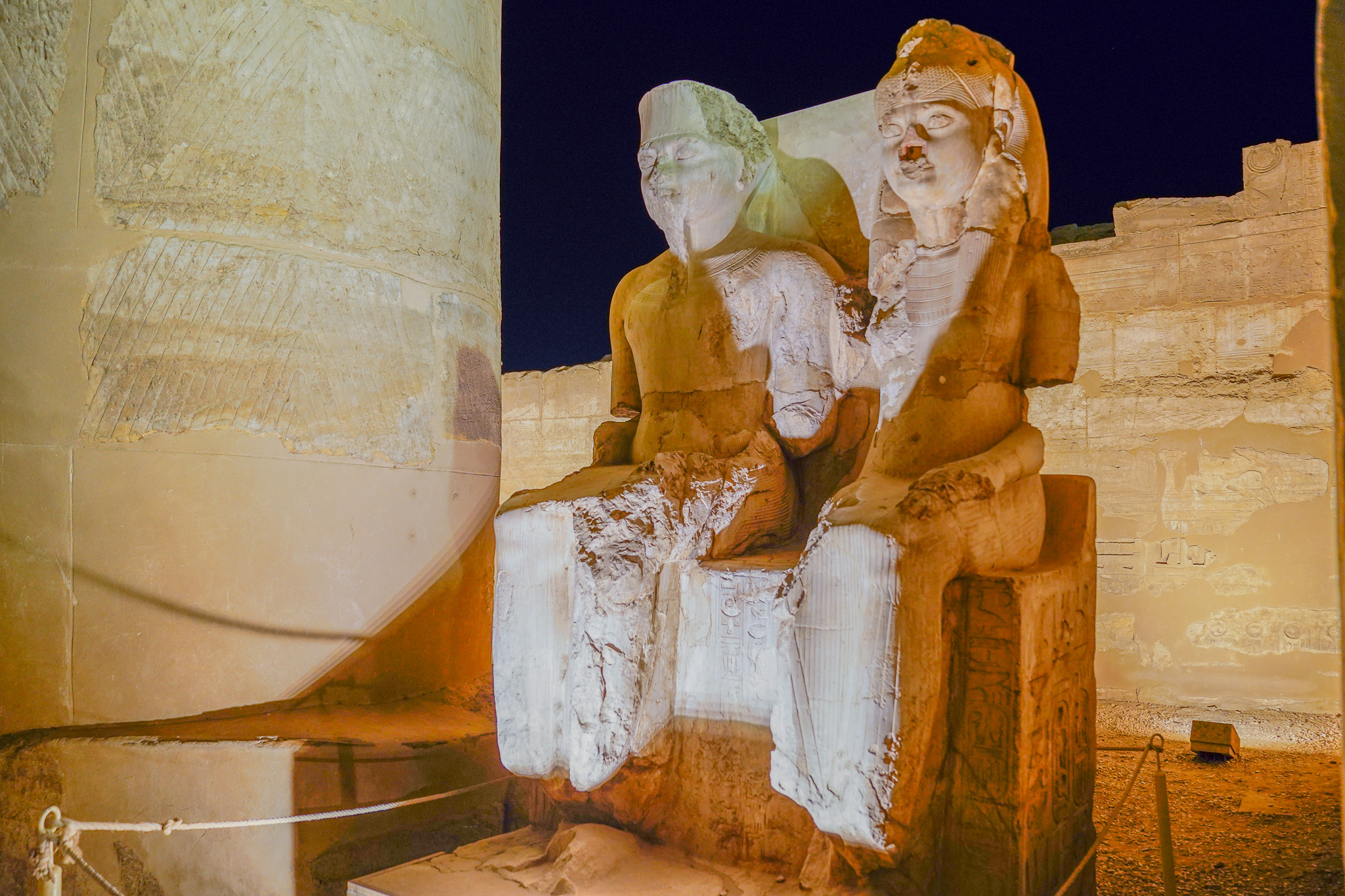
King Tutankhamun and consort Ankesenamun – Luxor Temple 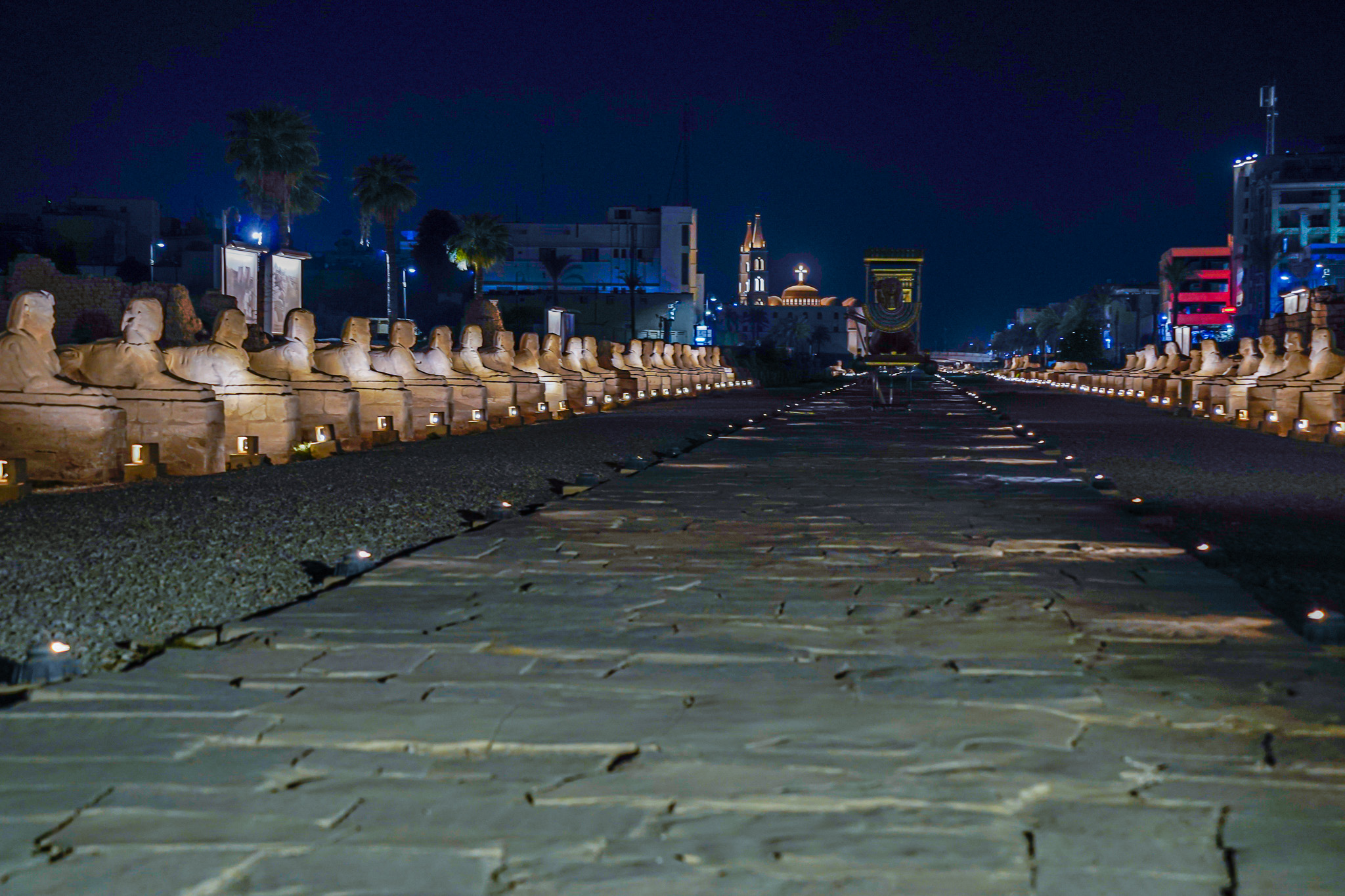
The Sphinz Avenue at Luxor Temple
Karnak Temple Complex
Dr. Mostafa Waziri is the Secretary General of the Supreme Council of Antiquities. Upon our arrival at the Karnak Temple Complex, he greeted us with exciting stories of the latest discoveries in Egypt. In addition to numerous cashes of mummies, the most significant discovery was an intact papyrus, 52 feet long and dated 50 B.C.E. Found in 2023, it is the first intact papyrus found in over a century.
The Karnak Temple Complex is the largest temple worldwide and took over a thousand years to complete (World Monuments Fund). We walked around the sprawling ruins of the Karnak Temple with Dr. Waziri. He showed us new areas where workers continue to clean and uncover colors, still brilliant after thousands of years.


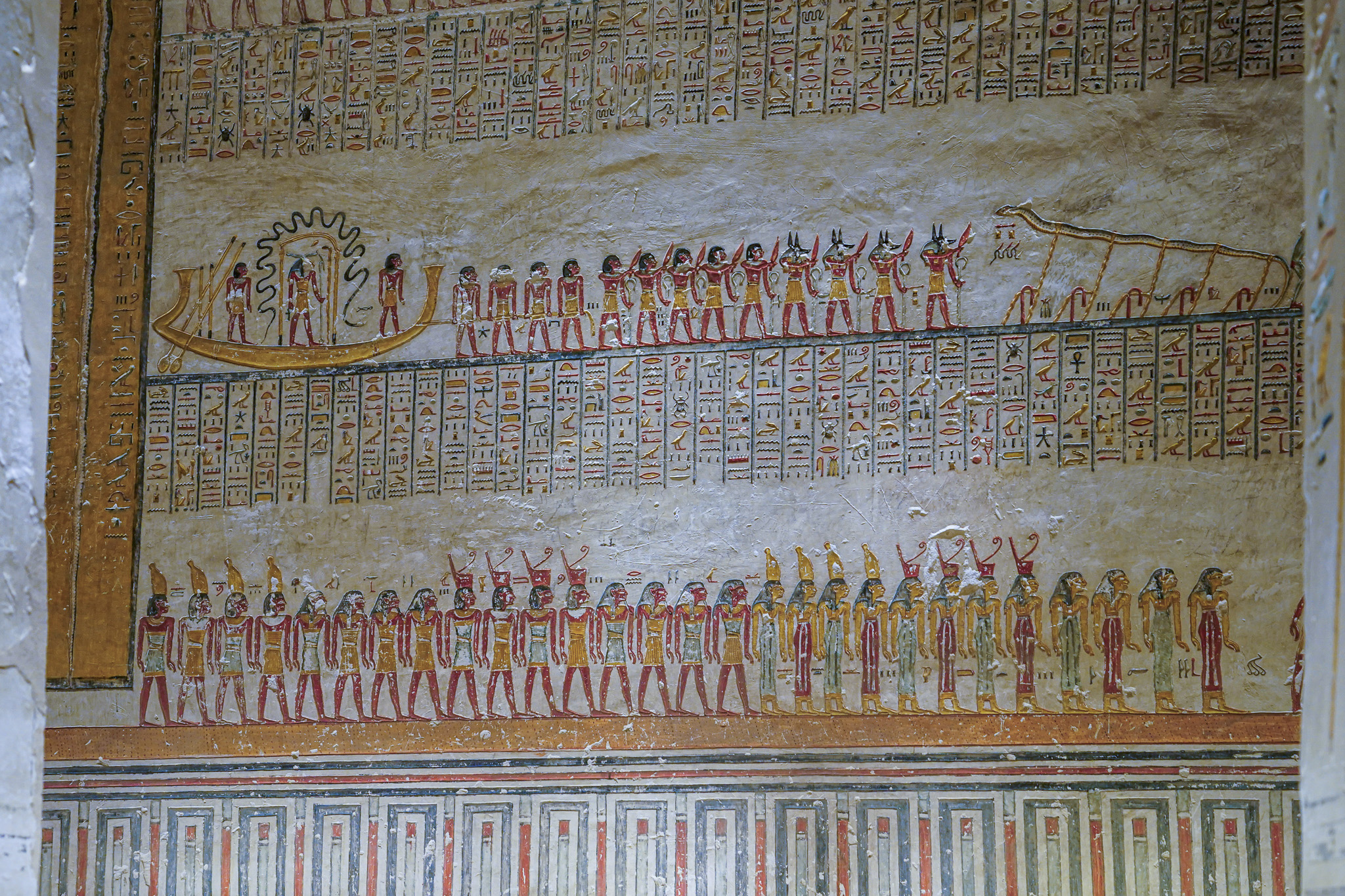
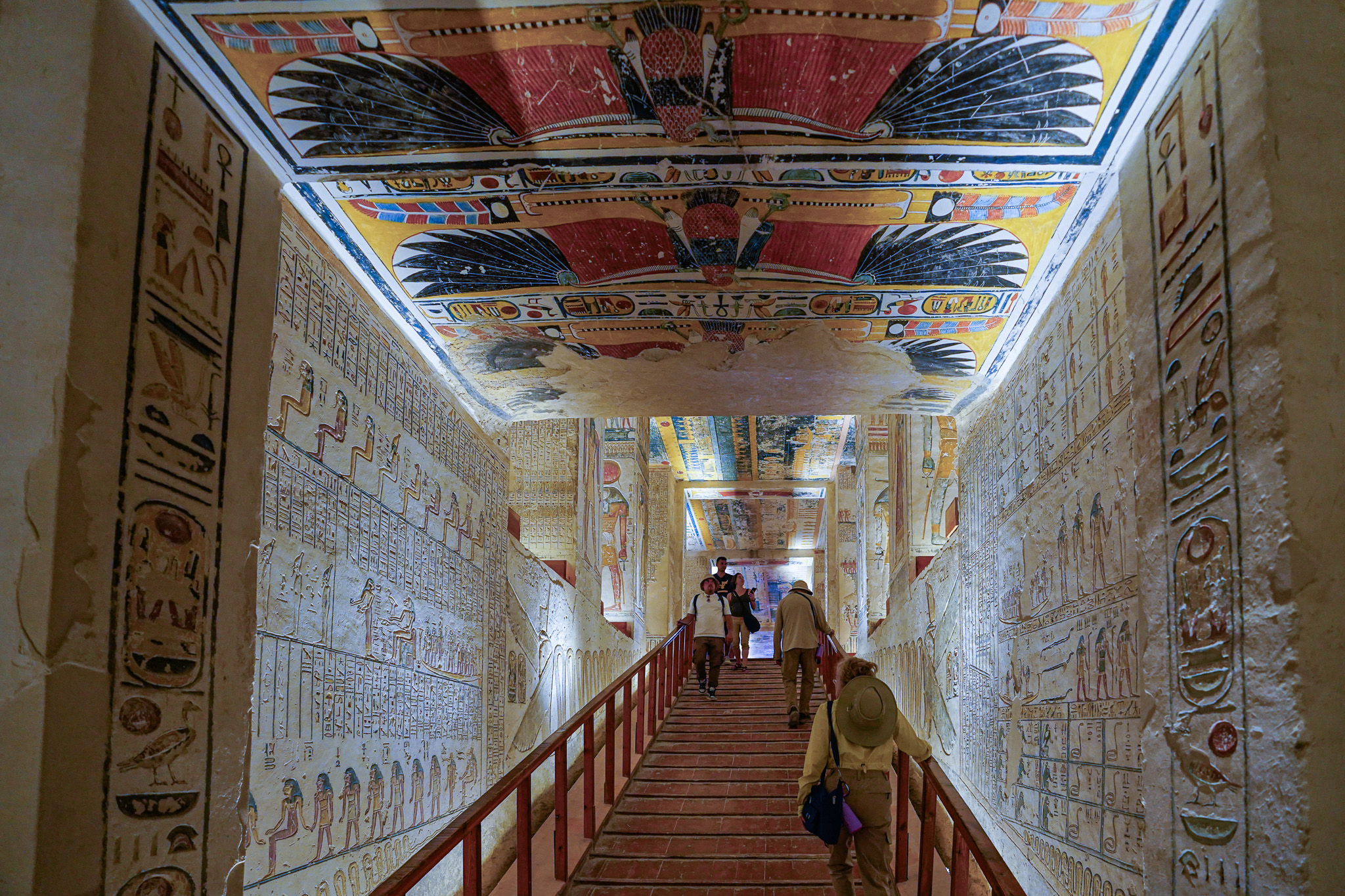
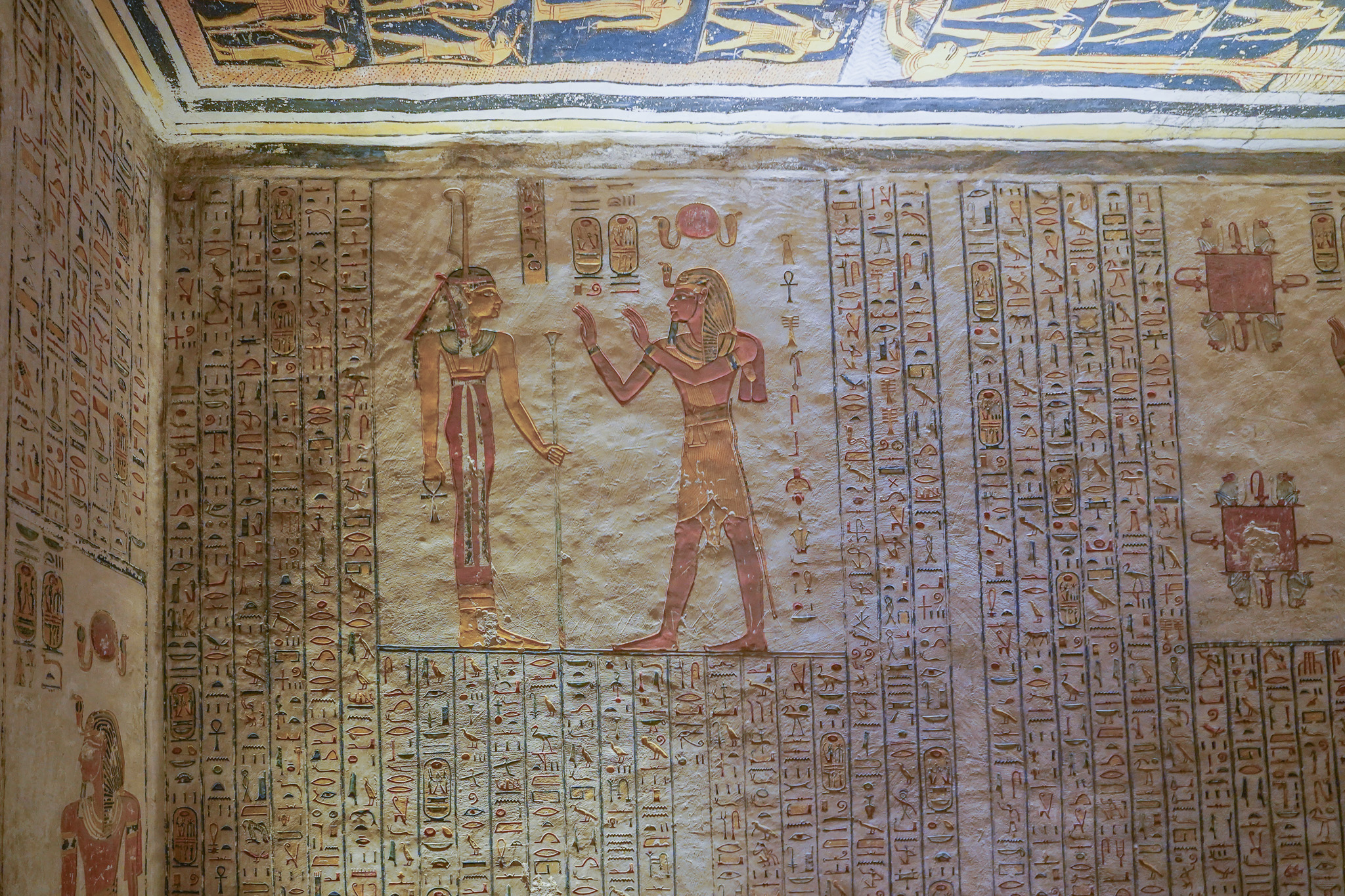
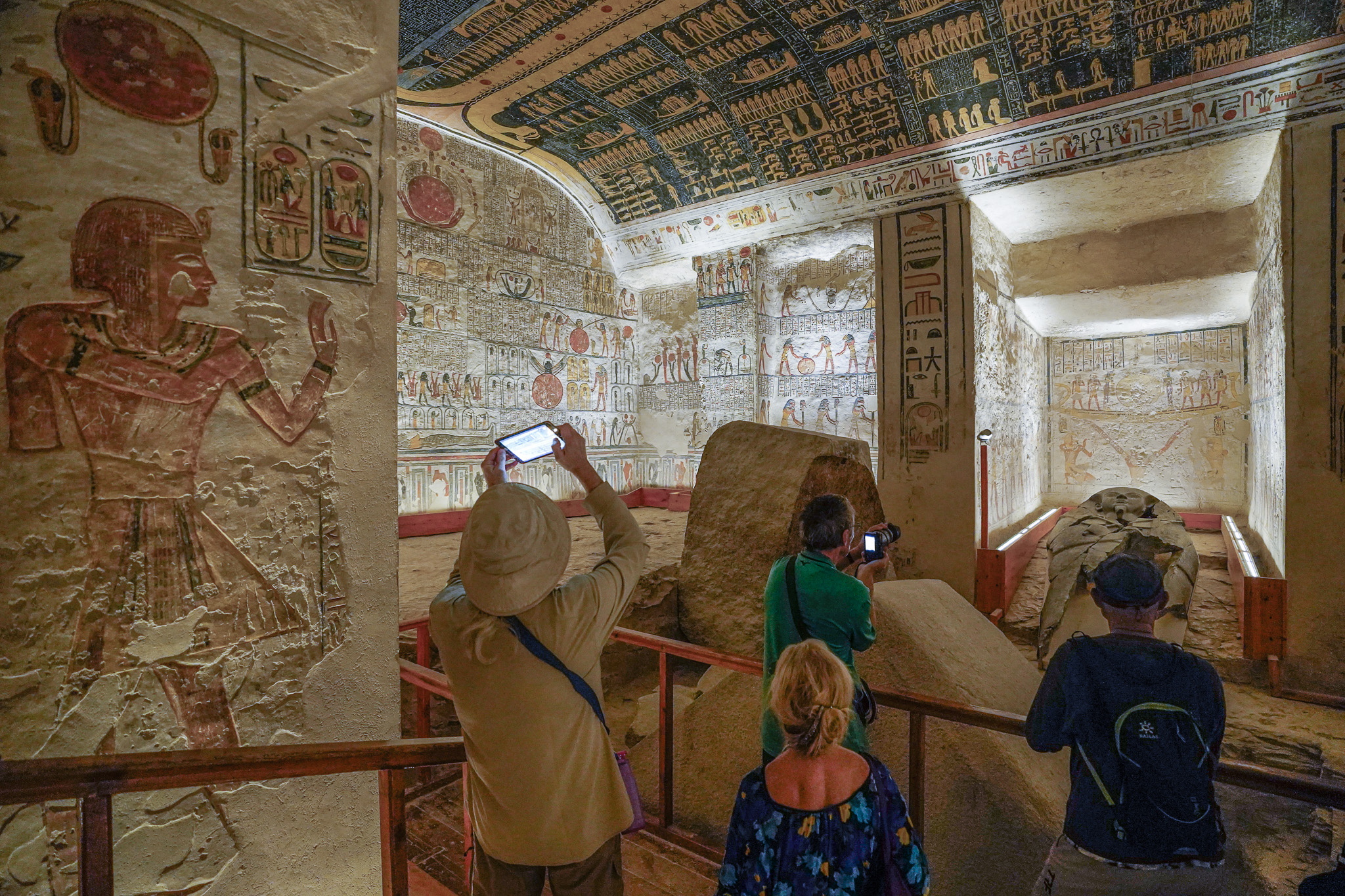
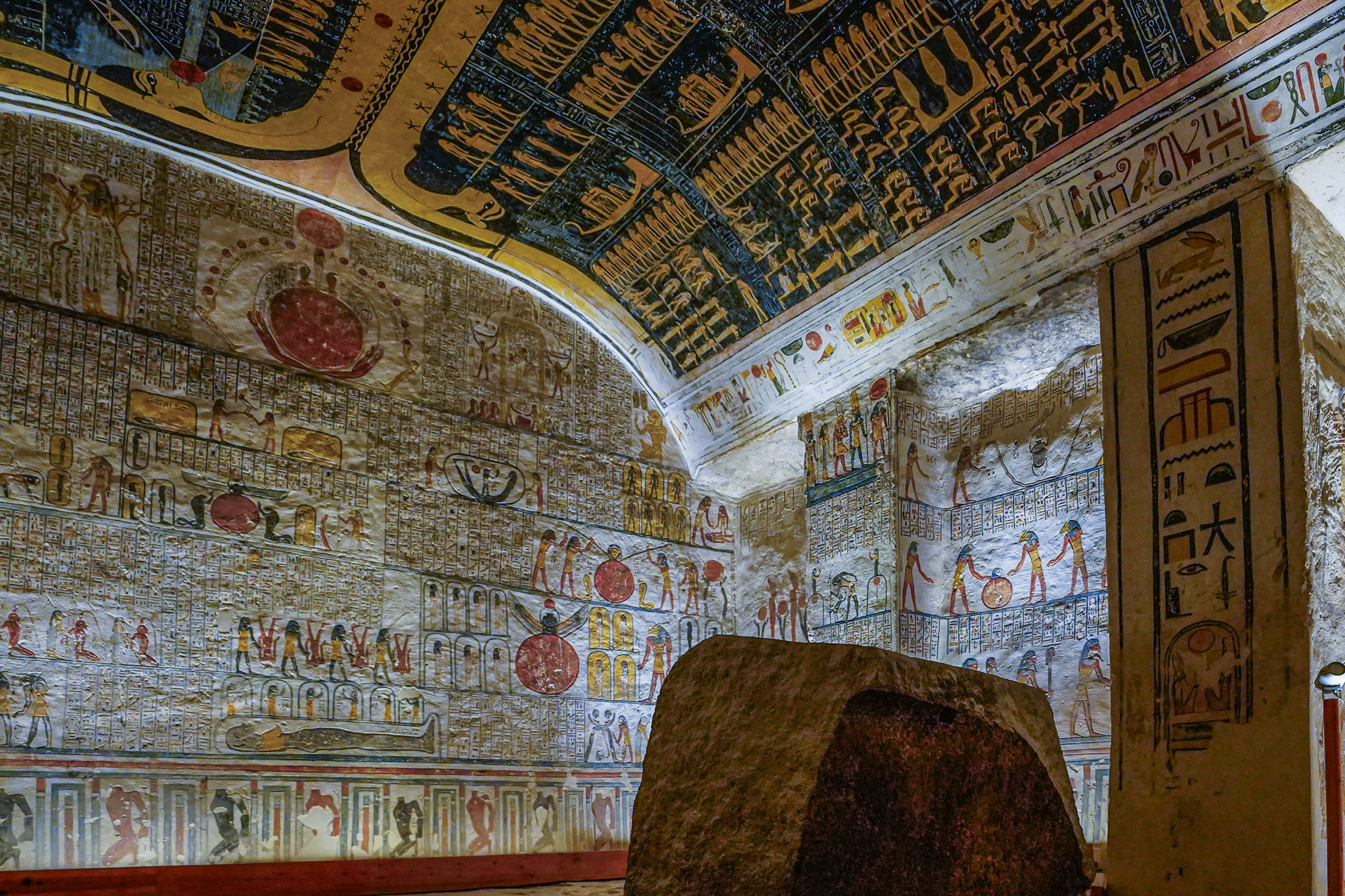
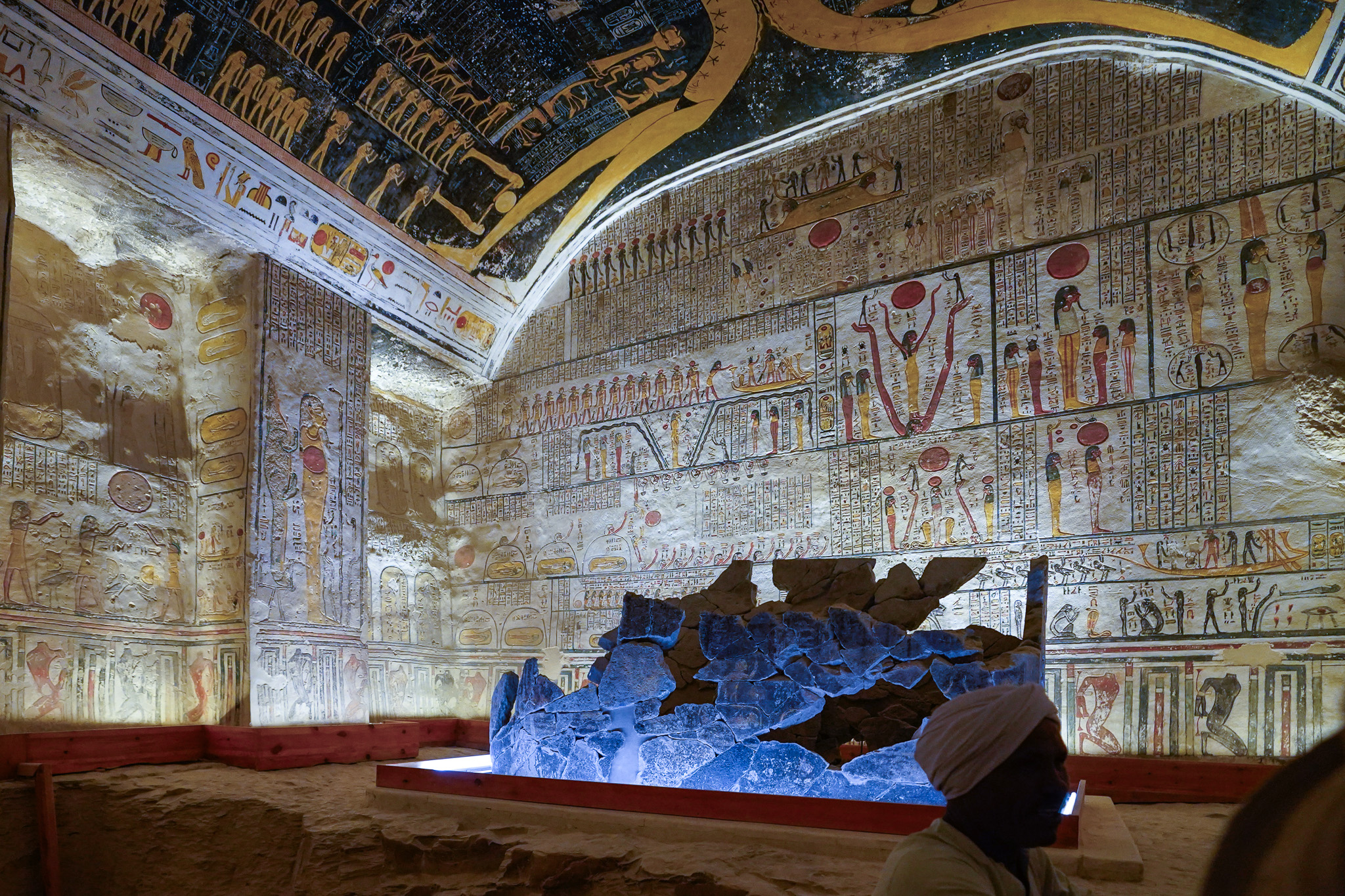
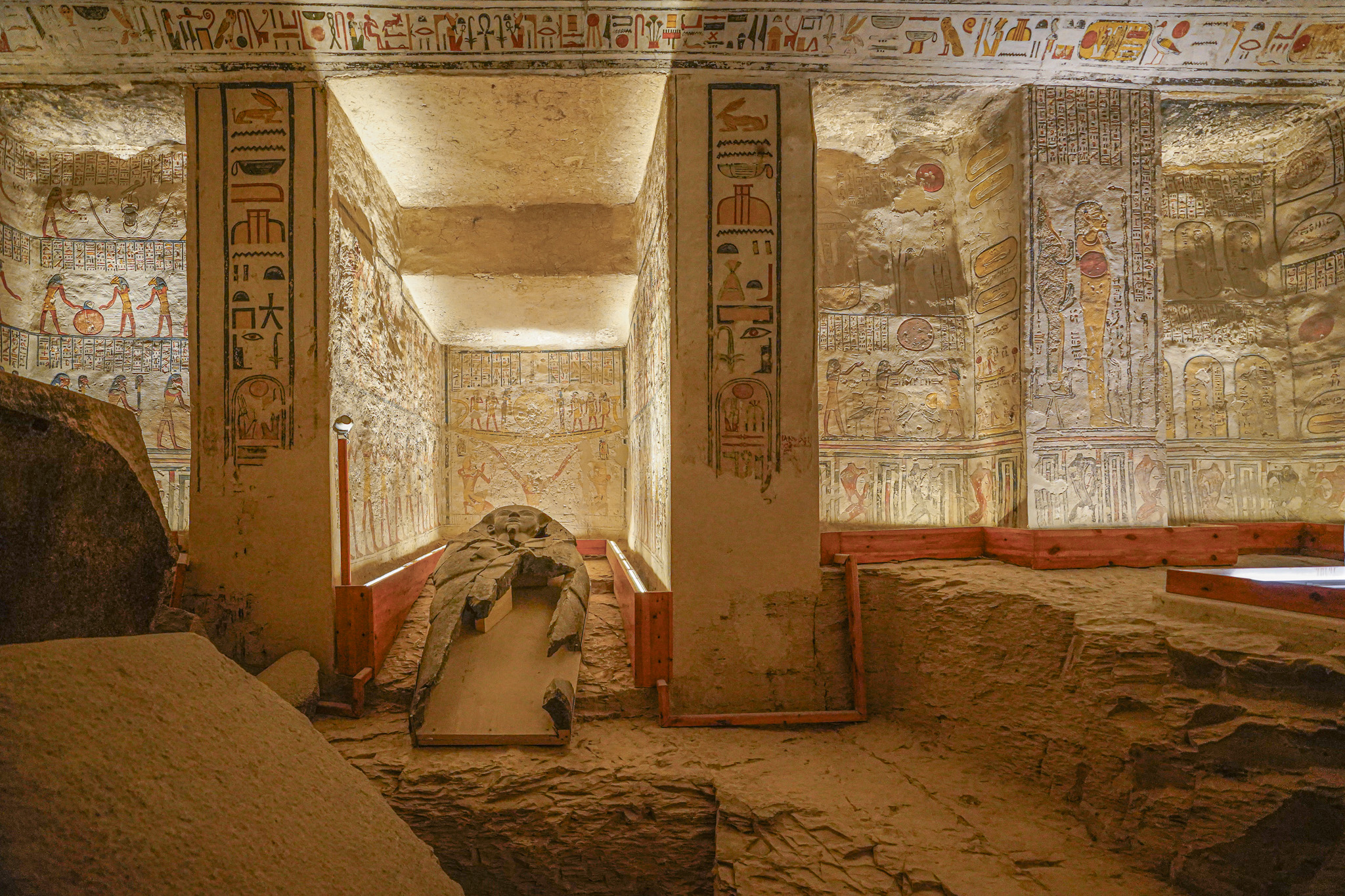
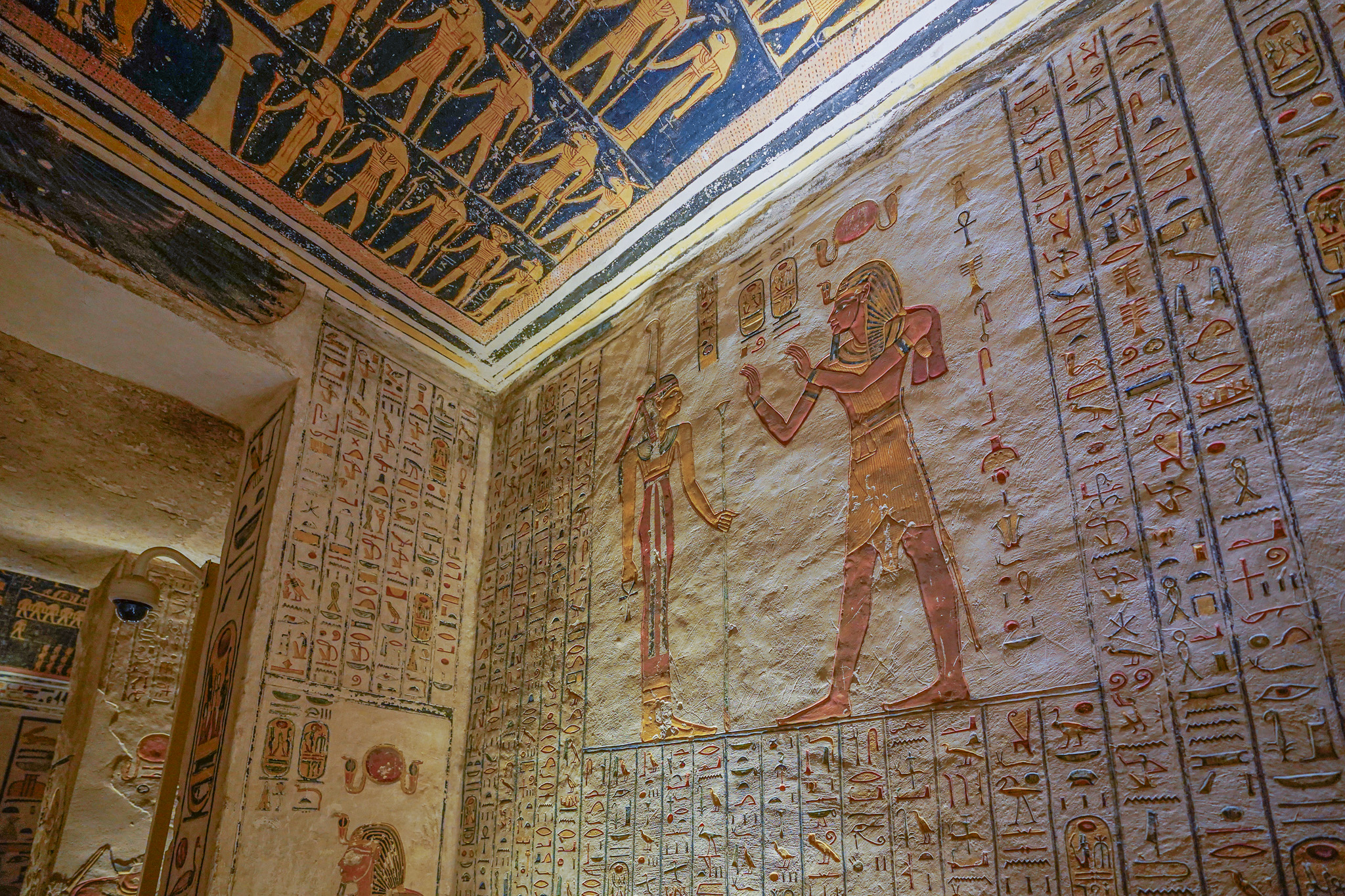
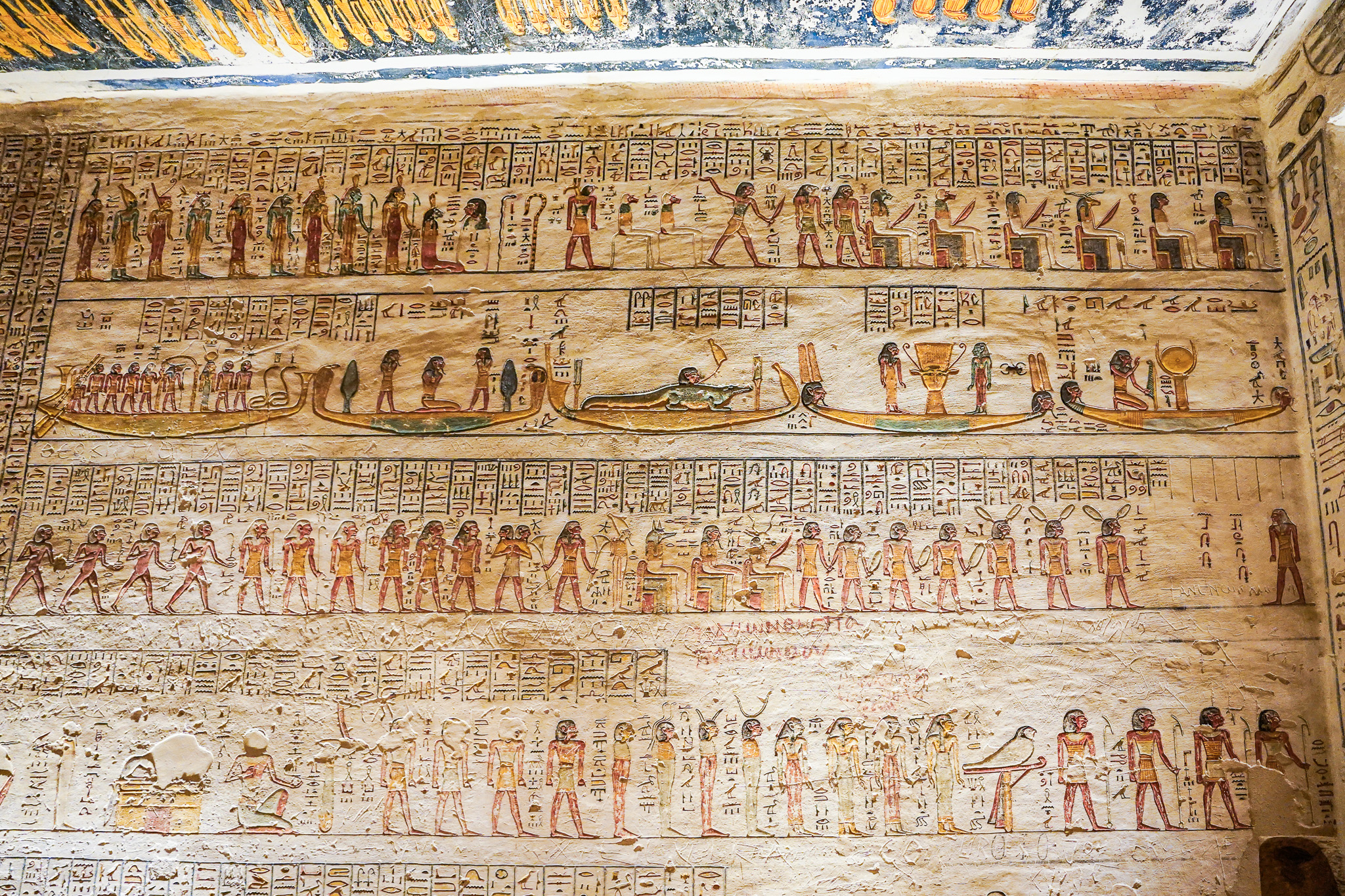
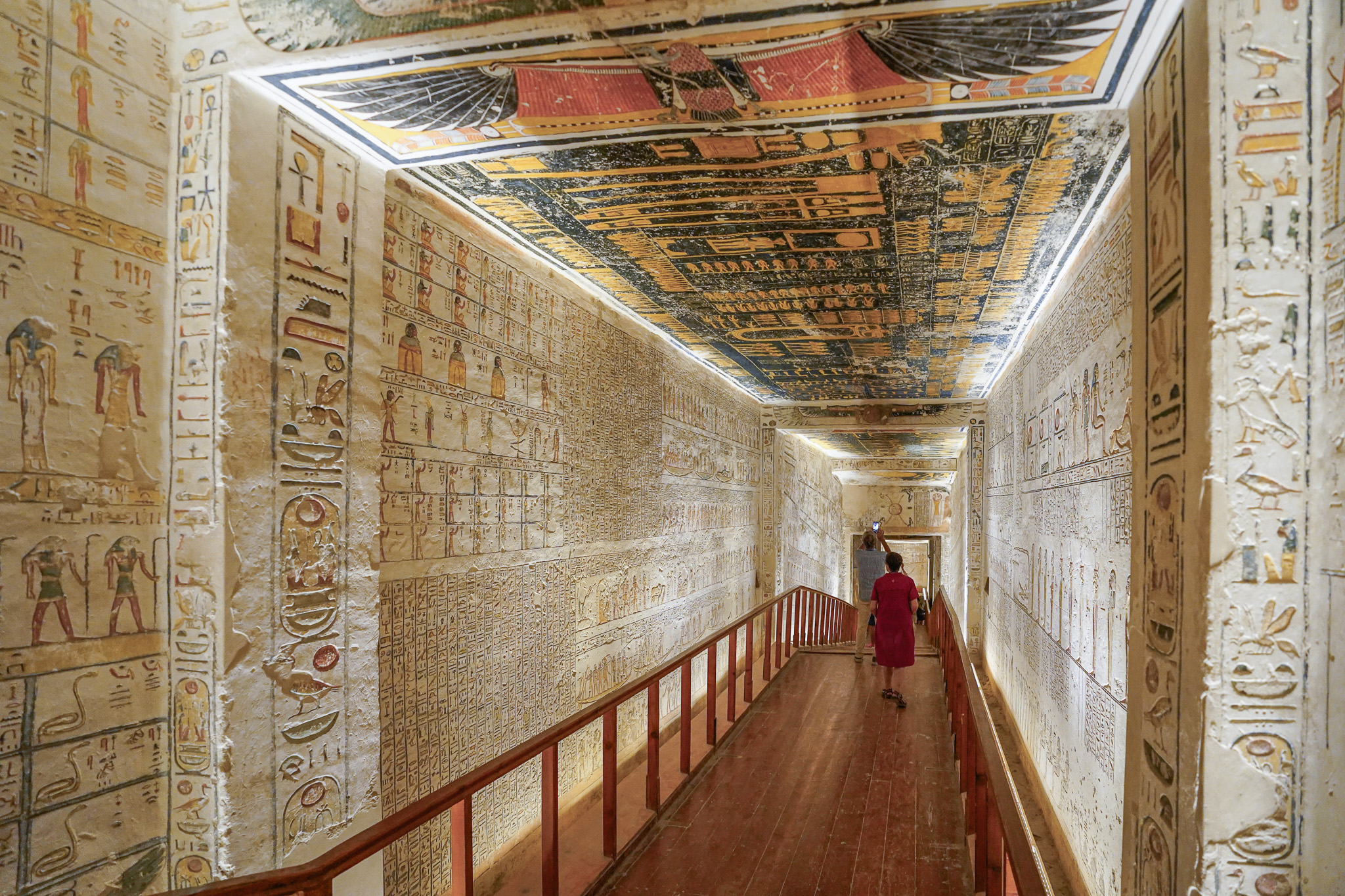
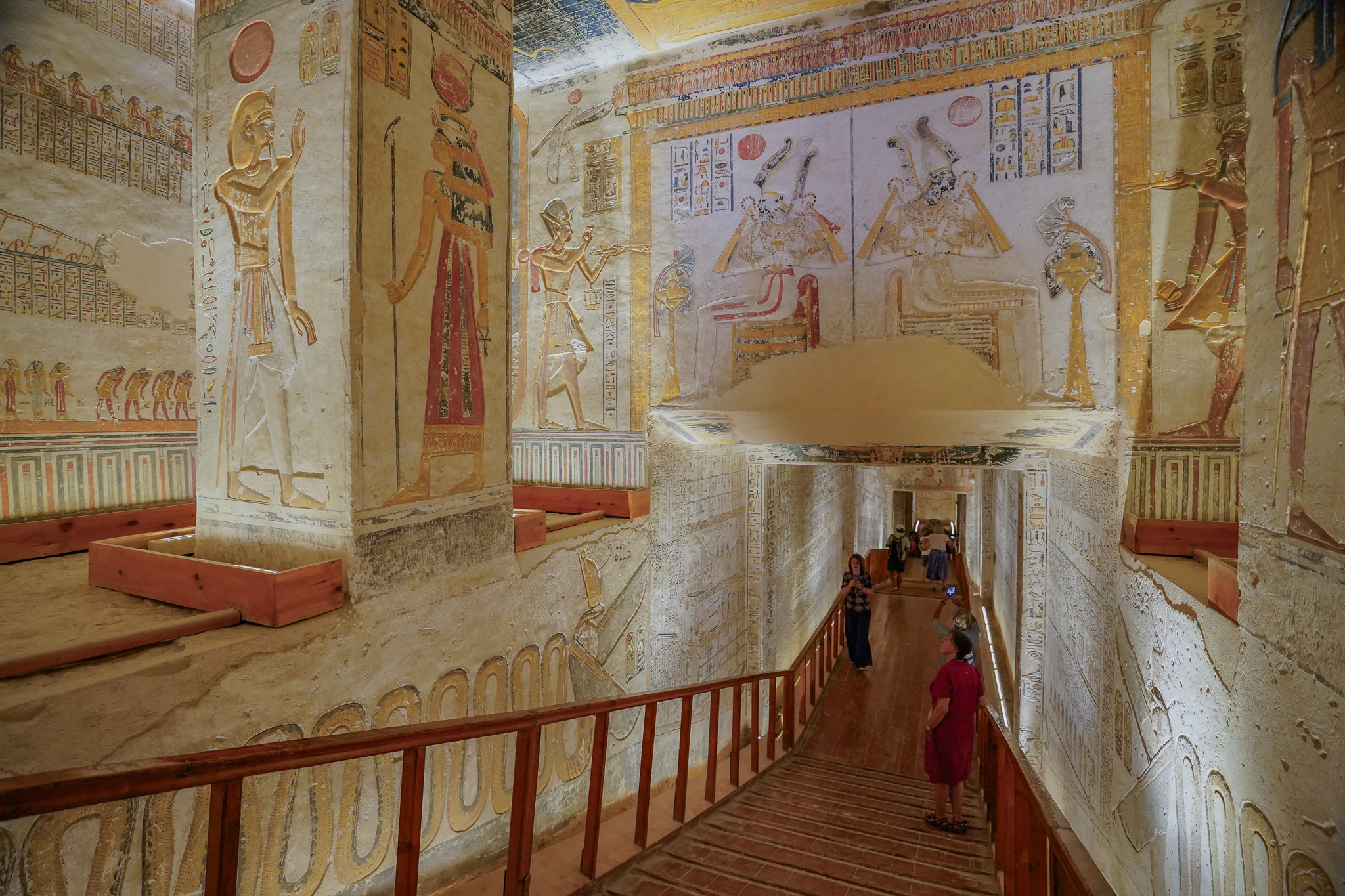
Valley of the Kings – Tomb of Ramesses VI
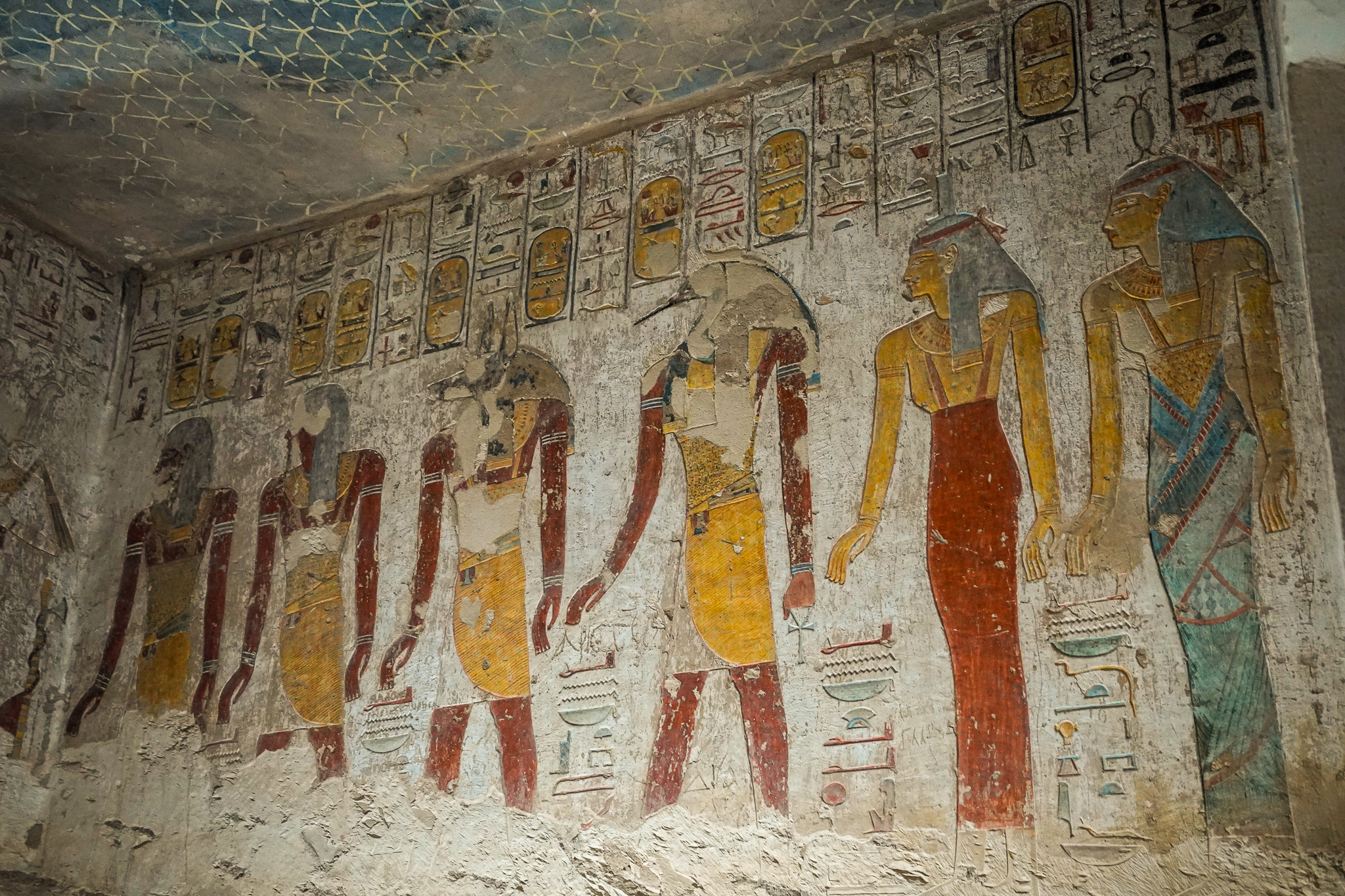
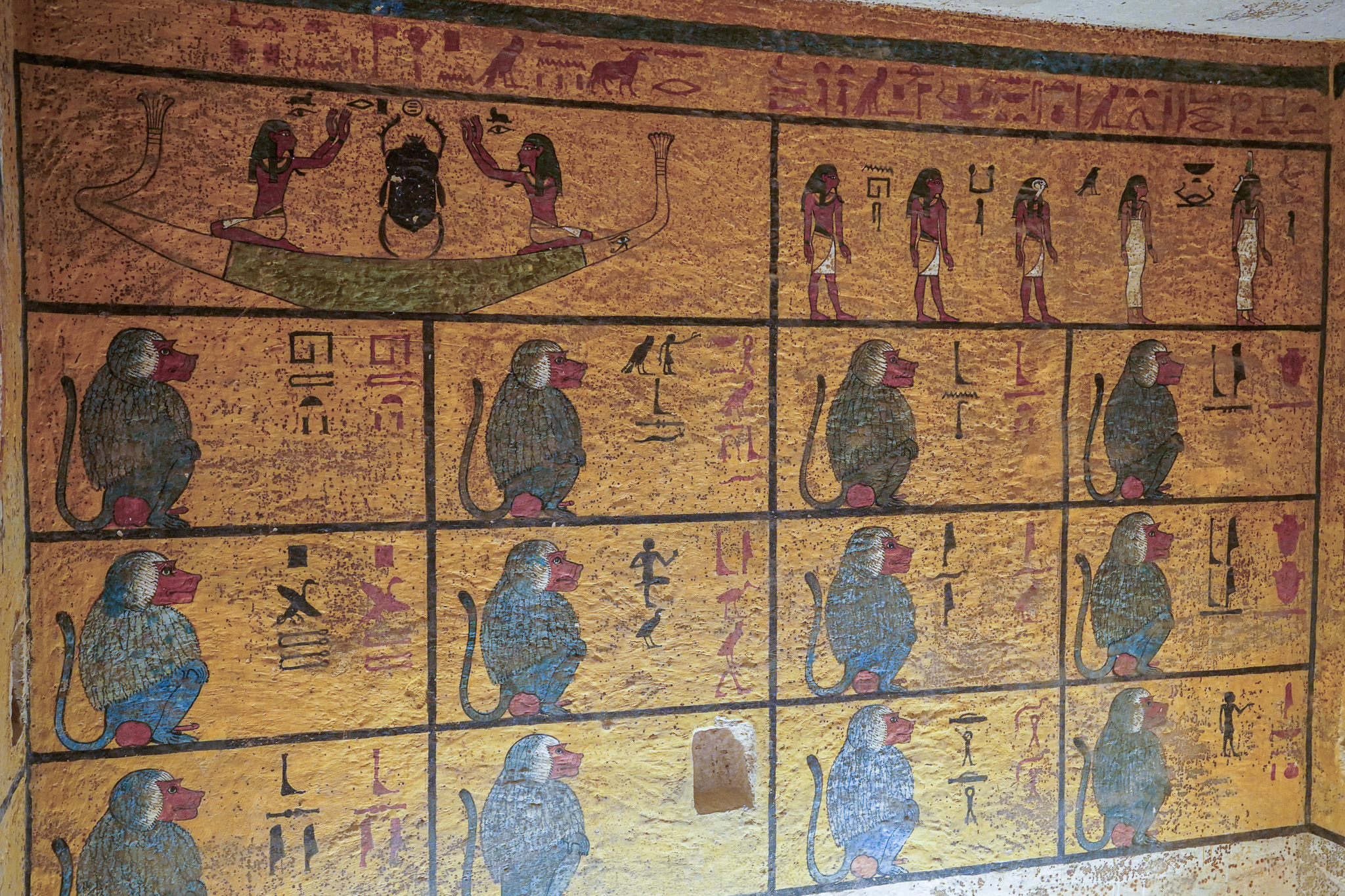
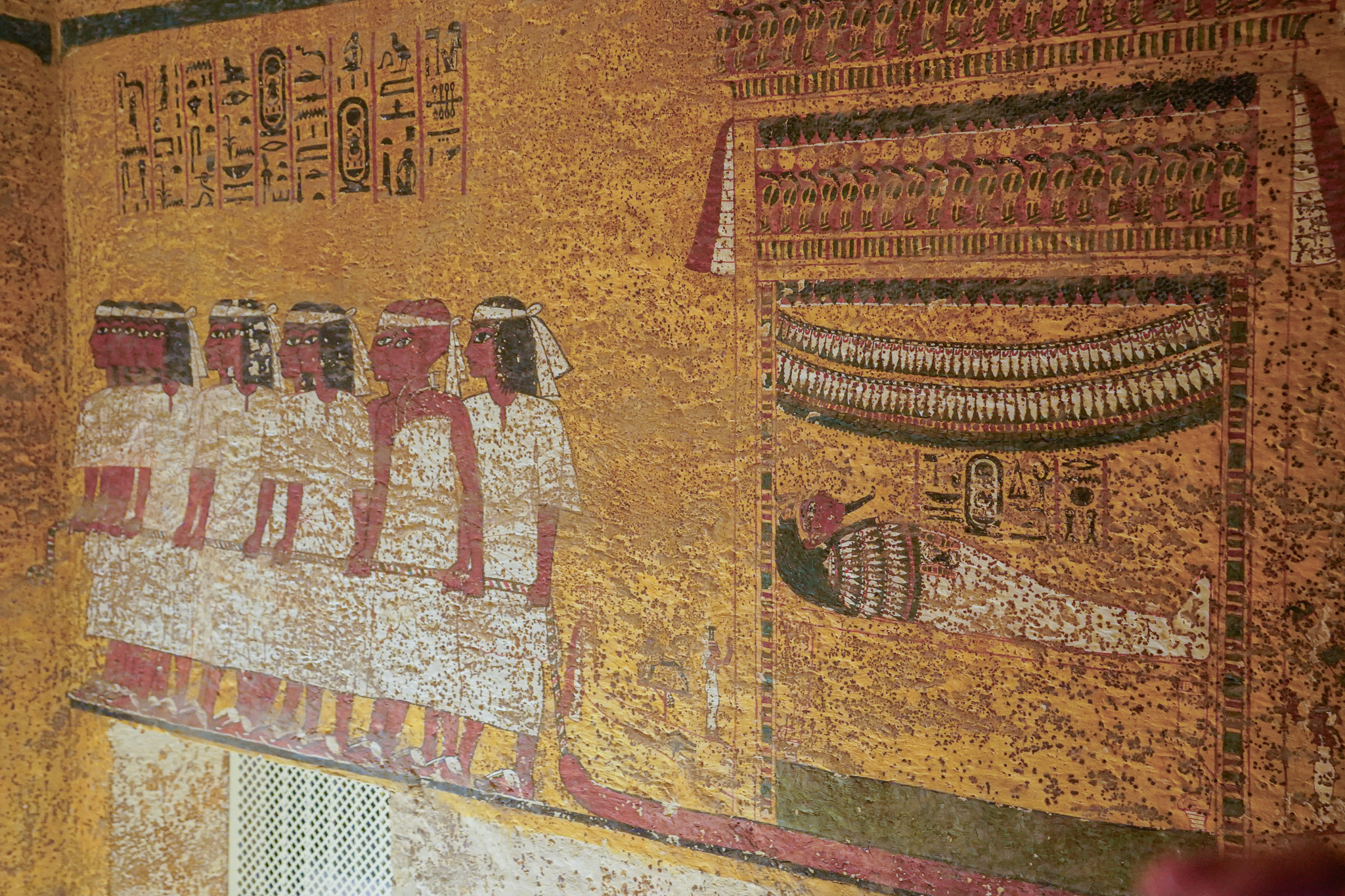
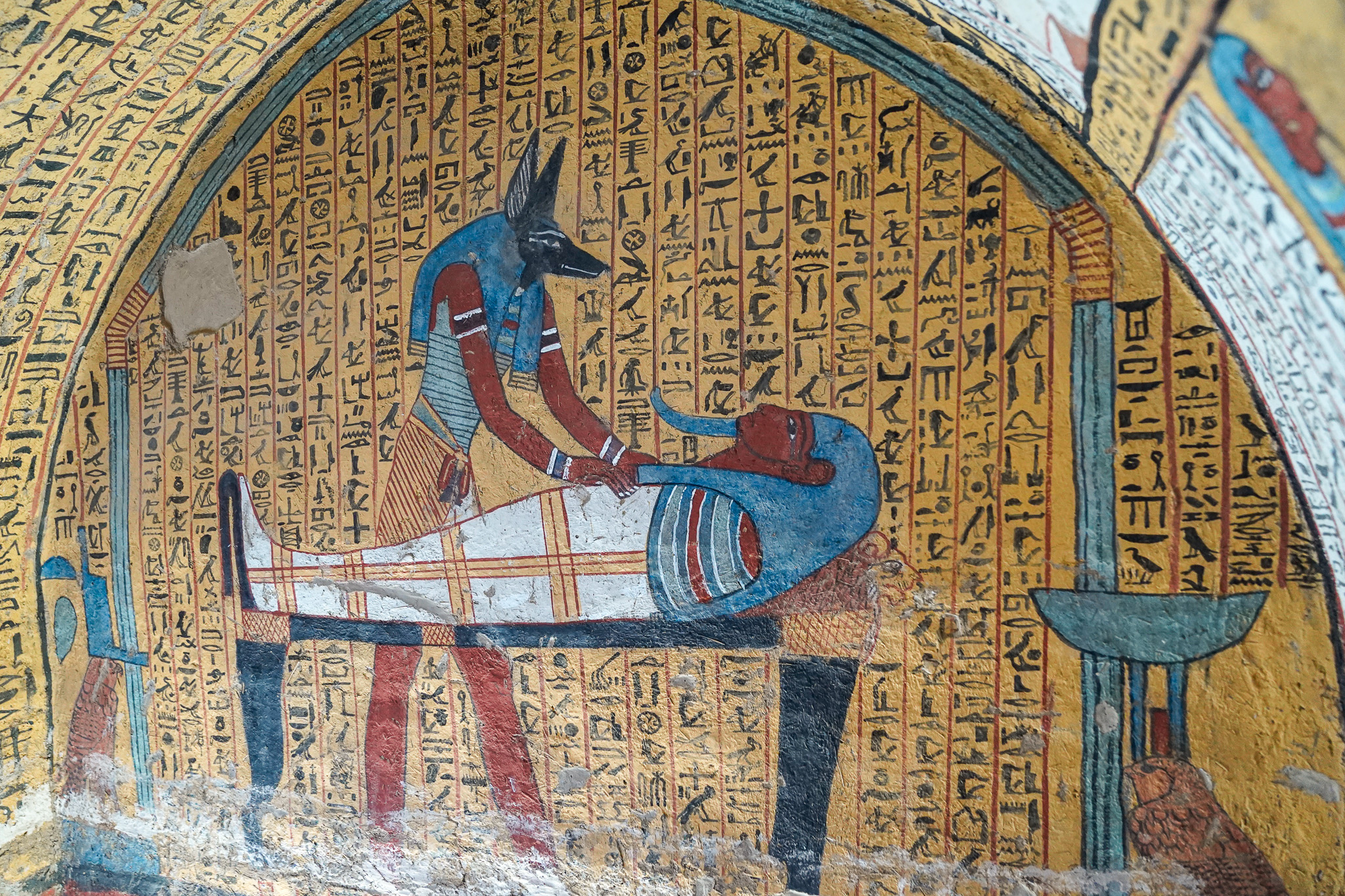
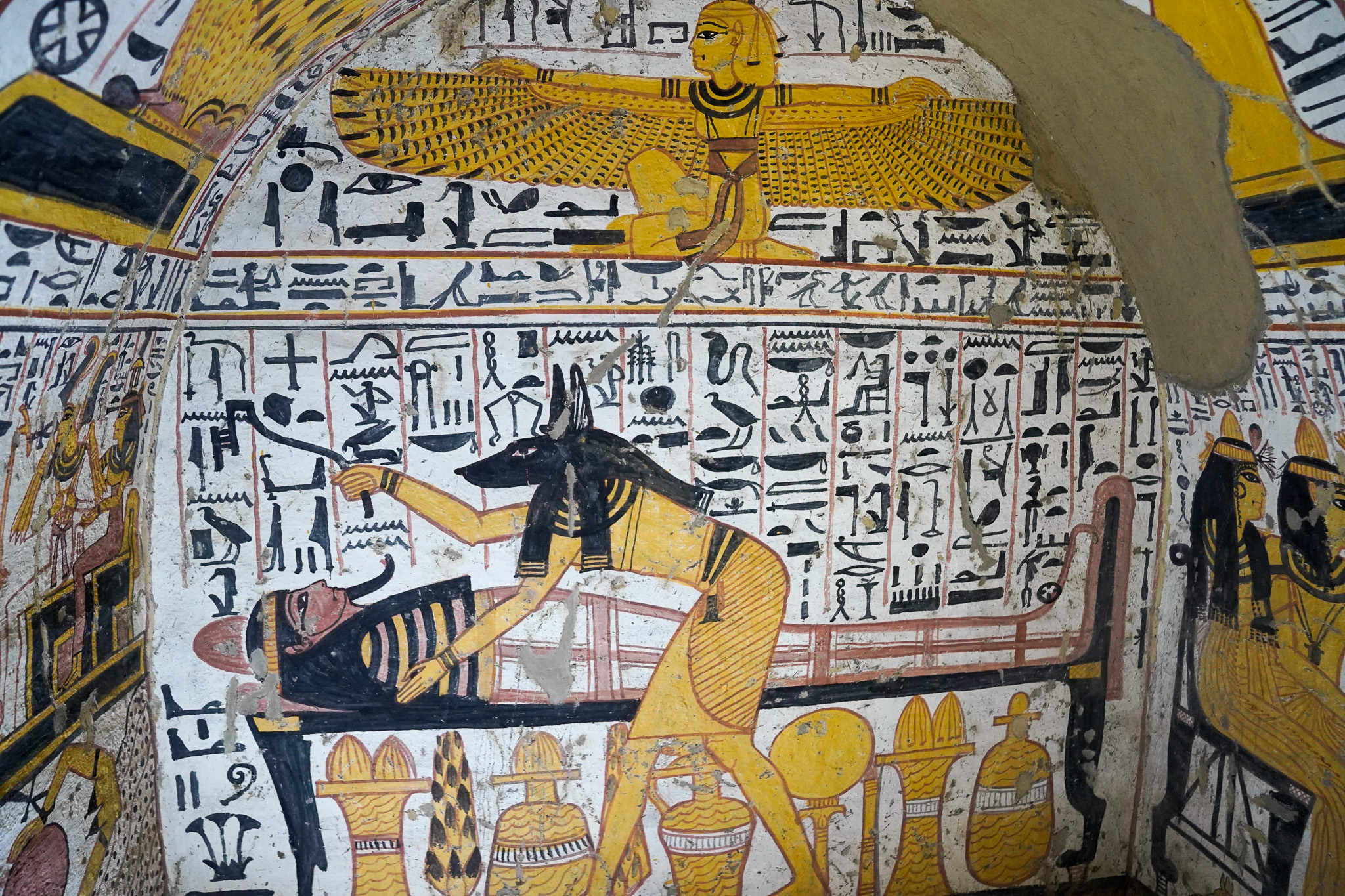
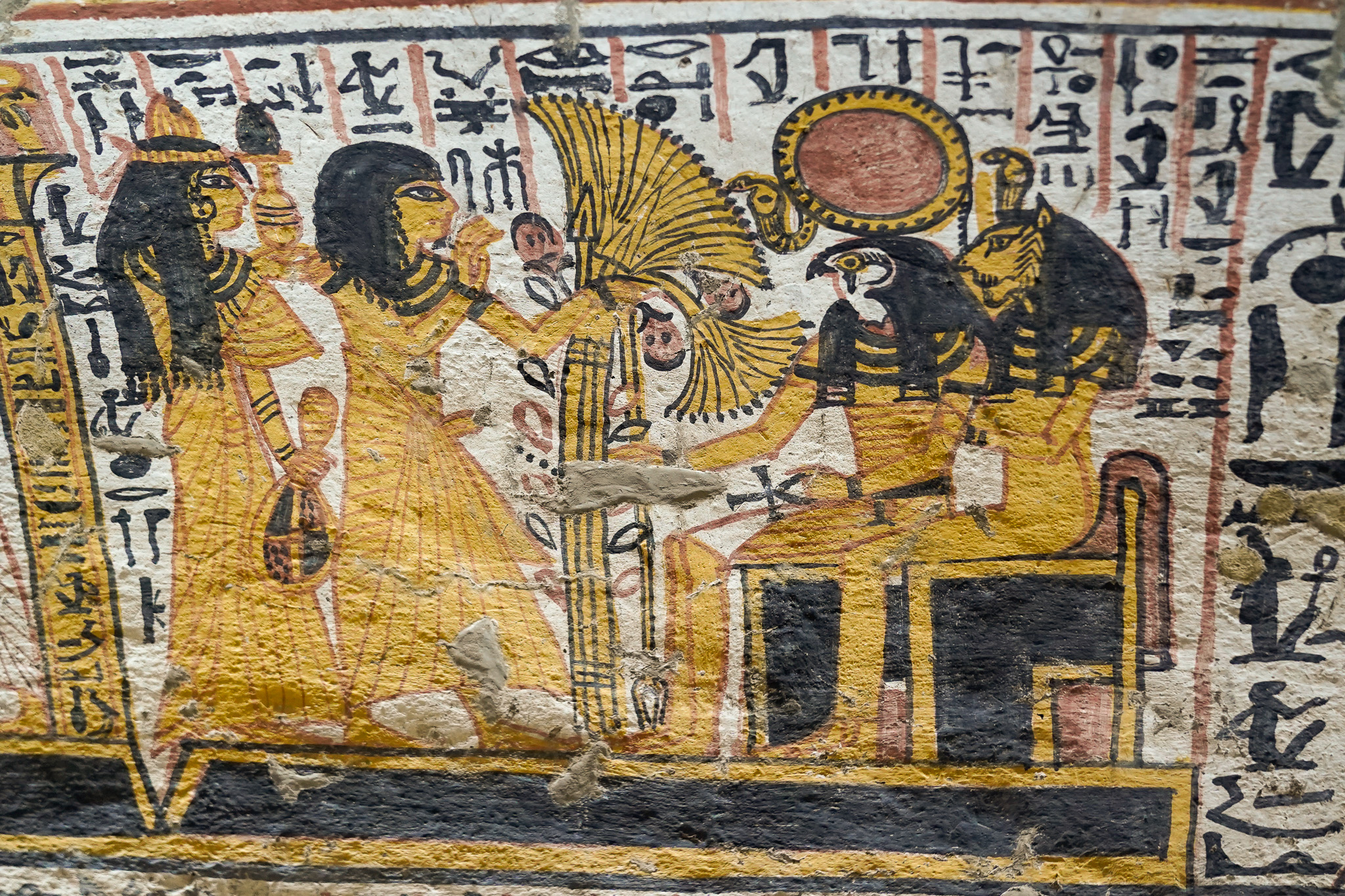
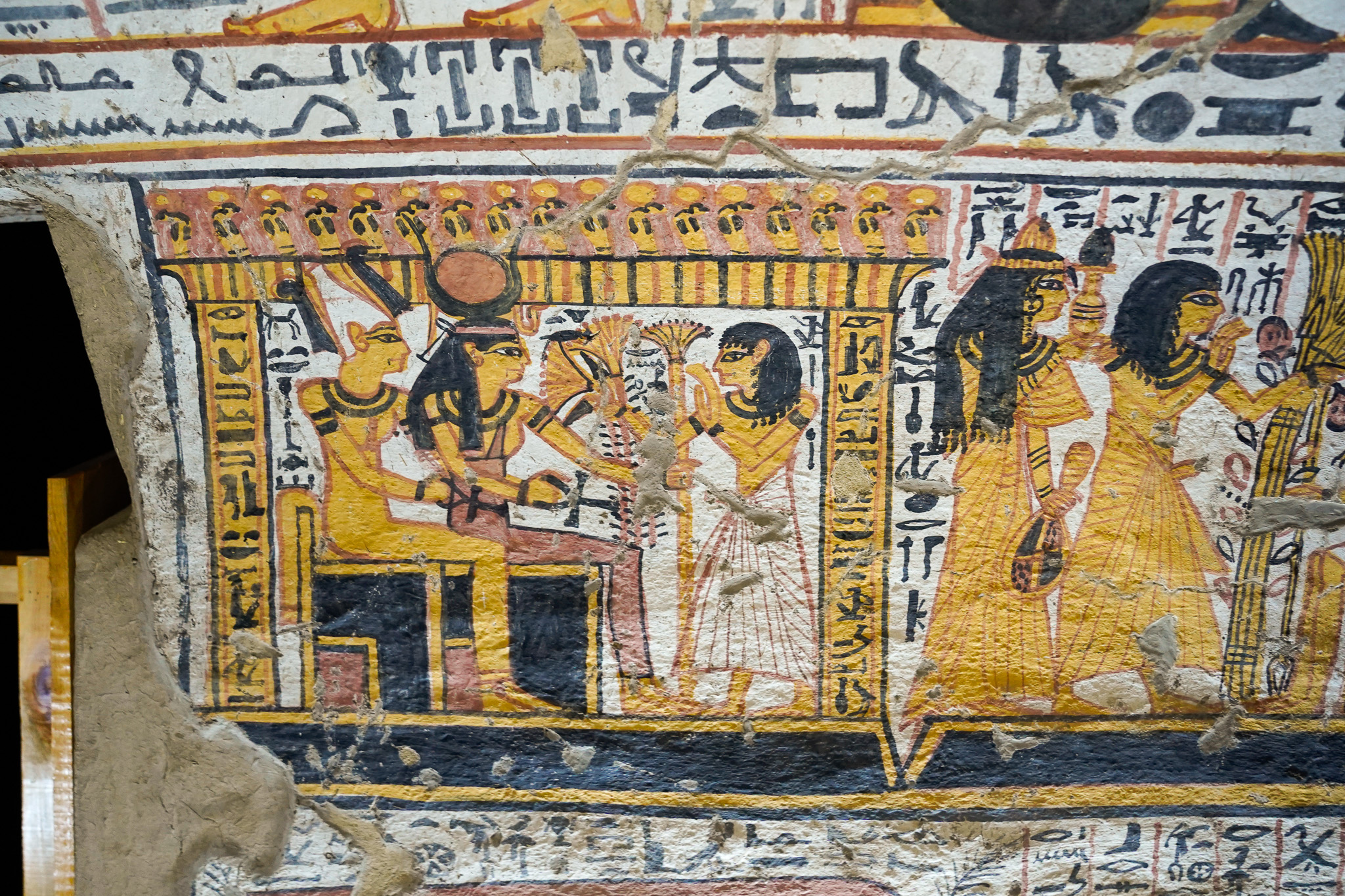
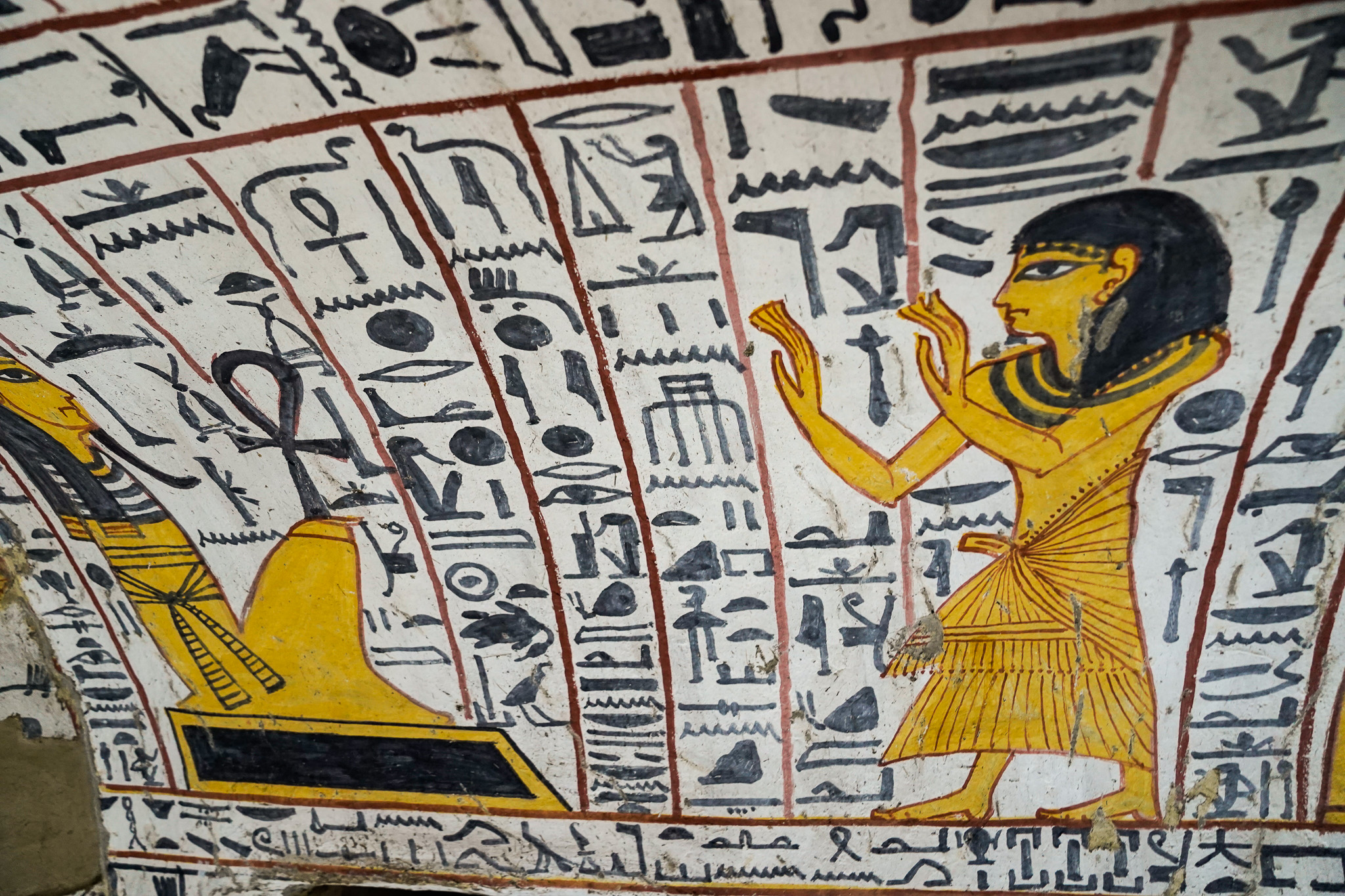
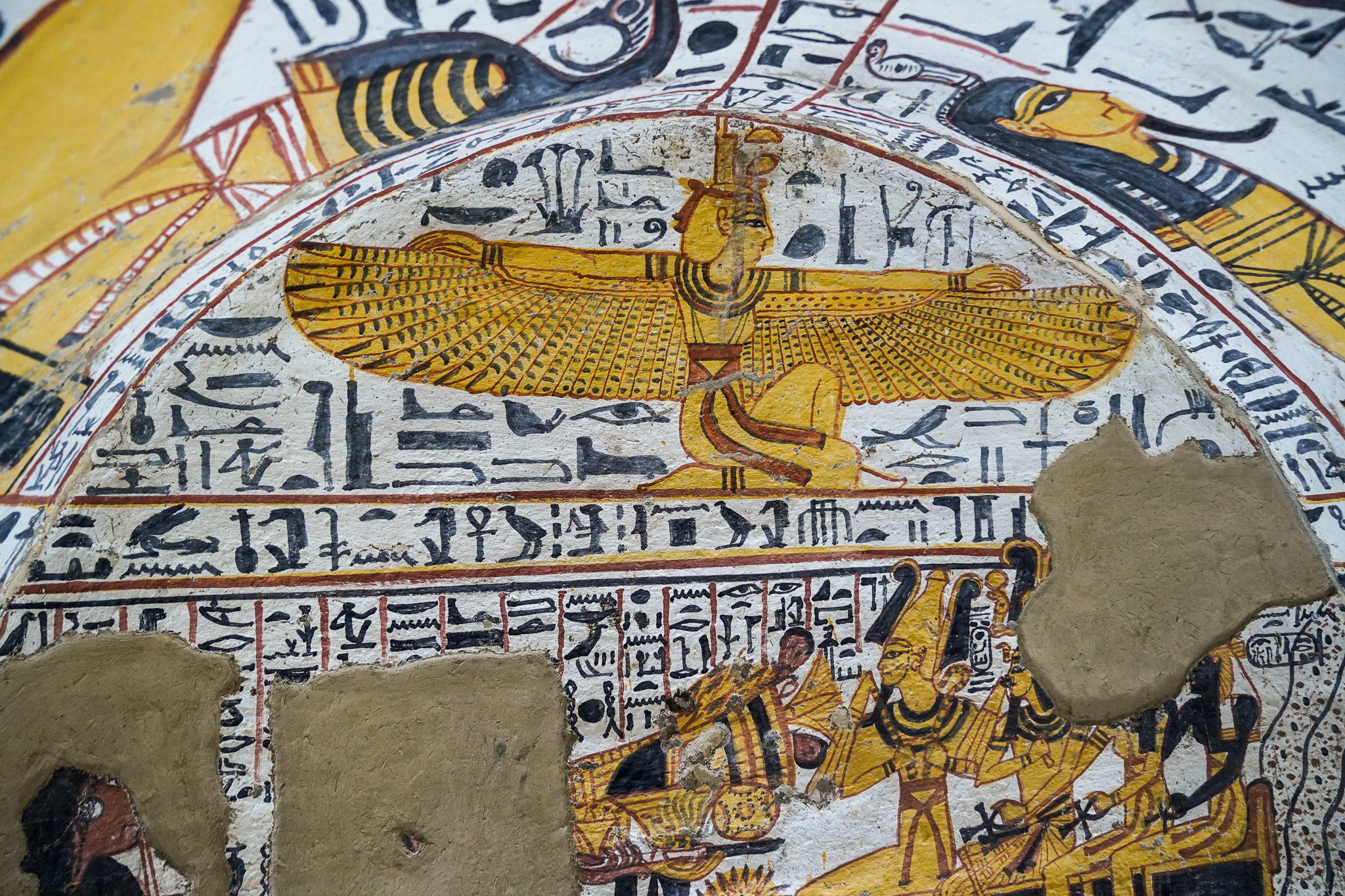
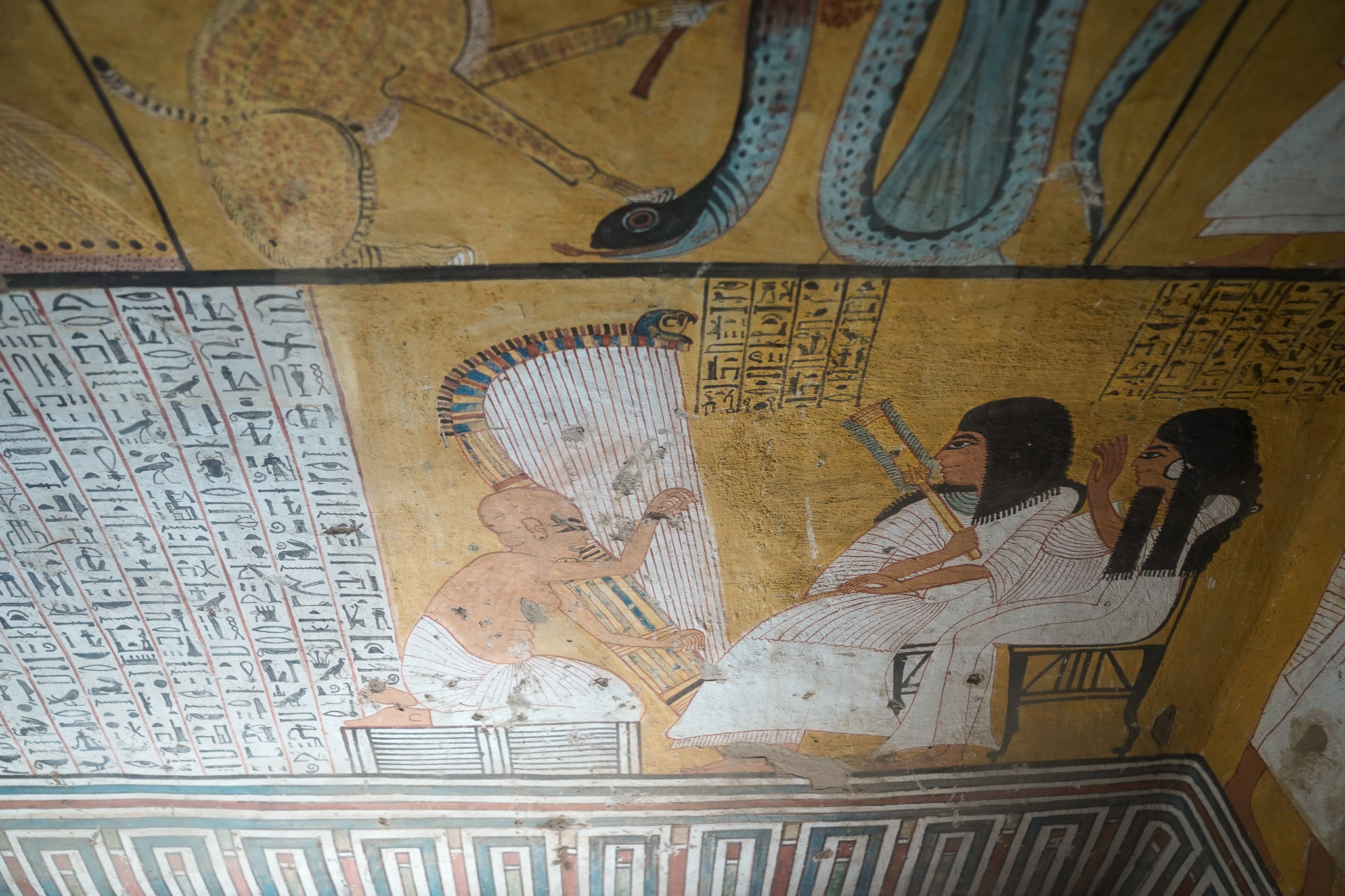
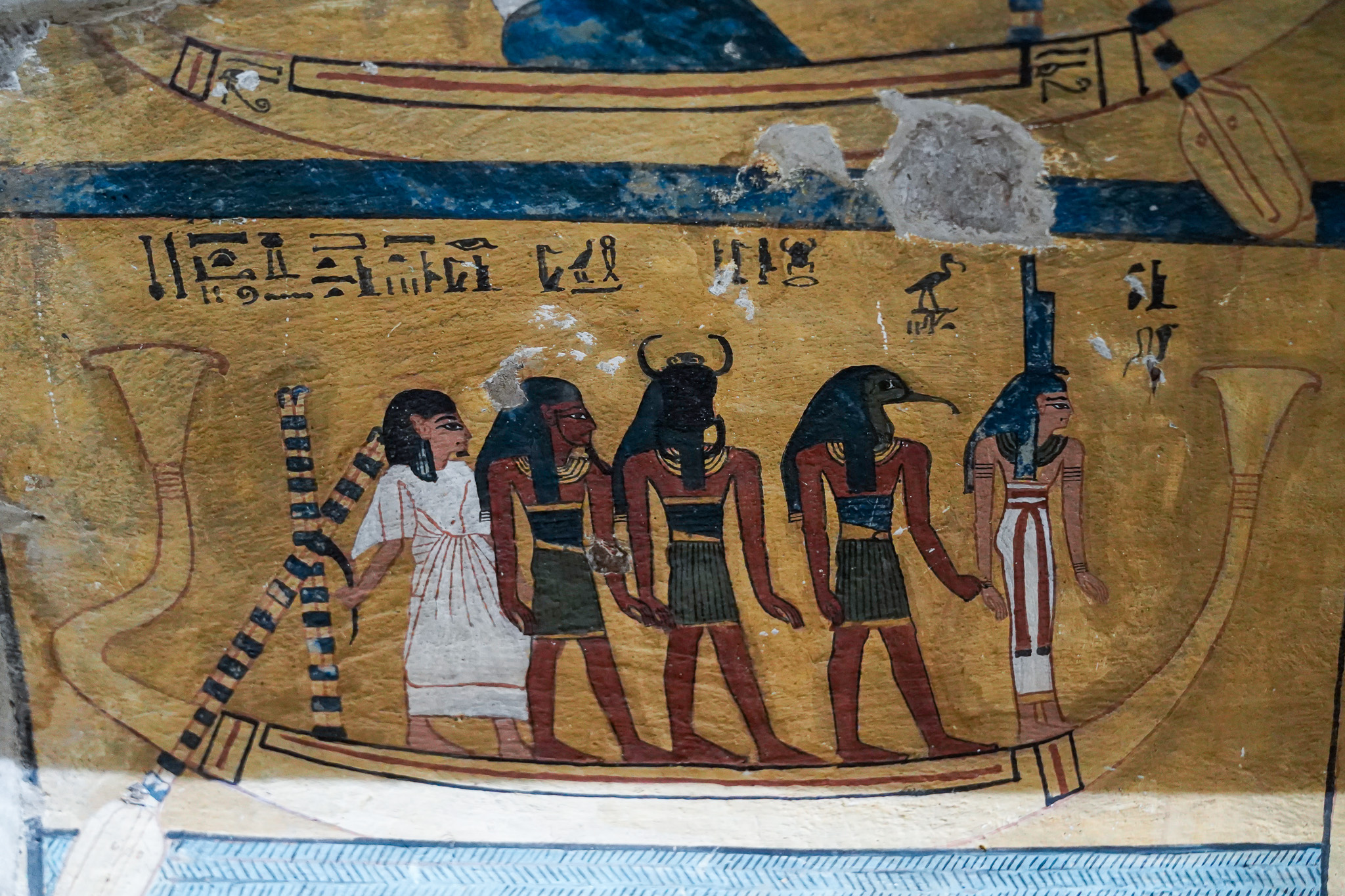
There are 63 tombs in the Valley of the Kings and 91 in the Valley of the Queens, awe-inspiring treasures of ancient Egypt. Of the few that I visited, King Ramesses VI was one of the most striking.
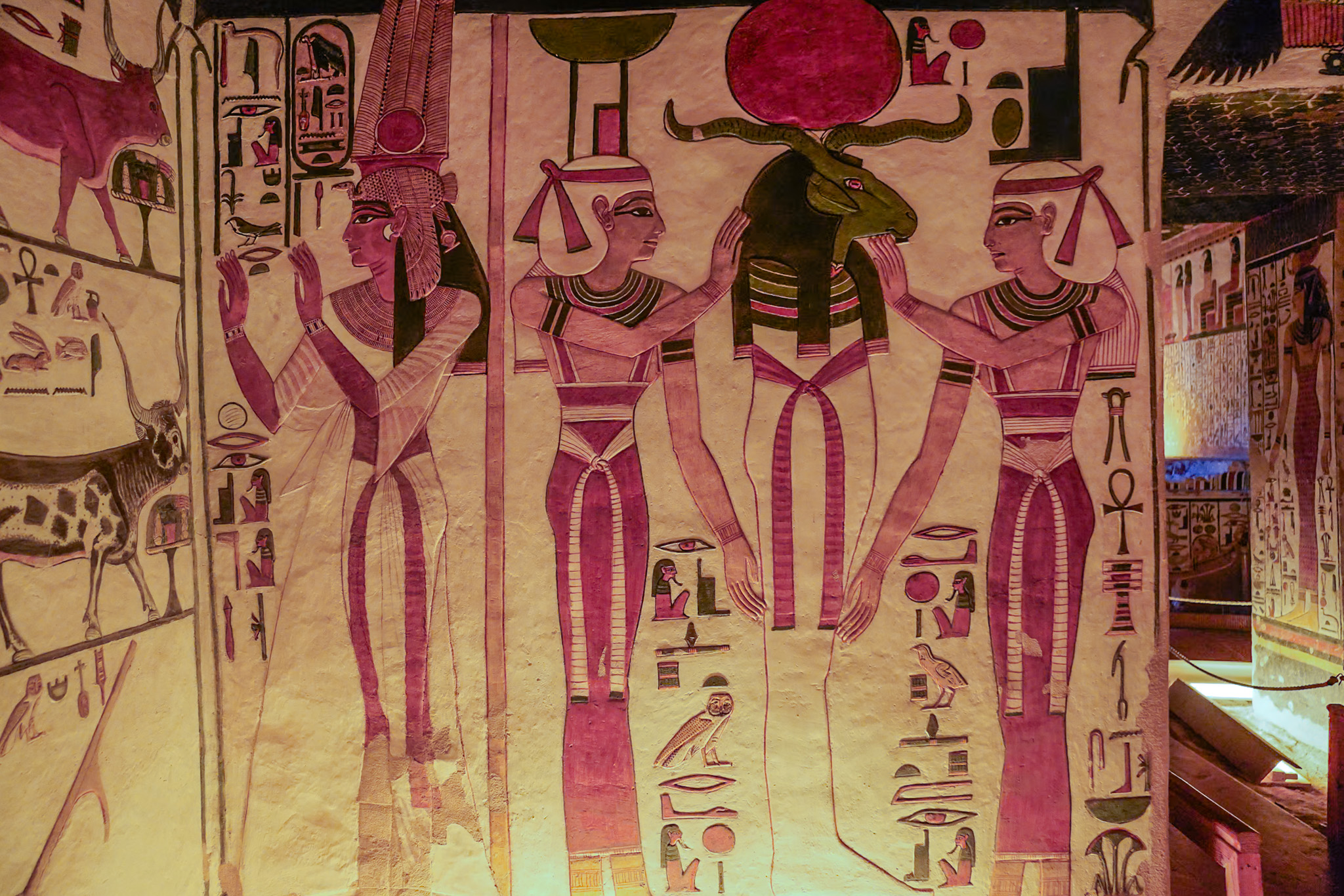
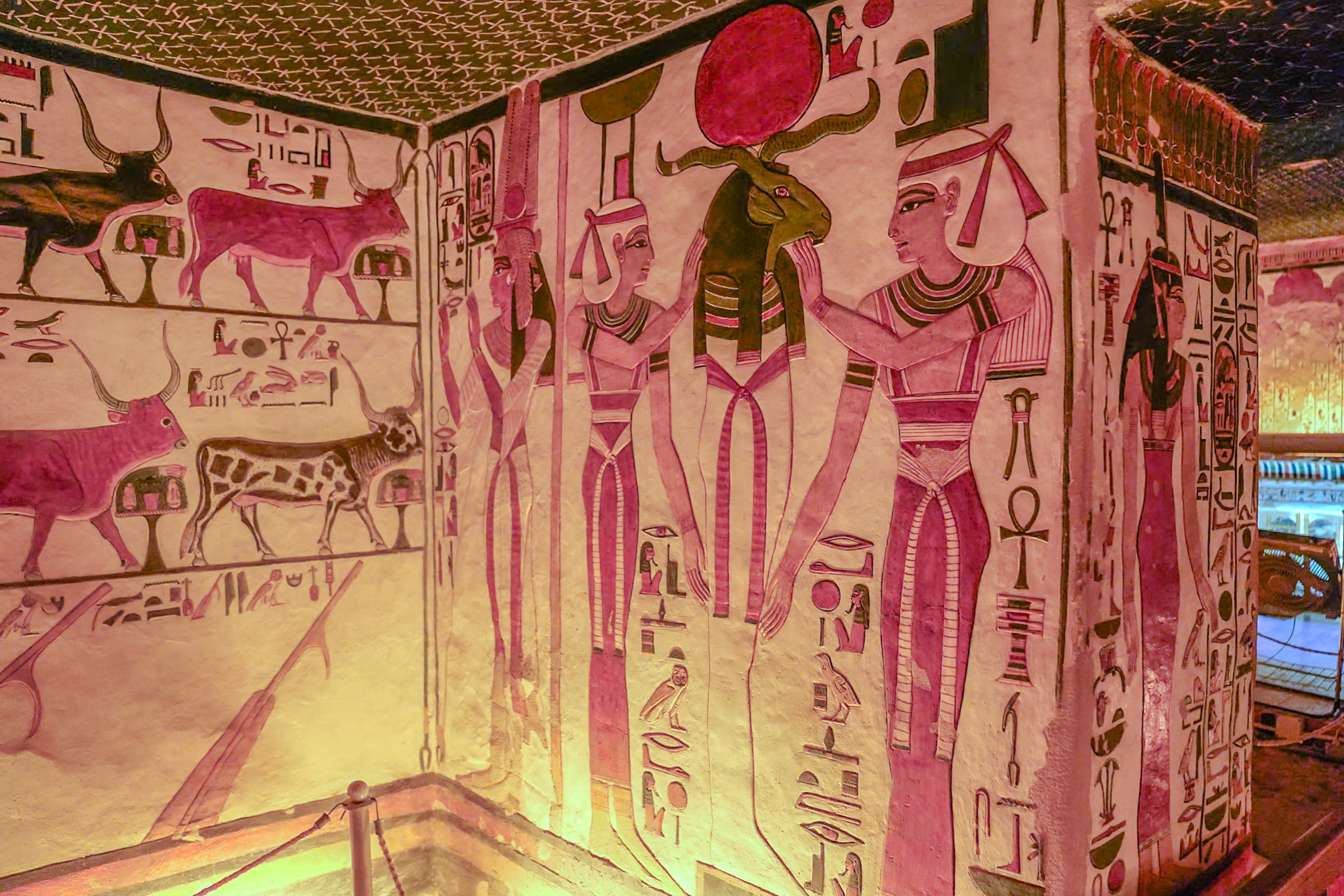
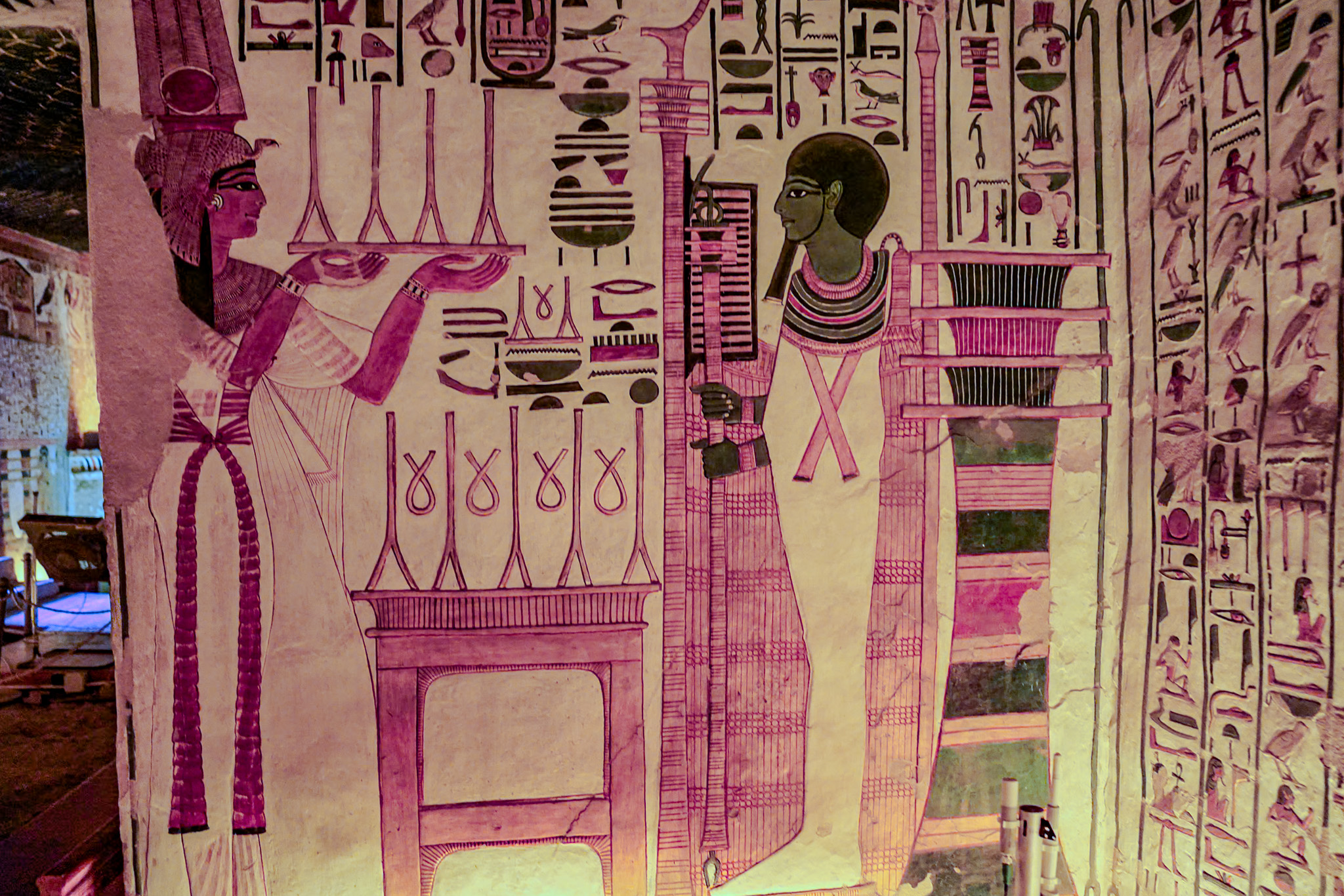
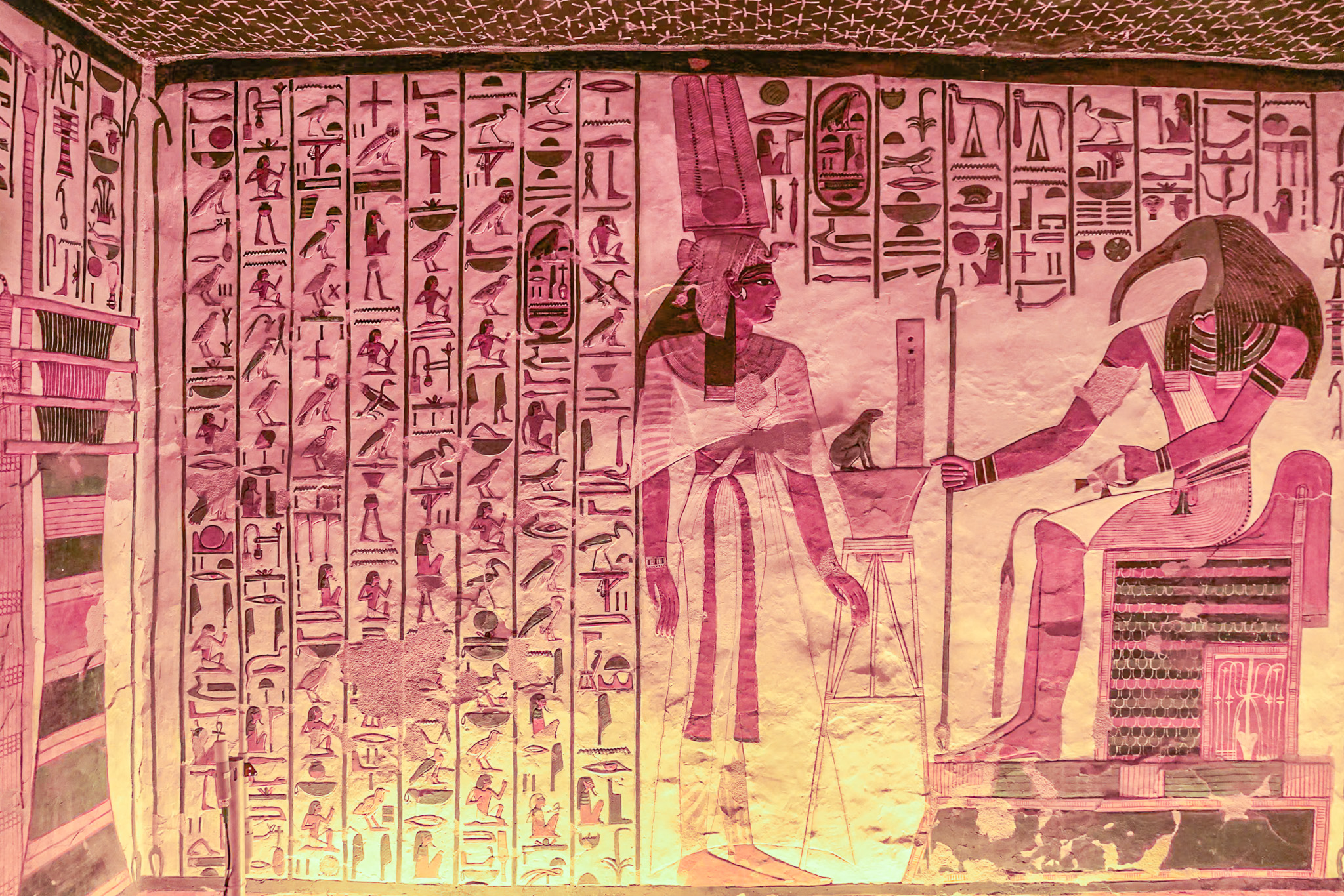
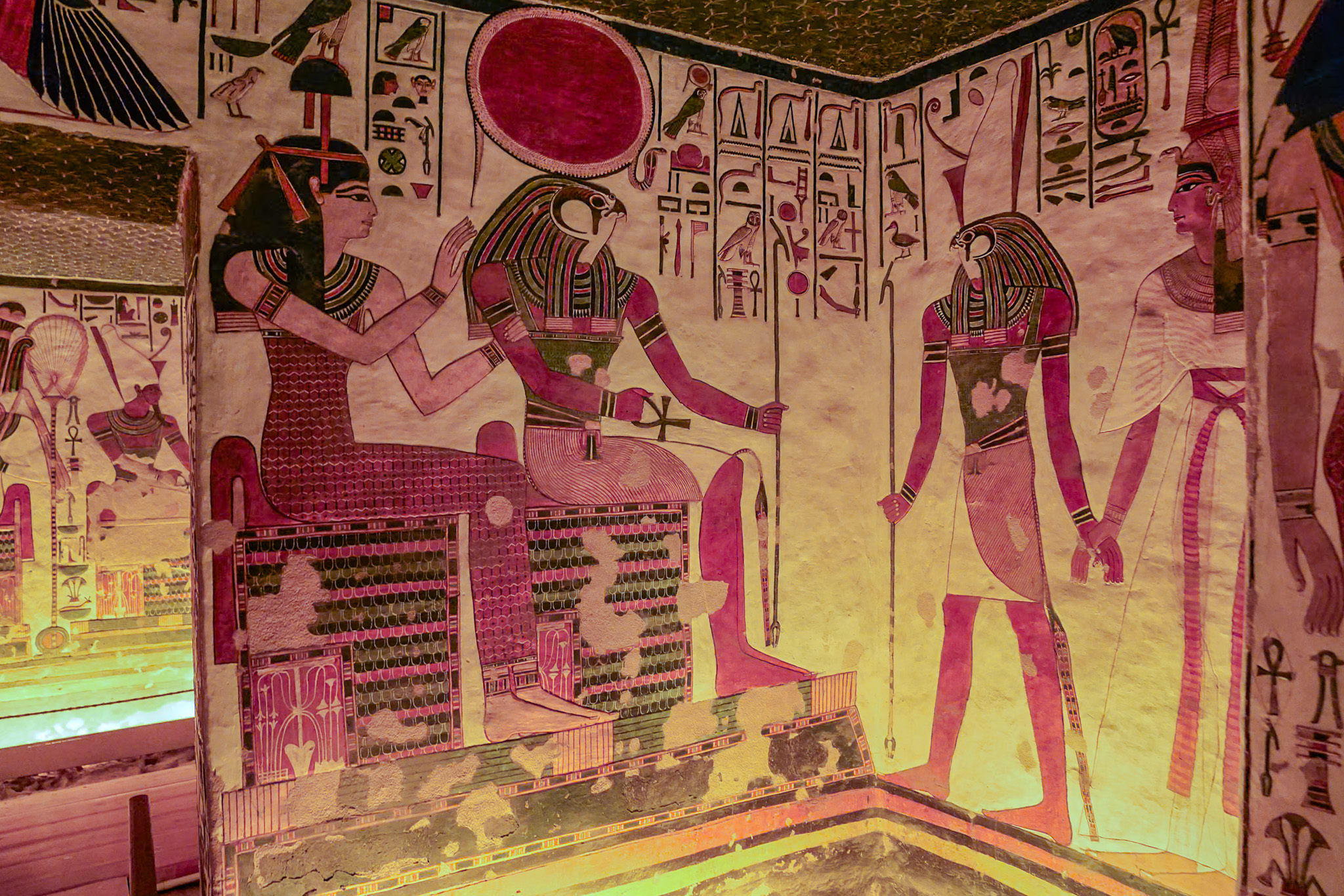
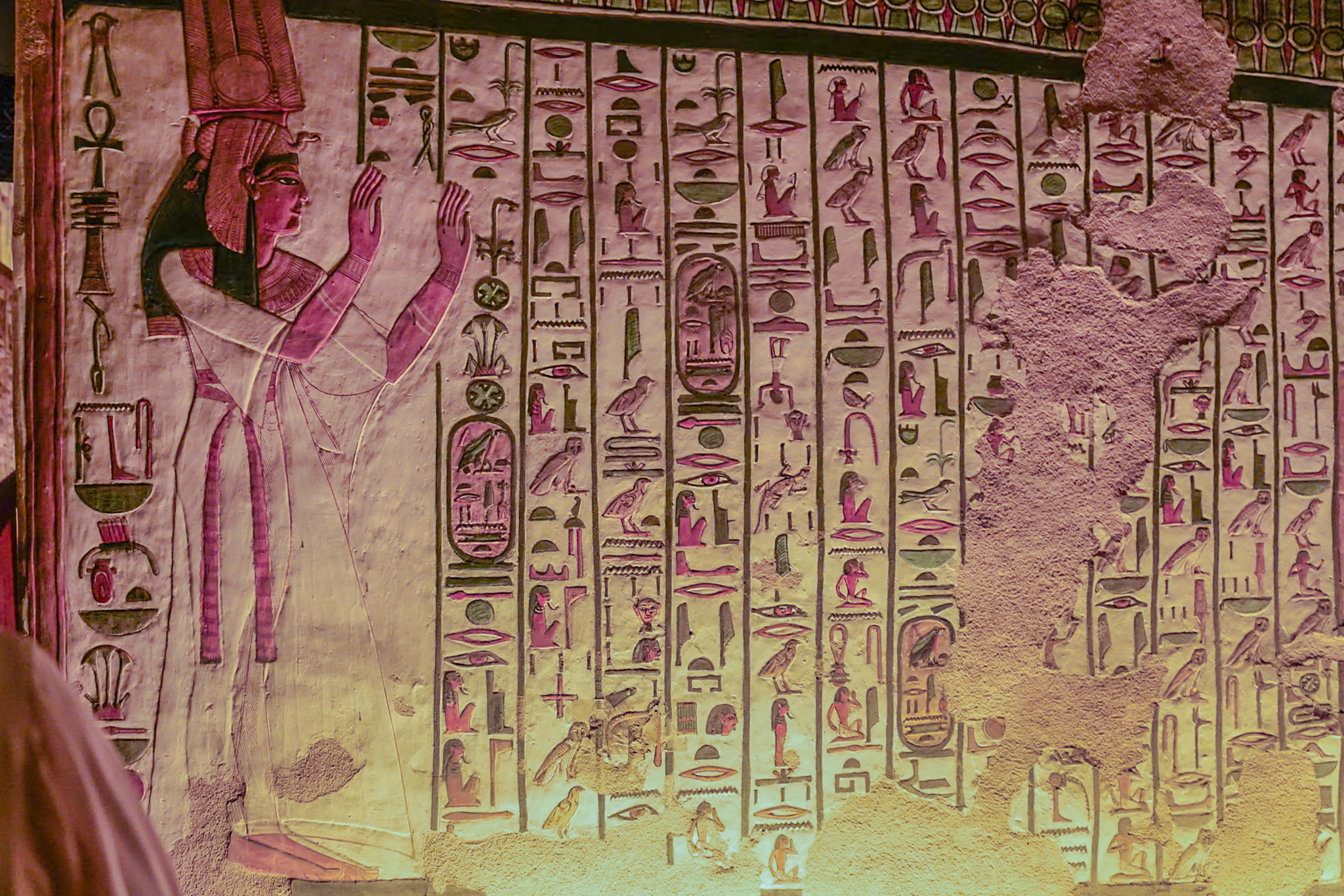
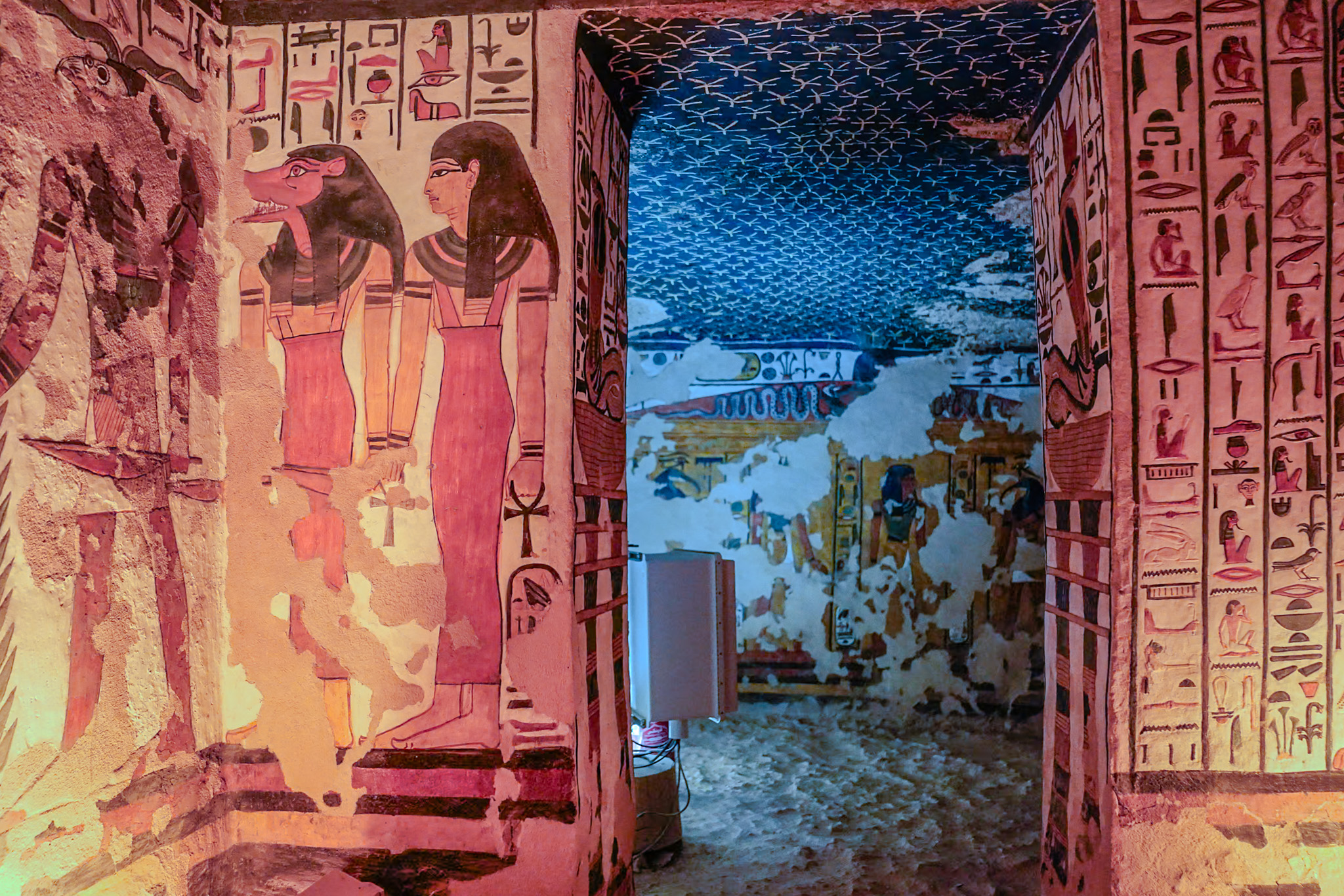
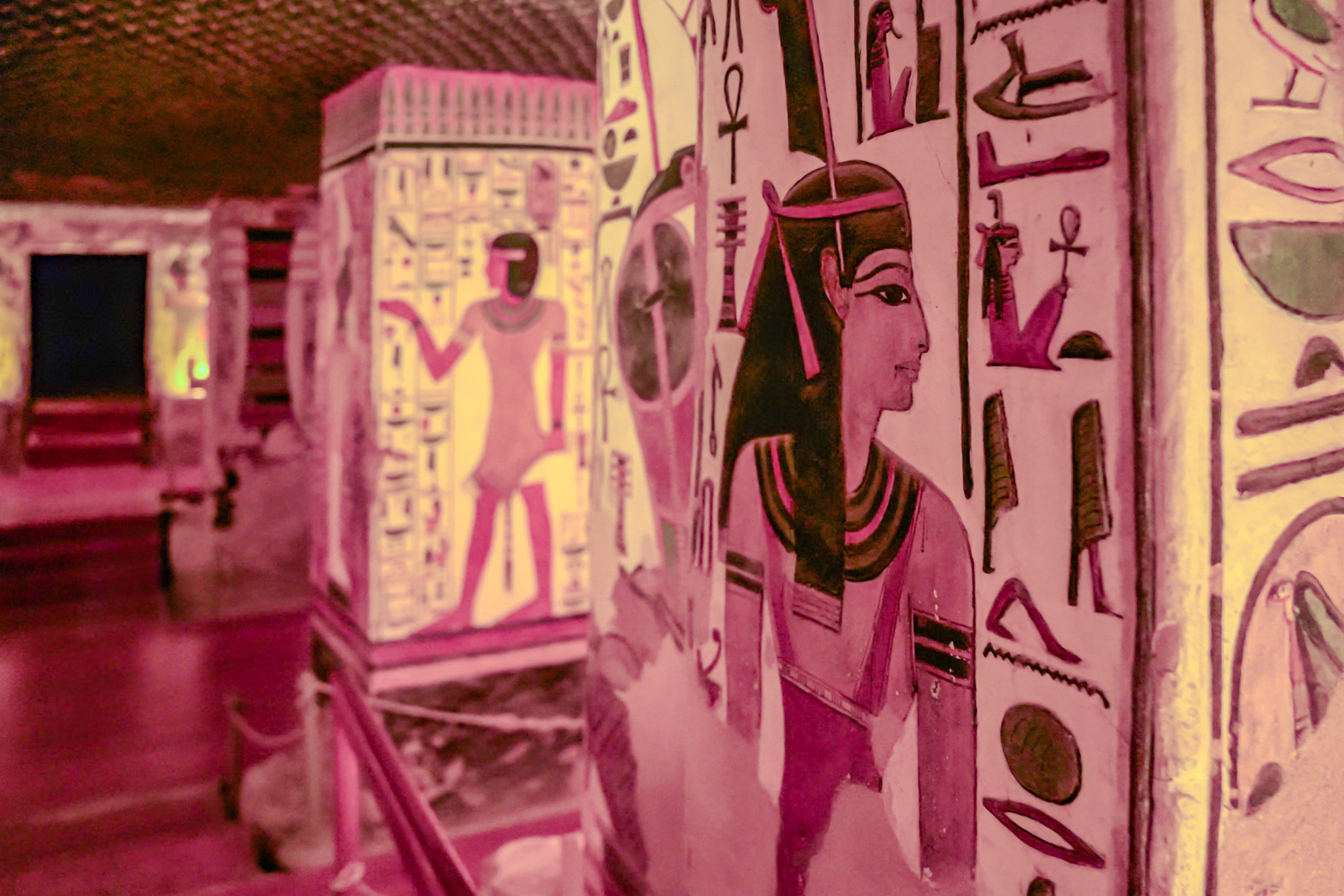
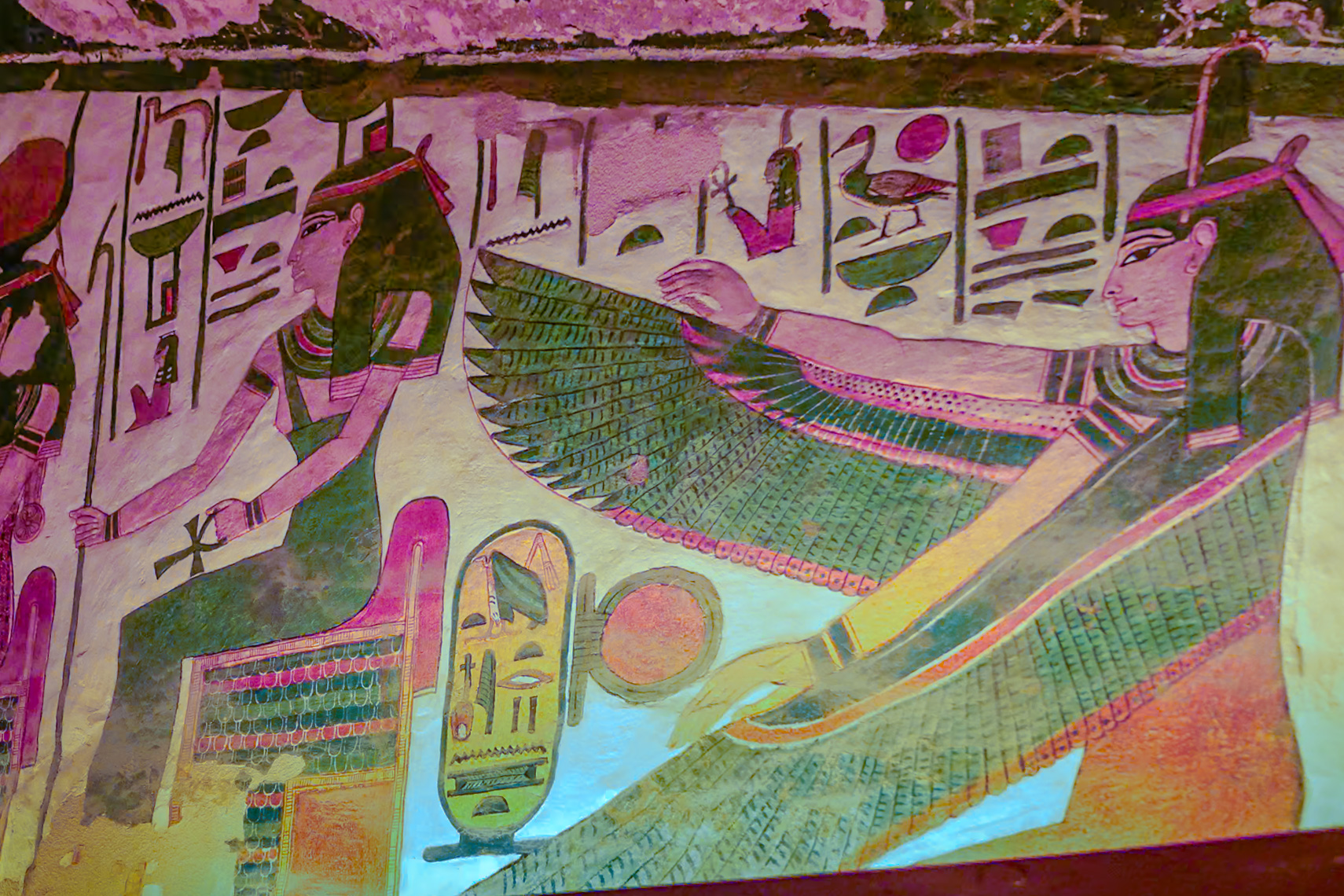
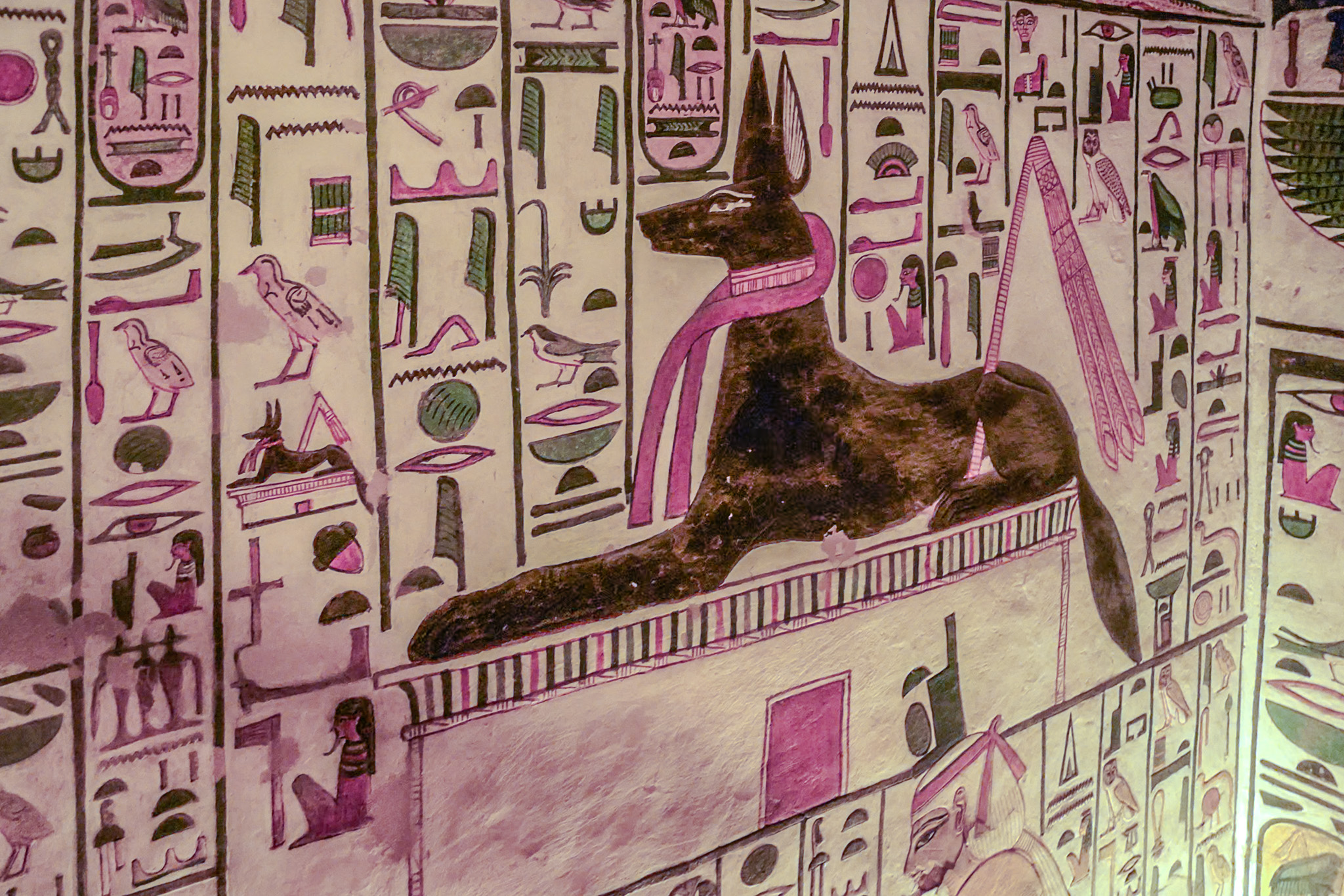
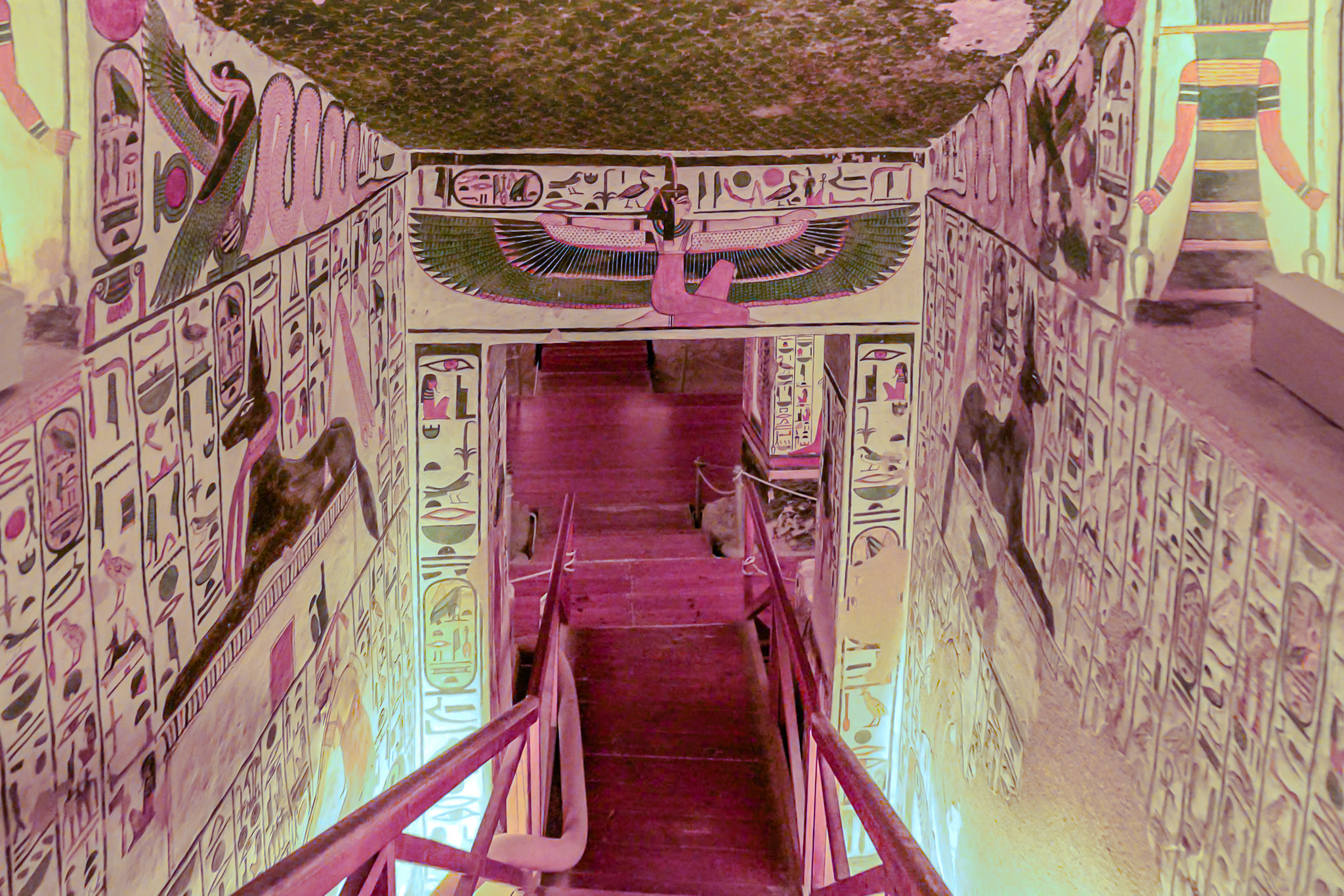
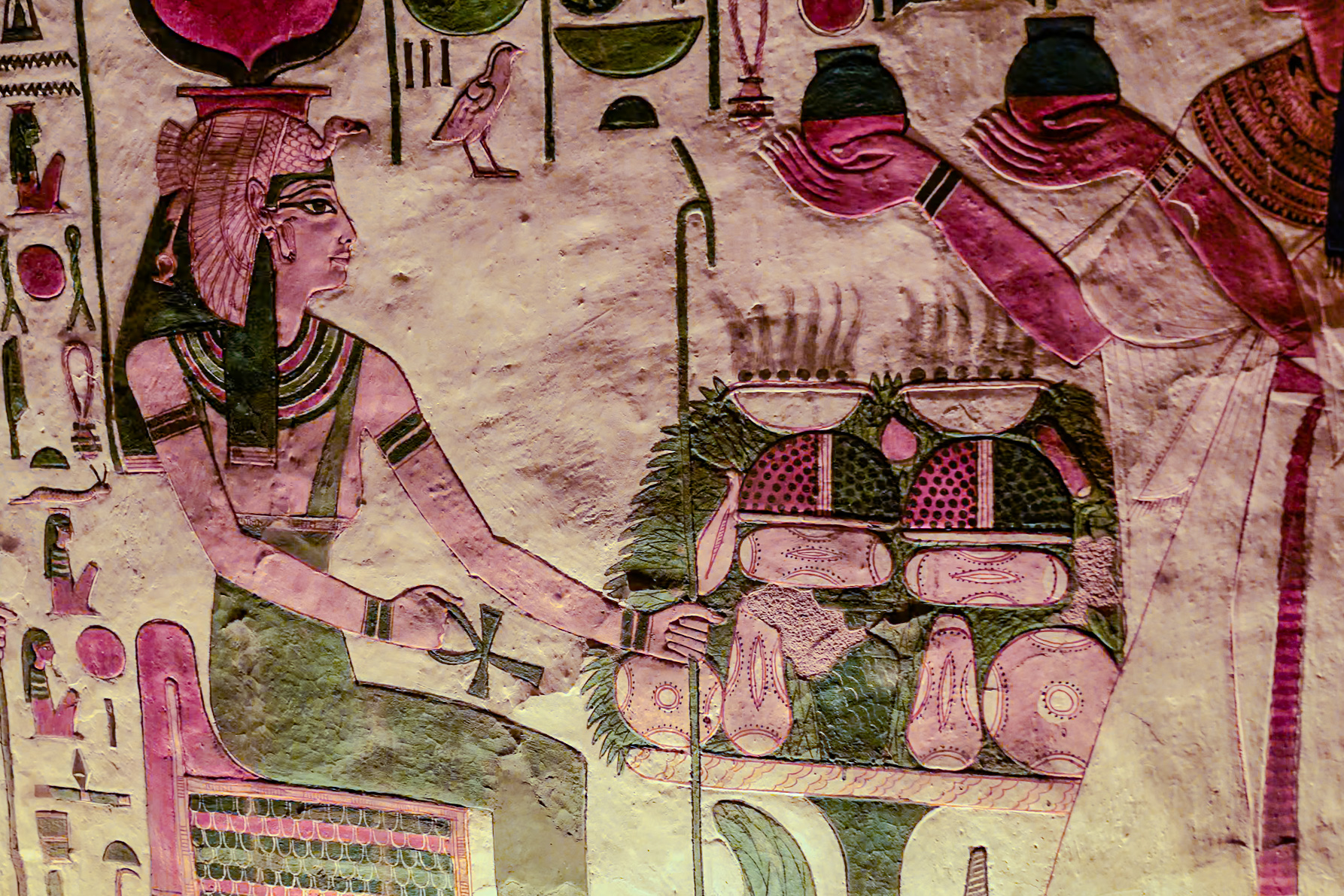
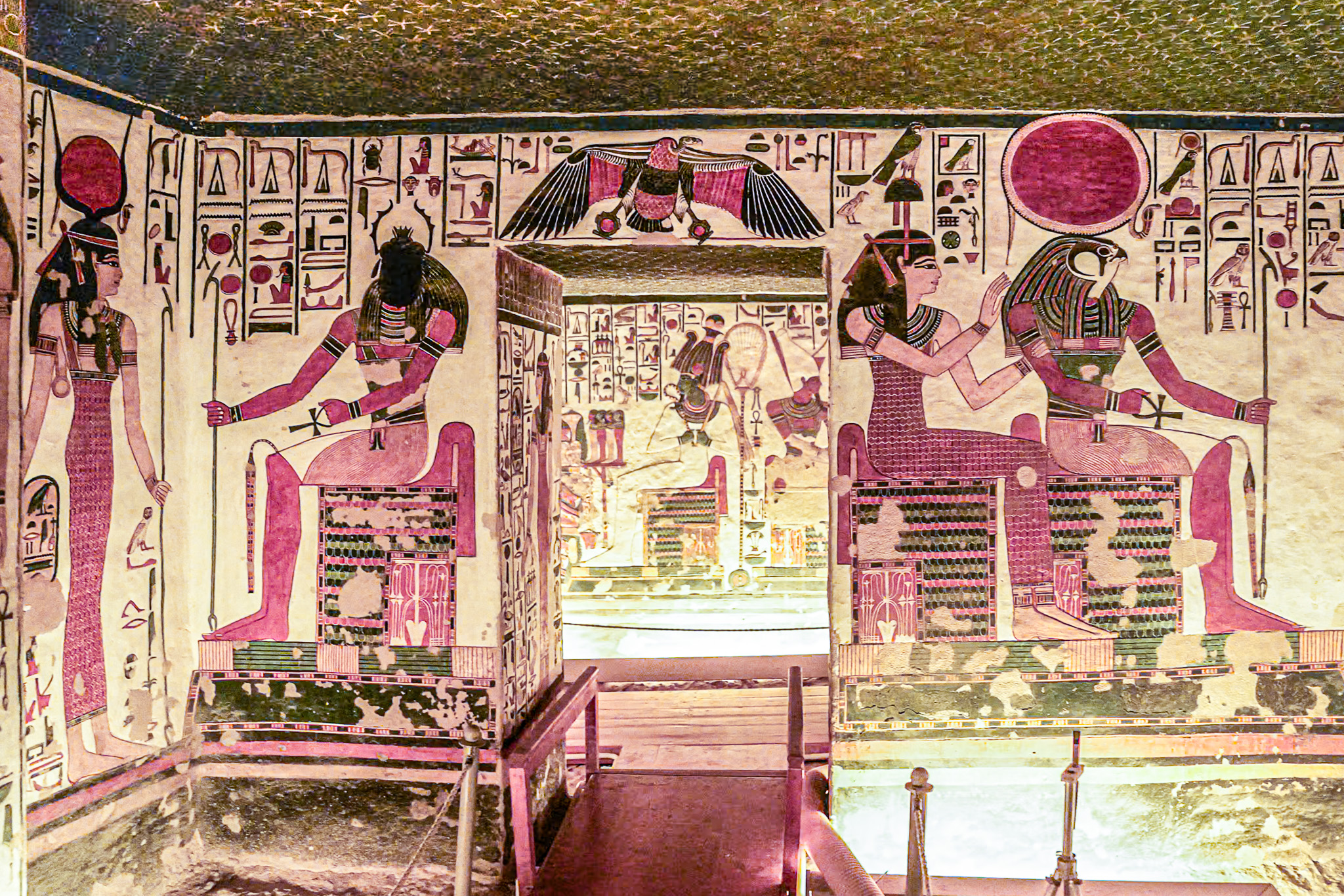
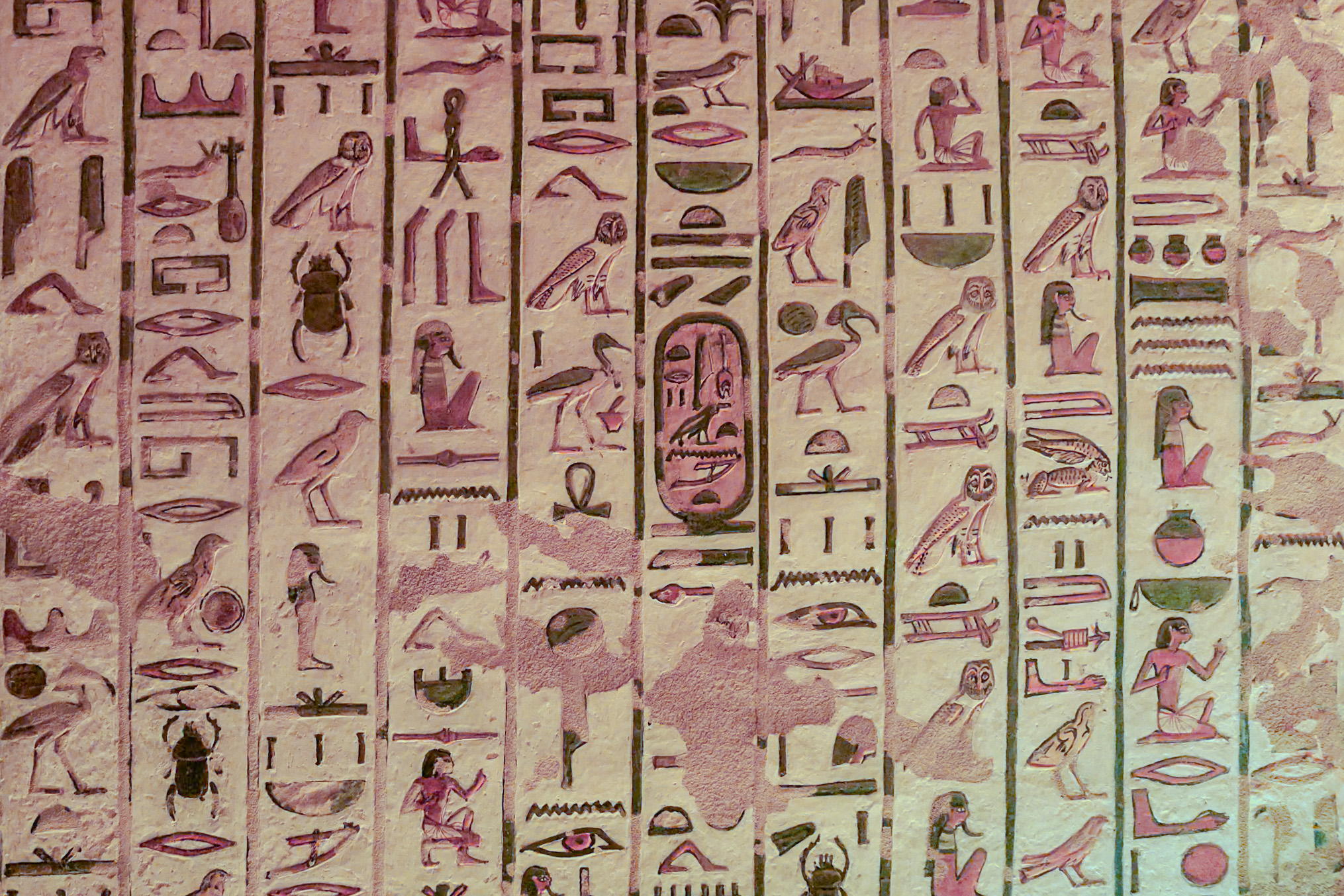
Valley of the Queens – Tomb of Nefertari
Queen Nefertari is said to be the favorite Queen of Ramesses II, the greatest and most well-known Egyptian ruler. The inside of her tomb is striking in detail and colors.
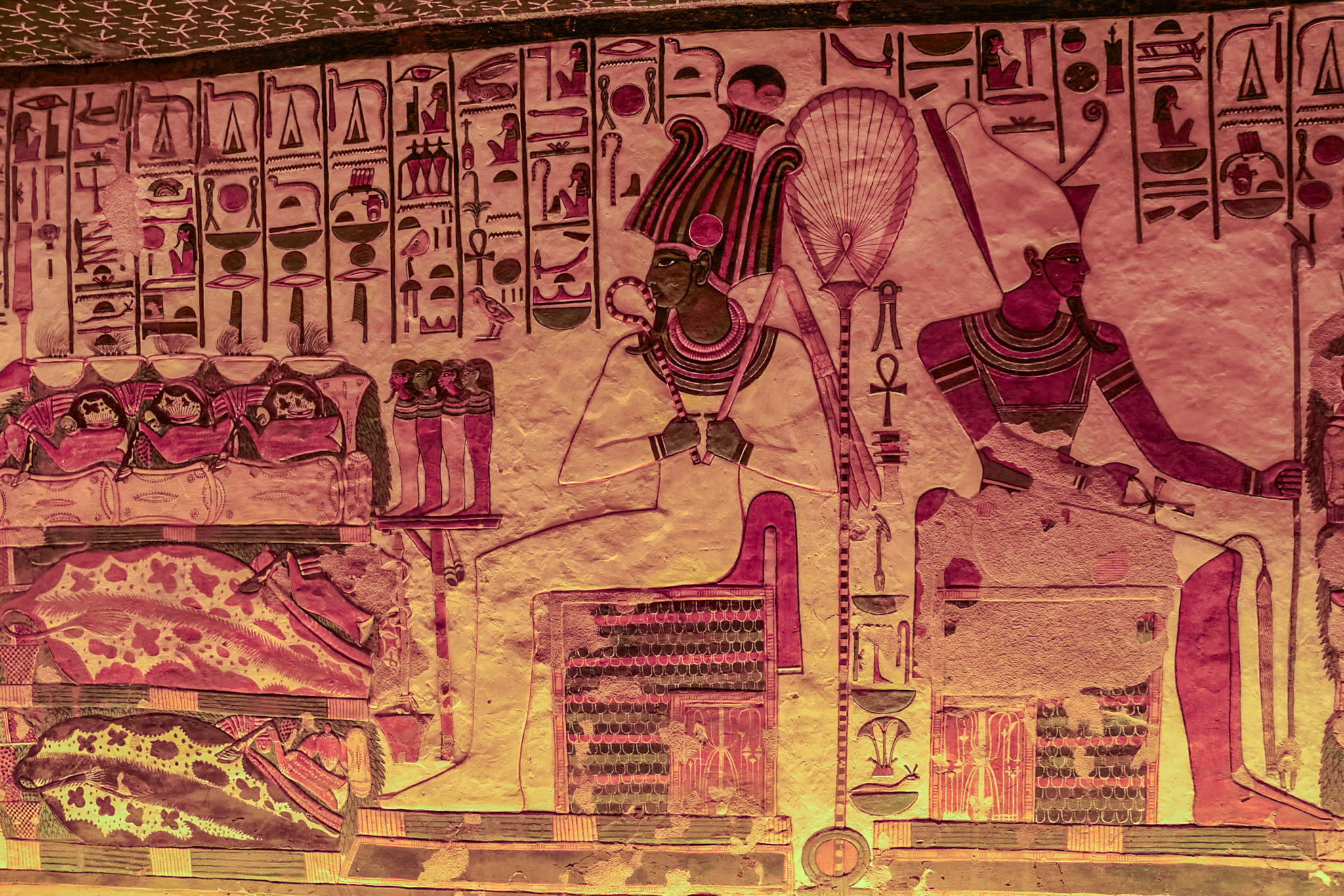
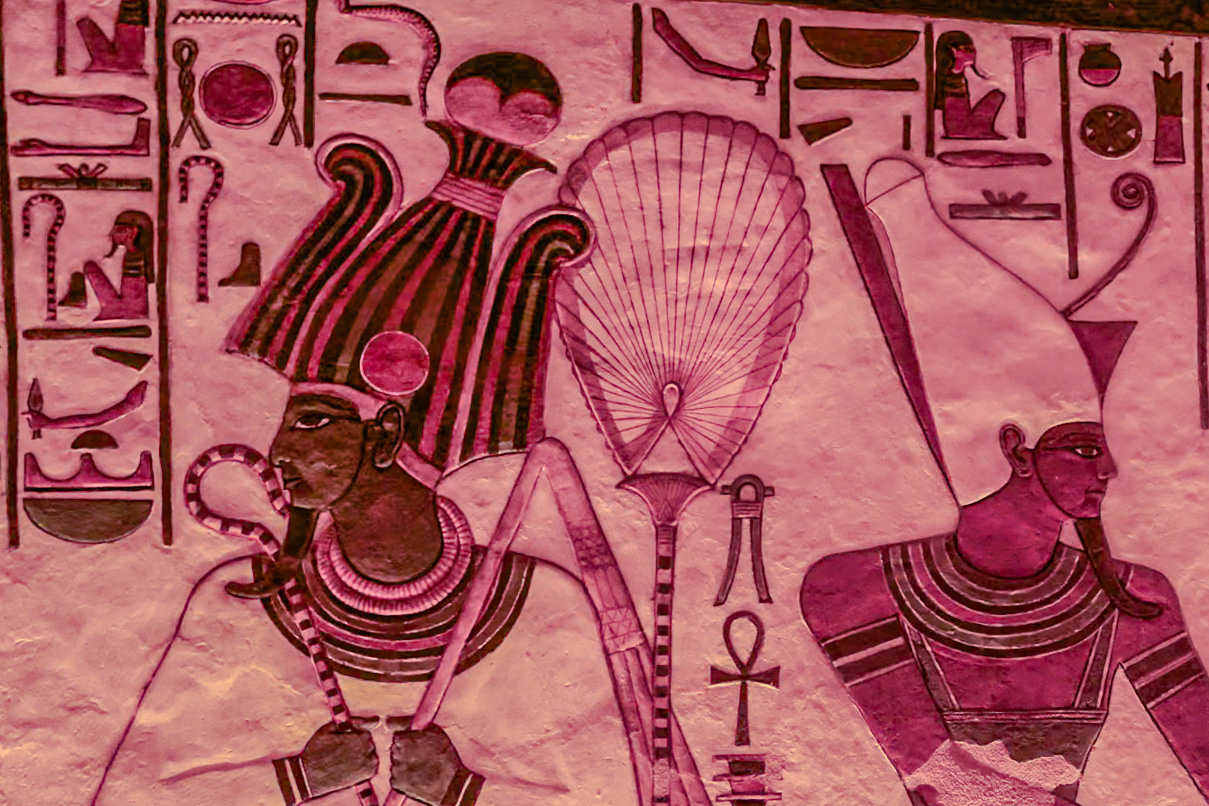
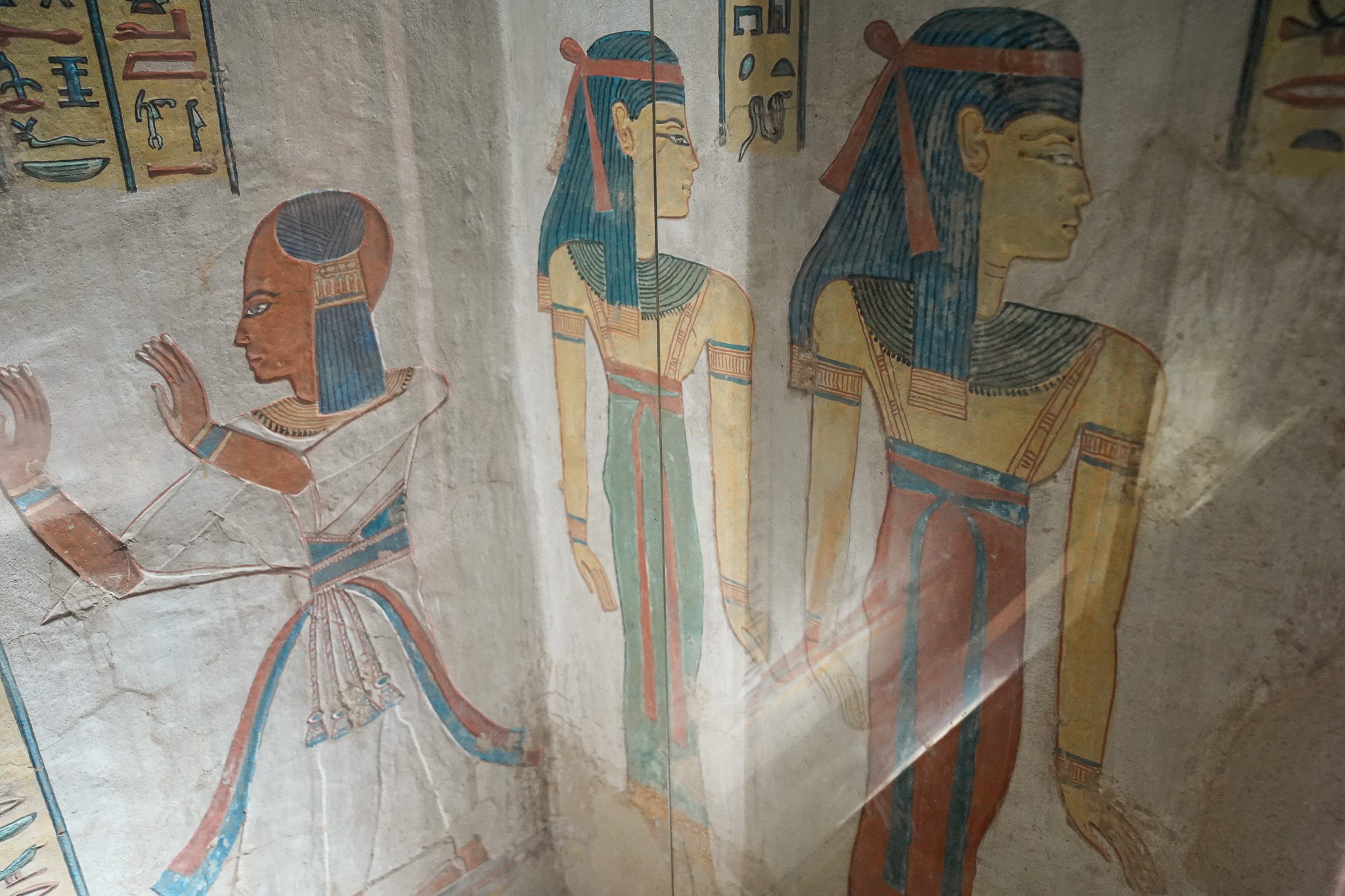
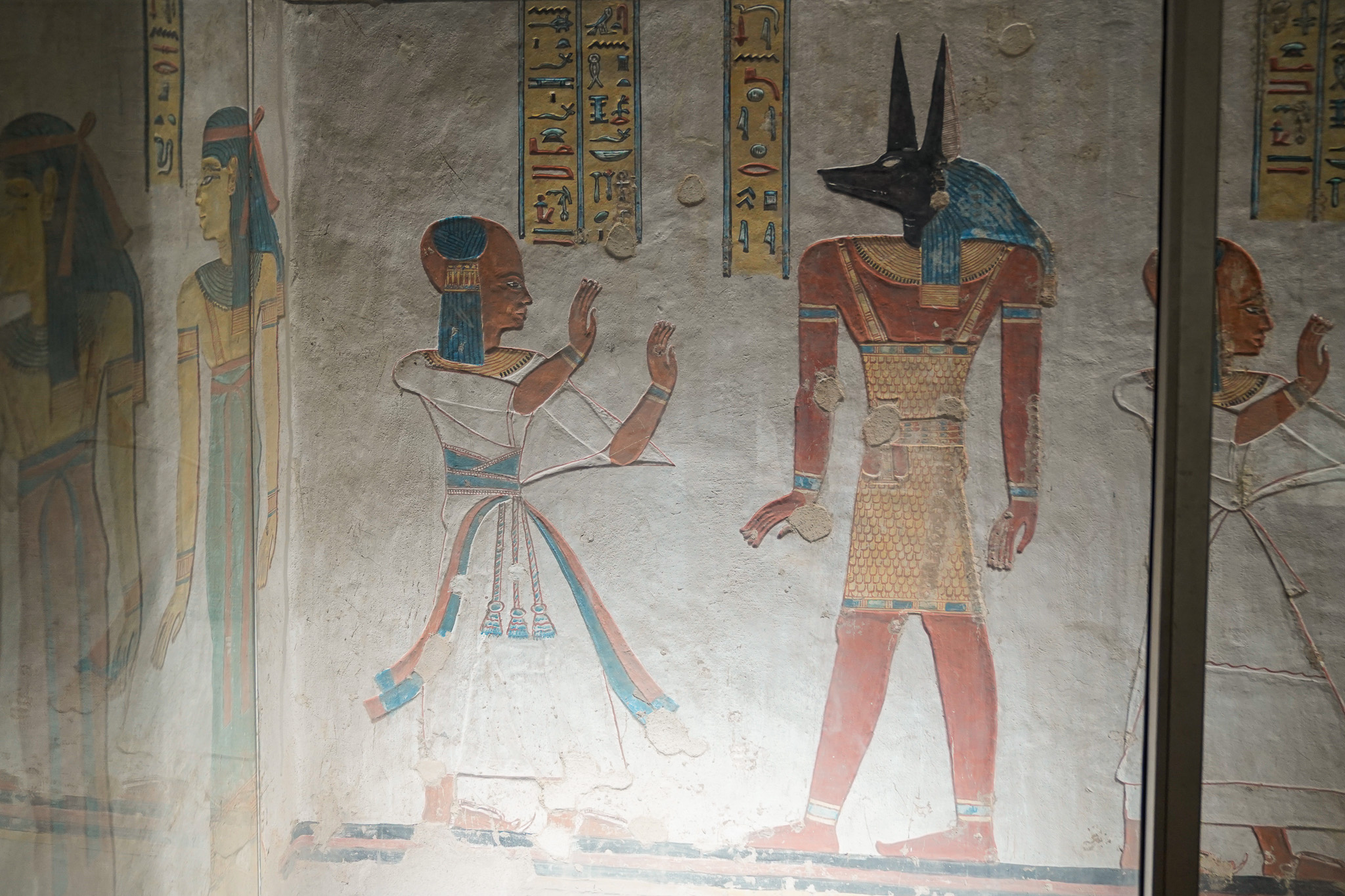
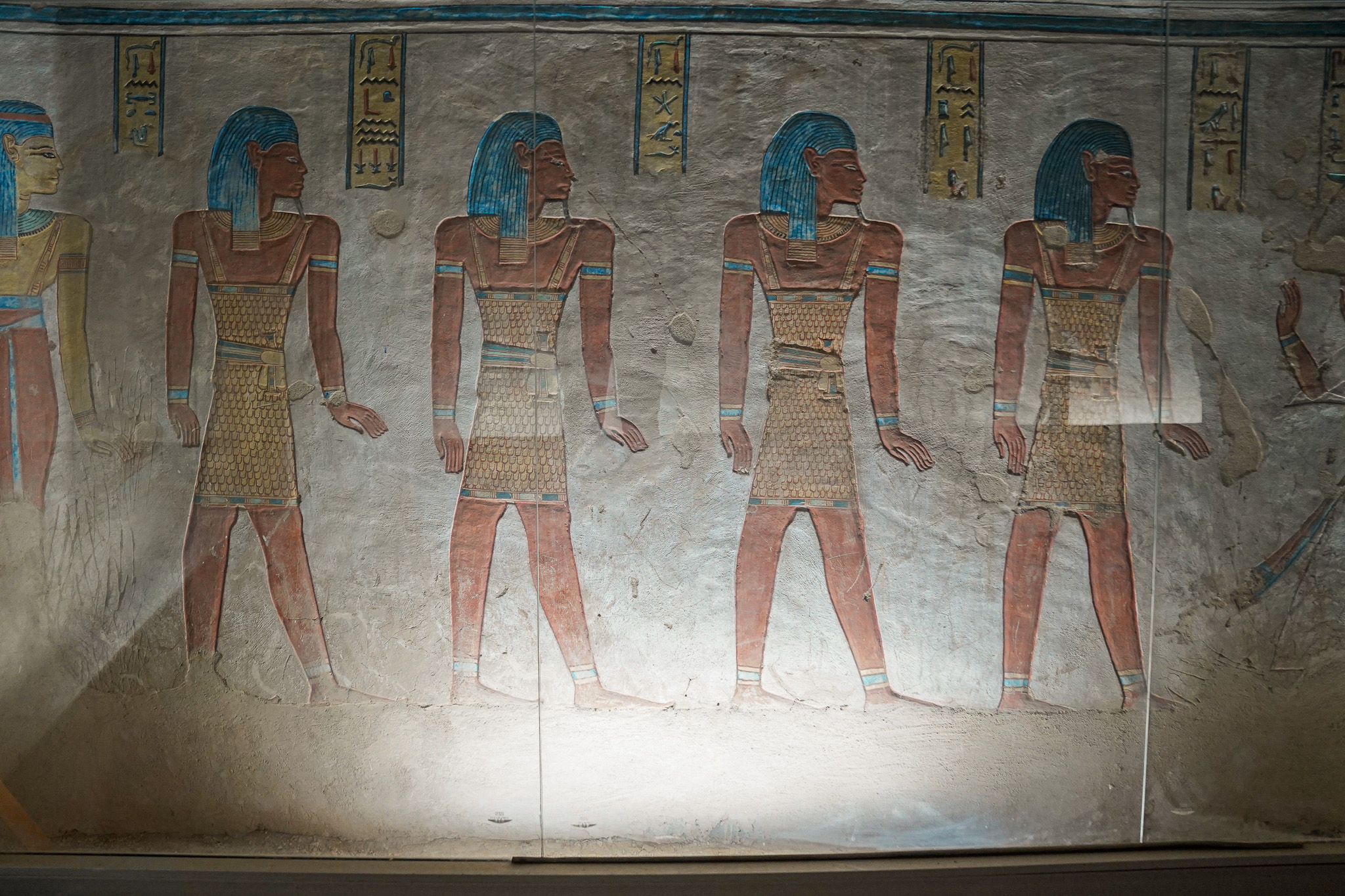
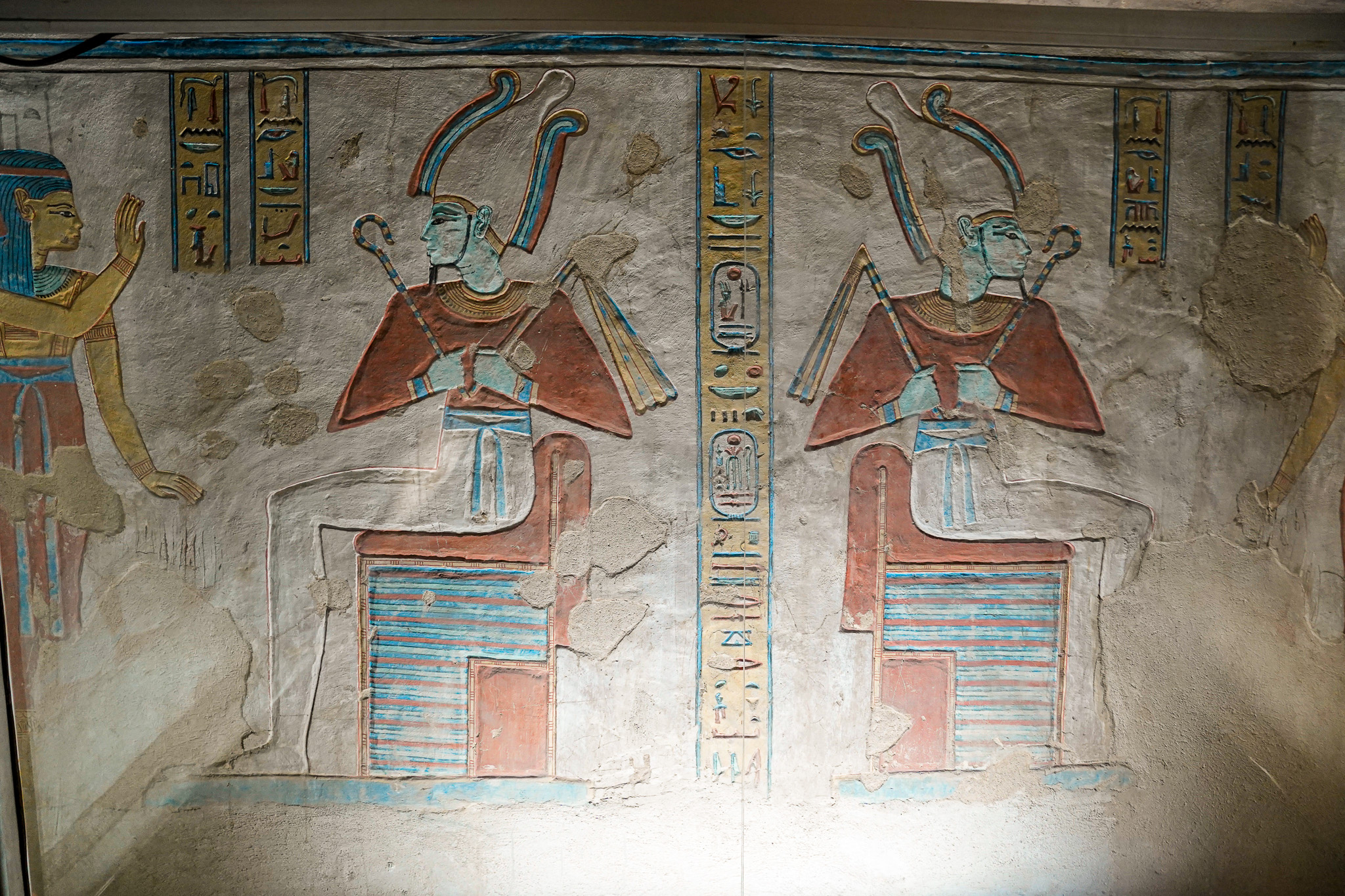
Valley of the Queens – Tomb of Khaemwaset
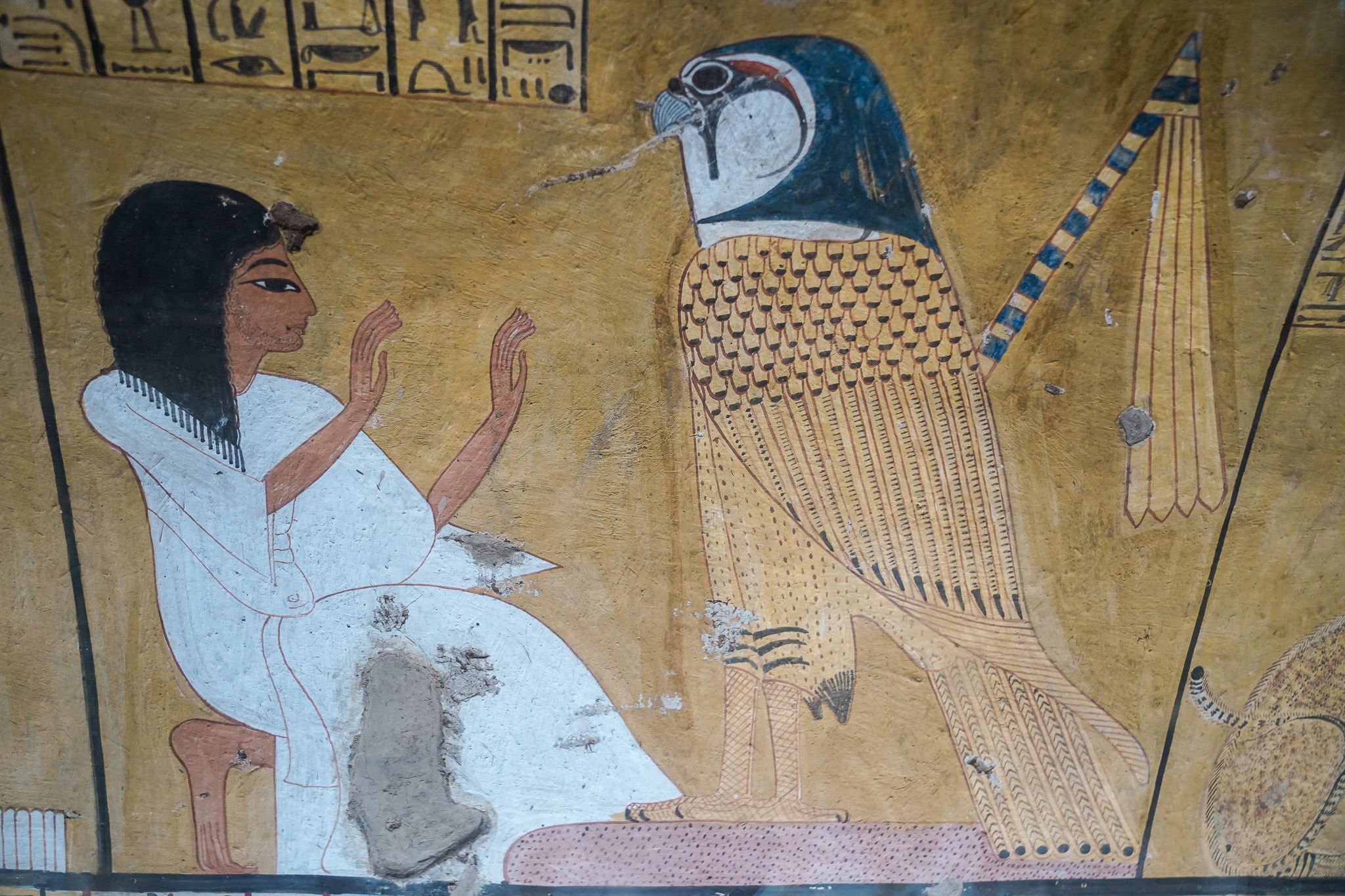
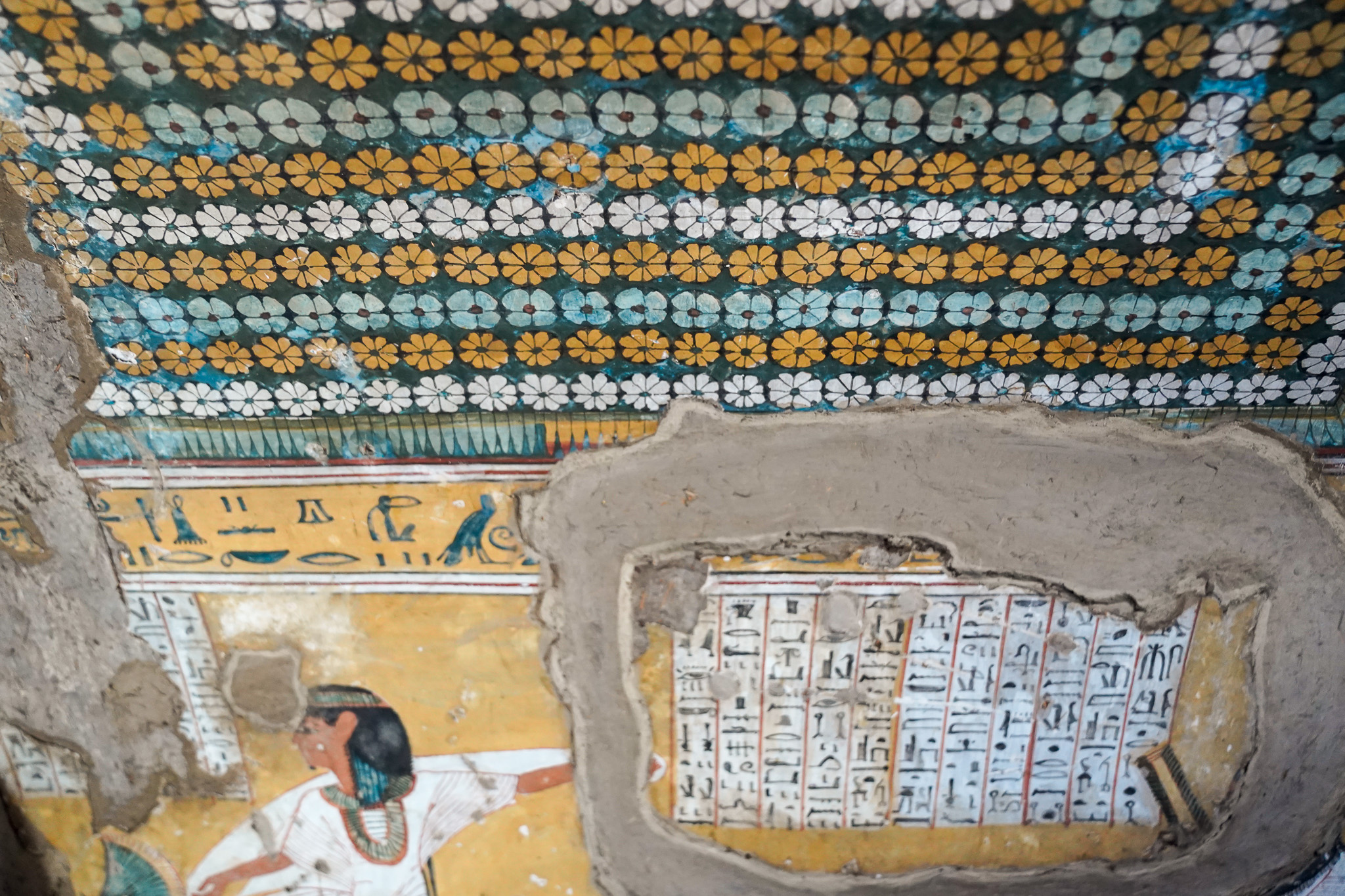
Princesses, princes, and other nobility have tombs in the Valley of the Queens. Prince Khaemweset was the fourth son of Ramesses II. Though covered with protective material, you can see the delicate colors and detail.
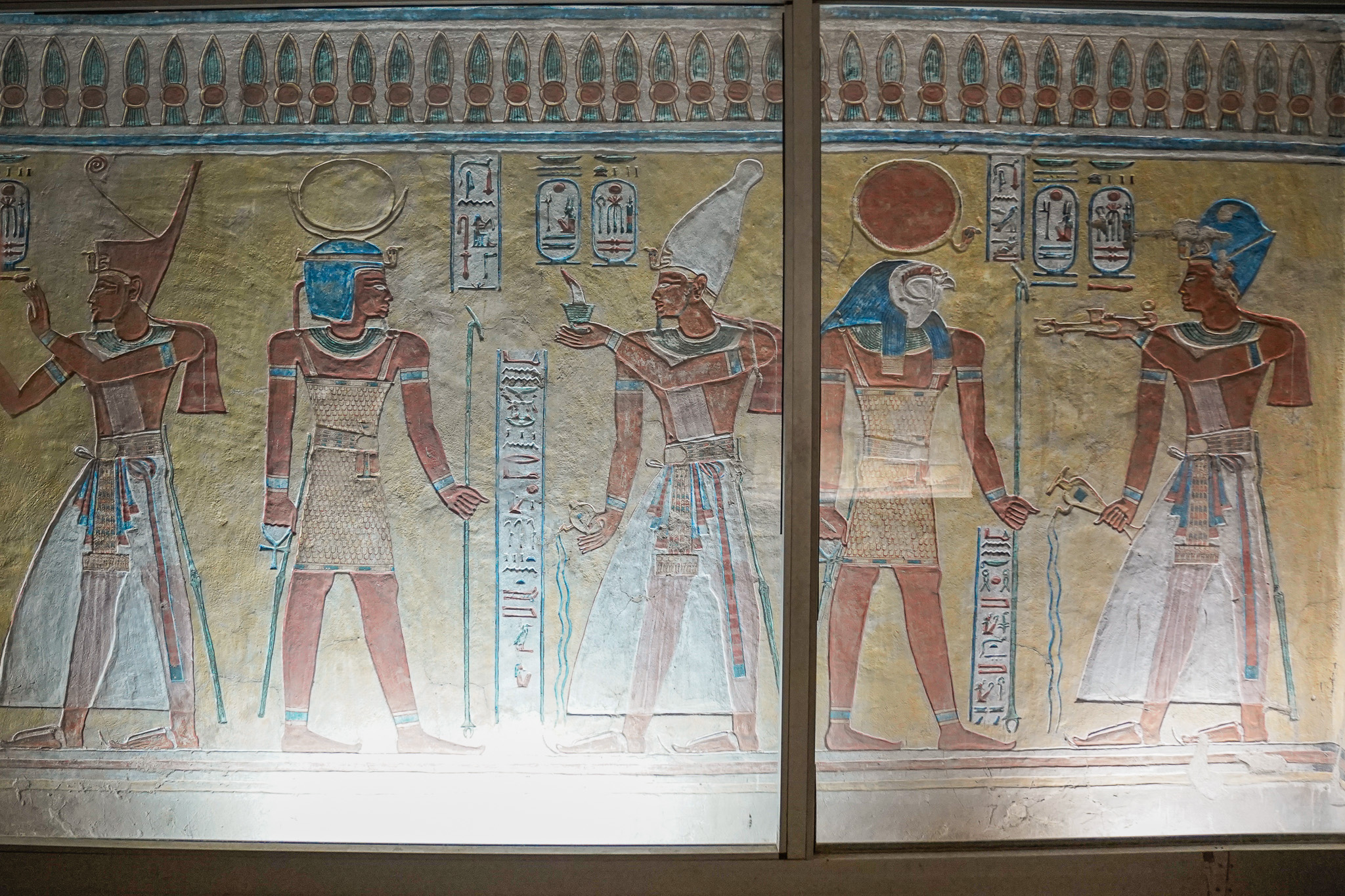
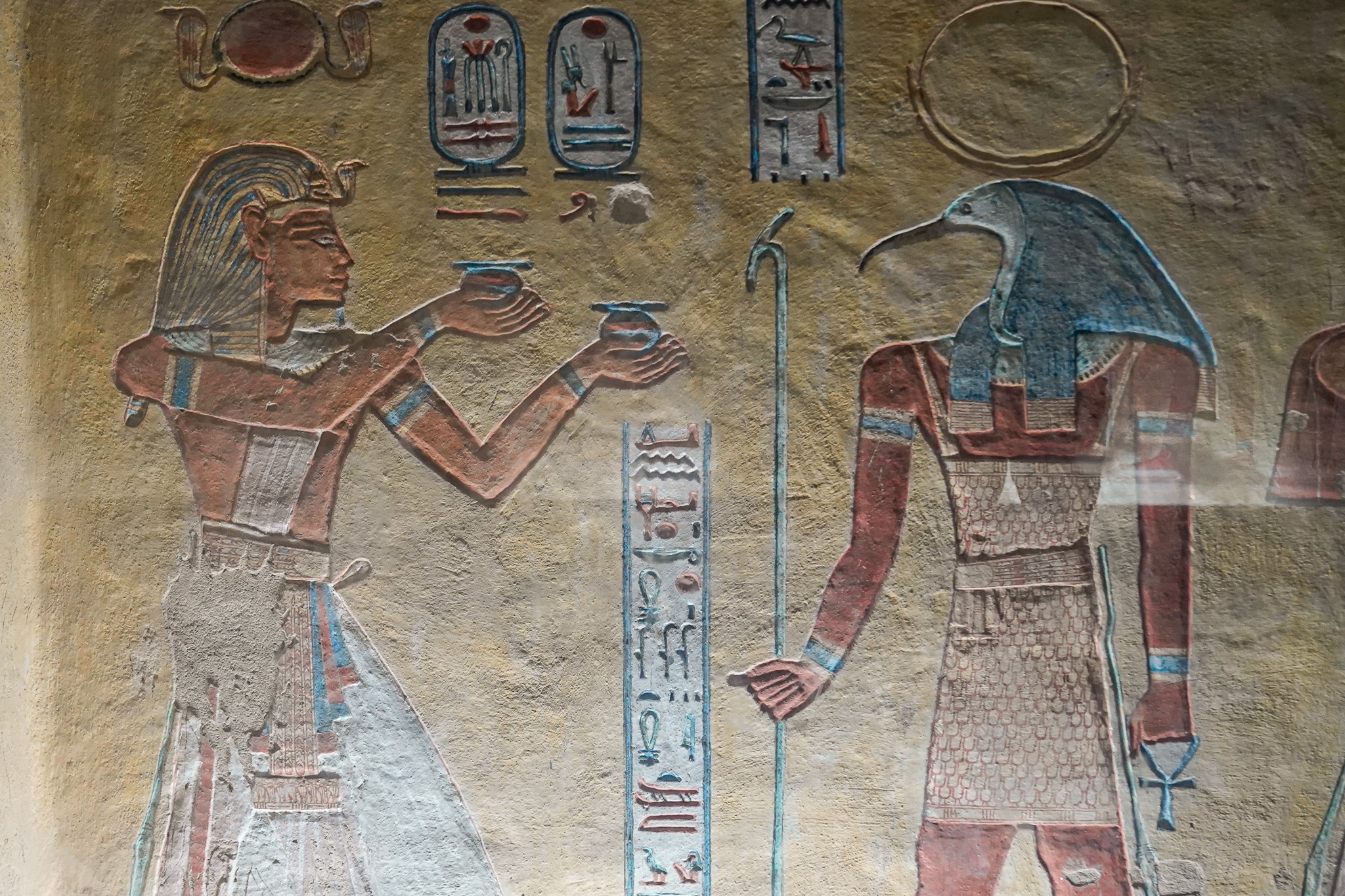
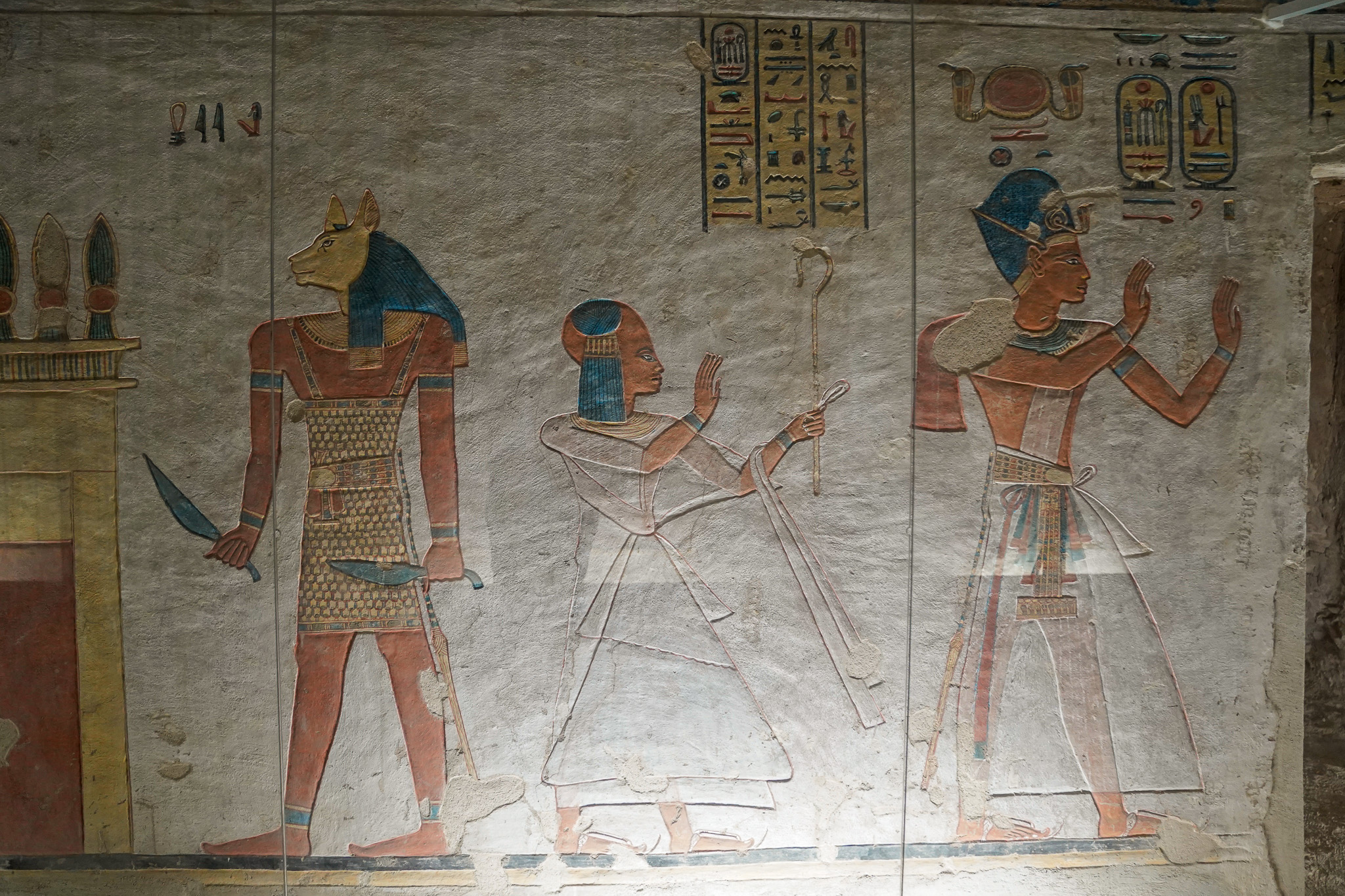
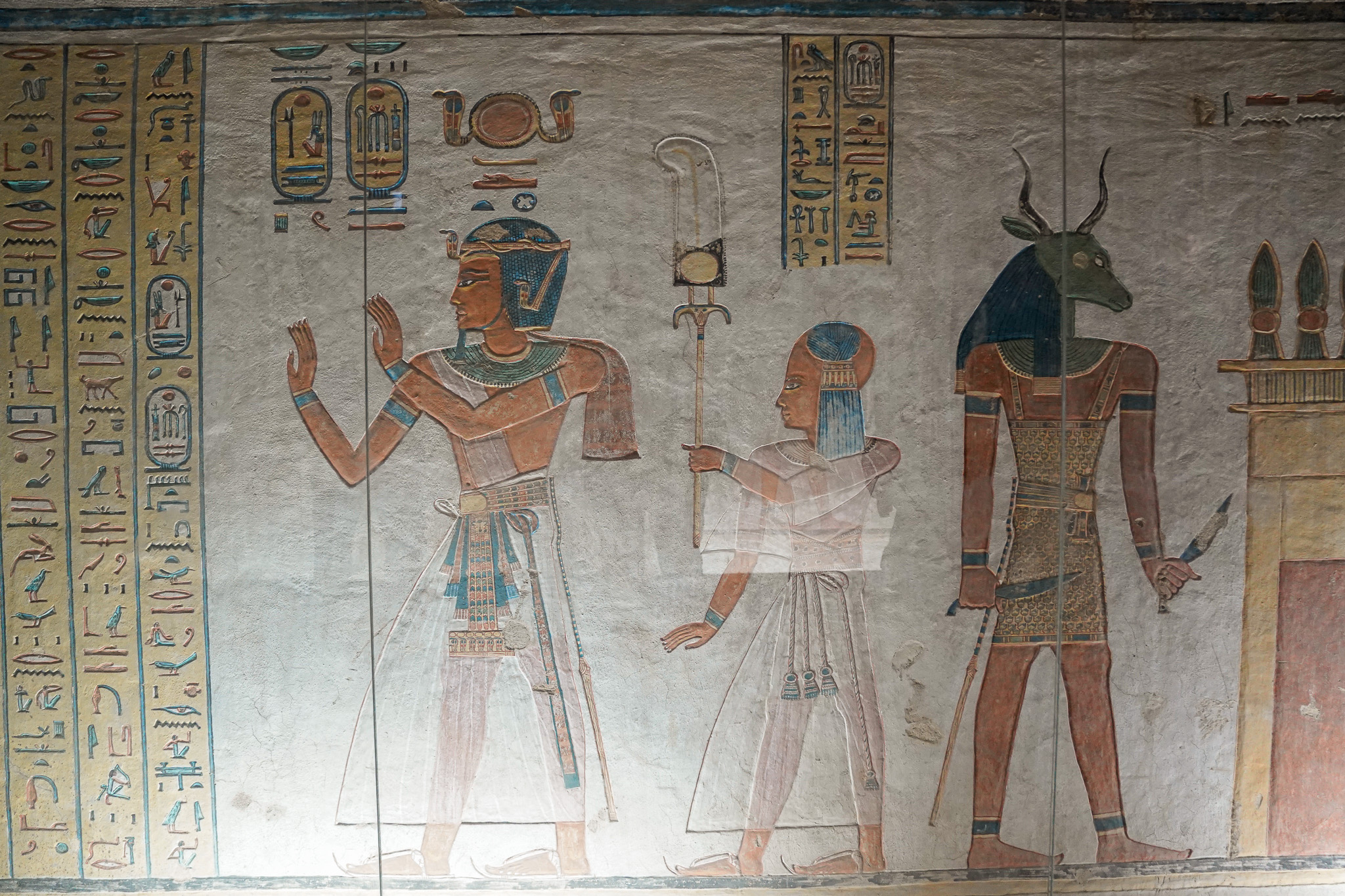
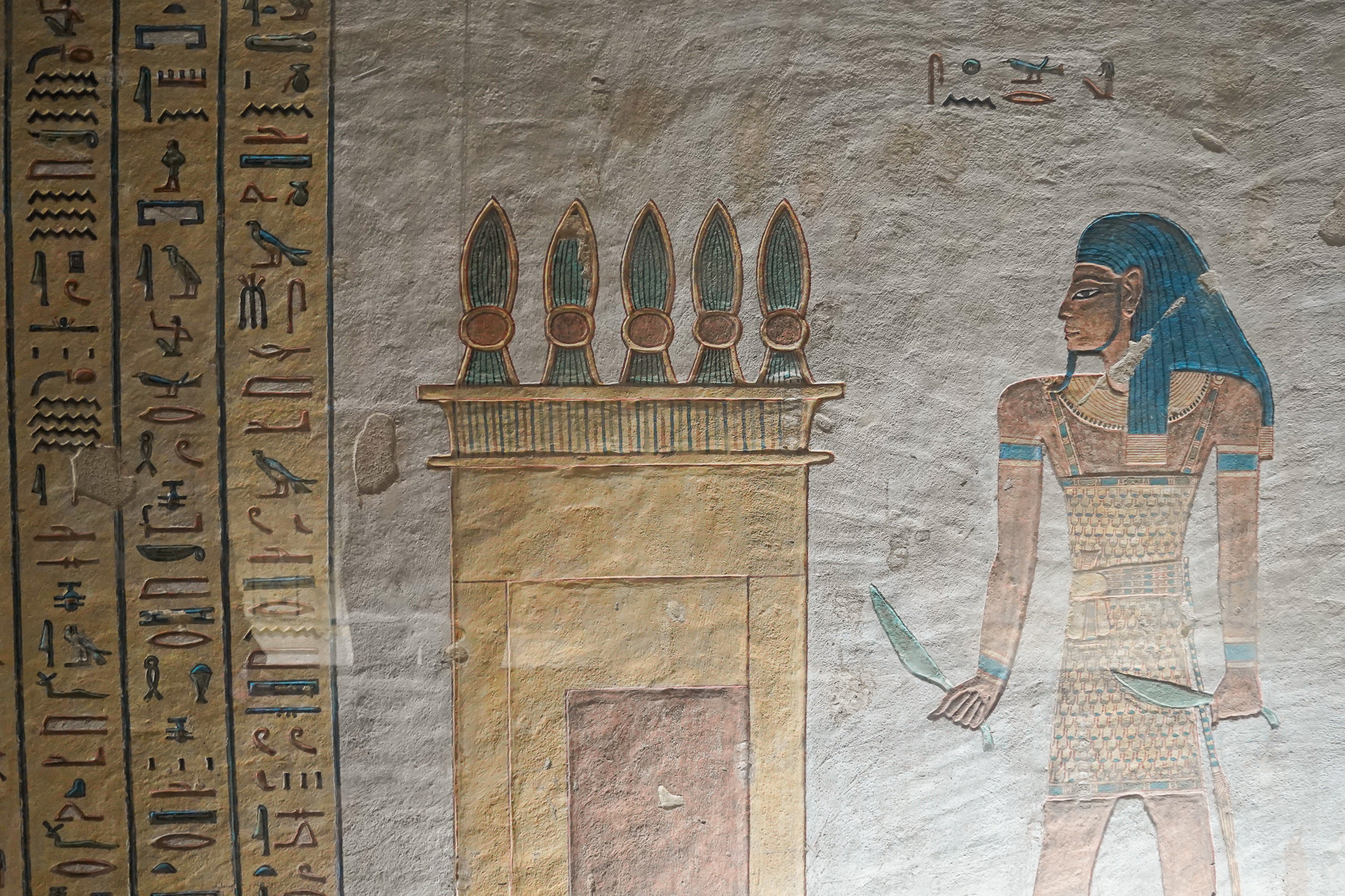
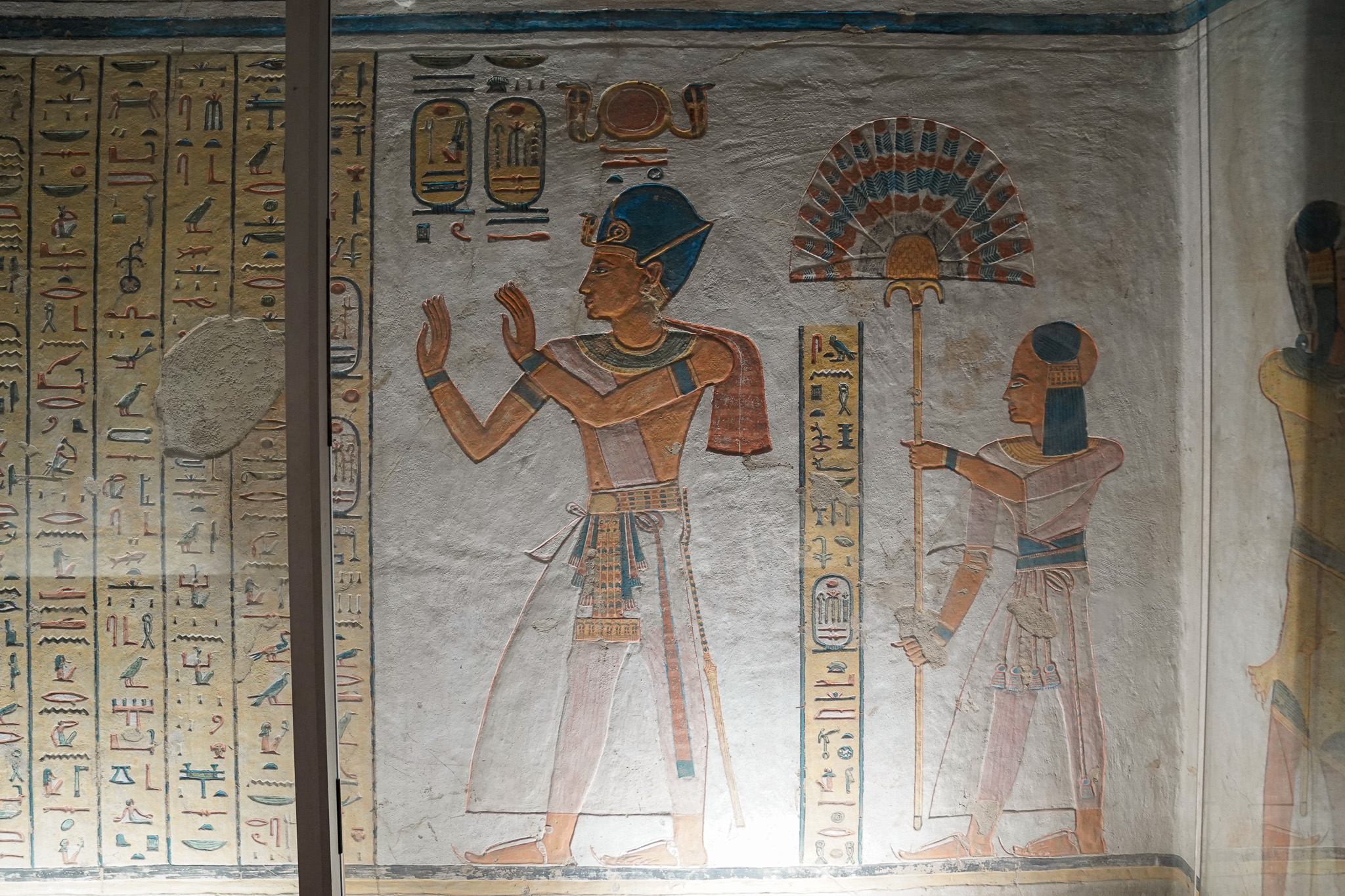
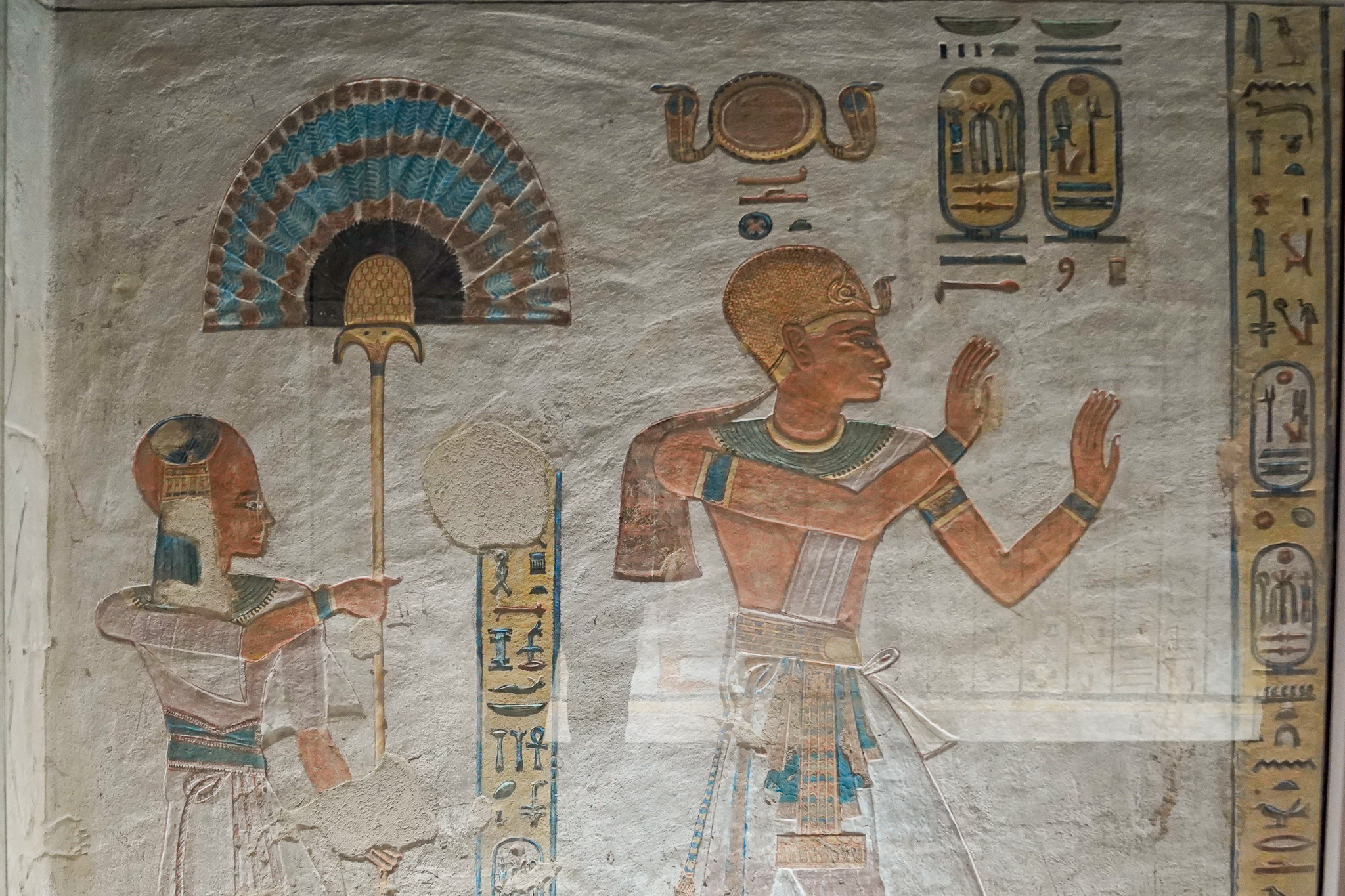
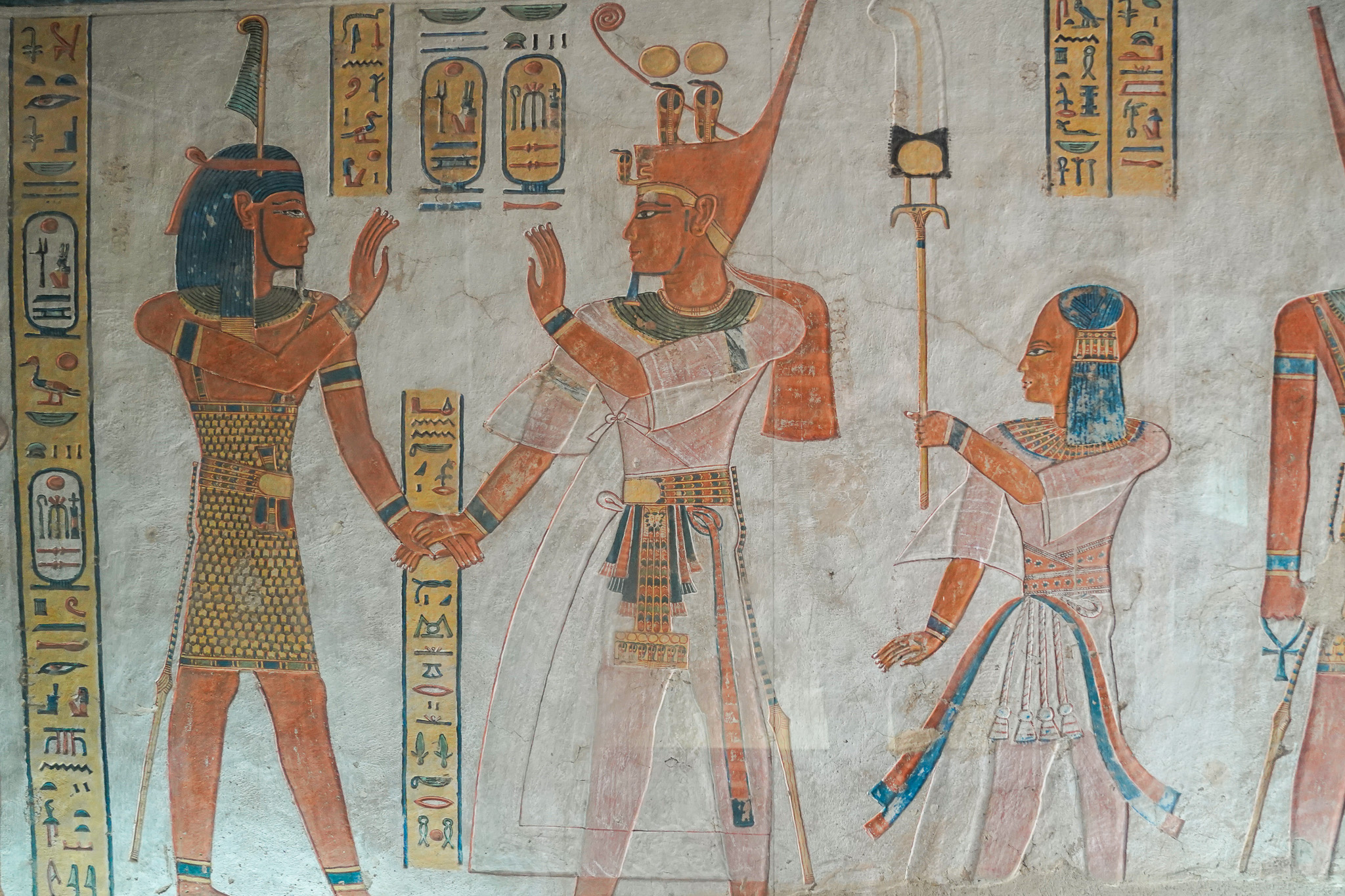
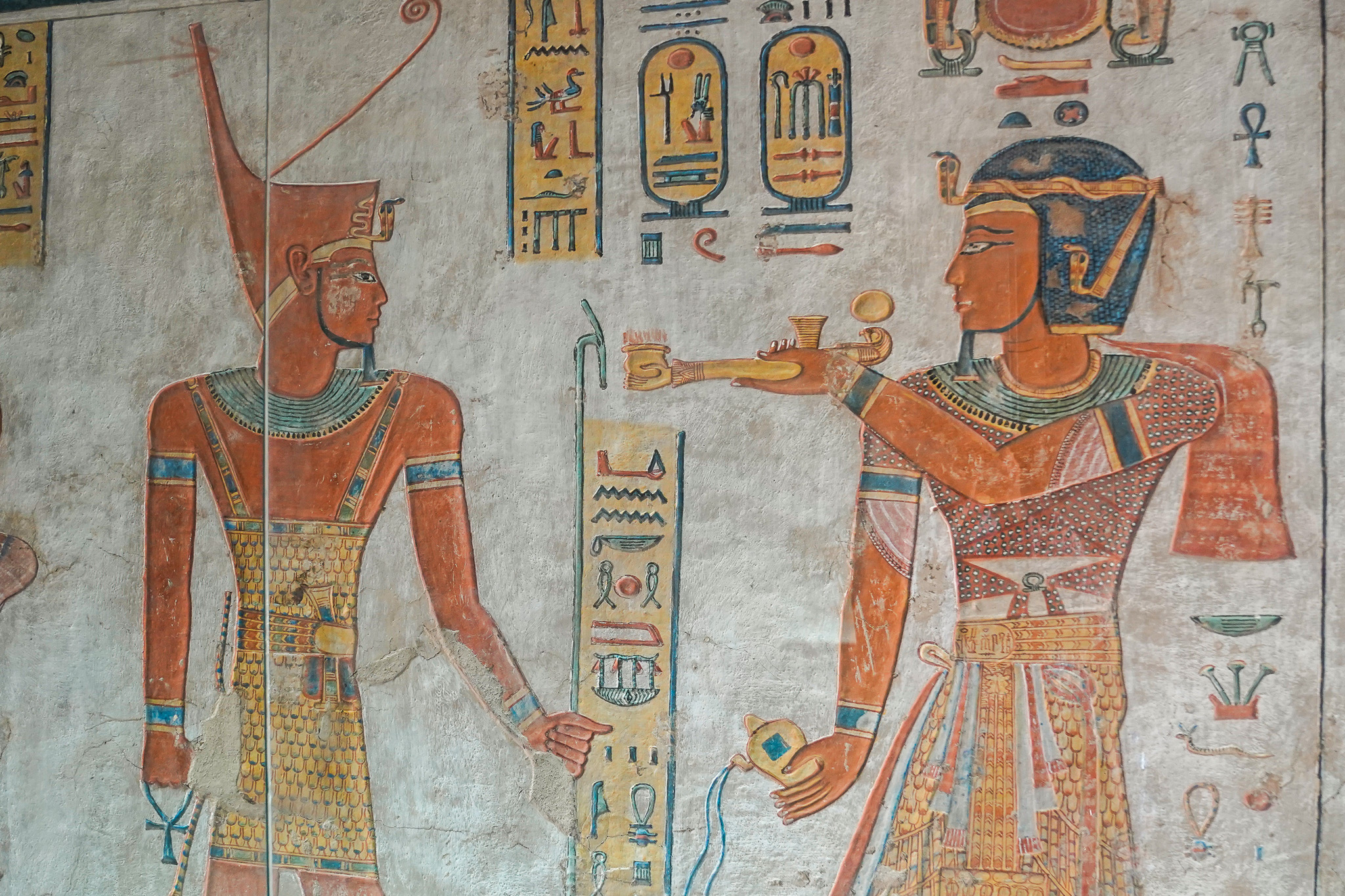
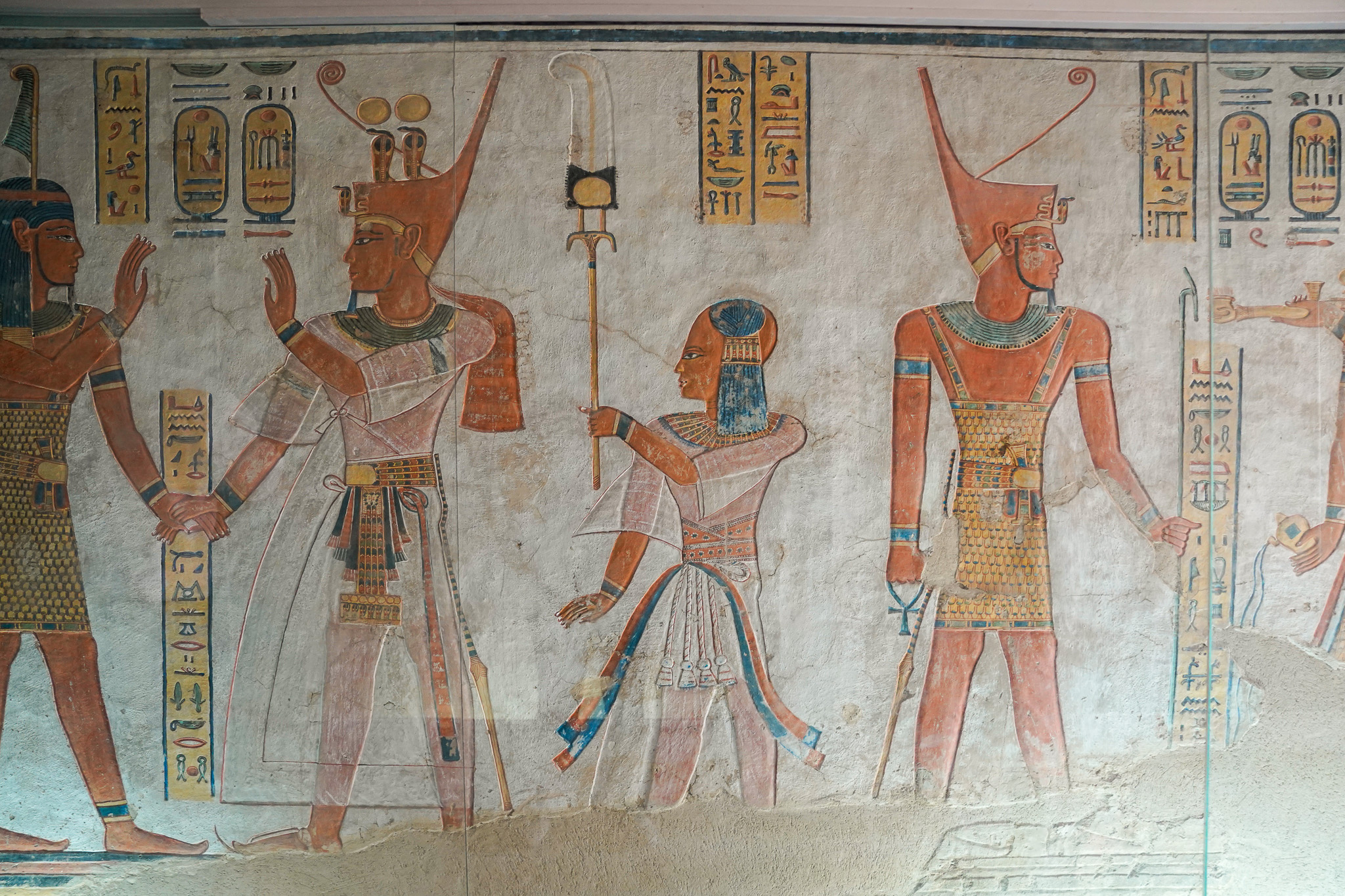
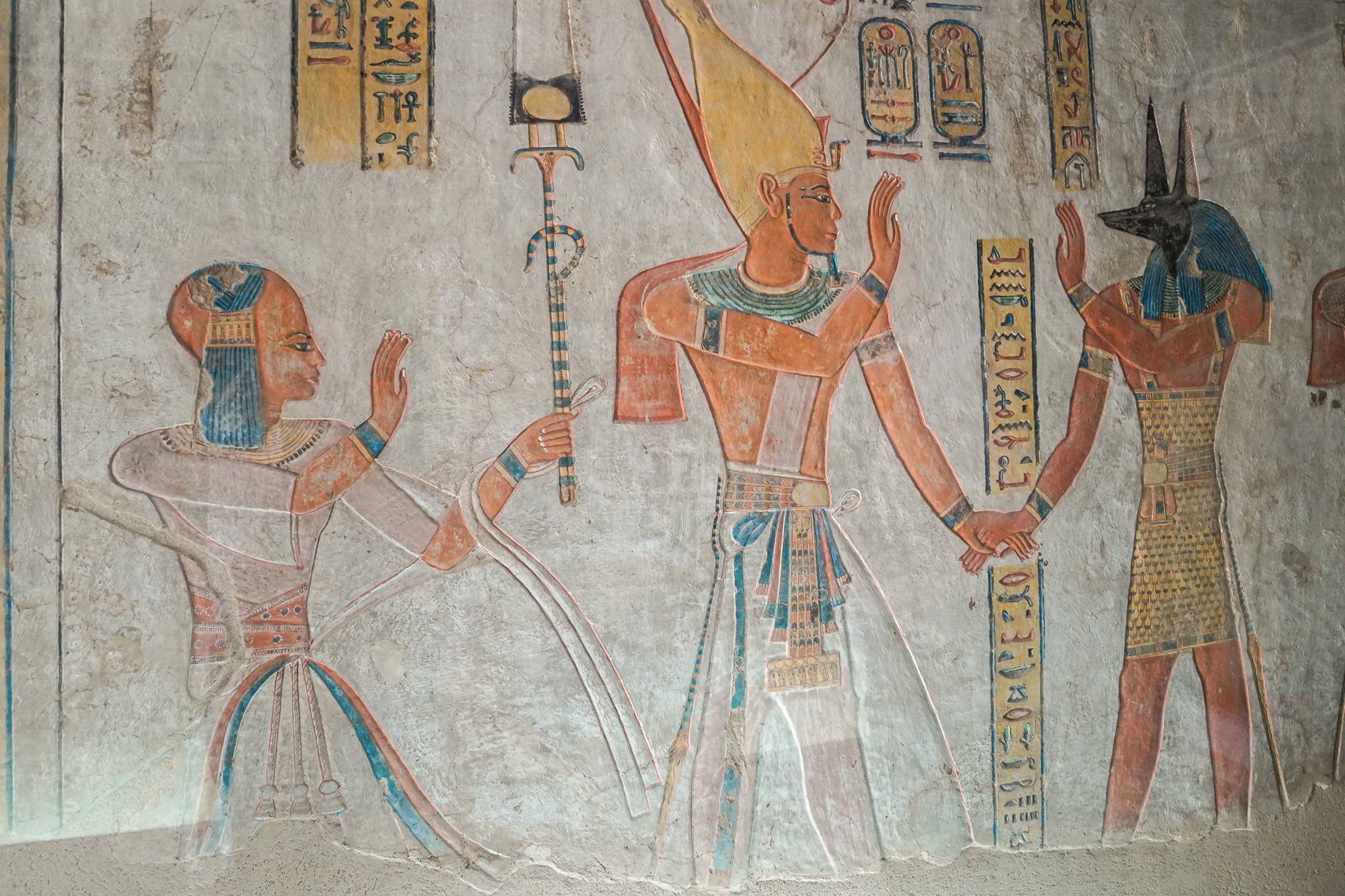
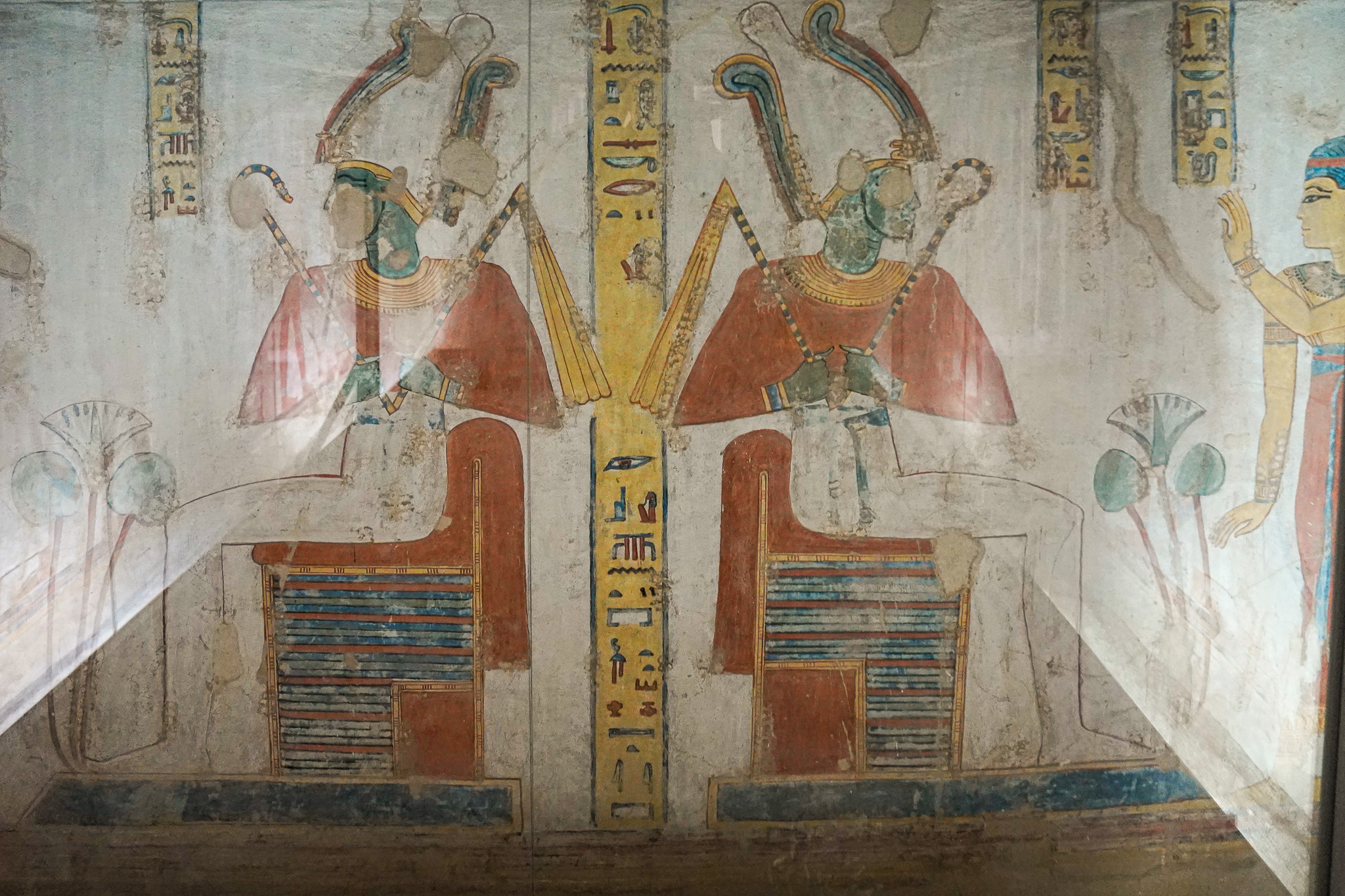
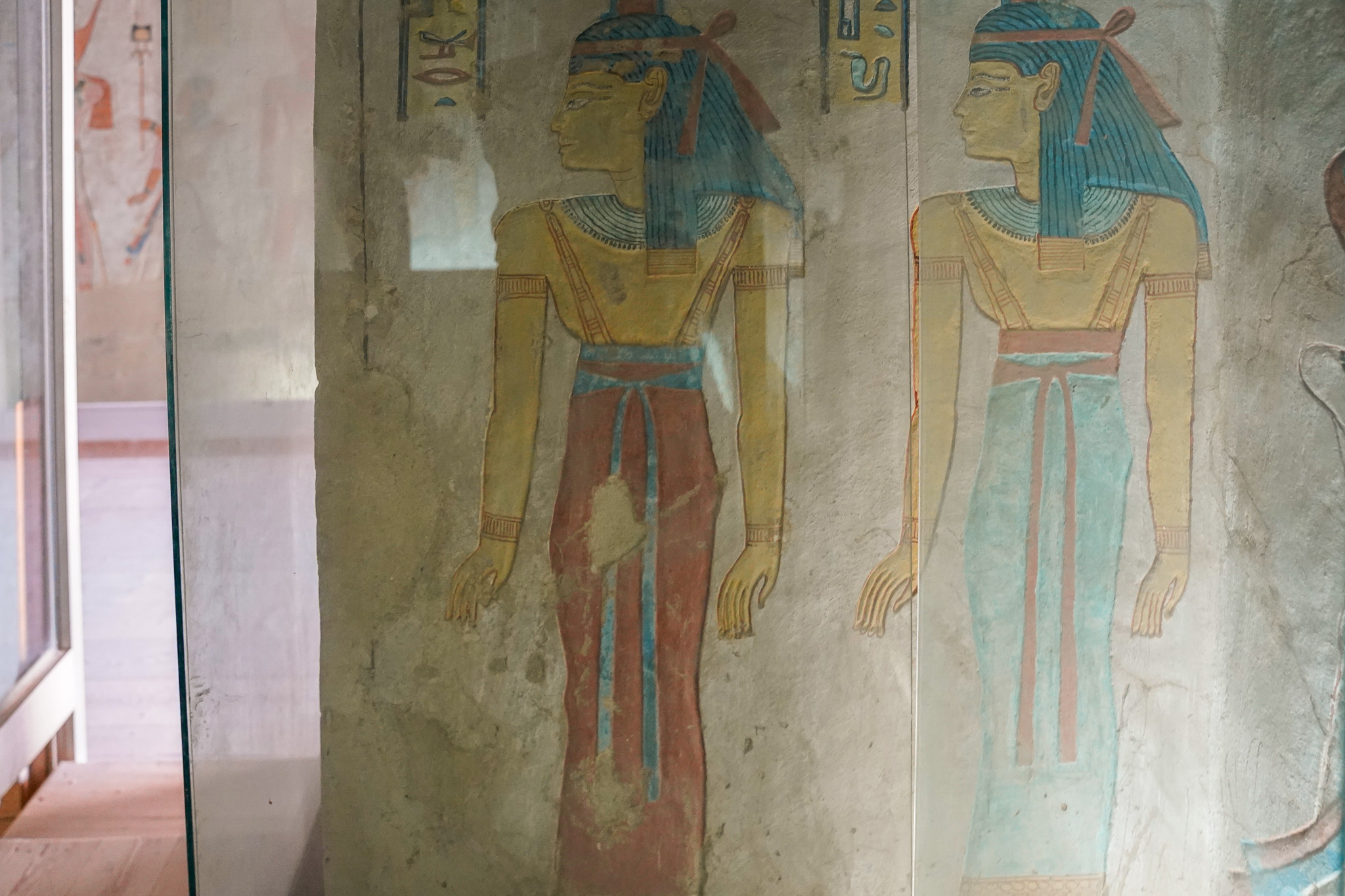
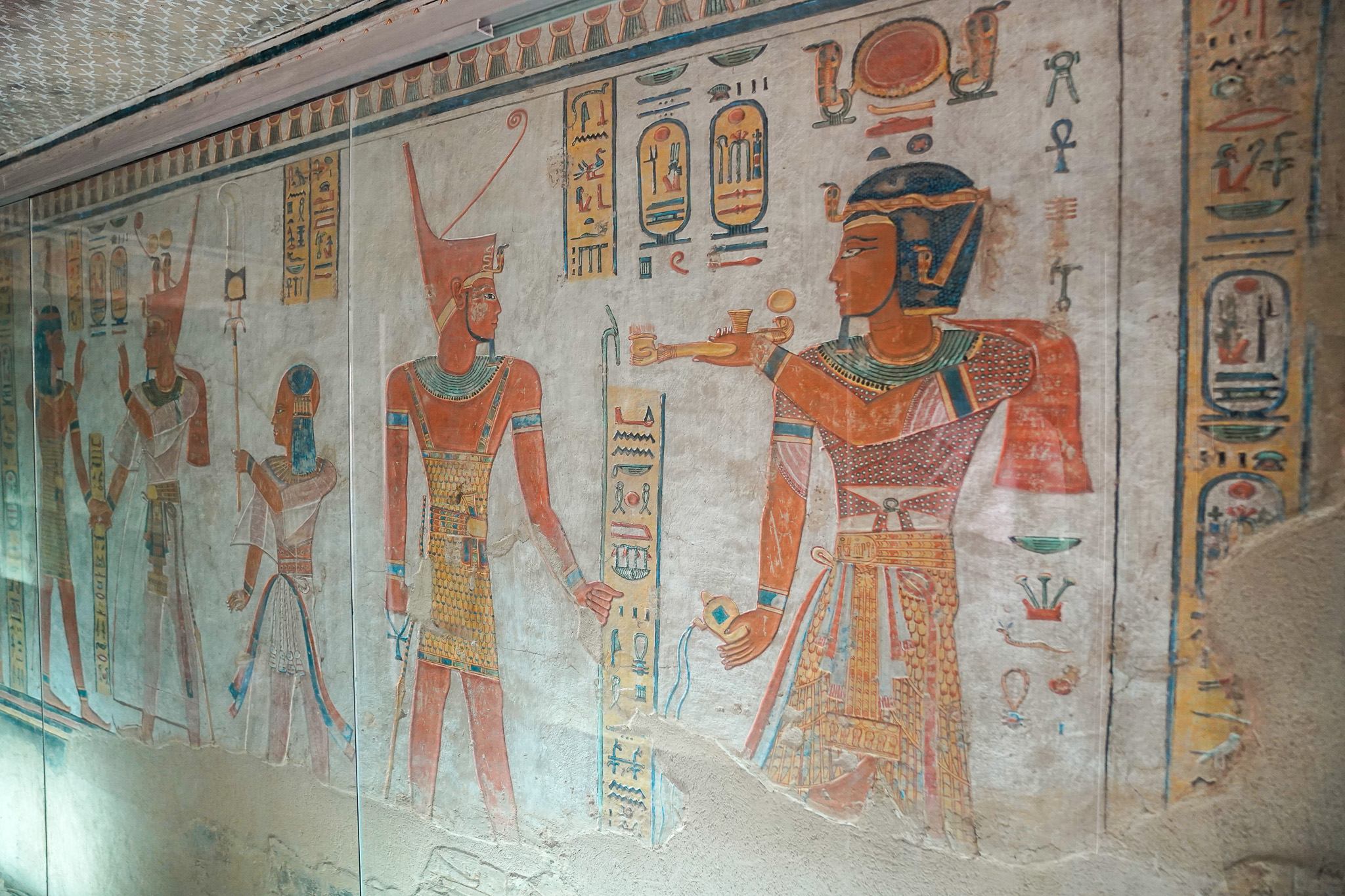
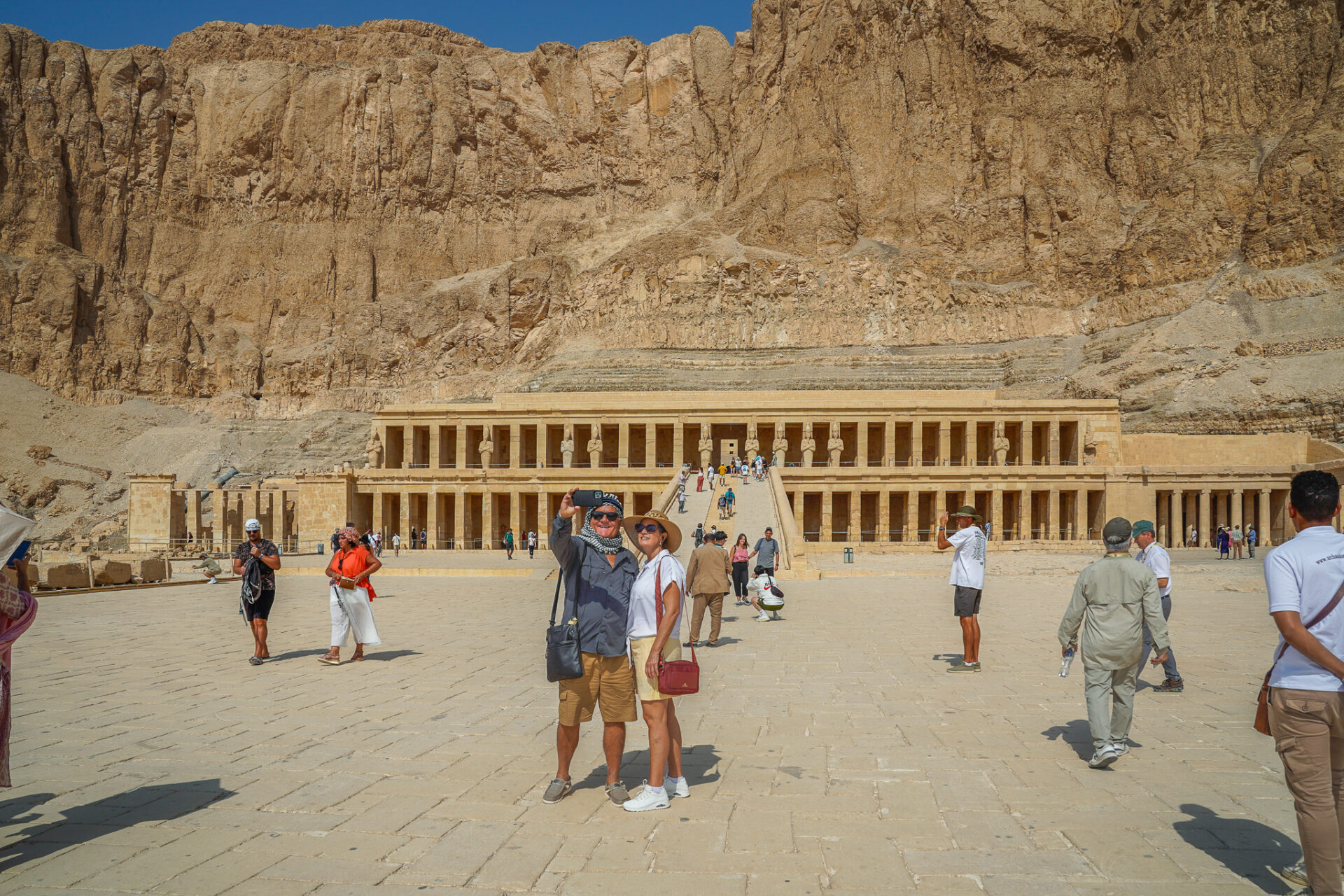
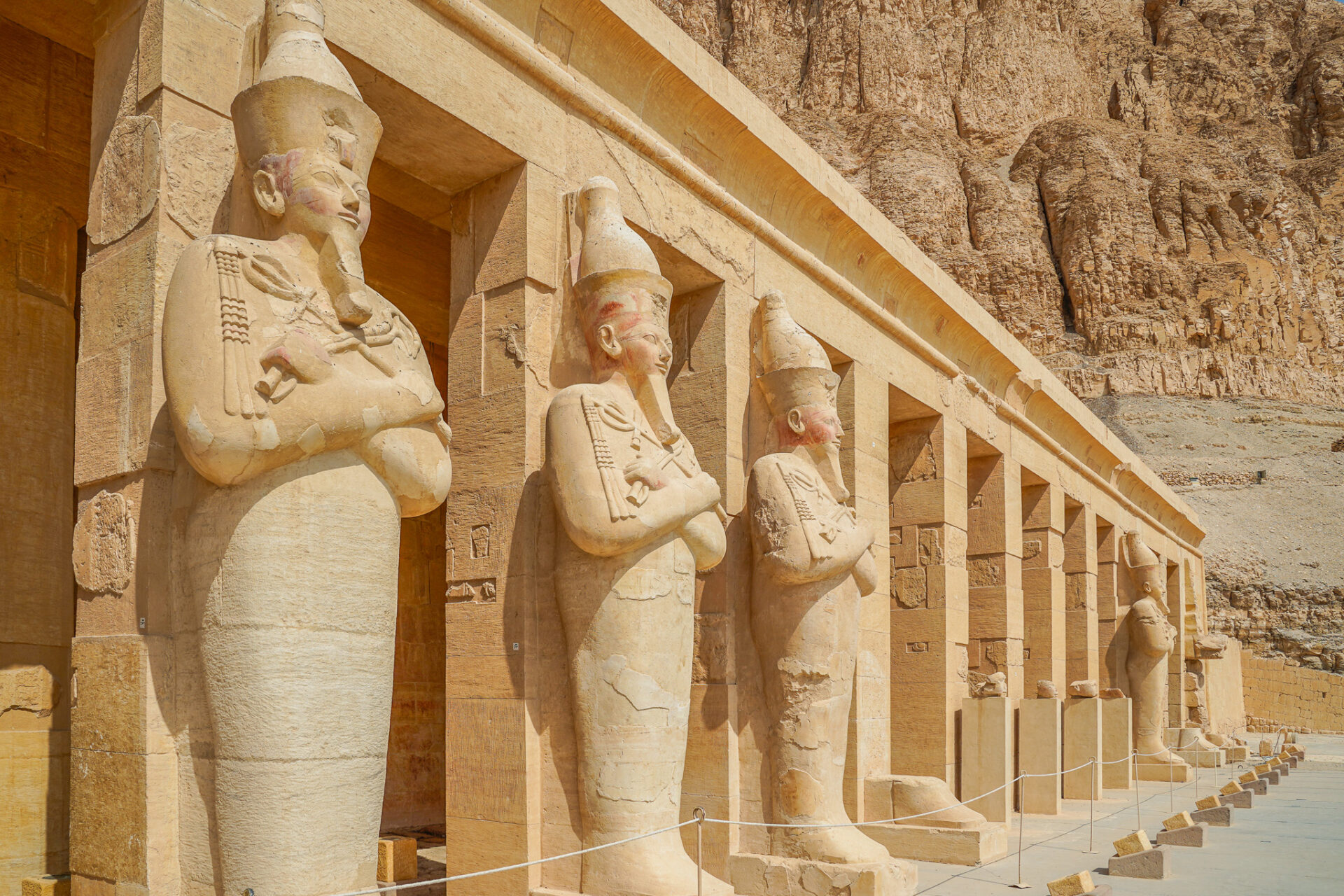
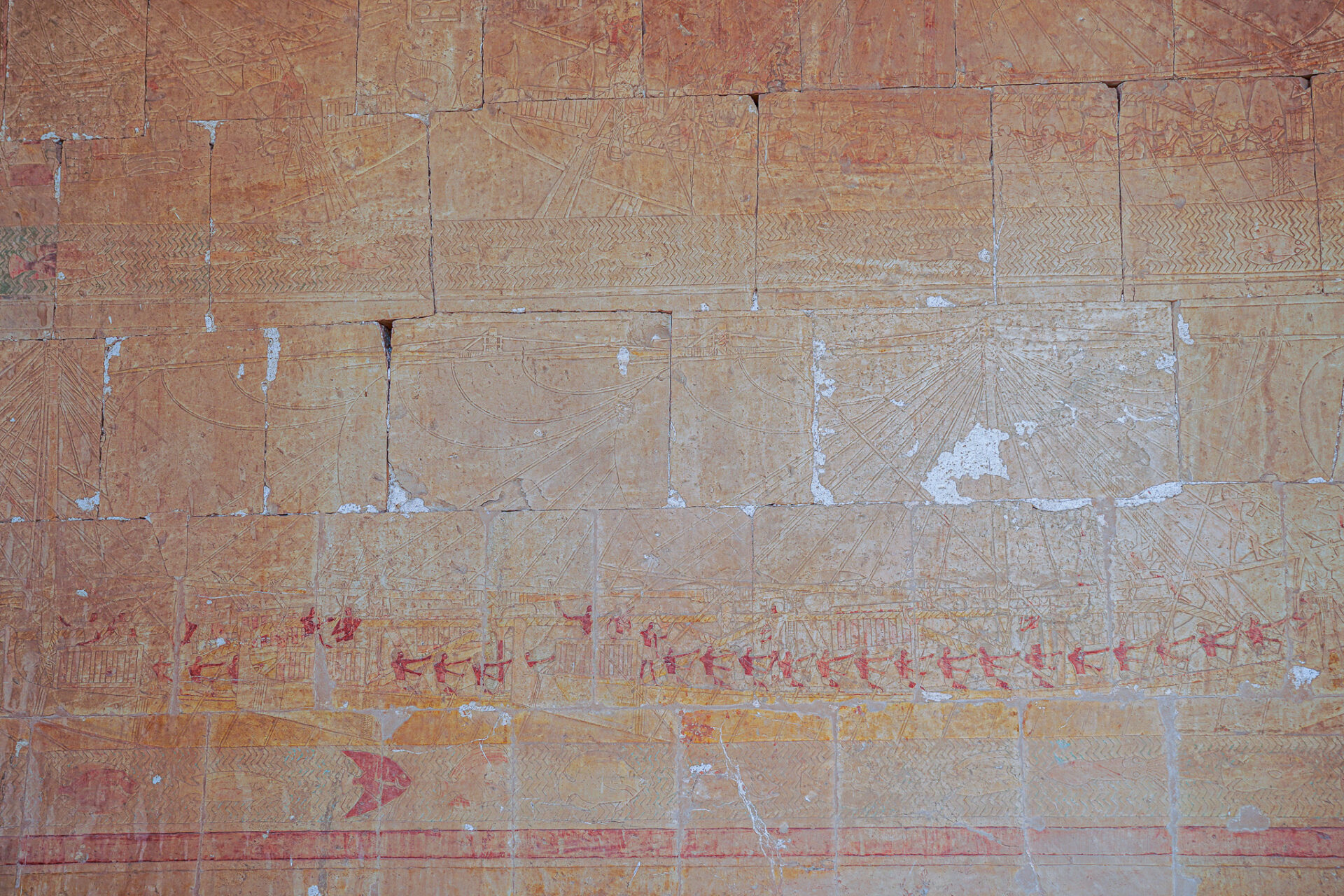
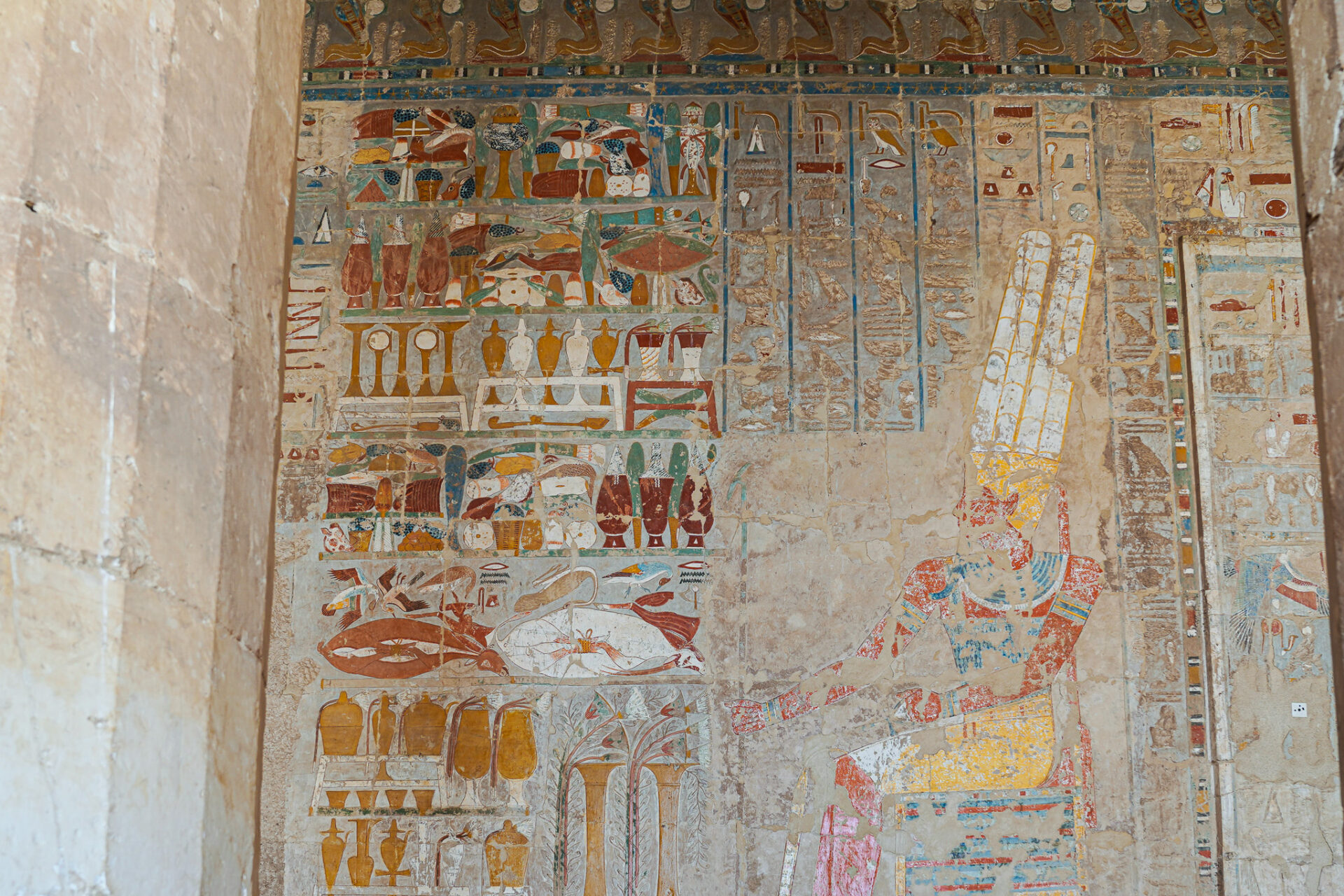
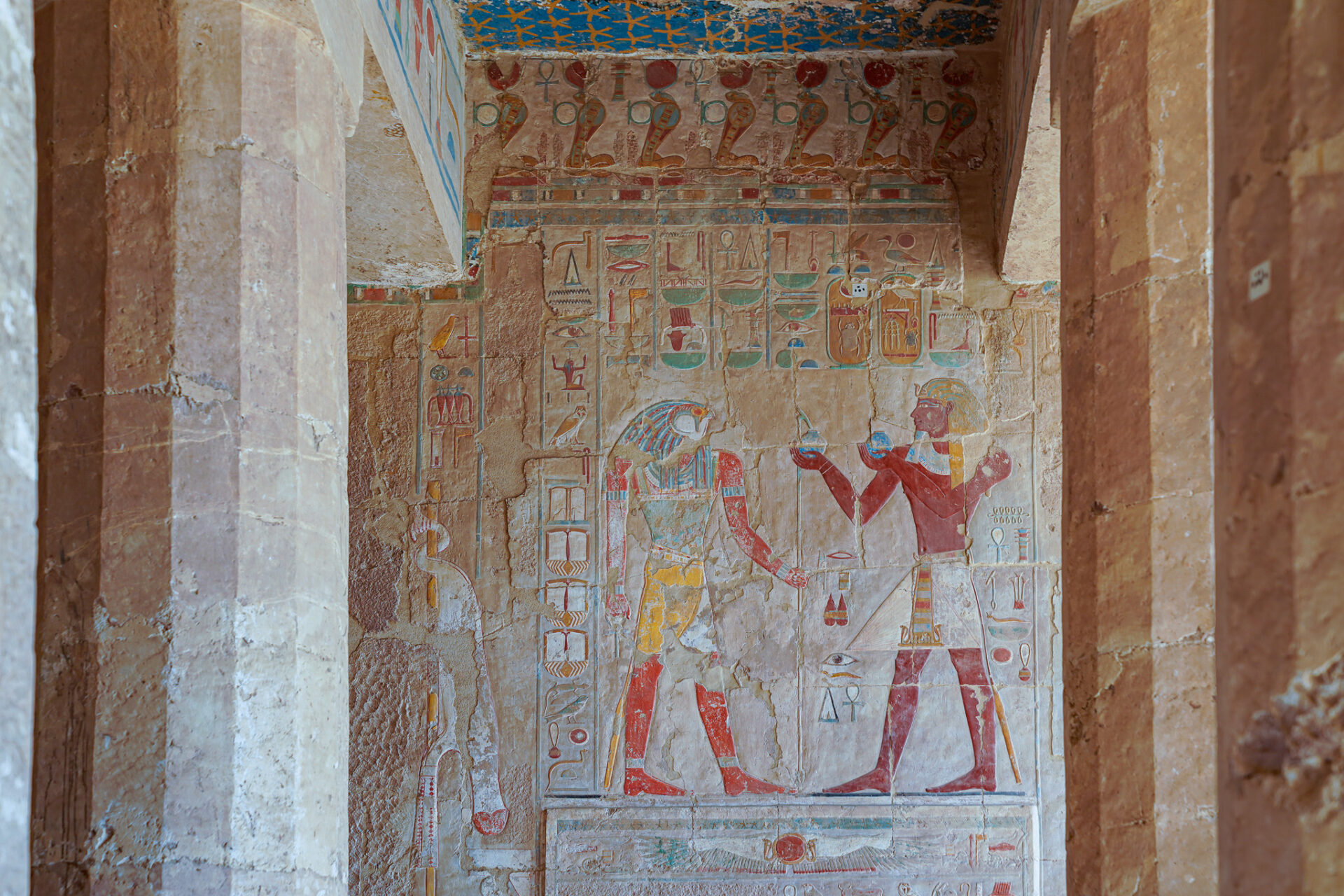
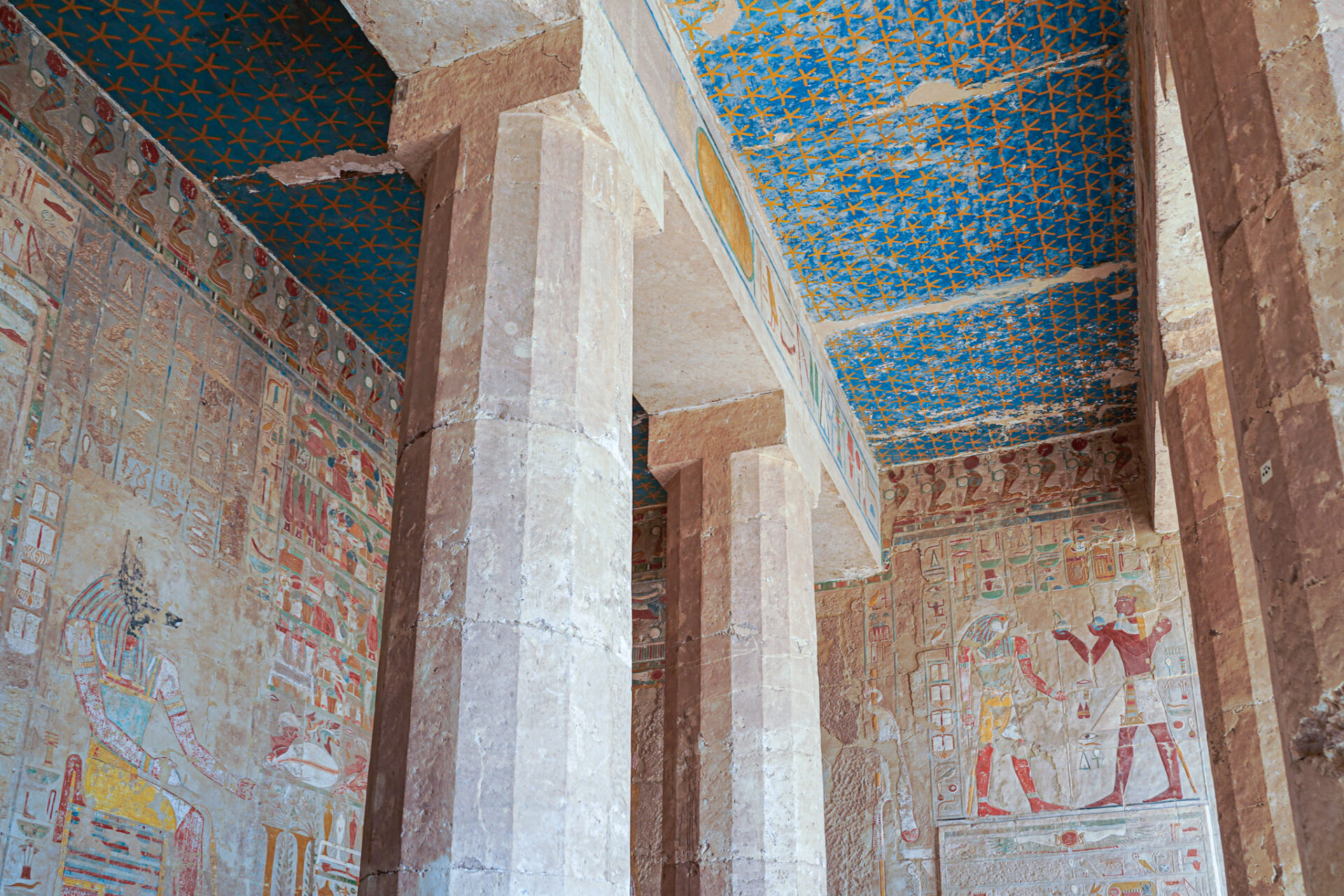
Mortuary Temple of Hatshepsut (c. 1473-58 B.C.E.)
It wasn’t popular in Egypt for a Queen to rule. Hence, Queen Hatshepsut took on male roles and depicted herself in male royal regalia. She was even shown with the potiche, the false beard worn by royalty. She built some of the most large-scale structures during her reign, including the Temple of Hatshepsut, and restored some parts of the Karnak Temple Complex.
Abu Simbel Temples – saved treasures of ancient Egypt.
We departed our cruise vessel and journeyed to the Aswan Dam and the Abu Simbel Temples. The main temple depicts the might of the Pharaoh Ramesses II. Carved into the rock, the seated statues of the Pharoah are 66 feet tall. In 1960, UNESCO launched an international campaign to save the monuments from the rising waters of the Aswan Dam. In the book Empress of the Nile, Lynn Olson describes that Jackie Onassis wrote a letter to her husband, President John F. Kennedy, encouraging him to support the initiative. The United States and many other countries joined the effort. The Philae monuments were also moved. The eight-year international UNESCO project is one of the most extensive archaeological rescue efforts ever. The treasures of ancient Egypt were saved from an underwater tomb.
Ramesses II’s wife, Queen Nefertari, also has a temple at Abu Simbel. Significantly, at the entrance, she is depicted as the same size as her husband, indicating her importance.
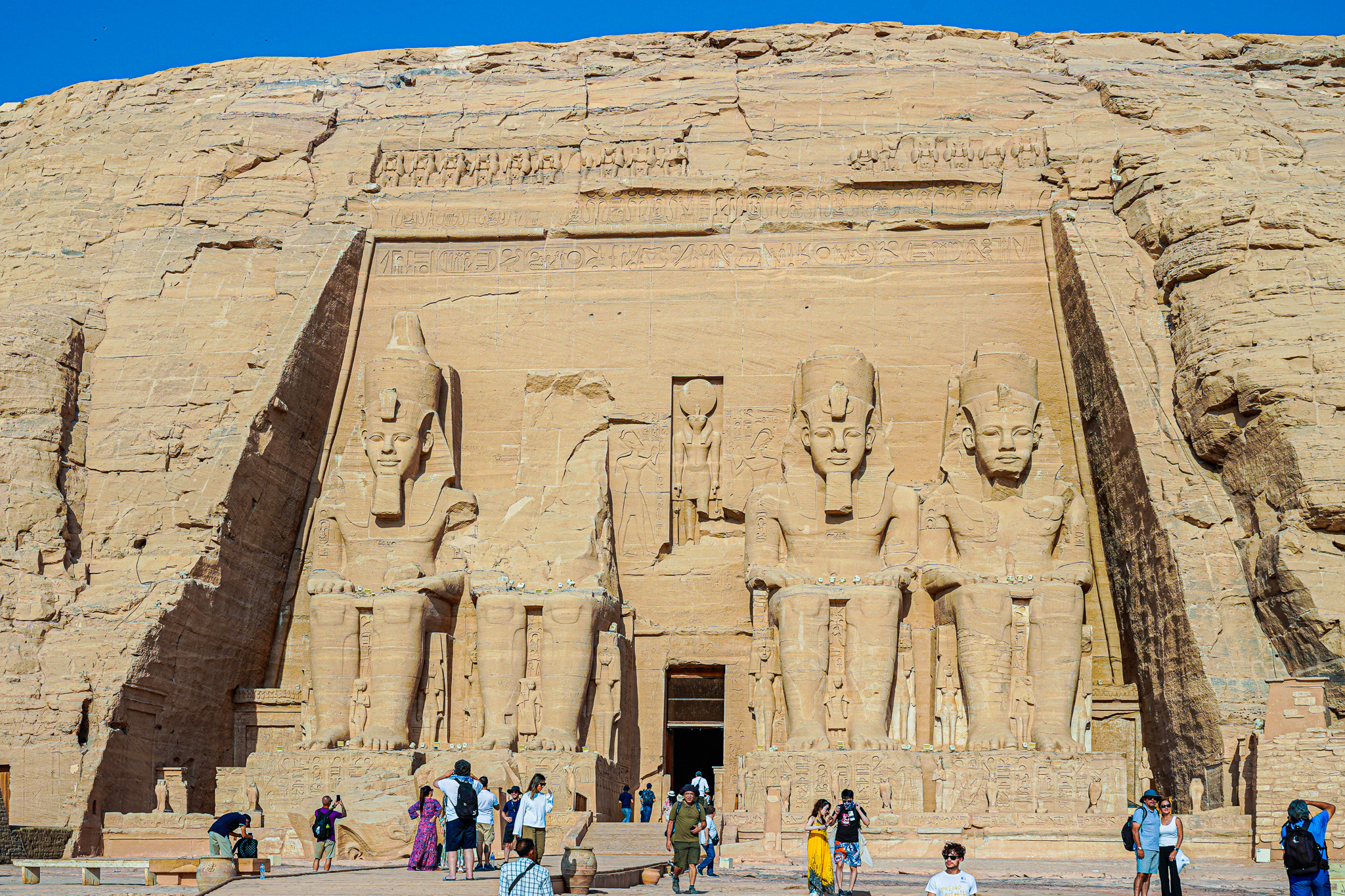
Great Temple of Ramesses II 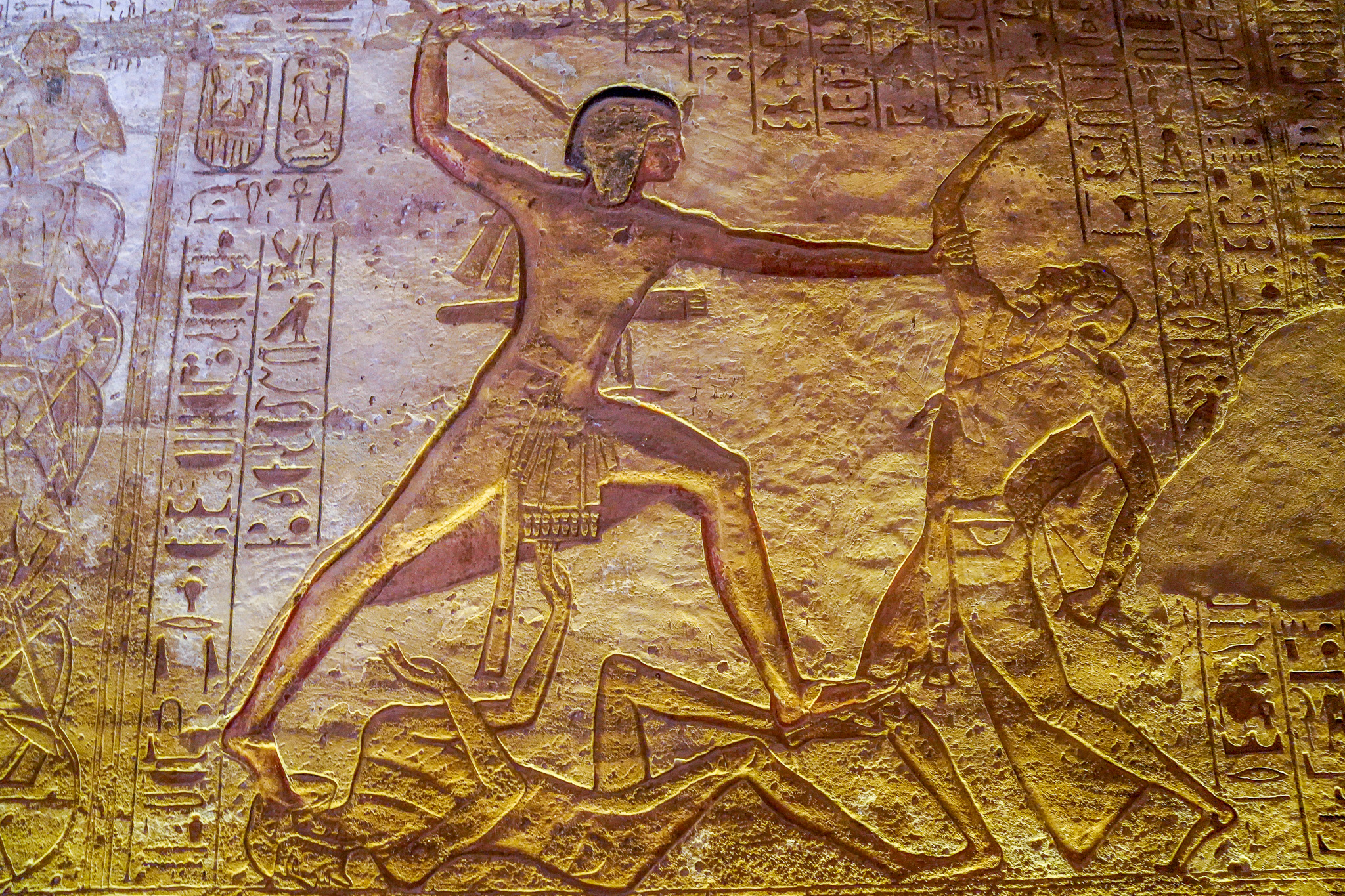
Battle of Kadesh depicted inside the Great Temple of Ramesses II 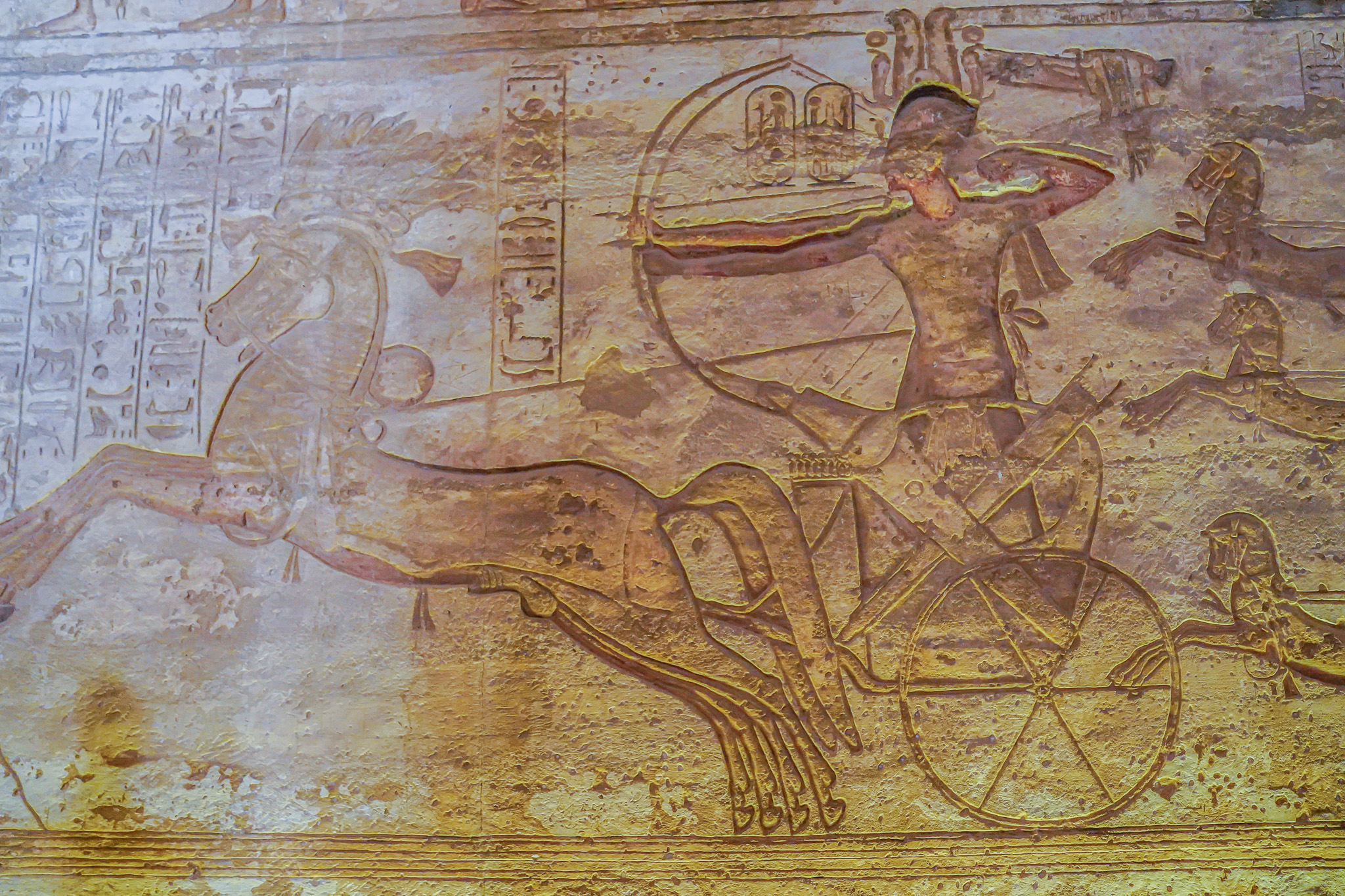
Battle of Kadesh depicted inside the Great Temple of Ramesses II 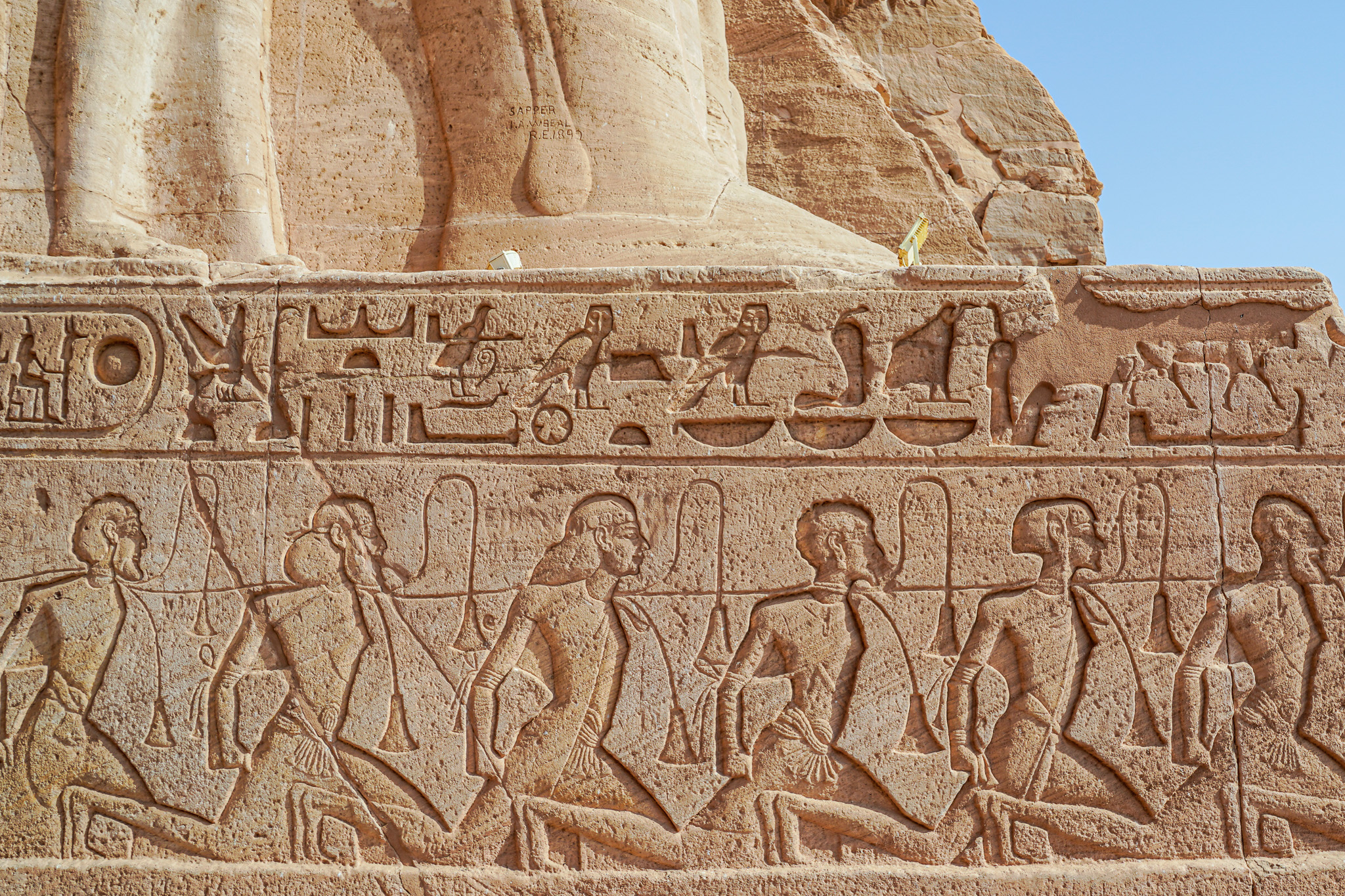
Prisoners from the Battle of Kadesh depicted under the foot of Ramesses II 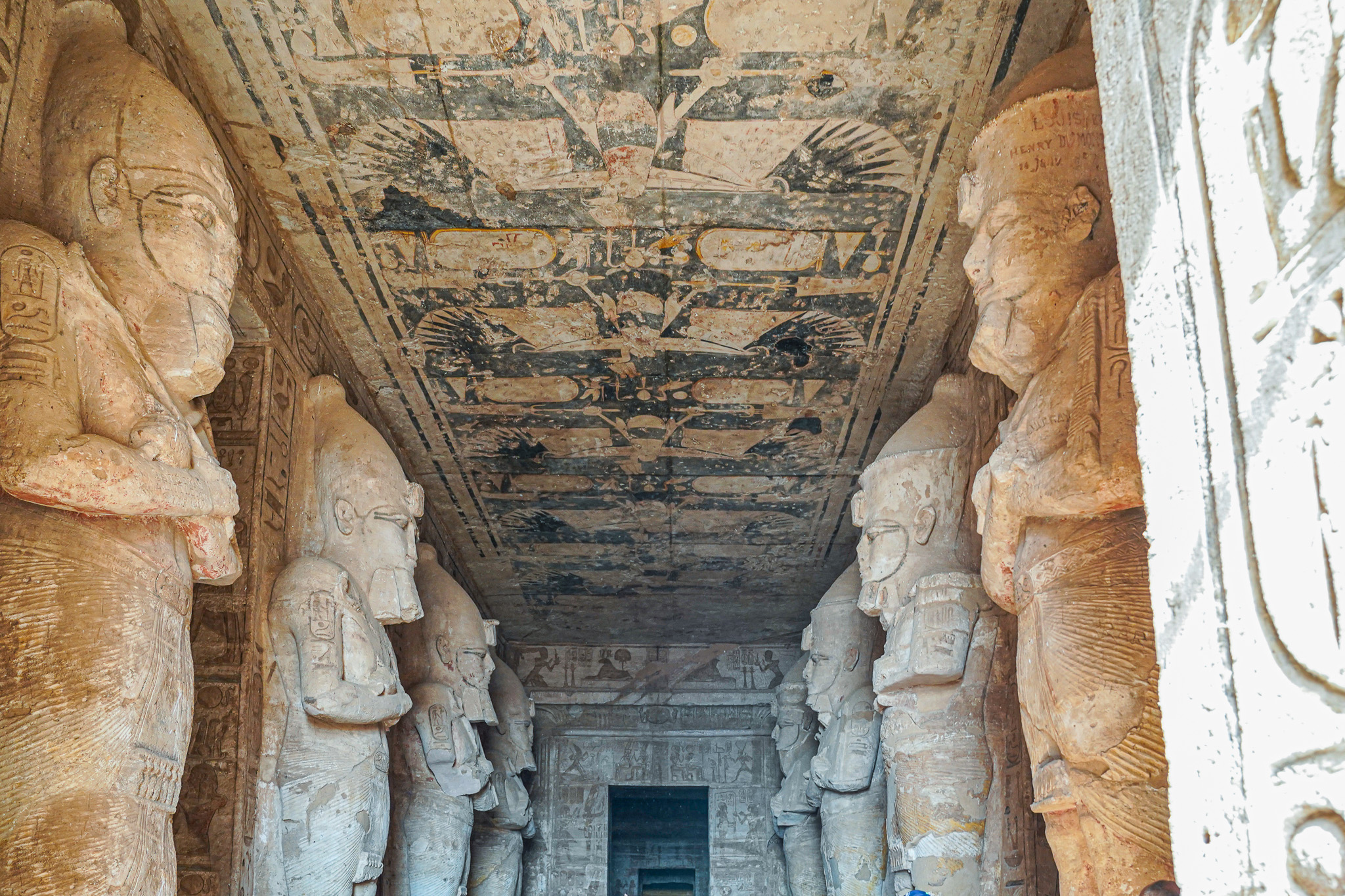
Inside the Temple of Ramesses II 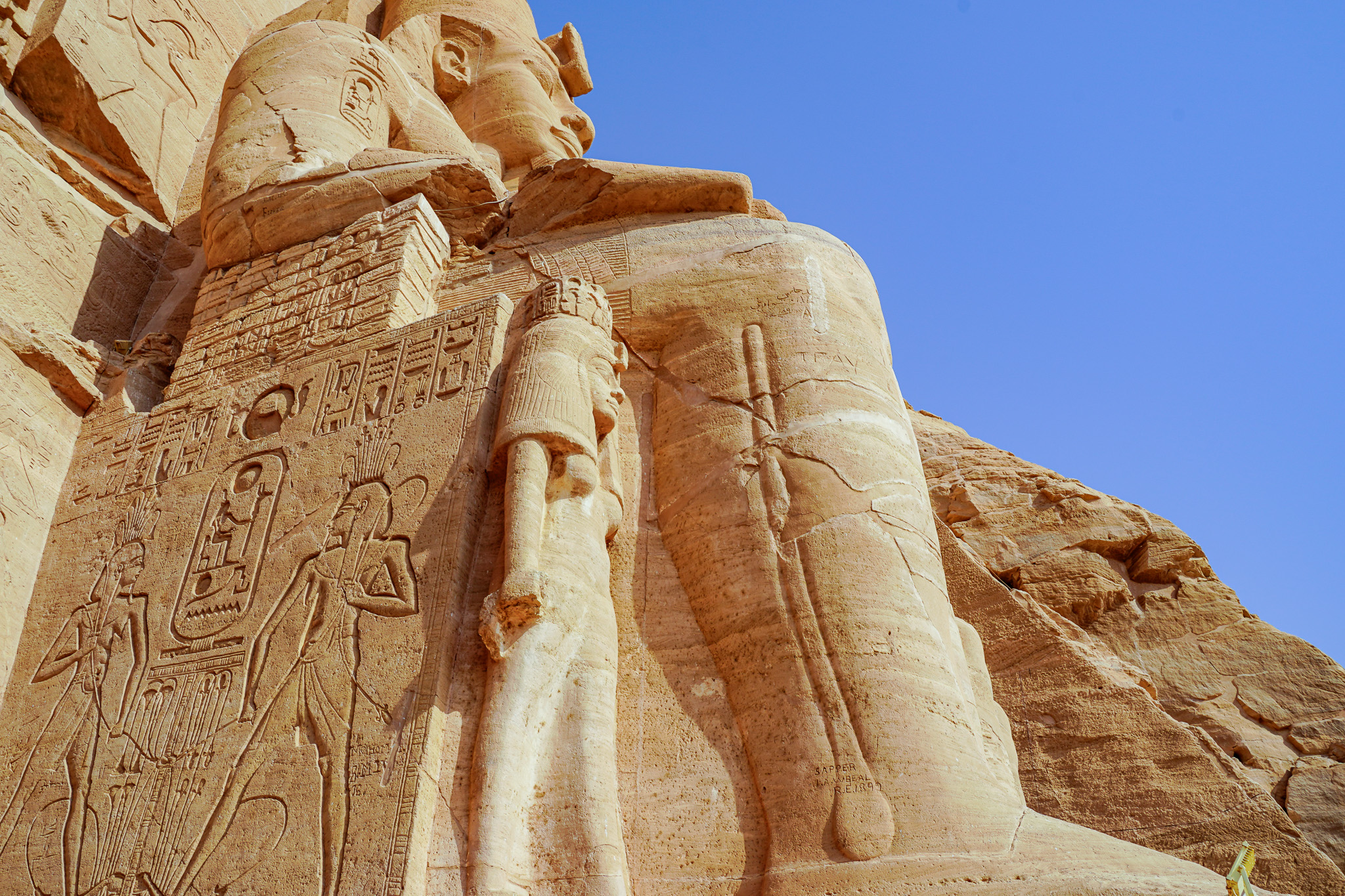
Queen Nefetari in the fold of Ramesses II’ leg 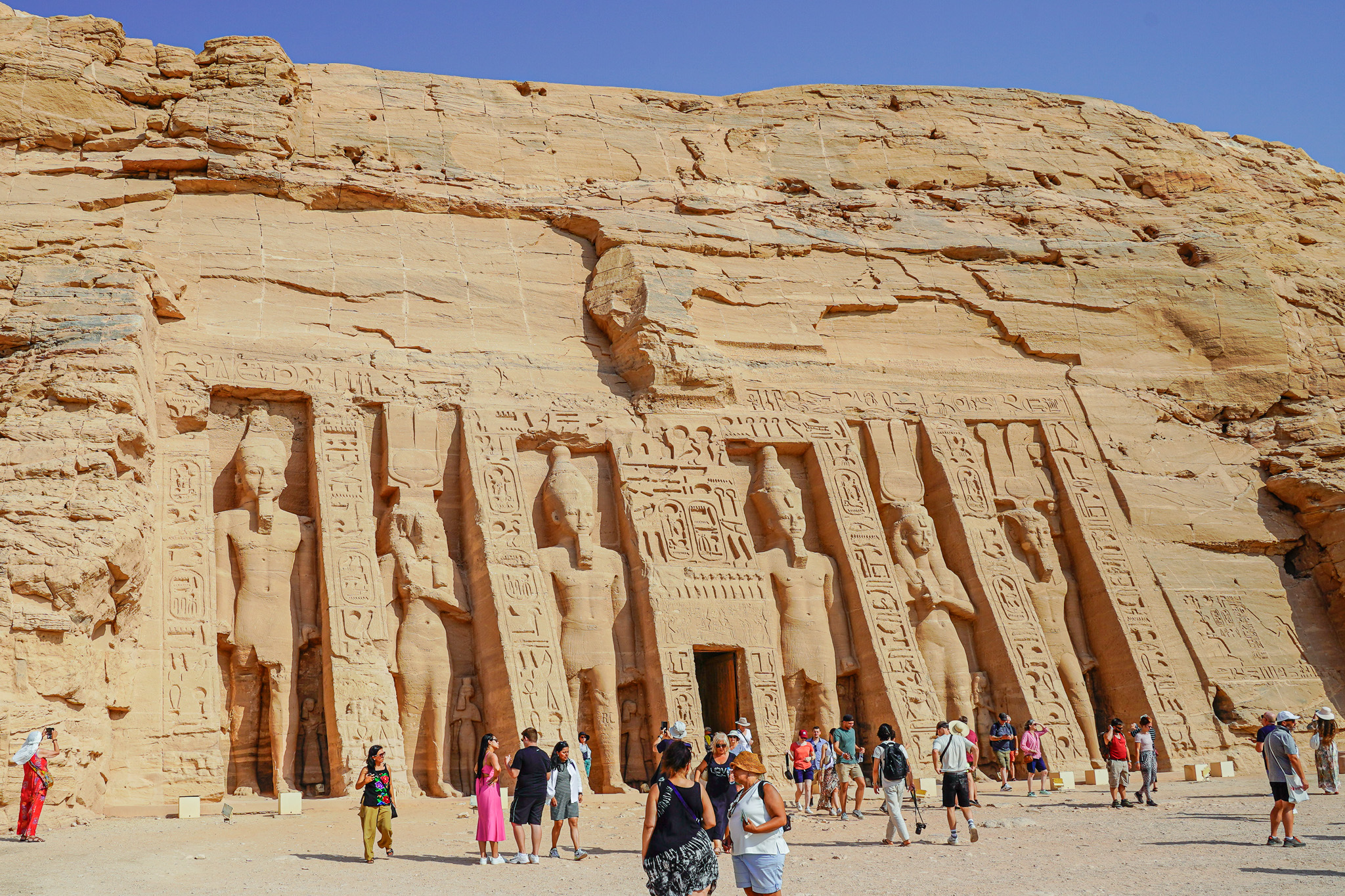
Temple of goddess Hathor and Nefertari 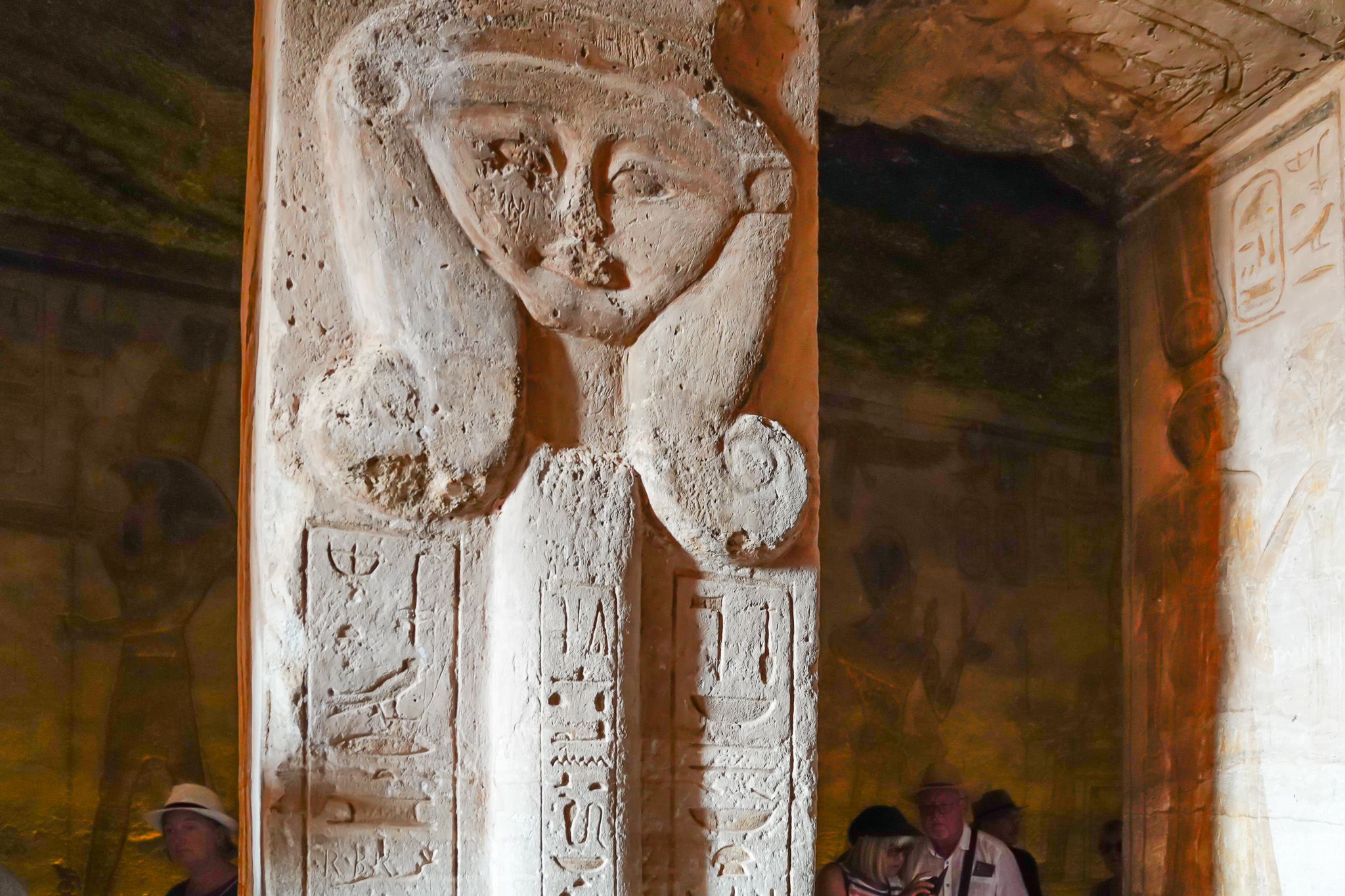
Hathor-headed columns inside the temple of Hathor and Nefetari
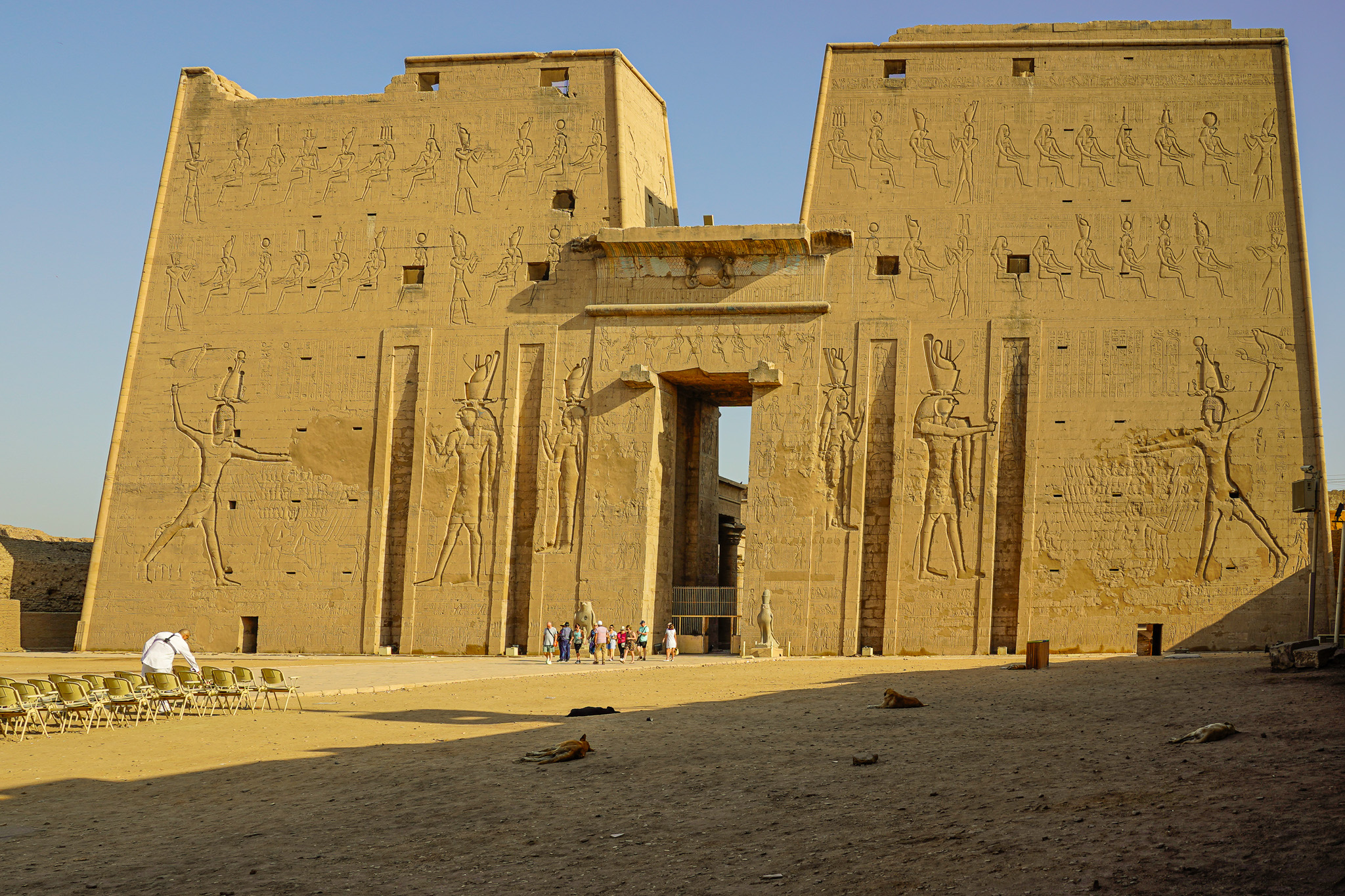
The Ptolemaic period is the beginning of a foreign state occupation of Egypt. It was established in 305 BC by Macedonian General Ptolemy I Soter, who was with Alexander the Great, and ended in 30 B.C. with the death of Cleopatra VII. With this occupation, the ancient Hellenistic Greek period contributes to the treasures of ancient Egypt.
Temple of Edfu
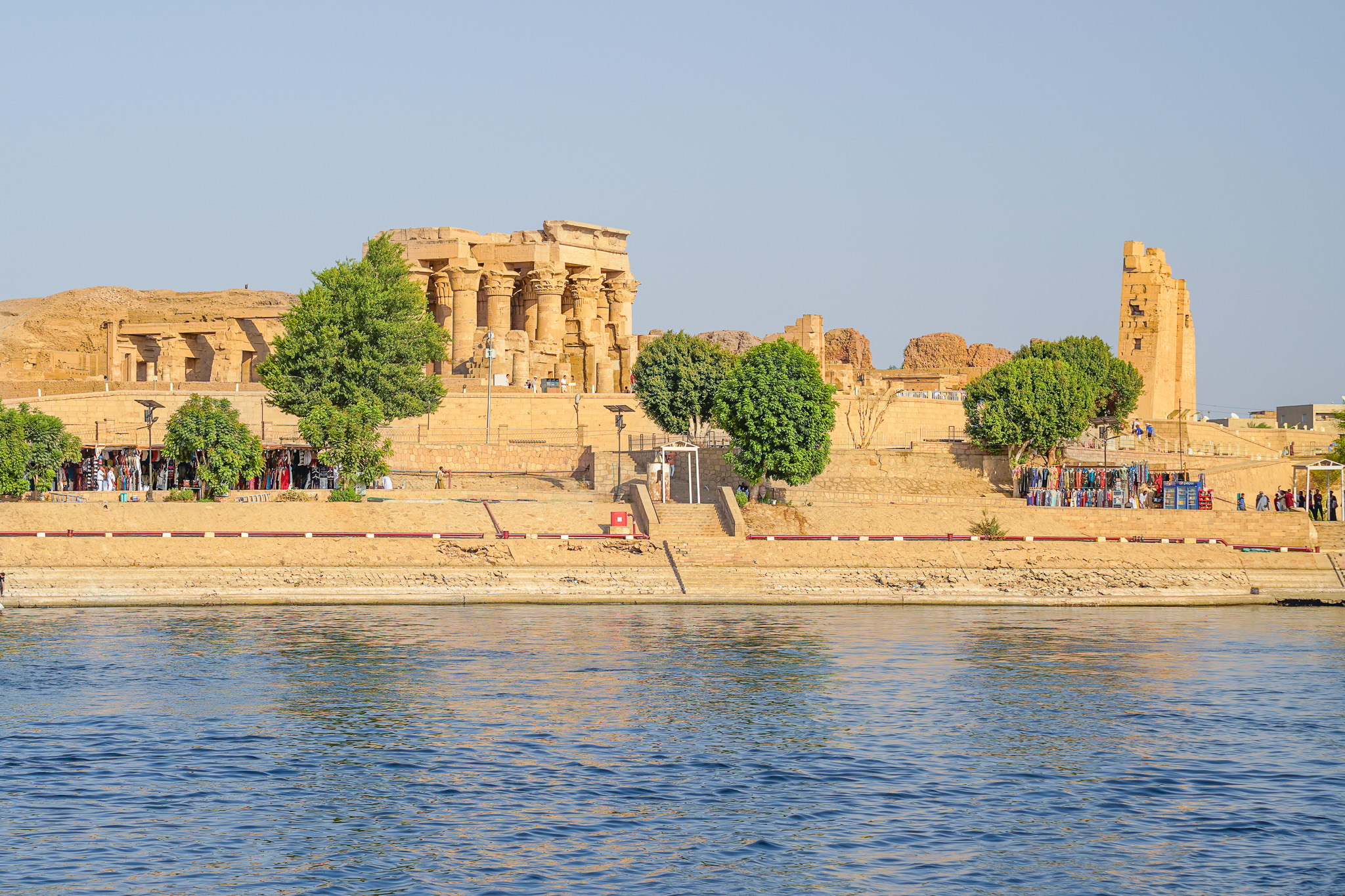
Kom Ombo Temple – Aswan
Kom Ombot Temple is architecturally doubled, recognizing the two gods, Sobek and Horus.
Kom Ombo Temple 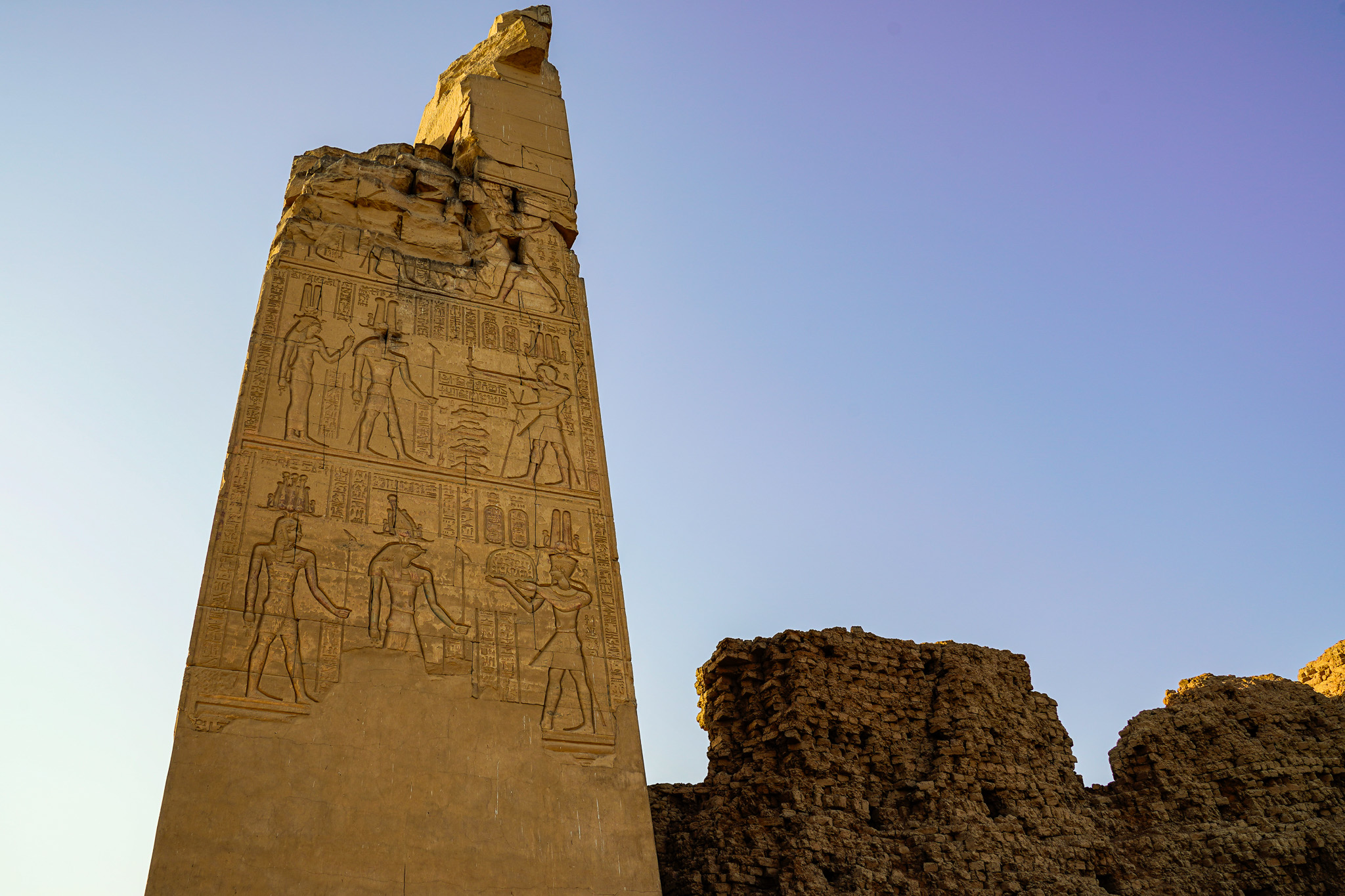
Kom Ombo Temple 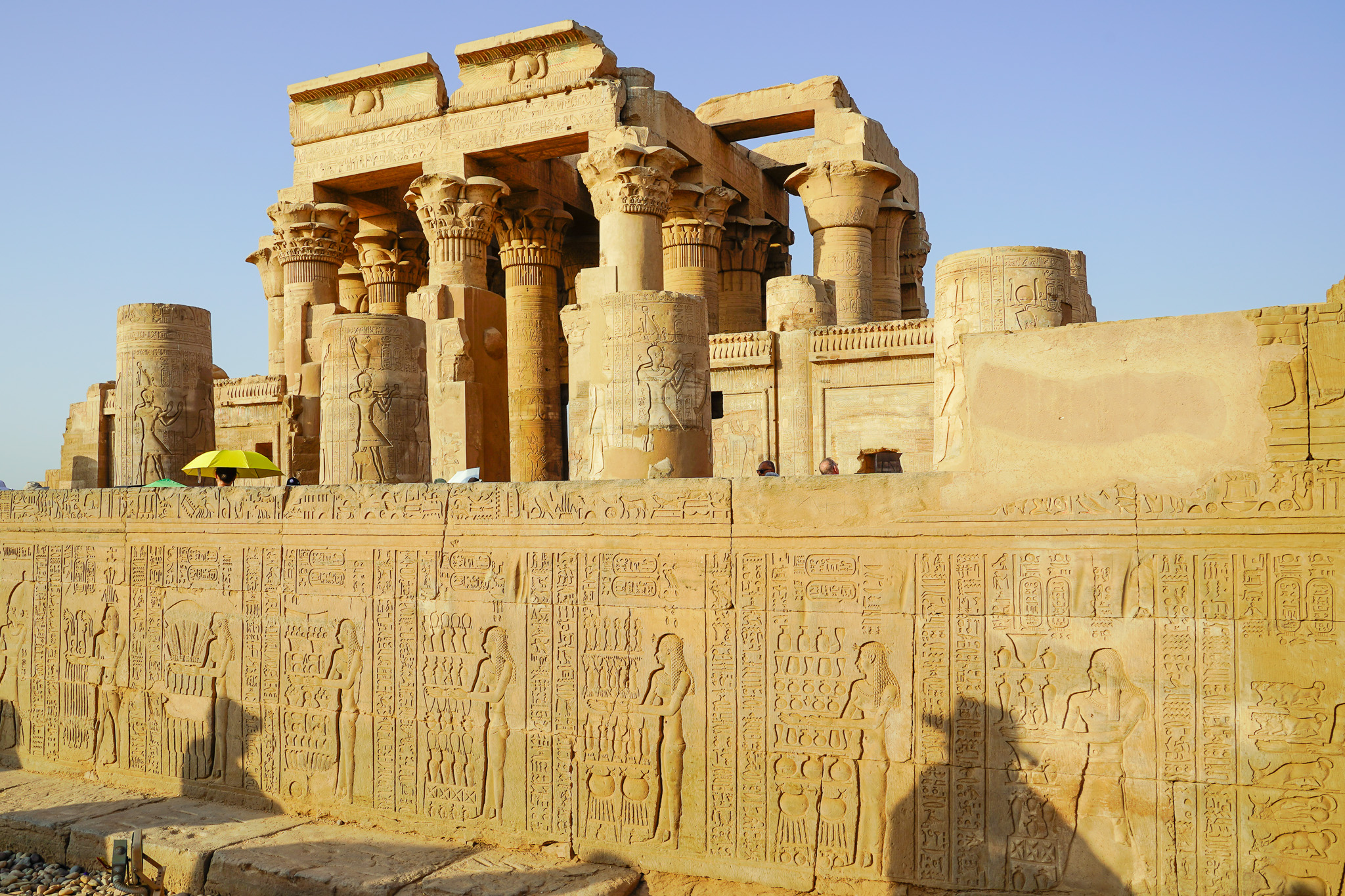
Kom Ombo Temple 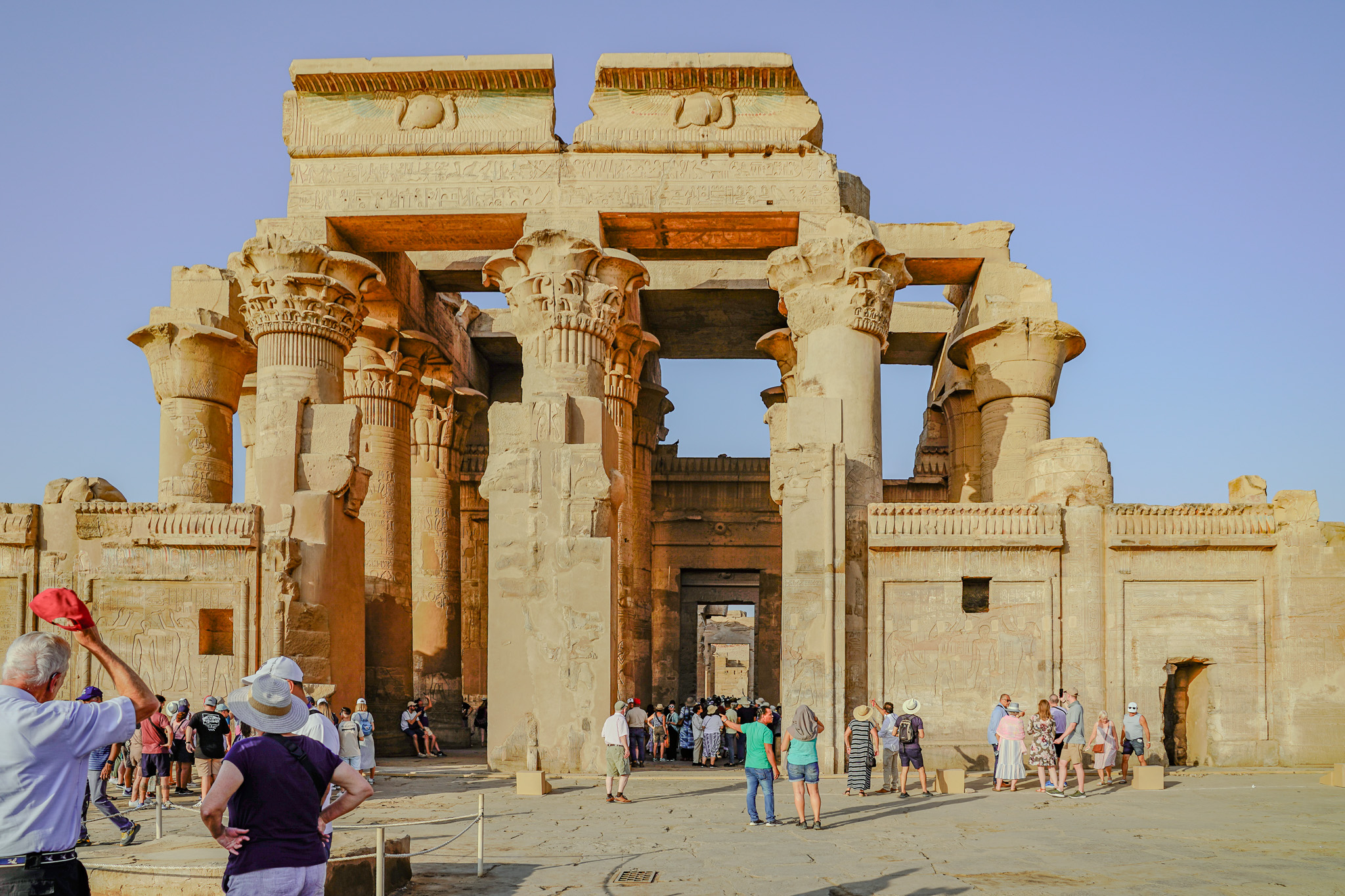
Kom Ombo Temple – double entrance 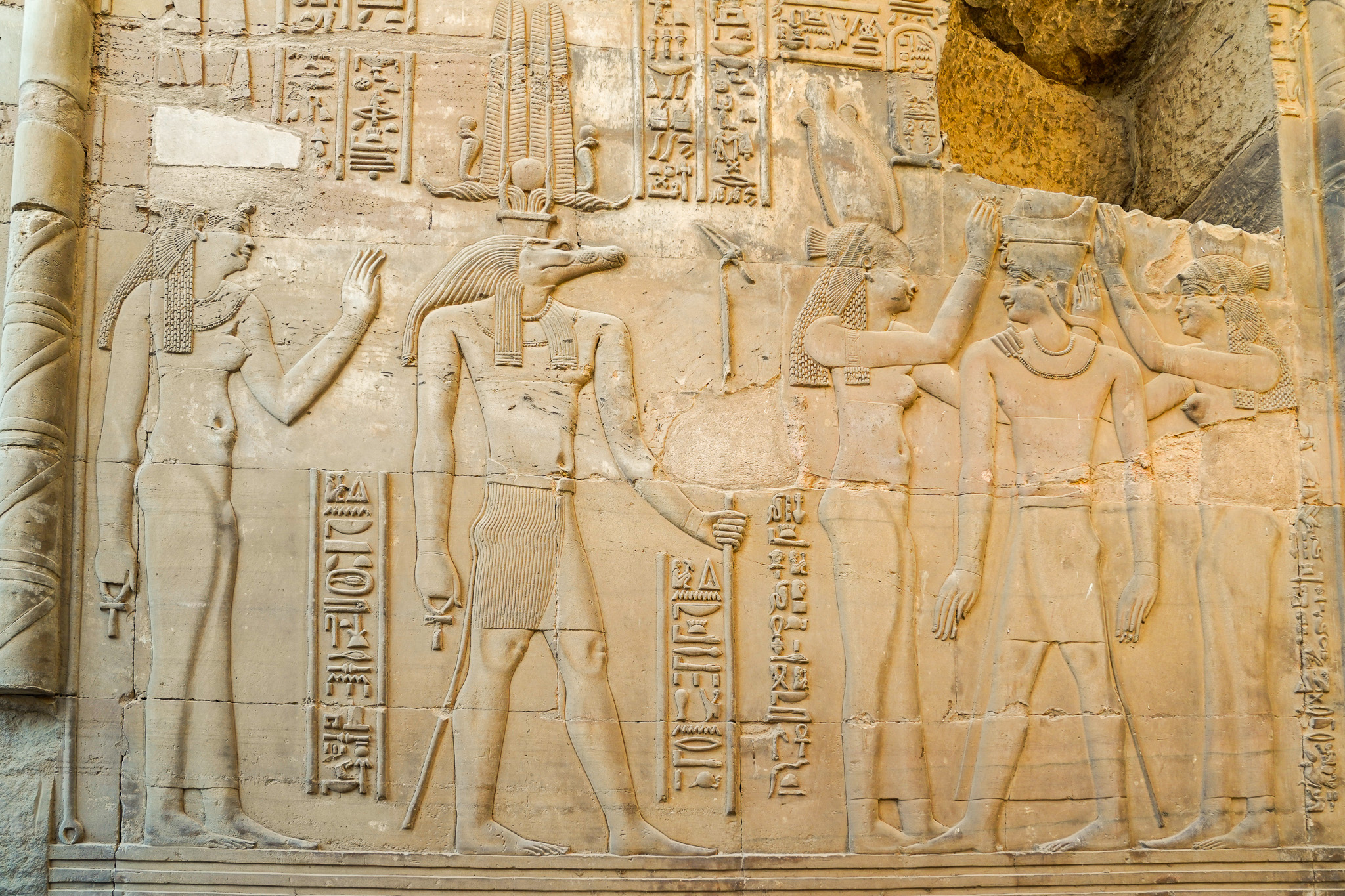
Relief from the Kom Ombo Temple 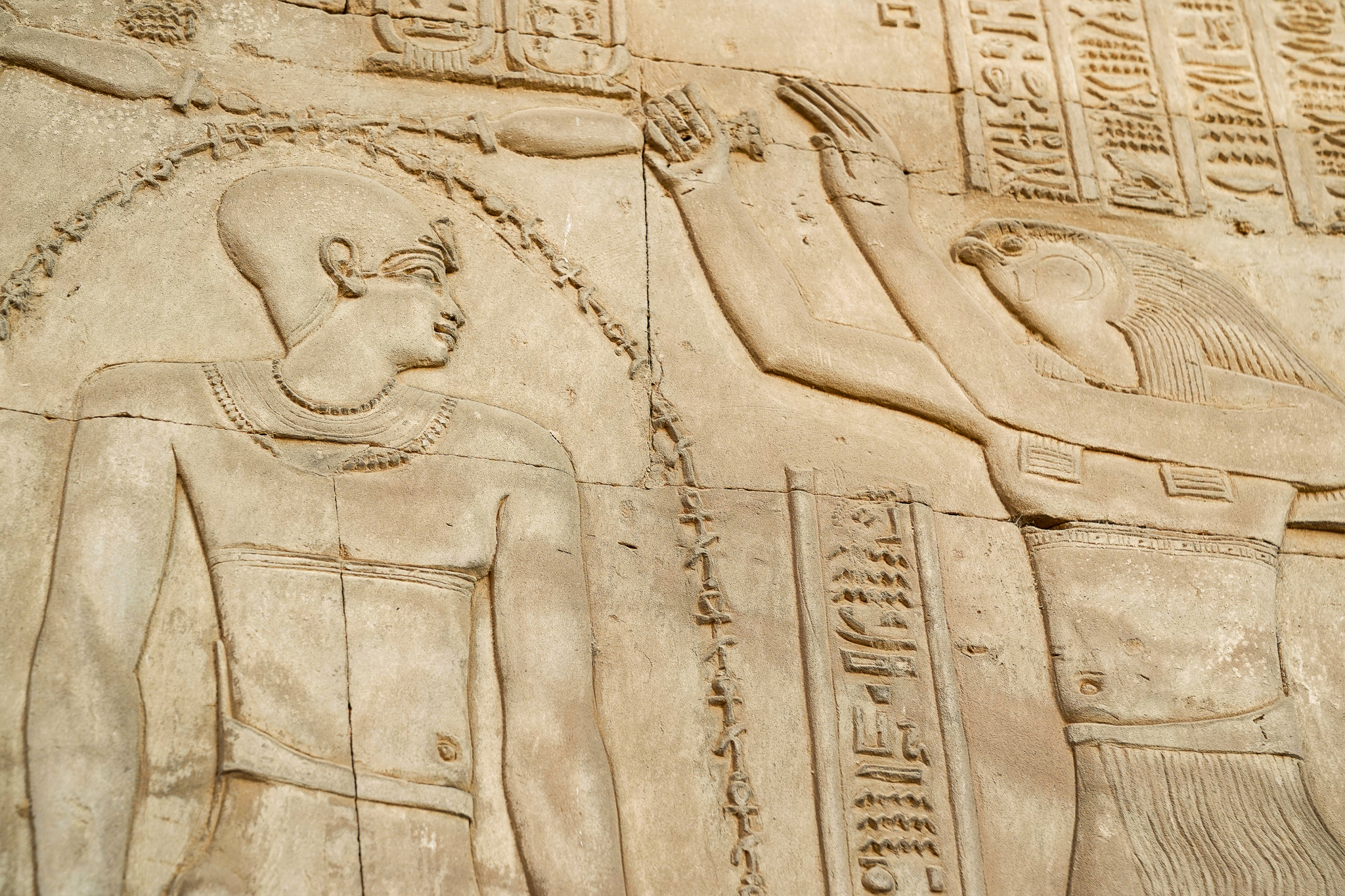
Kom Ombo Temple – Relief of Thoth and Horus blessing the Pharoah 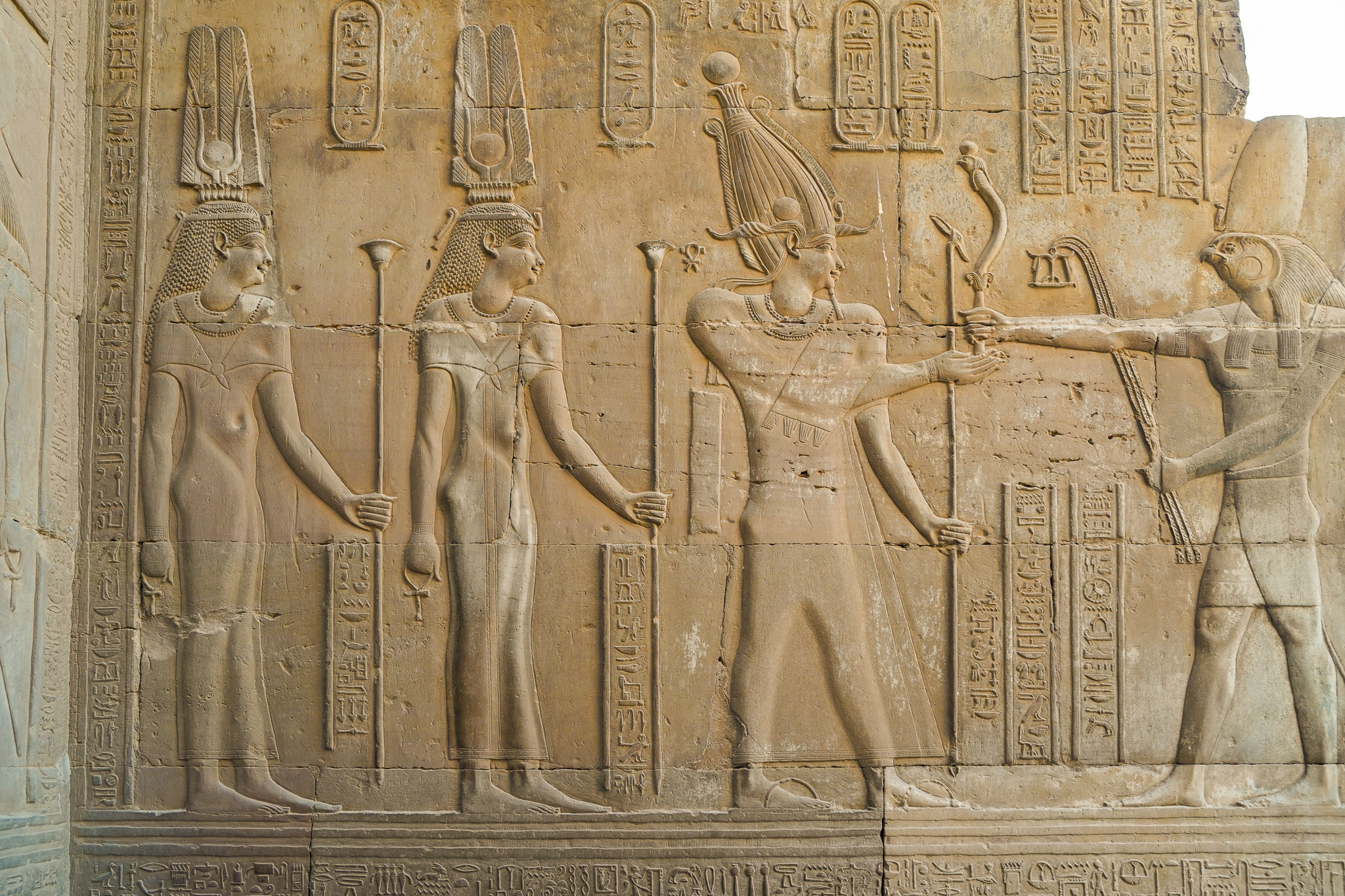
Relief at Kom Ombo Temple 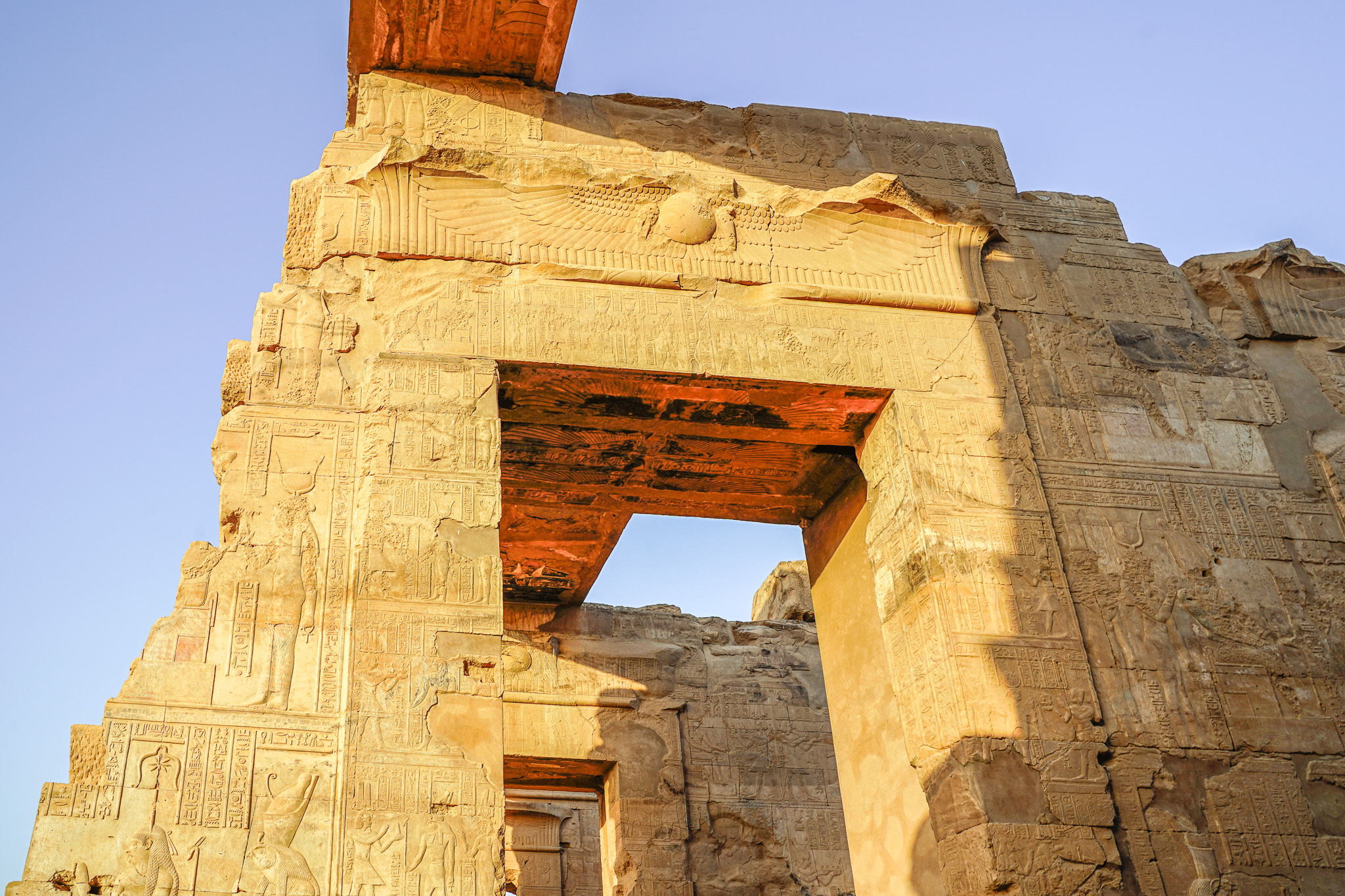
Kom Ombo Temple 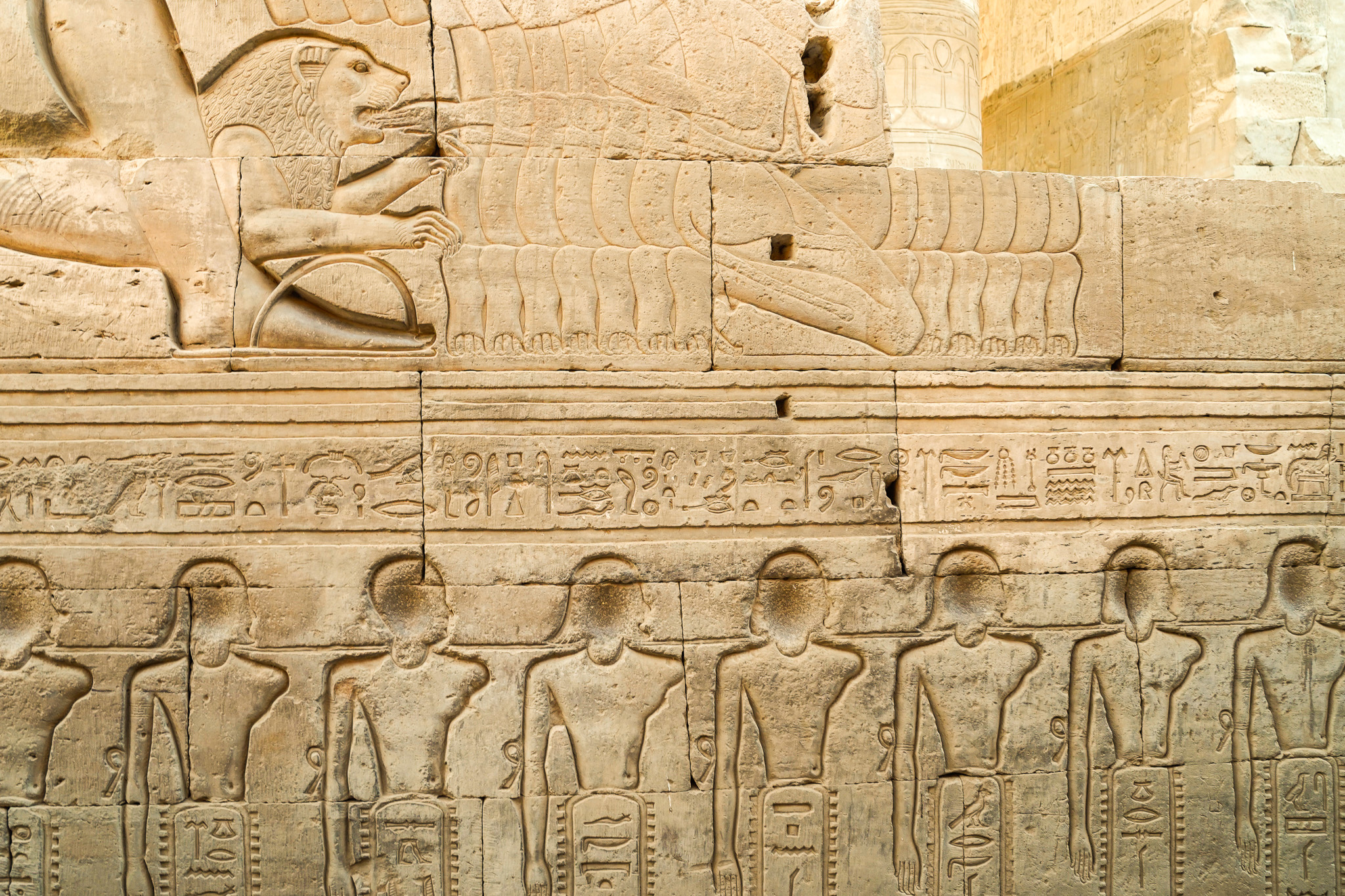
Relief of Striding lion eating the hand of the prisoners with prisoners face obiterated 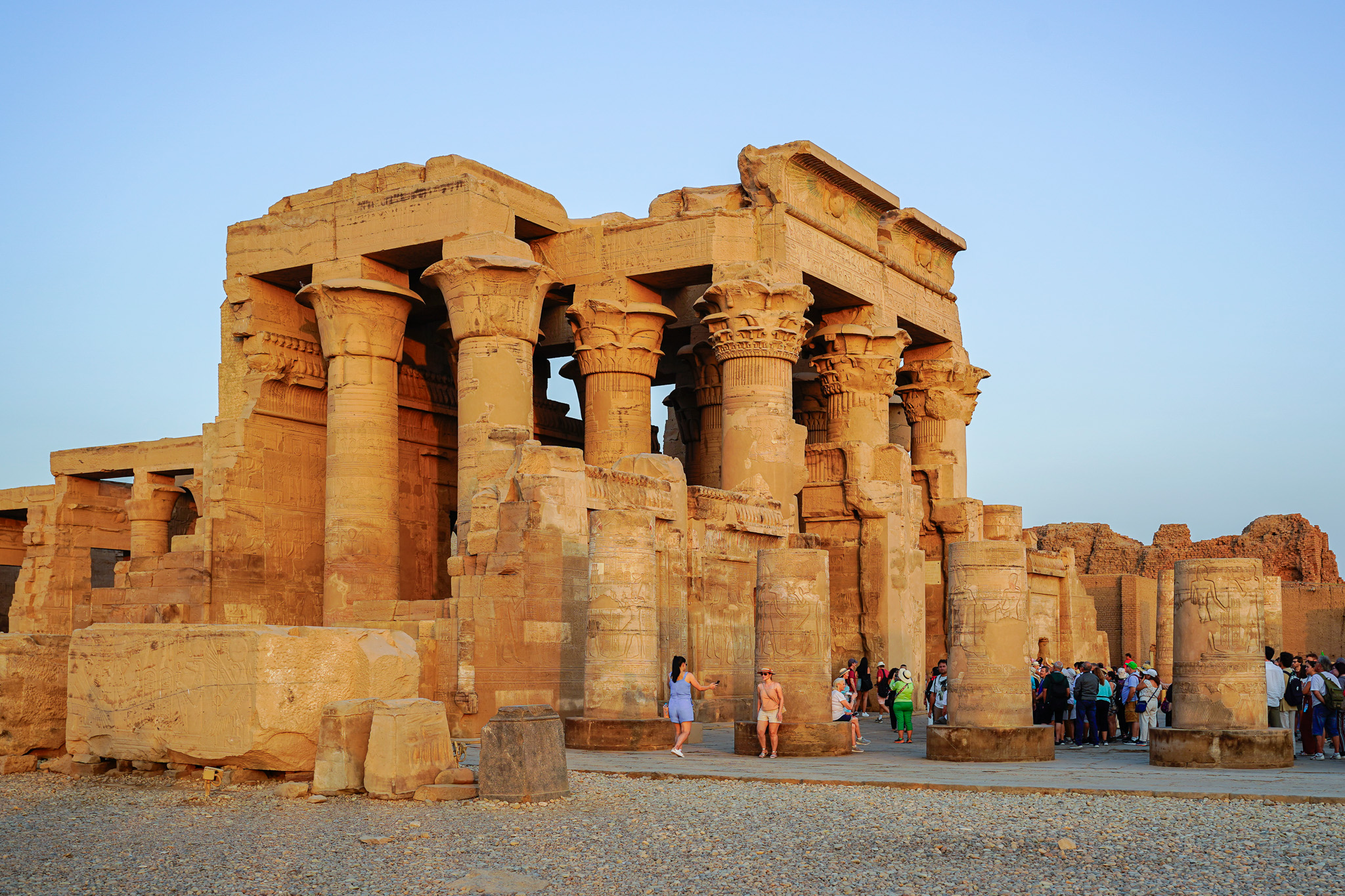
Kom Ombo Temple
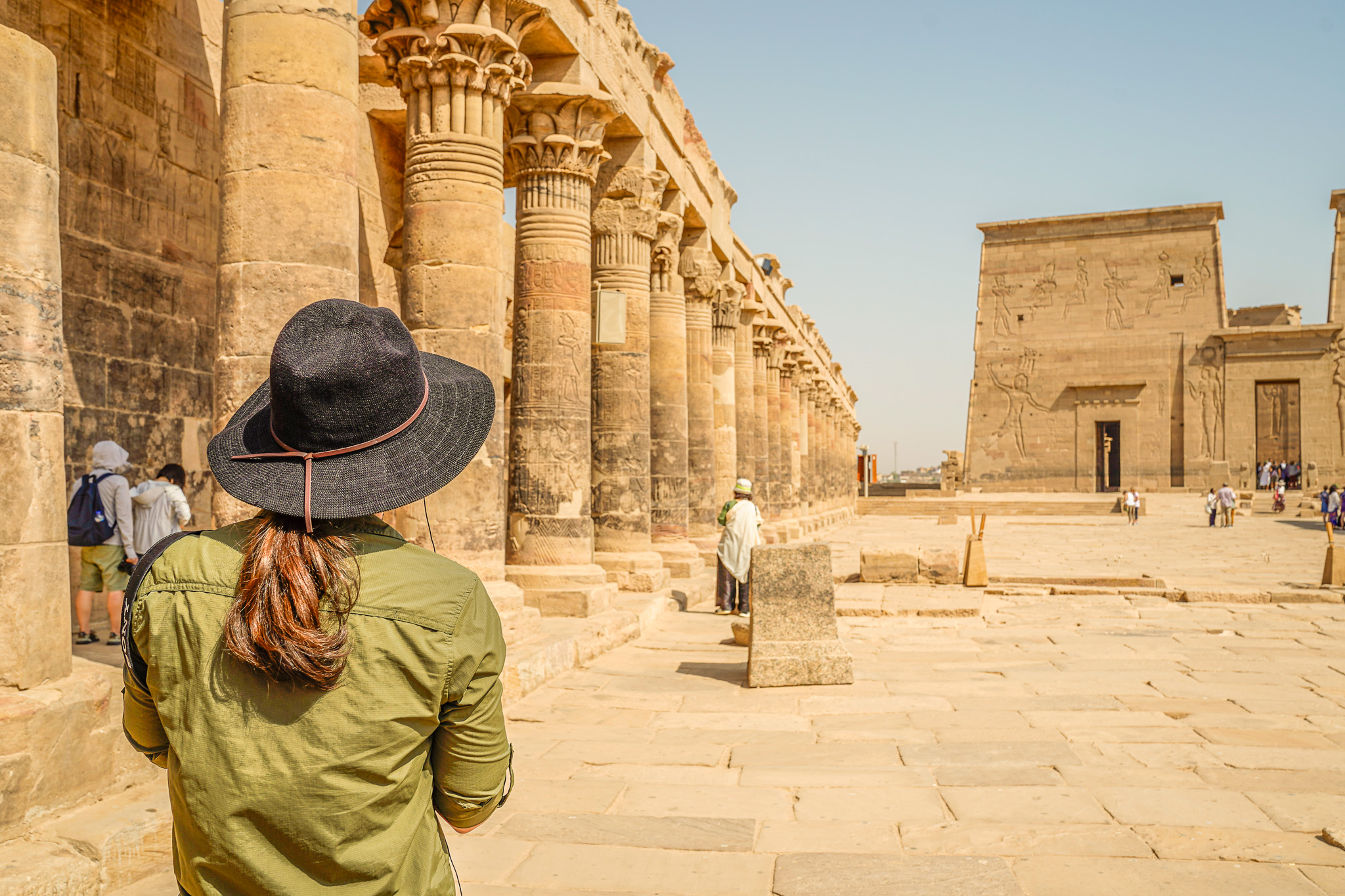
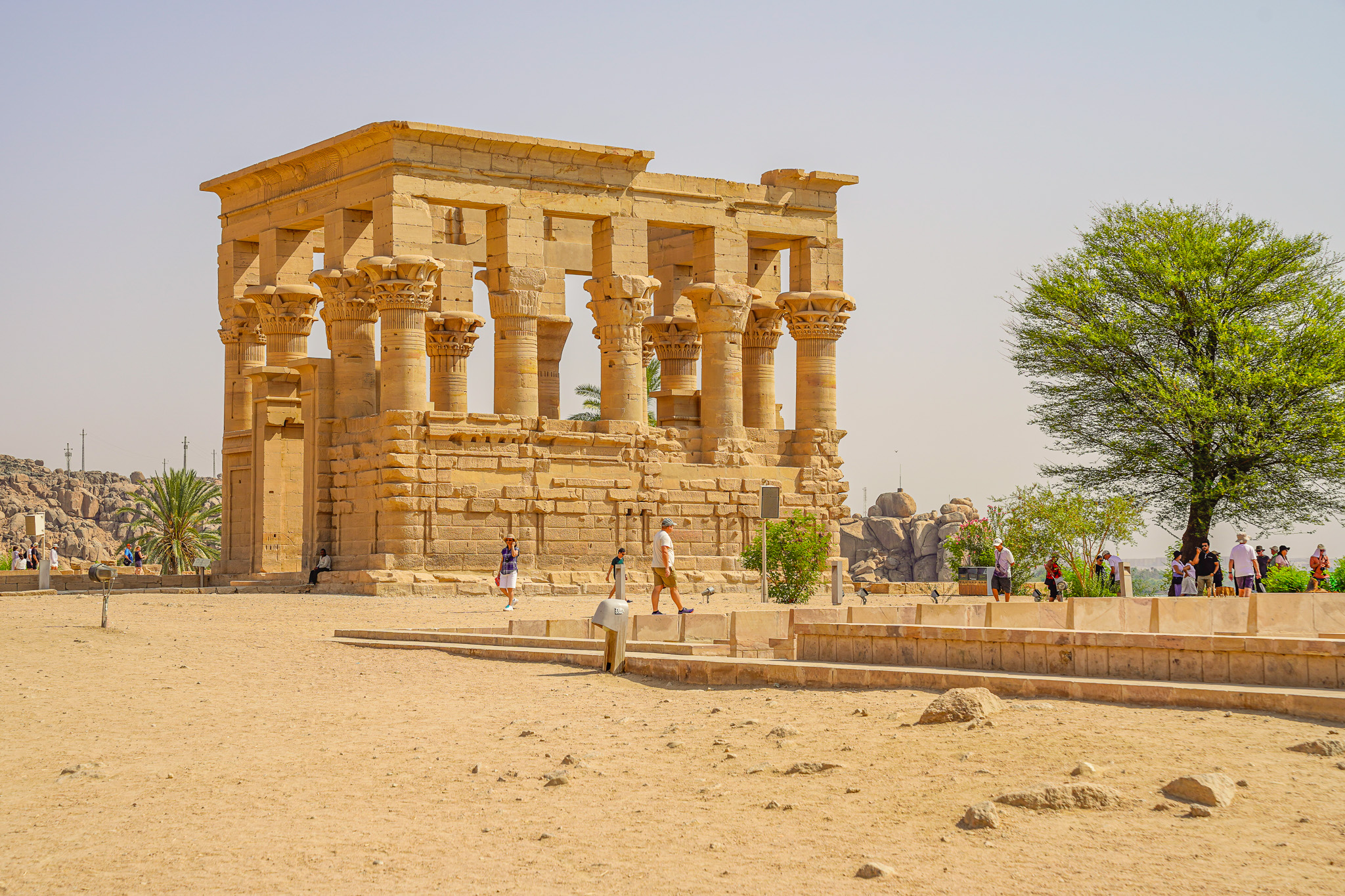
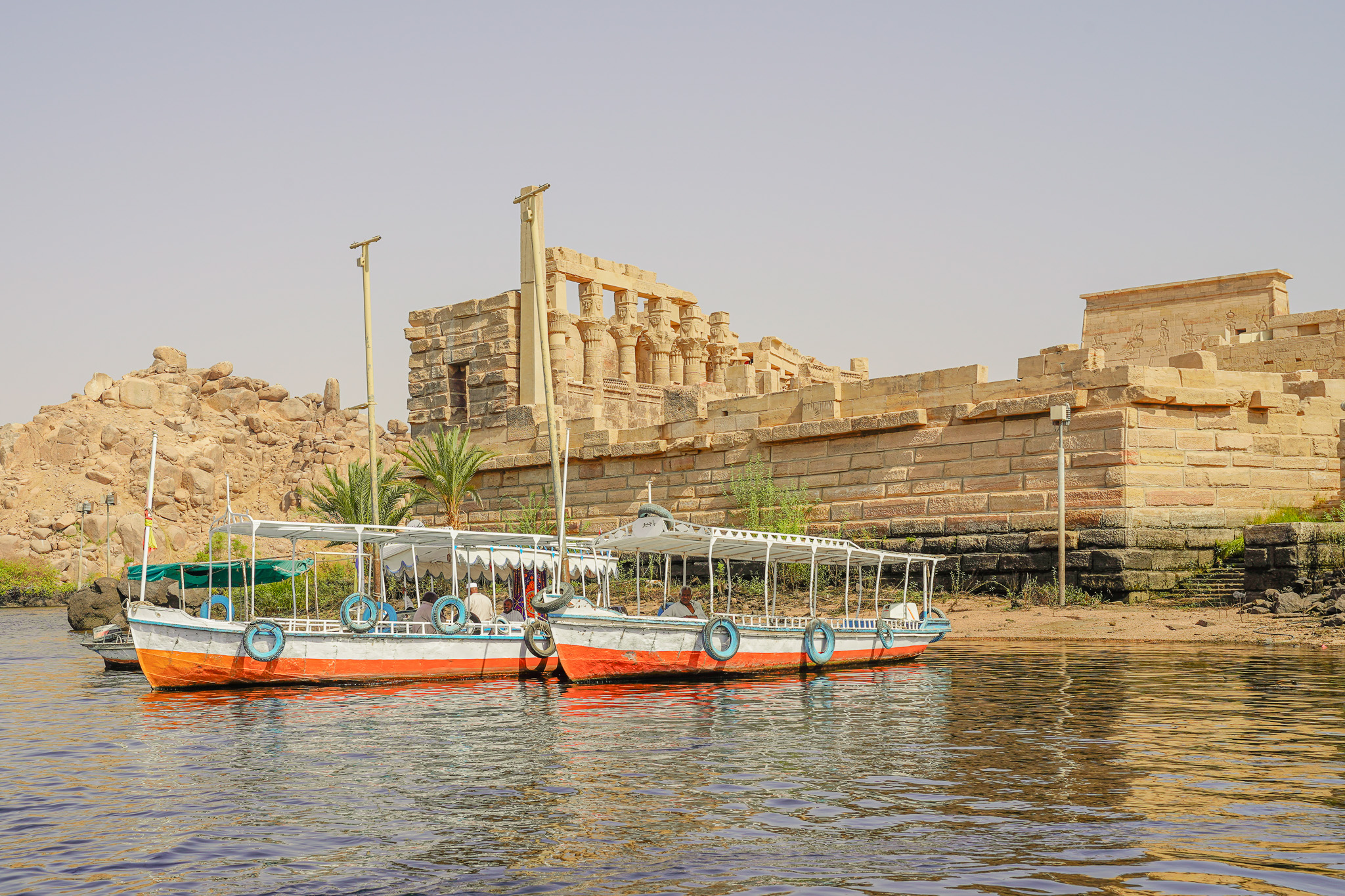
Philae Temple Complex – Agikia Island, Aswan
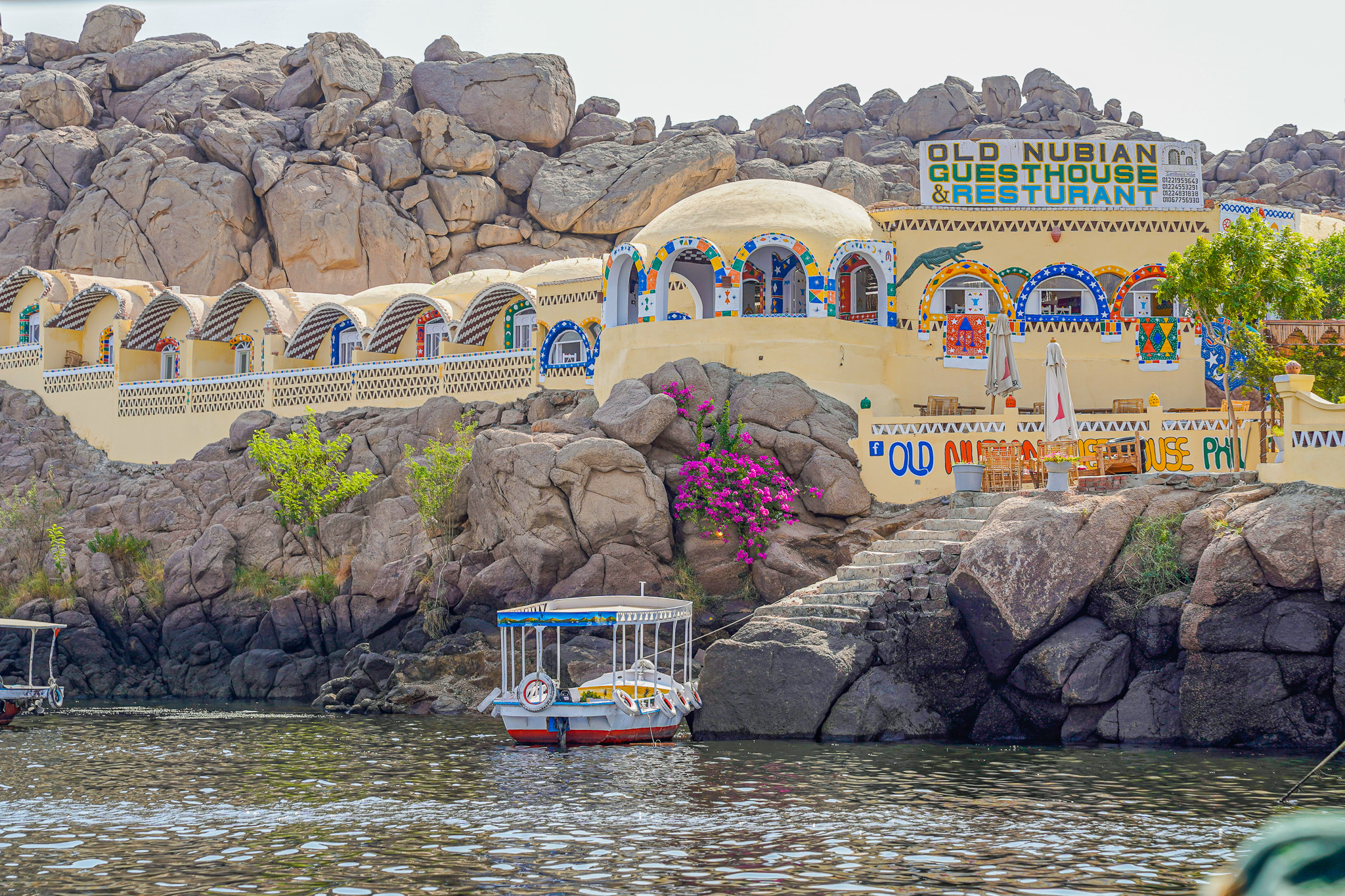
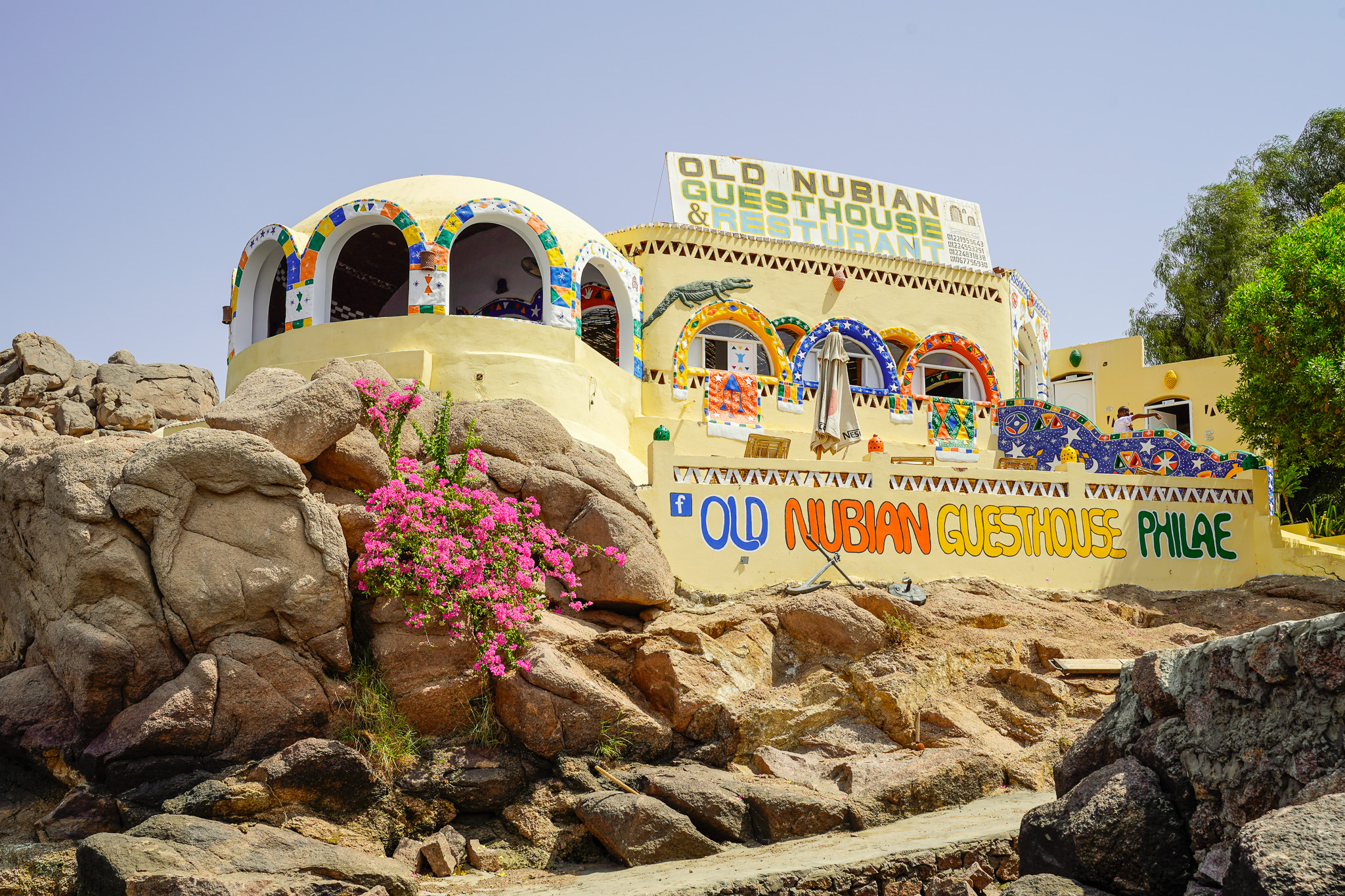
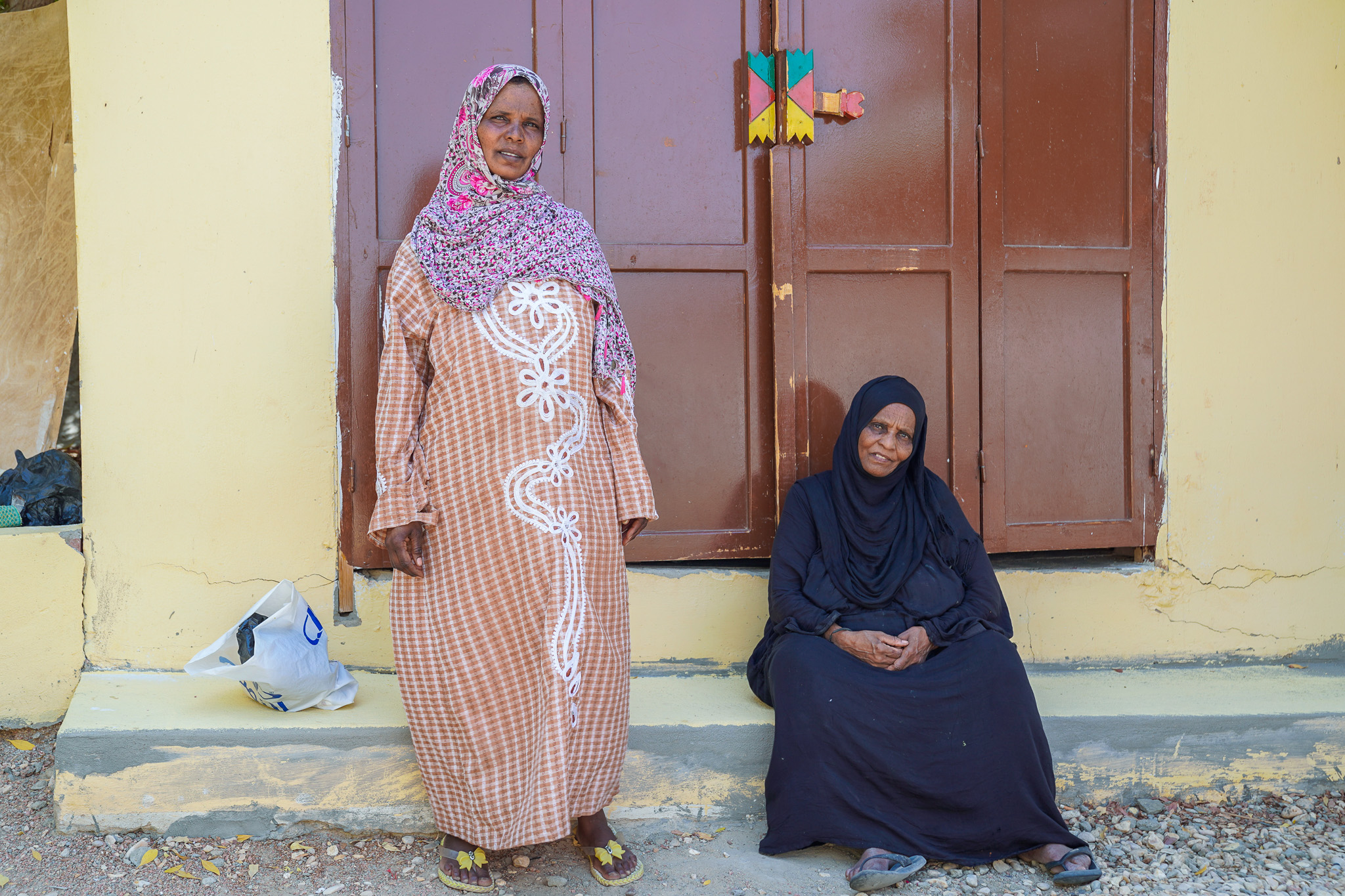
Nubian Village – Aswan
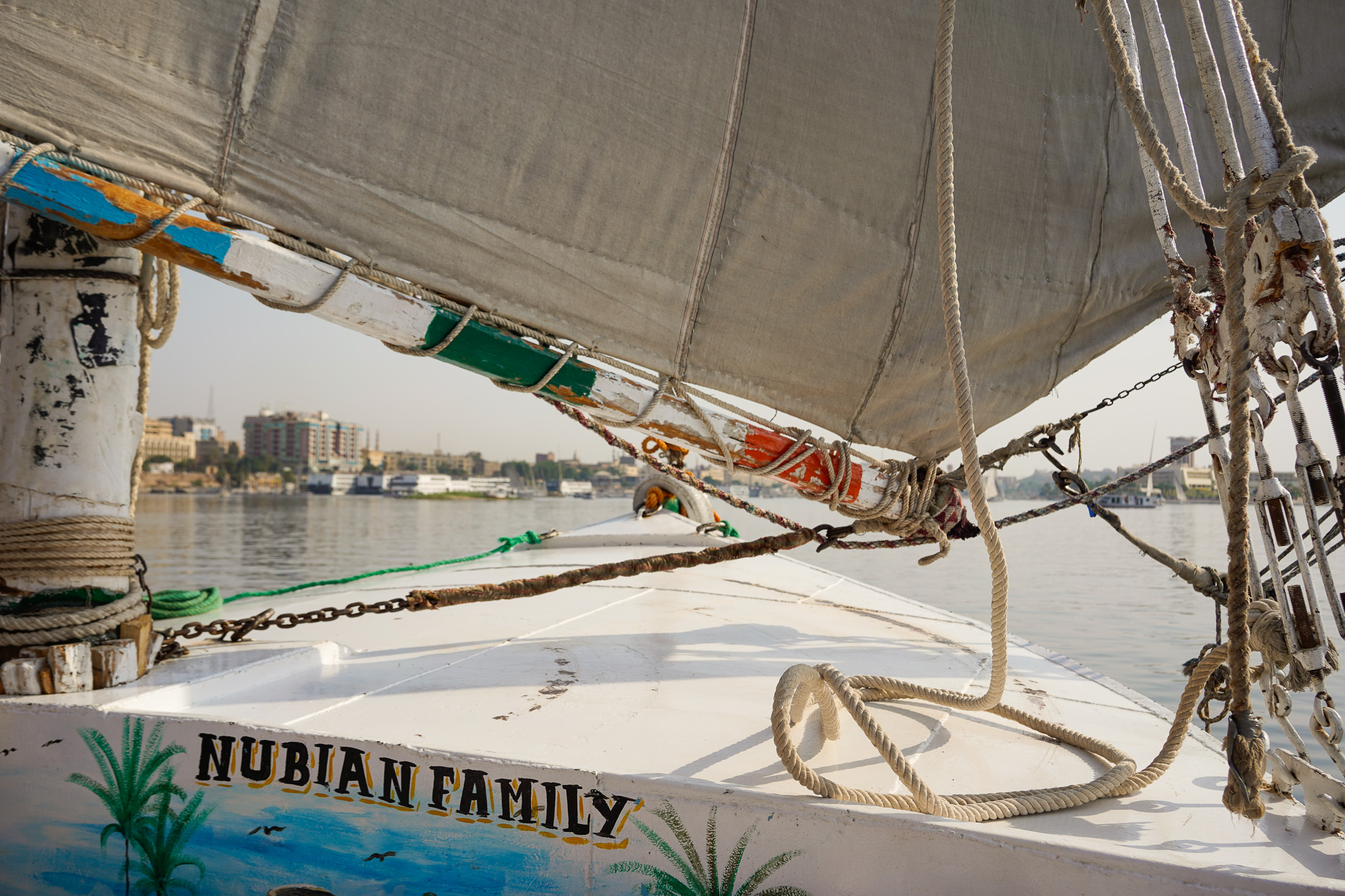
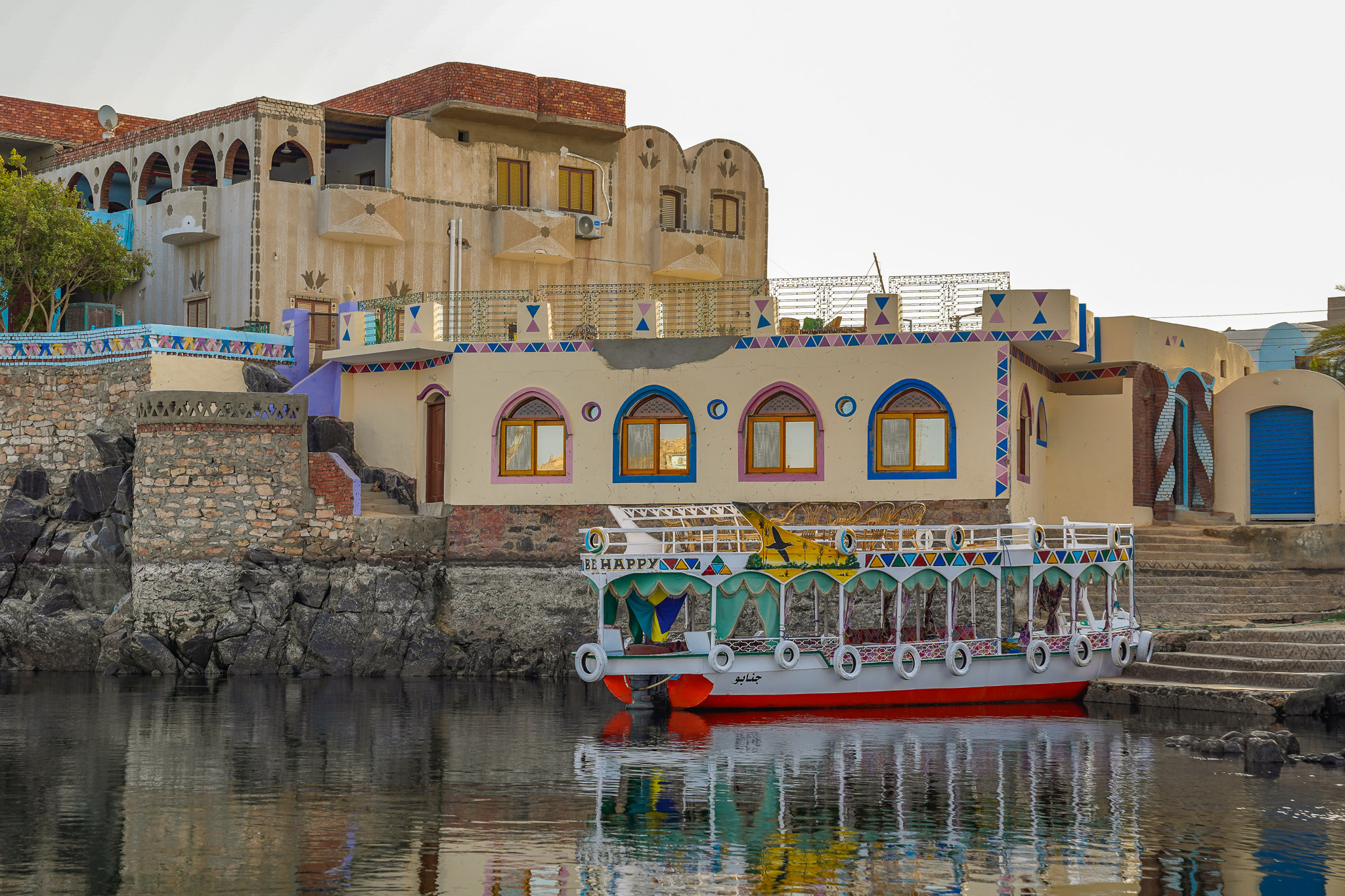
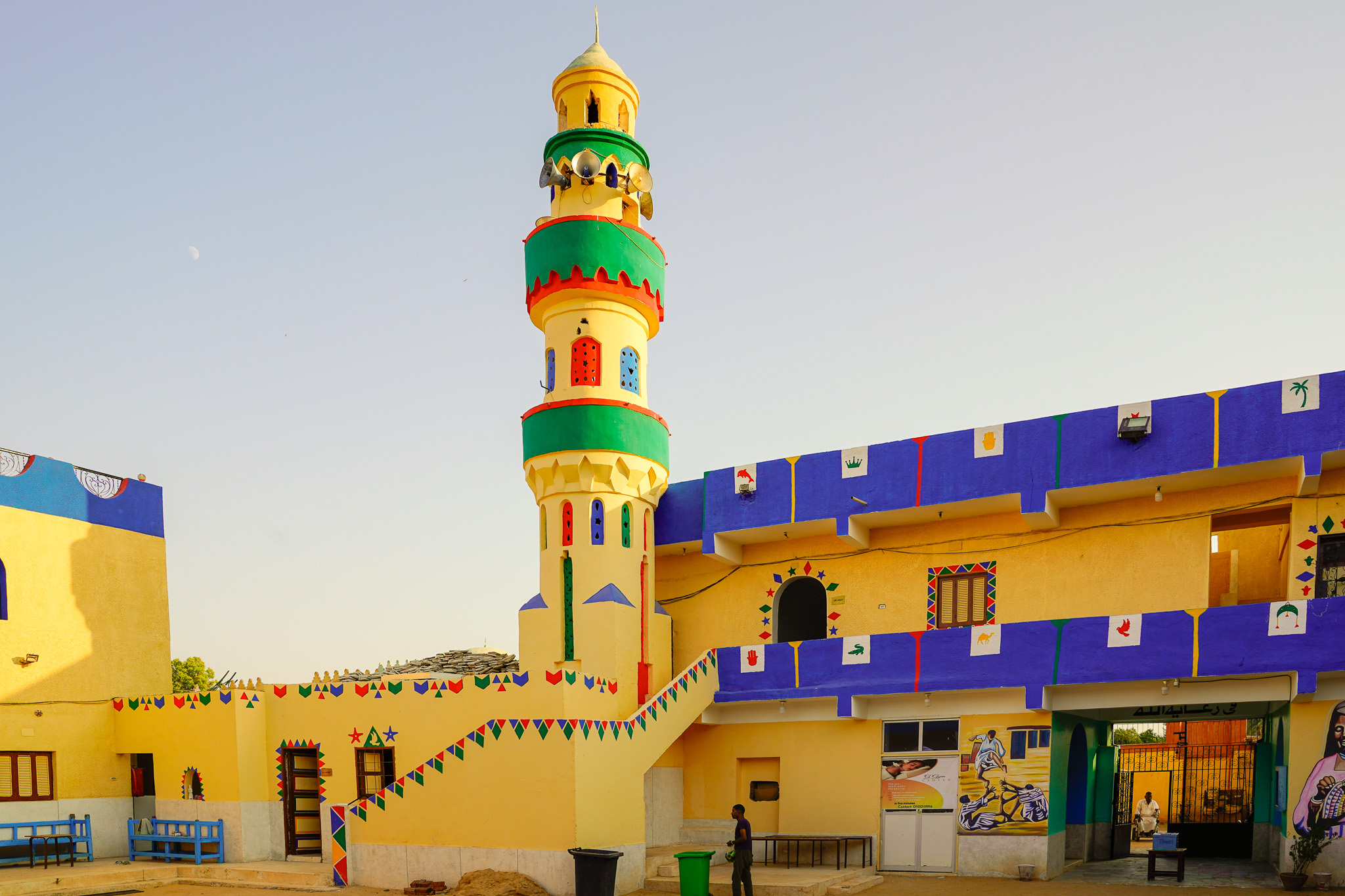
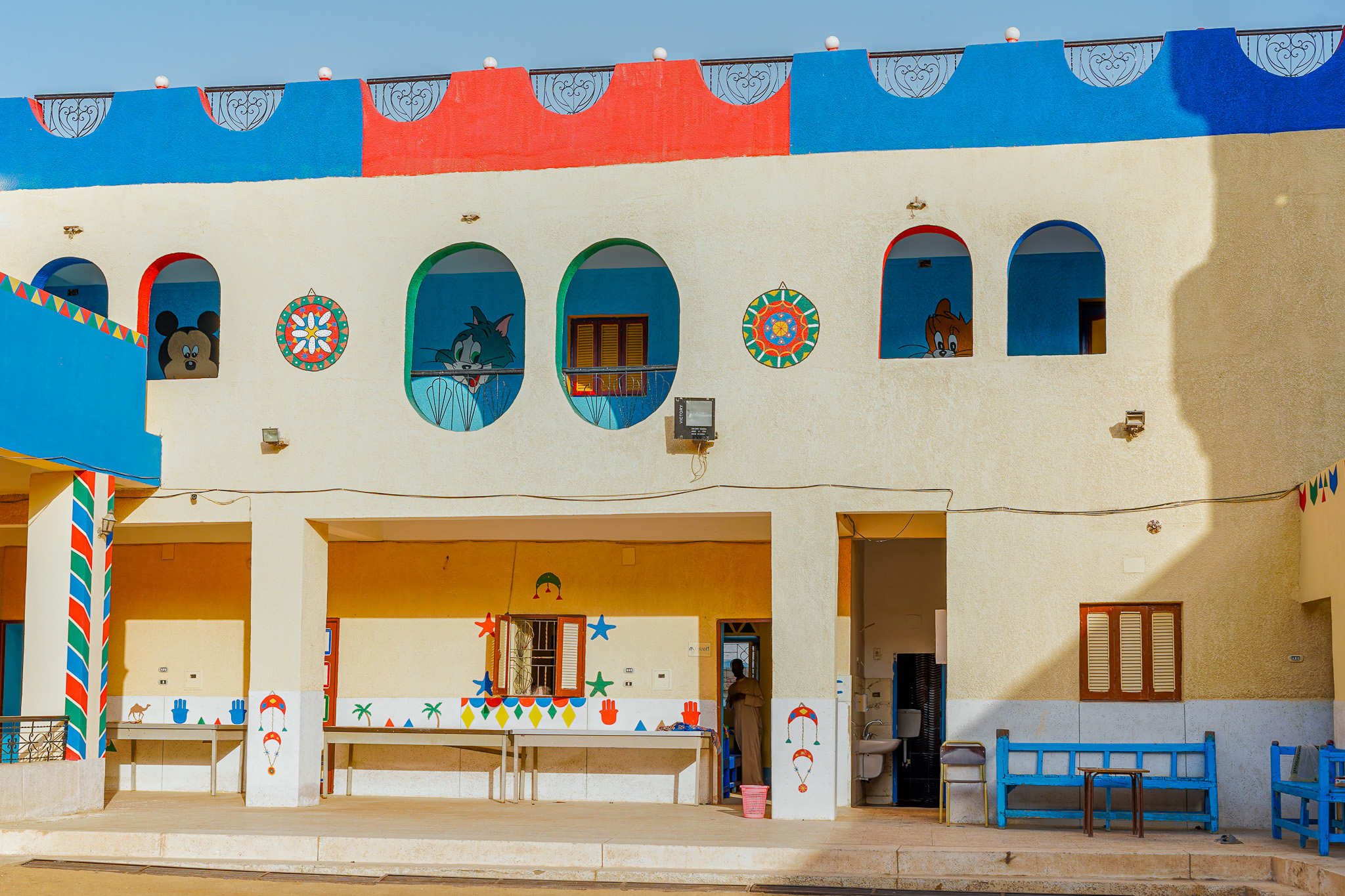
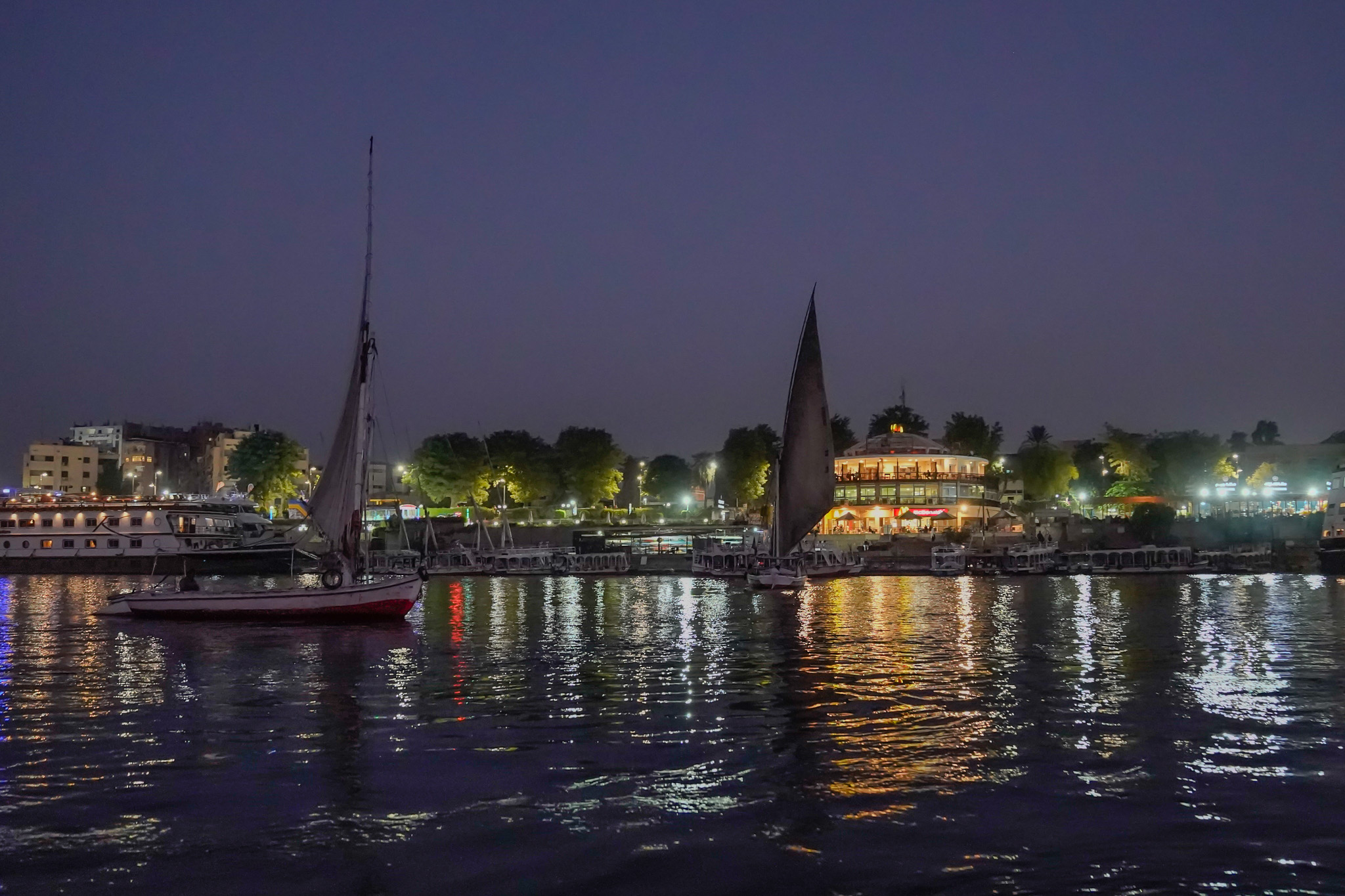
Time slipped away, unnoticed as we sailed to the Nubian village, approximately 45 minutes downstream from Aswan. Reaching a bend in the river, kids straddling surfboards latched onto the side of our boat and sang childhood songs for tips. Finally, on the west bank of the Nile, a kaleidoscope of colors came into view.
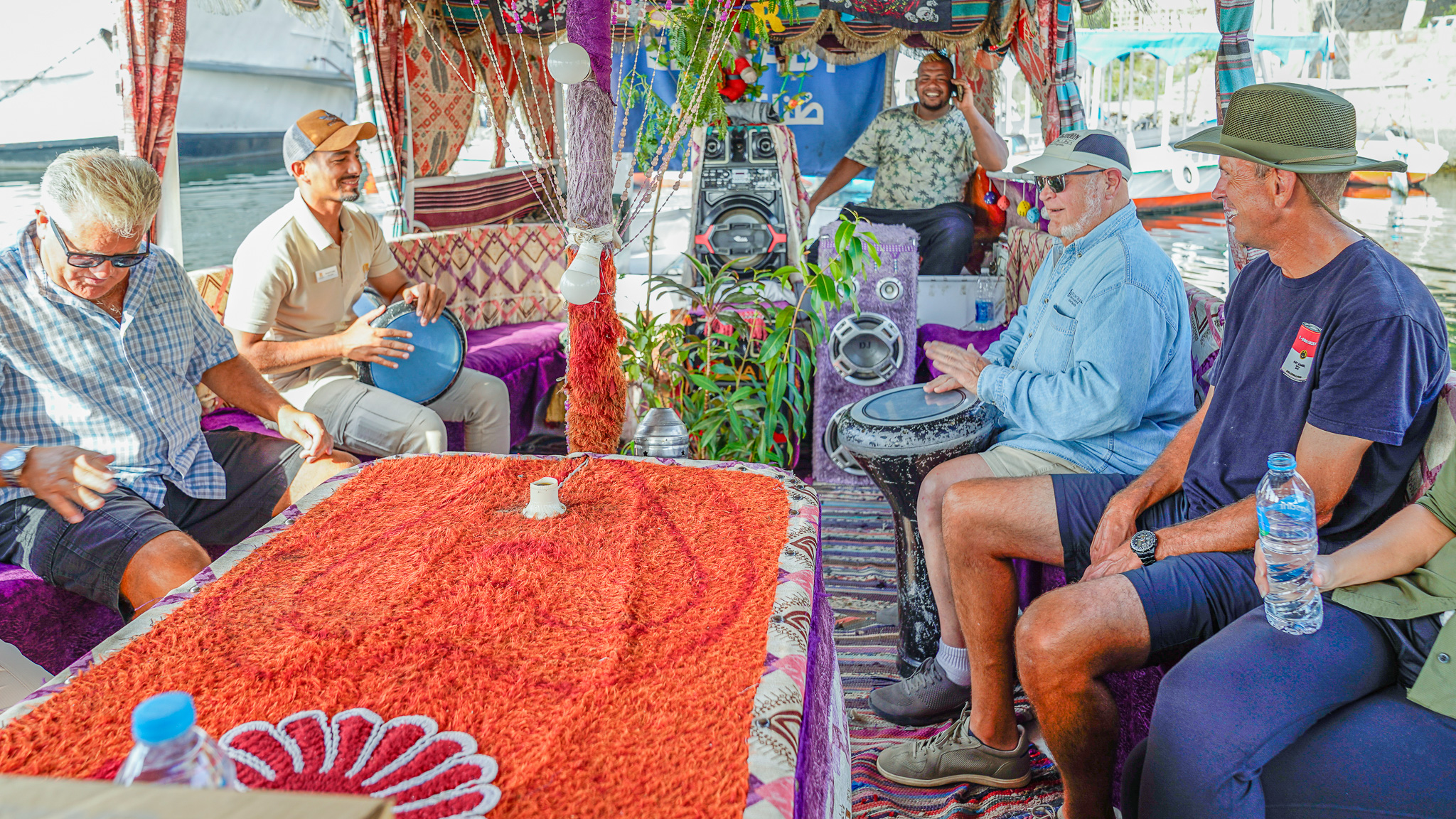
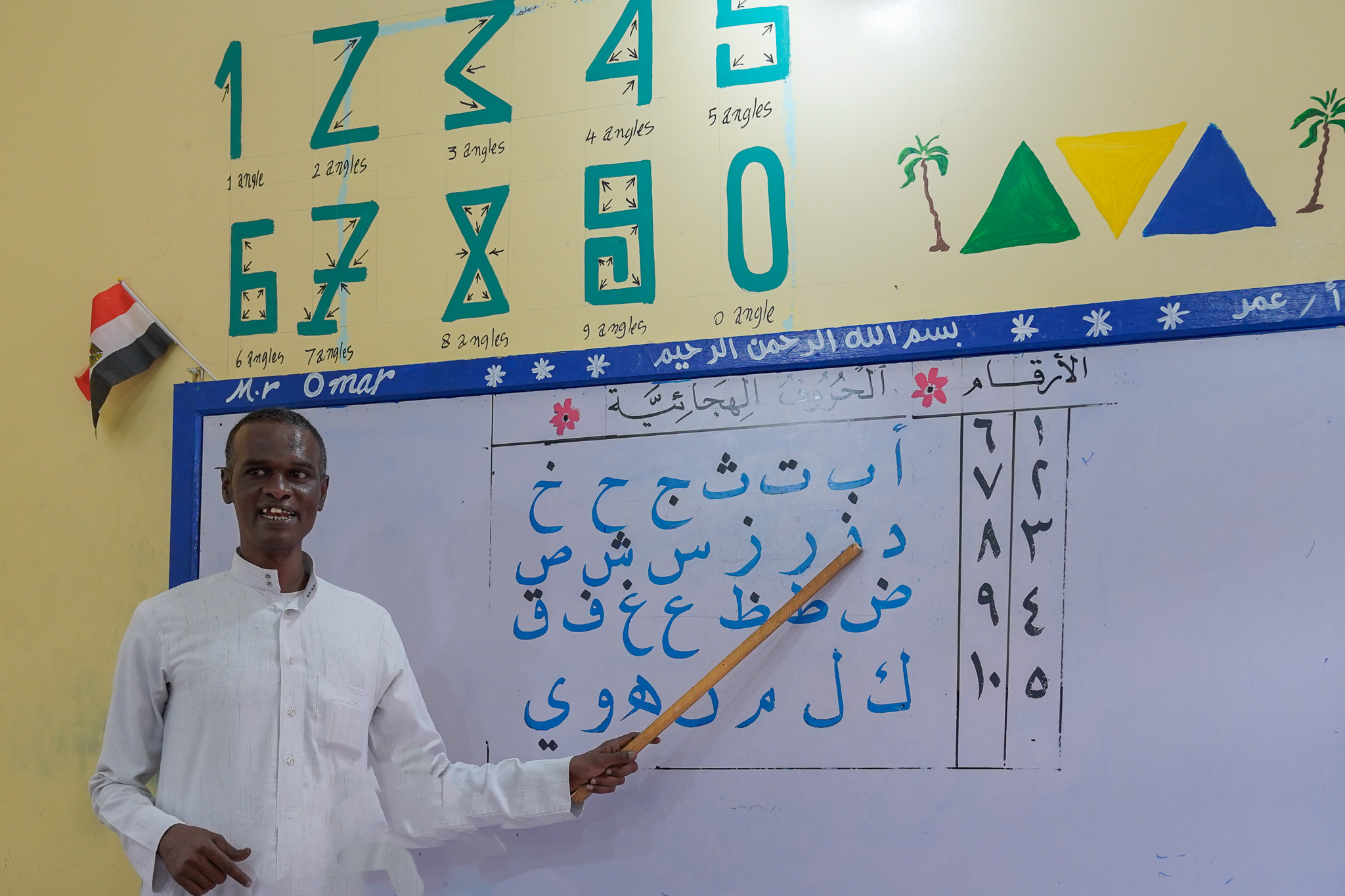
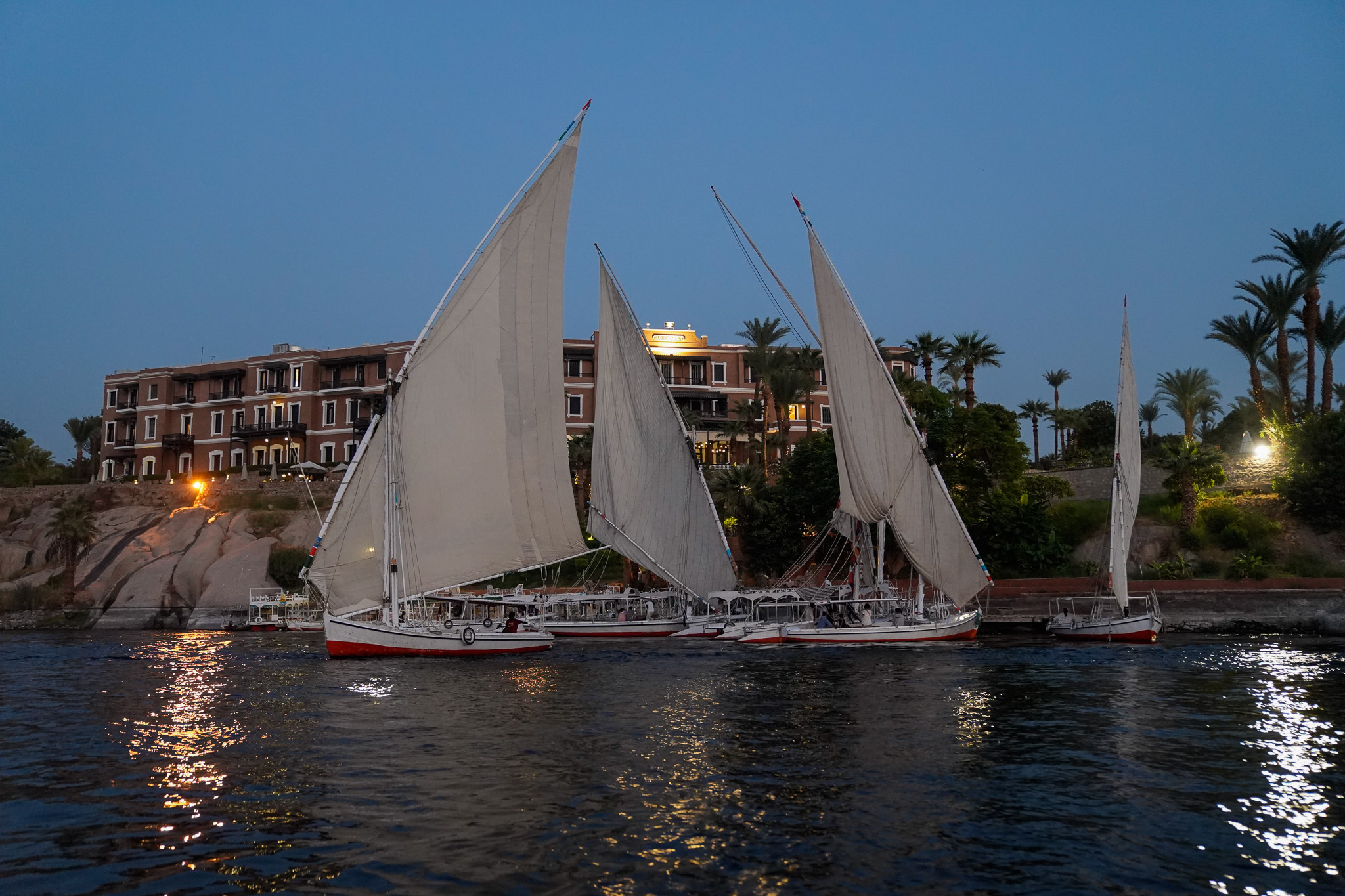
Vibrant colors and flavorful food identify the Nubian people. We enjoyed lunch at the Old Nubian Guesthouse & Restaurant. The Nubian people are indigenous to Southern Egypt and Northern Sudan. They have a distinct culture and speak their unique language, yet they are intertwined with Egyptians in a complex history. After a tour of the village and a lesson in the Nubian alphabet, we watched the sunset on a gentle sail to the tunes of Bob Marley and the beat of our talented fellow travelers.
Our Guides – Treasures of Modern Egypt
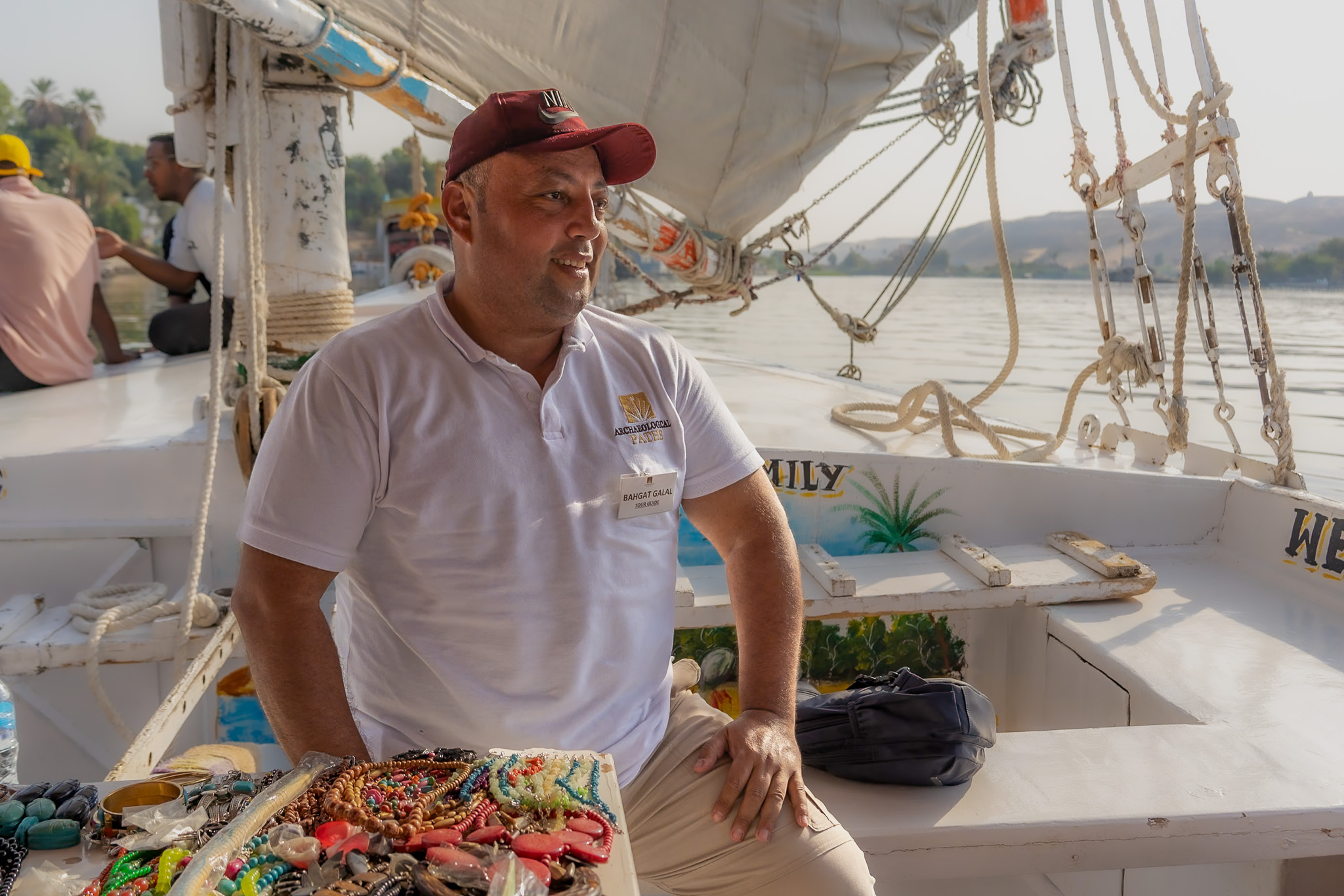
Bahgat Galal Sobeh – Tour Guide
Bahgat’s knowledge of ancient Egyptian history is unsurpassed! A great storyteller, he conveys complex information in a way that ties it all together. Most of all, he’s a professional and fun too!
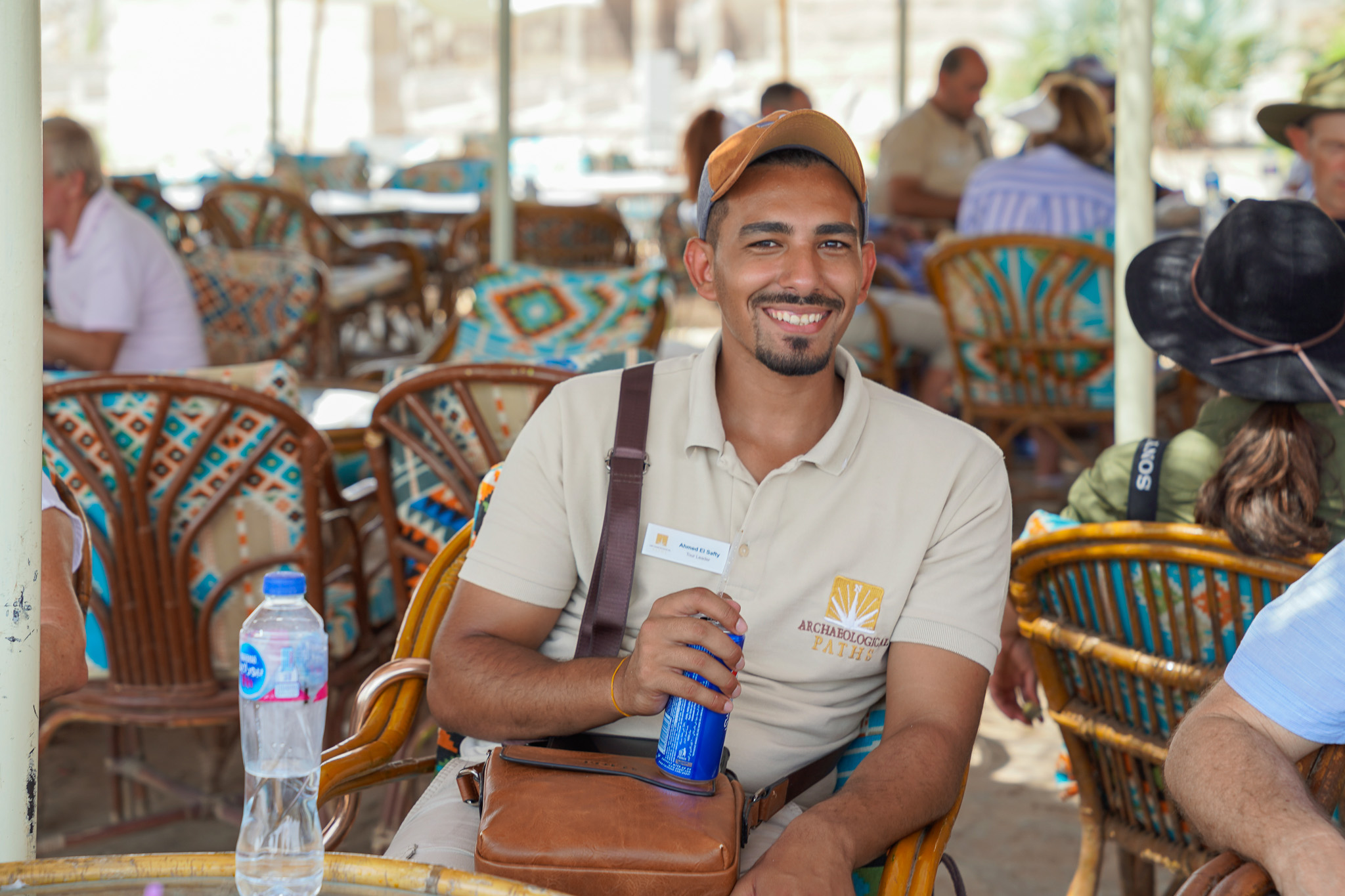
Ahmed Elsafty – Tour Coordinator
The idiom “The Devil is in the Details” describes our logistics coordinator, Ahmed. He handled the complicated details of a multi-city, multi-conveyance tour without a hitch, always smiling.
Books
Zahi Hawass’ Secret Egypt 2019, by Zahi Hawass
Empress of the Nile 2023, Lynne Olson
The Rise and Fall of Ancient Egypt, 2021 edition by Toby Wilkinson
Egypt, Greece, and Rome 2014 edition by Charles Freeman
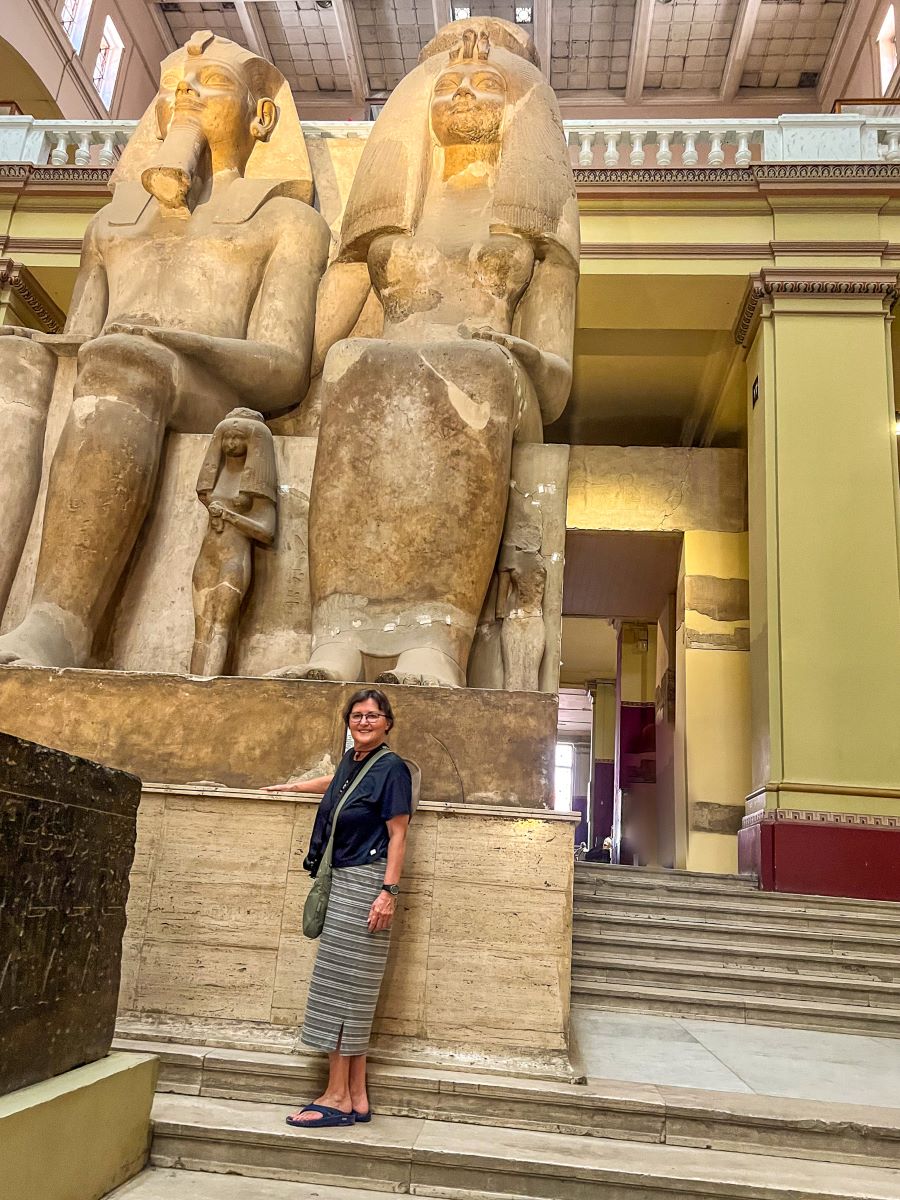
I’m standing at the foot of Pharoah Amenhotep III and his Great Royal Wife, Tyre, in the Egyptian Museum. The colossal statue is 22.9 feet tall. What I like about this statue is that Tyre is the same size as Amenhotep III, signaling her prominent status as the Queen. Their daughters are below, the one in the middle intact. Tyre is the grandmother of the Pharoah Tutankhamun.
Travel Notes
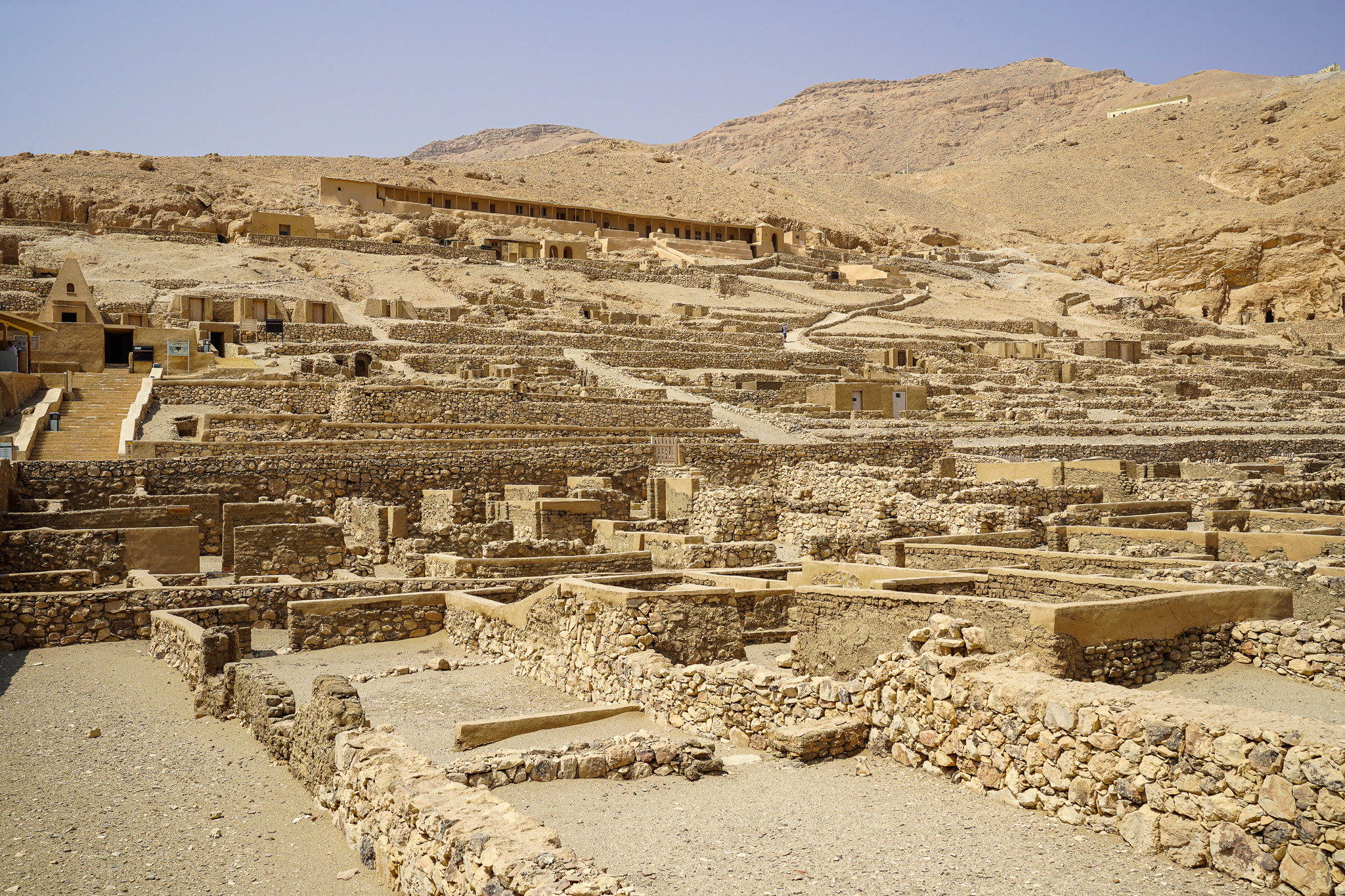
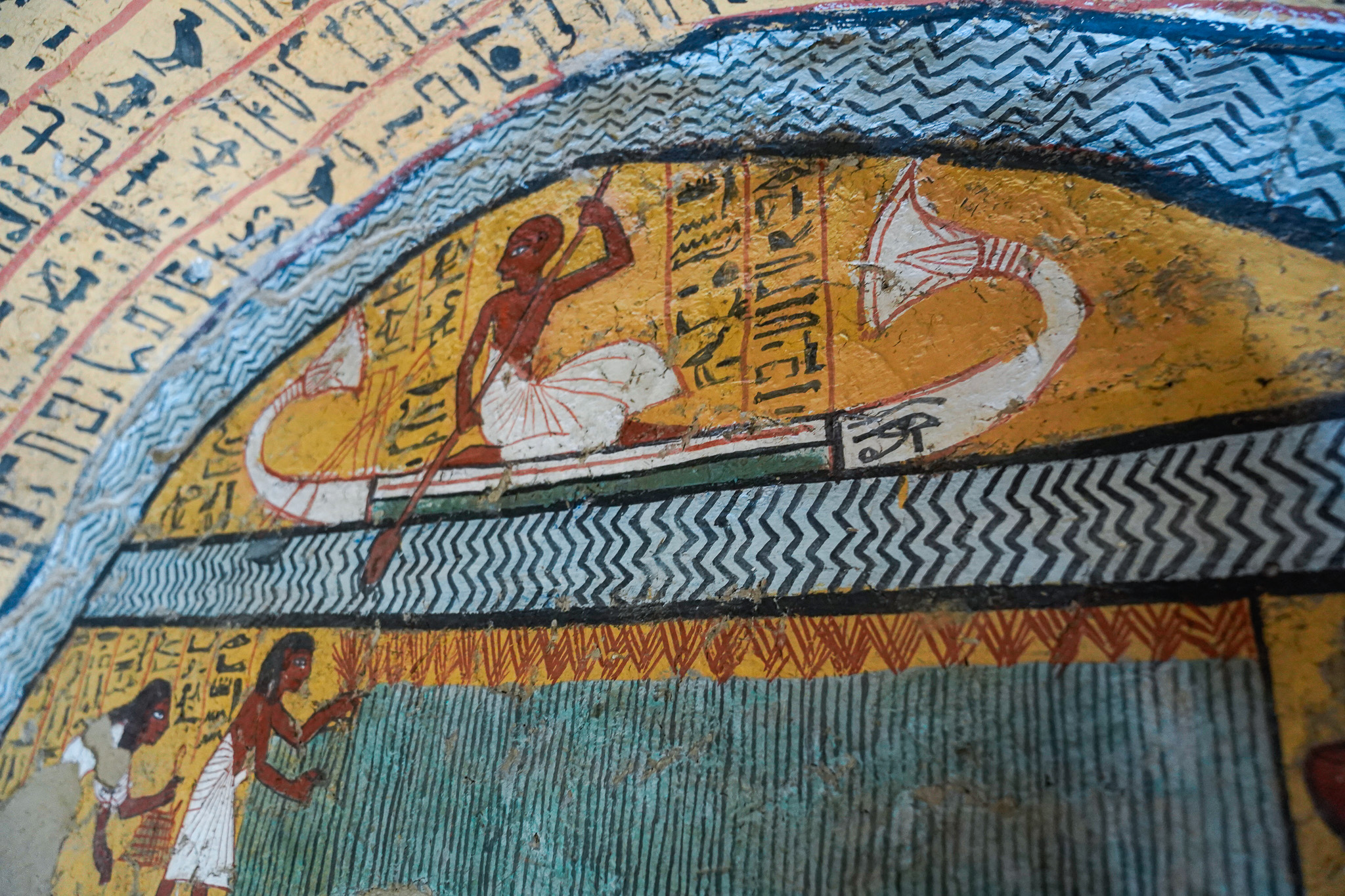
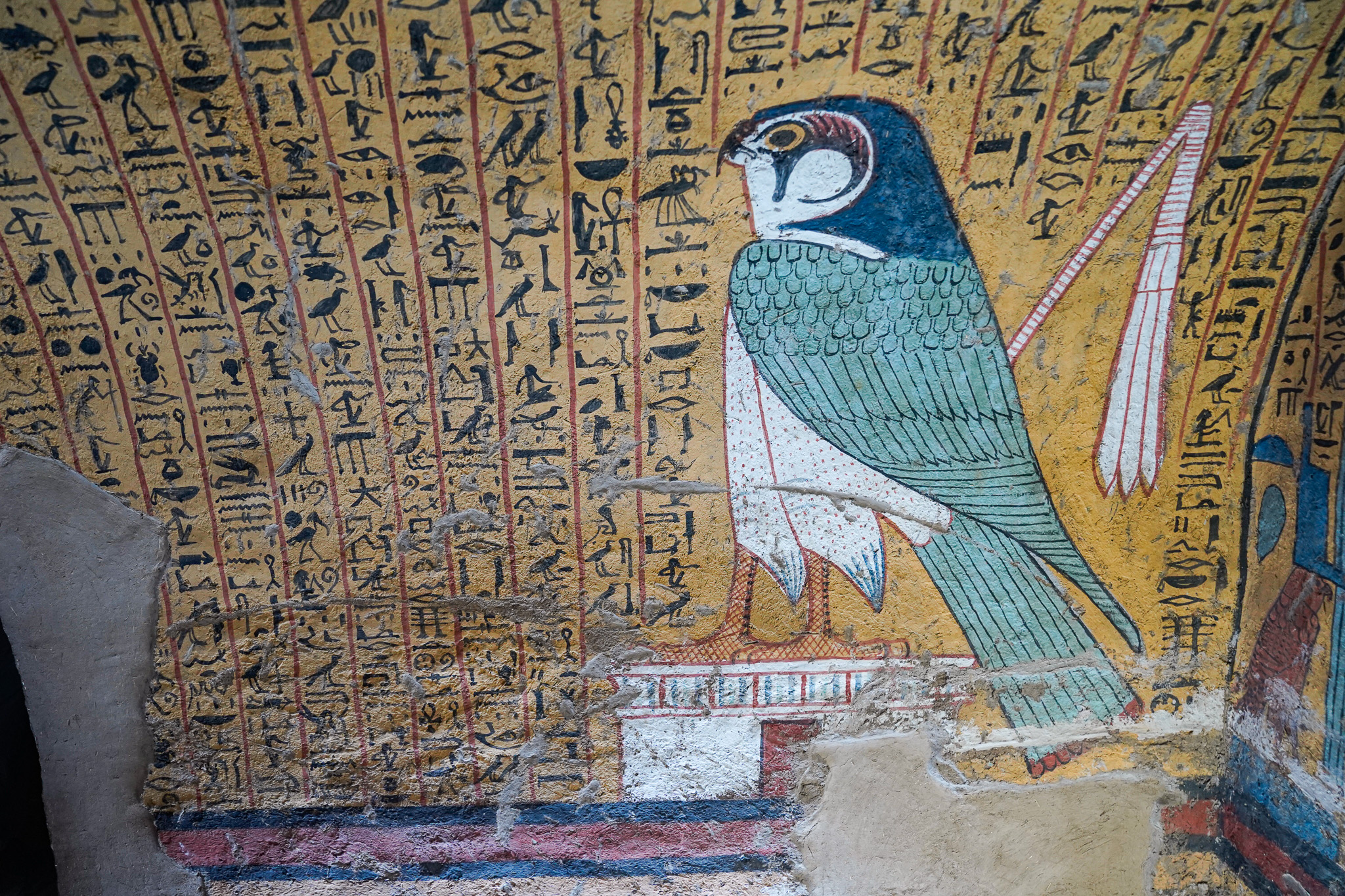
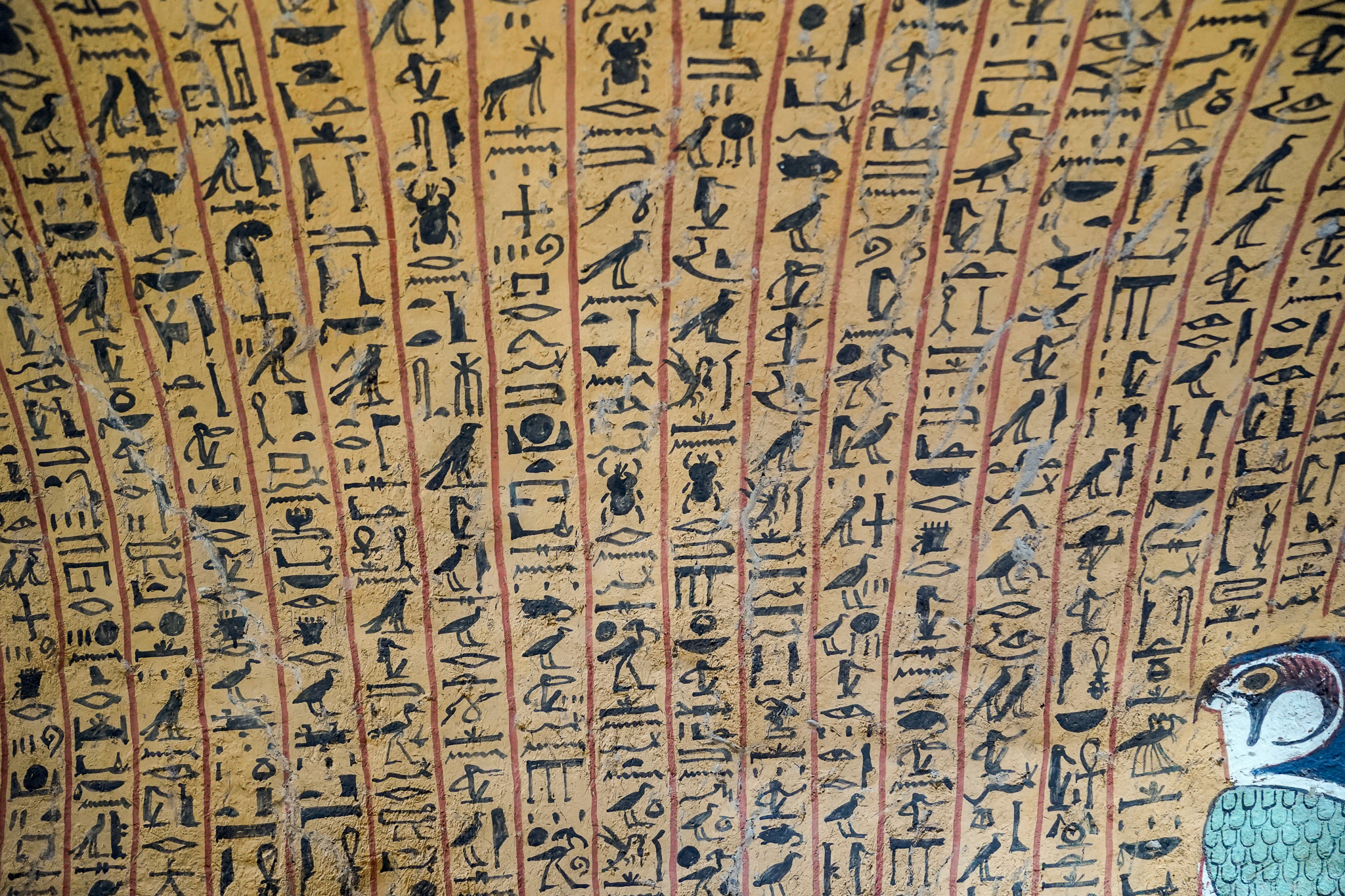
It defies reasoning that mere mortals could have built the colossal temples, monuments, and tombs, the treasures of ancient Egypt. However, the work of archaeologists proves that they did. The workers’ tombs at Deir el-Medina provide clues to how the artisans lived. Earlier, near the Giza Pyramids, we saw the Pyramid Builders Tombs. The extraordinary work of ordinary people secured the destiny of Kings and Queens in the afterlife. The success of rulers, so they believed, secured their victory.
Deir el-Medina – The New Kingdom Workmen’s village
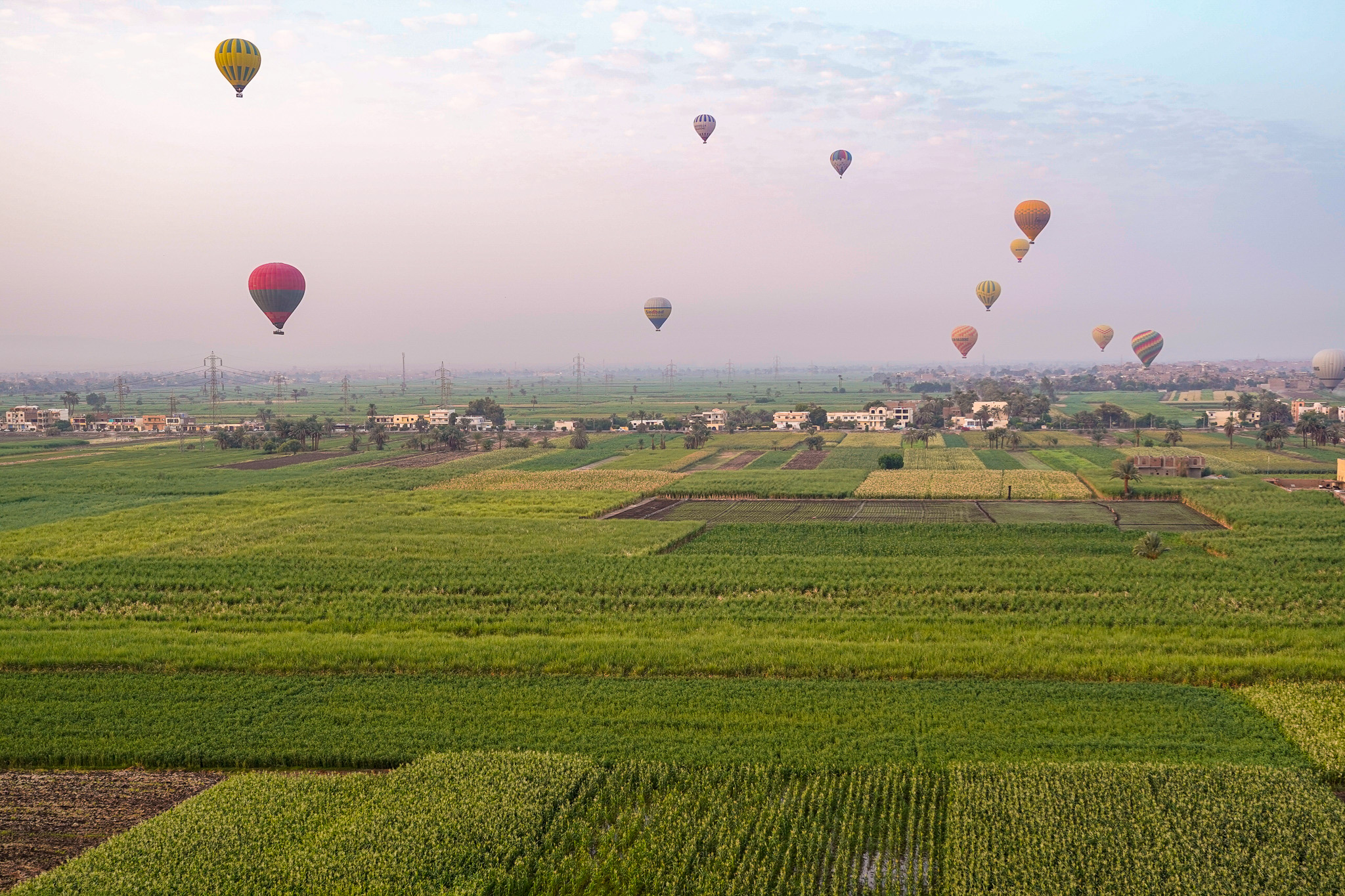
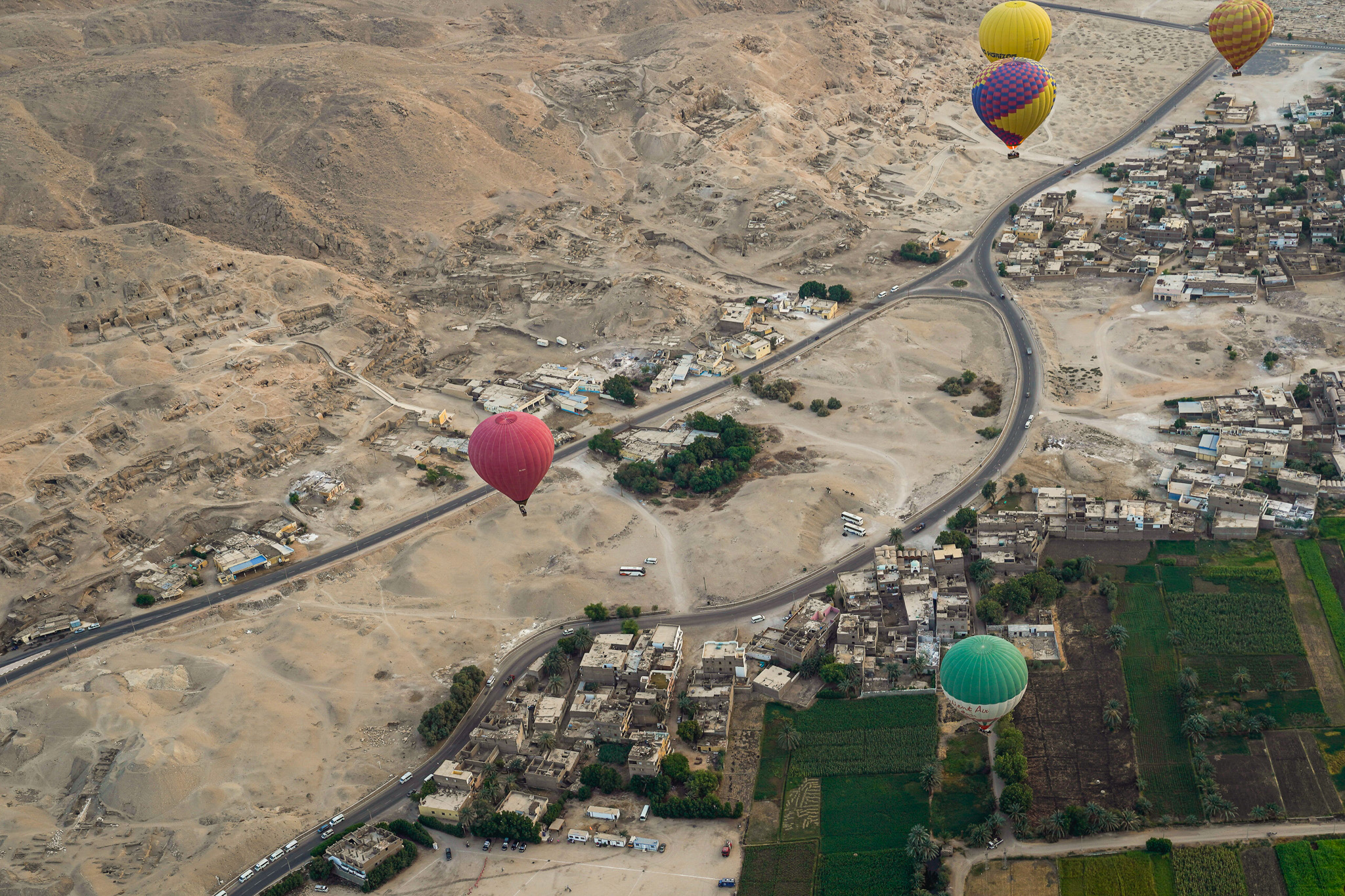
We saw the treasures of ancient Egypt from many perspectives!
Balloon Ride Over Luxor

Camel Caravan
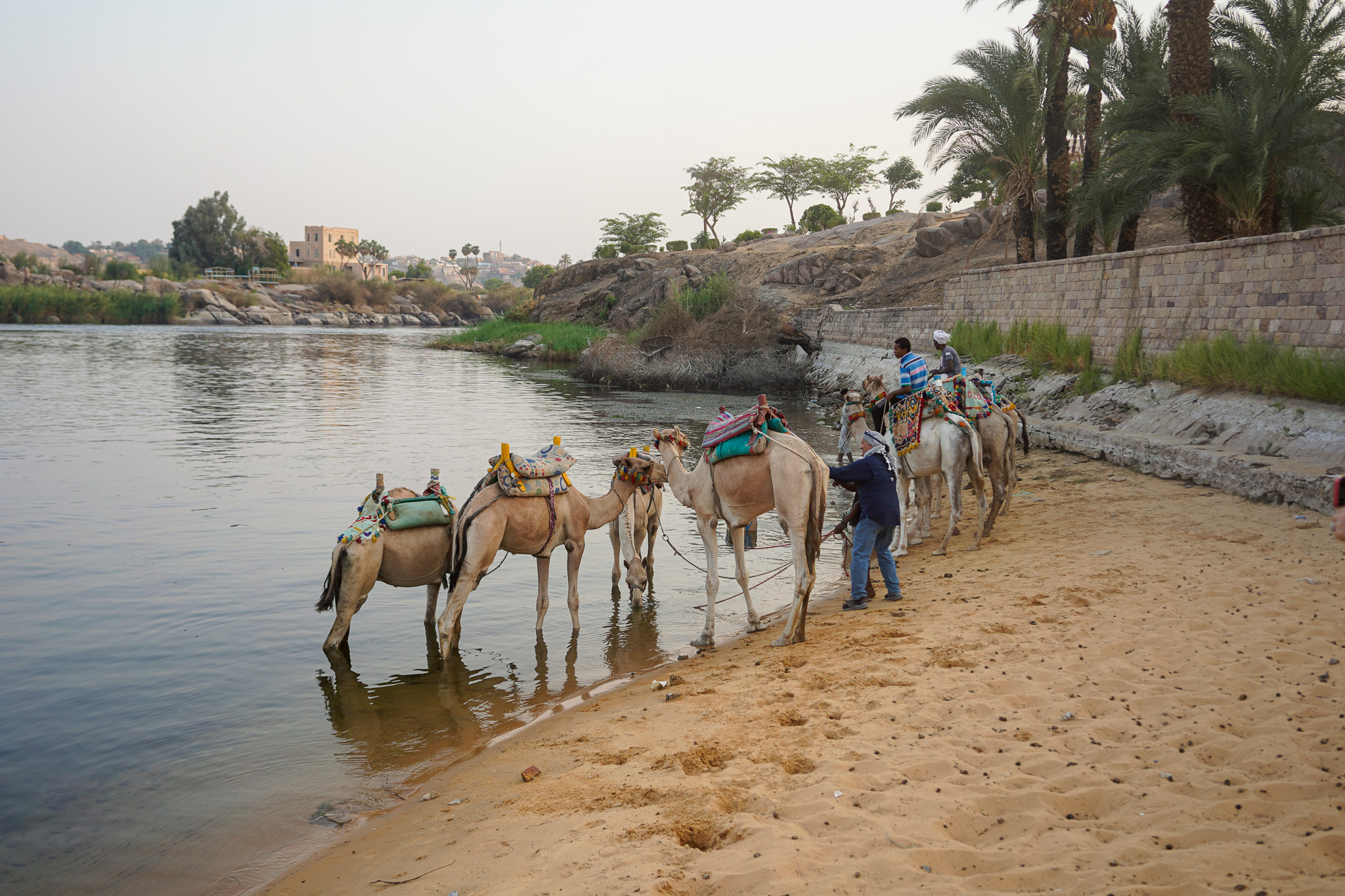
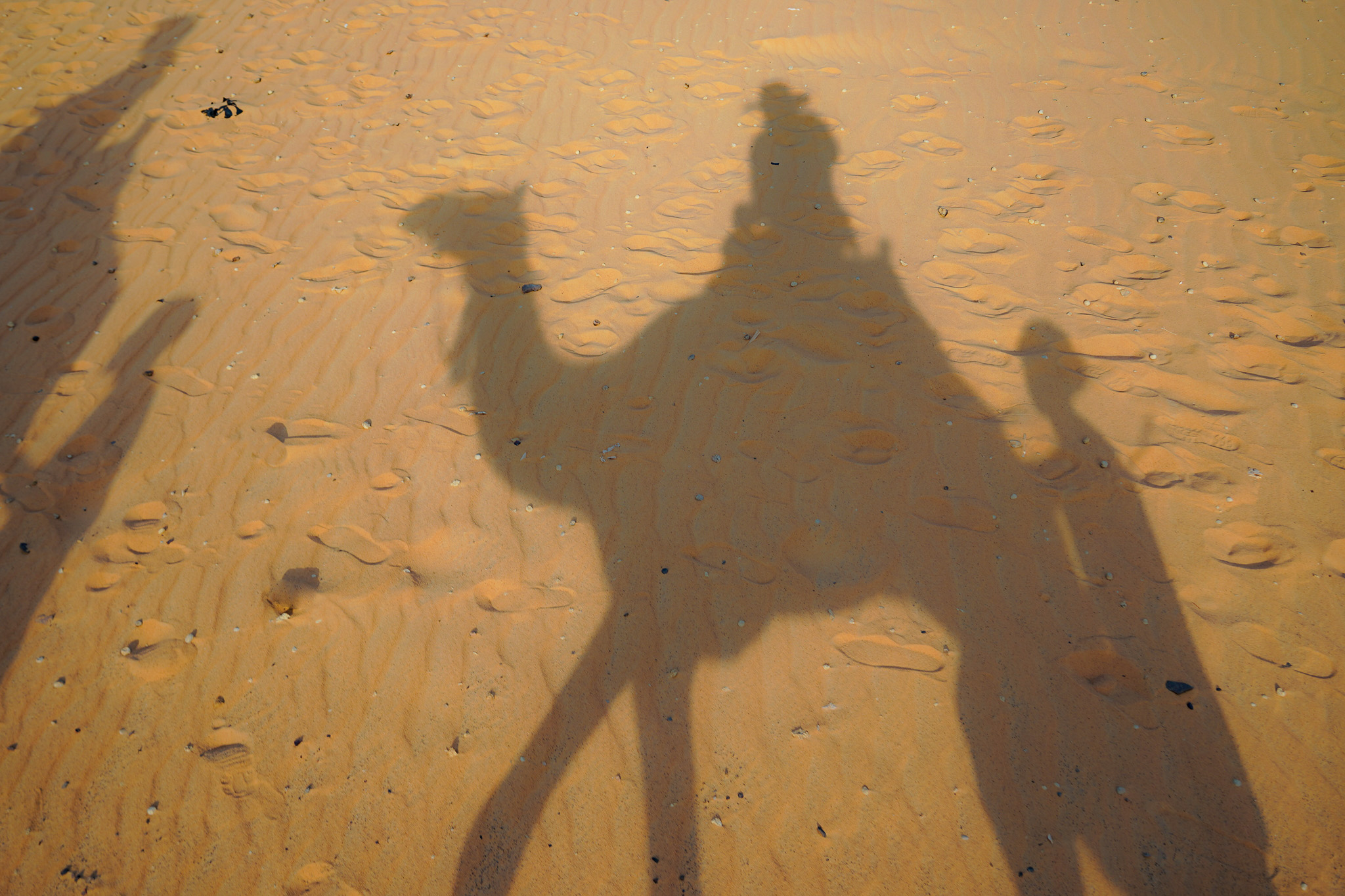
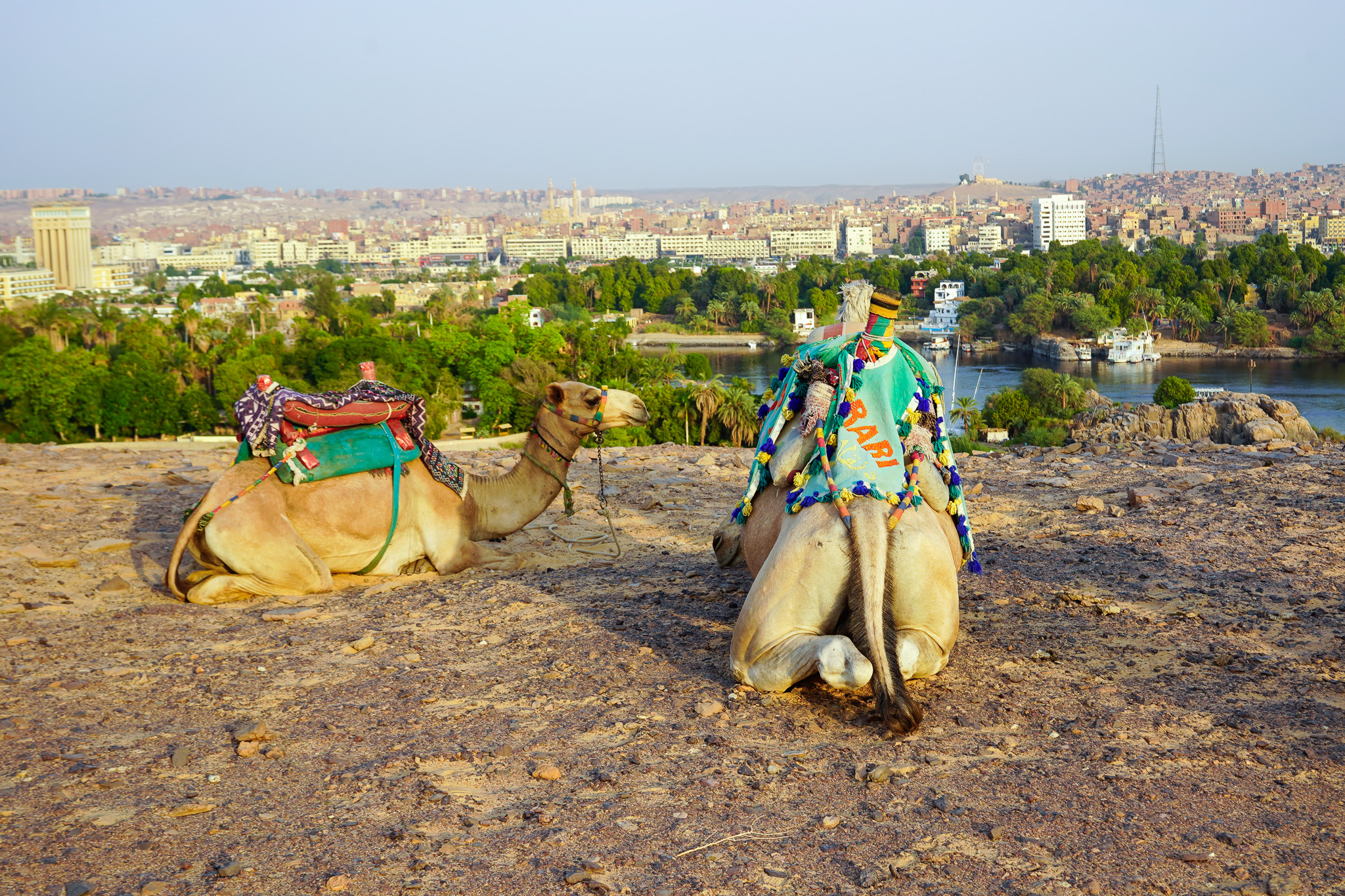
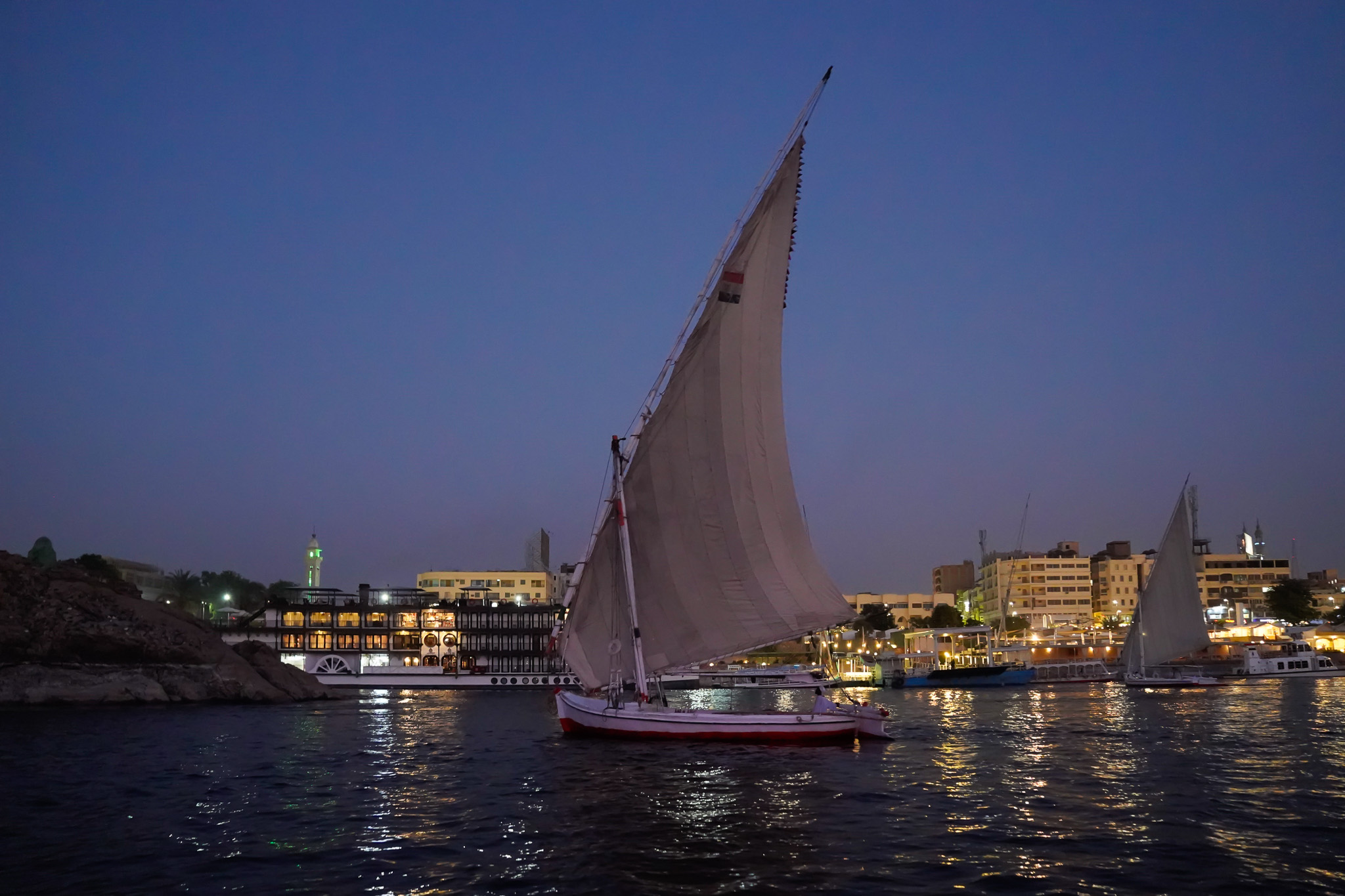
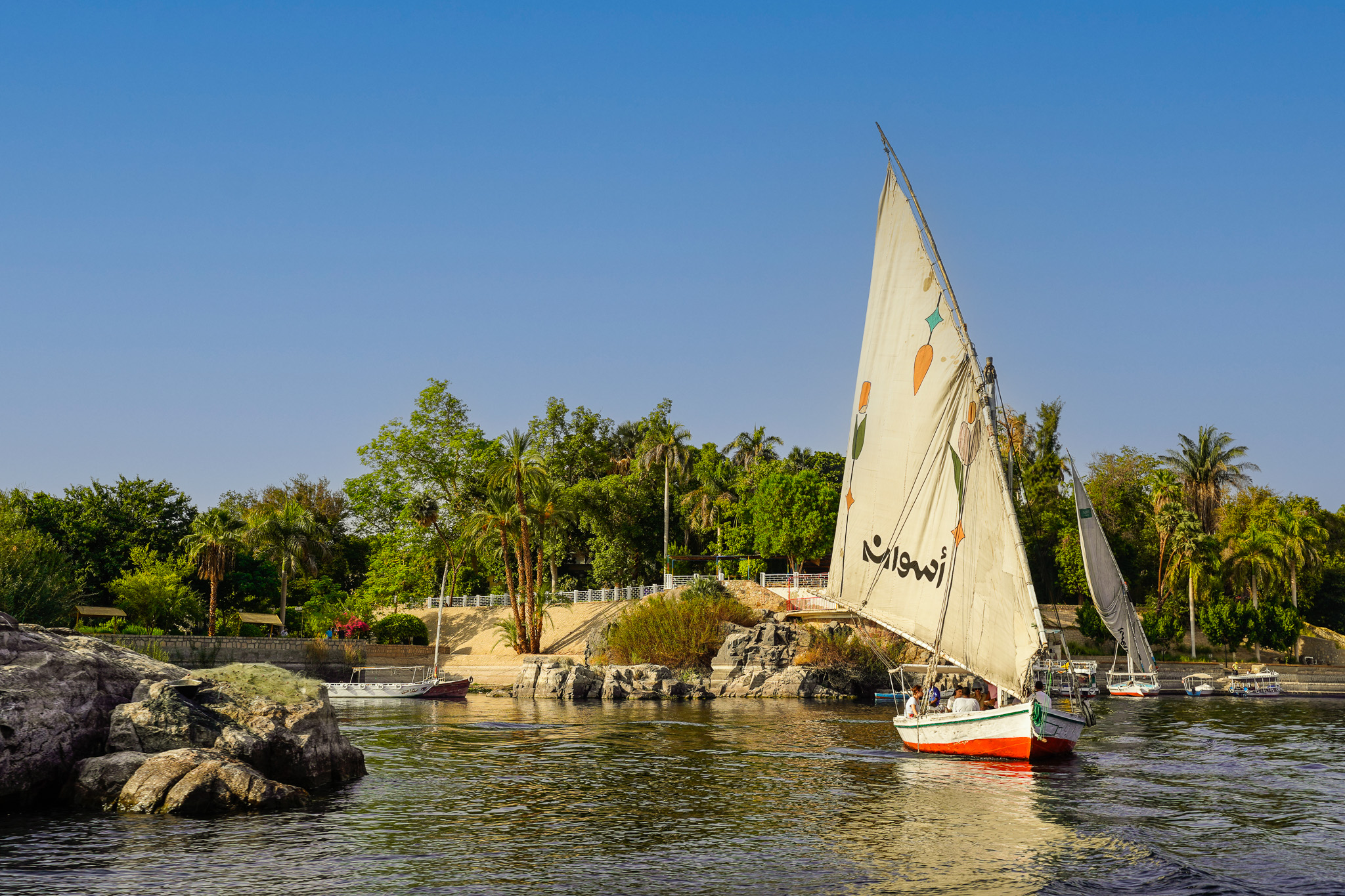
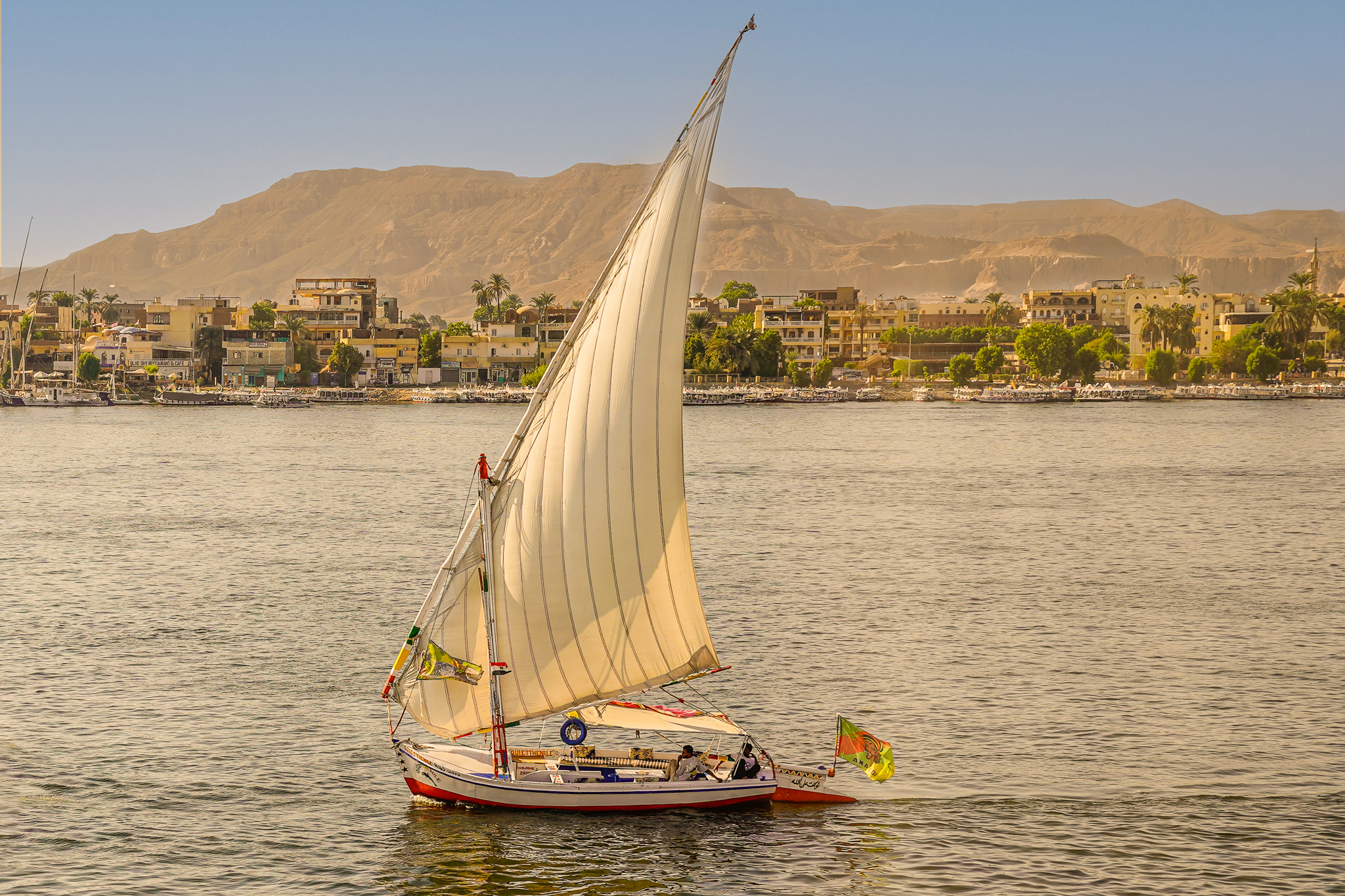
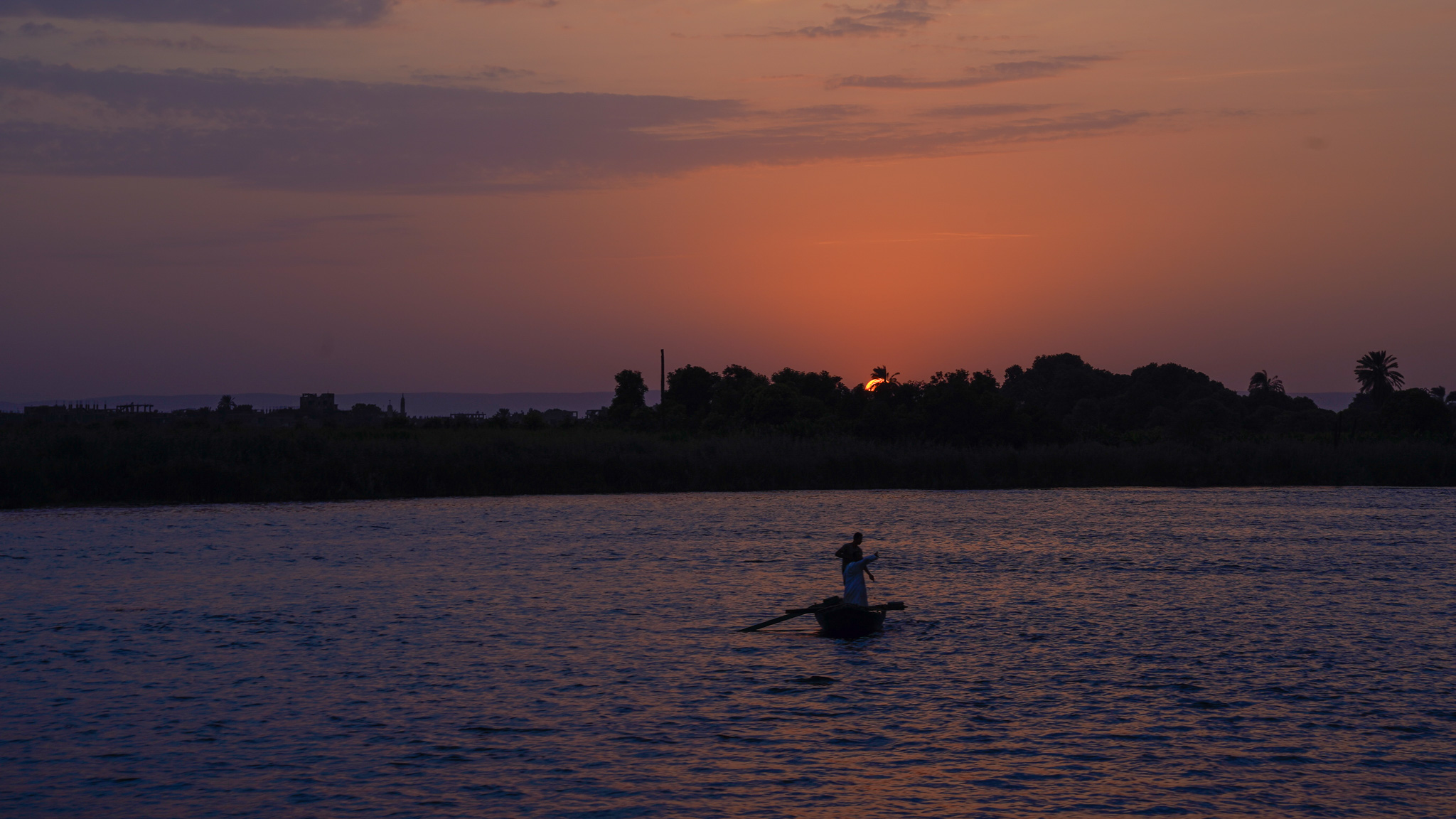
The Nile River
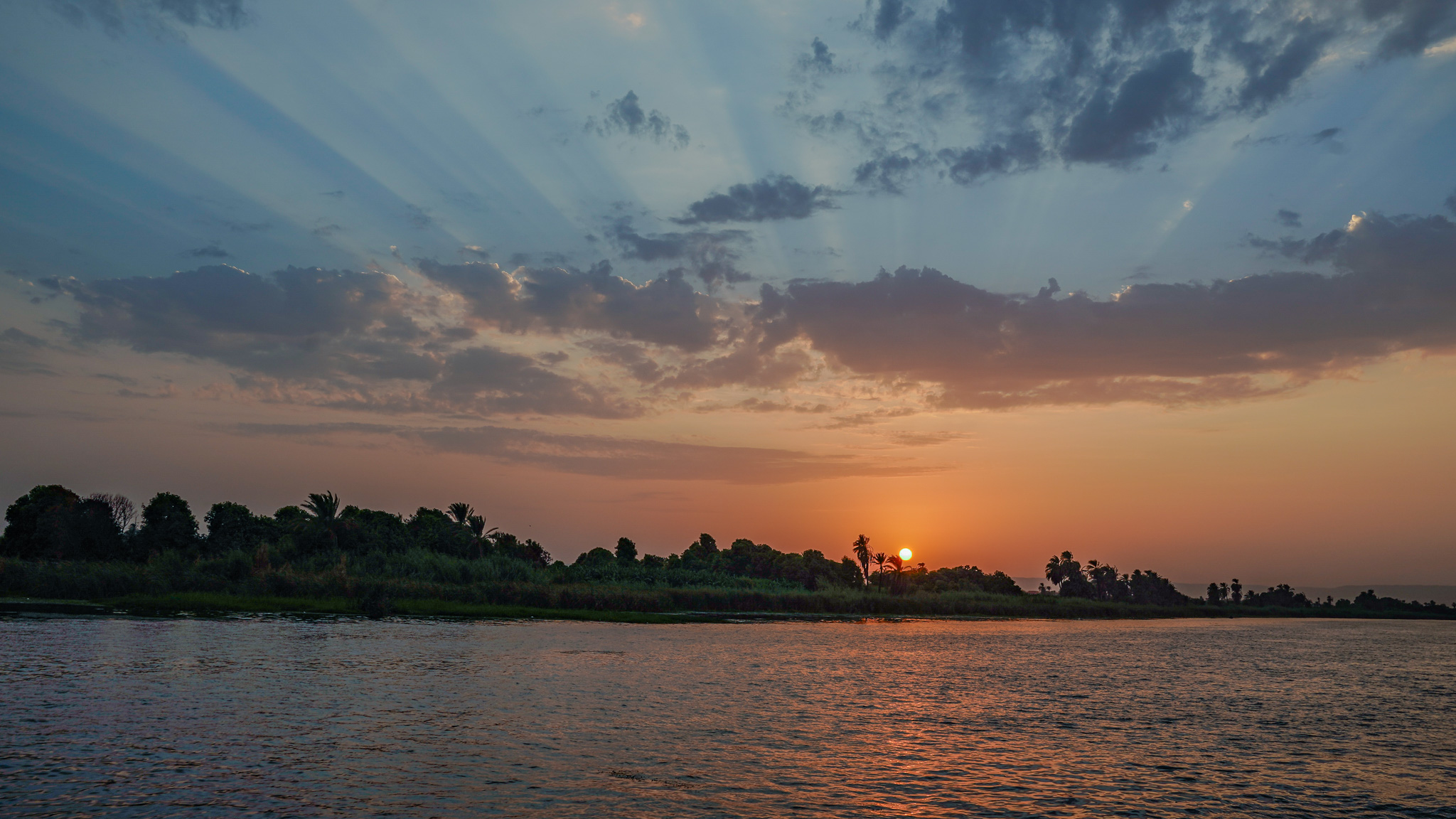
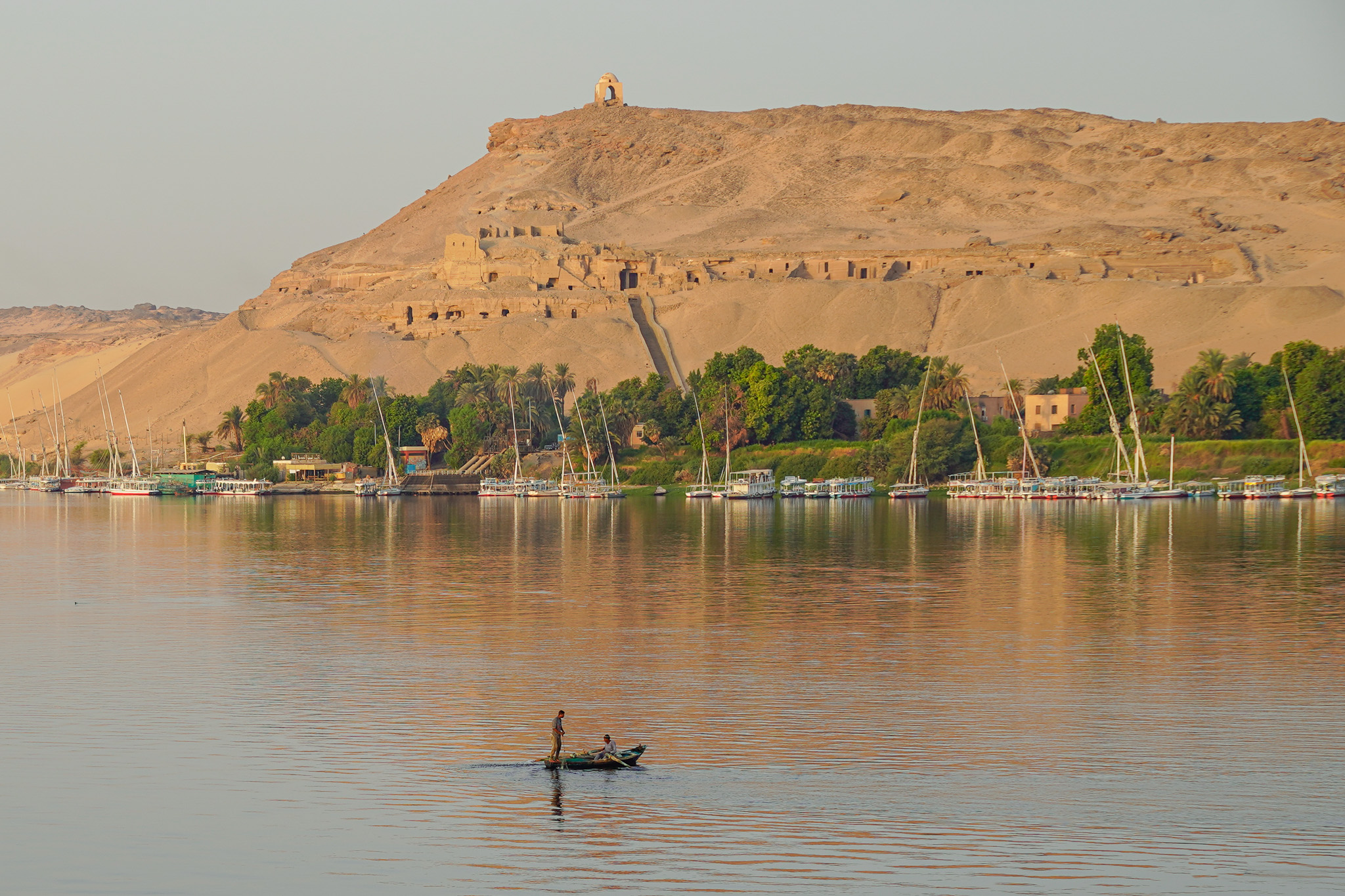
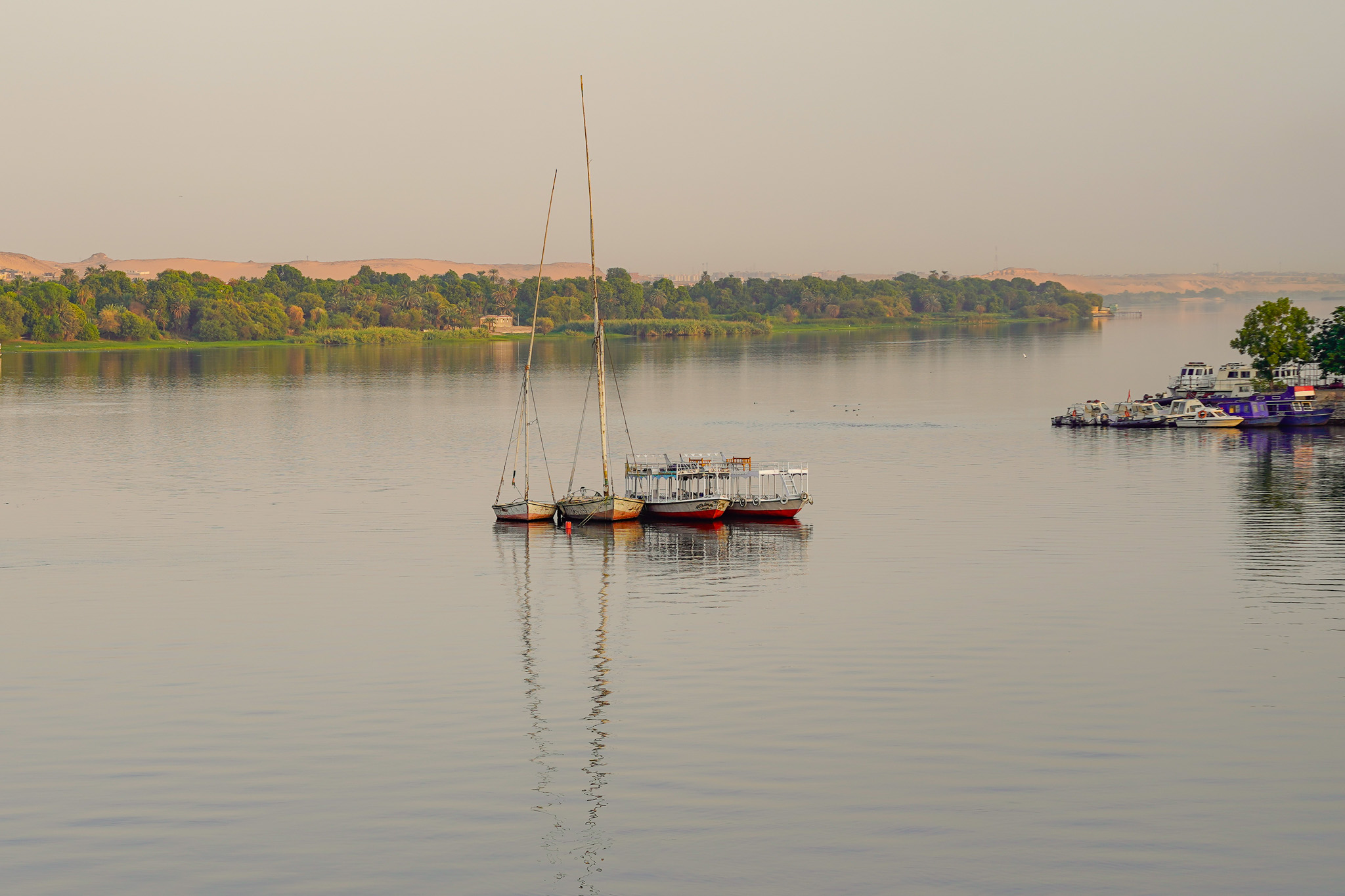
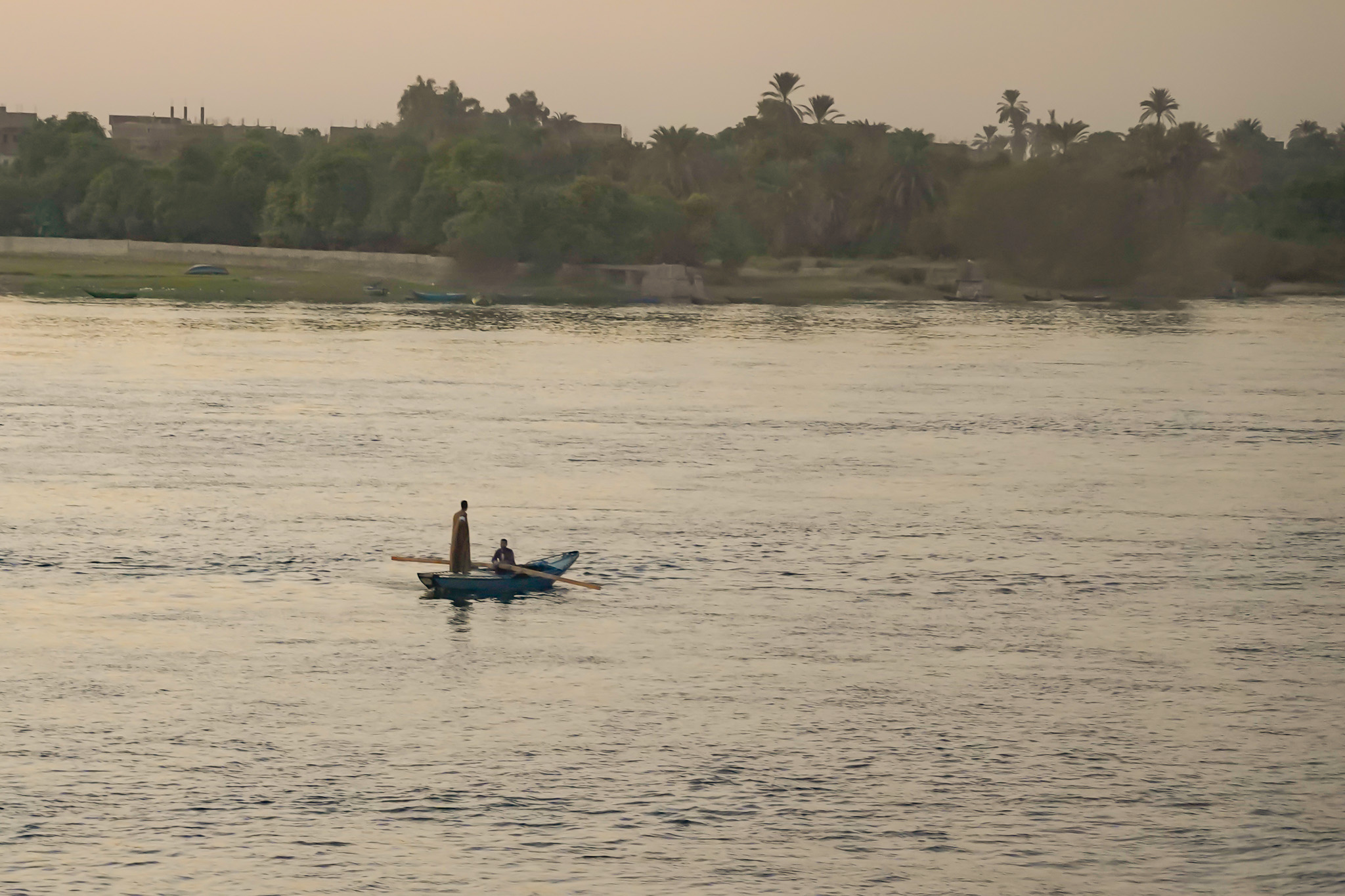
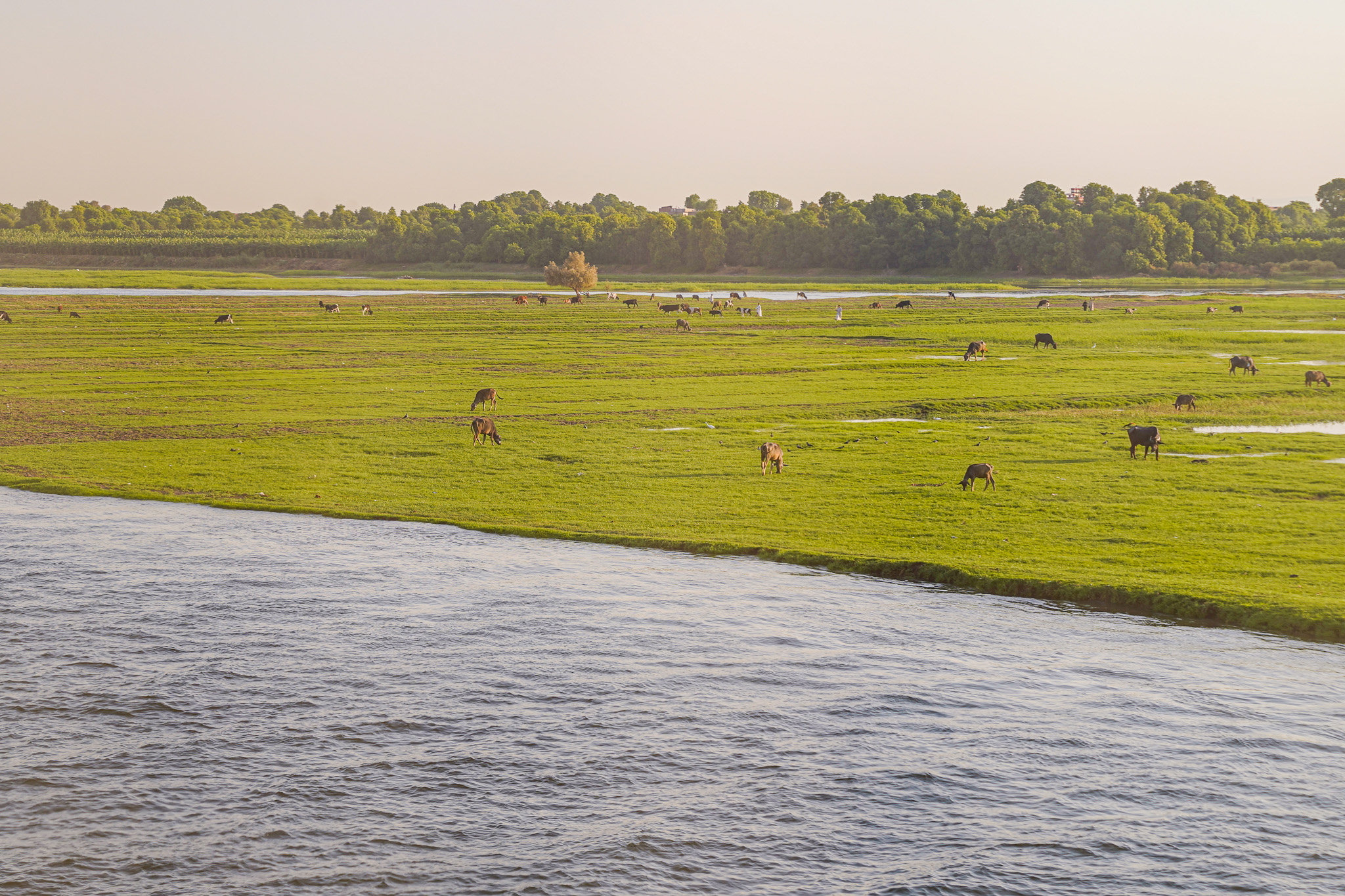
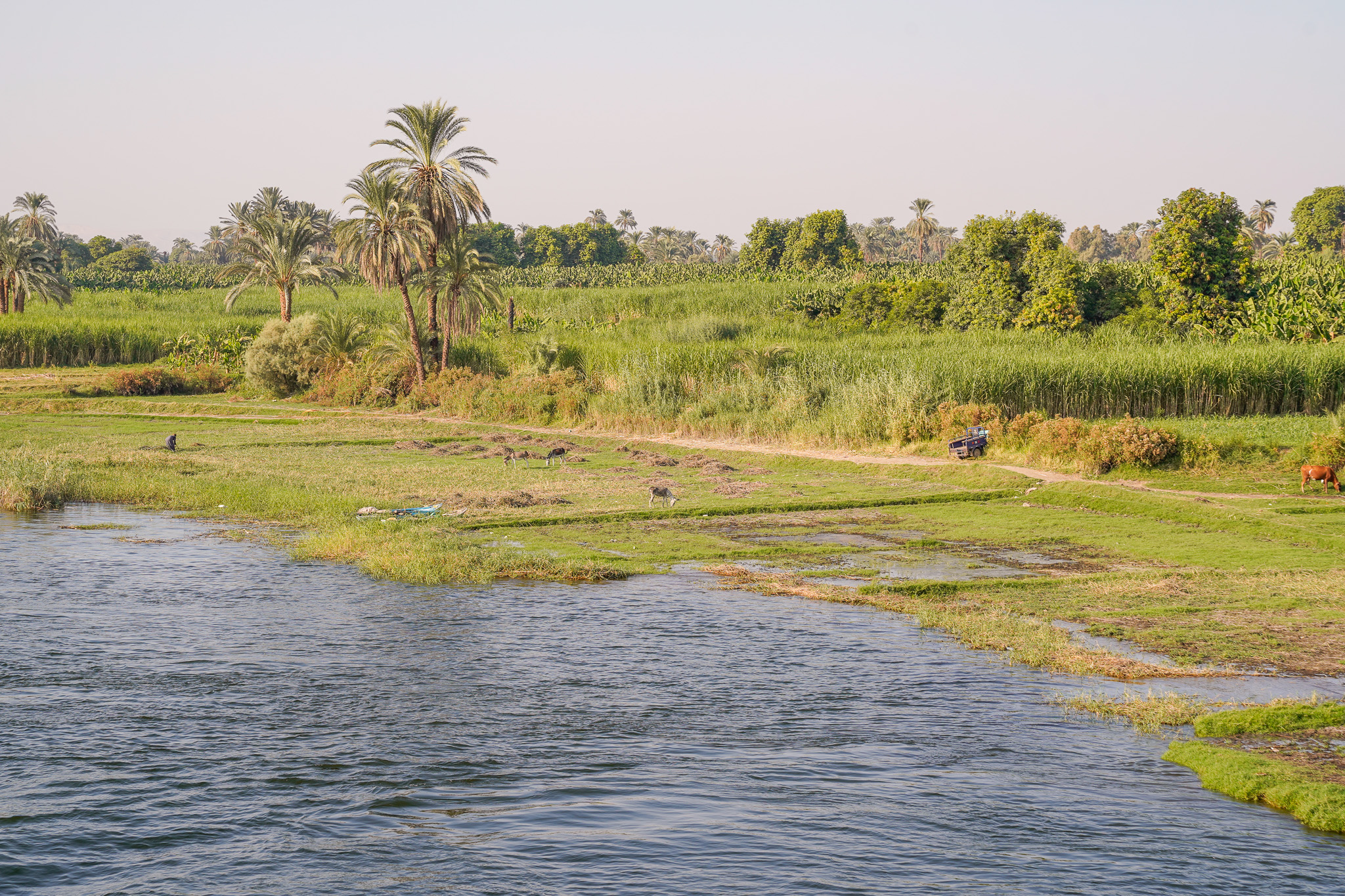
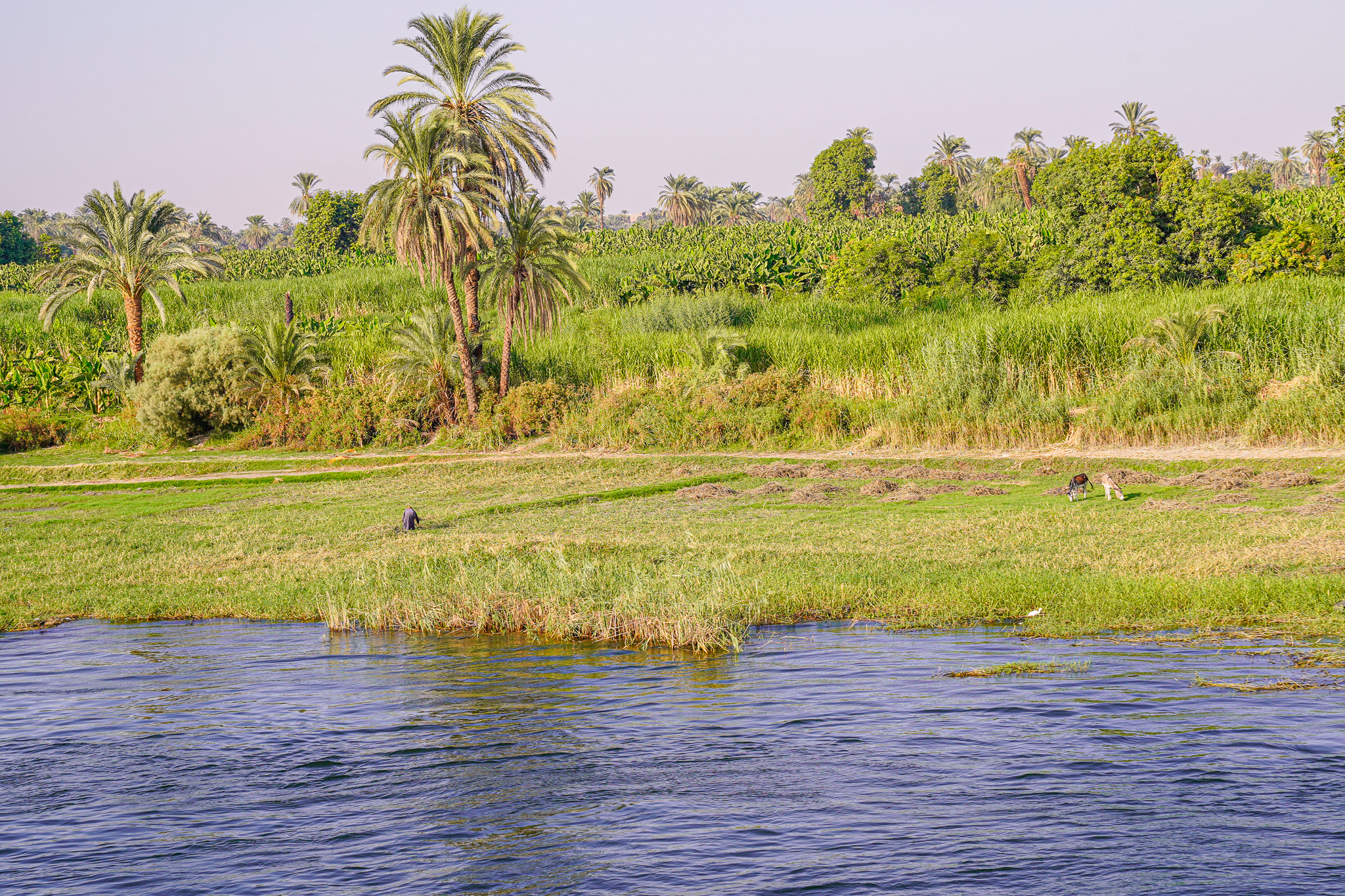
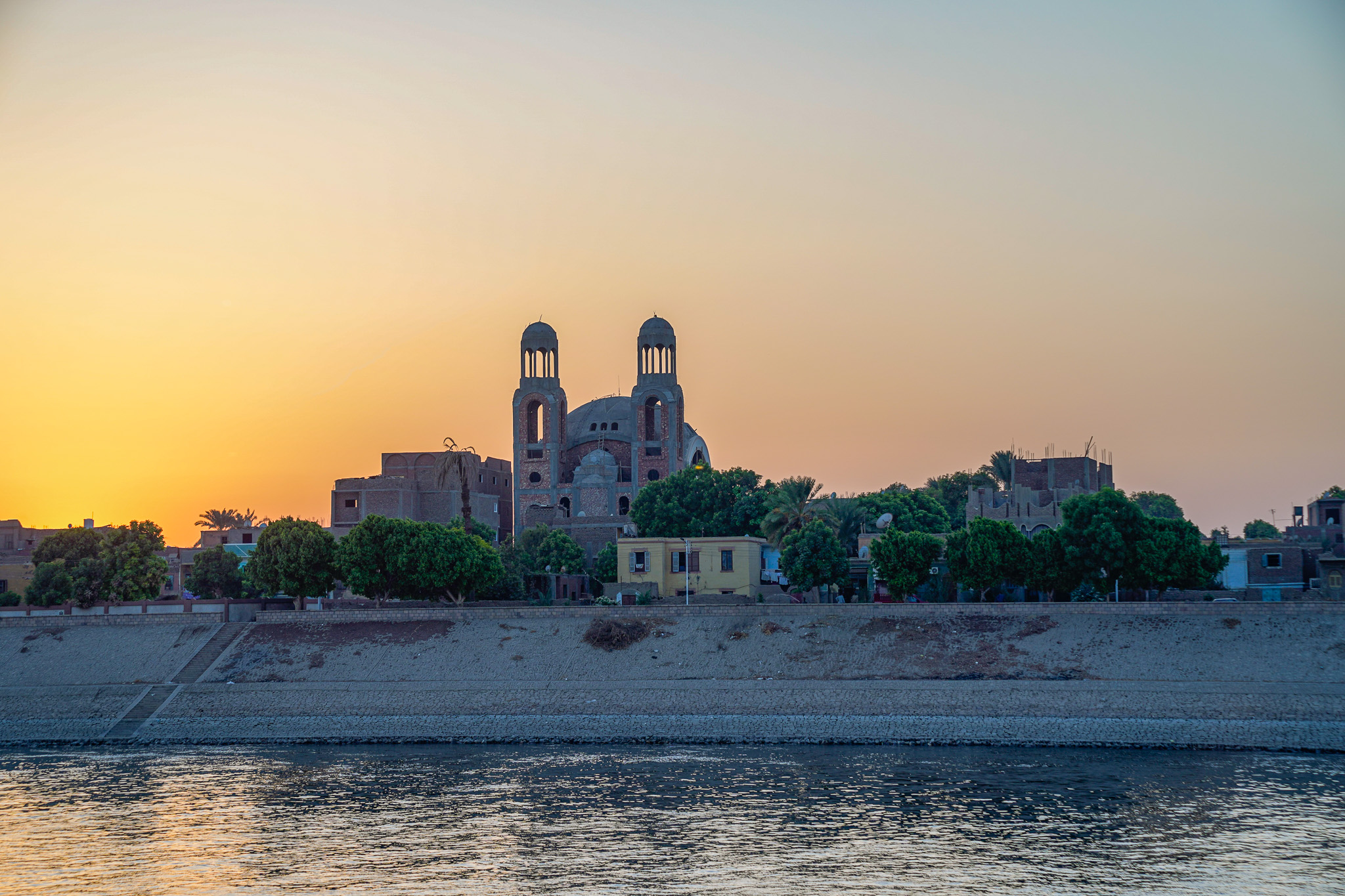
I visualize the map when I think of Upper and Lower Egypt. Lower Egypt is above since the Nile River flows from South to North. We sailed upriver from Luxor to Awan and downriver on the return. Sunrise and sunset on the fertile farms of the Nile Delta had me pondering ancient Egypt. The Pharaohs’ success depended on the Nile River’s seasonal flooding to provide enough crops to feed the people.
Cairo
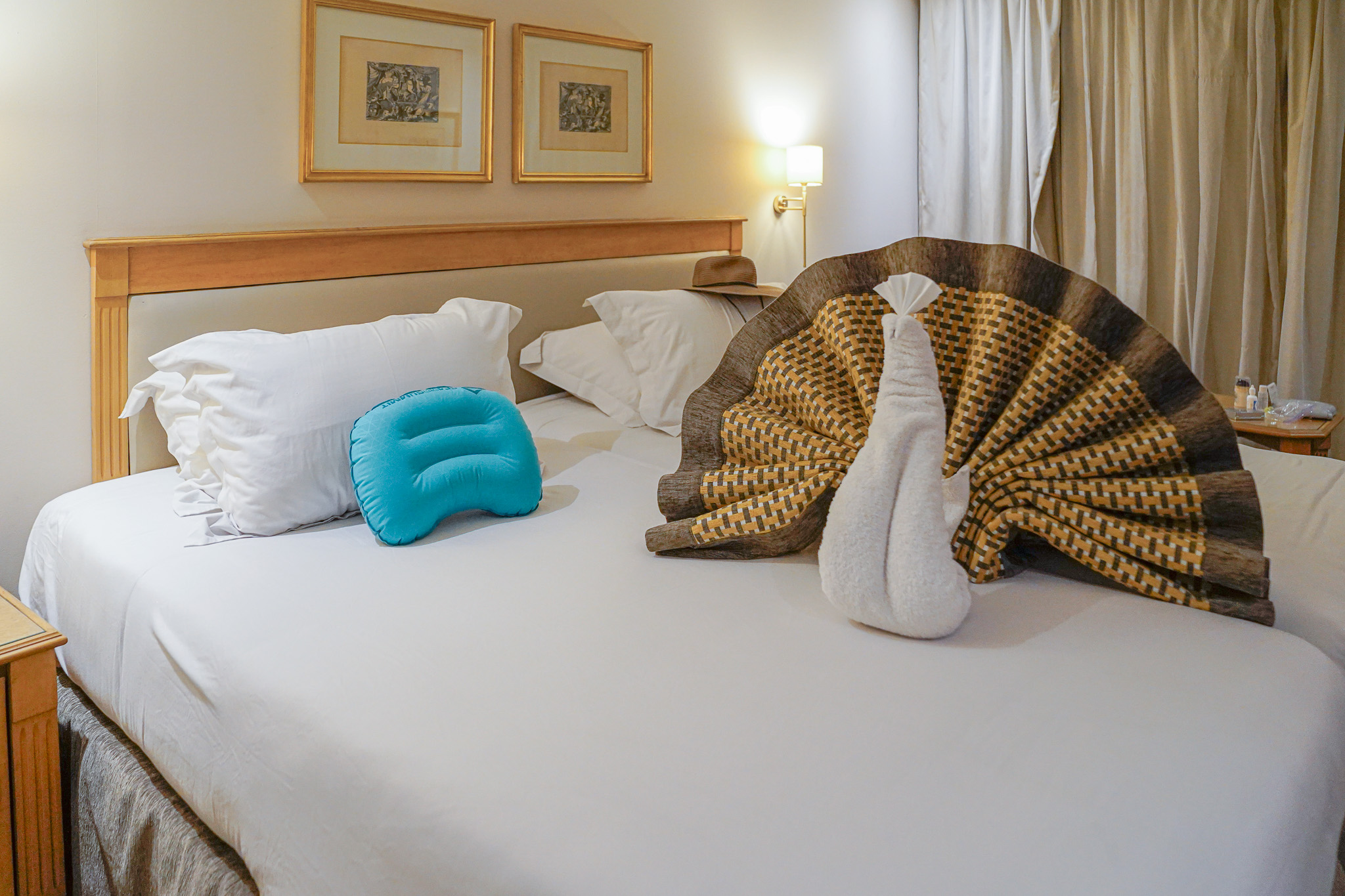
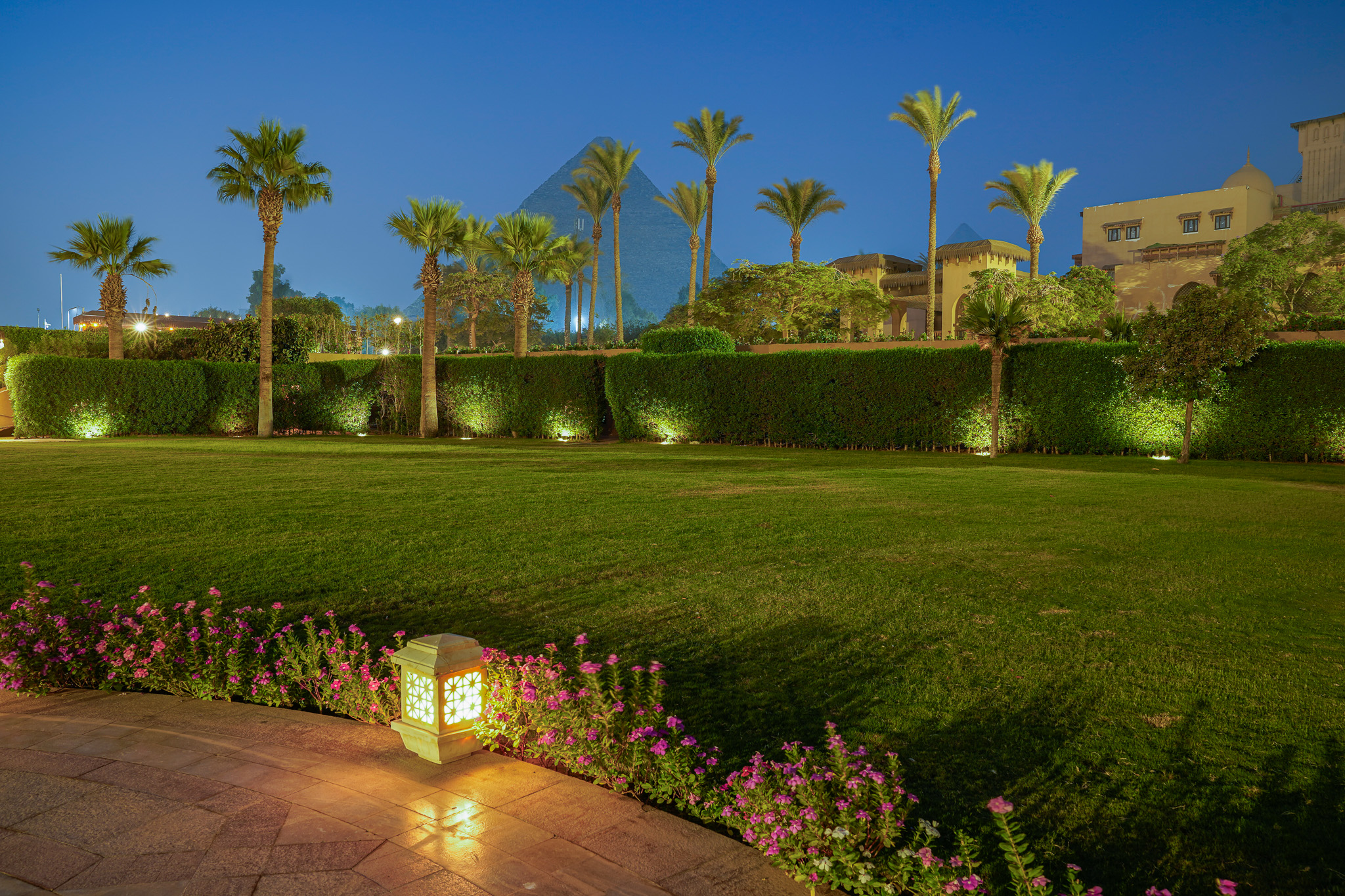
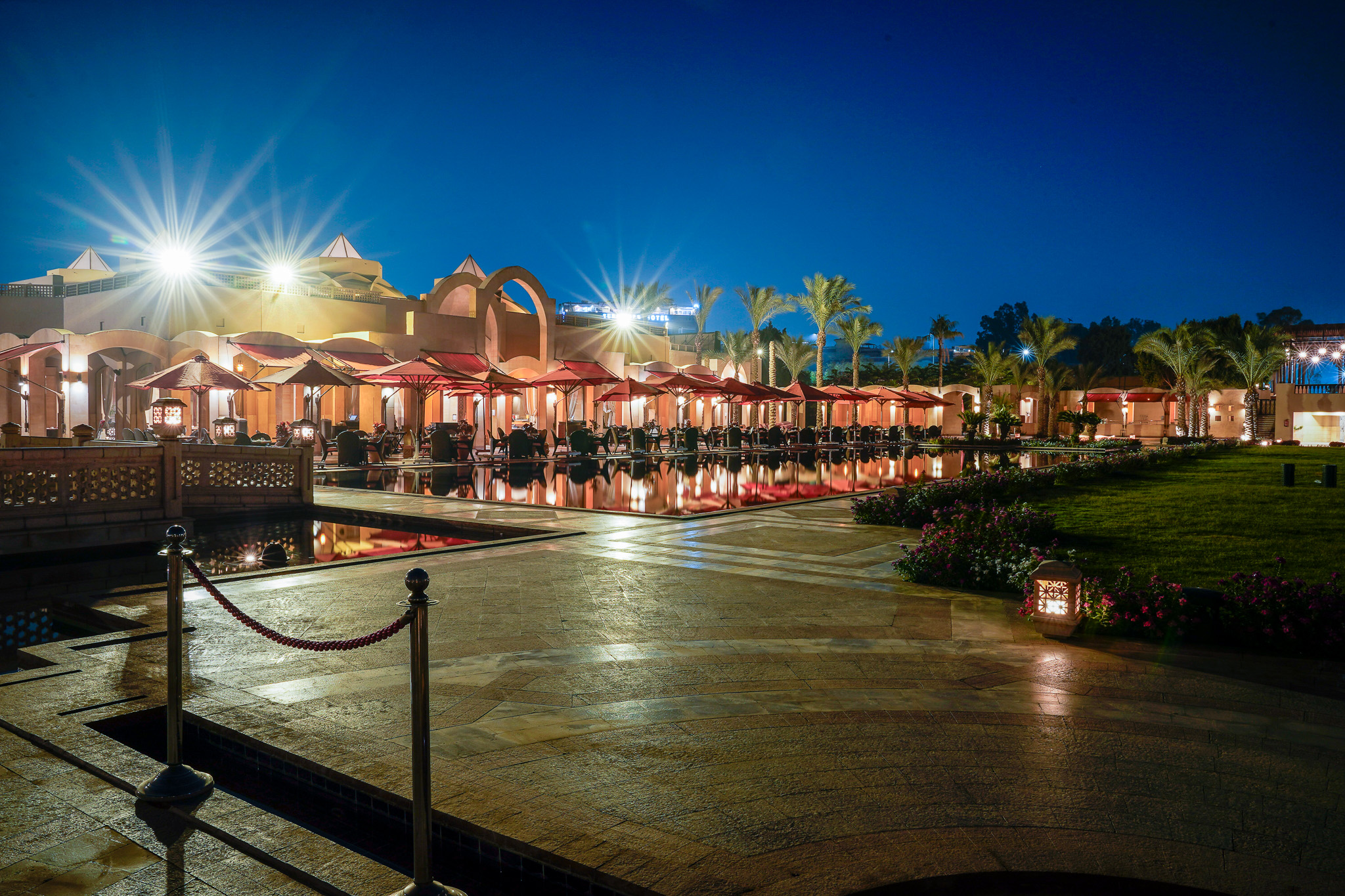
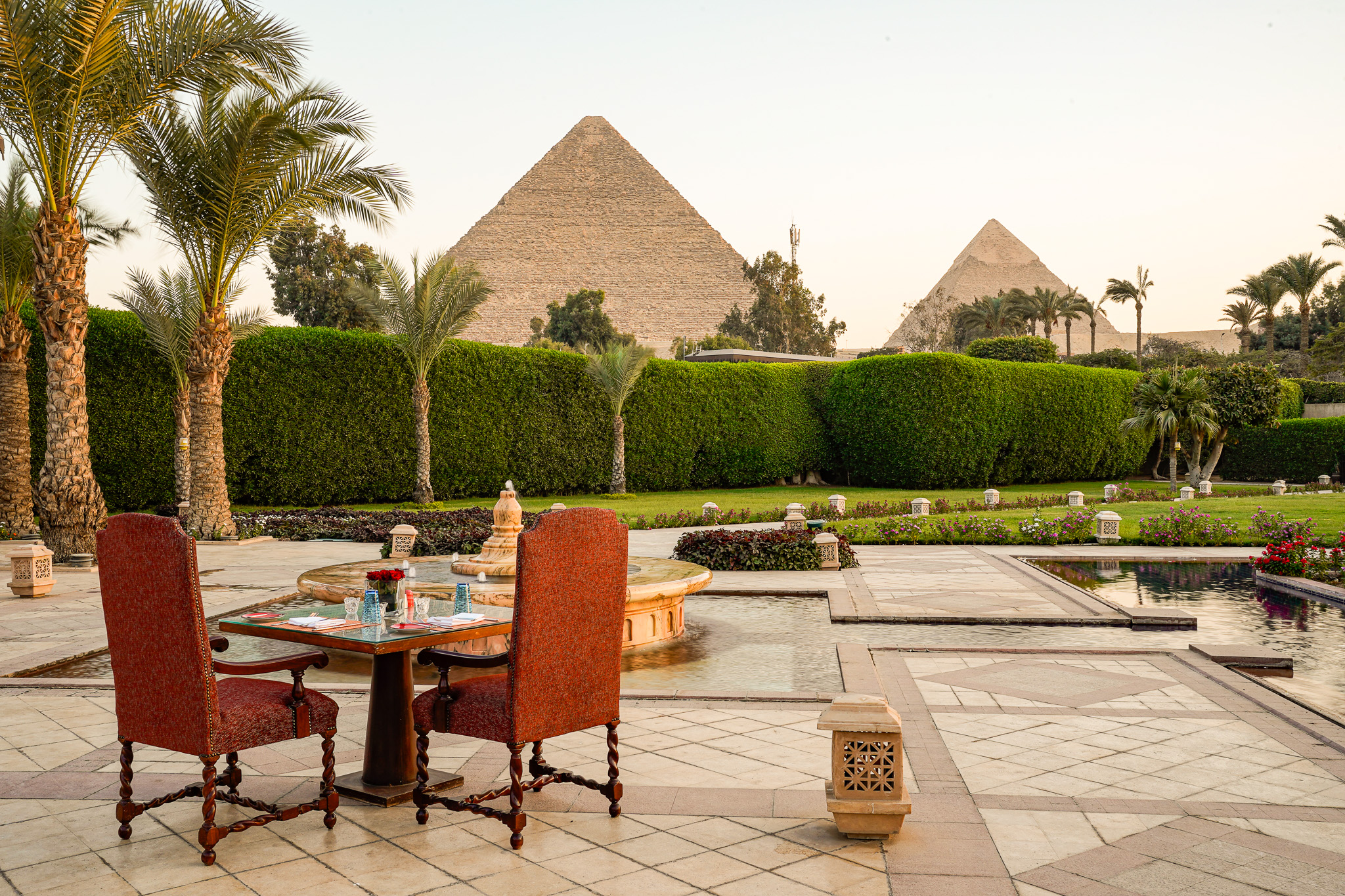
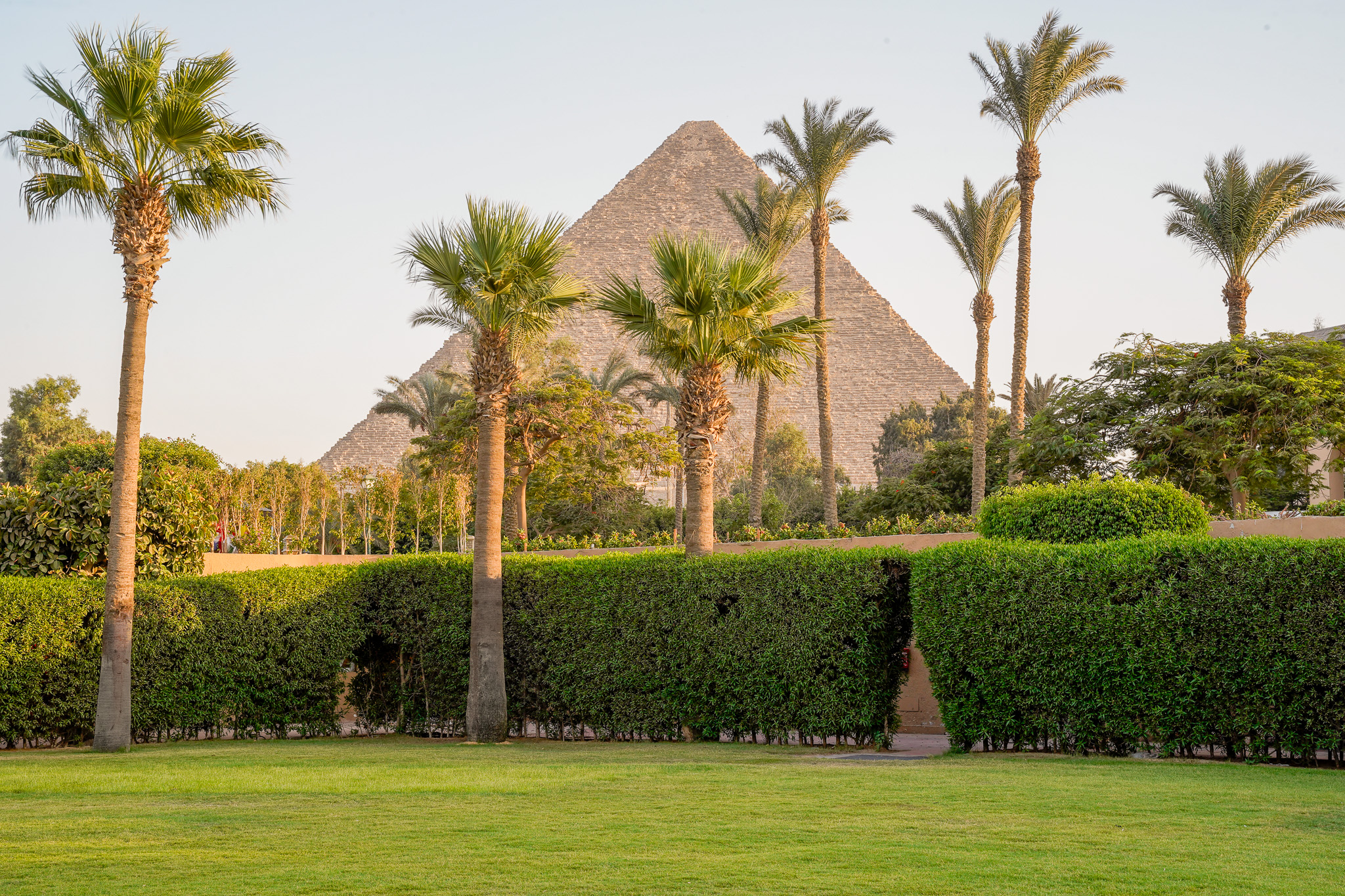
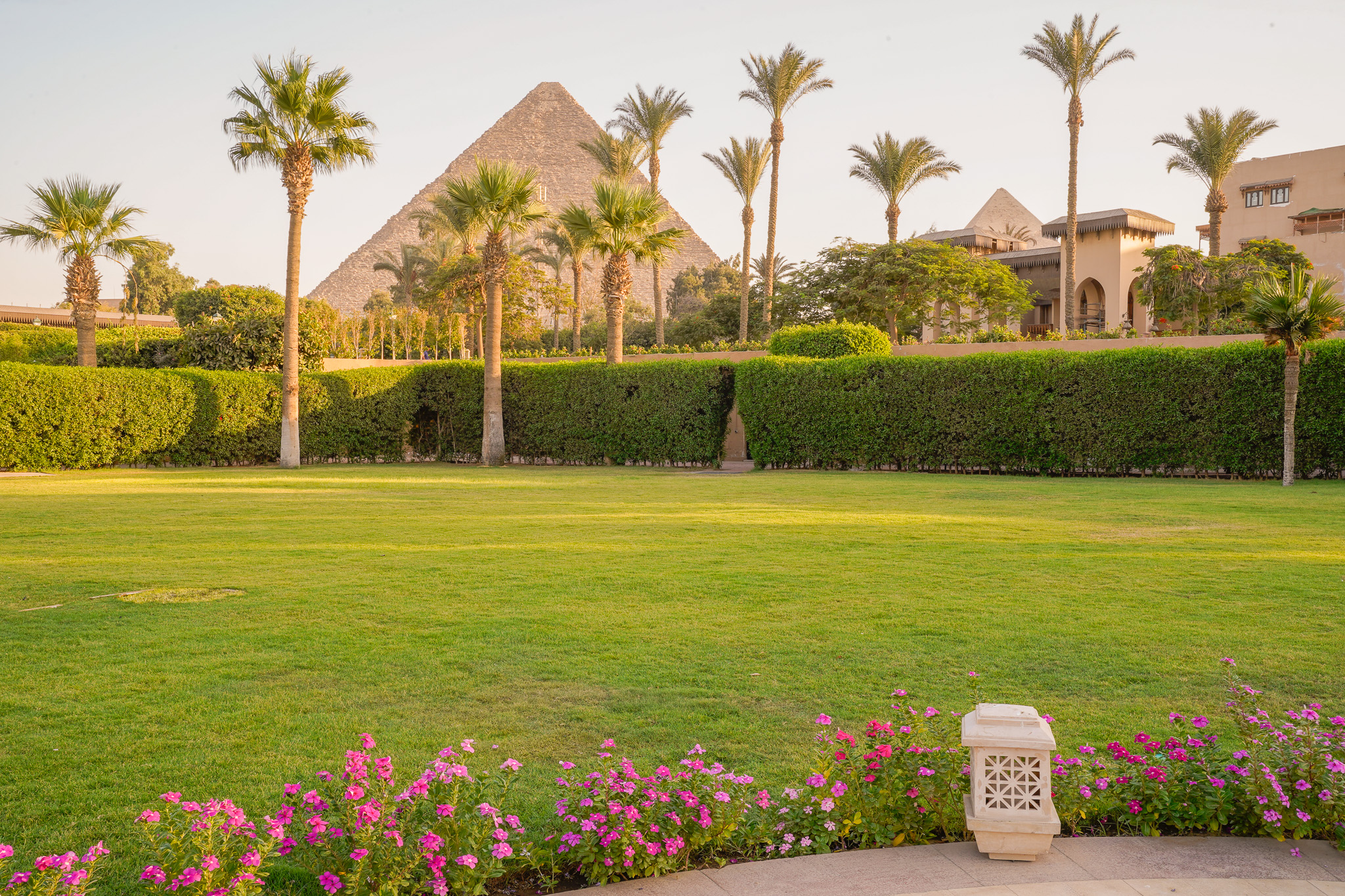
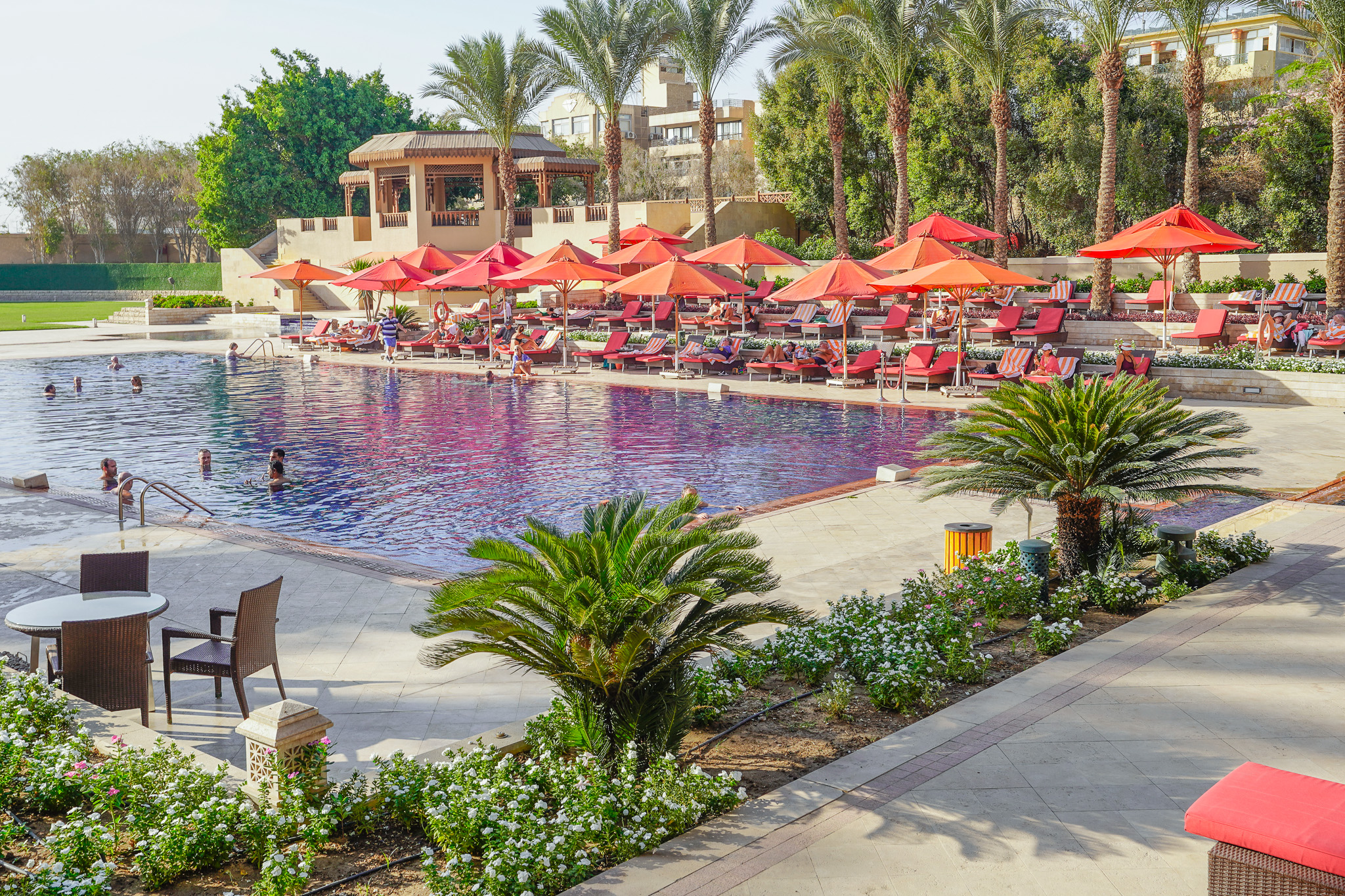
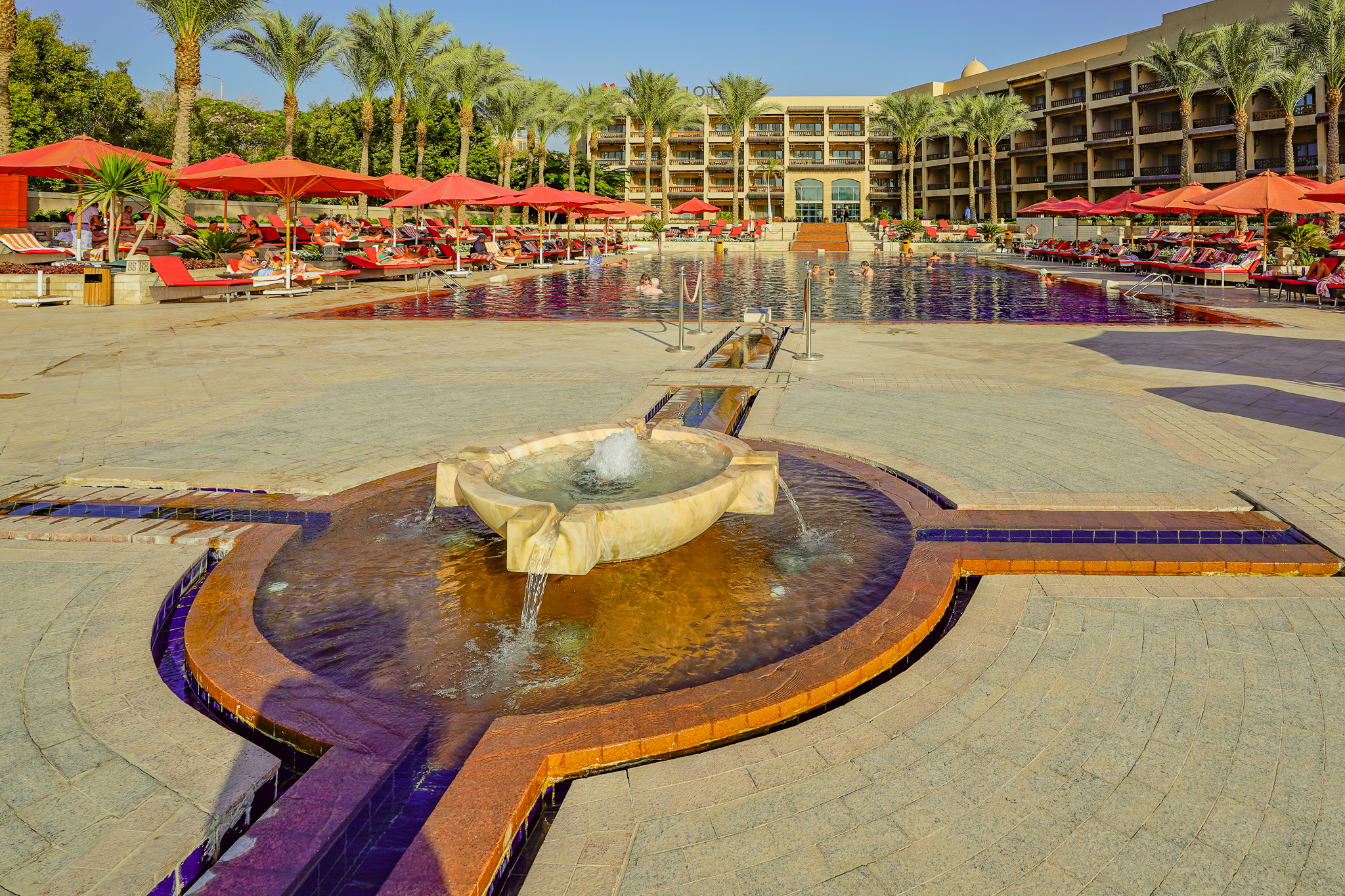
Mariott Mena House Cairo
The historic Mena House dates back to 1886, when it served first as a humble hunting lodge. It transformed throughout the years to meet the needs of the times: a palace during the opening of the Suez Canal, a military headquarters and hospital during WWII, and then a private retreat for the rich and famous. We stayed at Mena House for four days and, from there, visited pyramids and tombs in the area. We met renowned archaeologist Dr. Zai Hawass at Mena House and learned of the latest discoveries at Saqqara Necropolis, the central part of larger Memphis.
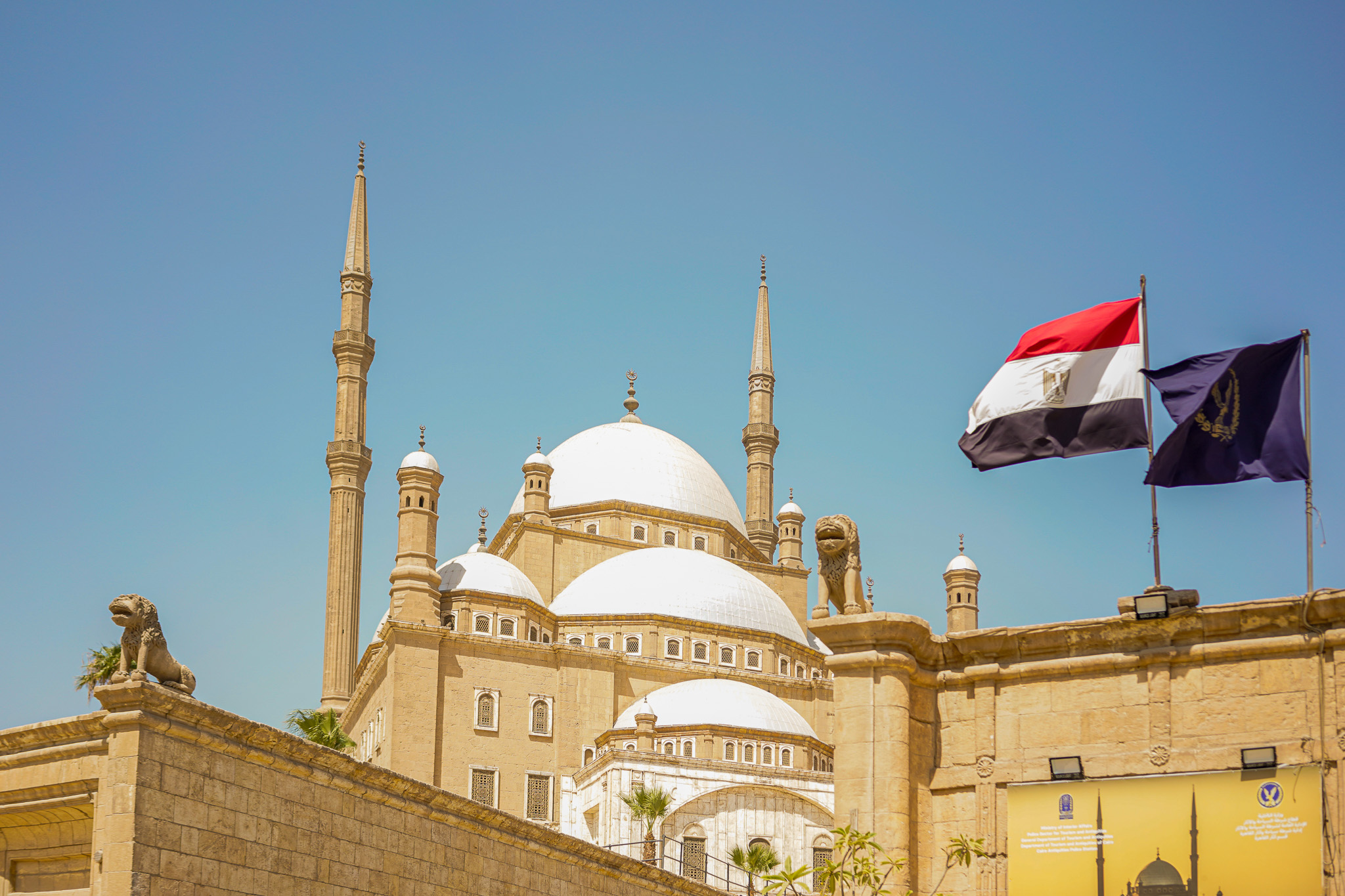
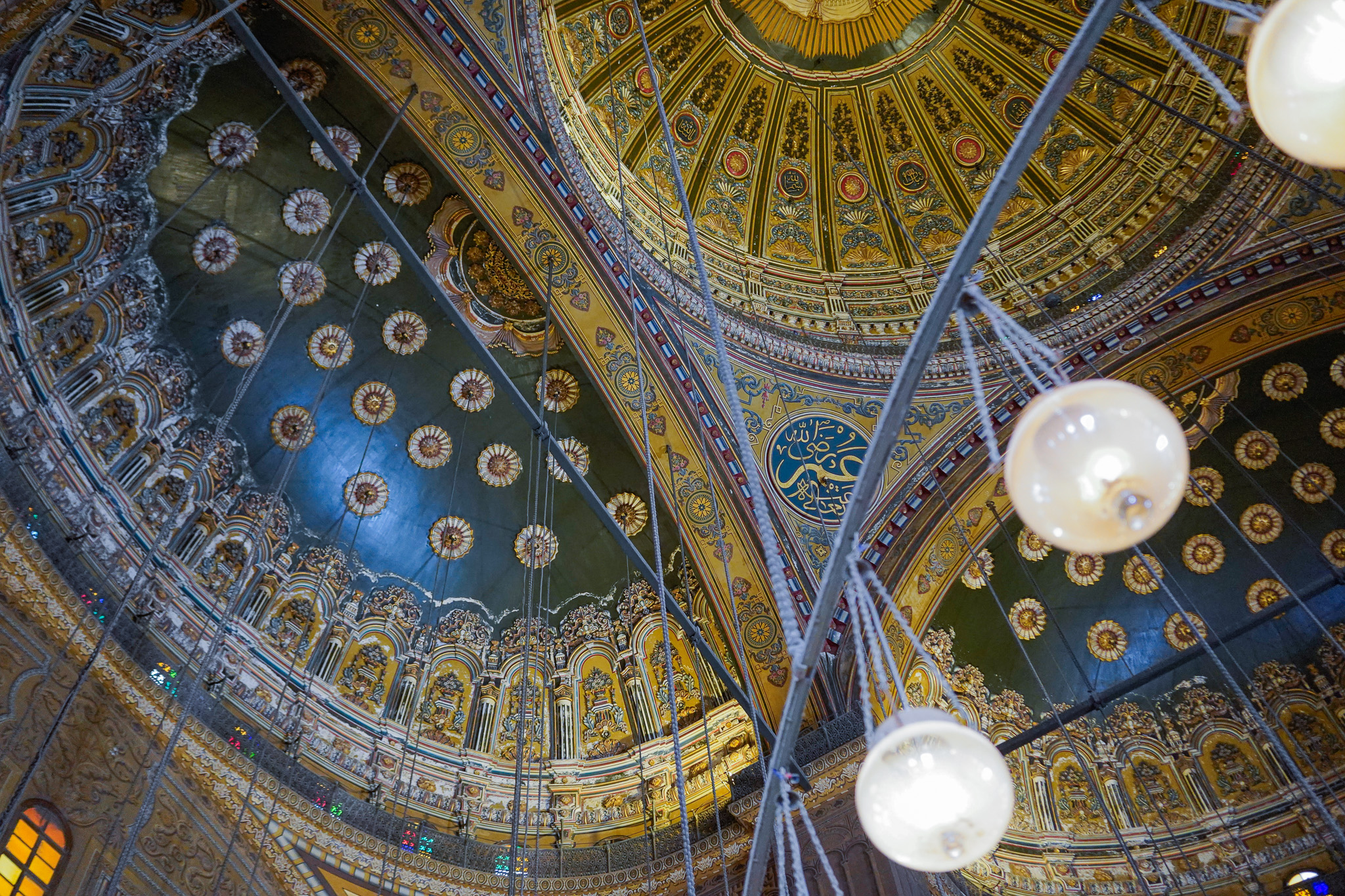
Muhammad Ali Mosque
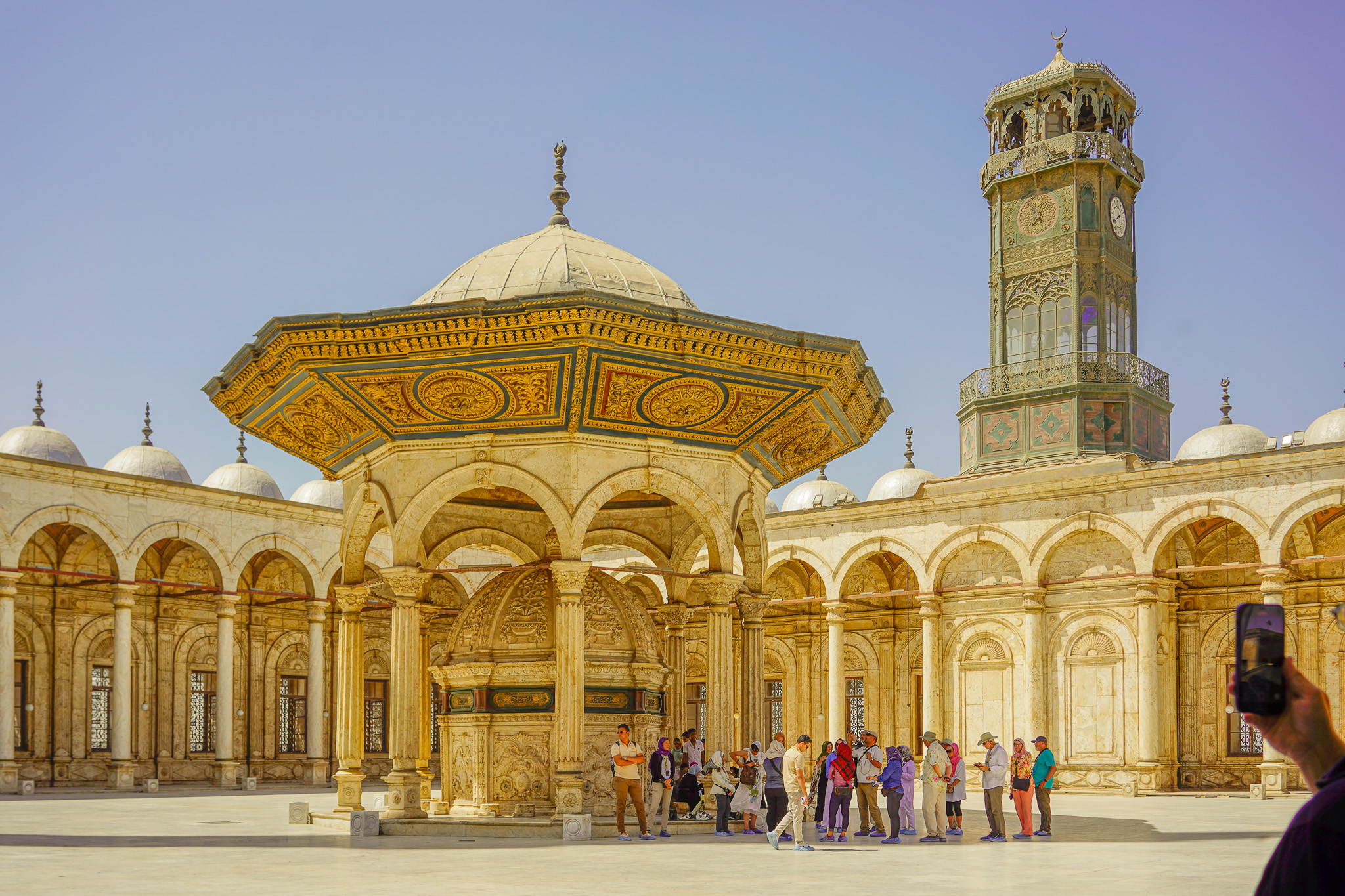
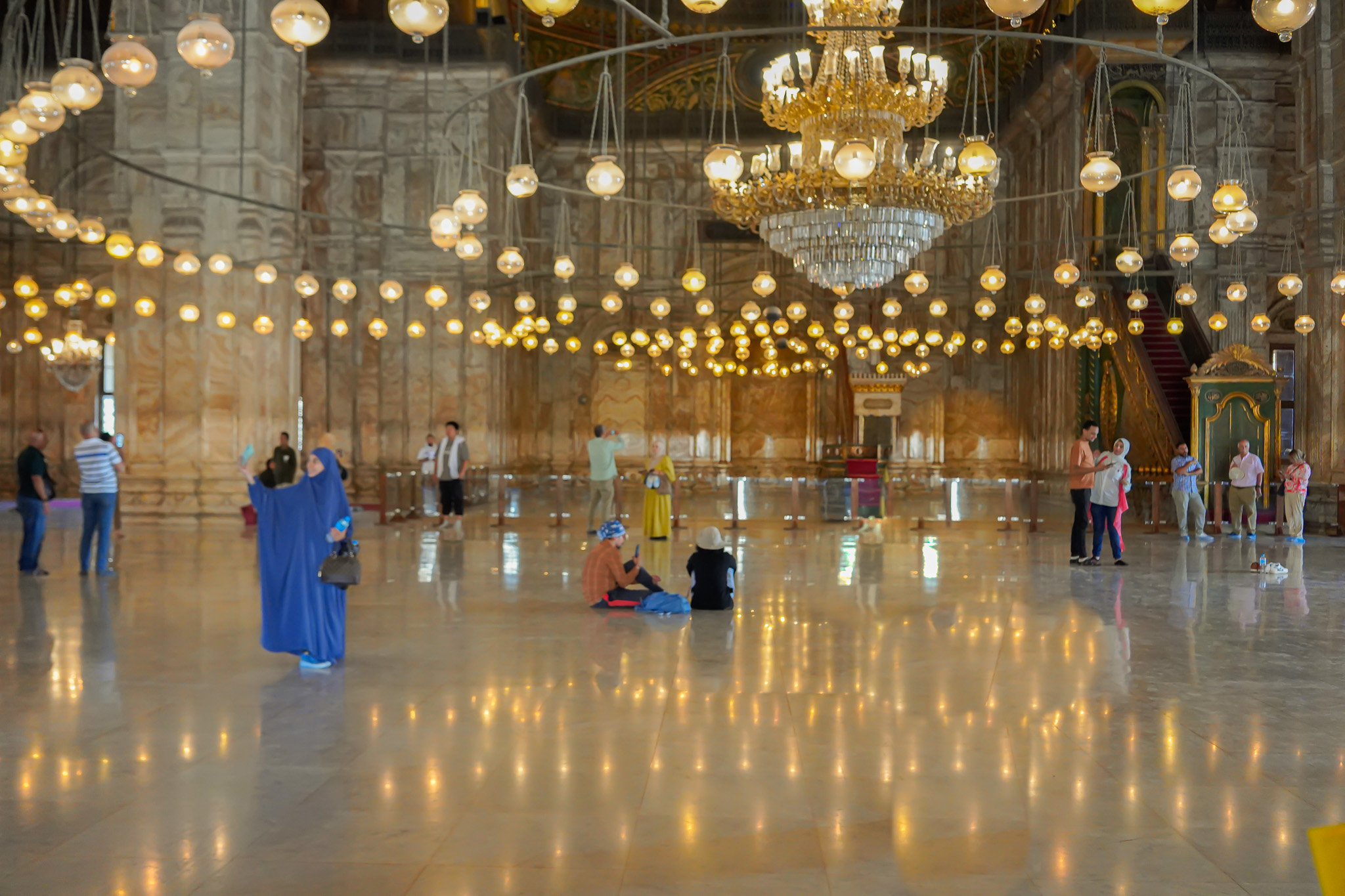
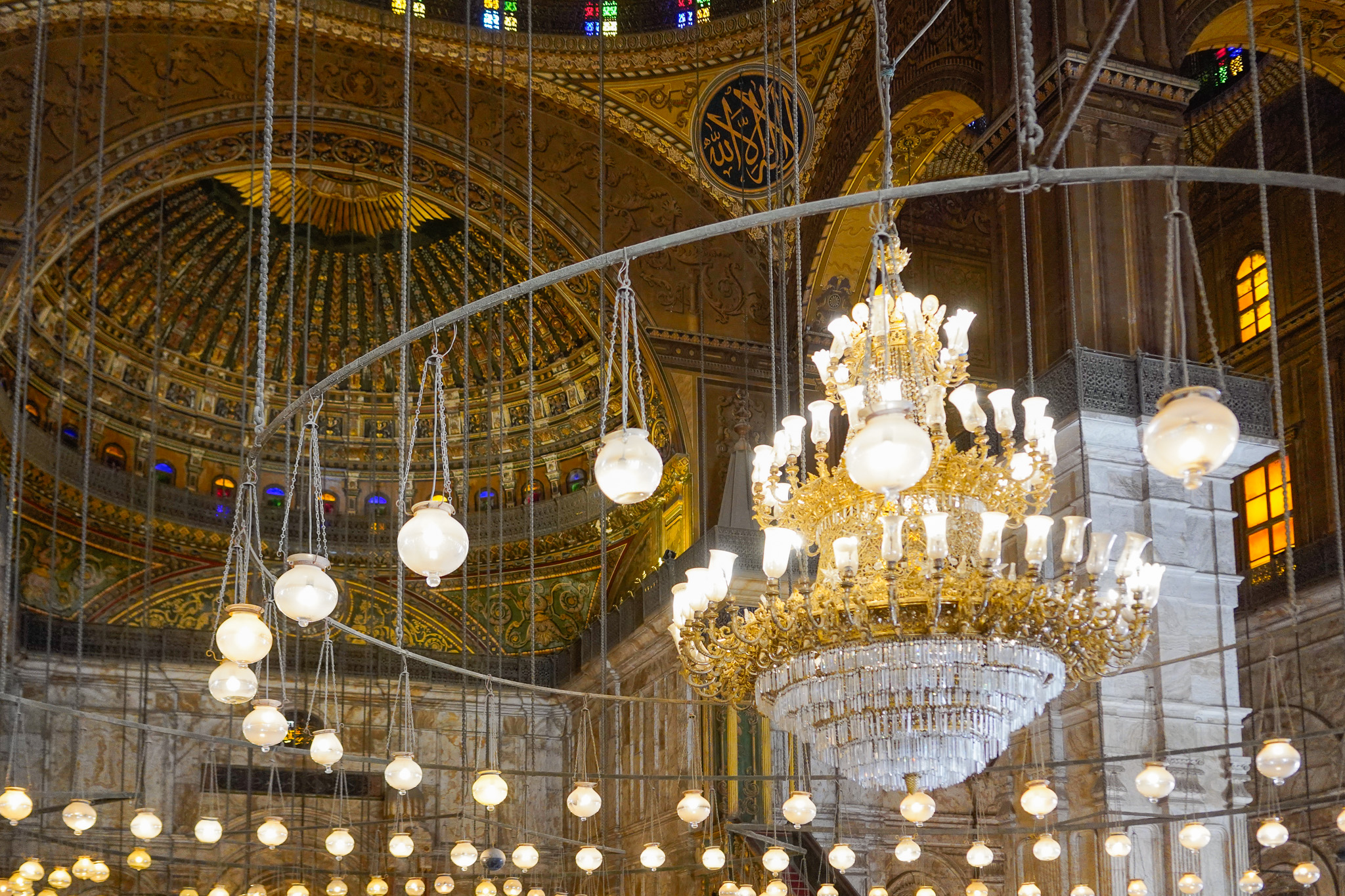
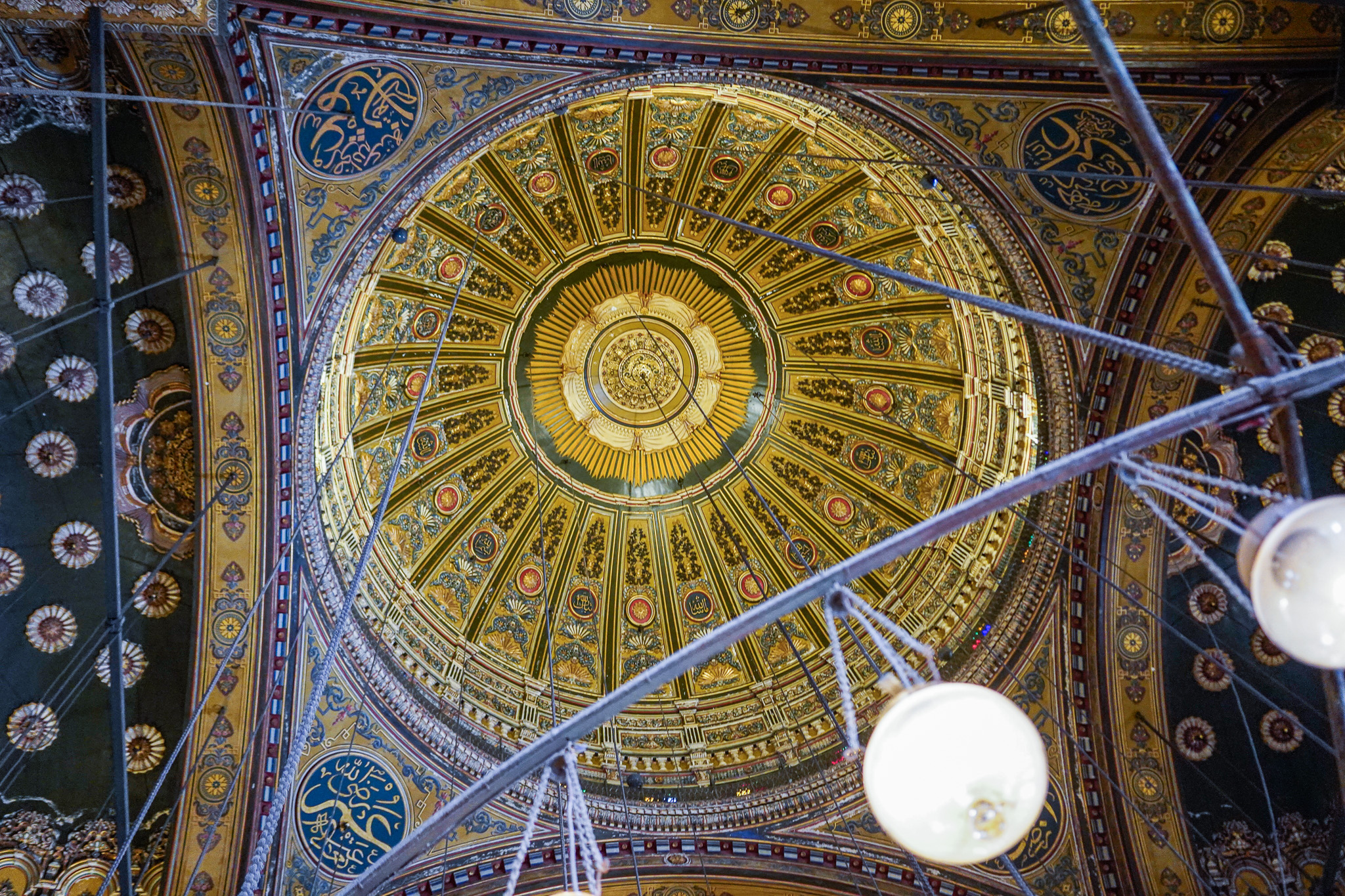
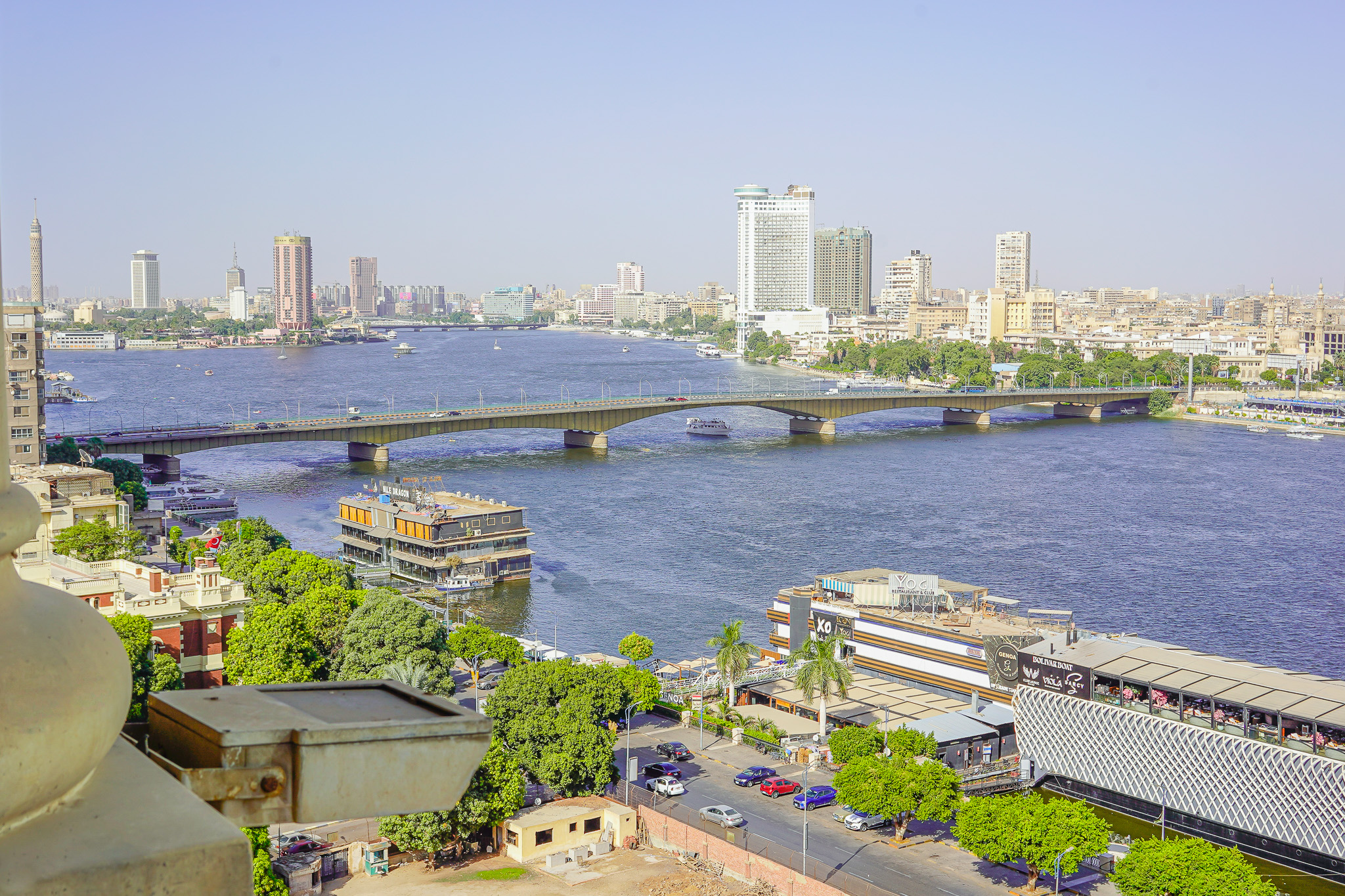
View of the city from the Four Seasons Hotel Cairo
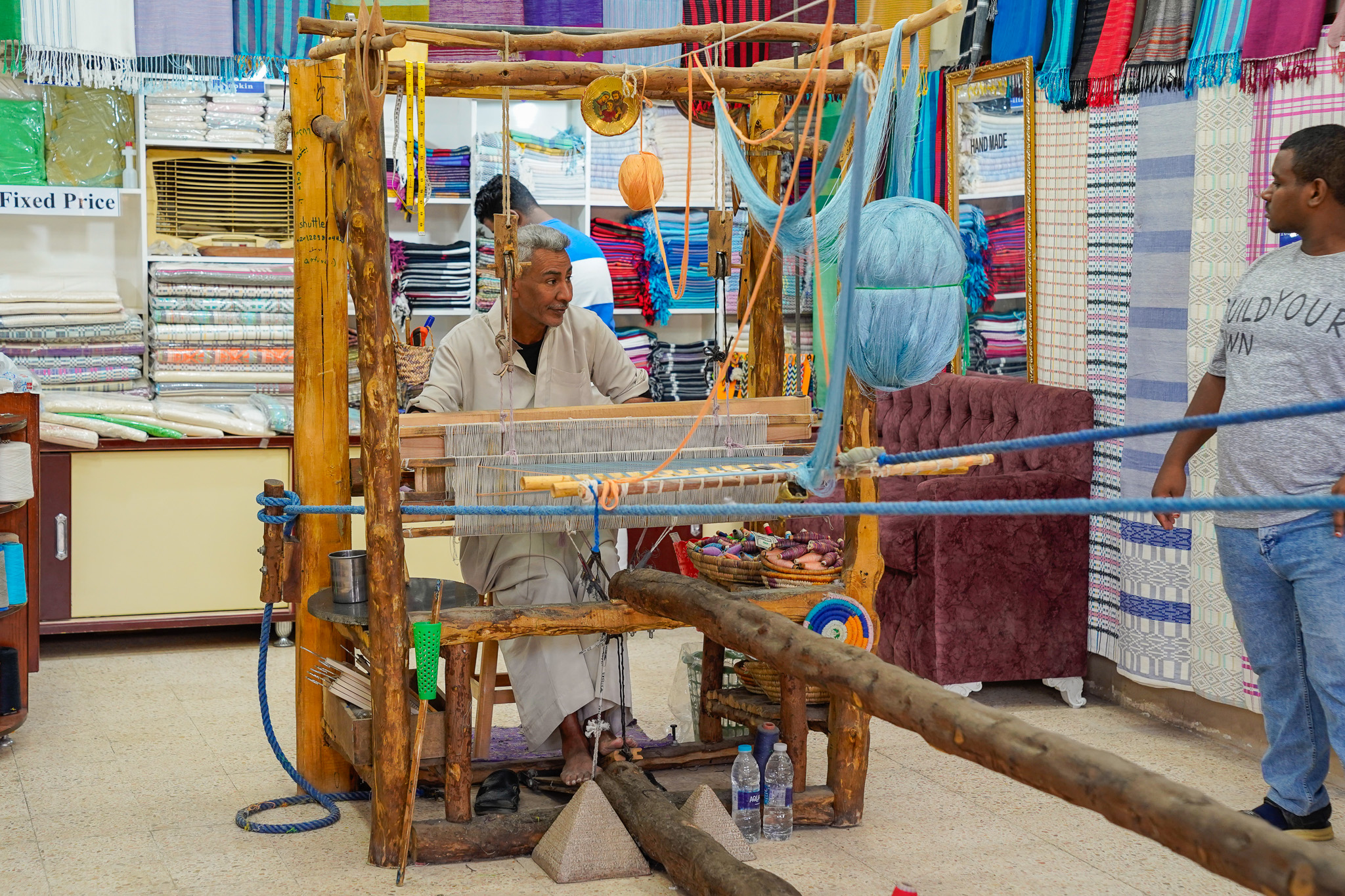
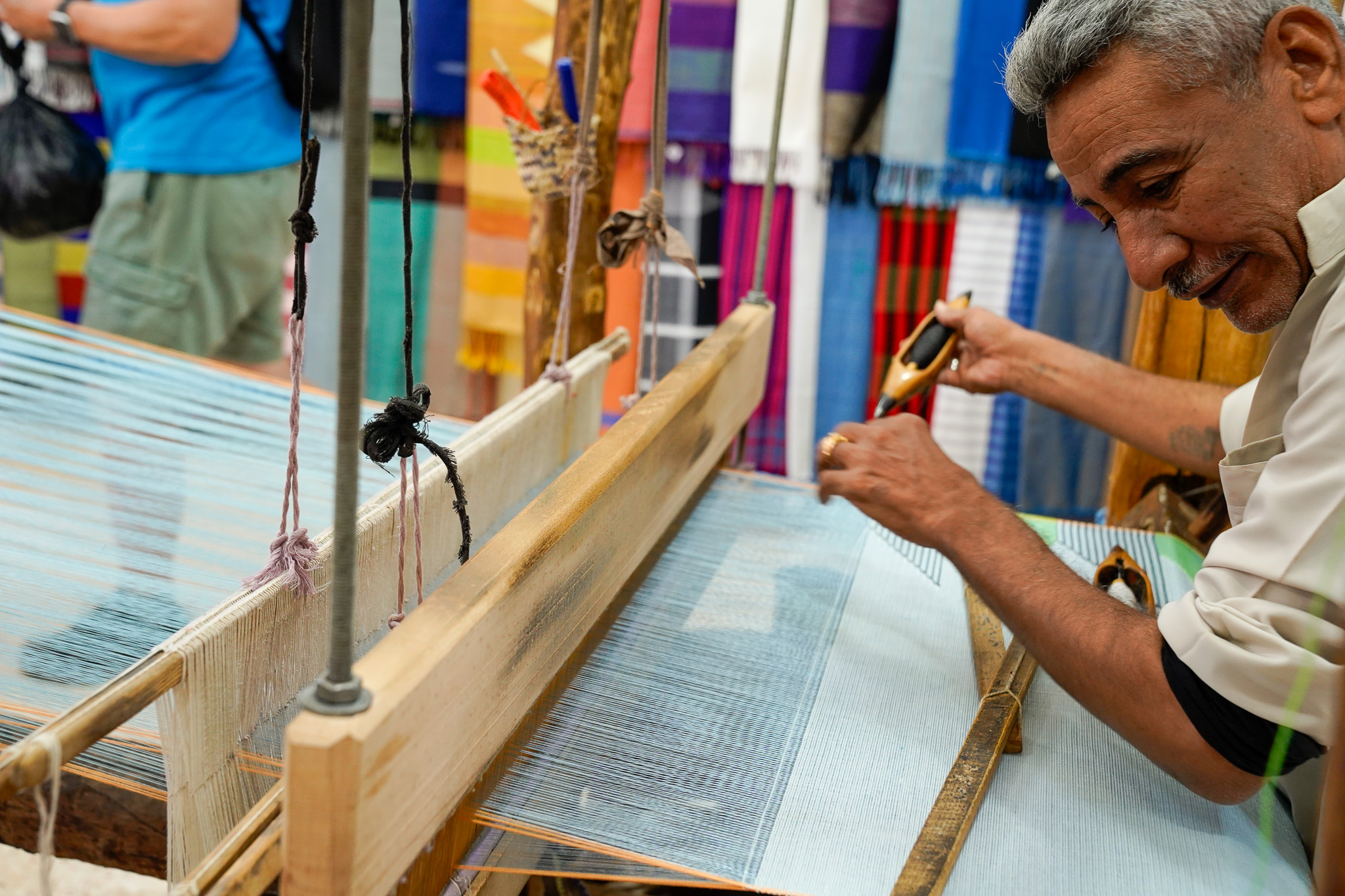
The People
My greatest pleasure as a photographer is to take pictures of people. But it can be awkward on a fast-moving trip, with little time to engage. Ethical treatment is the key to a successful outcome. Ask permission first and offer a tip! Photography guides often prearrange consent from the subjects or hire models. If I can’t obtain permission, I try to capture the person looking away from the camera or in the background. Blurring the faces in post-production is another strategy. Although I love pictures of children, I don’t use them unless they are far away, looking away, or I blur their faces later.
More often than not, people love to have their pictures taken. If they ask, I try to get a good picture and give them a copy or at least show it to them.
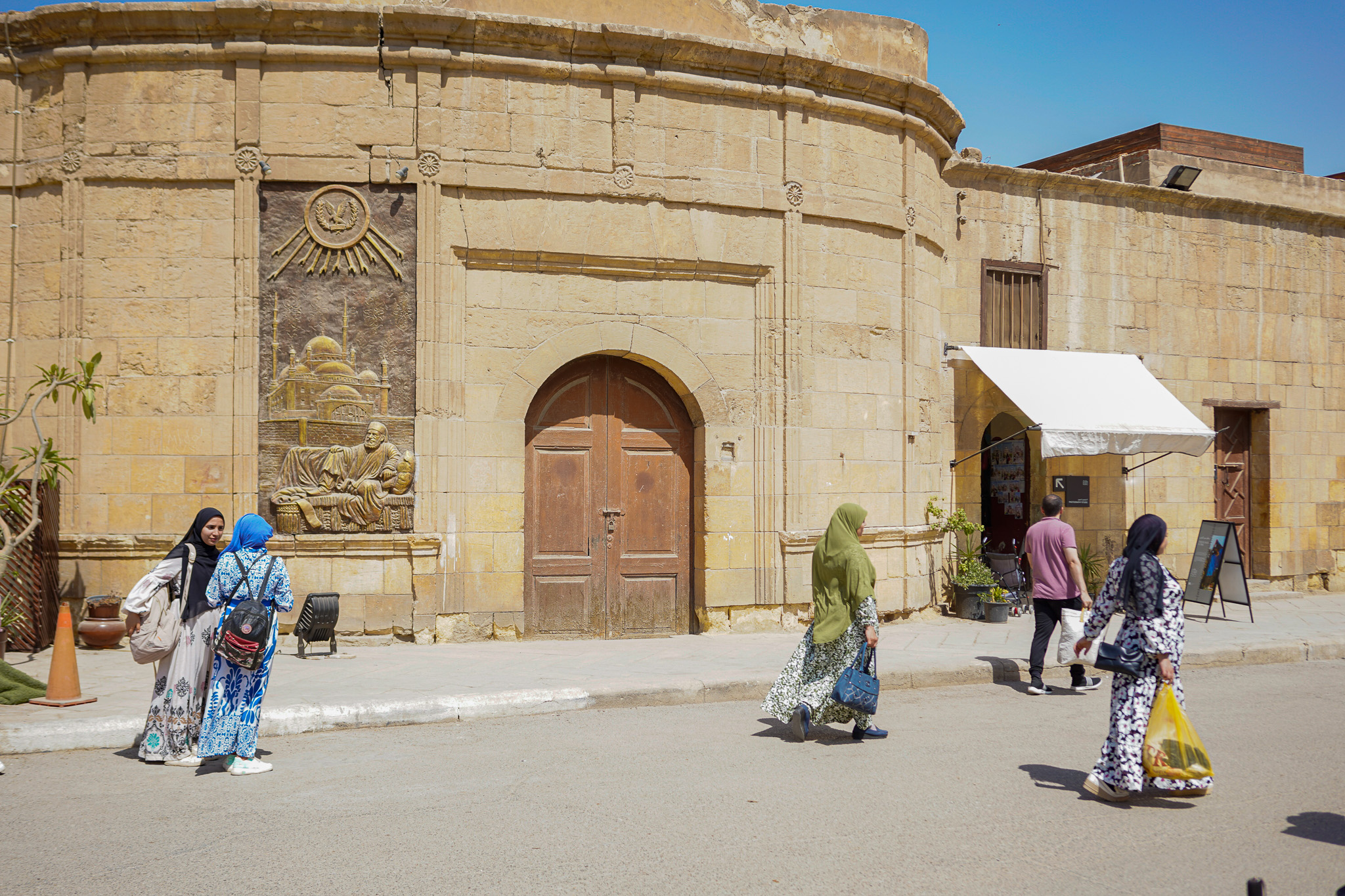
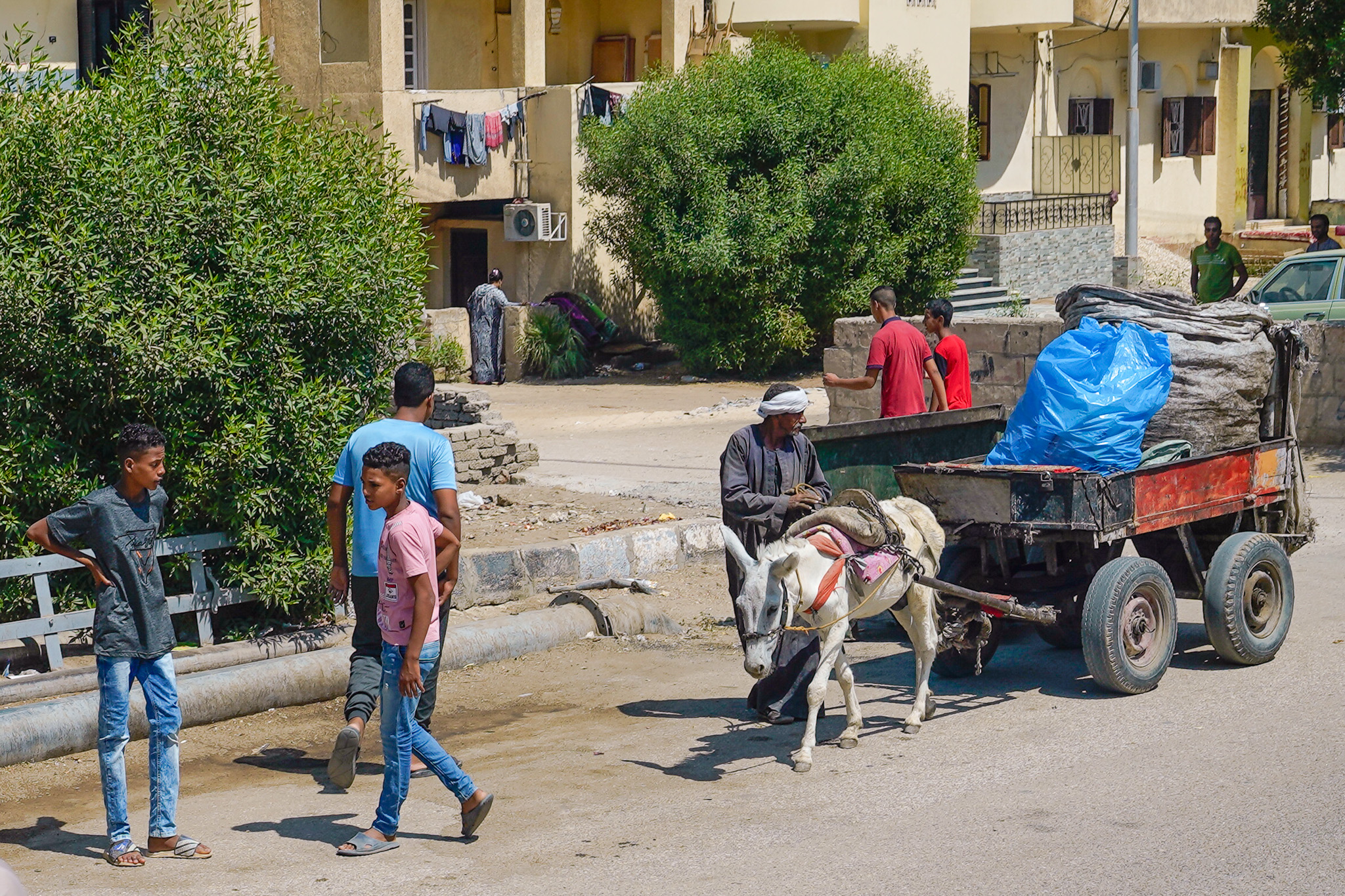
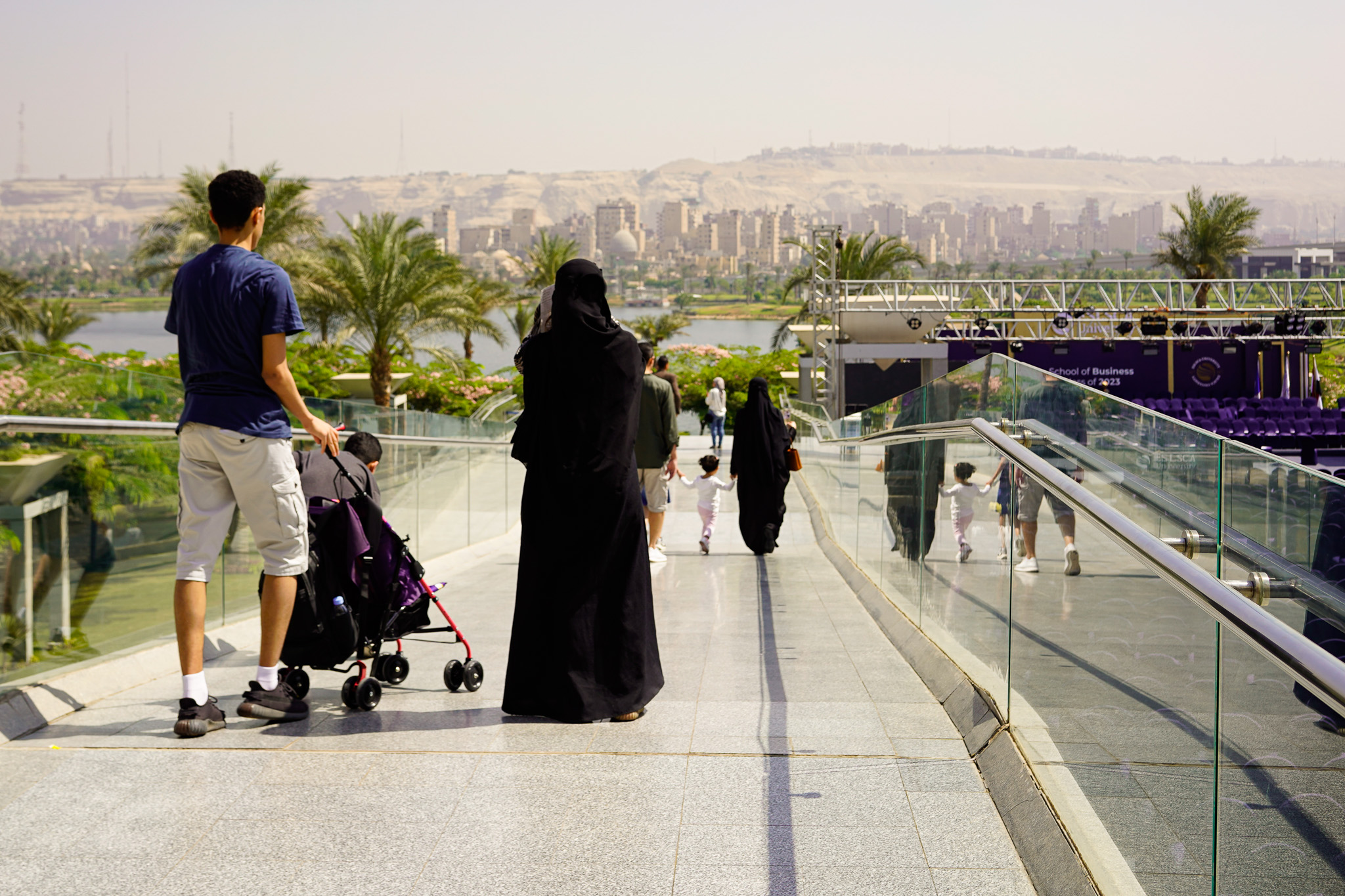
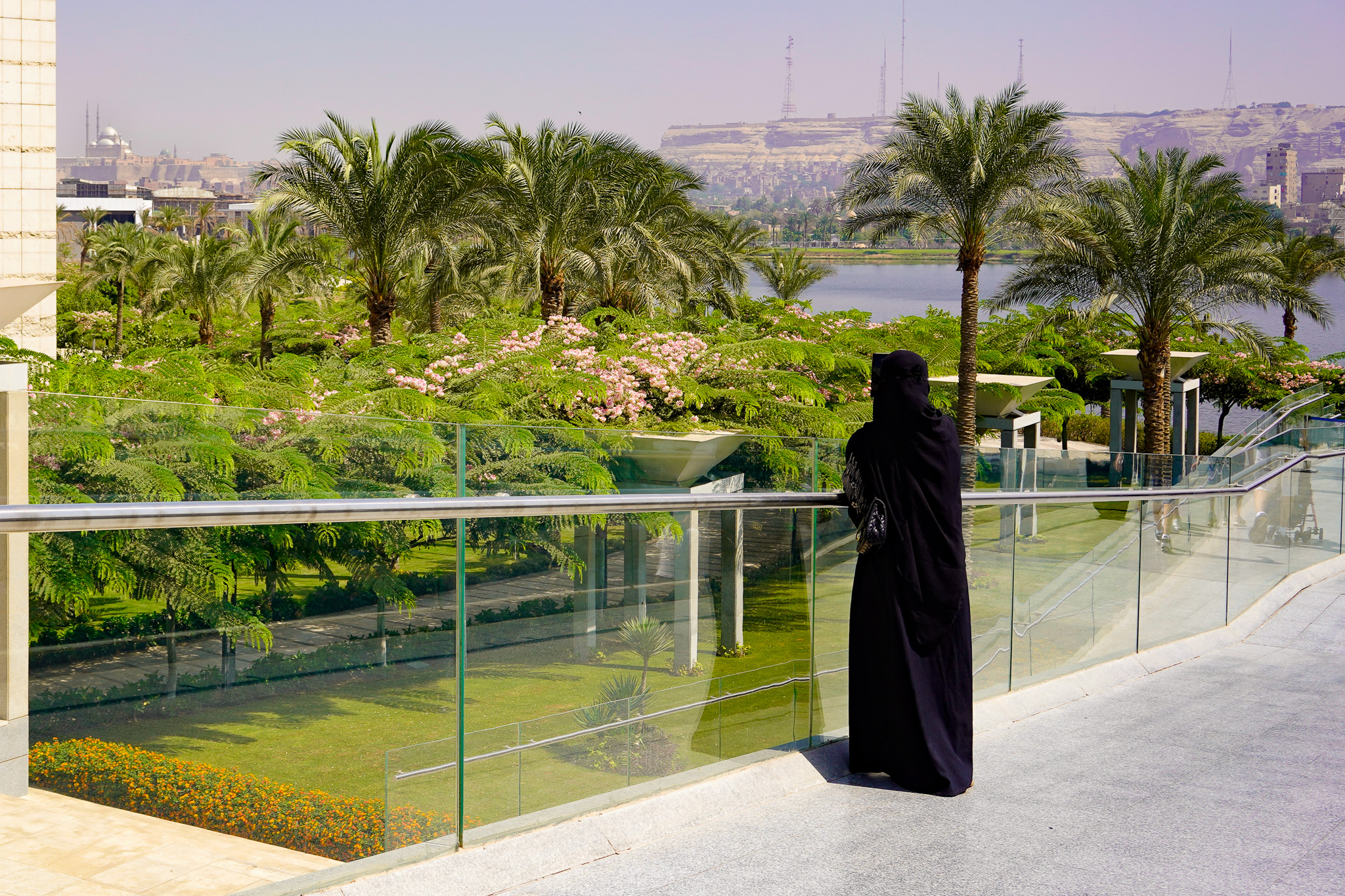
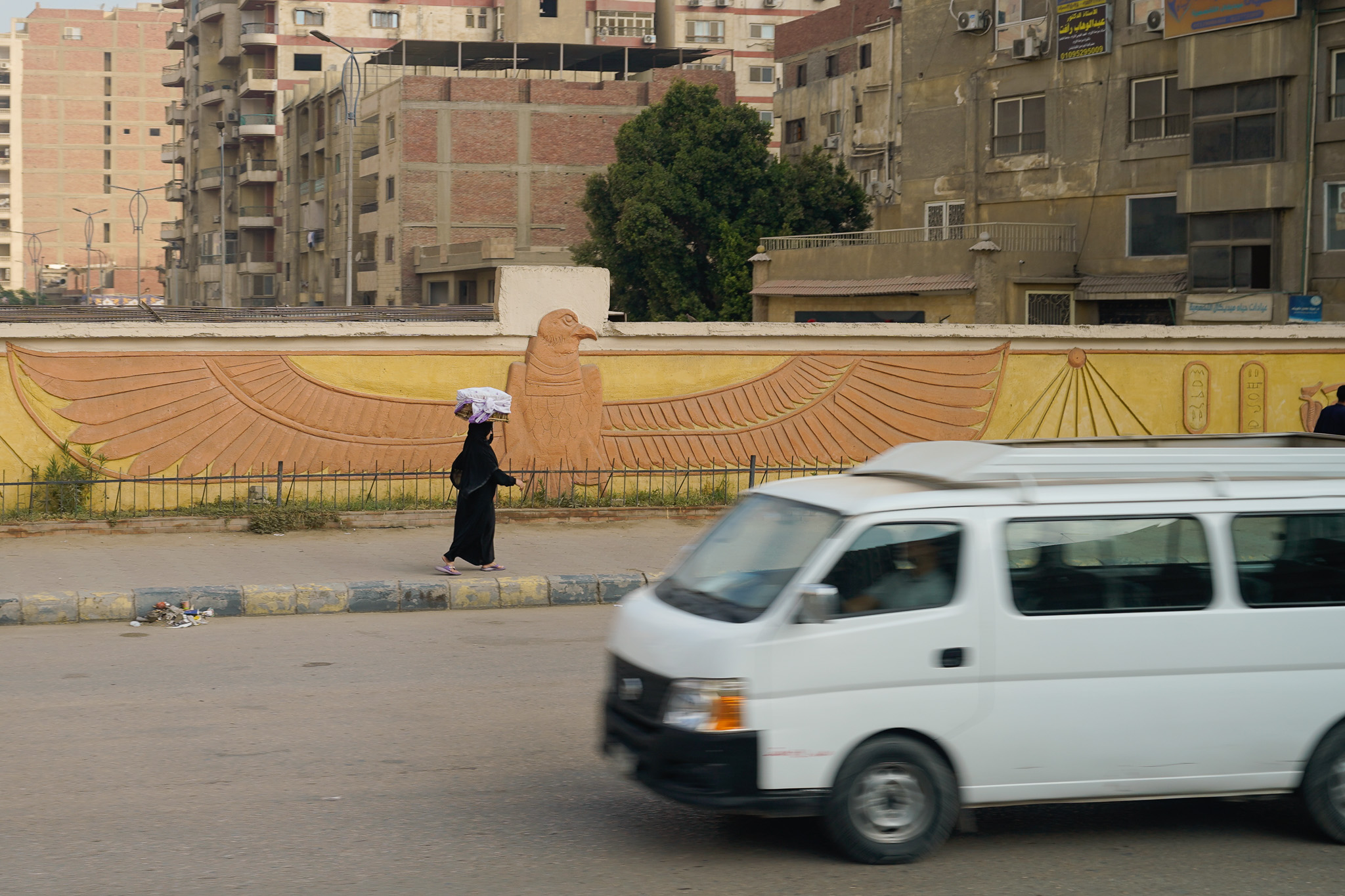
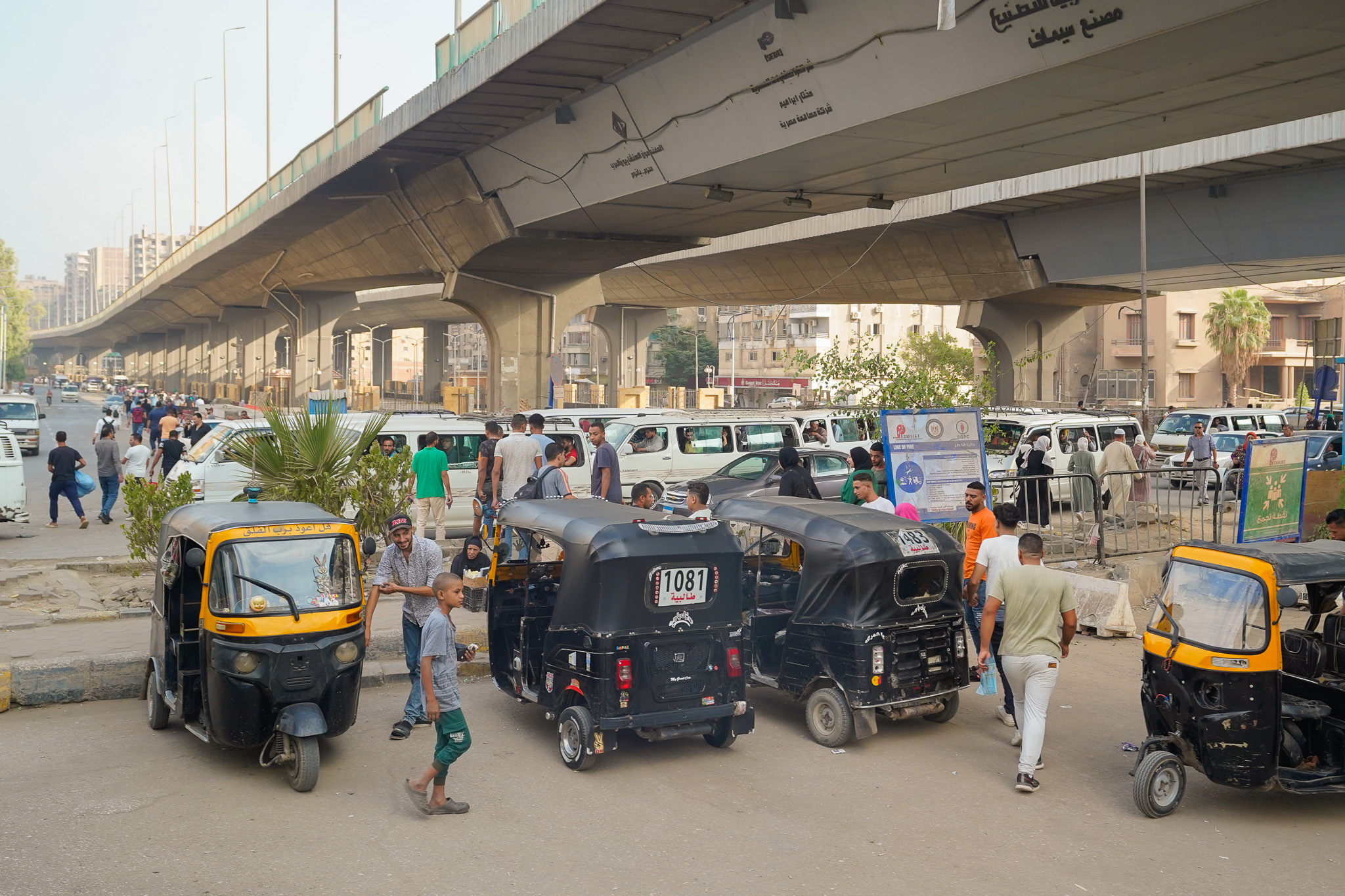
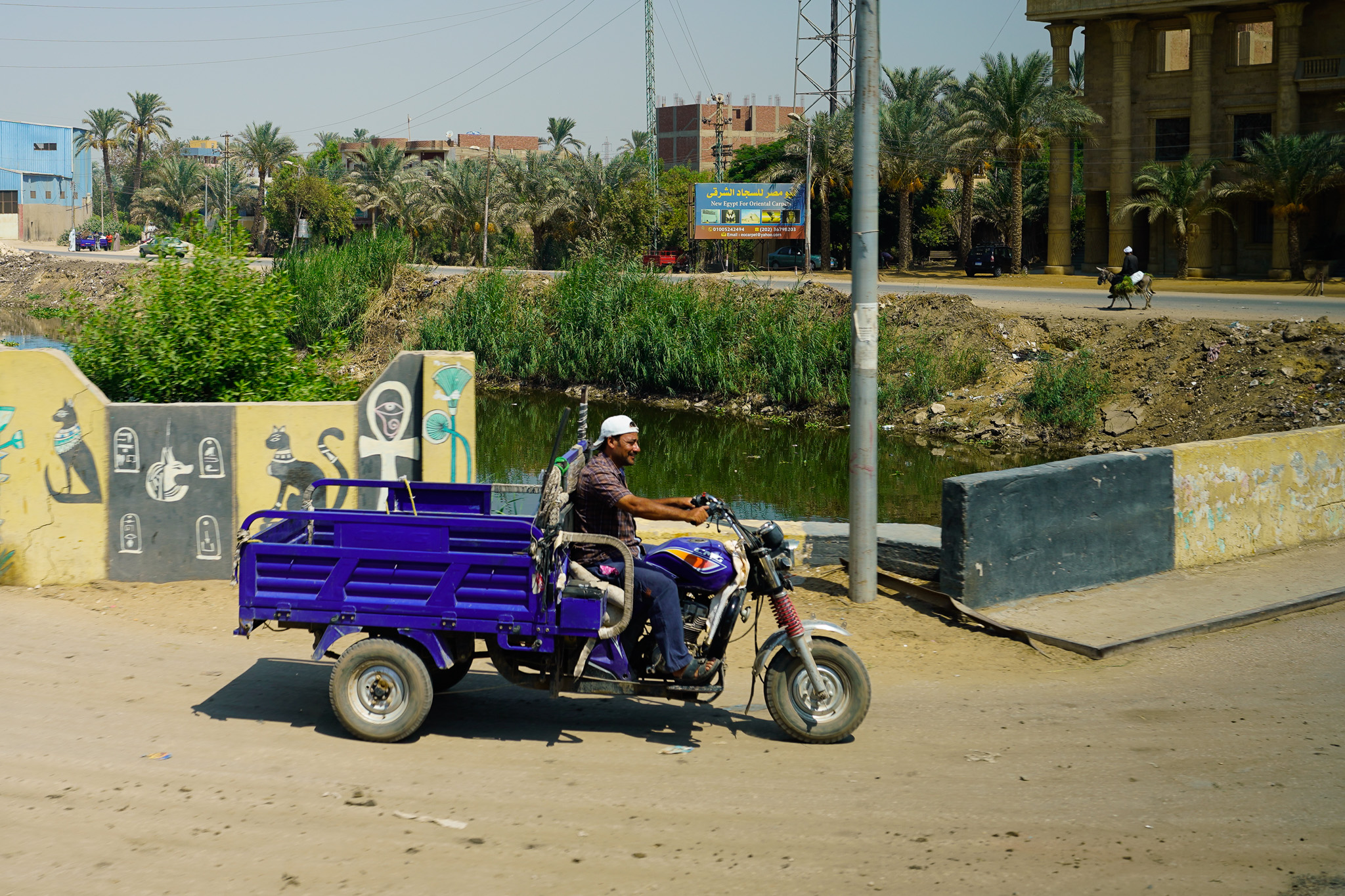
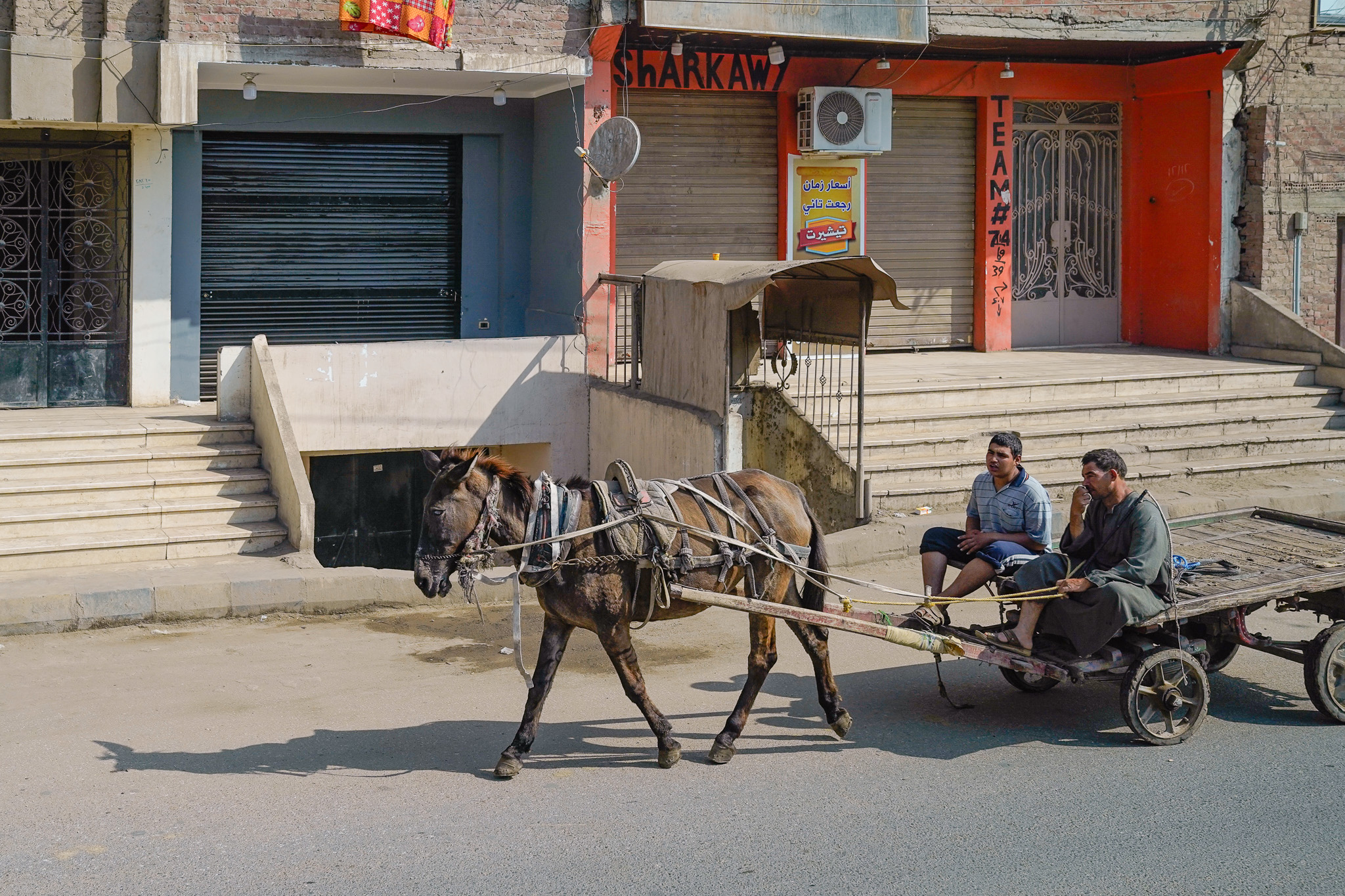
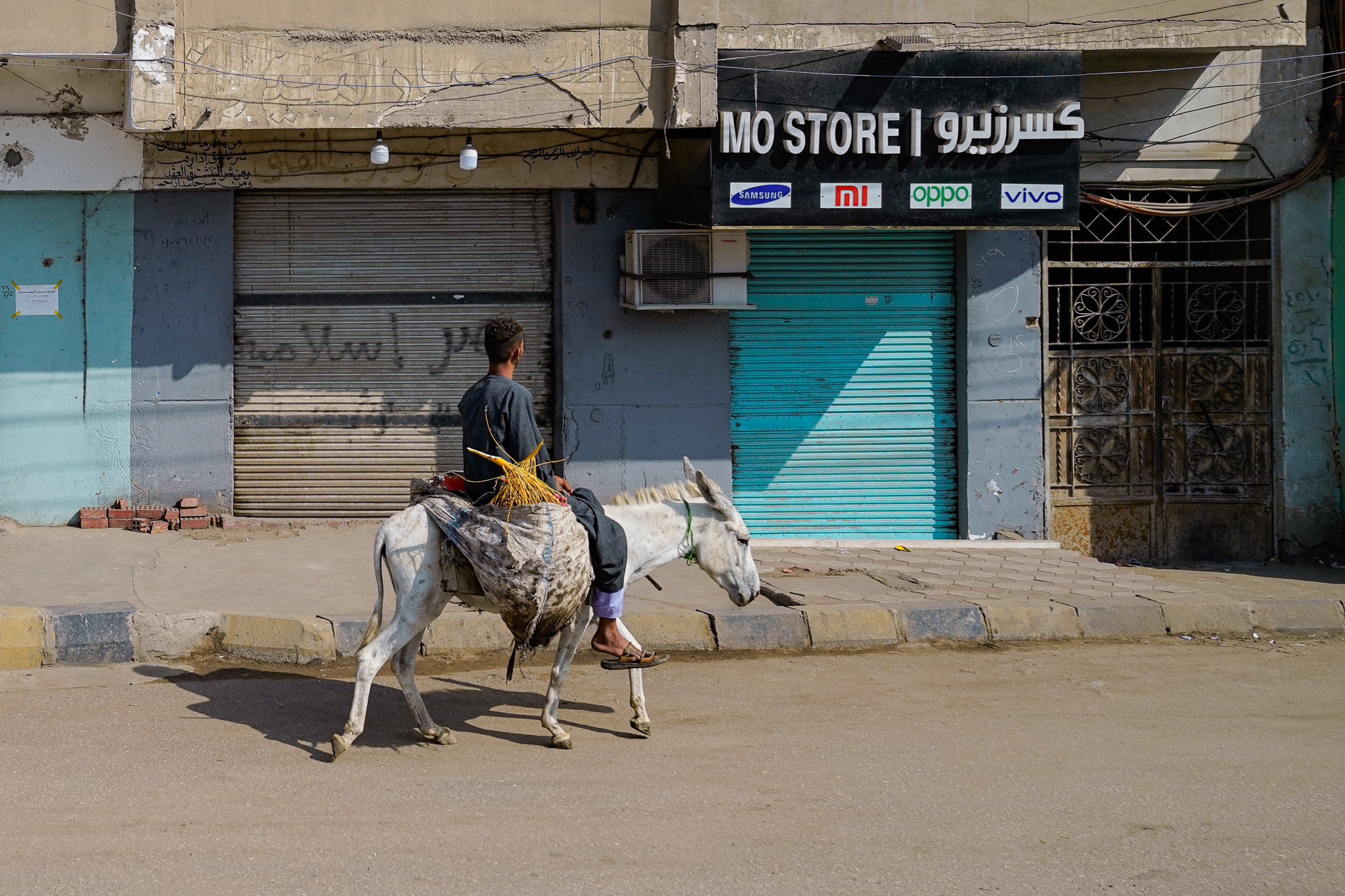
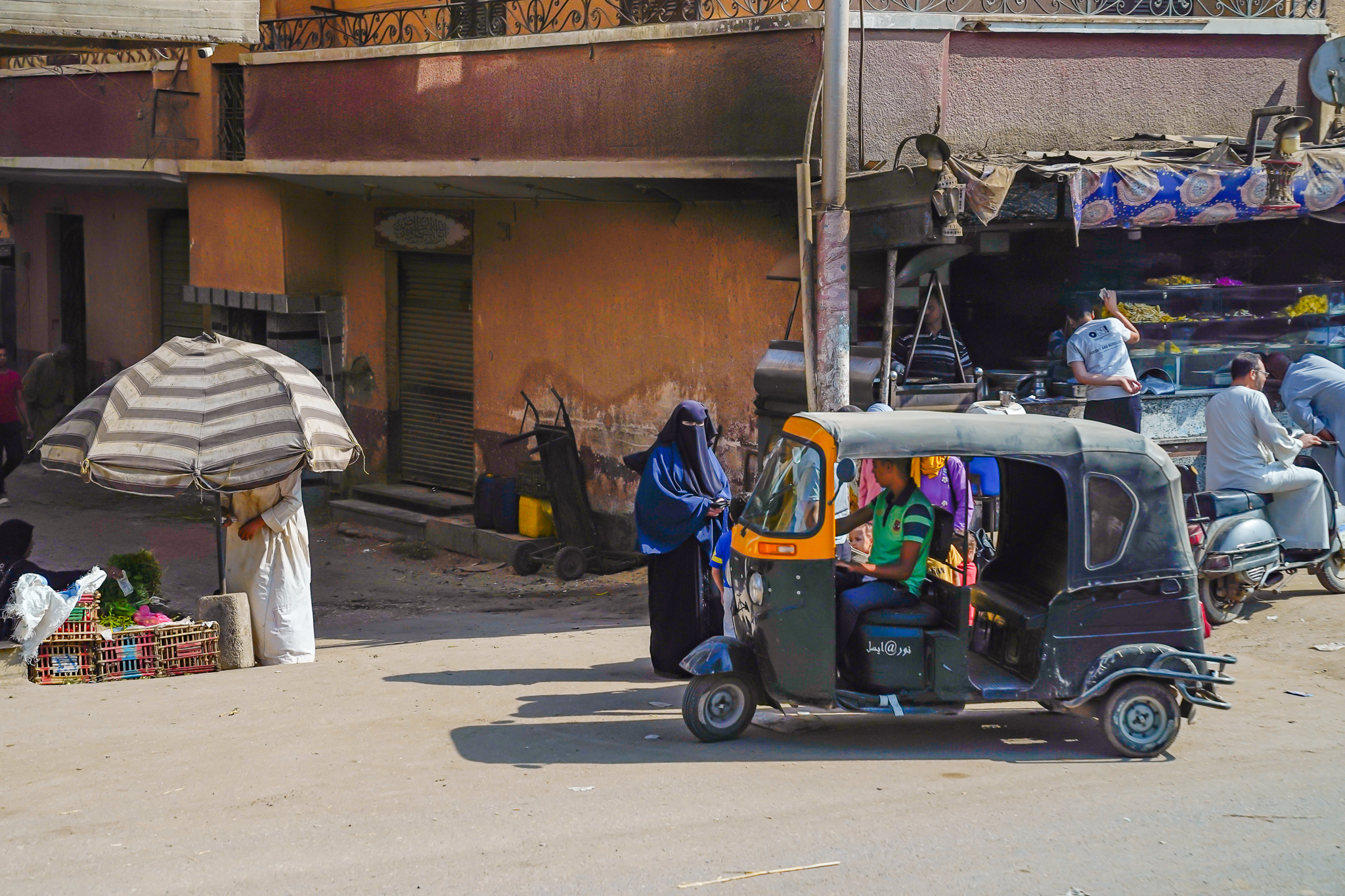
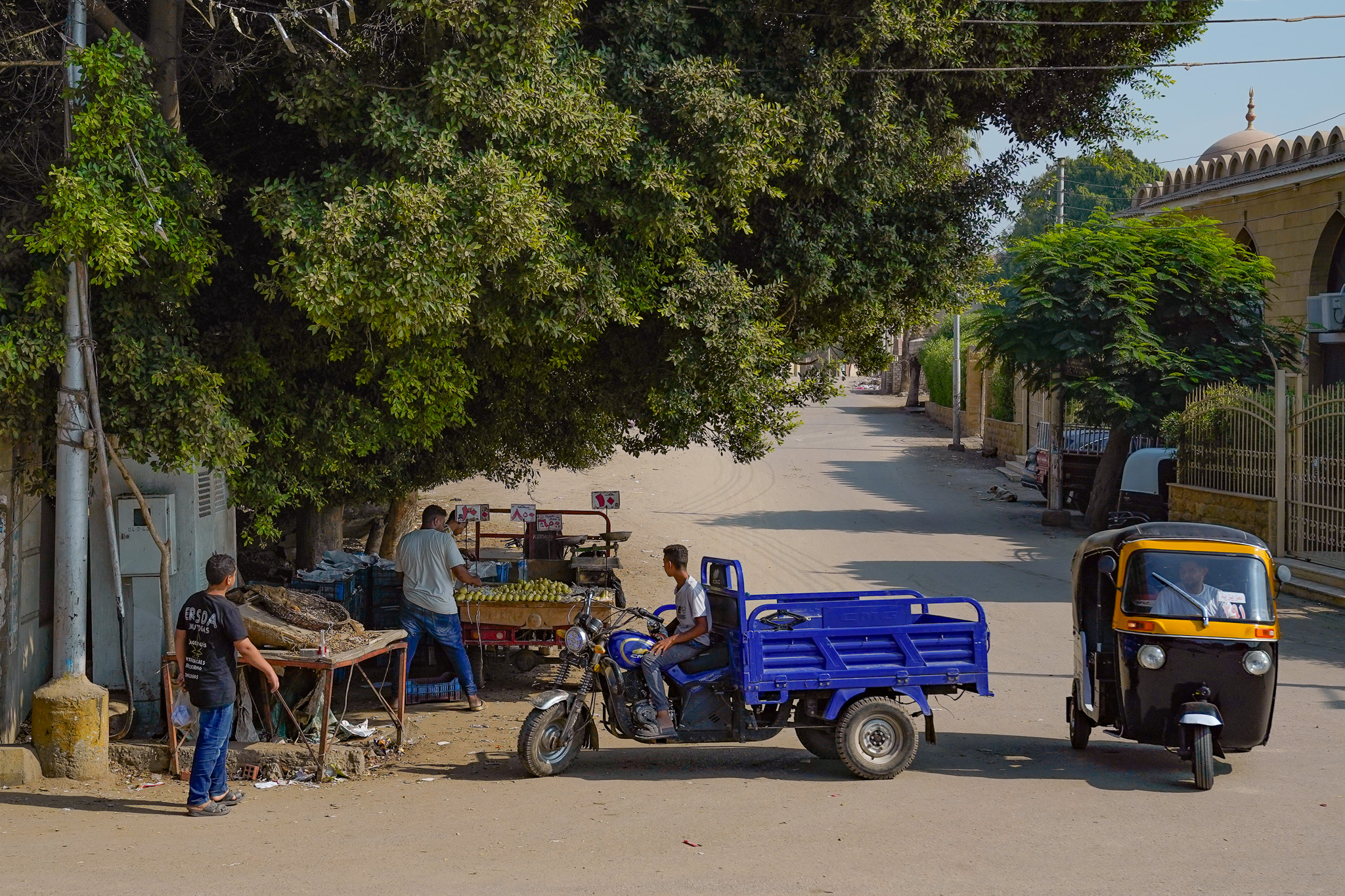
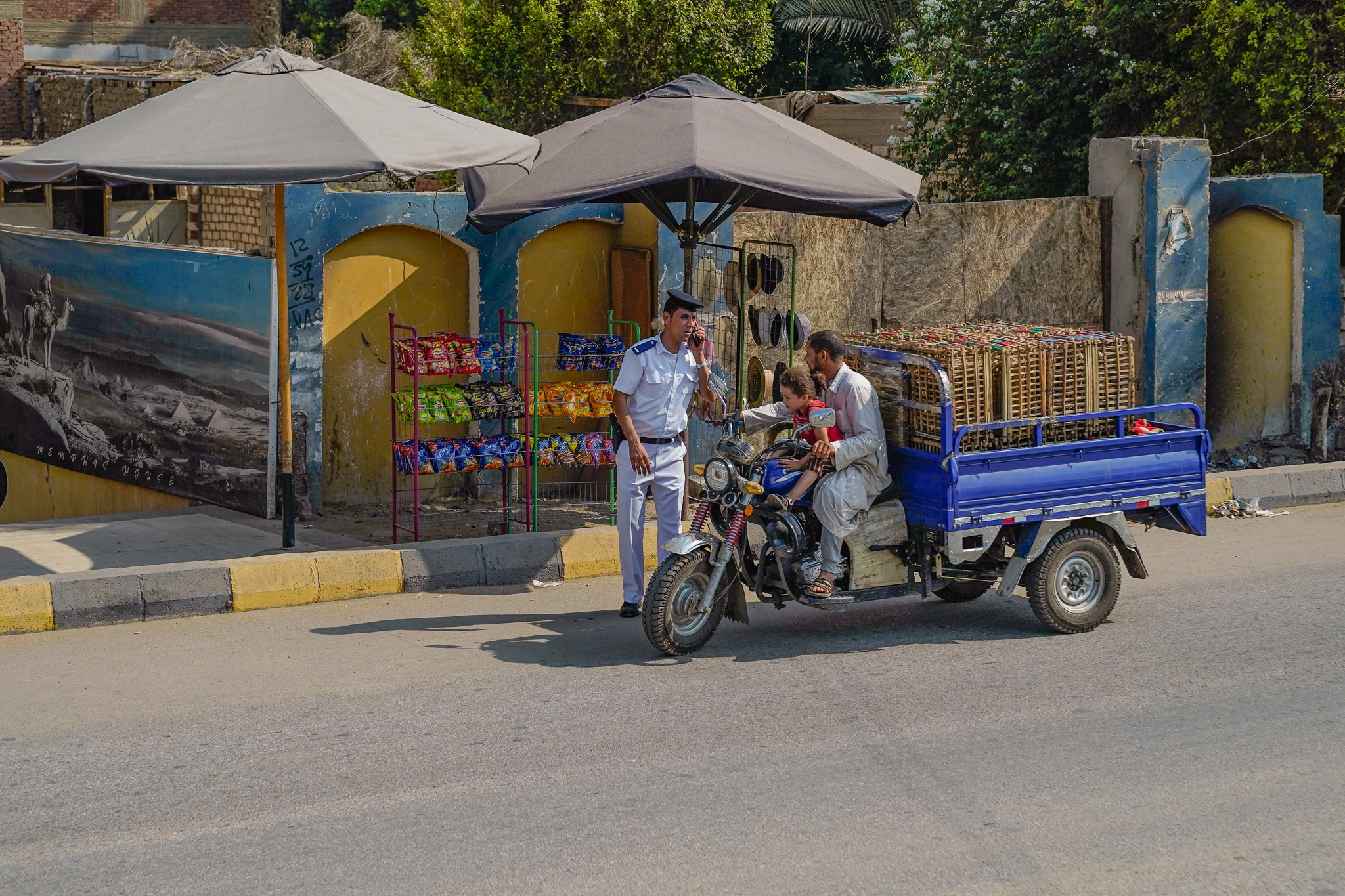
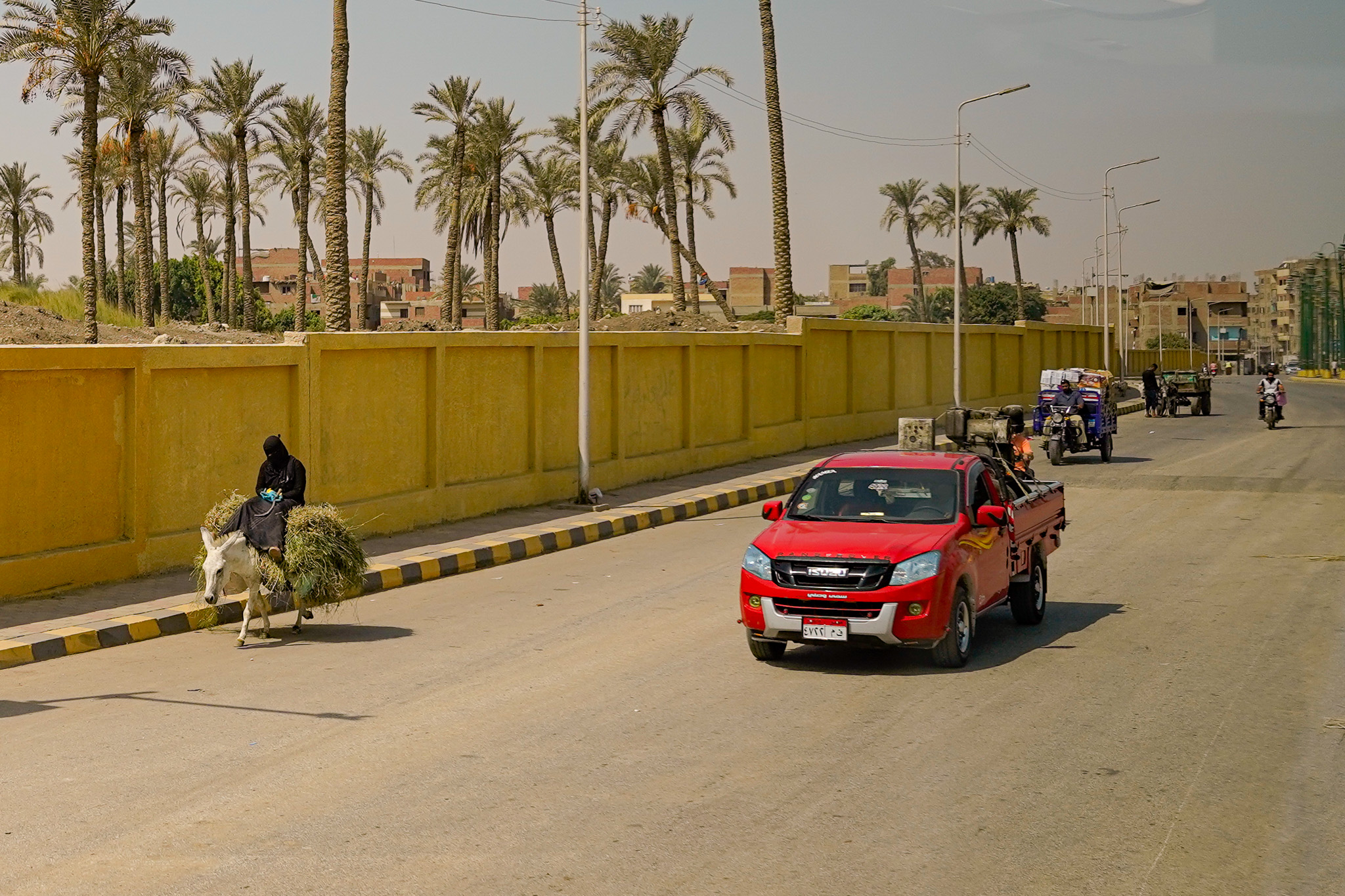
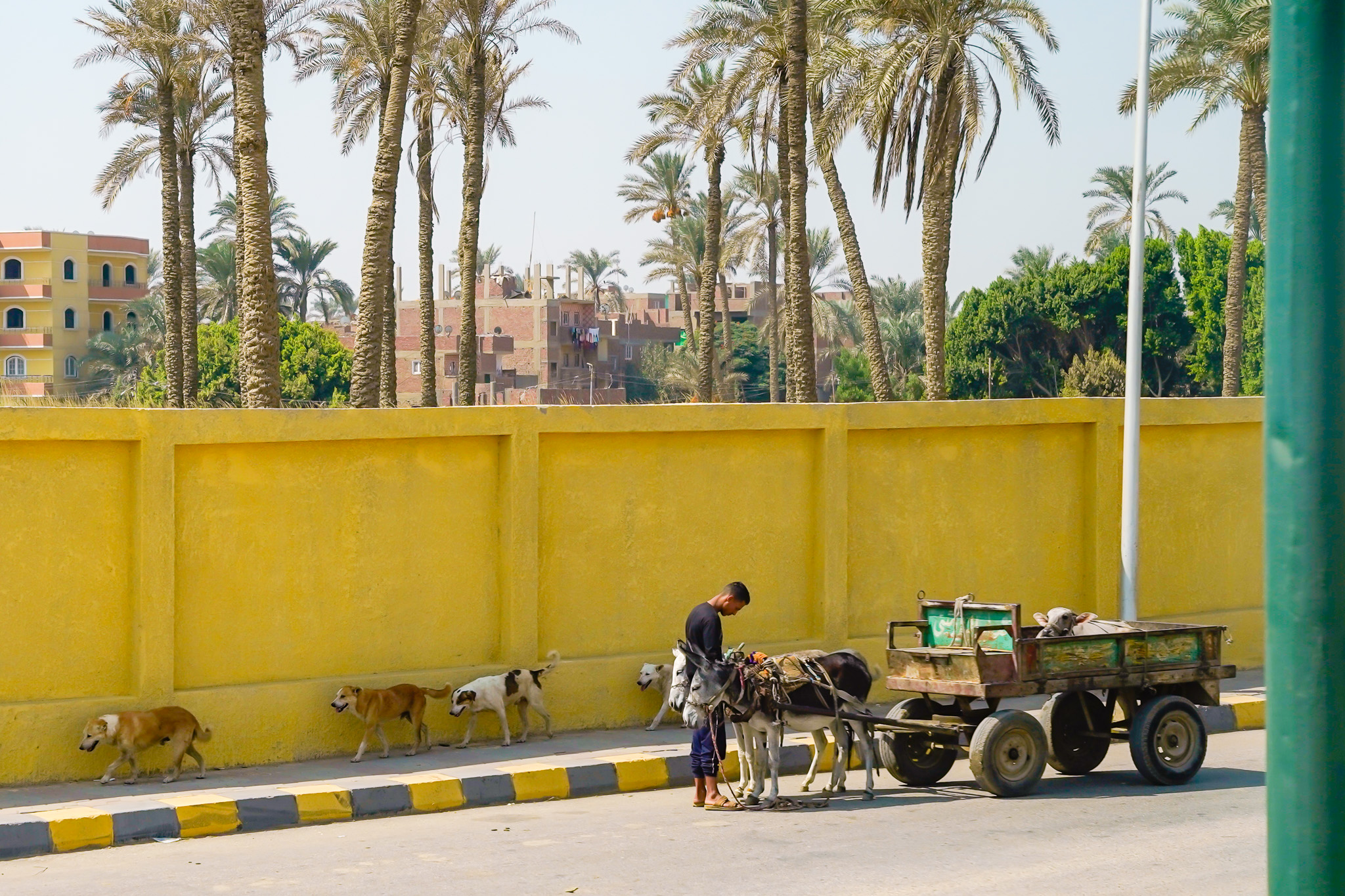
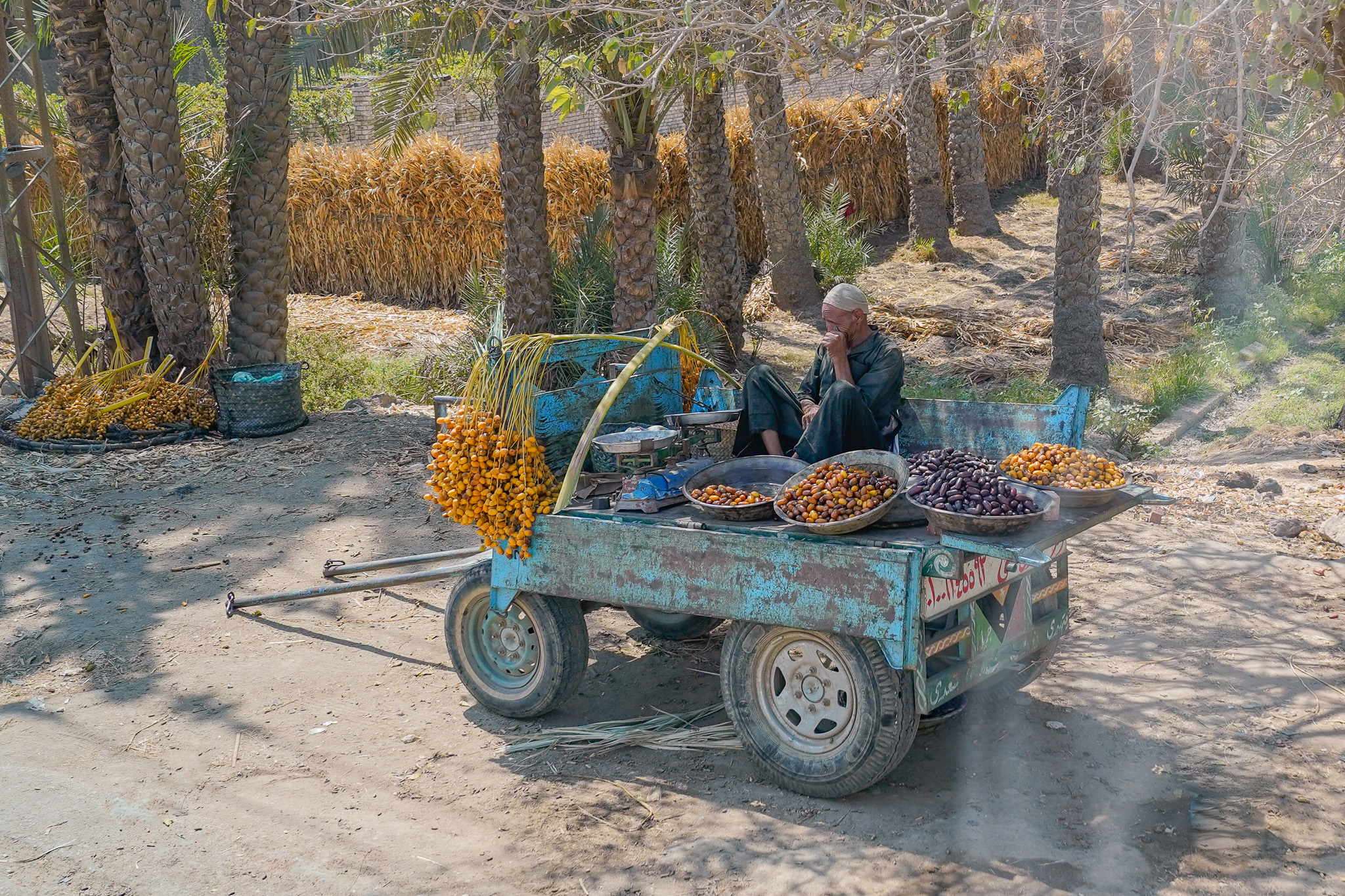
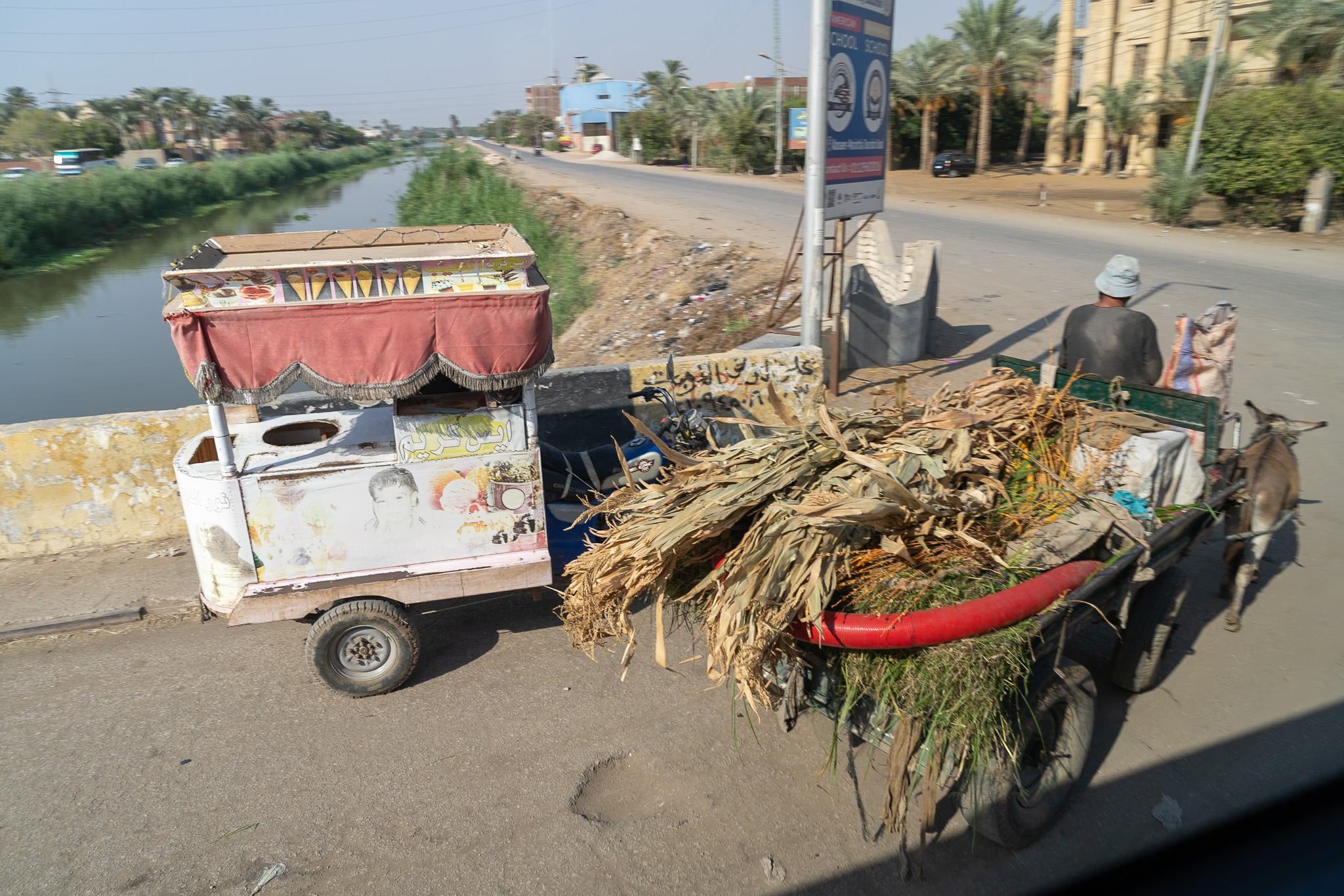
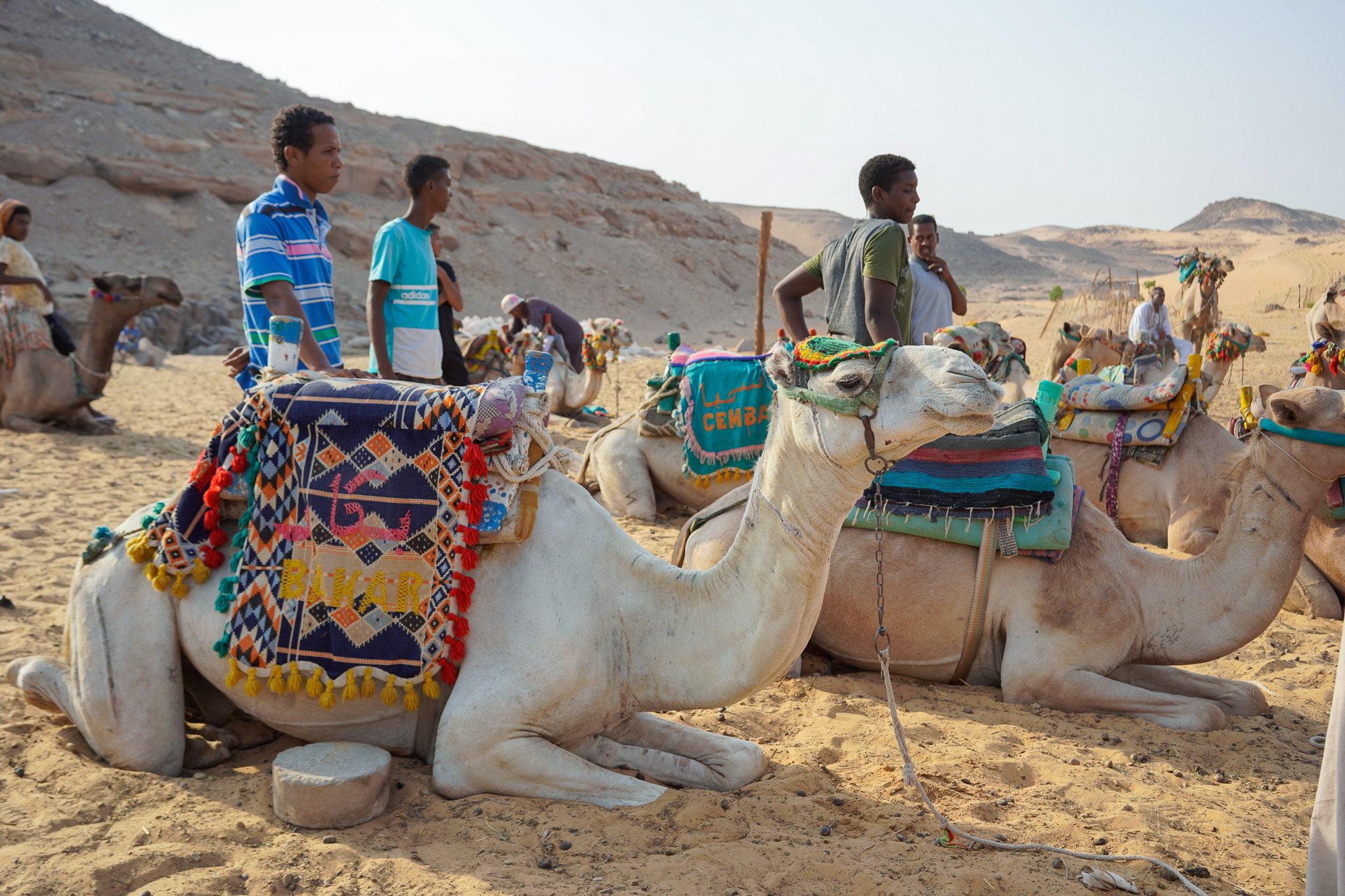
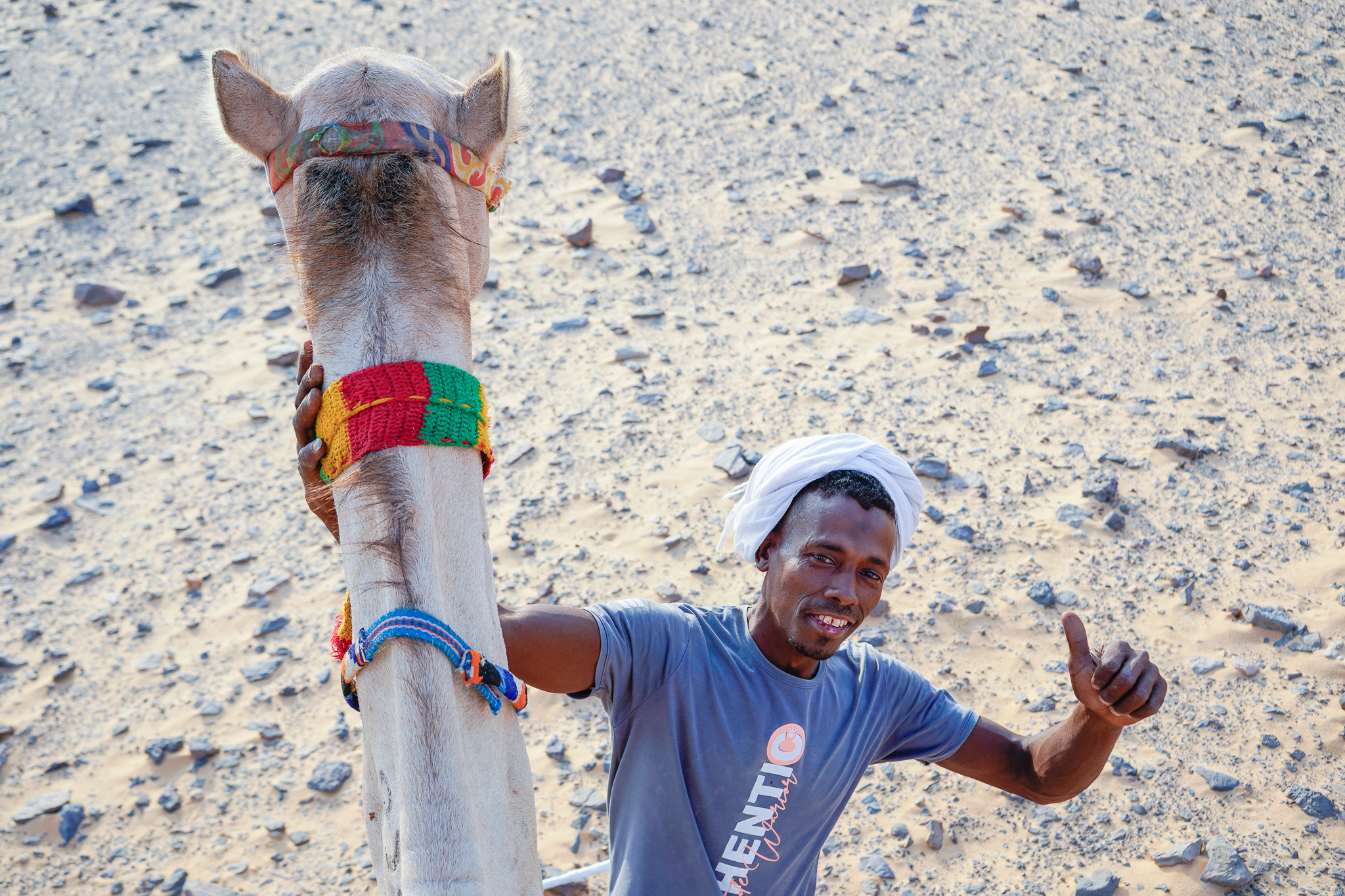
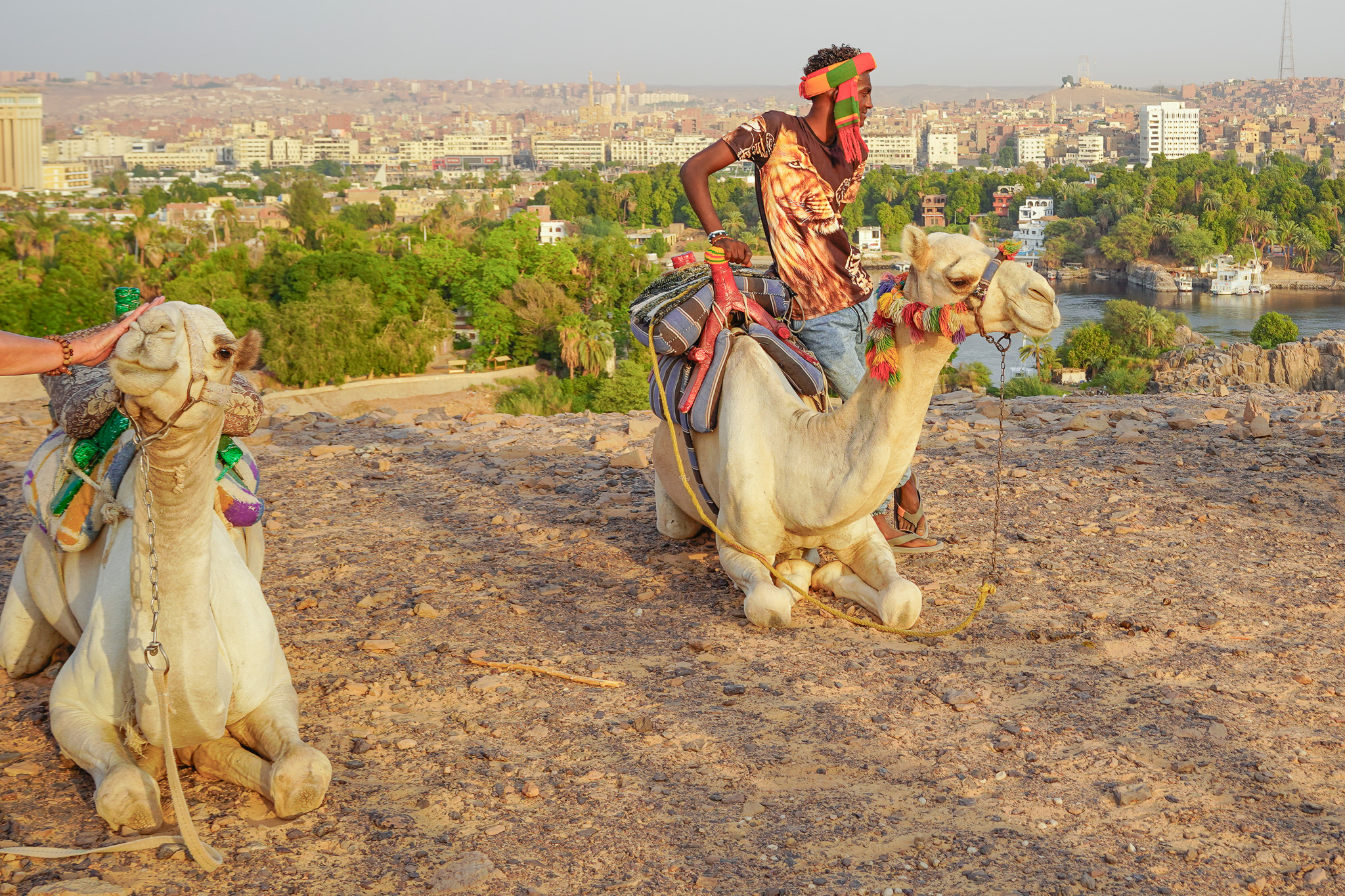
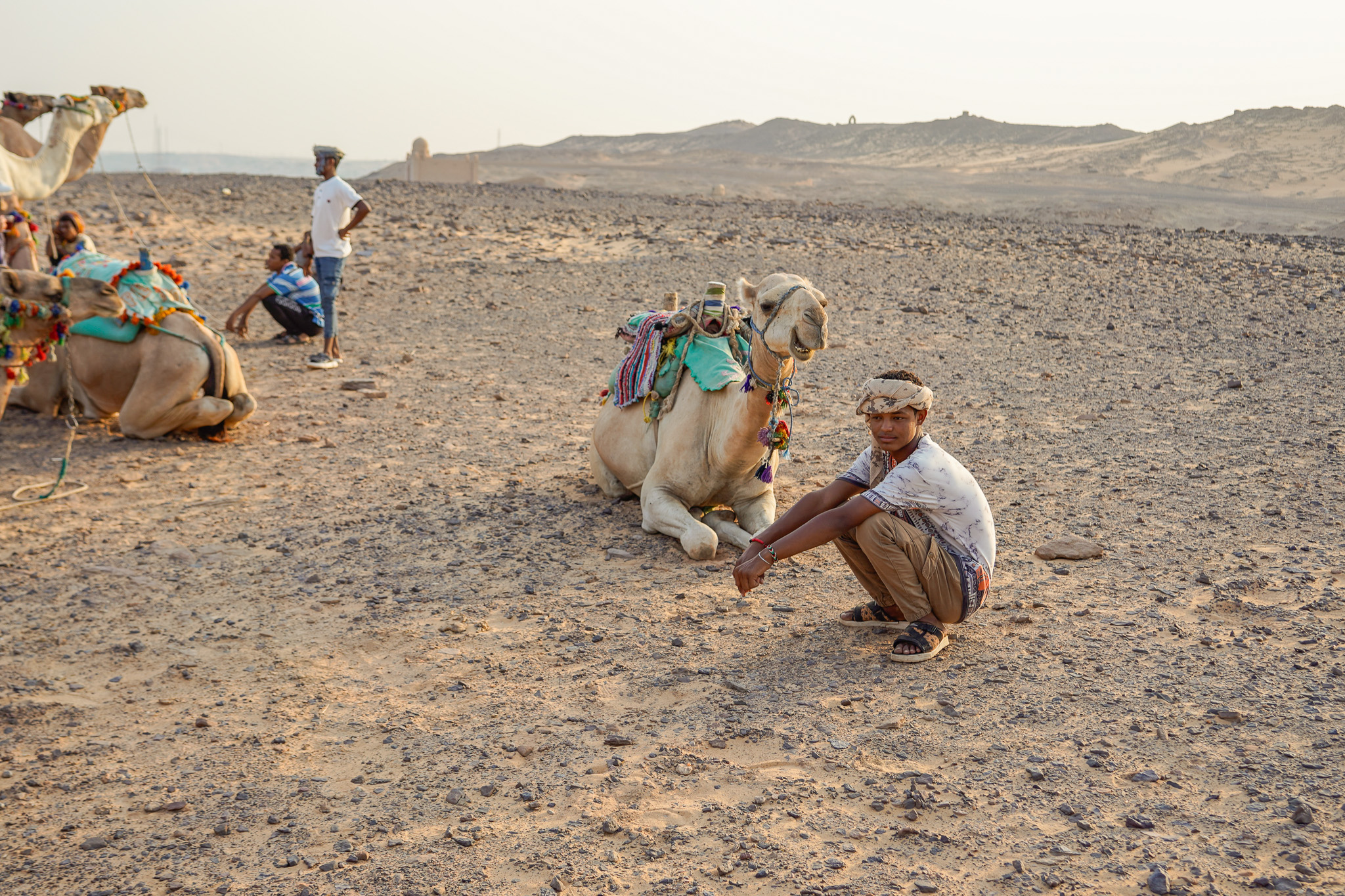
I did not expect to do a photo journal this comprehensive. However, since every moment of our journey with Archaeological Paths was filled with wonder and amazement, I couldn’t resist. The night before our departure, we met with Dr. Khaled El Anany, Minister of Tourism and Antiquities. Dr. Anany shared exciting details about Egypt’s new museum opening this year, The Grand Egyptian Museum (G.E.M.) Egypt, he said, including the children, are embracing their ancient legacy.
Now is the best time to see the treasures of ancient Egypt!
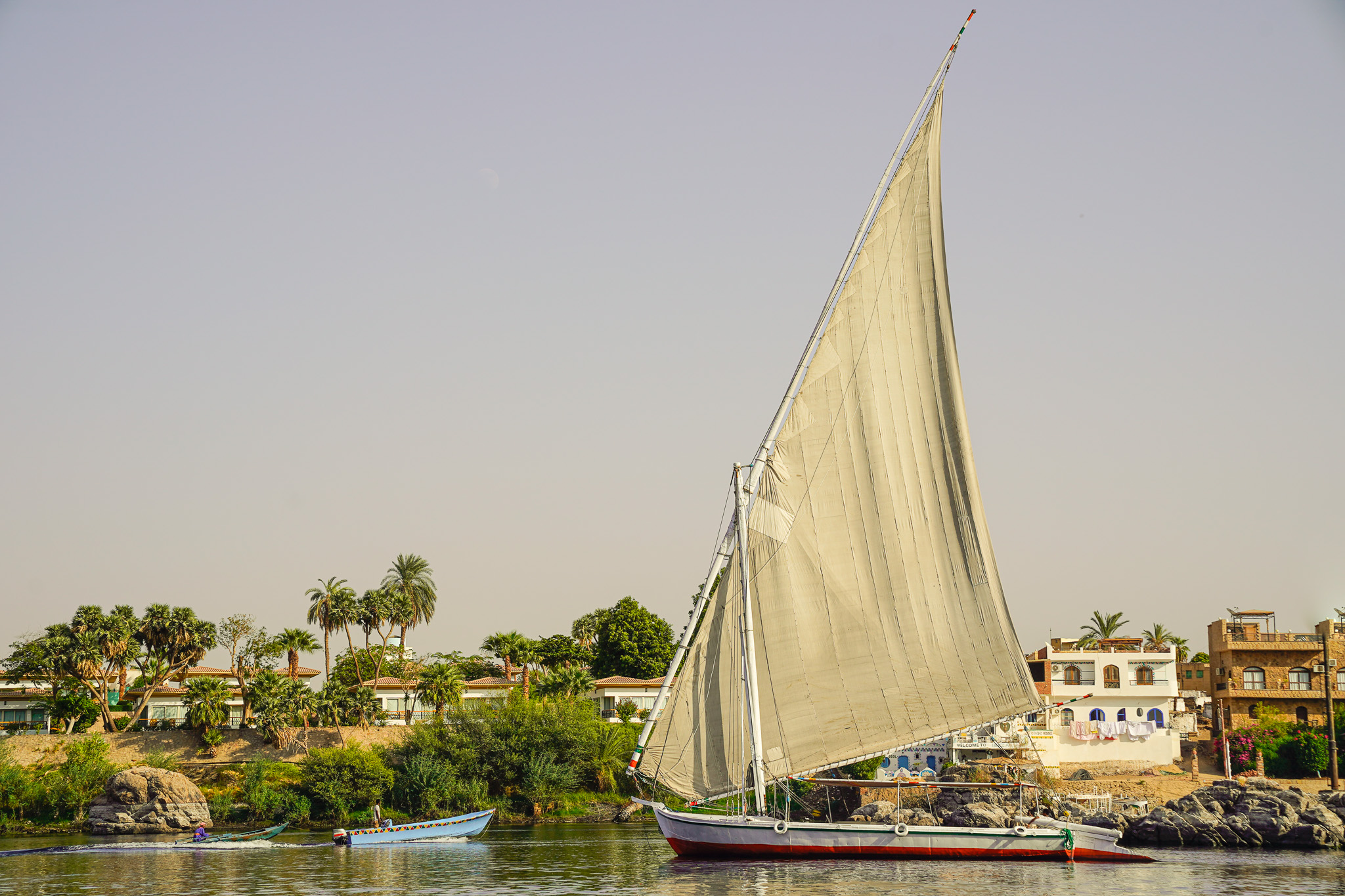
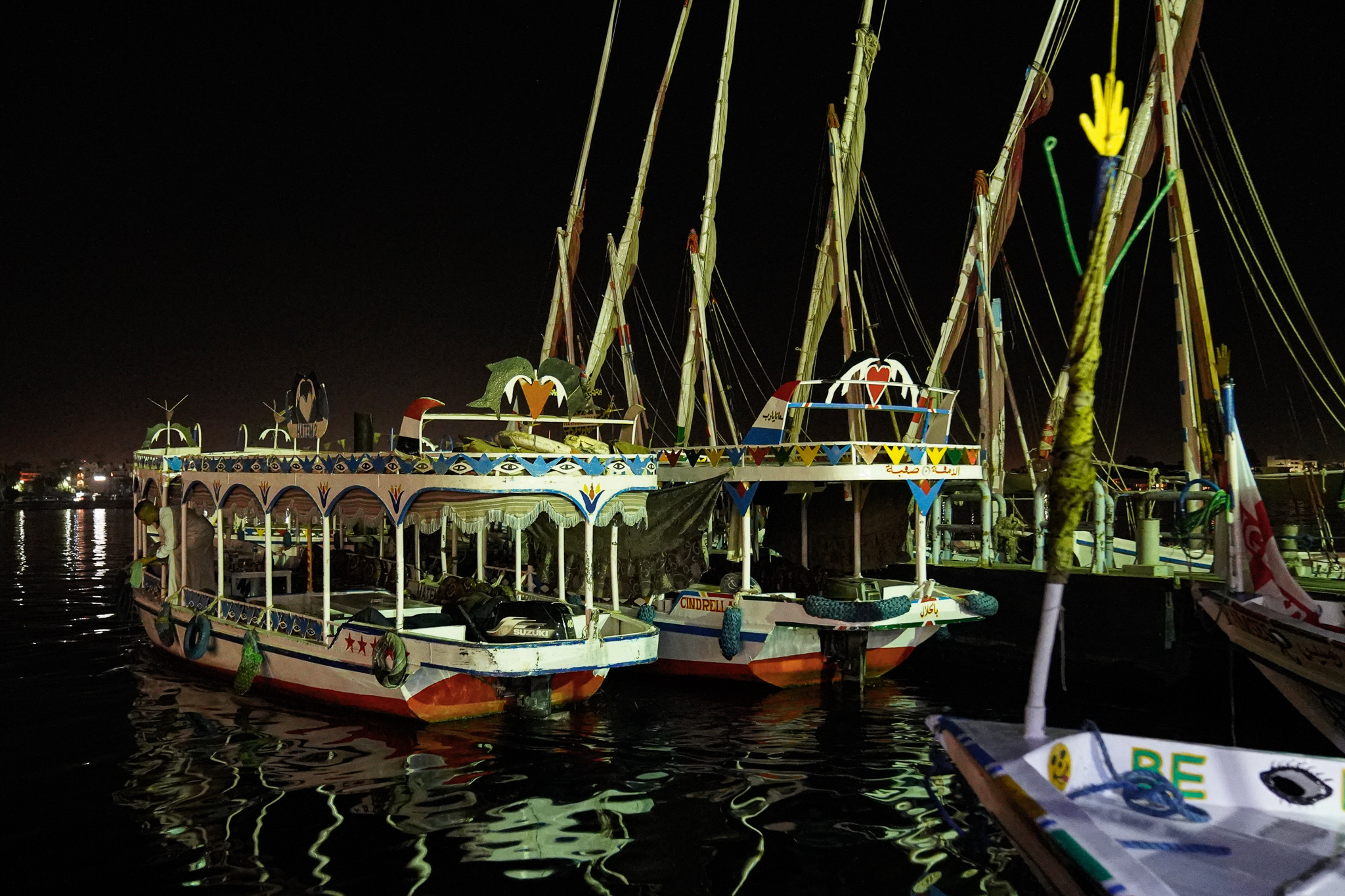
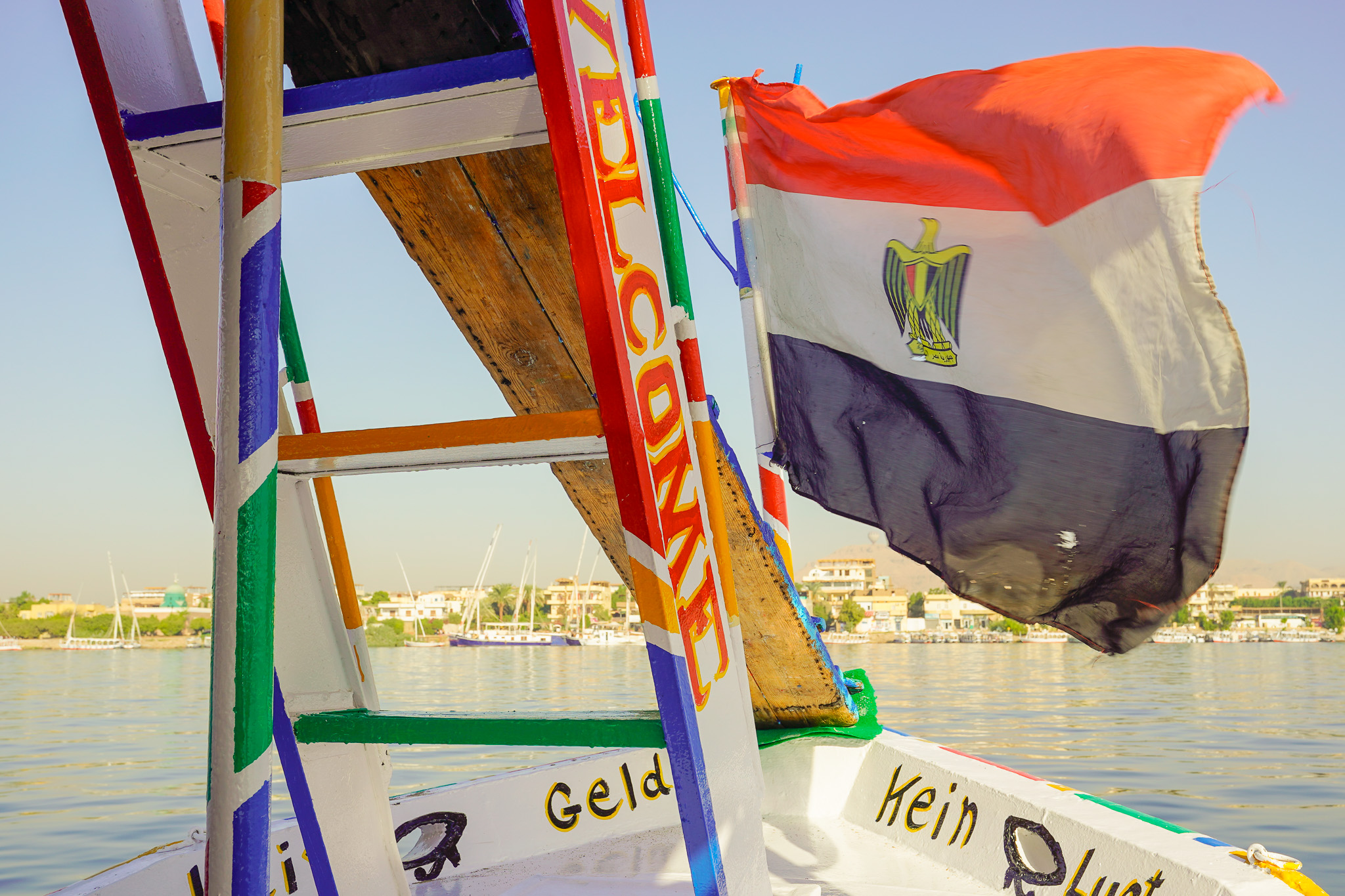
We flew from Cairo to Luxor and spent six nights on a Nile River Cruiser, sailing from Luxor to Aswan and back again. Our excursions included transportation on the iconic large-sail felucca boats, colorful pontoon boats, hot air balloons, horse-drawn carriages, and camels. One member of our group summed up our tour of Egypt:
You must be logged in to post a comment.