We gazed up the steep cobblestone street to the magnificent terraced houses; the colorful heritage of Bo-Kaap. Radiant colors: cerulean blue, magenta, lemon yellow, lime green, aqua, peach, and lavender invoked a sense of joy and happiness. We were thirty-three women with Leadership Women – International, visiting the Bo-Kaap (Afrikaans for Above the Cape). It is a National Heritage Site in the middle of Cape Town, South Africa. Our guide handed out colorful bandanas. We needed these to cover our heads before entering Auwal Mosque, the first and oldest mosque in South Africa. Why different-colored bandanas? Just for fun? No! The bandanas served dual purposes.
After visiting the historic Mosque, we would separate and enter a home corresponding to the color of our bandana.
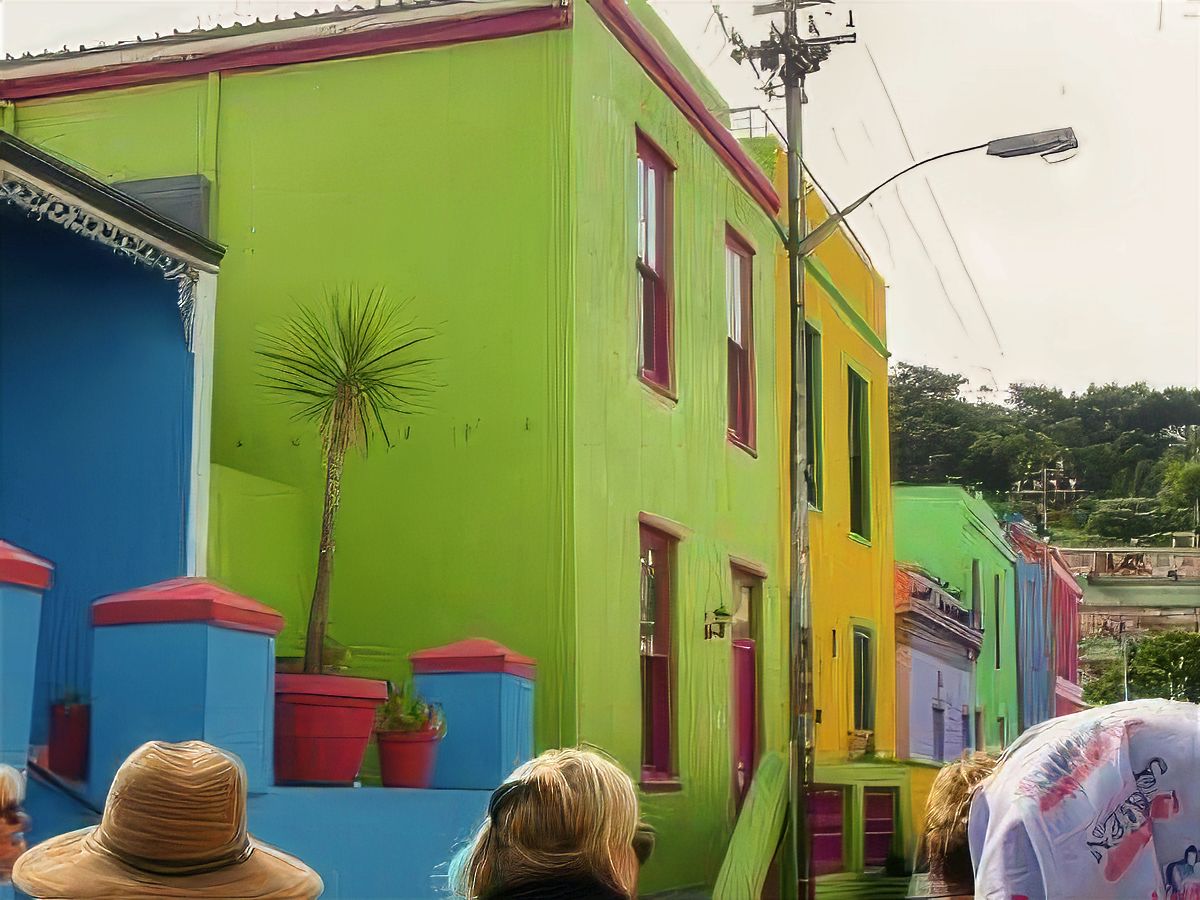
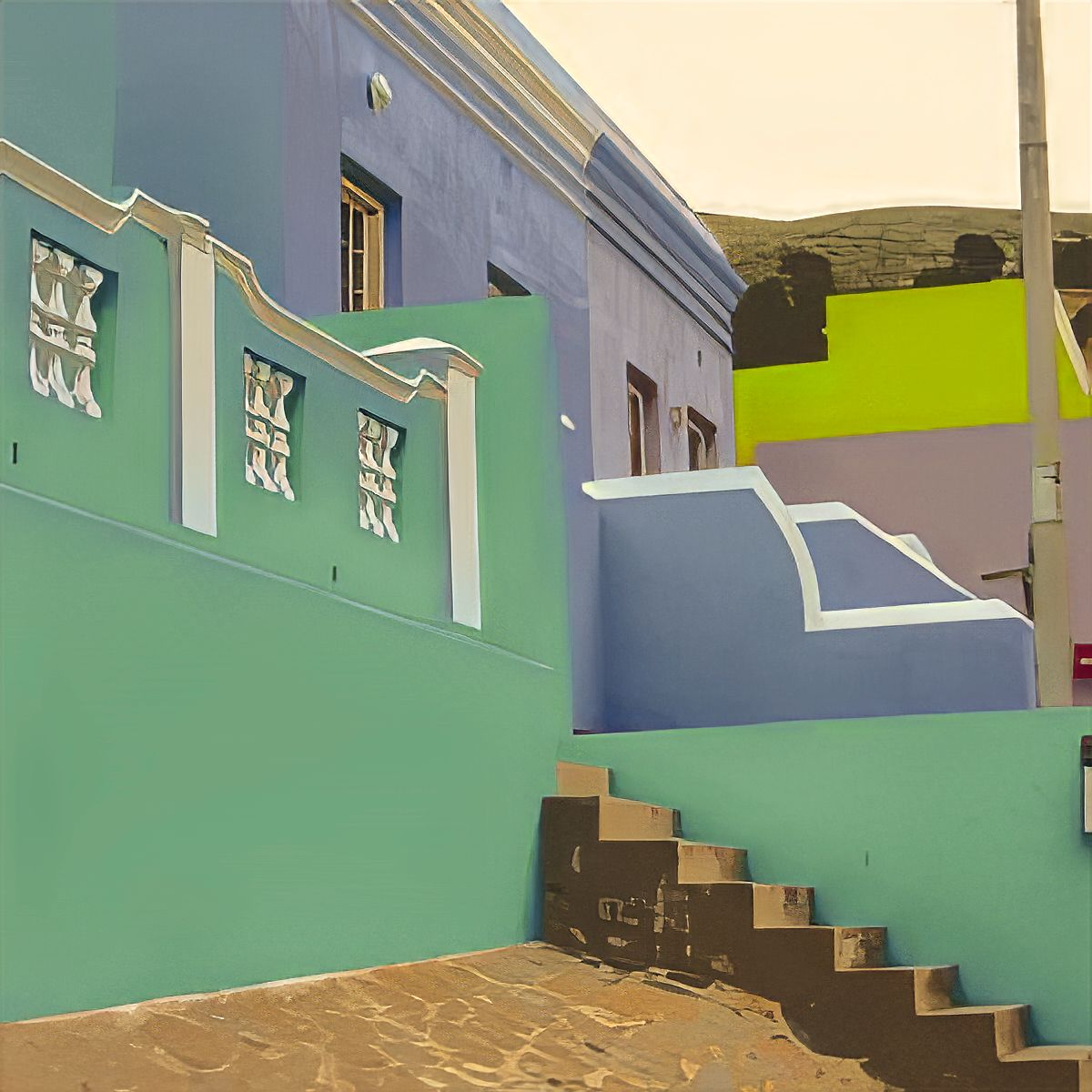
There we would prepare dinner, the traditional Cape Malay foods!
From the blue terrace of her home, Gamidah Jacobs greeted the group. We would spend the next two hours in her home, where she inspires visitors with traditional cooking techniques. She explained some of the history of the Bo-Kaap area as she led us down the hallway to her kitchen. The picturesque houses passed from one generation to the next for many years and eventually, together, became an historical monument. “And the steep hills?” Gamidah said with a laugh, ” I have walked these hills since I was a child!”
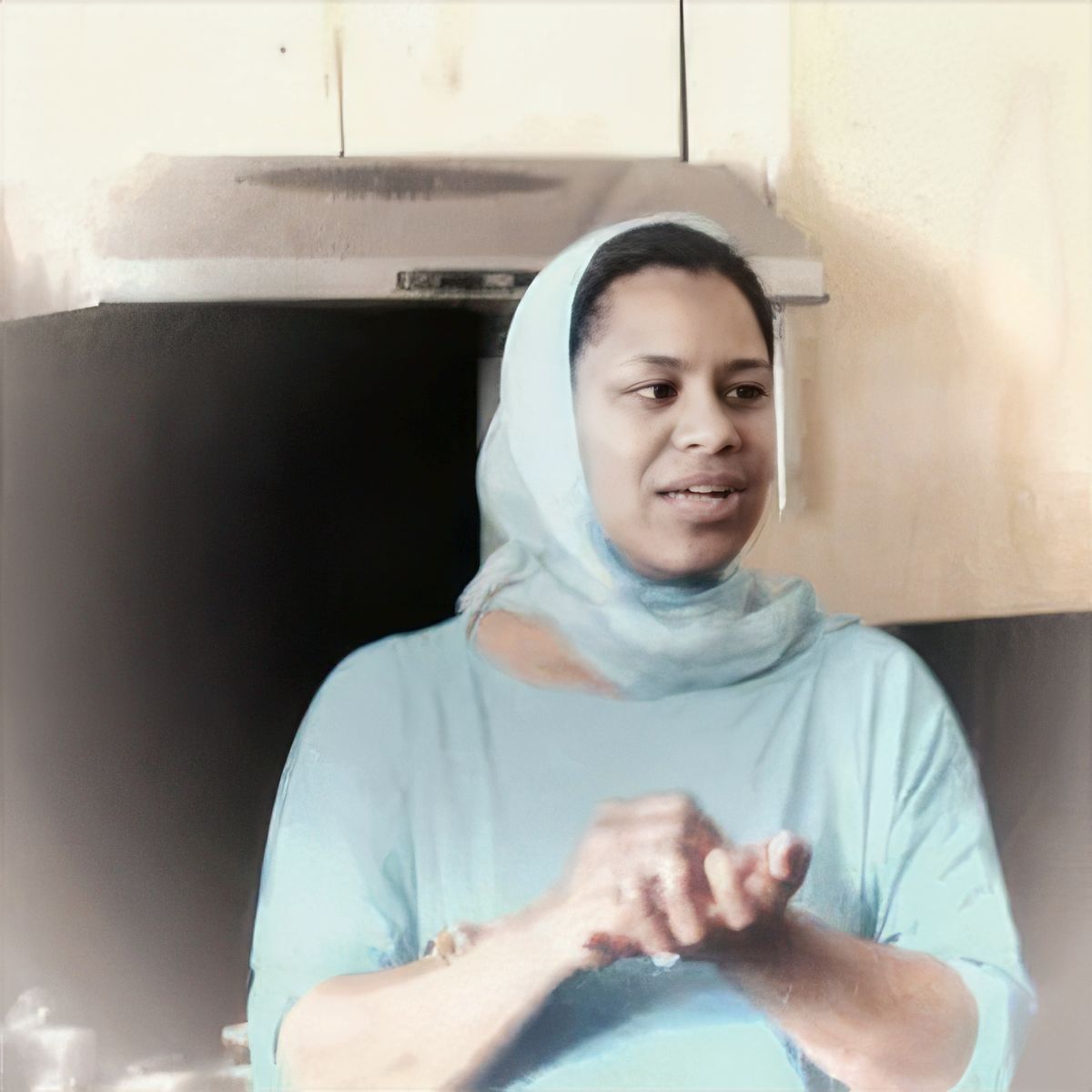
Gamidah’s warm, benevolent humor made cooking feel effortless as she guided us through preparing various dishes. She demonstrated techniques for rolling dough for round, flat roti bread. We folded thin triangles of pastry for samosas, made the dough for chili bites (recipe below), and prepared other delicacies.
Turmeric enhances the color of foods. It’s important to get the right combination of spices for the unique piquant flavor of each dish. The recipes for these dishes can be somewhat complicated for a novice. With Gamidah’s guidance, we completed the preparations and sat down to enjoy the tangy and delicious meal.
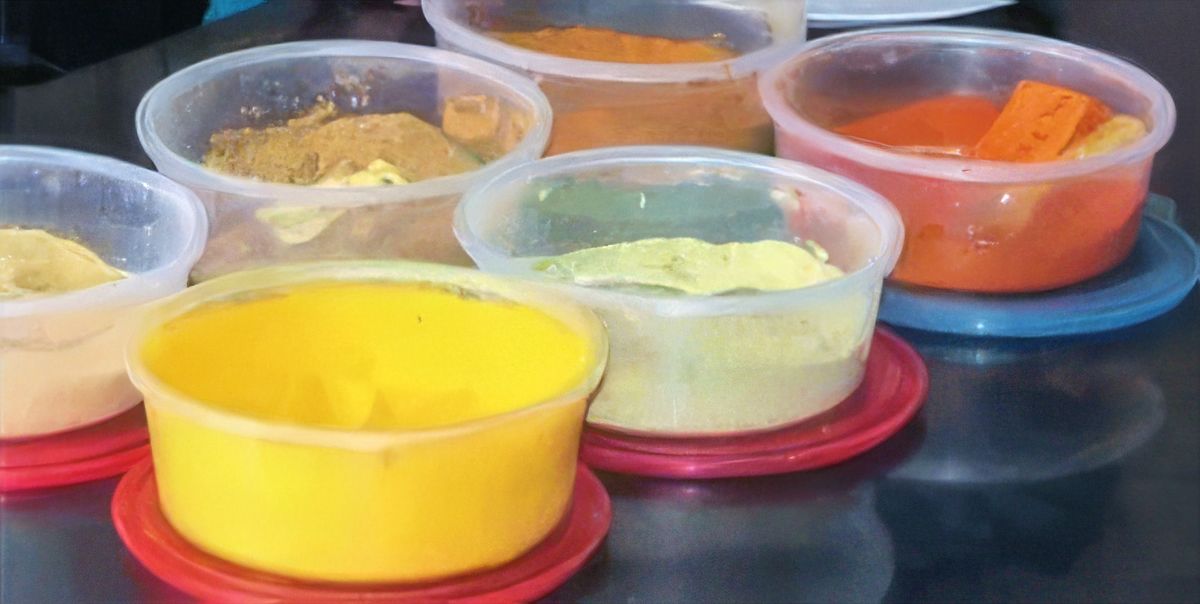
The vibrant colors and rich flavors of Malay cuisine are complemented by spices like cardamom, cumin, turmeric, fennel, coriander, cinnamon, aniseed, tamarind, ginger, bay leaves, curry leaves, garlic, and rosemary.
After dinner we went outside to the terrace as dusk gave way to darkness. Gamidah bid us farewell as she left for the Call to Prayer (Athaan). The Athaan, coming from the minaret above filled the air with a touching sound as she left. It was a fitting departure after such a lovely experience.
The colorful heritage of Bo-Kaap is not complete without the lively sound of jazz music. After a delicious dinner, we joined them as they danced and entertained us on the street.
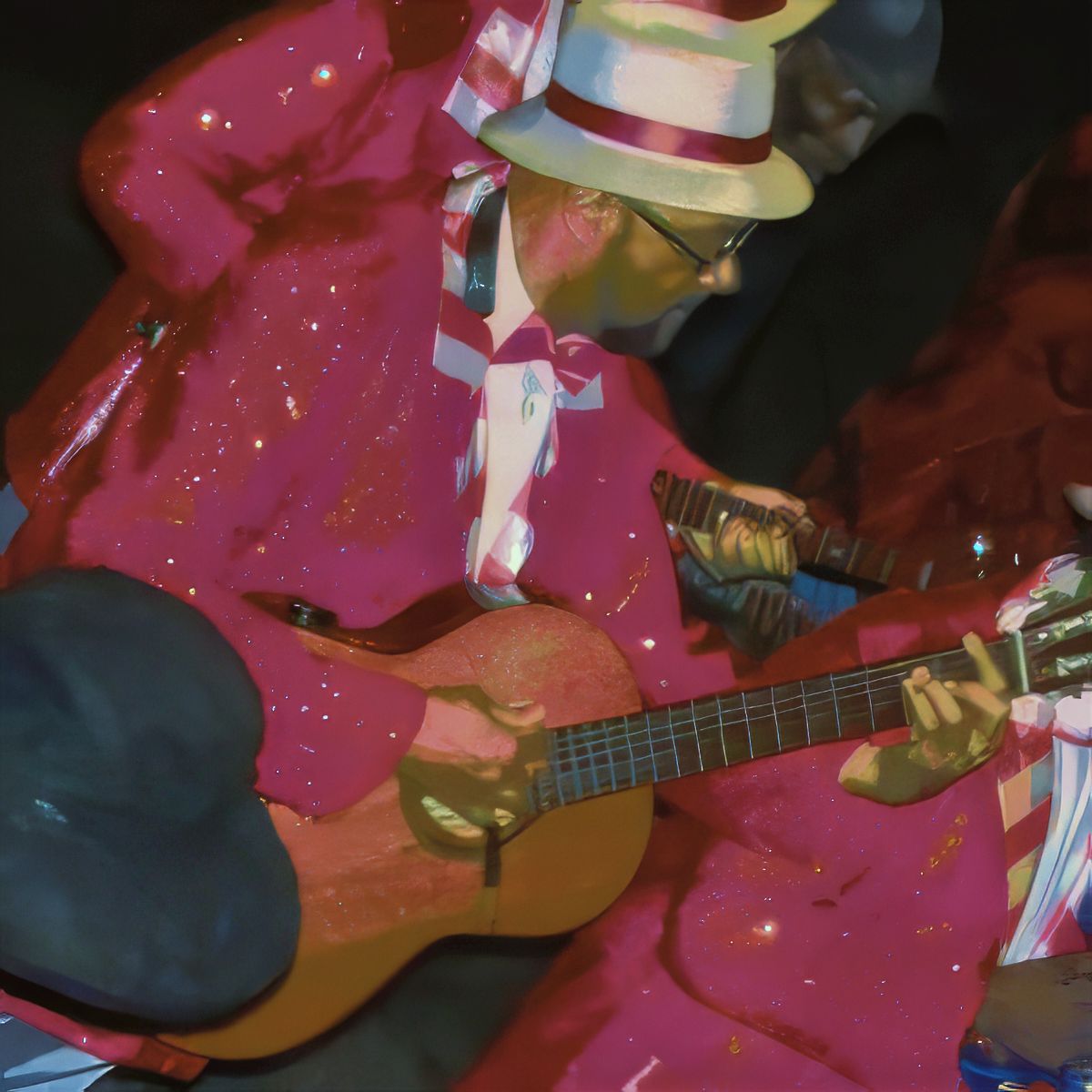
Musicians dressed in vibrant sequined suits marched down the street.
They performed lively jazz music with trumpets, trombones, banjos, guitars, and percussion. They were members of the Kaapse Klopse (minstrel troupes) celebrating Tweede Nuwe Jaar (Second New Year). The annual event kicks off on the eve of the New Year, January 1.
As the minstrel troupe passed each house, members of our group joined them for a thrilling “taste” of celebration! Imagine the fervor on January 1 when 13,000 minstrels take to the streets of Cape Town!
History
Spices are an essential ingredient in Malay recipes. Their origin is interwoven with the story of the people. For centuries, they achieved the savory benefits of their flavors. The Dutch East India Company flourished for two hundred years (1602 – 1800) along routes between Europe and Asia that traded spices, silk, porcelain, metals, livestock, tea, grain, rice, soybeans, and sugarcane. The successful trade of these goods went hand in hand with colonialism and slavery.
The [Dutch East India] Company colonized the area of Cape Town, which was the midpoint of the maritime trade route from East to West. They brought slaves, political exiles, and prisoners from India, Indonesia, Malaysia, and other parts of Africa. In 1763, a Dutch owner built huurhuisjes (rental houses) for his slaves, the Malay, in the area of present-day Bo-Kaap. Other liberated people came to the area after emancipation in 1834, and many had skills in various crafts and trades. The people of India brought the Muslim faith and eventually built the mosques. The descendants of this historical multicultural infusion of people became known as “Cape Malays” (Cape Muslims). The Malay Quarter is associated with colonialism. In 2016, Cape Town renamed the area Bo-Kaap, a name more associated with the people of the Islamic faith.
The Muslim faith is the most important feature of the Bo-Kaap community, and the Auwal Mosque is a key historic landmark. The mosque is an integral part of the colorful heritage of Bo-Kaap.
Many of the prisoners that the Dutch East India Company brought to Cape Town were important people who resisted colonialism. Tuan Guru (Imam Kadi Abdus Salaam), from the Island of Tidore, arrived in 1780, and the Dutch East India Company incarcerated him on Robben Island. It’s the same island where, years later, the apartheid government incarcerated Nelson Mandela for 18 years of the 27 that he was incarcerated.
Tuan guru claims descent from the Sultan of Morocco and Prophet Muhammad. Known as a qadi (judge) and a prince. Tuan Guru was a hafiz al-Qur’an, meaning he had memorized the entire Qur’an. During his imprisonment, he wrote multiple copies of the Qur’an from memory. After his release, he married a free woman and focused on his main concern: agitating the authorities for a madrasah (religious school). He eventually conducted the school in a warehouse, where many people in the area converted to Islam. Later in 1795, the British granted permission for a masjid (Arabic for mosque), and Saartjie van de Kaap, owner of the warehouse, donated it to Tuan Guru, who converted it to the Auwal Mosque.
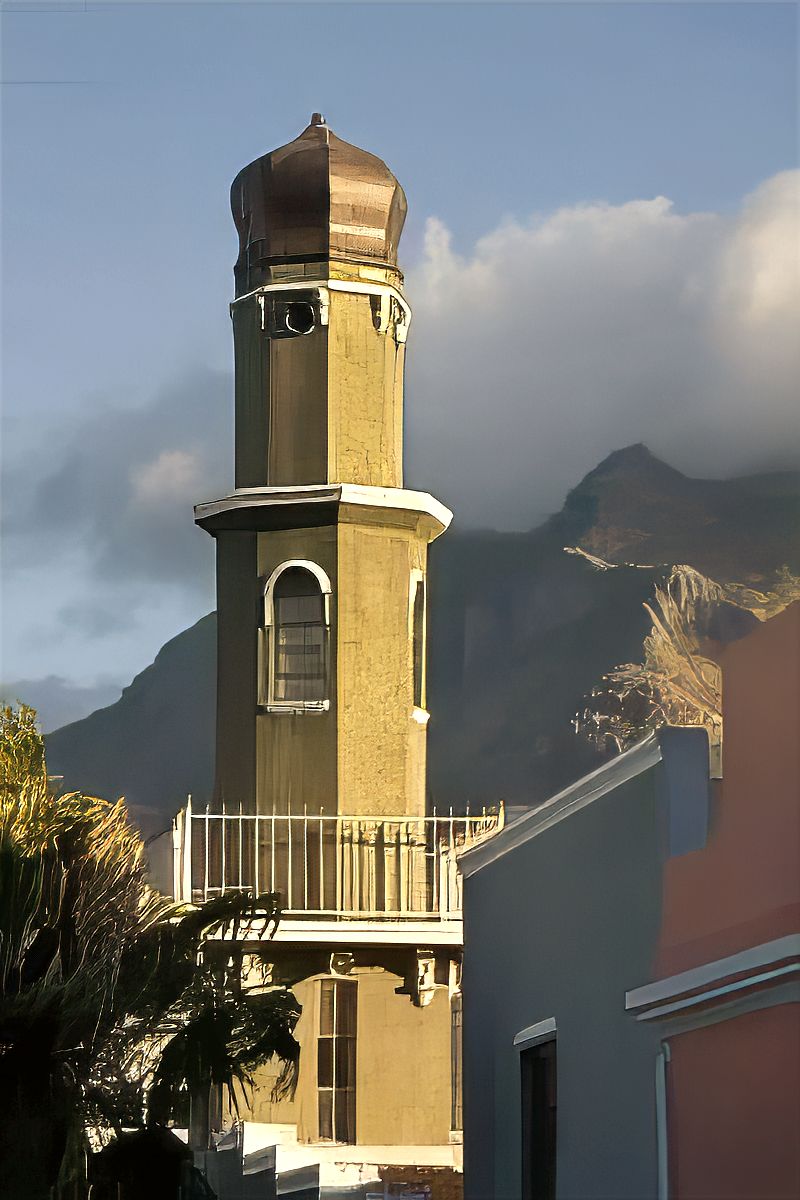
TA Man, the muezzin, does the Call to Prayer from the minaret or tower of the Mosque.
The picture of the minaret of the Auwal Mosque is provided courtesy of Around the World in 80 Clicks. To hear the Call to Prayer in Bo-Kaap, courtesy Erhan Esen, “Auwal Mosque Prayer Call, Dorp Street, Bo-Kaap, Cape Town, YouTube
The heritage of jazz in Cape Town, known as Cape Jazz, began in the mid-20th Century with marabi ( piano jazz). The lively culture of the Cape Towners took the heritage “to the streets” where they prefer to celebrate with instruments they carry, such as brass, percussion, banjo, and guitar. The minstrel troupe survives as one of the longest running cultural traditions in South Africa. For the complete history visit South African History Online (SAHO).
The Bo-Kaap area of Cape Town is a scenic area, with a colorful heritage, is sandwiched on the slopes of Signal Hill, between Cape Town and Table Mountain.
It is listed as “one of the most magical and picturesque cities in the world”, and “a fairy tale and living museum”. The vivid colors of the homes obscure their oppressive origin, a time when their color was restricted to white and their inhabitants were slaves. The colors signal individual freedom and expression and point to the cooperative spirit of the people who selected the most visually striking but compatible color combinations.
Today the unique cultural identity of the Bo-Kaap area is at risk. Because of its beauty, affluent people from other parts of Africa and Europe are moving in, sometimes for just a summer residence, as they persuade long-time residents to sell. See more of this trend and the consequences in The New York Times as reported by the CapeTown Journal, “Muslim Enclave Forged in Apartheid Now Faces Gentrification”.
Travel Note
Leadership Women is a nonprofit organization headquartered in Dallas, Texas. As noted on its website, it is “the longest-running women’s organization in the United States and exists to provide programs that advance and improve the personal, economic, and professional status of women.” Find out more about Leadership Women at https://leadership-women.org.
The recipe for Chili Bites (Dhaltjies) is provided courtesy Gamidah Jacobs – Lekka Kombuis Cooking Classes, at http://www.lekkakombuis@mweb.co.za. Contact numbers: +27 (0)79 957 0226/+27 (0)21 423 3849. My thanks to Gamidah for reviewing my article for accuracy before posting.
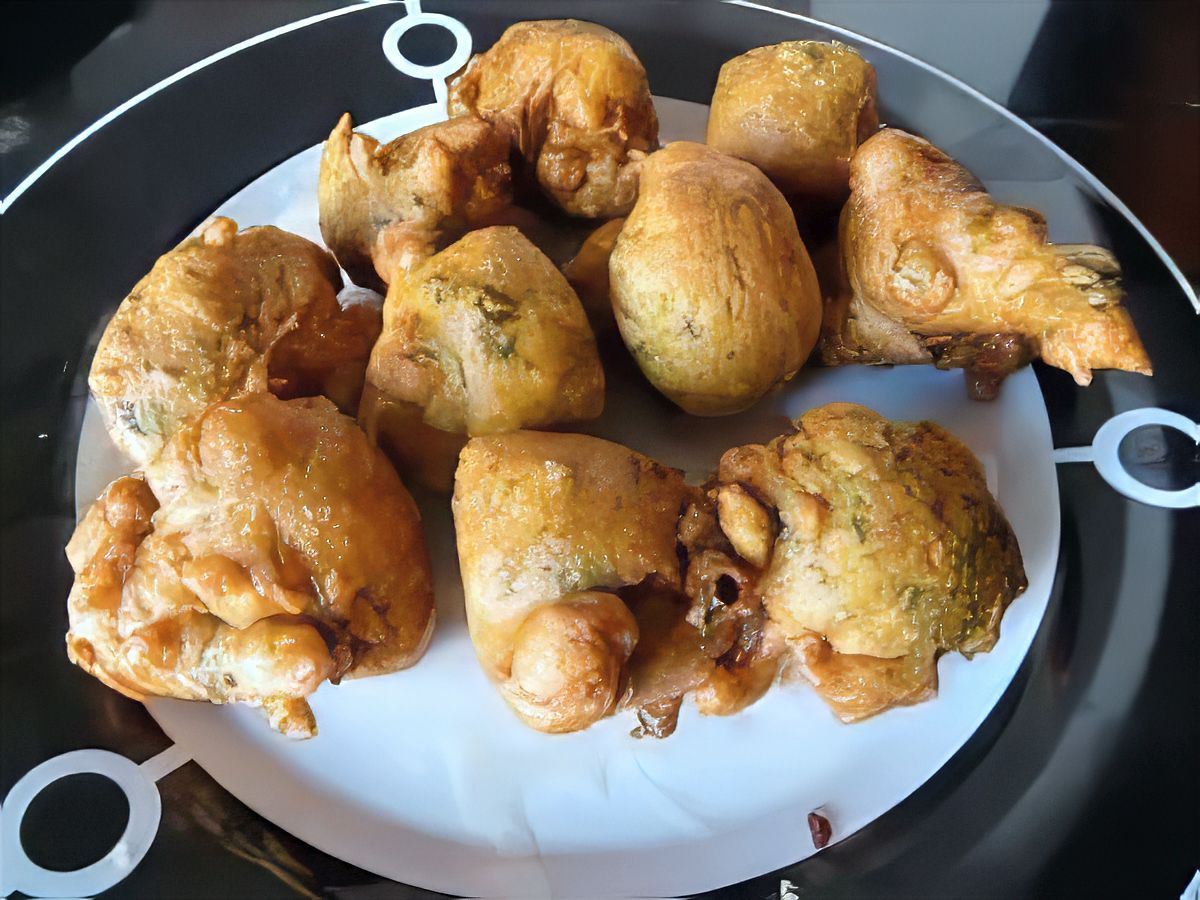
For (20) Chili Bites (Dhaltjies)
Ingredients:
Vegetable oil for deep frying
250 ml (1 cup) self-rising flour
250 ml (1 cup) chickpea flour
10 ml (2 tsp) baking powder
10 ml (2 tsp) turmeric
10 ml (2 tsp) masala
1 onion, chopped finely
5 leaves of spinach, chopped
5 ml (1 tsp) salt
Mix dry ingredients in a bowl. Add the onions and spinach, and mix well. Add 200-250 ml water, form a dough, and add the onion and spinach mixture. Mix the dough until the texture is easy to drop. Fill a pot halfway with oil and heat it to medium-hot but not boiling. Dip a spoon in oil and scoop up enough dough to make one golf-ball-size dhaltjie. Drop the dhaltjie into the oil and fry until cooked in the center (use a skewer stick to check the center of the dhaltjie for doneness). Drain dhaltjies on paper towel.
You must be logged in to post a comment.