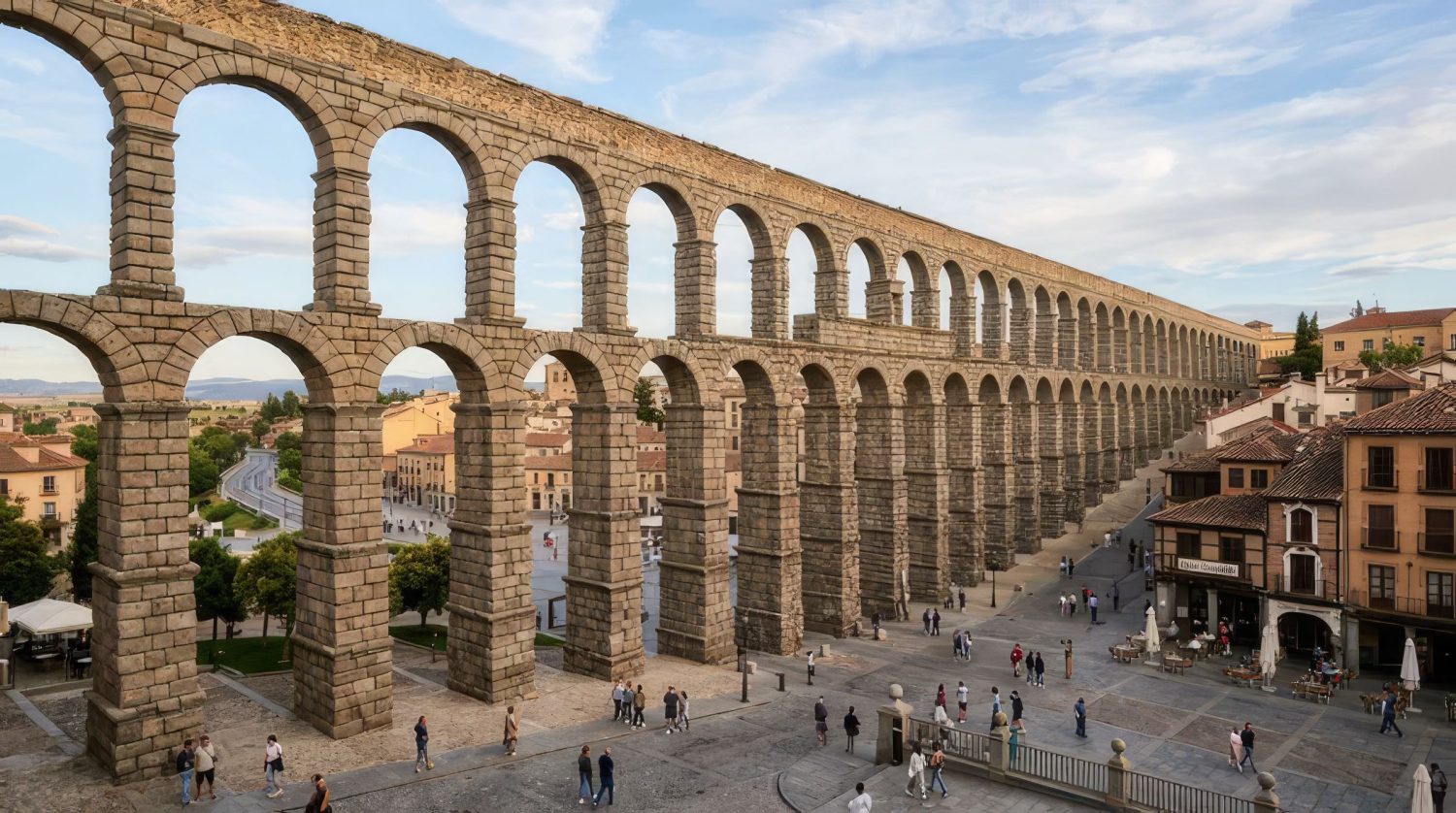
Exploring Segovia, Spain, we found layers of history and incredible food. What do an ancient (1 AD) Roman aqueduct, a 12th-century fortress, a 16th-century cathedral, and Cochinillo (suckling pig) have in common? Their home is Segovia, a World Heritage Site and one of Spain’s most beautiful historic cities.
Segovia is a provocative historical mix of Muslim, Christian, and Jewish communities.
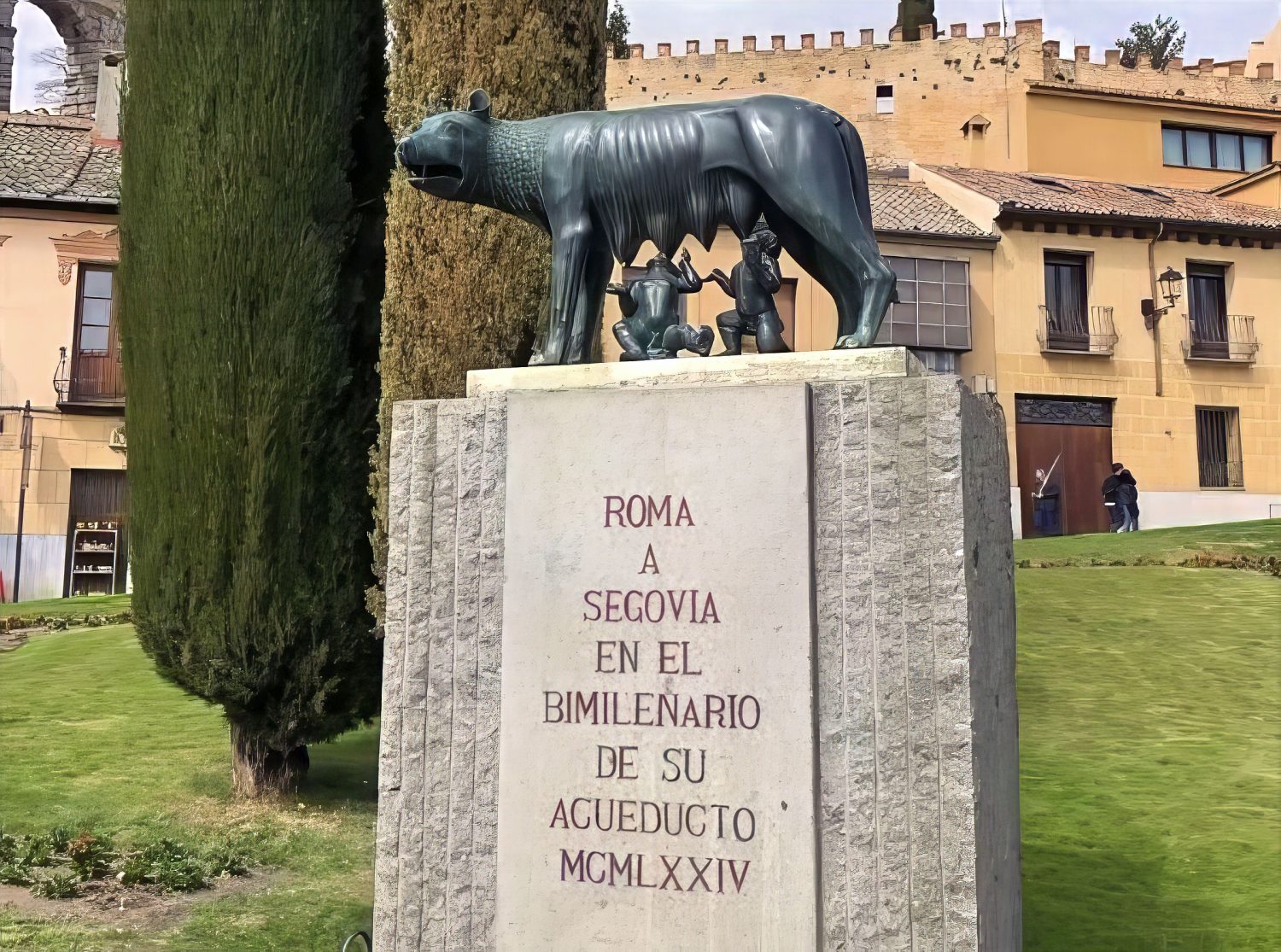
By the time the Romans completed the aqueduct, they controlled much of the Iberian Peninsula. Today, this impressive stone structure still stands remarkably well, serving as a grand entrance to Segovia. Walking beneath its arches, we entered another era: narrow cobbled streets, aged stone walls, and just the occasional car passing by ourselves against ancient facades. We wandered slowly, stopping whenever a monument caught our eye. One of my favorites, for its fascinating mythology about the origins of Rome, sits directly under the aqueduct—a bronze Capitoline Wolf nursing the twins Romulus and Remus, a quiet reminder that Segovia’s story began in the shadow of Rome itself.
While it might seem cliché, the best way to describe the Alcázar of Segovia is as a ‘fairy tale.’ Positioned atop the city, this fortress showcases centuries of conquest—Roman, Muslim, and Christian. Several centuries of people altered the Alcázar. First, the Romans built a fort, then the Moors changed it to a fortress, and finally, in the 12th Century, the Castilian monarchs used it as a royal palace. The turrets and towers are so captivating that they are believed to have inspired Walt Disney. From inside, we paused to gaze at the sweeping views of the surrounding hills and red-tiled rooftops.


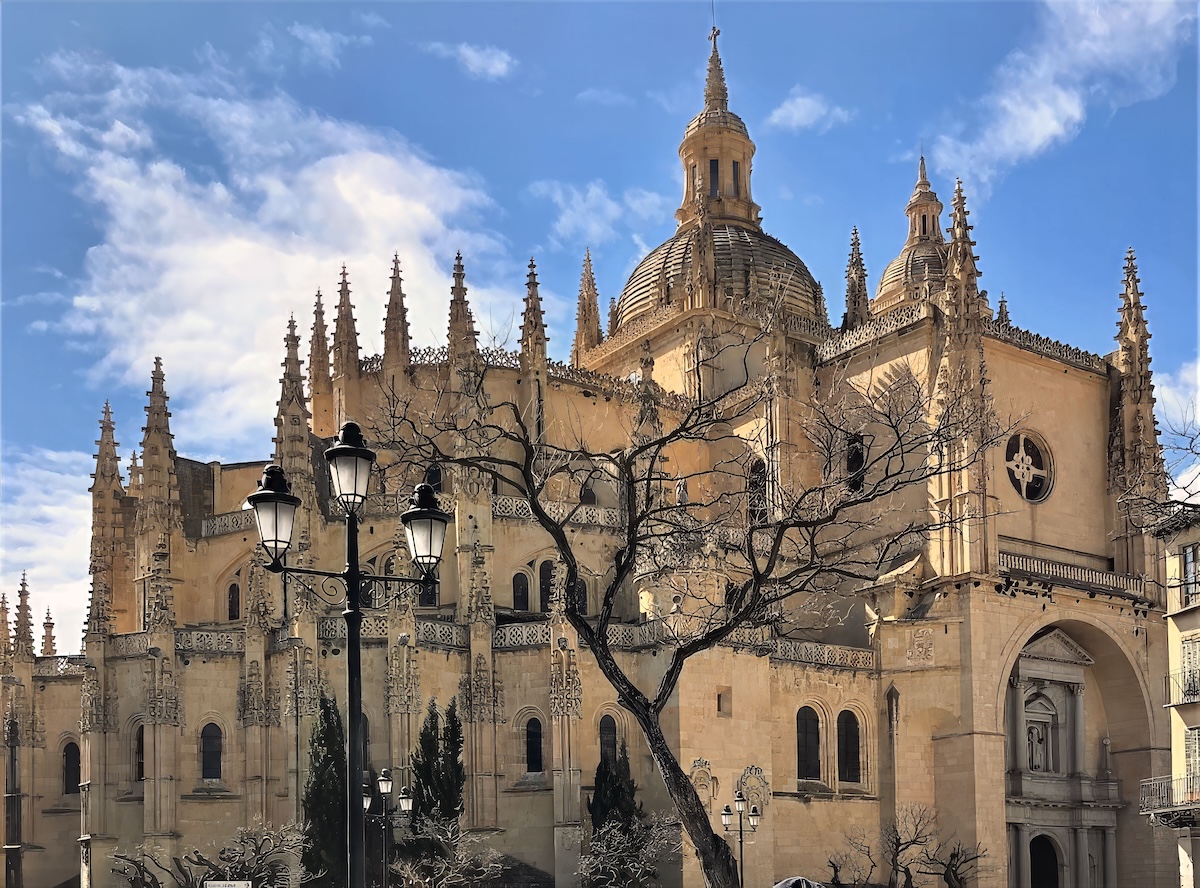
During our continued exploration of Segovia, we came across the impressive 16th-century Cathedral of Segovia. It stands out prominently in Plaza Mayor, the city’s central square, in Old Town, and is a hub of activity.
The 16th-century Cathedral of Segovia rises above the Plaza Mayor, the beating heart of the Old Town. By day, its pale stone glows in the sun; by evening, its towers watch over a plaza buzzing with conversation and clinking glasses.
Judiones de las Granja is a rich buttery giant white bean stew, unique to Segovia. It complements the legendary Cochinillo Asado (roast suckling pig) at Lázaro Restaurante in Segovia.
Exploring Segovia for dinner, we selected one of several cafés near the square and sat down, exchanging stories with two Canadian couples—teachers exploring Spain. Sampling the iconic food in Segovia was one of our best dining experiences! Cochinillo Asado (traditional roast suckling pig) is a legendary culinary masterpiece, accompanied by another iconic dish of Judiones de las Granja, a rich, buttery giant bean stew.


After dinner, we started looking for Segovia’s famous marzipan, a simple almond-and-sugar dessert from Spain. Segovia’s marzopan is unique. It has a soft, sweet, almond-flavored outer coating made with crushed almonds and sugar.
Travel Notes -Exploring Segovia from Madrid
Segovia is a day trip from Madrid. The quickest way is by high-speed RENFE train, which takes 28 minutes for a small cost of €20, a little over $20.00 at today’s rates.
From exploring Segovia, southwestern Europe to Belfast in northwestern Europe, read A Journey Through Belfast: From Troubles to Triumph
Note: The cover photo is AI-generated; the rest are by Marie Goff.
You must be logged in to post a comment.