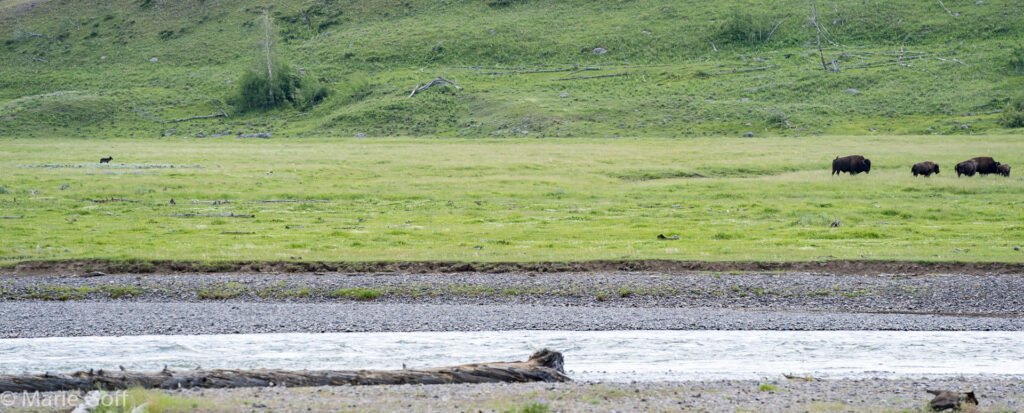
This was Montana. The bison lay bleeding in the river, their heads rolling from side to side. There was nothing the herd could do but keep moving, increasing their safety by staying together. As they reconstituted on the opposite side of the river, a lone wolf stood close by, alert and ready. Our gaze followed as the herd turned away from the river and upward, toward the higher ground. There, a grizzly bear appeared and disappeared over the ridge.
This dramatic scene unfolded before us in the Lamar Valley. A park ranger explained that the wolf was familiar, a black male traveling alone, not part of a pack. The wolf had injured the bison lying in the river. As he waited for the bison to die, he continued to harass the herd. The bear was also alert and ready, hoping to snare a stray bison calf.
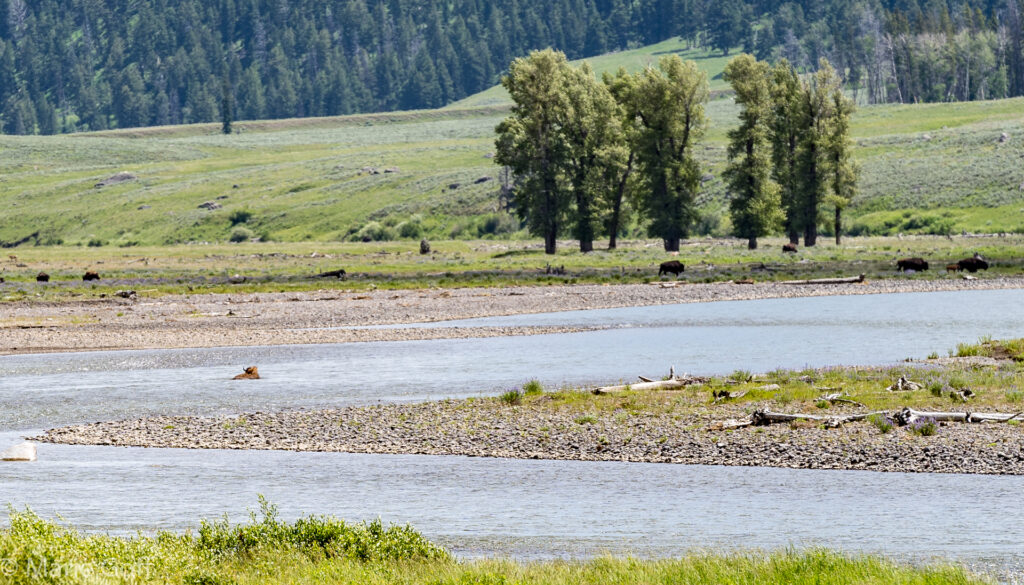
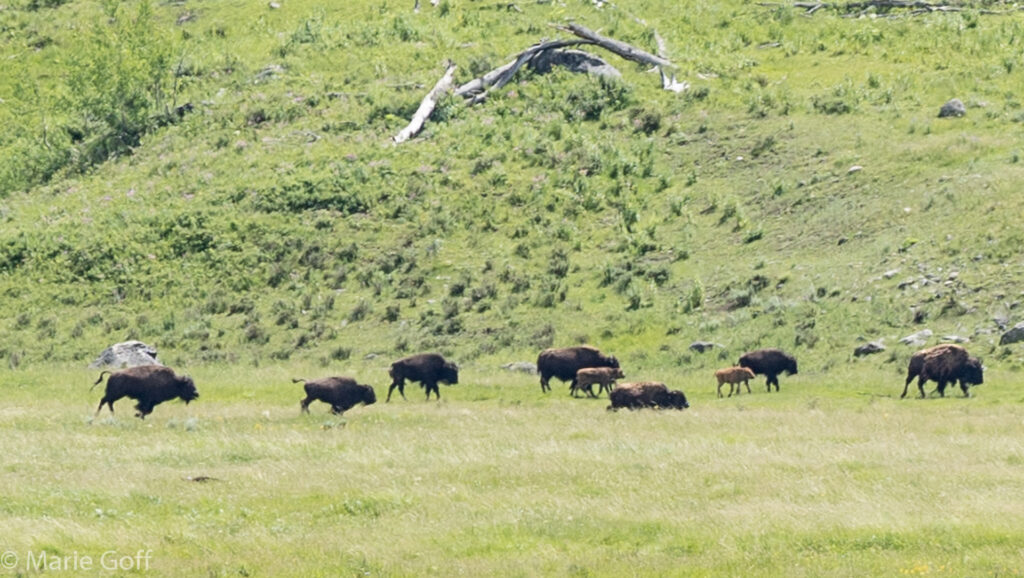
Passing through the Lamar Valley on our own, we’d enjoyed watching the spectacular herd of bison in the distance. But traveling with an experienced guide, we were learning more about life and death in Yellowstone National Park. This narrative transformed sightseeing into a fascinating and suspenseful adventure.
Eddie and I were traveling with the ETV Endowment, “Meet Me in Montana, Out West with Patrick McMillian”!
As we continued to watch the bison, wolf, and bear, we were learning. Bison are good swimmers but vulnerable when crossing a river. It stands to reason that the wolf would eventually return to satisfy his hunger. But there’s no guarantee. The bear would likely take advantage of the bison first. Wolves and grizzly bears are top predators of bison at Yellowstone, but bears tend to be ahead. Both wolves and bears prey on weak and injured bison. Other hungry scavengers compete for the food source, including coyotes, mountain lions, and even birds, especially ravens.
As longtime fans of the Emmy Award-winning television program Expeditions with Patrick McMillan, we were excited about this adventure. Patrick explained natural history and science as we traversed this incredible landscape of mountains, forests, plains, prairies, highlands, and valleys. Using the same gentle, confident tone as on TV, Patrick described the prairies. He shared his experiences working with national-level partners to save endangered flora and fauna. One particularly touching story concerns his efforts with fellow naturalists to reintroduce the endangered prairie dog to certain areas.
In Montana, many ranchers prefer eradication in spite of proof that prairie dogs and cattle coexist successfully. See the full documentary, The ‘Prairie Dog Wars’ with Patrick McMillan, here.
We also learned more about Patrick along the way. His soothing tone belies a passionate fighter’s spirit for conservation. How lucky we were to travel with such an experienced naturalist, author, educator, and practiced storyteller!
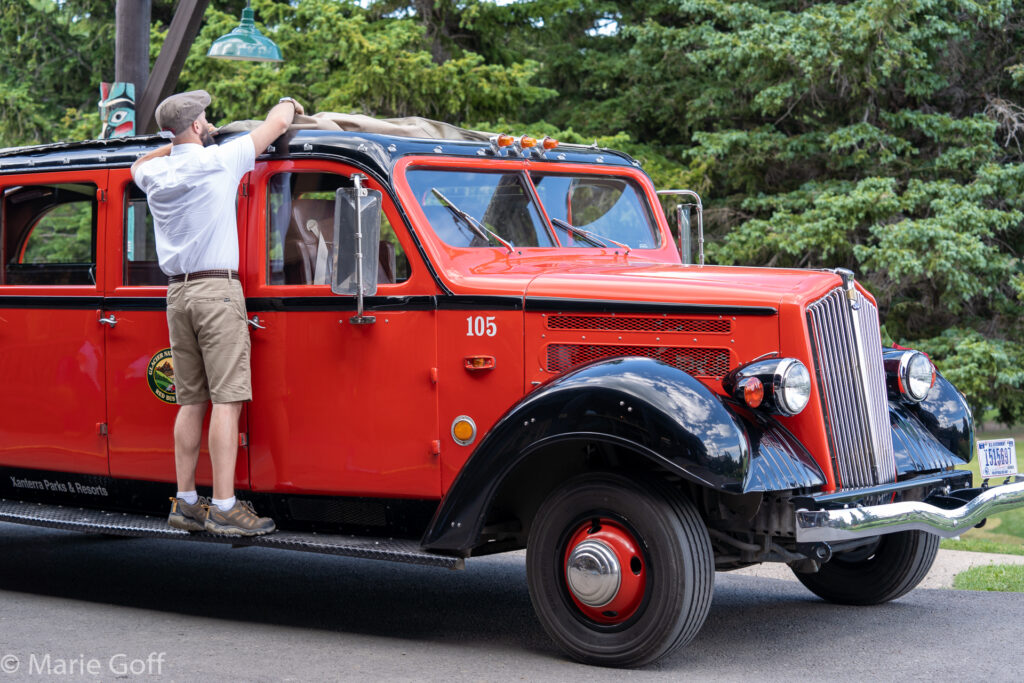
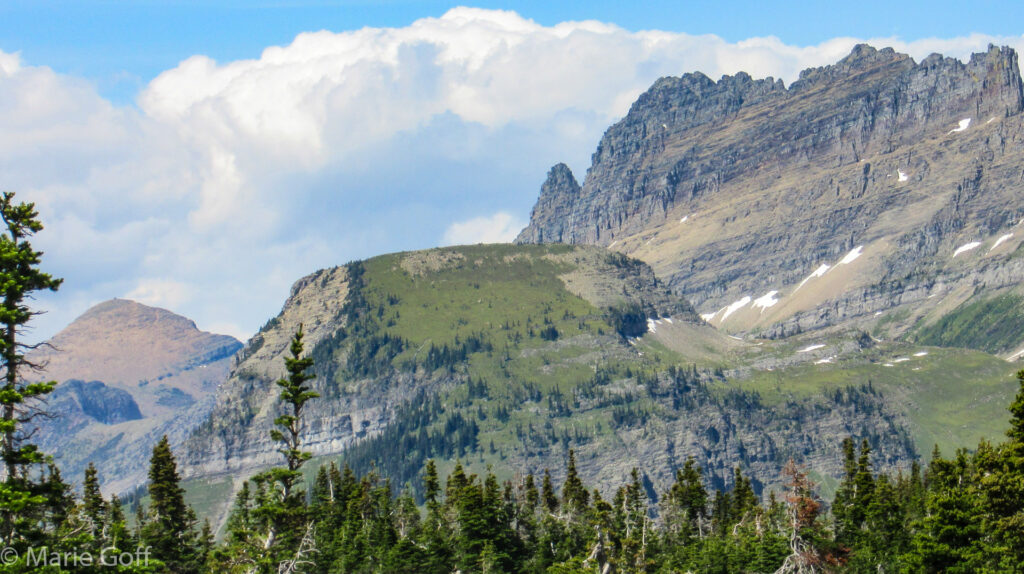
Traveling to the east side of Glacier Bay National Park and Preserve, we observed majestic mountain ranges through the open tops of Red Jammer buses. Red Bus Tours, the coolest way to go! Drivers shuttled us from Lake McDonald via Logan’s Pass on “Going to the Sun Road,” stopping to view bears along the way.
Many Glacier is known as the “Switzerland of North America.” Pepper spray burned our noses as we disembarked from our pontoon there. Someone had just sprayed a bear at the entrance to the wooded path. A few steps in, we were surprised to see a grizzly bear cub, about 35 feet from the trail. Unsure whether it was the best course of action, we resisted our natural urge to flee and stood still. With a clear view of the bear, I took a few pictures, alternating between my camera (on silent) and my iPhone. As soon as Patrick stepped forward from the back of the line, he quietly told us to keep moving quickly.
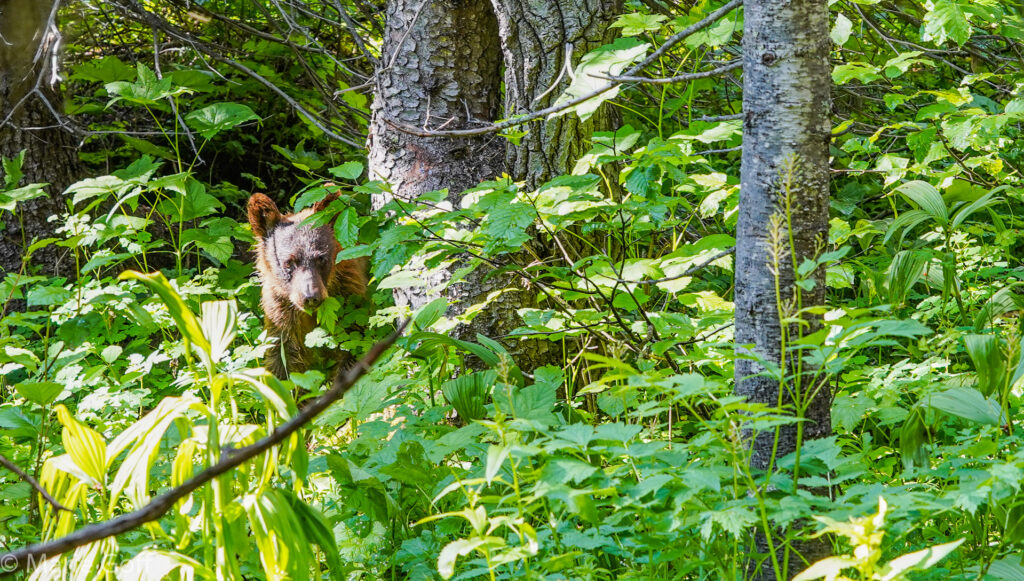
Safely away from the bear, Patrick explained that in spite of his calm appearance, seeing the cub made him very concerned for our safety. He noted,
“The fact that we were so close was not in our best interest and not something I would have encouraged, because that’s the kind of thing that gets people hurt. It wasn’t the little bear cub I was worried about, but the mother who’d been pepper-sprayed just before we got off the boat.”
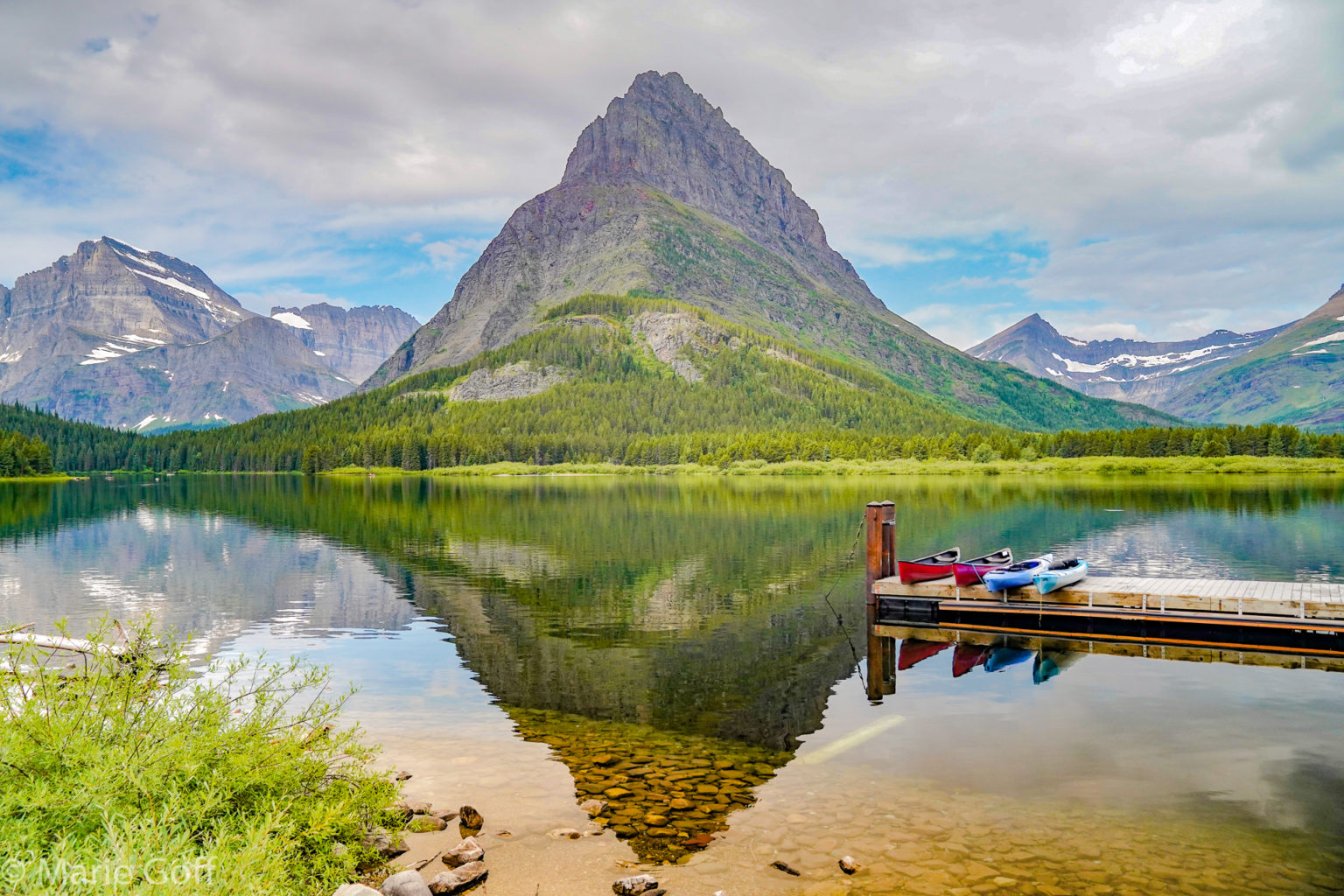
Swiftcurrent Lake
As we returned across the Swiftcurrent Lake, we saw the cub’s mother grubbing around on the opposite shore and were relieved to see she was safe, too. There were a few kayaks and a canoe on the lake, and just on the other side of a wooded area, we could see people walking on the trail, about 100 feet from the bear. It’s likely that they had no idea they were so close to a mother bear with a cub. Later, we learned that Patrick had quietly circulated among key people to alert others to the danger in the area.
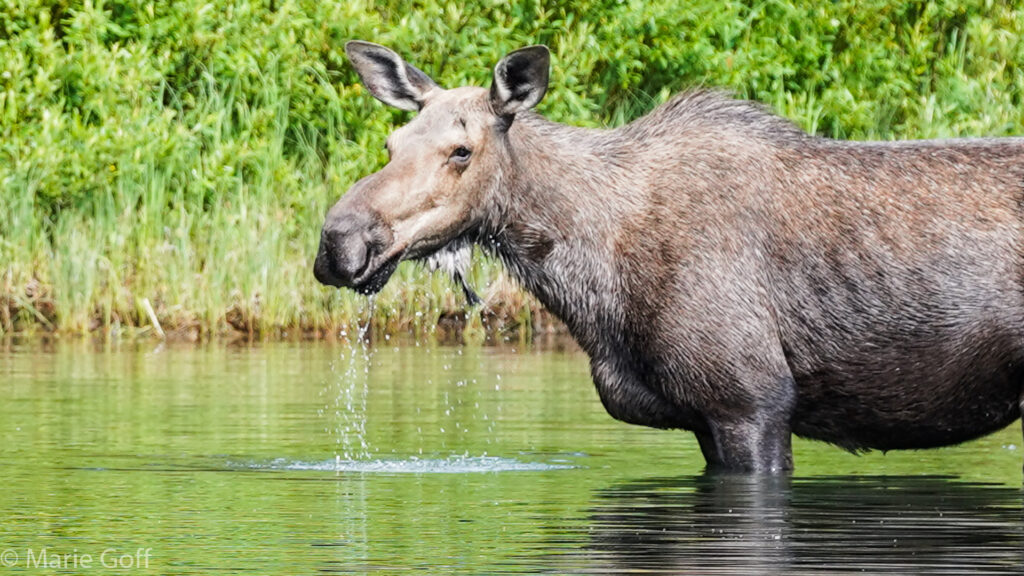
The dramatic scene on Swiftcurrent Lake was complimented by a moose enjoying a cool drink.
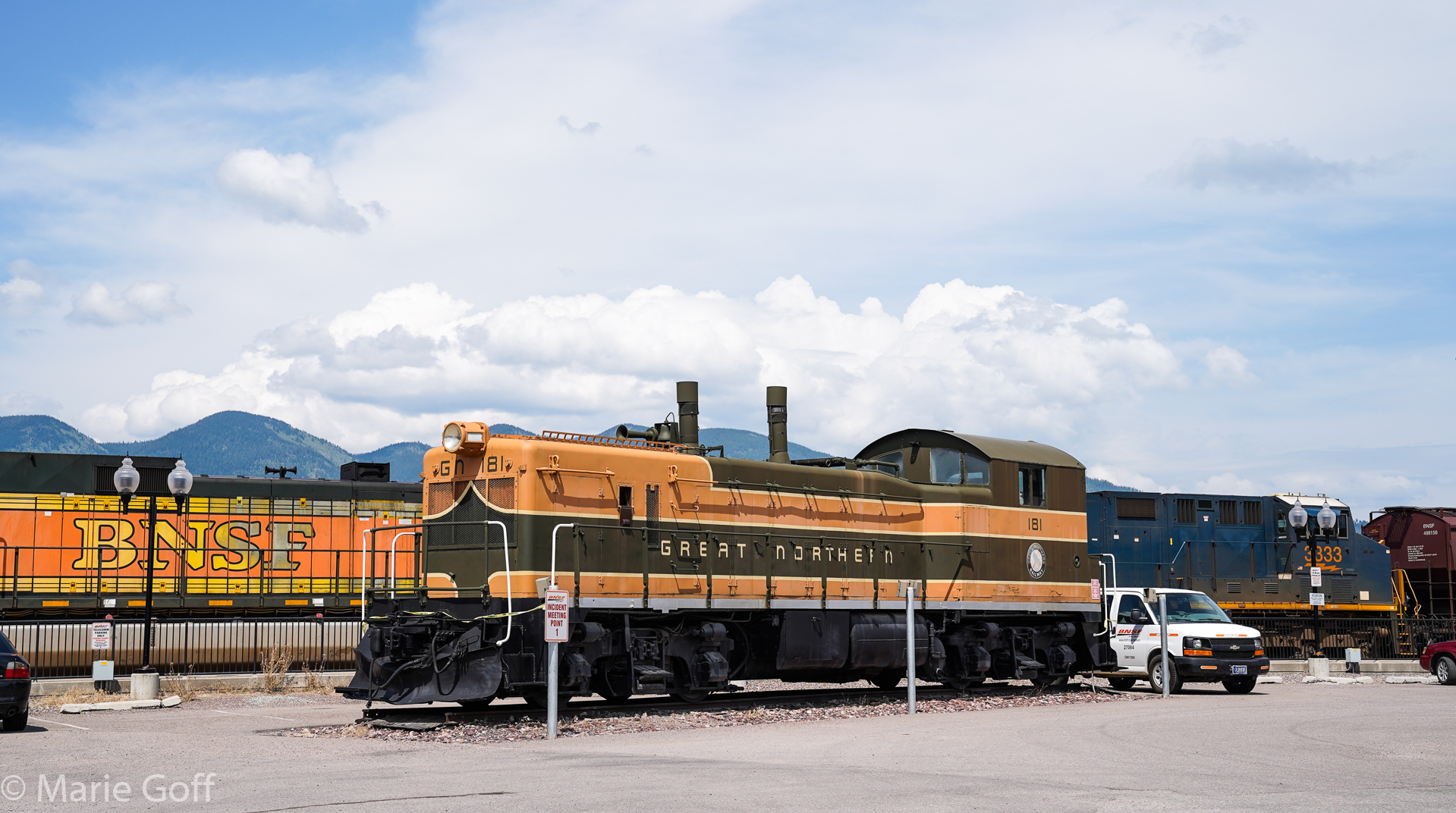
Awe-inspiring views of the lake and mountain peaks entertained us as we lunched in the historic Ptarmigan dining room at Many Glacier Hotel. Built by the Great Northern Railway in 1914-15, the hotel, with its towering lobby, is almost as jaw-dropping as the vista from the window. Reluctantly, we departed the breathtaking landscape of Glacier National Park, with more incredible scenes to come.
At the Lewis and Clark Interpretive Center in Great Falls, Montana, we refreshed our knowledge of history before taking in the scenery along the trail at Giant Springs State Park. Crystal-clear water flows at 156 million gallons per day from the Madison Aquifer. It’s one of the largest freshwater springs in the country. As we lunched, a ranger explained how members of the Lewis and Clark Expedition, also known as the Corps of Discovery, might have perished. But they were aided by Sacagawea, a Native American who provided valuable clues that helped them navigate her native Shoshone lands.
Today, Giant Springs State Park is the most visited State Park in Montana.
Visitors enjoy over 20 miles of single-track trails, great for hiking, and miles of paved trail for casual biking, walking, and birding.
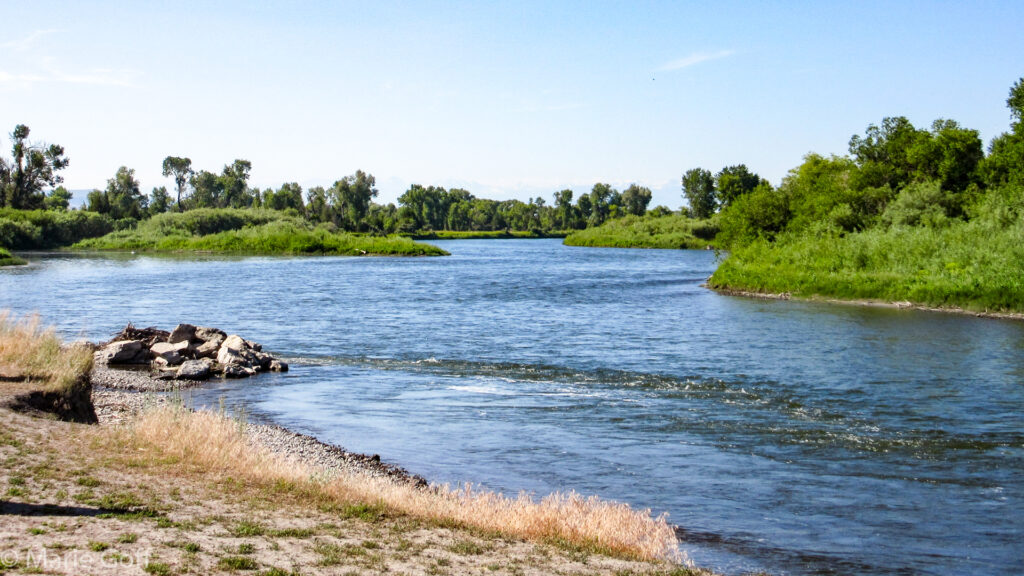
We continued the Lewis and Clark journey with a two-hour boat ride from Helena, Montana. On the Missouri River, we passed through the towering gray limestone cliffs of Gates of the Mountains Wilderness. In his journal, Meriwether Lewis recorded “the most remarkable cliffs we have yet seen” and described the 1,200-foot-high cliffs as closing like gates. He also noted abundant wildlife, including bighorn sheep, deer, eagles, and more, that visitors might still see today. Later, we followed the Missouri River to the headwaters at Three Forks and the Madison River Valley before turning north. Along the way, we spotted bison, elk, eagles, black bear, and pronghorn, and we could only imagine the awe Lewis and Clark must have felt when they saw thousands of bison and other creatures along the route.
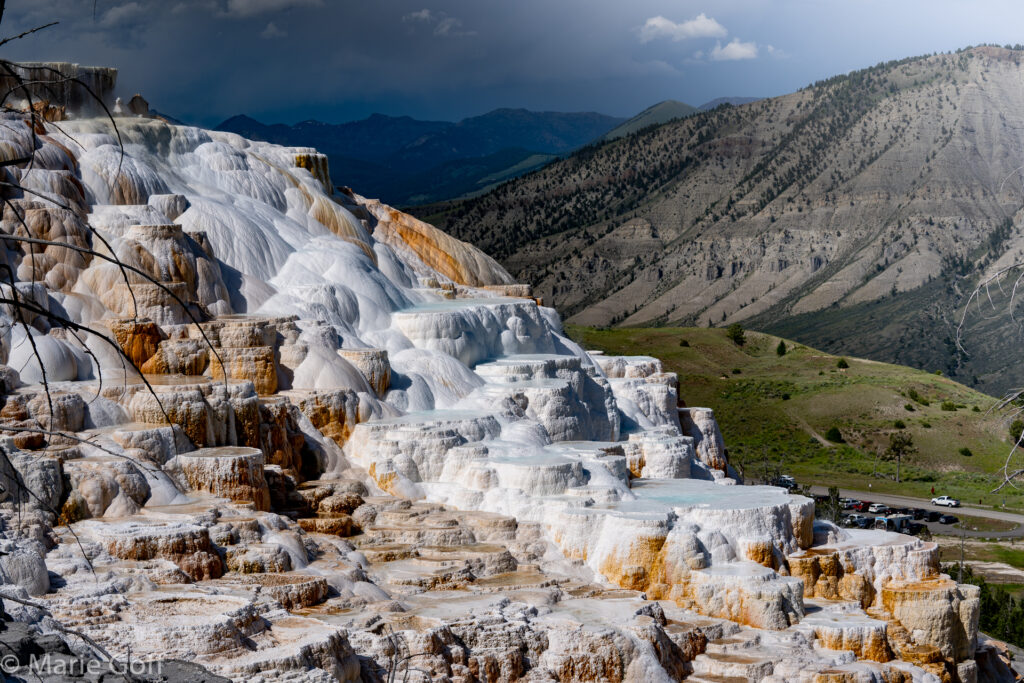
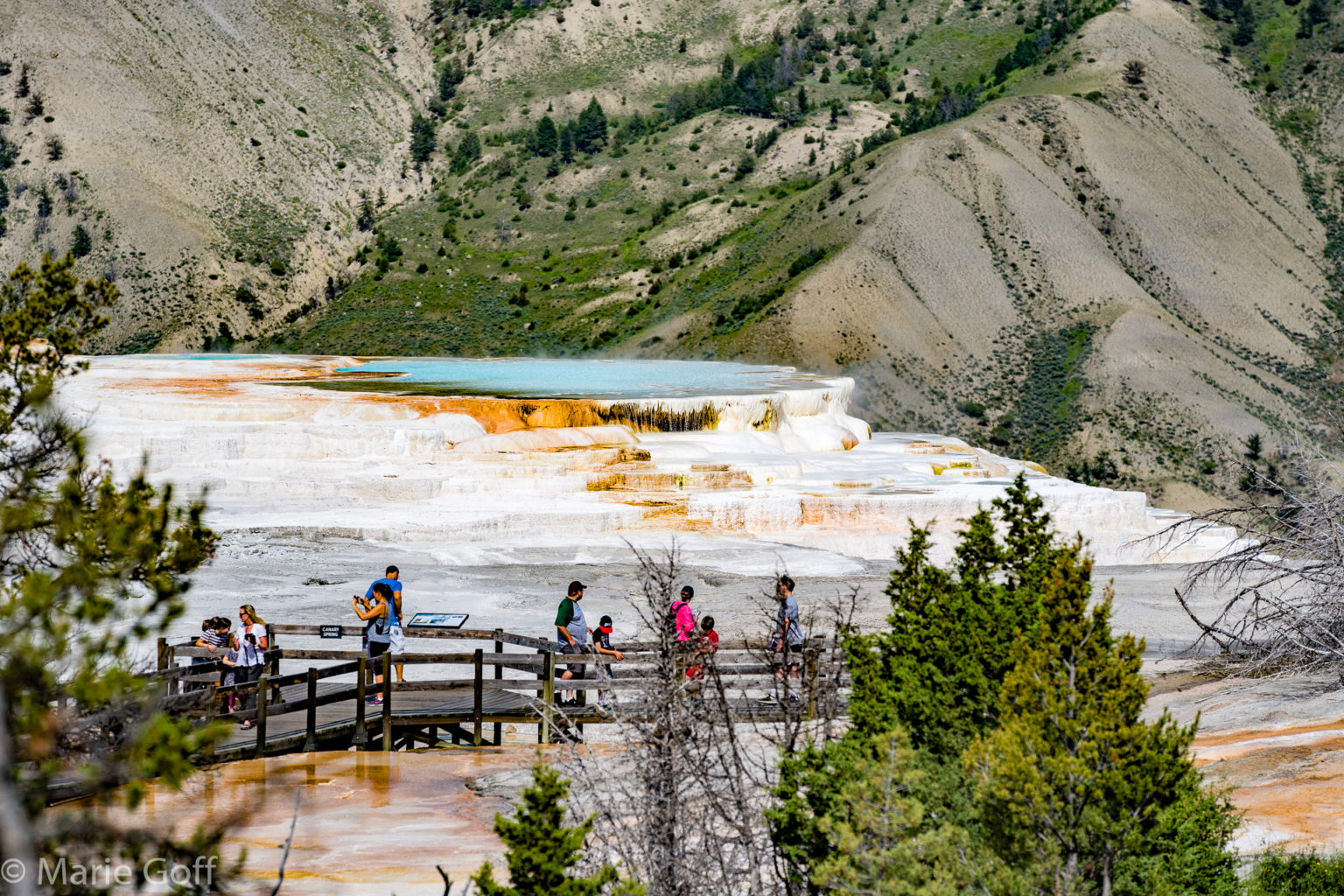
Entering Yellowstone National Park via Mammoth Hot Springs, we gazed at the mysterious wonder of landscape.
Underground minerals and limestone rock combine to create multilevel travertine terraces of giant blue-green cauldrons, spilling over with steaming hot water.
Finally, we entered the Lamar Valley. Along Dunraven Pass, we came upon the scene described at the beginning of this story. The predator-prey saga: bison, wolves, grizzlies, the circle of life in Yellowstone, and our raison d’être for the trip.
The primeval scene would continue after we were gone.
Patrick foretold what would happen next but called the park ranger to confirm. The big male grizzly failed to nab a bison calf for dinner. But he would later drag the bison from the water and eat as much as he wanted. Then the wolf would eat as much as he wanted. Finally, the scavengers would eat until nothing was left.
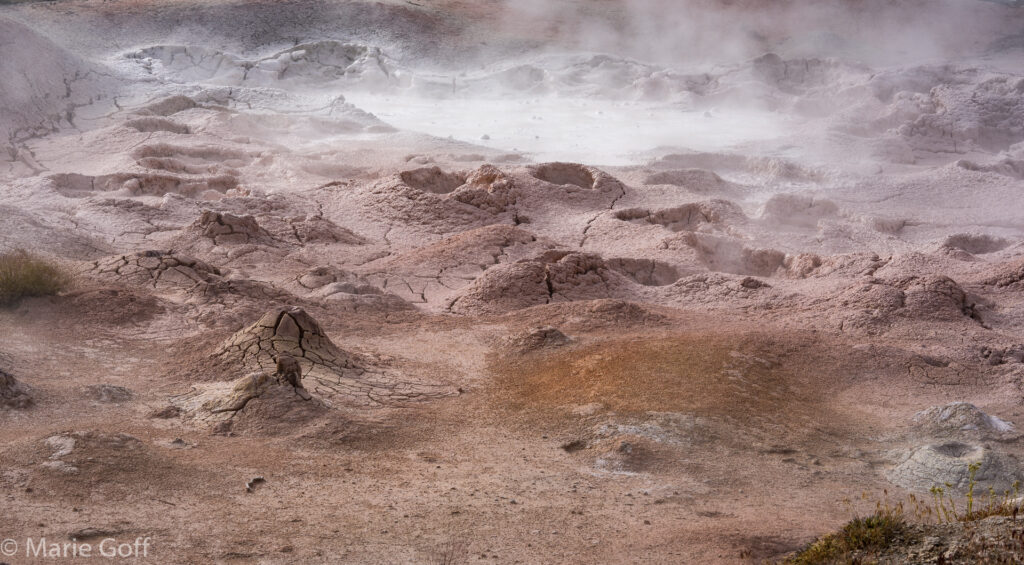
We visited hot springs, bubbling mud pots, fumaroles, and geysers. They have alluring names like Old Faithful, Fountain Paint Pots, Artist’s Point, and Brink of the Falls. These fascinating geothermal features and waterfalls at Yellowstone rival any natural wonder in the world, appearing otherworldly and difficult to describe. Boardwalks and random seating offer visitors the opportunity to observe closely.
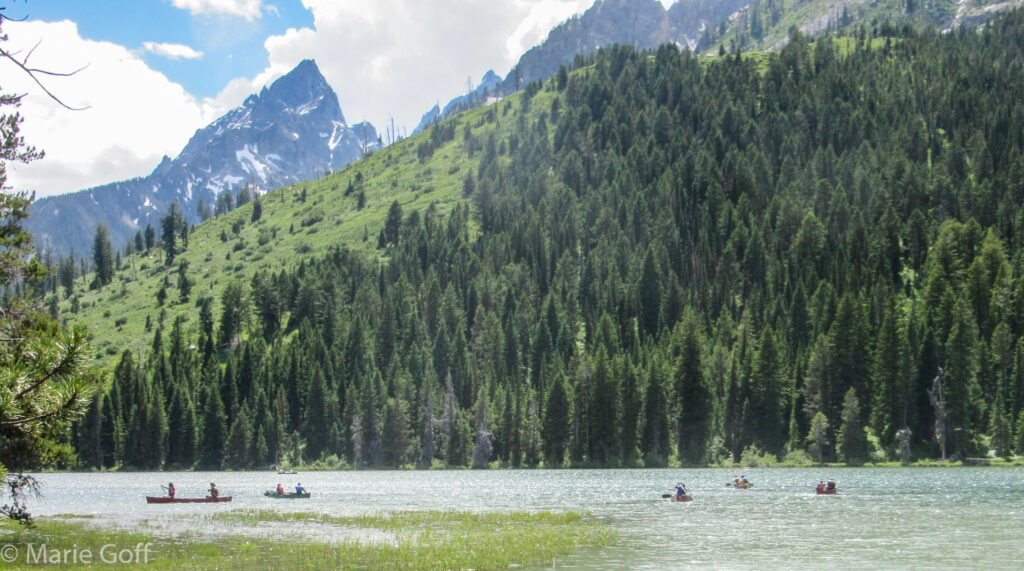
Our journey with the ETV Endowment and Patrick McMillan came to a dramatic close at Grand Teton National Park. With views of the Cathedral Group and a walk along String Lake, our moods turned nostalgic. We’d been fortunate to glimpse these magnificent places in Western Montana through the lens of a famed naturalist.
You had to pinch yourself often to make sure it was real!
How we got there
Our group gathered at Glacier Park International Airport. Eddie and I drove from South Carolina to the trip’s terminus at Jackson Hole Airport, stopping to sightsee along the way. From there, we rented a car and drove to Kalispell, Montana, arriving in time to meet the group at the airport.
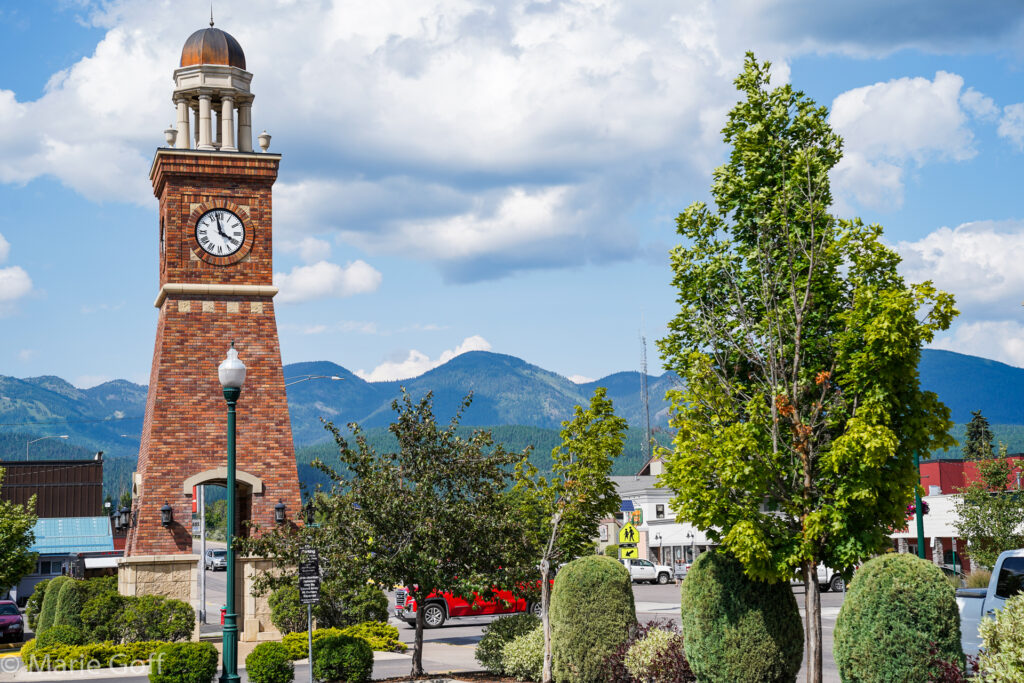
From Kalispell, our bus transported us to Whitefish, Montana, only 27 miles from Glacier National Park, where our adventure began.
Hosts from the ETV Endowment
The ETV Endowment provides extensive travel opportunities to fascinating destinations around the world. Out hosts for this trip were Dr. Patrick McMillan and Coby Hennesy.
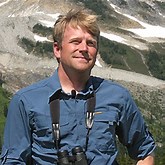
Dr. Patrick McMillan is the Hilliard Professor of Environmental Sustainability, Director of the South Carolina Botanical Garden, Director of the Clemson Experimental Forest, and Director of the Bob Campbell Geology Museum. He is the Emmy Award-winning host, co-creator, and writer of the nature program Expeditions with Patrick McMillan, aired on PBS affiliates across the nation.

Coby Hennesy, CPA, CFRE is Executive Director of the ETV Endowment and serves on the boards of several civic organizations and charitable organizations. She is Executive Producer of Man and Moment: Steve Flaherty – A Voice Returned and the NPR series Song Travels with Michael Feinstein. Coby accompanied our group to Montana, providing logistical support and special treats to eat along the way.
Find Out More
The ETV Endowment arranged accommodations with budget, comfort, local history, and a town center within walking distance. One of our favorites was the rustic and historic Glacier Park Lodge, East Glacier Park. One of many Great Northern Railway hotels in or around Glacier National Park, the structure was built over one hundred years ago. Its massive lobby and bar area is flanked by some of the world’s largest Douglas Fir logs, hence the name “Big Tree Lodge”. Visitors glimpse the social life of wealthy and powerful guests of earlier periods from pictures located throughout the hotel. There are also renderings of local Native Americans of the period. Guests today enjoy the rustic feel of the historic hotel with the comfort of a few updated amenities.
More Information
The Prairie Dog Wars with Patrick McMillan
Expeditions with Patrick McMillan, fascinating adventures throughout North and South America.
American Prairie Reserve, a conservation group dedicated to work that creates a protected area in central Montana.
“Two visions collide amid push to restore Montana plains ” National Geographic Magazine, by Hannah Nordhaus, January 16, 2020
Train travel is another way to see the great Northwest. Whitefish, Montana, is the busiest stop on the Empire Builder, Amtrak’s most popular long-distance passenger train. The historic depot is a history buff’s dream. Traveling daily from Chicago to the Pacific Northwest, passengers enjoy magnificent scenery. In certain sections, Trails & Rails – Heritage Appreciation Onboard, a partnership between the National Park Service and Amtrak, provides guides during spring and summer.
Note About Photography
In an earlier post, I wrote about purchasing a Sony a7III for an incredible expedition to Jordan. Since then, I’ve been asked how the photography is going. Some ask why go to all the trouble to learn to use a professional camera when our iPhones take great images. I photographed the bear cub using both the iPhone and the Sony, and after editing in Adobe Lightroom Classic, I got a clear image from the Sony. The thrill was like getting a clear image of the moon for the first time. I use my iPhone 11 Pro Max every day for great images, but the Sony is invaluable for taking the best images.
You must be logged in to post a comment.