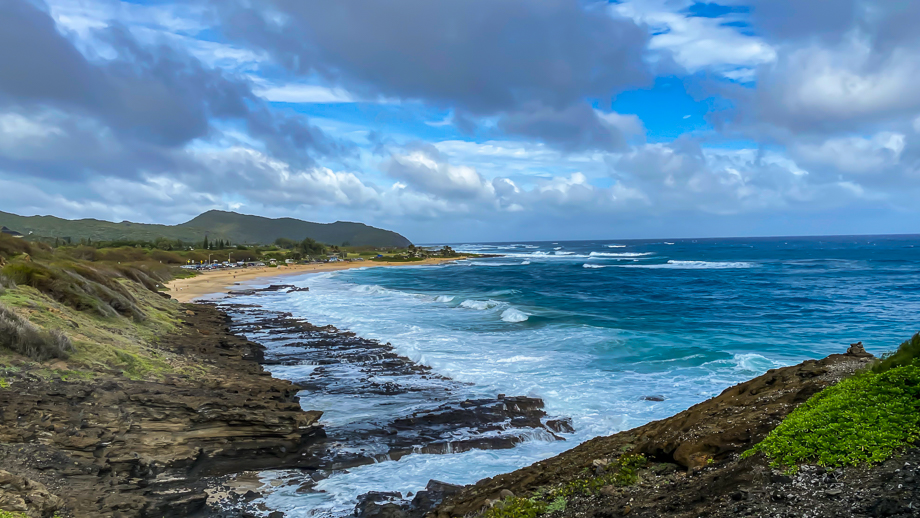
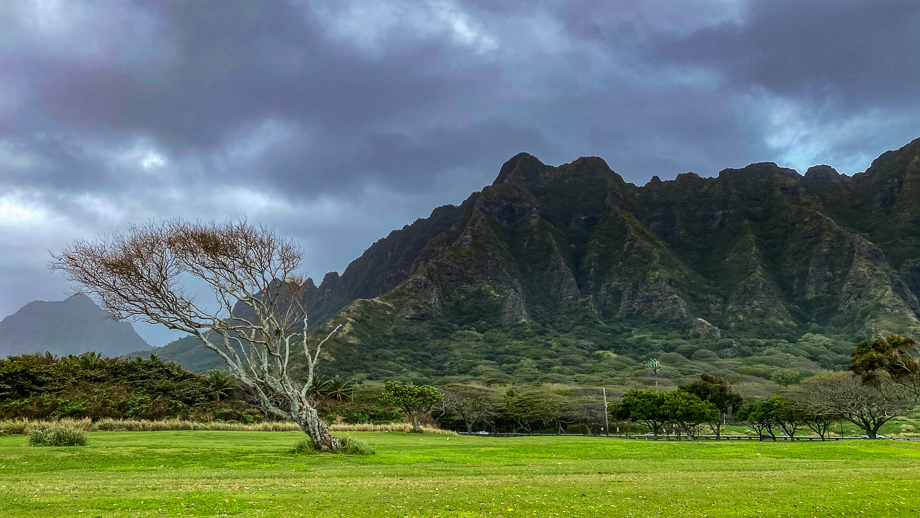
The verdant Ko’olau mountain range hangs like billowing curtains shrouded in mist, an ethereal image on an overcast day. On the opposite side of the road, the turquoise ocean breaks across hidden coral reefs in the distance, sending wave after wave of white foam gliding to the sandy shore. The enveloping beauty is mesmerizing, visceral, and excruciatingly beautiful.
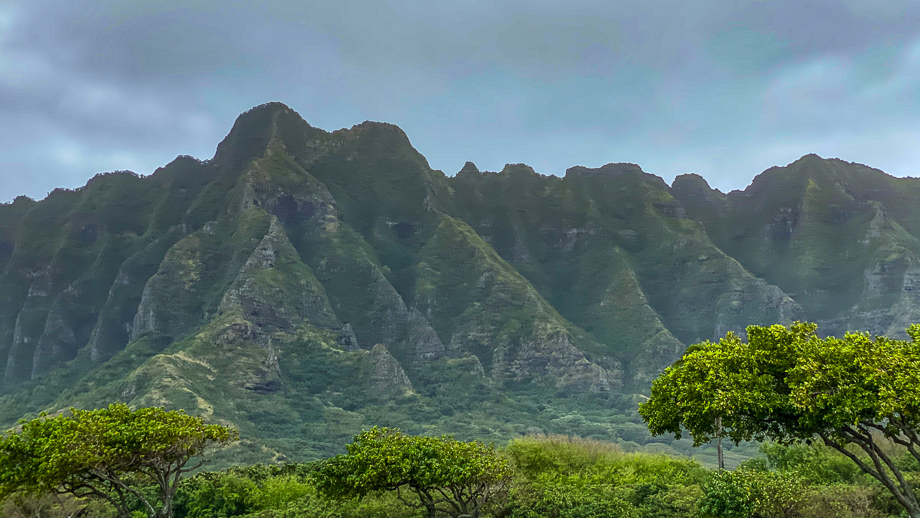
In January, my husband, sister, and I set out for Hawaii to escape the cold winter months in South Carolina. Landing on Oahu without an agenda, we scheduled a guided tour and set out in a small excursion van to explore the island. As we traveled north along the shore on the windward, eastern side of Oahu, the guide pointed to landmarks along the way. She explained that Hawaiian culture is intrinsically tied to the earth and passed down through generations, along with the responsibility to care for the earth, each other, and all living things.
Chapter 5 of Hawai’i Revised Statutes, § 5-7.5, “Aloha Spirit”: “Aloha Spirit” is the coordination of mind and heart within each person. It brings each person to the self. Each person must think and emote good feelings to others.
The best places to learn about the history and culture of Hawaii and the Hawaiian people are within easy reach of visitors to the island of Oahu.
Bishop Museum of Natural and Cultural History
The Bishop Museum offers visitors the chance to journey through the fascinating realms of Hawaii. There is the realm of gods and legends before contact with the Hawaiian Islands, the realm where people live in natural surroundings, and the realm of the noho ali’i, rulers, historical moments, and the connection to the gods.
The Pacific Hall is dedicated to the importance of the ocean in Hawaiian culture and the early Polynesian wayfinding methods. Ancient teachings describe how the sea is connected to the land and how stewardship of both forms a connection to people. Ancient healing practices such as lomi lomi and ho’oponopono heal not only people, but also the land, sea, and air.
The largest collection of Polynesian artifacts in the world is located in the Bishop Museum. These include artifacts, heirlooms, and photographs of Hawaii’s ruling families. The rulers of Hawaii believed they descended from the first Polynesian, Papa, short for Papahanaumoku, the earth mother goddess. Their connection to the earth is spiritual and forms the basis of Hawaiian mythology and religion.
These beliefs were passed down through hula dancing combined with chanting. Hawaiians adorned their bodies with leis, flower, seed, or shell necklaces, and kakau, tattoos. These often identified social status and koa, or warrior, skills. Tattoos also served to protect health and spiritual well-being.
For special attractions, plan your visit to the Bishop Museum ahead of time. These may include documentaries such as We the Voyagers: Lata’s Children, a film depicting living Polynesian craftsmen and storytellers.
Iolani Palace
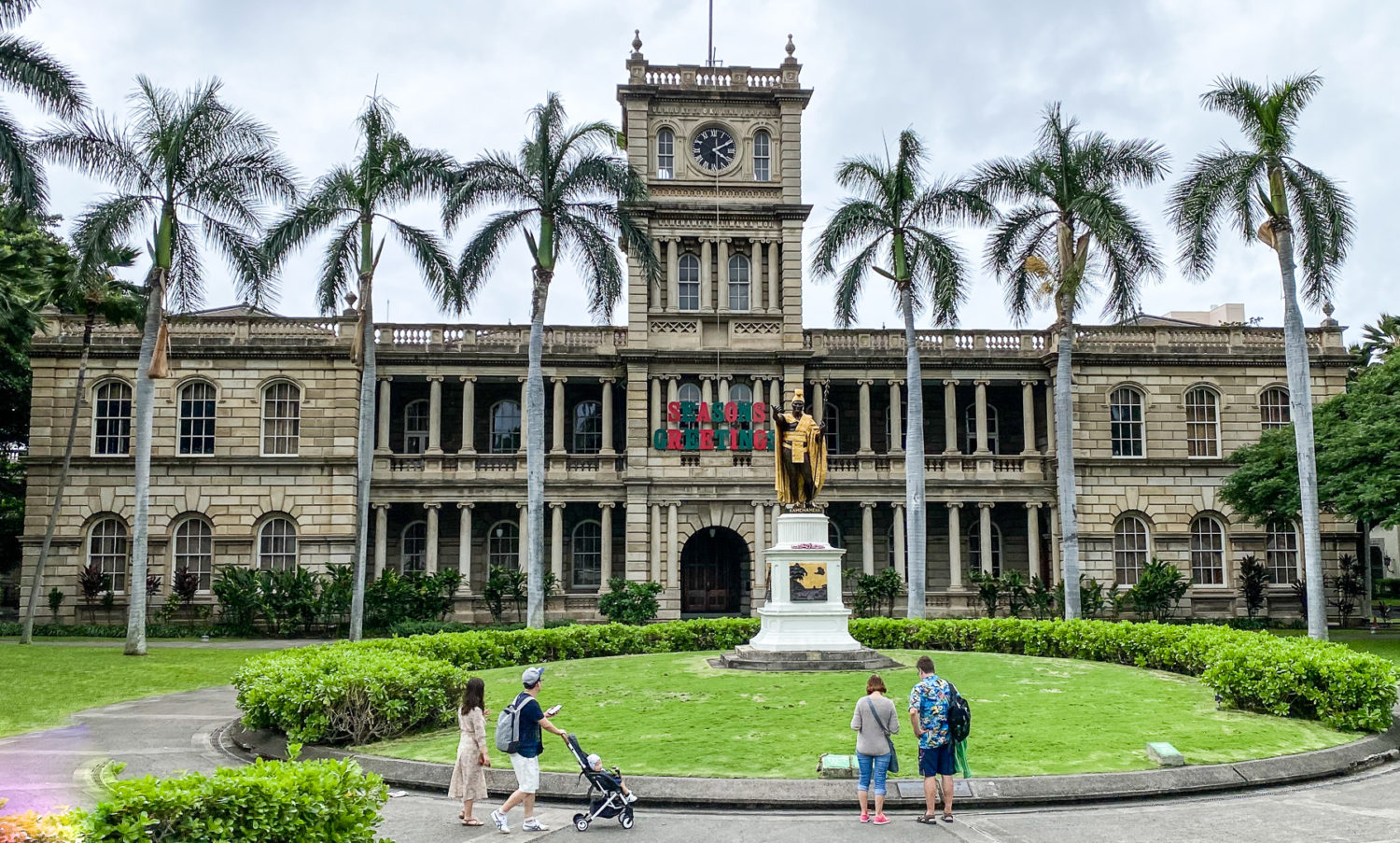
A registered National Historic Landmark, Iolani Palace represents the cultural, political, and spiritual heritage of the Hawaiian people. It is a tangible reminder that Hawaii was once a sovereign nation ruled by a dynasty that lasted 80 years. Hawaii’s royal families lived there and conducted social and political affairs within its walls.
In 1893, Queen Liliuokalani was imprisoned on the second floor. It was there that she signed abdication documents that ended the Hawaiian monarchy. The overthrow of Queen Liliuokalani and the Kingdom of Hawaii is considered a coup d’état. The end of the monarchy saw the establishment of a provisional government made up of thirteen foreign residents, who auctioned the furnishings and converted the palace into their official headquarters. This action paved the way for Hawaii to become the 50th state of the United States.
Iolani Palace is the only official royal palace in the United States. Caretakers continue its careful restoration.
Statues
Numerous statues in Honolulu honor Hawaii’s heroes. Some are linked to the beginnings of a royal dynasty, while others point to its tragic end. Still others are honored for their lasting legacies to the Hawaiian people. These are some of our favorites.
Kamehameha I — 1758–1819
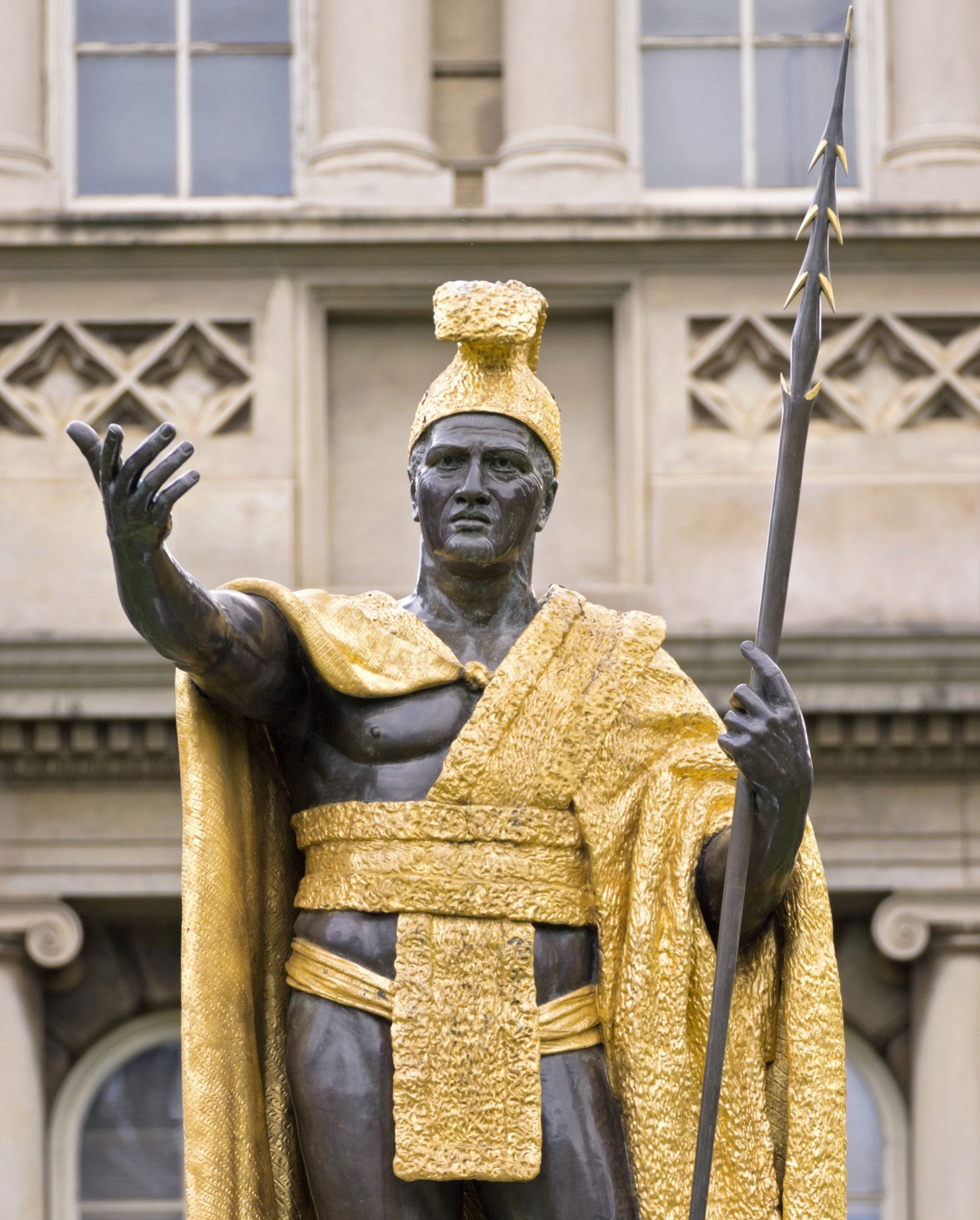
There are several statues of Kamehameha I on Oahu. One of them is located at Aliiolani Hale, the Hawaii State Supreme Court, across from Iolani Palace. The early years of the founder and first ruler of the Kingdom of Hawaii are immersed in legend. His birth in 1758 is believed to have coincided with the passing of Halley’s Comet. To Hawaiians, this was the “light with wings like a bird” that announced a great chief.
Later, his destiny was assured by legend: whoever overturned the Naha Stone, weighing between 2.5 and 3.5 tons, would become the first king of all the Hawaiian Islands. Kamehameha I is believed to have overturned the stone at the age of 14. Known as “Kamehameha the Great,” he formed a monarchy that lasted for 80 years and was recognized and respected around the world. On holidays, especially June 11, King Kamehameha Day, flower leis drape his outstretched arms all the way to the ground.
Queen Lili’uokalani — 1838–1917
The statue of Queen Lili’uokalani is located between the Hall of Columns and Iolani Palace. Her statue marks the end of the monarchy. She is beloved by the people of Hawaii for her intelligence, poise, and dignity, especially in the face of overpowering forces.
Gifted as a musician, she composed the world-famous “Aloha Oe” and many other works. Many believe she wrote the book Hawaii’s Story by Hawaii’s Queen while she was imprisoned in her palace.
Princess Pauahi — 1831–1884
The statue of Princess Pauahi is located in the Grove of the Royal Hawaiian Shopping Center. The last direct descendant of King Kamehameha I, she witnessed the decline of the Hawaiian population, the loss of land, and the stripping away of language and customs.
As a lasting legacy to her people, Princess Pauahi left 375,000 acres of ancestral land, the largest landholdings in the Hawaiian Islands, with instructions to use the assets to educate the Hawaiian people. The endowment is known as an enduring act of aloha and, through its holdings, has served thousands of Hawaiians in K–12 schools and communities.
Saint Damien — 1840–1889
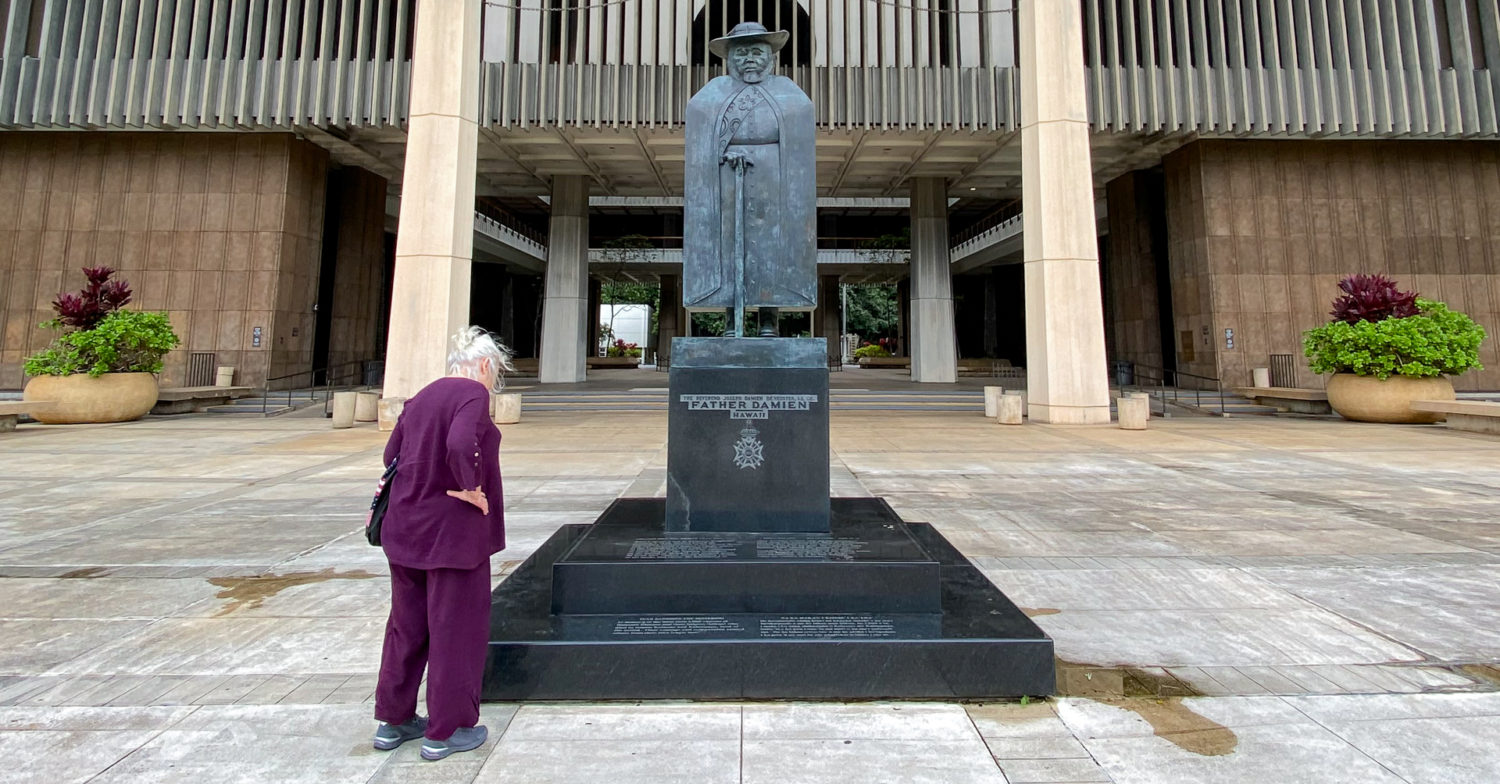
Saint Damien’s statue is located at the entrance to the Hawai’i State Capitol in Honolulu. His face bears the marks of Hansen’s disease, a controversial image when the statue was first presented.
For sixteen years, until he died from the disease himself, Father Damien served Hawaiians and others who found themselves isolated on Molokai with Hansen’s disease. Hansen’s disease was not the only disease foreigners brought to the Hawaiian Islands. Information differs as to how many Hawaiians died from foreign-introduced diseases, but studies show they may be responsible for 75 to 80 percent of the decline in population. Similar to American Indians, Kanaka Maoli, native Hawaiians, had little or no immunity to these diseases.
Duke Kahanamoku — 1890–1968
The larger-than-life image of Duke Kahanamoku reflects his popularity. Even in real life, he stood tall at 6 feet 1 inch. He was also known as the “Big Kahuna,” meaning the best at his craft. A five-time Olympic medalist in swimming, Duke Kahanamoku is most known for popularizing the ancient Hawaiian art of surfing.
The Polynesian Cultural Center
The cultural practices of Tonga, Tahiti, Samoa, Aotearoa, Fiji, and Hawaii are highlighted in unique village presentations at the Polynesian Cultural Center. This is another event to plan in advance; there are several packages available. No matter which package you choose, the cultural center brings the history and cultural practices of the Hawaiian people together in a dazzling show amid lush waterfalls and tropical gardens.
Our Luau Experience
There are many ways to experience a luau. Many hotels around Waikiki offer a luau as an optional experience, and hotel concierges can often connect guests to one. It is a fascinating and enjoyable way for the whole family to experience the spirit of aloha. A luau is centered around kalua cooking, often pork, and means to cook in the traditional way in an imu, or underground oven.
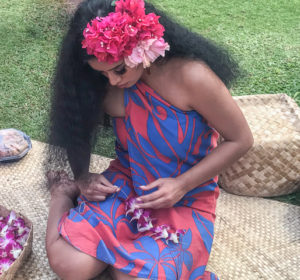
We attended a luau performed on the lush grounds of our hotel, the Hale Koa. It started at dusk, just as the Hawaiian sky was turning from pale blue to pink, violet, and dark. Females dressed in colorful muumuus and males dressed in malos, almost like loincloths but closed like skirts, greeted us with leis.
Pre-luau activities included traditional cultural experiences such as lei making and tattooing with henna.
Musicians played traditional Hawaiian music accompanied by the ukulele and other instruments. A performer demonstrated how Hawaiians gathered coconuts long ago by climbing an impossibly tall and slender coconut tree without assistance. During these activities, the breeze carried the fragrant aroma of kalua pork that had been cooking for hours before our arrival.
At 6:15, the blowing of the pu, or conch shell, drew our attention to the pit ceremony. This started the official luau. As we gathered around the pit, two people hoisted the pork out of a bed of hot coals, stones, and ti leaves using the handles of a wire mesh. They circled the pit with the presentation and entertained the crowd with anecdotes of Hawaiian customs.
They explained that leaves from the fragrant ti plant distinguish kalua pork from other hardwood-smoked pork. Vital to ancient Hawaiians, ti leaves were used for many purposes. In addition to adding flavor to food, Hawaiians used them for roof thatching, food wrapping, cups, plates, hula skirts, leis, and rain capes.
Performers at a luau are masters of ancestral storytelling through hula dancing and other ancient practices. As we feasted, artisans performed ancestral Hawaiian hula, Samoan fire dance, Tahitian otea, and the Maori haka. The movements of the dancers conveyed the story of their ancestors, who voyaged more than 2,000 miles to reach the Hawaiian Islands. Koa, or warriors, demonstrated lua, a fierce traditional style of fighting. The performers bantered with an eager audience as the spirit of aloha imperceptibly embraced the crowd.
Getting Around Oahu
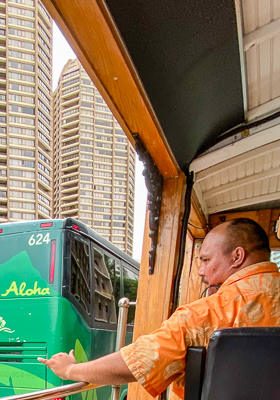
The Waikiki Trolley Hop-On Hop-Off is one of the best ways to travel, with 1-, 4-, and 7-day all-lines passes. This gets you to Diamond Head, Pearl Harbor, Sea Life Park, Waikiki, Bishop Museum, and more. The drivers are knowledgeable and friendly, eager to share information about Hawaiian customs and folklore.
We noticed our driver using the “hang loose” hand gesture to other drivers. He explained that he was thanking the other driver for letting him maneuver in and out of traffic. The same hand symbol, referred to as shaka, has more than one meaning. It can indicate solidarity, serve as a greeting, or simply act as a friendly gesture to say thank you. We rode all six lines of the Waikiki Trolley from the convenient downtown Waikiki hub location. Check for special offers while you are there. We bought a day pass and got the next day included free.
Motor coach tours with experienced guides take in a good portion of the island of Oahu. They are usually out all day, and the cost often includes lunch. We set this up with the concierge at the hotel. The concierge is always our first stop after settling into a hotel.
Rental cars are a great way to see the island of Oahu and stop and start at your leisure. It is best to book rental cars in advance when you book your flight.
Visit the official Oahu tourism site to learn about things to do. Once you have studied the options, sit down with the concierge at your hotel. They can explain your choices, book your activity, and arrange travel to and from an event, including tours to other islands.
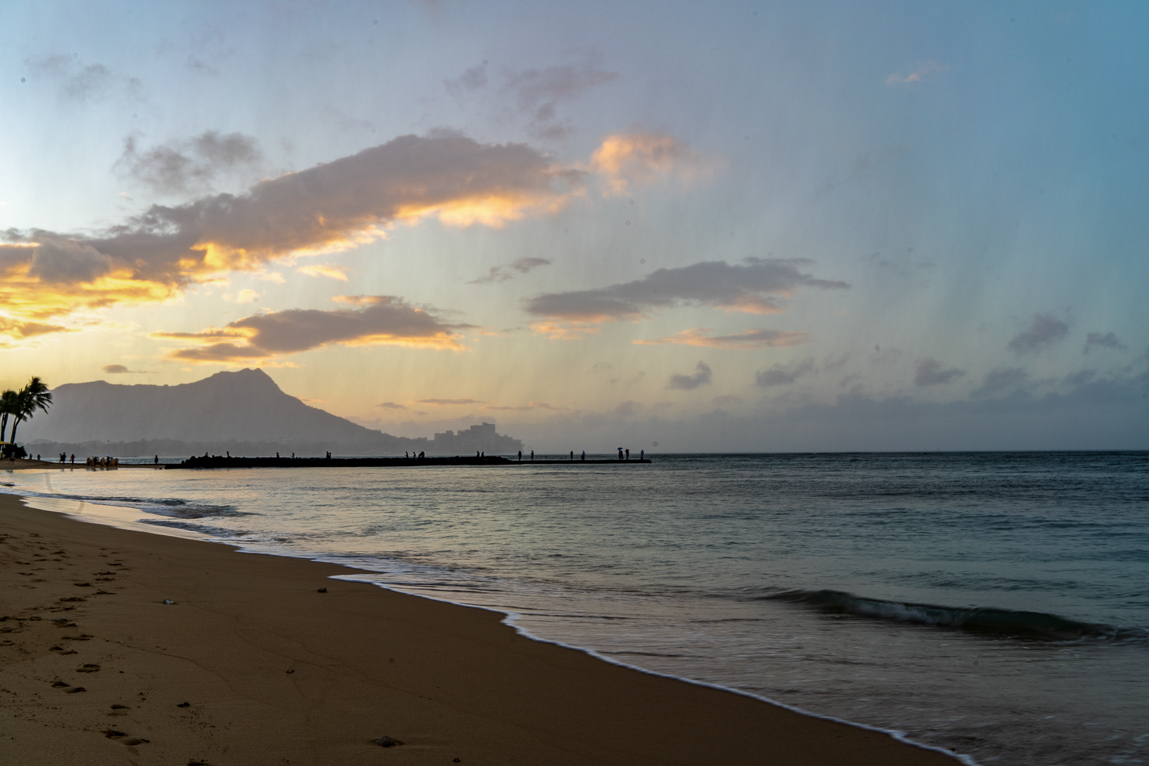
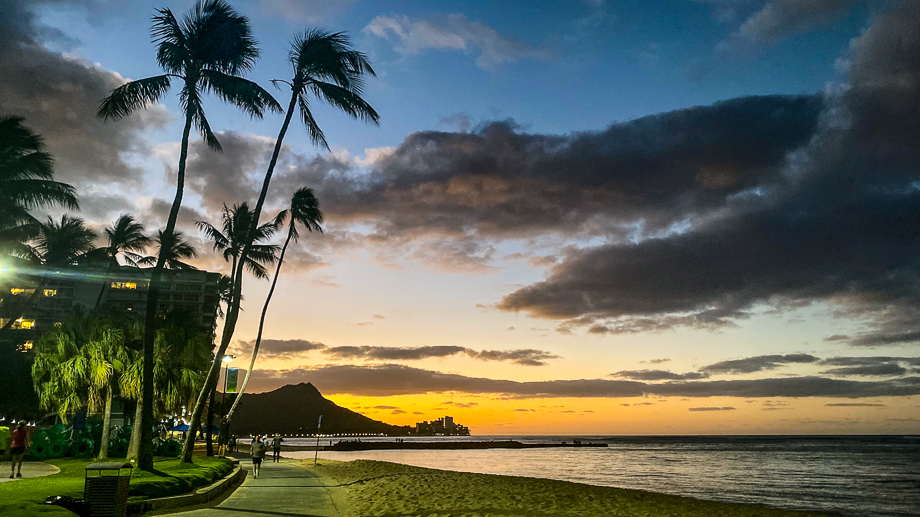
The Hale Koa Hotel is one place active military personnel and retirees can enjoy Hawaii. It is located at Waikiki Beach, with a view of Diamond Head State Monument from the beach out front. Like many hotels, you will need to book in advance, sometimes as much as a year. Visit here for other places to stay at Waikiki Beach.
Books
- Moloka’i by Alan Brennert — purchase here
- Hawaii’s Story by Hawaii’s Queen Liliuokalani — purchase here
Magazine
“Accessing Heritage Wisdom: Ancient Teachings Like Lomi Lomi and Ho’oponopono Heal Modern Hurts,” Spirituality & Health, March/April 2020.
Prior to our visit, we wanted to learn as much as possible about Hawaiian culture, history, and current issues. This YouTube video examines controversial issues behind the belief among some Hawaiians concerning sovereignty and the right to govern themselves: Meet the Hawaiians Fighting U.S. Occupation.
Music
A short discussion with Paige Okamura, “DJ Mermaid,” on Hawaii Public Radio includes excerpts of four songs from her homeland. These highlight cultural practices of Hawaii, including the traditions of hula and chanting, kona, layers of meaning and metaphor in the Hawaiian language, and beautiful traditional Hawaiian music. Listen here: DJ Sessions: Hawaiian Music From DJ Mermaid.
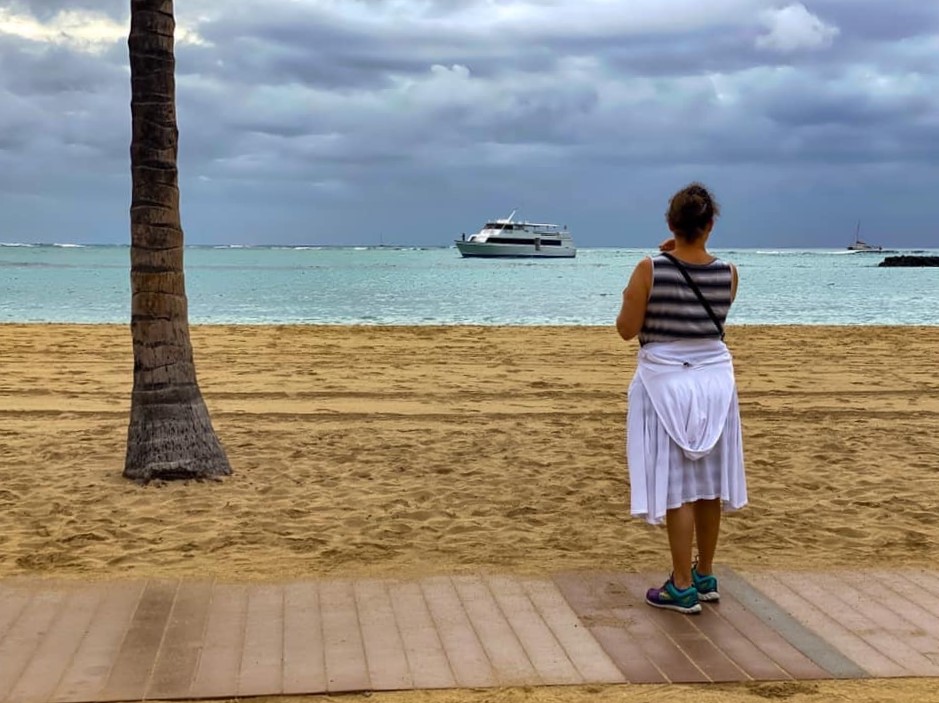
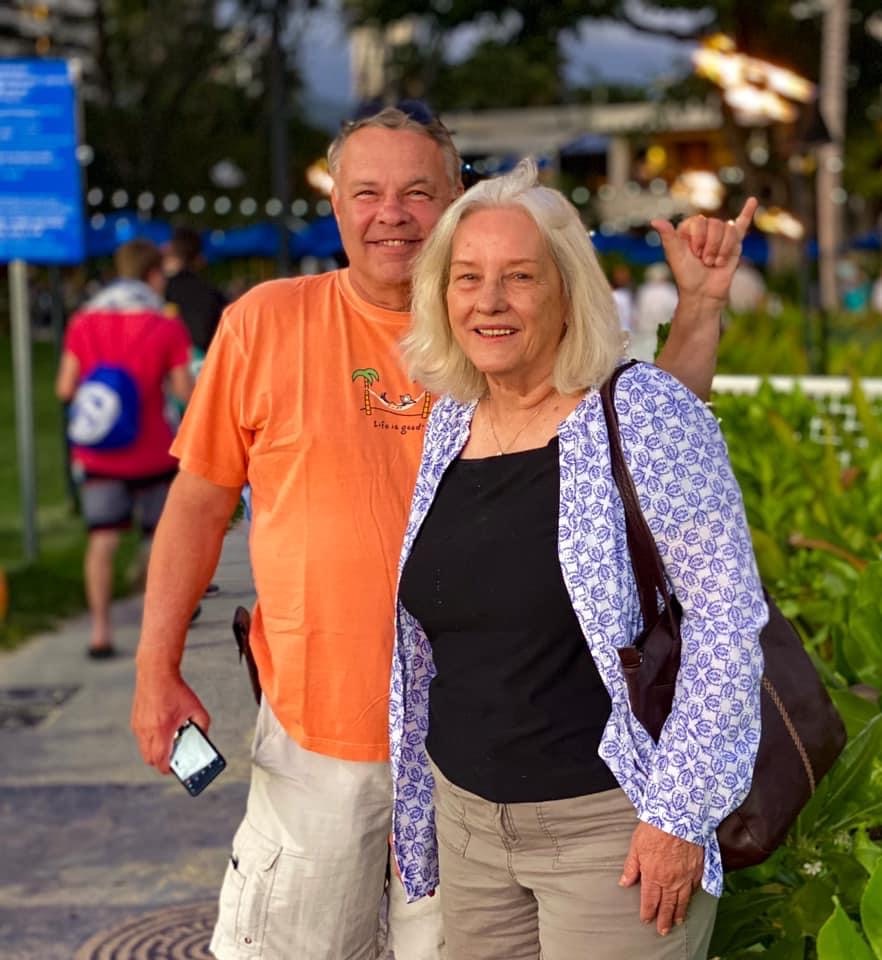
Eddie and I invited my sister Elaine to join us on this vacation. She was a terrific travel companion. Besides learning about Hawaiian culture and history, we had a wonderful time just being together in Hawaii. Here are Eddie and Elaine on Waikiki Beach. We especially enjoyed the view and breakfast at the Hale Koa Hotel.
You must be logged in to post a comment.