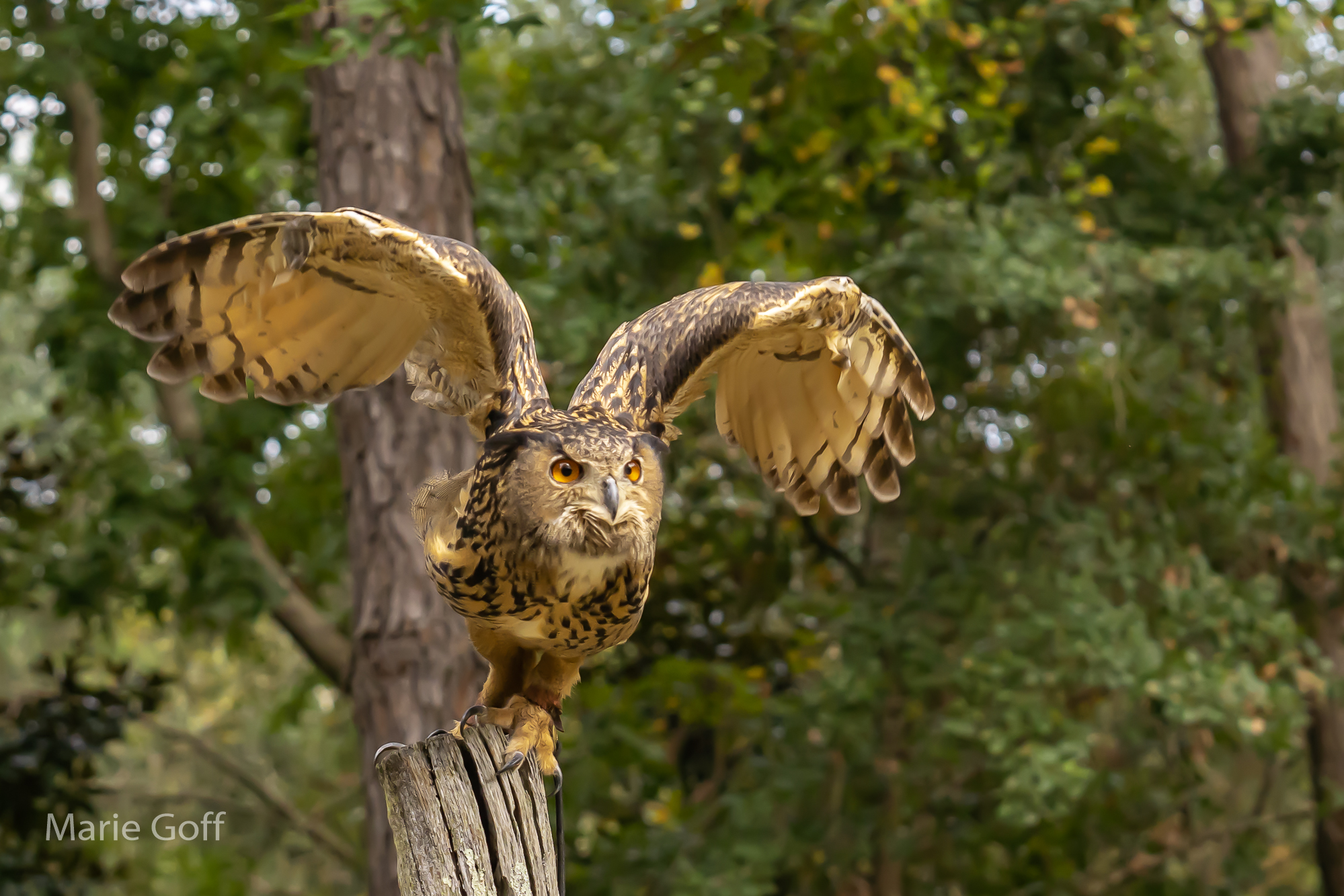
Photography day at the Avian Center flew by! No pun intended. Getting tack sharp photos of birds in flight is difficult. I’d tried for months on my own before finding out about the workshop at the Center for Birds of Prey in Awendaw, S.C.
The Center presents an invaluable opportunity to learn to get tack sharp photos of birds-in-flight.
Expert photographer Chris Smith provides coaching while participants practice photographing birds during close-range demonstrations. And, the best part is getting to see majestic birds of prey close up!
These are just a few of the photography techniques that Chris covers in the workshop.
ISO, shutter speed, and aperture, known as the photography triangle, are settings that control the light that enters the lens. Adjustments to these are key to getting successful images.
Weather conditions impact settings in the exposure triangle.
Seeing a light rain shower as I entered the Avian Center had me worried. Rain often adds an element of interest, but in this case, it might have hindered the flight demonstrations. Thankfully, the weather cleared and flights continued.
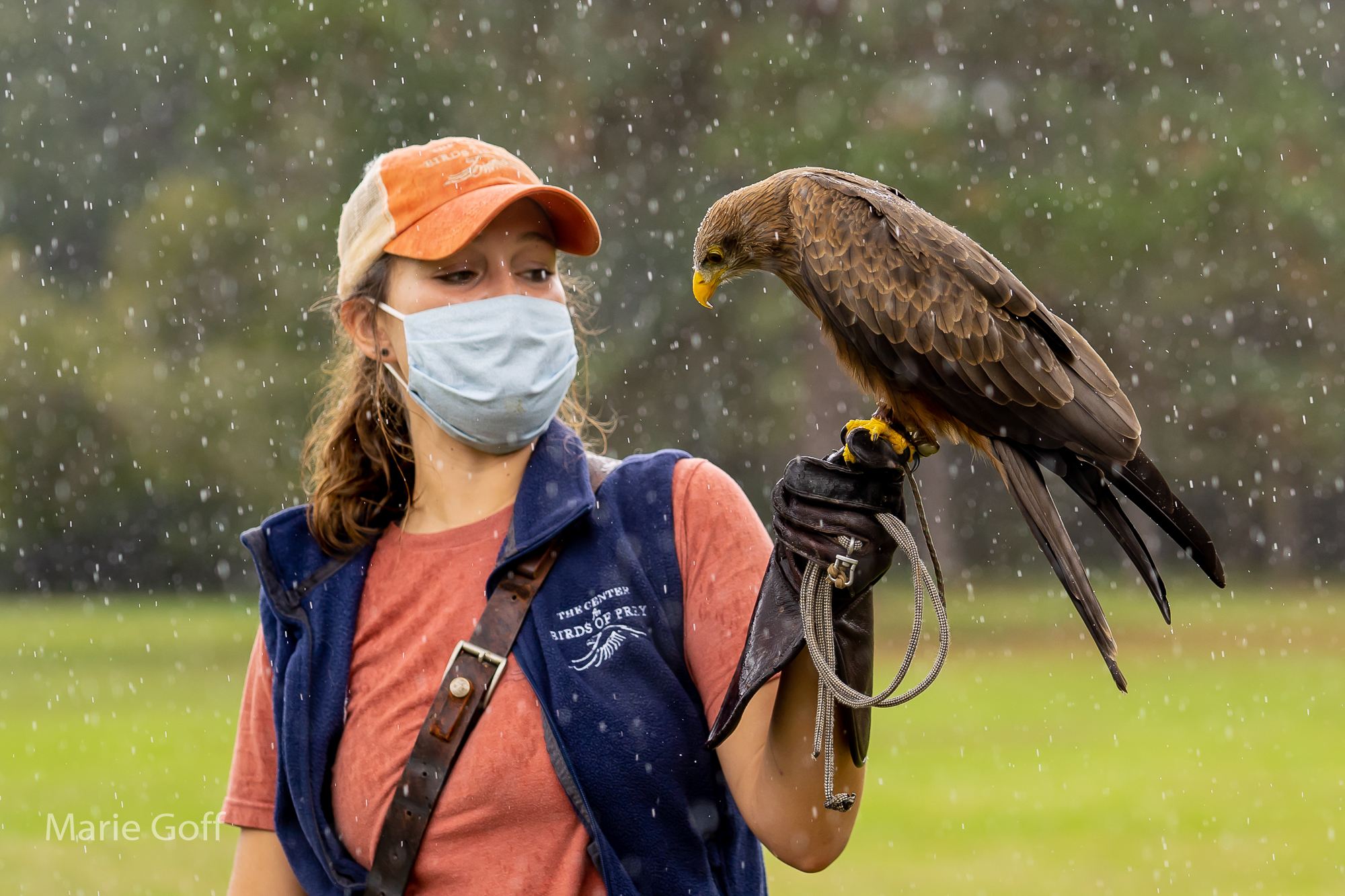
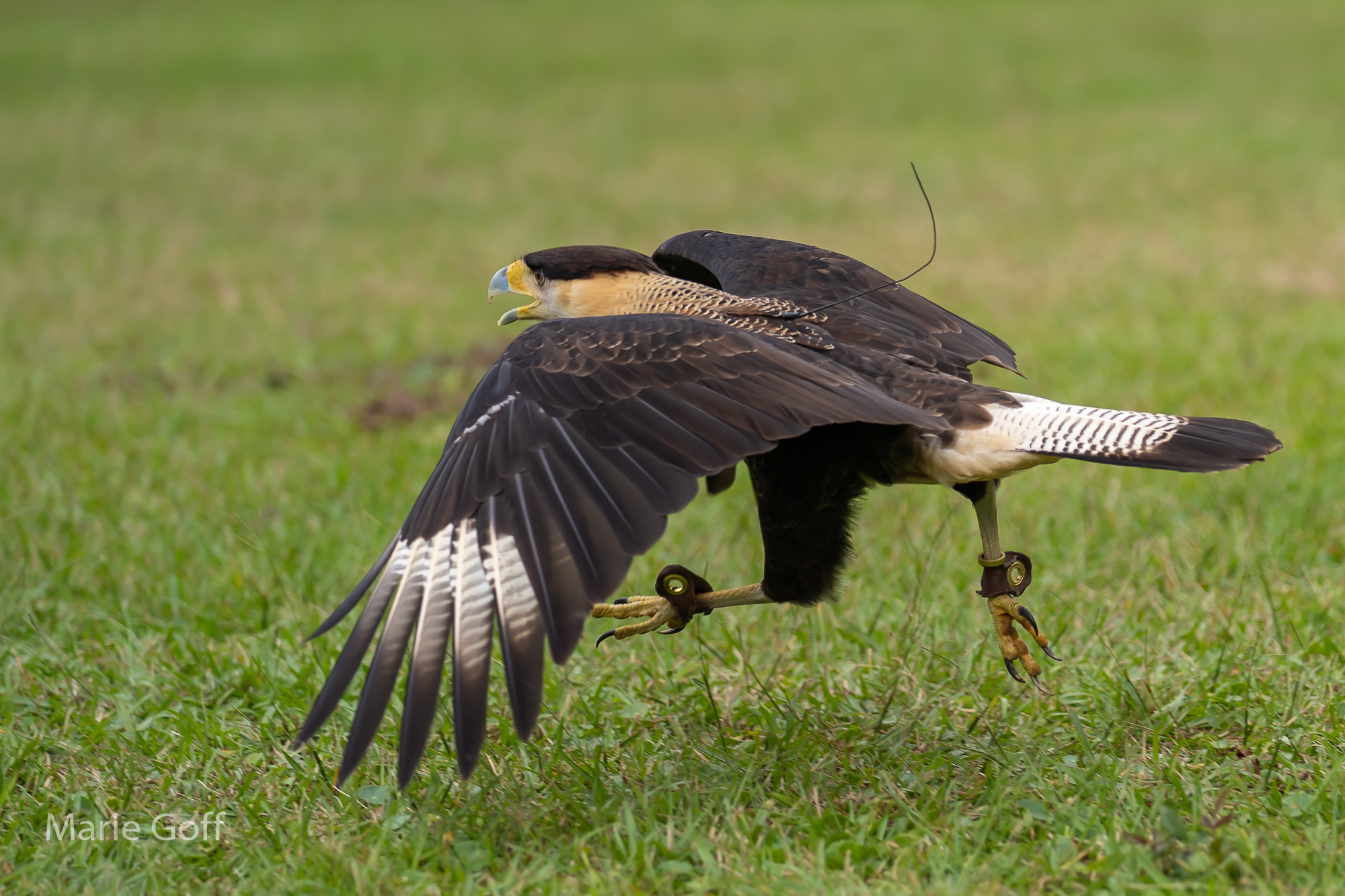
Freezing the shot means using the settings to stop movement in the photo. In these shots, the entire action of the birds is frozen perfectly for photos of birds-in-flight.
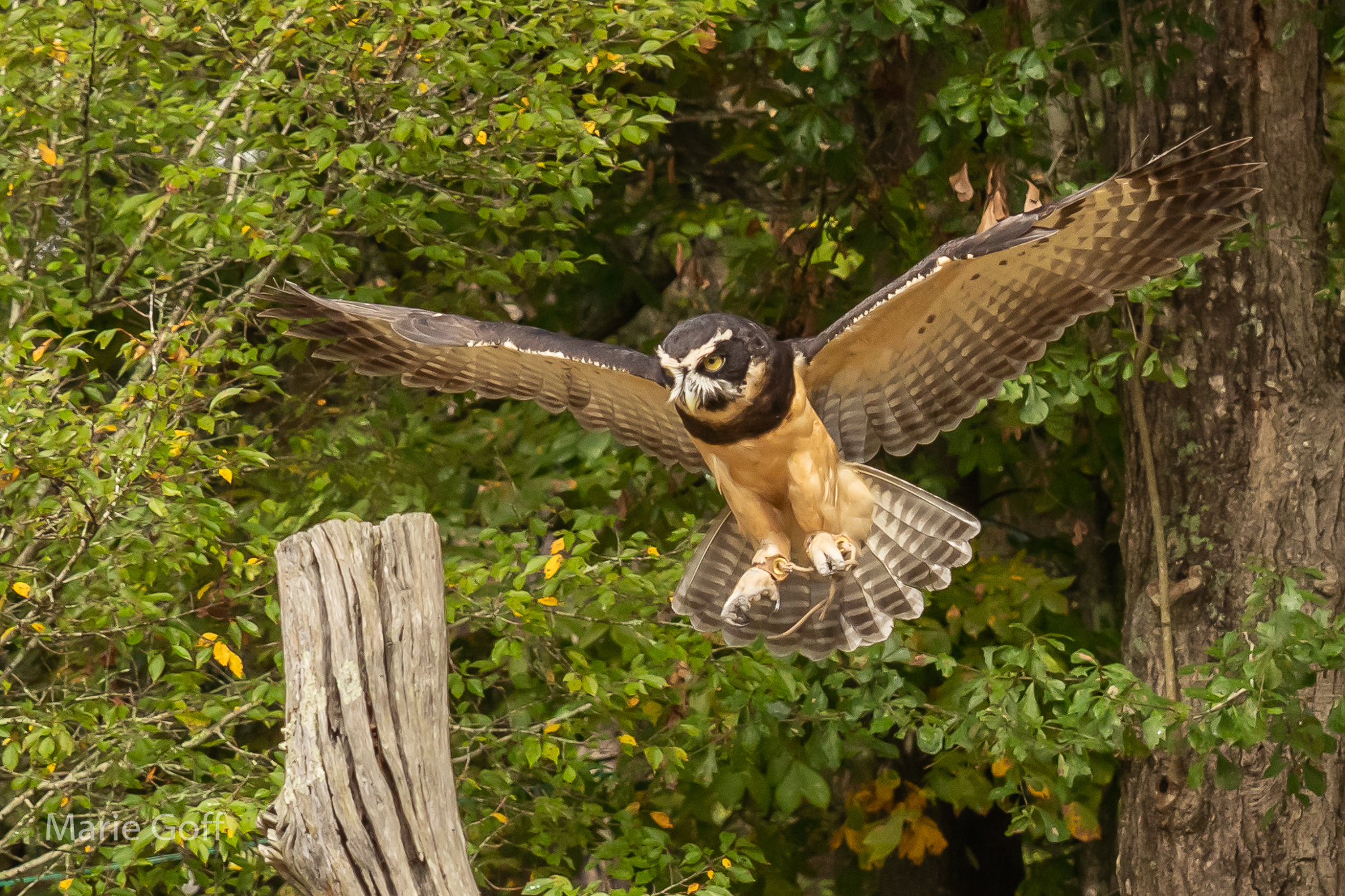
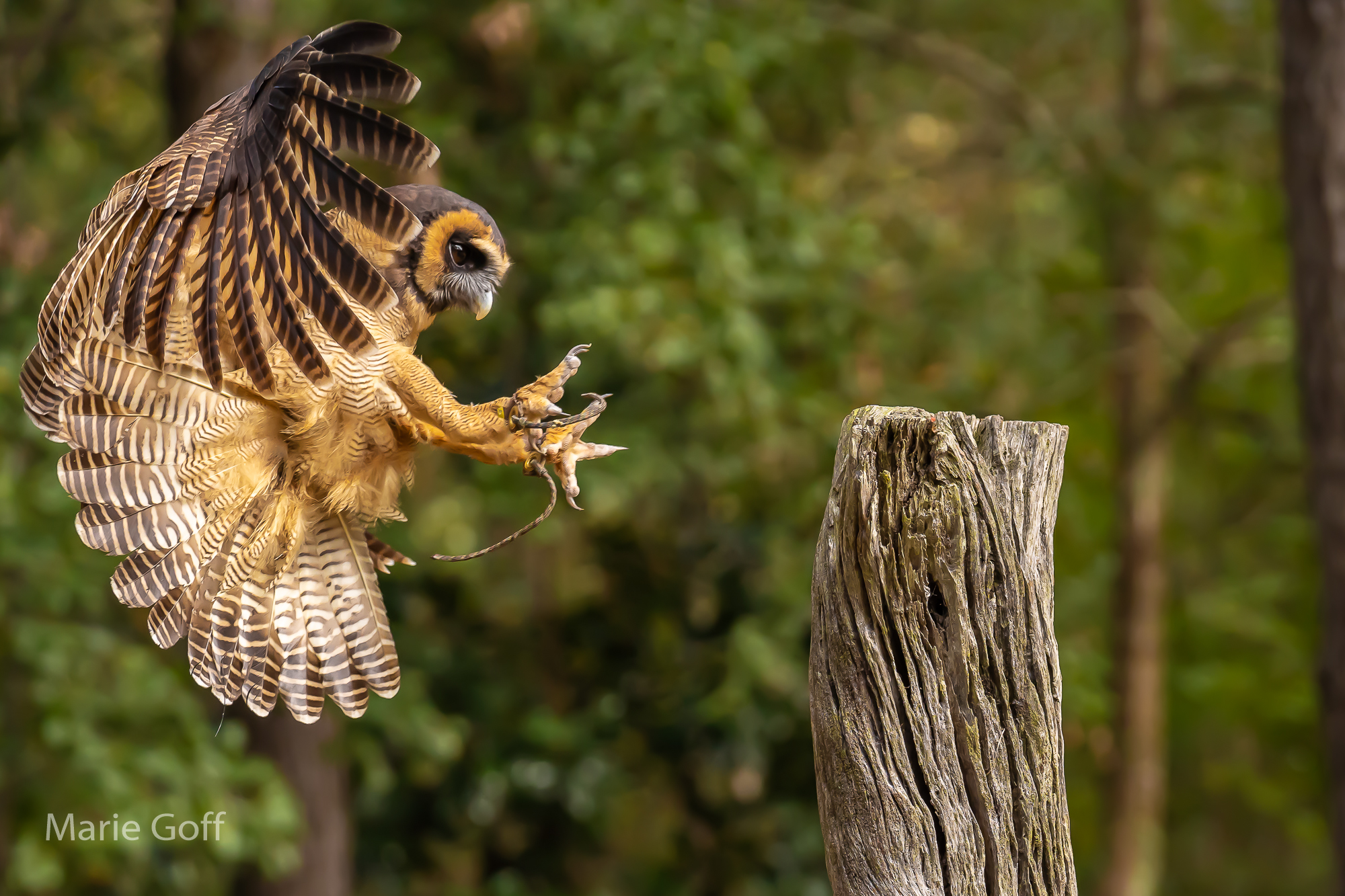
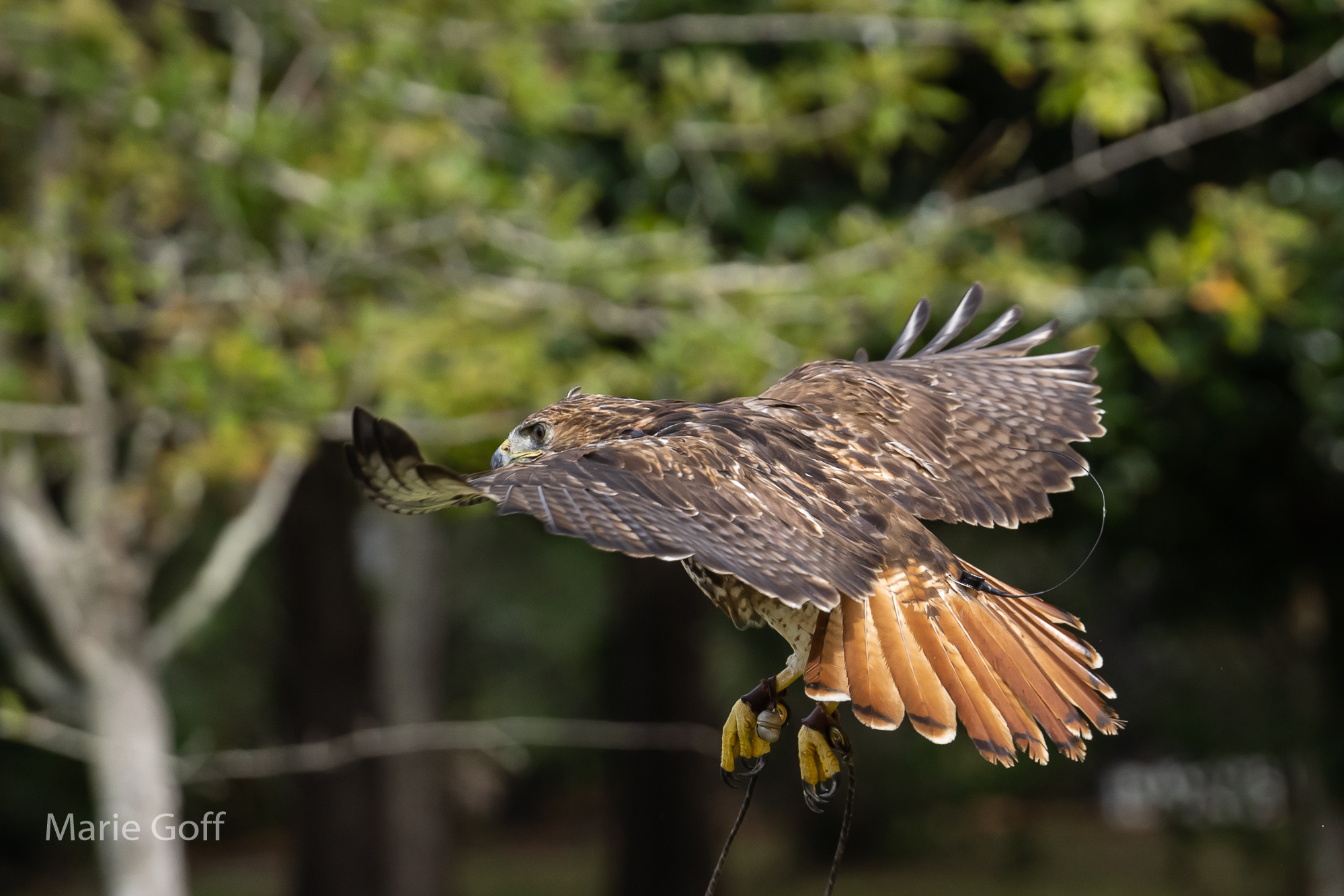
On the other hand, Intentional motion blur indicates movement. In these shots, adding blur to the bird’s wings adds drama.
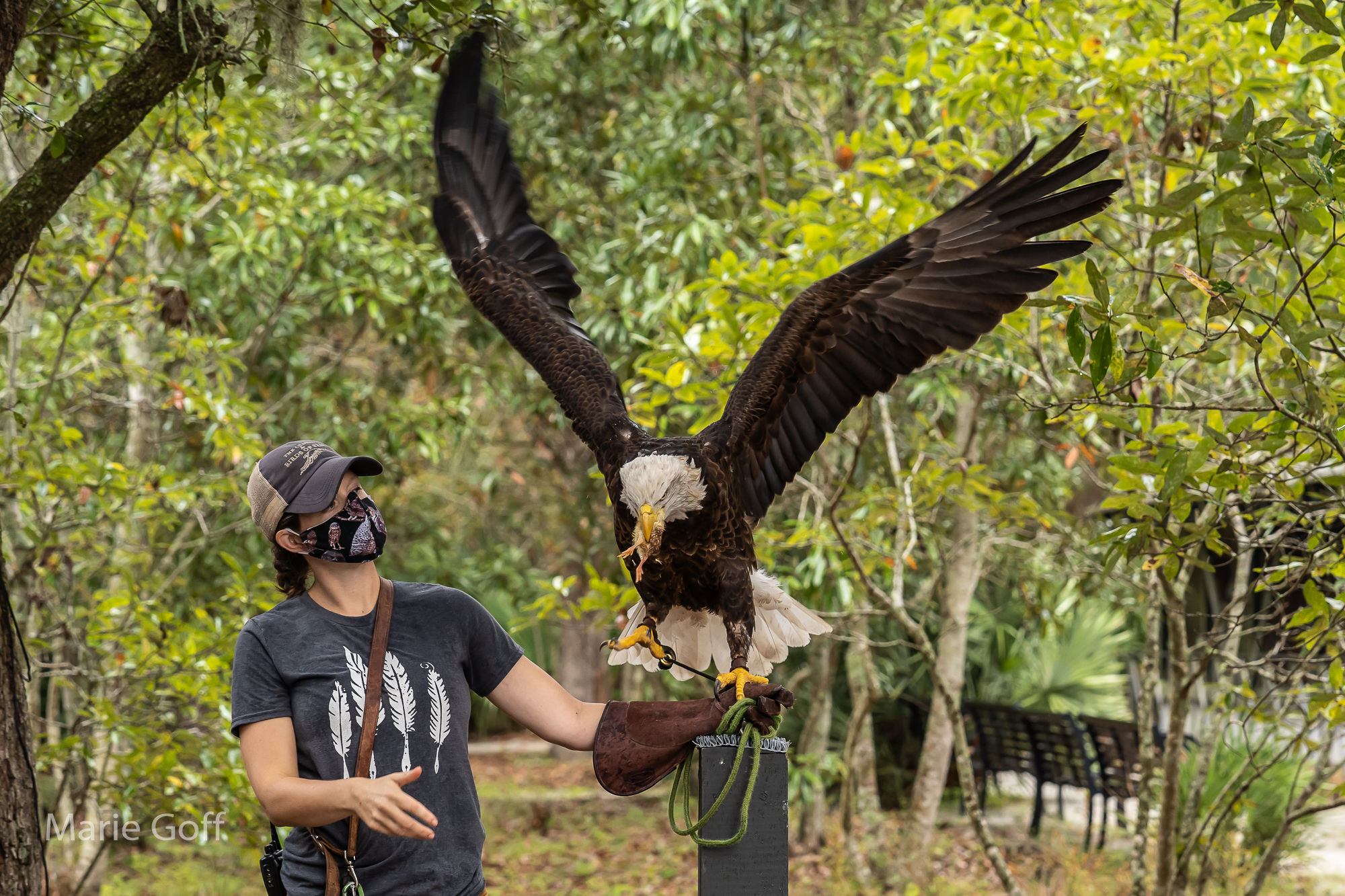
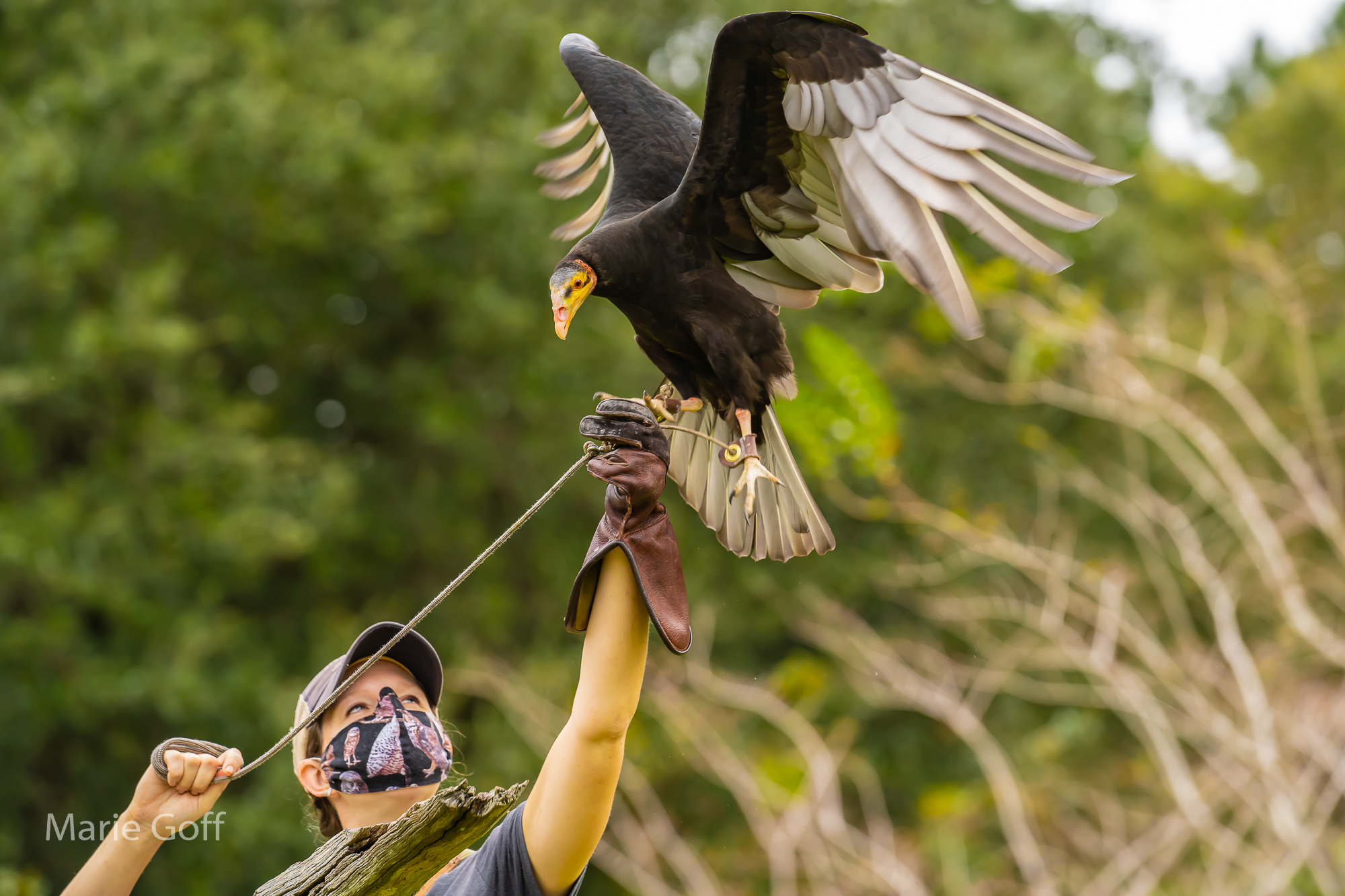
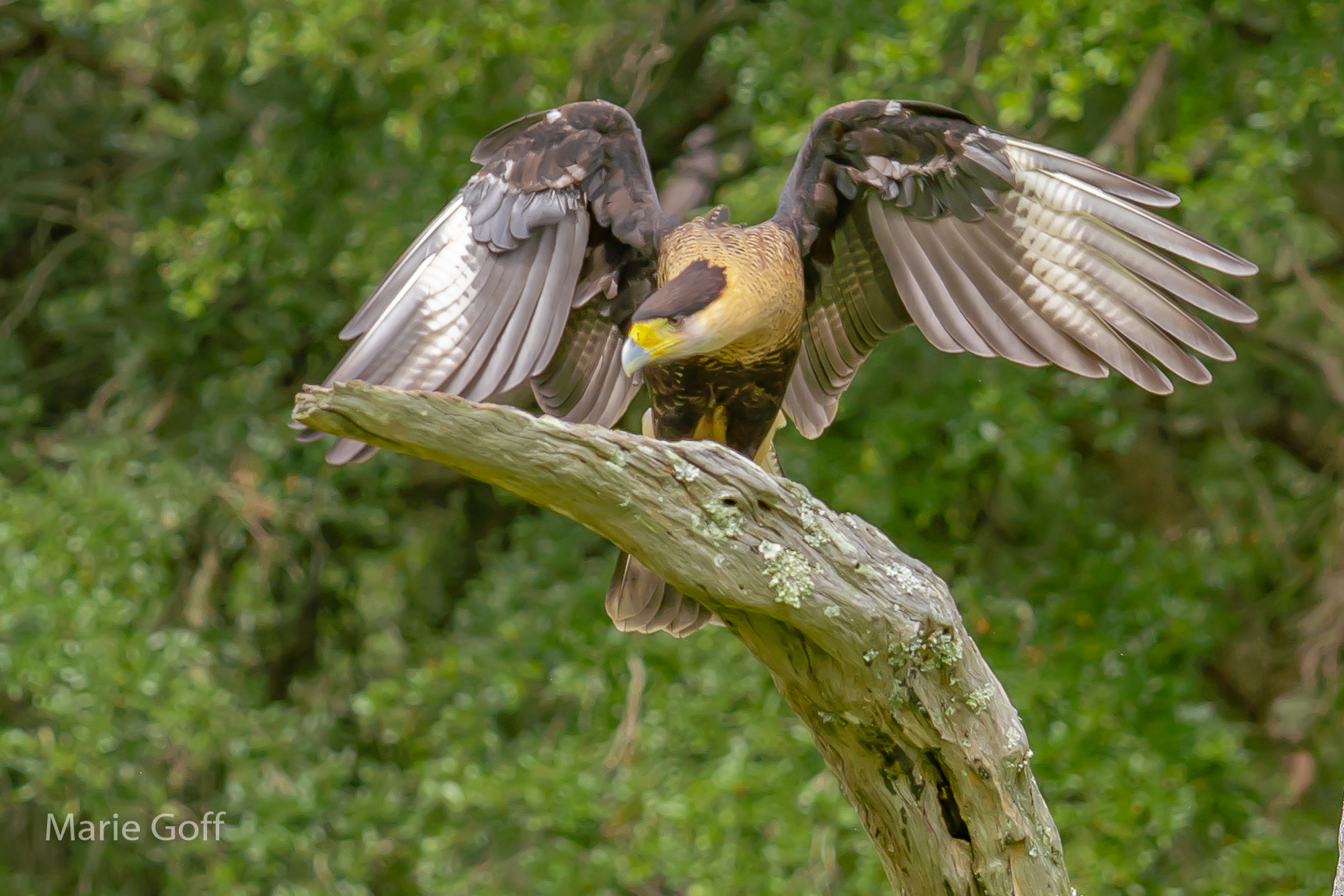
The composition draws interest and holds attention. It includes many elements. A few are the consideration of background colors and placement of the subject within the frame. Rule of thirds refers to the position of the subject in the frame, the best place at the intersections of the horizontal and vertical grid lines within the viewfinder, with empty space ahead of where the subject is facing. Background blur allows the subject to stand out.
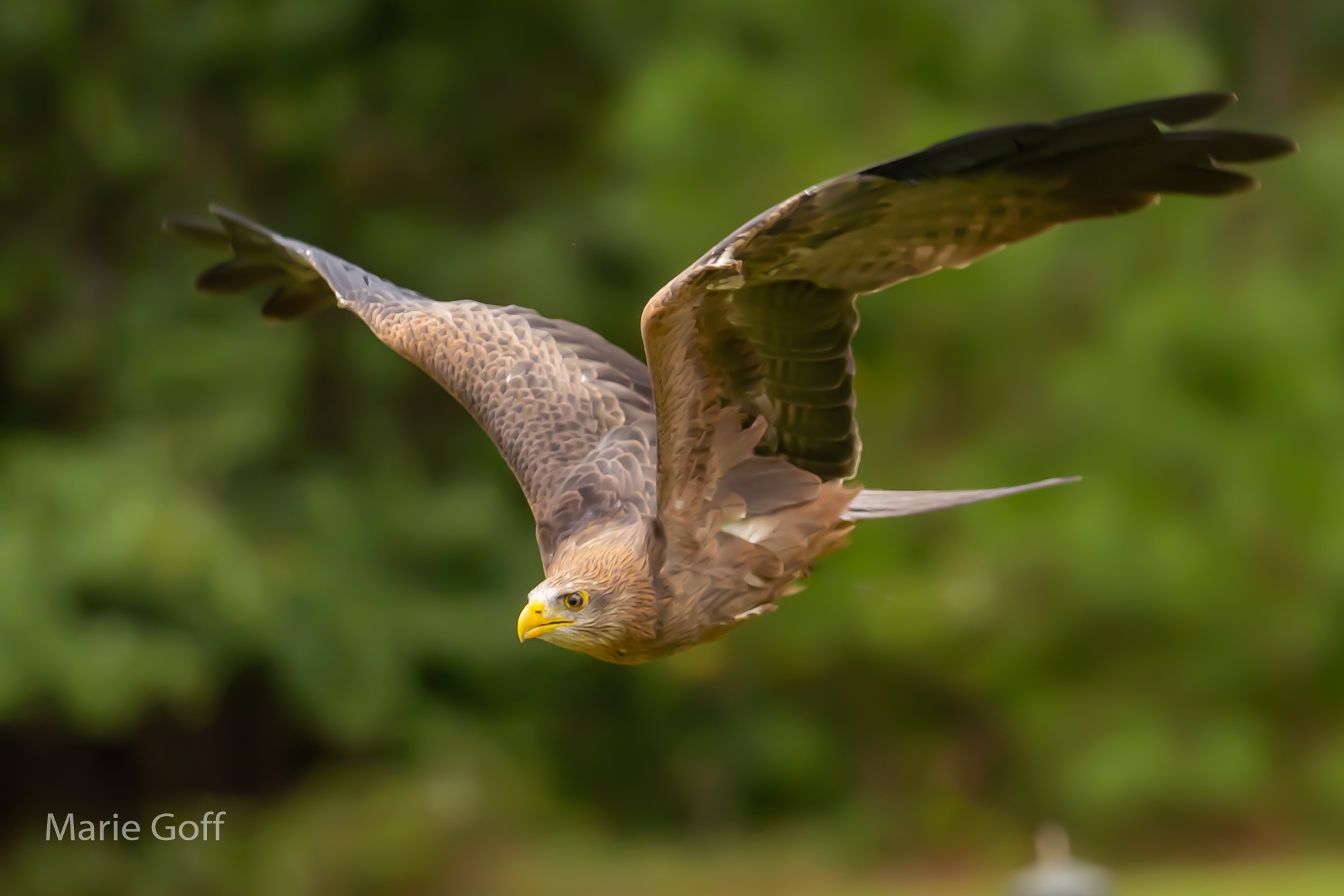
In addition to photos, getting to know the habits and personalities of the birds is another benefit of learning bird photography. These are a few of my favorites.
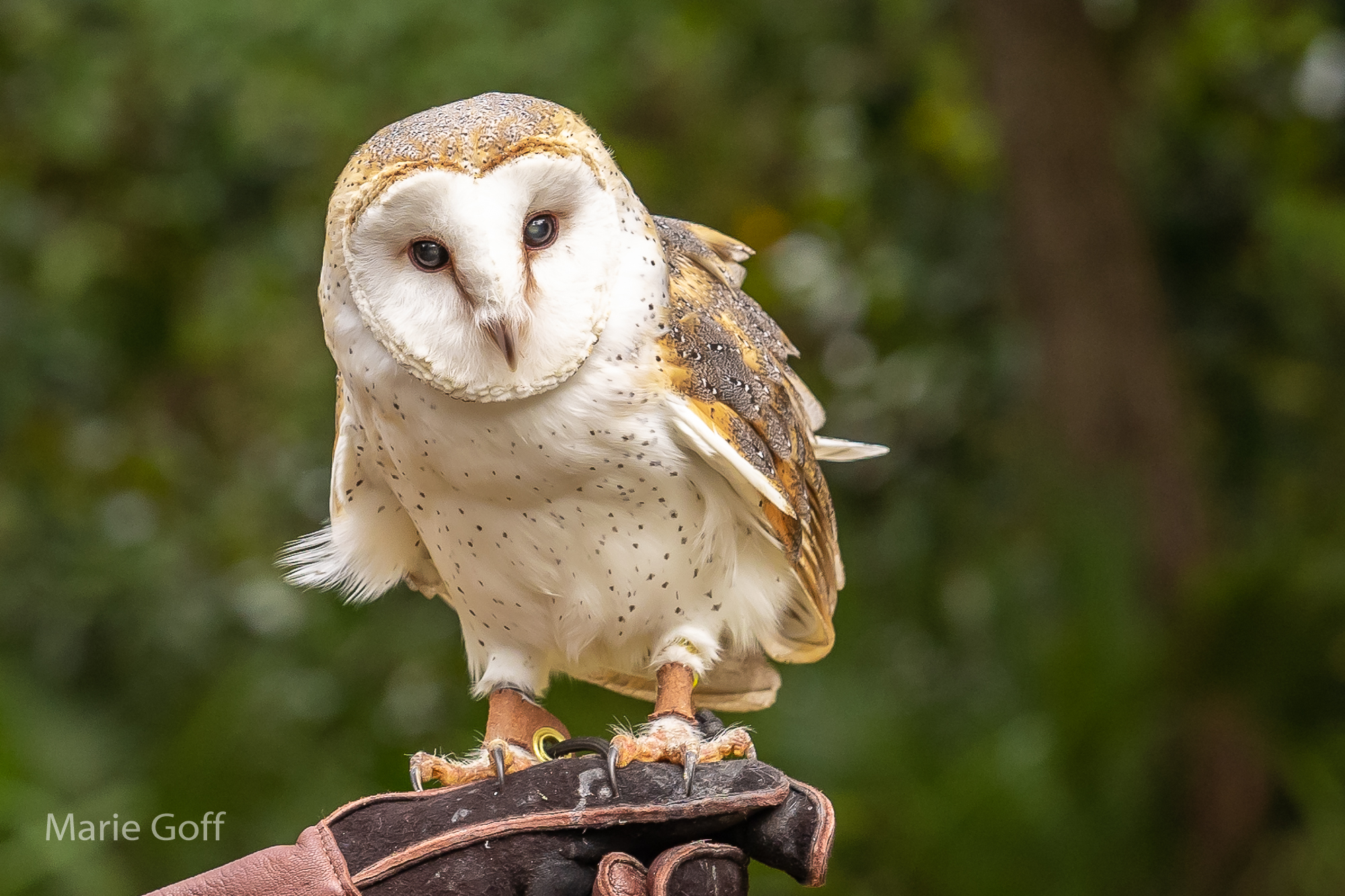
The barn owl’s eyes are light sensitive and have a beautiful irridescent color.
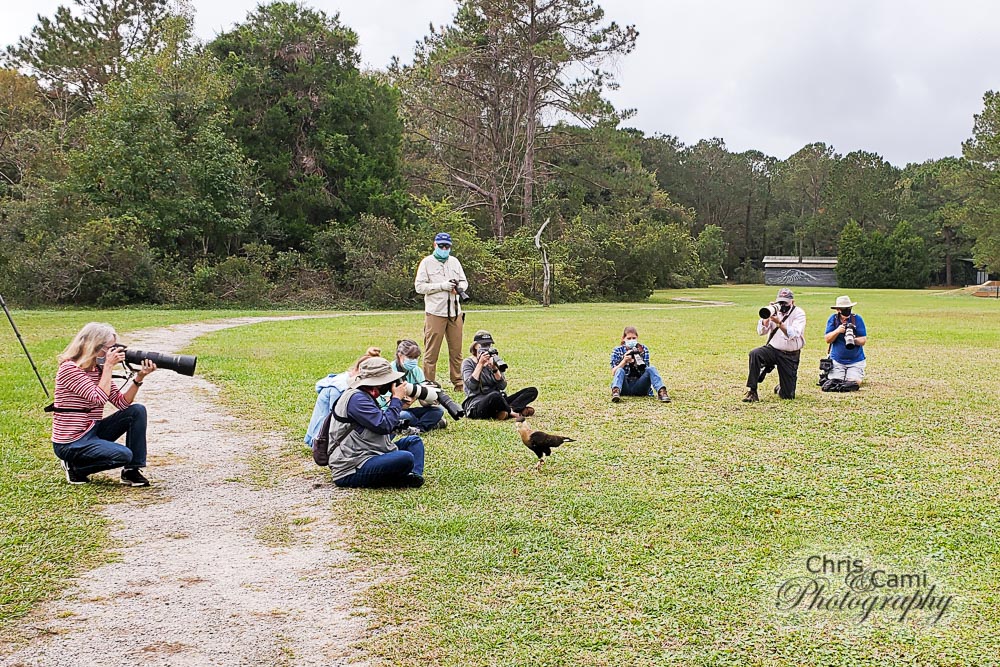
The crested caracara runs along the ground in a comical display of personality, but with the serious purpose of dislodging insects.
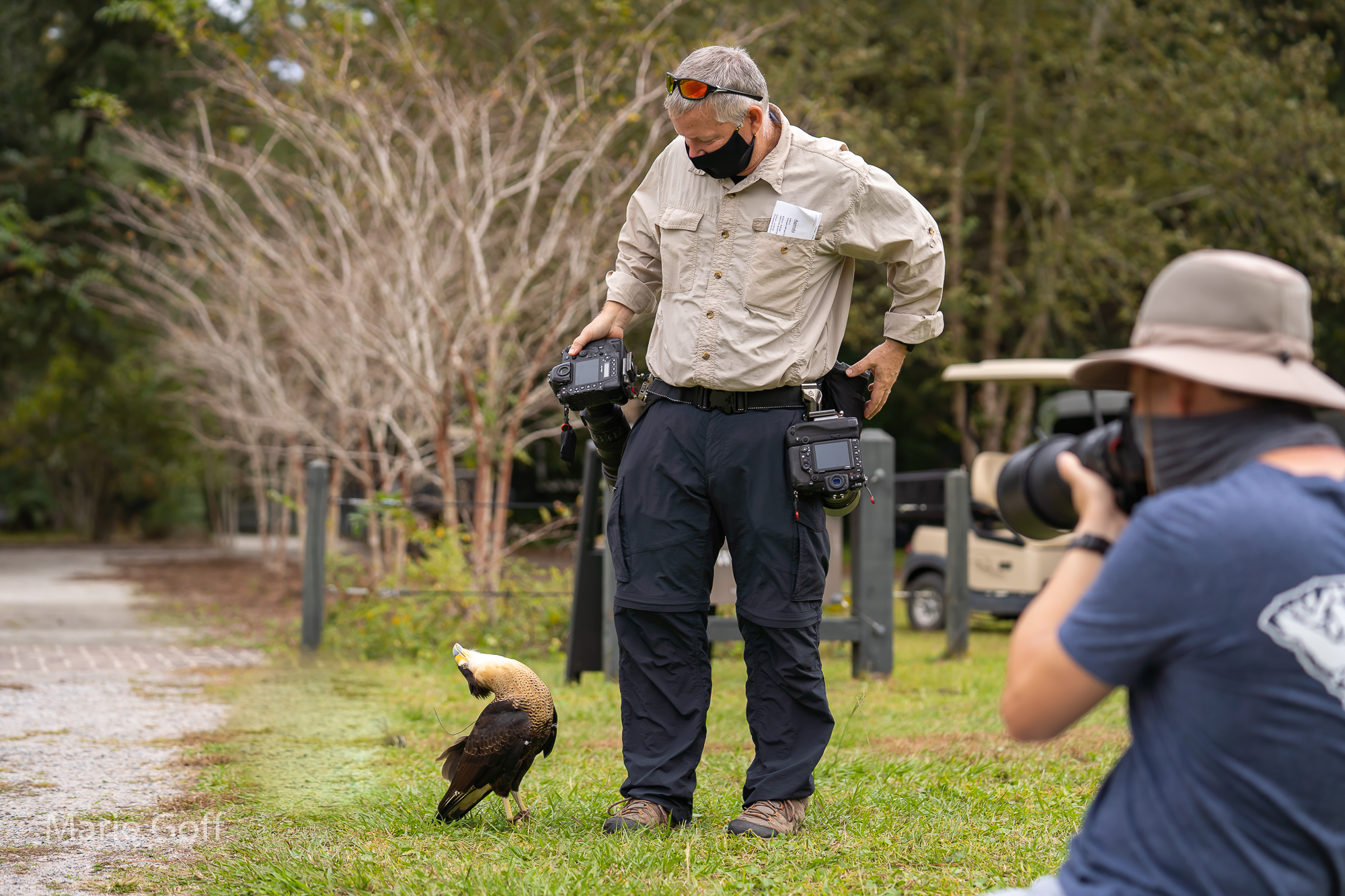
Finding me sitting in his path, he jumped on my head and kept going, not intimidated at all. Upon reaching the instructor, he threw his head back and made several loud cries before perching on a stump.
Mastering photos of birds-in-flight is rewarding but close-up images are some of my favorites. See magic in their eyes!
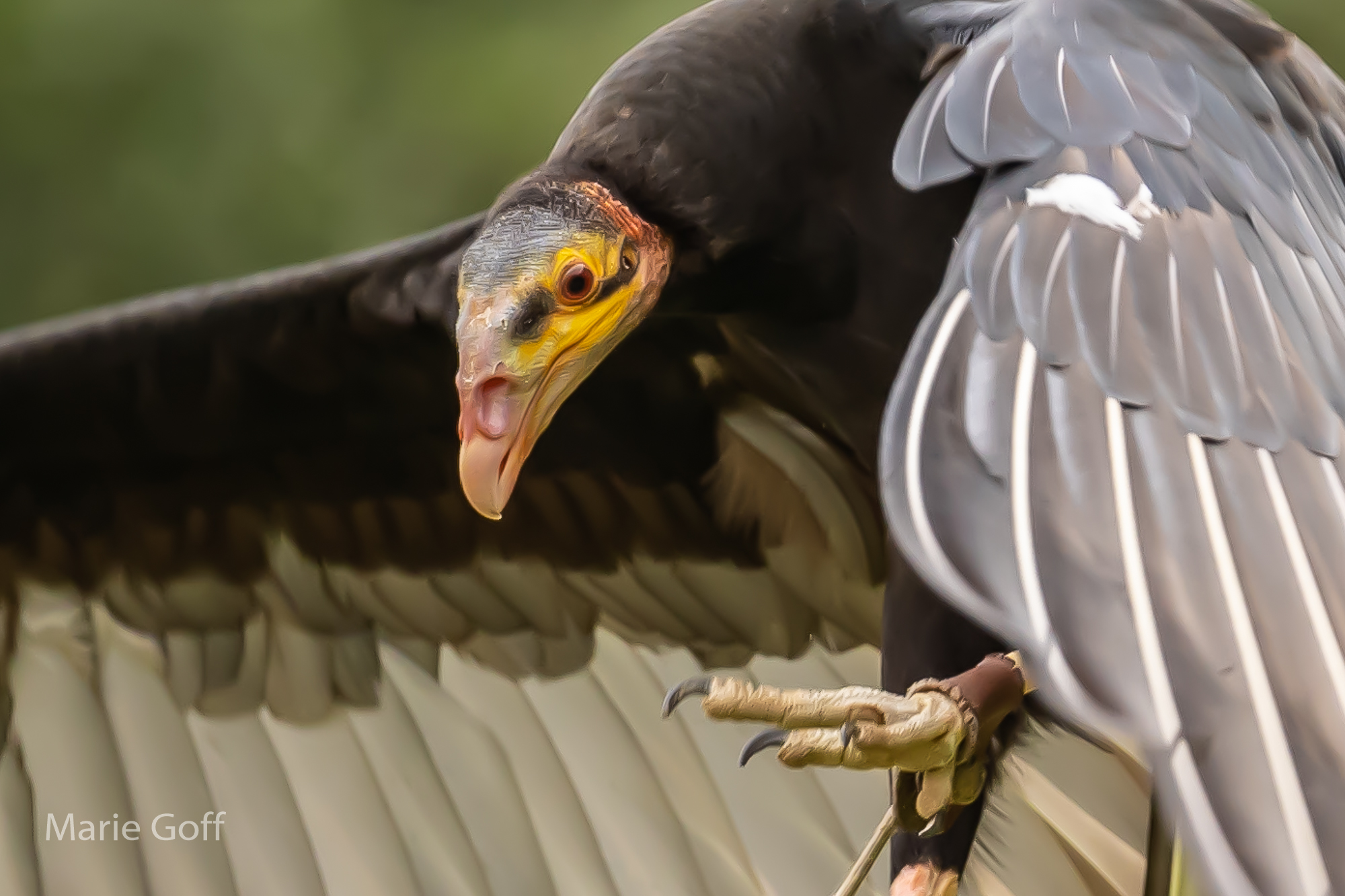
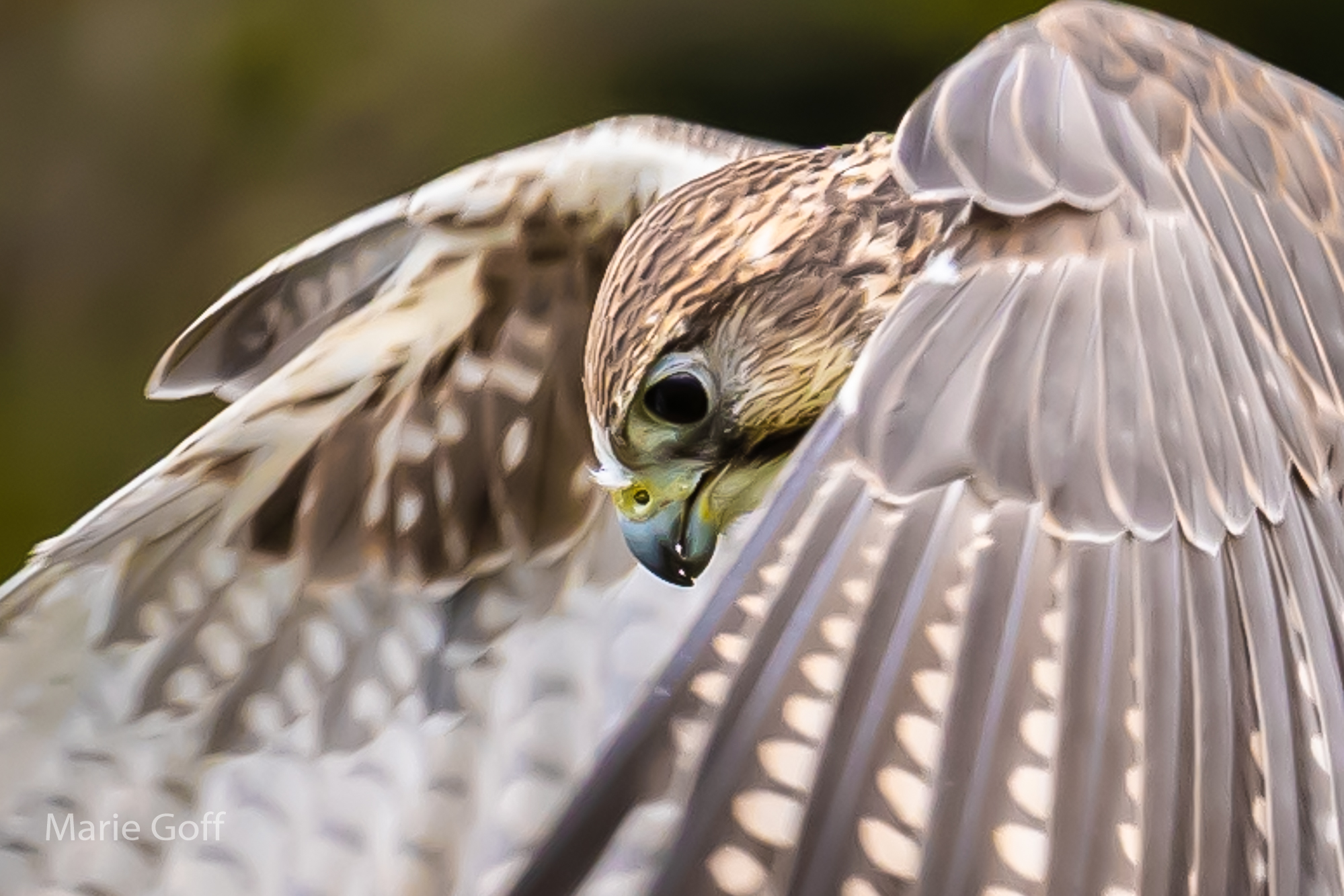
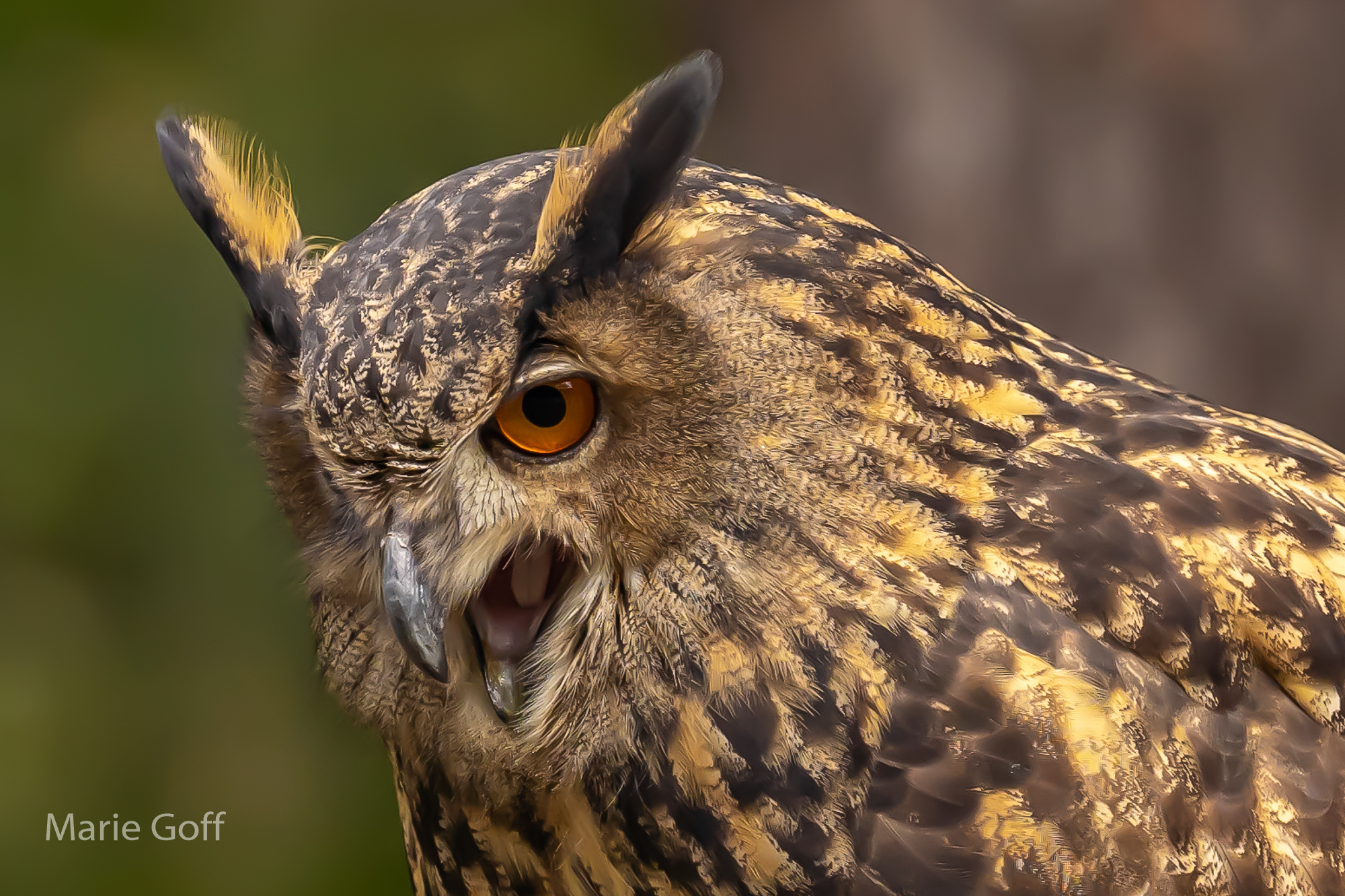
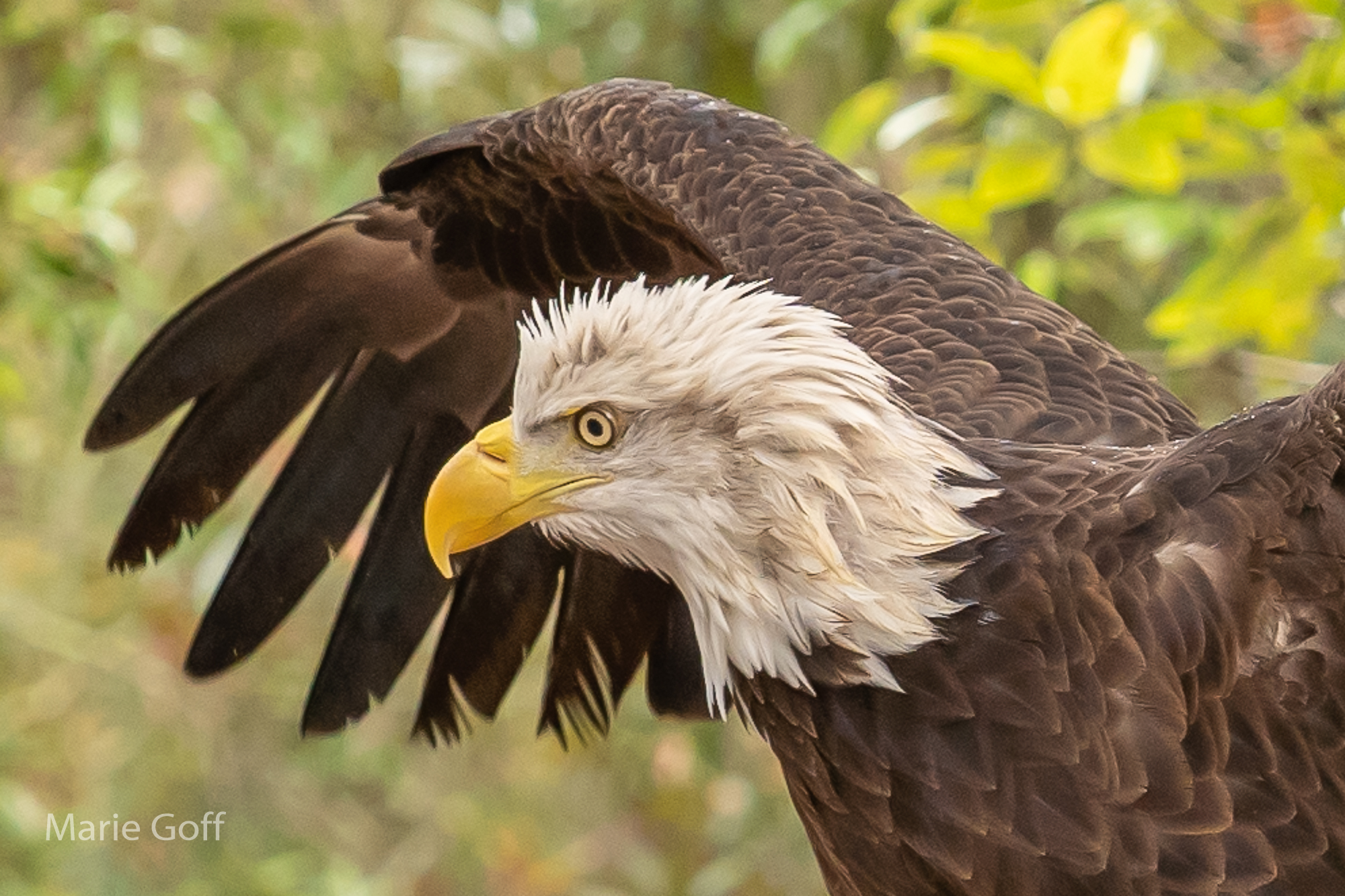
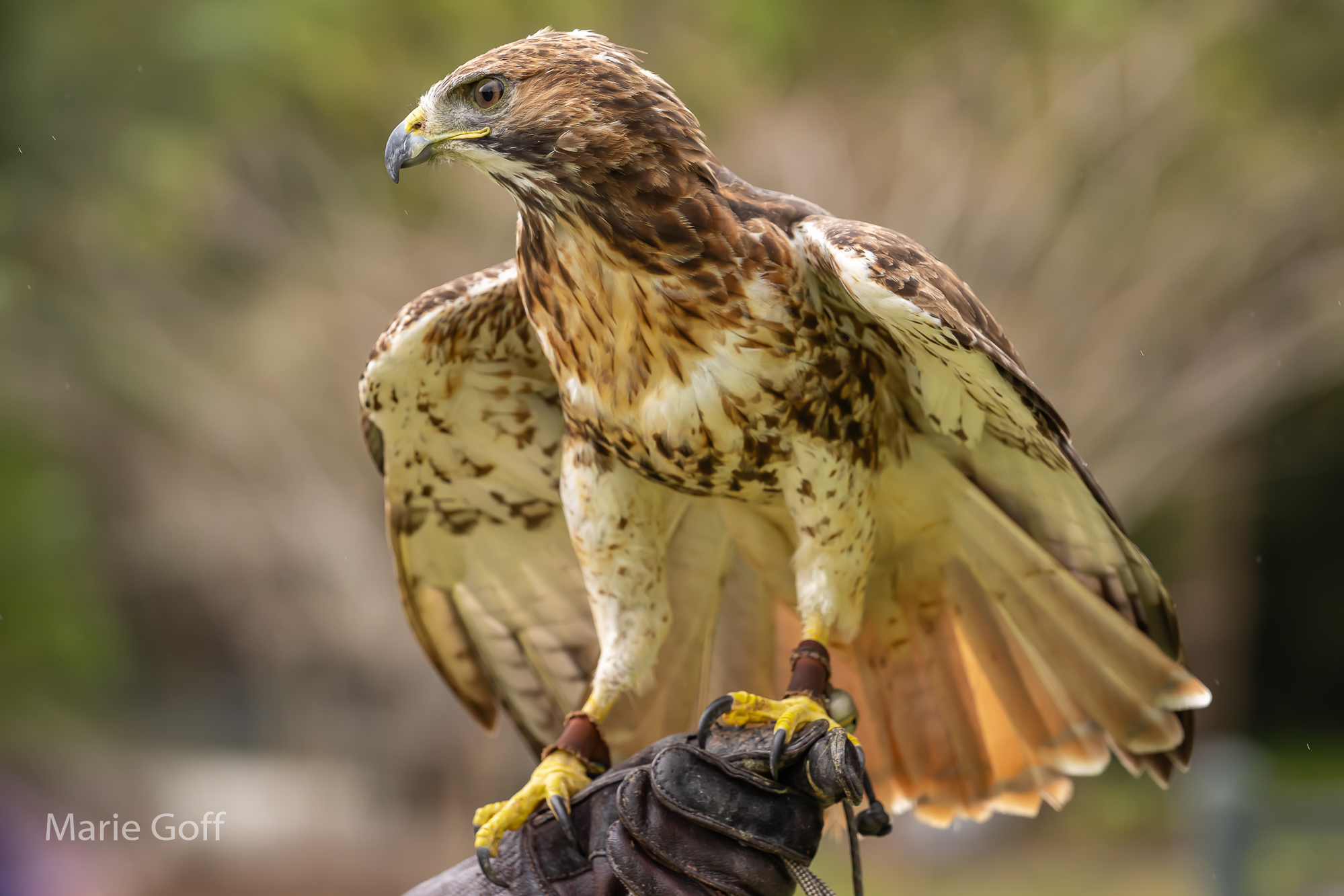
For these images, I used a Sony a7III camera with Sony FE 2.8/70-200 GM OSS lens.
I held the camera in my hand the whole time and that was a big surprise! With stability in the camera and/or lens and lots of natural light, I didn’t need to use a tripod for getting tack sharp photos of birds-in-flight.
Participants in the full-day workshop get an afternoon with Chris in the classroom for tips on editing photos in Adobe Lightroom. This is another important part of getting great photos and is very much worth the time.
Chris & Cami Photography, LLC
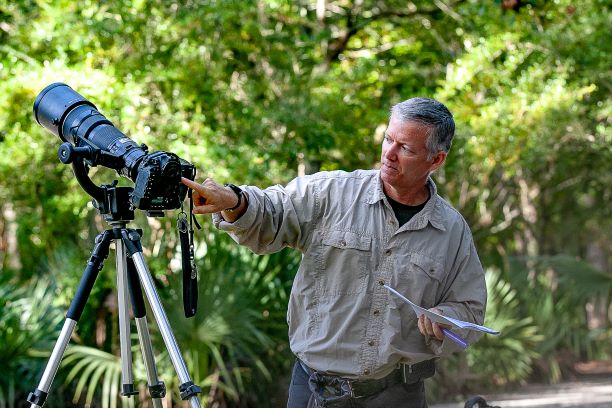
Chris Smith discovered a passion for photography as a young boy growing up in the Democratic Republic of the Congo. Later he graduated from the New York Institute of Photography. His wife Cami graduated from the Ohio Institute of Photography. Together, they formed Chris & Cami Photography, located in Charleston, S.C. They cover a wide range of services including sports, weddings, architecture, interior, portraits, corporate, and family events.
Learn more about Chris & Cami on their About Page and see examples of their award-winning photography at Chris & Cami Photography, LLC.
The Center for Birds of Prey, Avian Medical, and Oiled Bird Treatment Facility make up the Avian Conservation Center in Awendaw, S.C. Through these operations, the Center plays a vital role in conservation through education, research, and response.
The medical staff treats eight to nine hundred patients a year. These are birds injured mostly from fishing lines and collisions with cars. About one hundred birds are long-term residents and cannot return to the wild. Volunteer Educators and Staff work with some of the resident birds for flight demonstrations and other educational programs. One educational program is the Owls by Moonlight. We learned that many owls are victims of rat poisoning, after eating the poisoned rats.
Mandy Feavel is the Director of Operations for the Avian Center. She explains that the Center is a non-profit organization that relies to an extent on public support from contributions, corporate sponsorship, foundations, and a dedicated Volunteer Staff.
The Avian Center is especially grateful for public support during the COVID-19 pandemic, as the same number of birds needing medical treatment continues.
To learn more about the photography workshop and how you can help support the Avian Center, go to The Avian Conservation Center– Center for Birds of Prey.
Read more travel photography stories at Travel Notes and Storytelling from the links below.
Lowcountry Photography and a little Civil War History
Save Time and Get the Best Photos