“We fight, get beat, rise, and fight again.”- Major General Nathanael Greene
South Carolina’s Revolutionary Landscapes explores the places where history lives. From battlefields and historic sites to living-history reenactments, monuments, ruins, and graves, these places preserve the stories of those who fought for independence. Eddie and I photo-journeyed through the Palmetto State’s revolutionary landscapes. The first in the series is South Carolina’s Revolutionary War Sites. This collection is not exhaustive; our Revolutionary War history is vast, with countless stories.
Part I: Revolutionary War Sites: Battlefields and Forts (1775–1781)
This story, South Carolina’s Revolutionary War Sites, brought Eddie and me intimately closer to our roots. During a year-long hub-and-spoke trip, we visited monuments, battle sites, grave sites, and rivers. Historians along the way brought the scenes to life in demonstrations, storytelling, and reenactments. Life-and-death struggles among friends and family for or against the quest for liberty were literally a civil war. The experience was educational and at times deeply touching and personal.
The air grew heavy as we reached Ninety Six, a trading post during Colonial times and my hometown. Stepping into familiar territory felt strange, armed with a deeper understanding of its history. A vital colonial trading hub, Ninety Six linked the Cherokee lands in the west to what was then Charles Town on the coast and served as a critical frontier supply crossroads. Given its location, Ninety Six was key to the British southern strategy. From there, they could maintain Loyalist control in the backcountry, supply the troops, and launch raids against the Patriots.
Walking through the Ninety Six National Historic Site today is deceptively peaceful. The only sounds are the occasional chirping of birds and scuffing of shoes on the trail. But it’s what lies underground, the tunnels and trenches that lead to the eight-pointed star, that capture the imagination. In May and June 1781, Gen. Nathanael Green laid siege to the fort, which would become the longest siege of the war; it lasted 28 days.
the first battle of the Revolutionary War in the South occurred in Ninety Six, South Carolina.
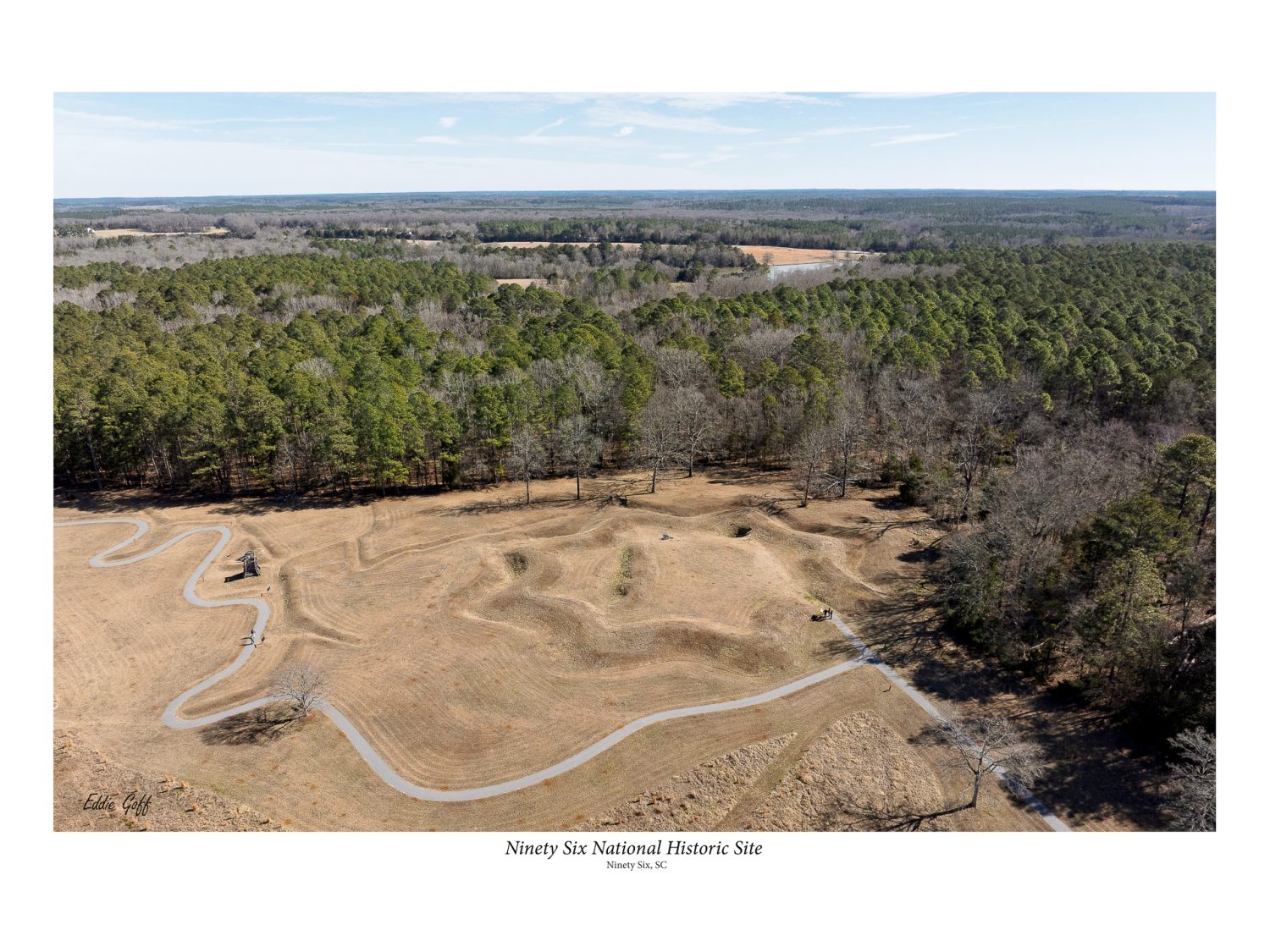
Five years and six months before Star Fort, there was another siege in Ninety Six, the Siege of Savage’s Old Fields. Approximately 1,900 Loyalists besieged 600 Patriots holding a cache of weapons and ammunition. The engagement lasted three days and resulted in the death of one Patriot, James Brimingham, for whom a marker stands today. That was November 18, 1775. Seven months later, as Loyalists began fortifying their grip on the backcountry at Ninety Six, the British Royal Navy bombarded Sullivan’s Island.
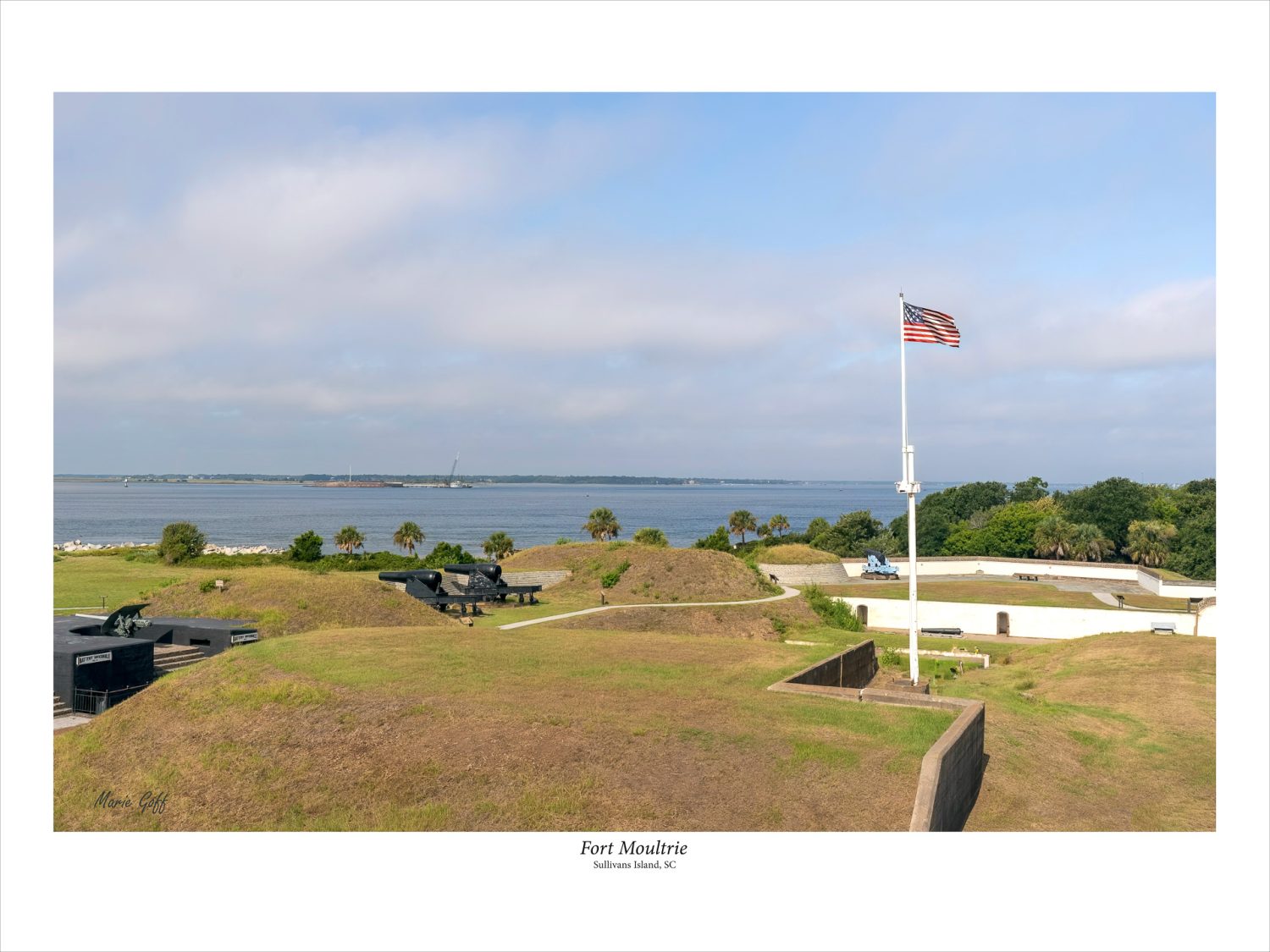
Canopies of live oak branches create magical tunnels along back roads leading to the Southern coast. At the water’s edge, the morning air was salty and thick with fog when Eddie and I arrived there. The Atlantic rolled in slowly and deceptively calm amid thoughts of what took place there on June 28, 1776. Standing on the WWII-era observation tower at Fort Moultrie, I imagined British ships crowding the horizon and cannon smoke hanging over Charleston Harbor. The fort itself doesn’t feel grand or imposing. No, it feels more stubborn, a wall of sand and palmetto logs that shouldn’t have been enough but somehow was.
As my camera shutter clicked, I heard the echo of guns across the waves, the shouted orders, fear, and the determination of men who refused to yield.
That was the first attempt at a major British invasion of Charleston, and it failed. That same year, the British inspired what would become a major Cherokee uprising, after which South Carolina maintained relative calm until Buford’s Massacre almost four years later.
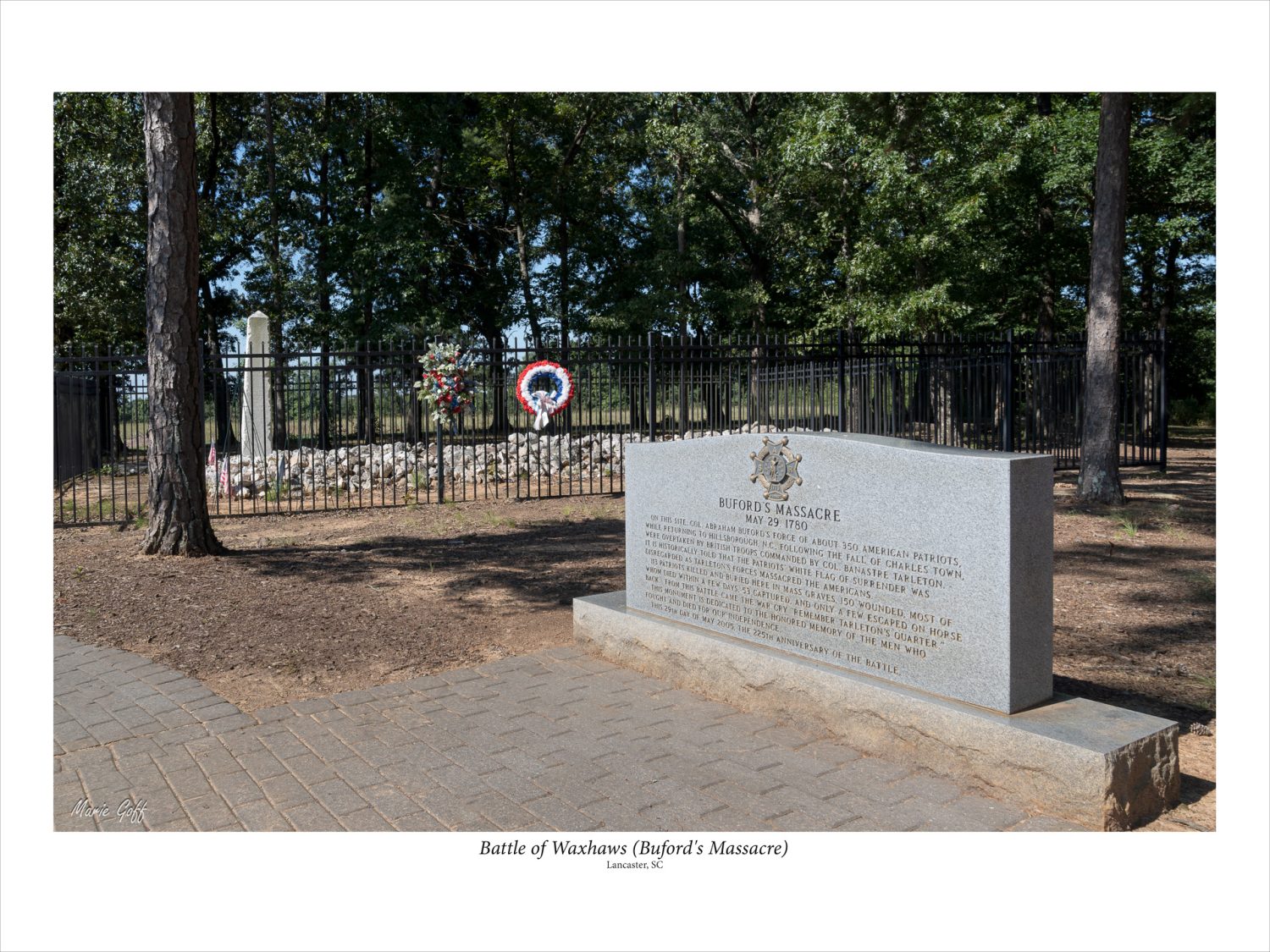
Deeper in the backcountry lies the site of Buford’s Massacre, the Waxhaw region, near present-day Lancaster. The landscape is soft—rolling fields, scattered trees, sunlight filtering down in warm patches—but the story it holds is hard and brutal. What took place there is one of the most shocking of South Carolina’s Revolutionary Sites. That infamous day earned Lieutenant Colonel Banastre Tarleton the moniker he carried throughout the war. The name “the butcher” or “bloody Tarleton” would burn in people’s minds, hardening their resolve and feeding their fury. British soldiers killed Patriots, led by Colonel Abraham Buford, as they attempted to raise a white flag. Whether the killing stemmed from a shot fired during the truce, the result was outrage. According to the Museum of the Waxhaws, Tarleton himself reported that his men “cut 170 Officers and Men to pieces.”
Two on-site mass graves hold 109 Patriots. The massacre occurred on May 29, 1780, almost four years after the failed British bombardment of Sullivan’s Island and just seventeen days after the British took Charleston following a grueling siege in their second attempt. While it might have appeared to the British that they were succeeding in their efforts to gain control of the South, conquering and holding the backcountry was key. That morning, standing alone on the site, I felt a menacing presence in the air and found myself whispering the words that once rose from Patriot throats on the battlefield: “Tarleton’s quarter!”
Photos of the now serene site felt inadequate. It was a small and futile attempt to capture something raw and searing that still lingers in the soil at Buford’s Massacre.
In Camden, history was closer to Eddie’s home in Elgin. Cary Briggs, the executive director of the Historic Camden Foundation, shared the story of the battle. With his telling, we easily visualized Major General Horatio Gates and 4,500 men marching down the Great Wagon Road. Day after day in the relentless heat of late July, they marched. With few provisions, the men foraged, barely existing on green peaches and corn, or whatever they found, mixed with molasses. By the time they neared Camden, many were too weak or too sick to fight.
Then, still on the Great Wagon Road, the British and Americans bumped into each other in the dark. Both commanders, Gates and British General Lord Cornwallis, hastily disengaged and, only half a mile apart, began preparing for battle. The number of troops is difficult to imagine. Cornwallis commanded 2,200 British regulars, seasoned professionals, and Gates commanded 1,000 veteran Continentals and 1,900 North Carolina and Virginia militia. Gates set his “green” militia against the best of the British, commanded by Tarleton, and the American line unraveled.
The atmosphere is heavy with the thought of troops marching through starvation and sickness to the doom that awaited. It was as if the land remembered the disaster that had unfolded there and refused to speak above a whisper.
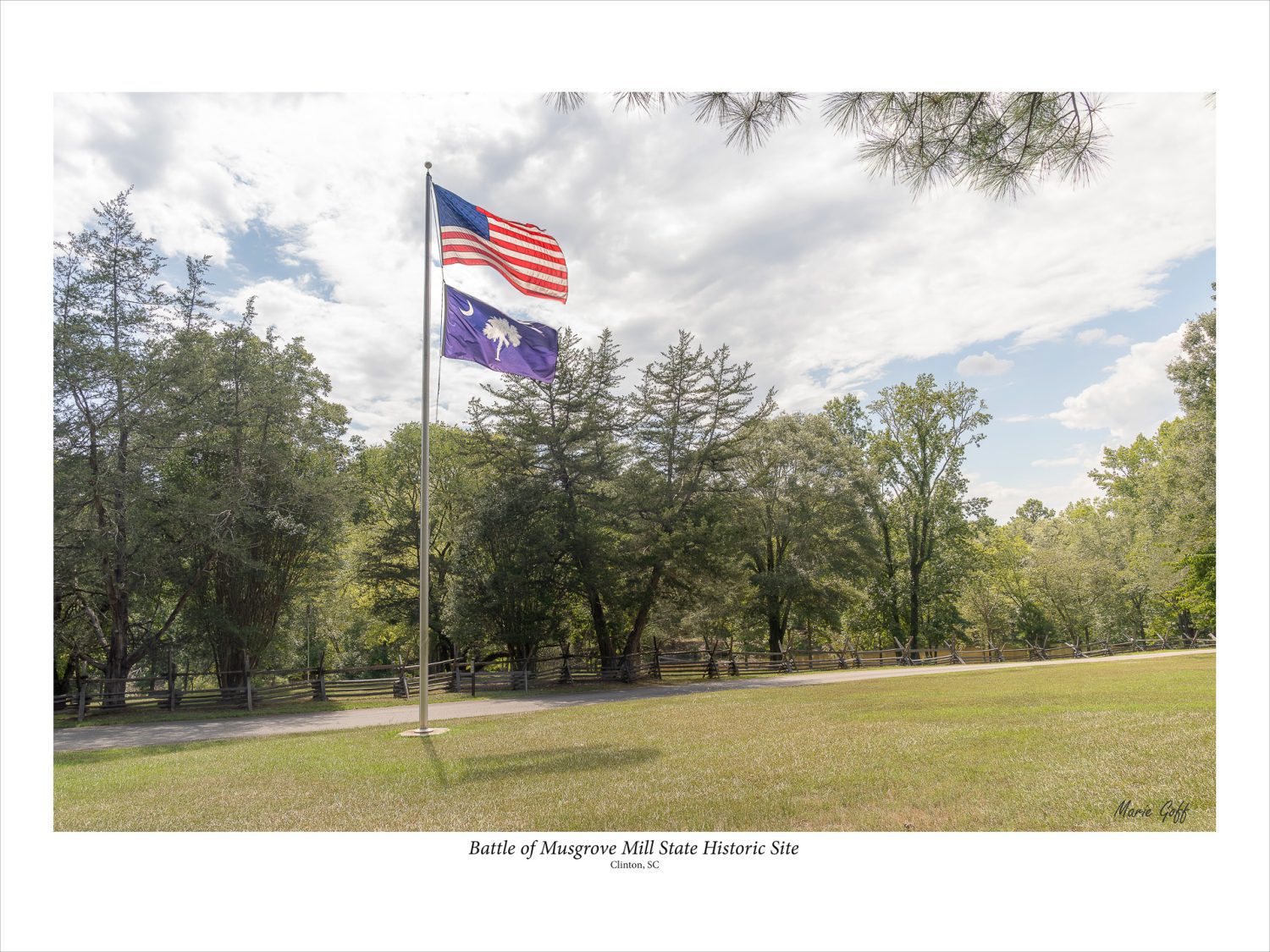
Driving away from Camden, we followed in the faint shadows of the Patriots’ next steps in the backcountry. Events began to move quickly. Only three days after the defeat at Camden, the Patriots laid an ambush for the Loyalists at Musgrove Mill. There, Loyalists controlled the local grain supply and a strategic ford in the Enoree River. At odds of 2-to-1, the Patriots surprised and defeated them. With this thought, the air felt charged with something new, defiance, maybe, or stubborn hope? Through the trees and over gentle rises, I imagined the sudden roar of musket fire, the quick, brutal clash, and then, a surprise victory. It was as if the landscape itself leaned forward, eager to show that after crushing losses, the fight wasn’t over.
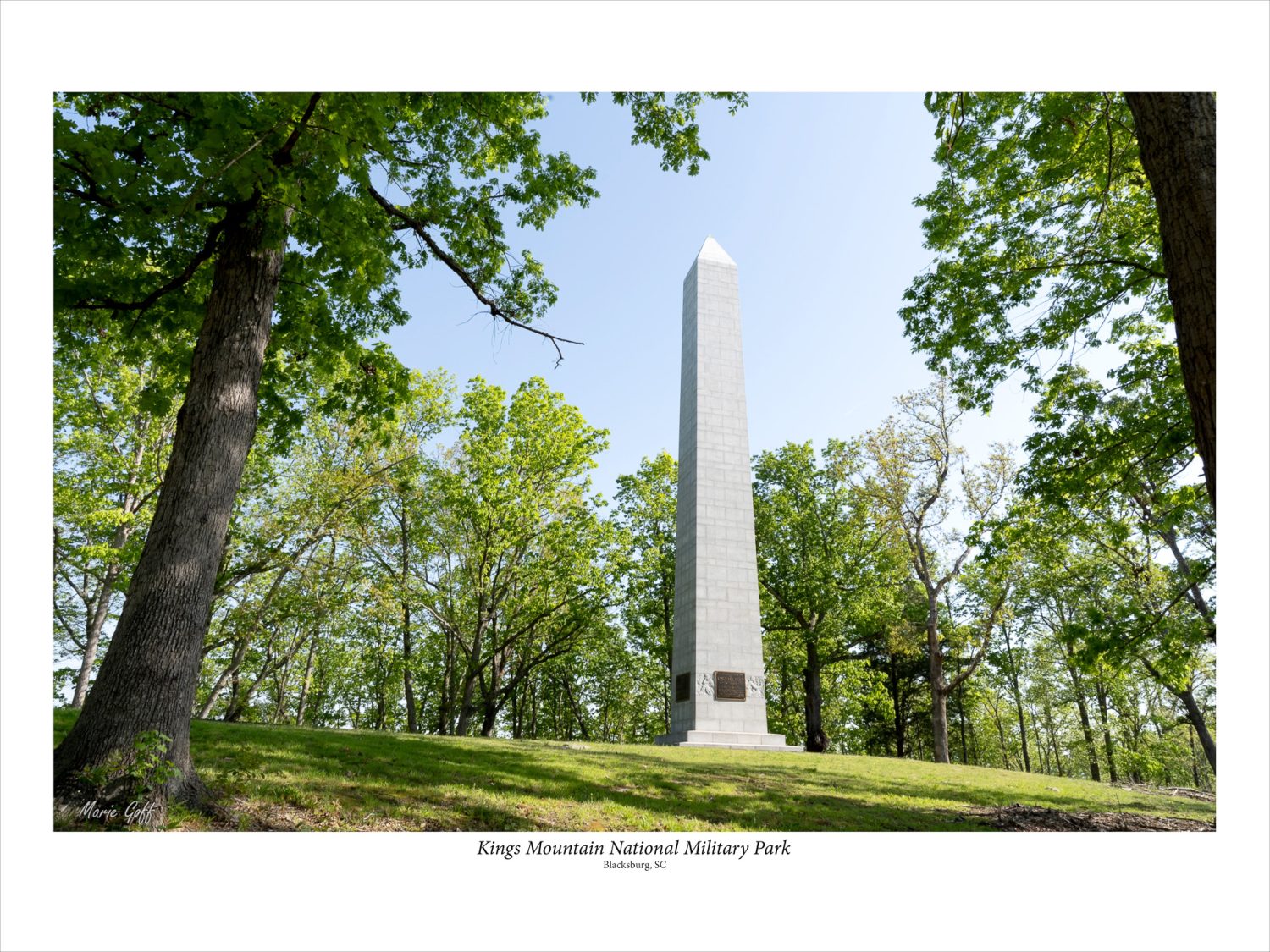
The Loyalists’ defeat at Kings Mountain, 49 days later, is a major turning point in the war. The ridge rises from the surrounding land like a spine, wooded and uneven, contrasting with today’s modern eco-friendly rubber path. 900 Patriot fighters, known as the Overmountain Men, commanded by a group of colonels, crept up the slopes, using the trees for cover, determined to defeat a force of 1,000 Loyalists. High ground and bayonets didn’t deter the Patriots. They kept charging up the slopes and, within an hour, defeated the Loyalists.
At the top of the ridge, looking out over the hills, I tried to imagine the moment when the Patriots realized they were winning—when the impossible victory began to feel real.
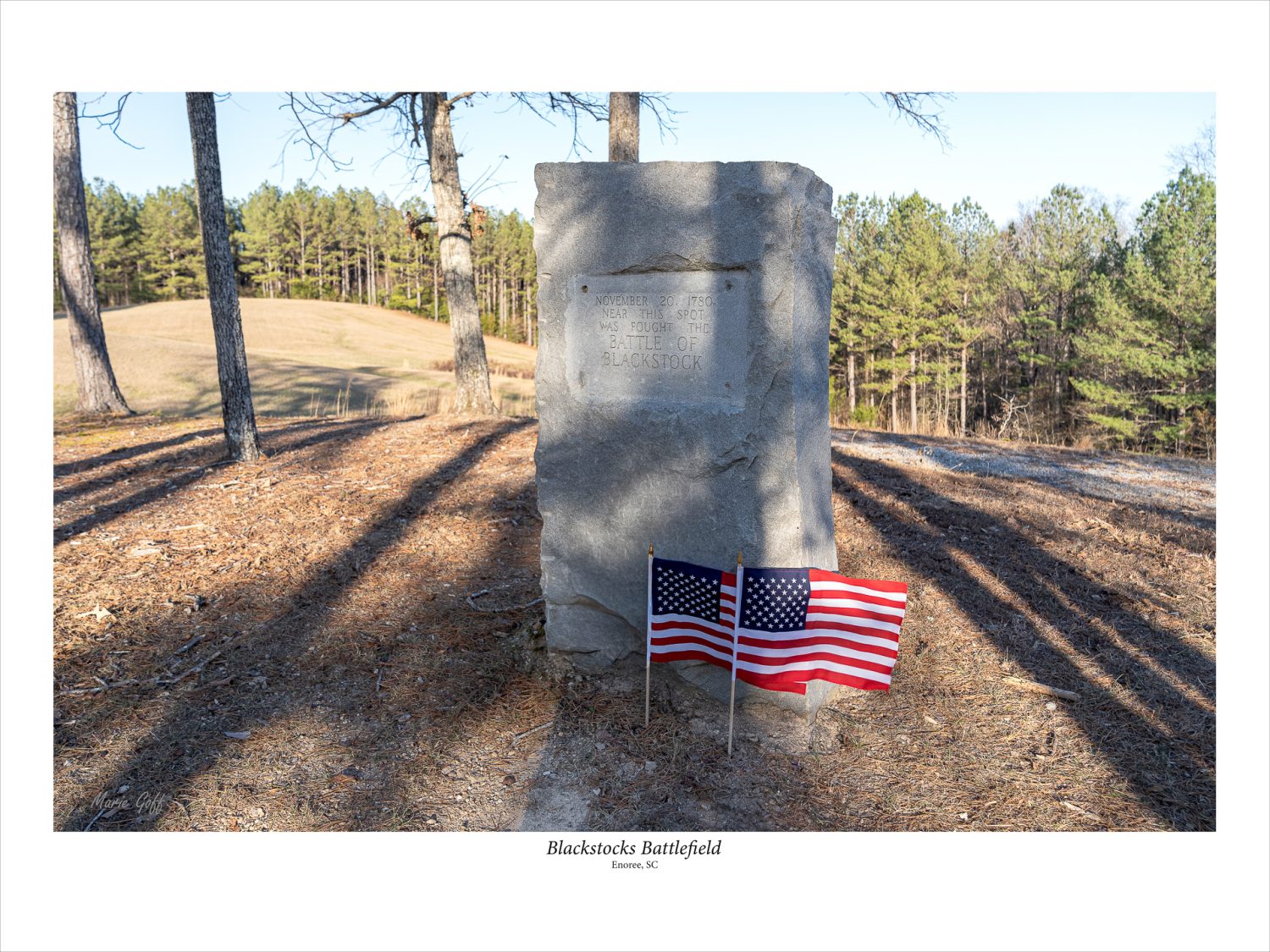
The Battle of Blackstock’s Farm came just forty-four days later. This time, recalled from his failed pursuit of General Francis Marion (the Swampfox) in the Lowcountry, Tarleton chased General Thomas Sumter (the Gamecock). Sumter had reached Blackstock’s Farm near present-day Spartanburg and strategically placed his troops in and around the farm and woods. Not surprisingly, Tarleton launched a frontal assault that pushed the Militia back. However, this forced his own troops into a disastrous crossfire, which killed over 90 and wounded 100.
Blackstock’s battlefield had an intimate feel. It was easy to imagine a farmhouse with fields, fences, and the ordinary fabric of daily colonial life. But we were walking on ground long ago trampled by soldiers’ boots, by terrified horses, by men running for cover. As I took the pictures, I kept thinking about how quickly a place can transform from home to battlefield, and later, again, into a quiet patch of earth, as if nothing had happened.
Tarleton’s first taste of defeat occurred at Blackstock’s Farm, but it wouldN’t be his last. In just 58 days, there would be another.
Tarleton commanded the British Legion, known as Tarleton’s Raiders. They were an aggressive, elite, and highly mobile regiment of cavalry (Dragoons) and Light Infantry. A sudden thunder of horses’ hooves heralds his arrival. However, this aggressive nature was once again turned against him at the Battle of Cowpens on January 17, 1781.
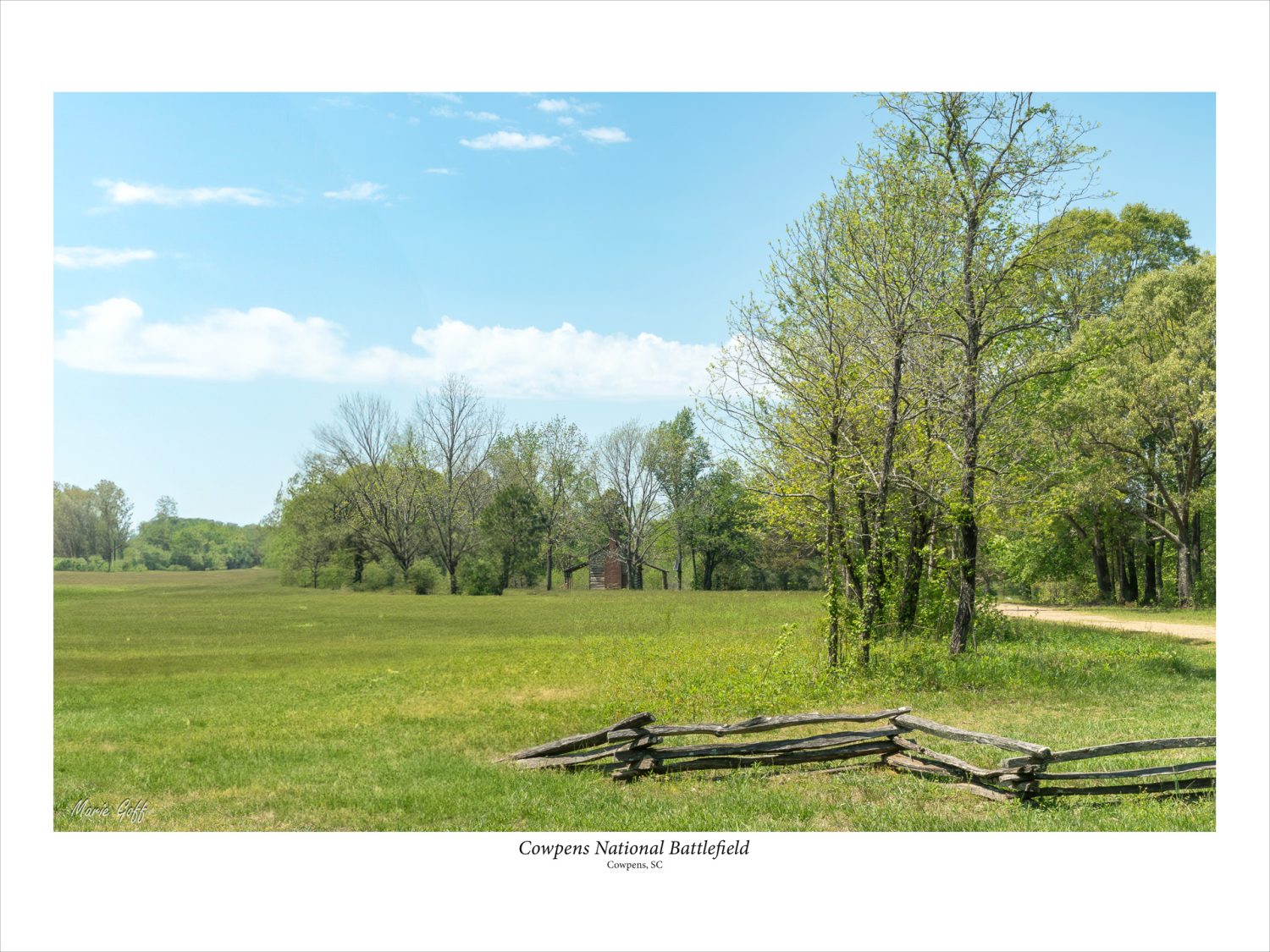
This time, Tarleton, with 1,150 troops, pursued General Daniel Morgan, with 1,065. At the Cowpens pasture, on a ridge with a gully to conceal his cavalry, Morgan set a trap. He cleverly positioned the militia out front and gave them the mission of firing two shots and falling back. This gave Tarleton the impression that he was facing a “green” militia on the run again, his experience in Camden. Morgan also left his flanks open, creating an impression of vulnerability. Tarleton charged toward Morgan in open pastureland, the militia fell back, and Tarleton faced previously concealed Continental Army troops. At the right moment, Morgan’s cavalry emerged, surrounding Tarleton on both sides and completing a classic double envelopment.
The battle at Cowpens was a decisive victory for the Americans and a welcome morale boost. i imagined the shouts of victory; “Huzzah!”
Another victory for the Patriots came just shy of four months after the great victory at Cowpens. Fort Motte captures the imagination because of the remarkable Patriot sacrifice and the unique military etiquette that followed the siege.
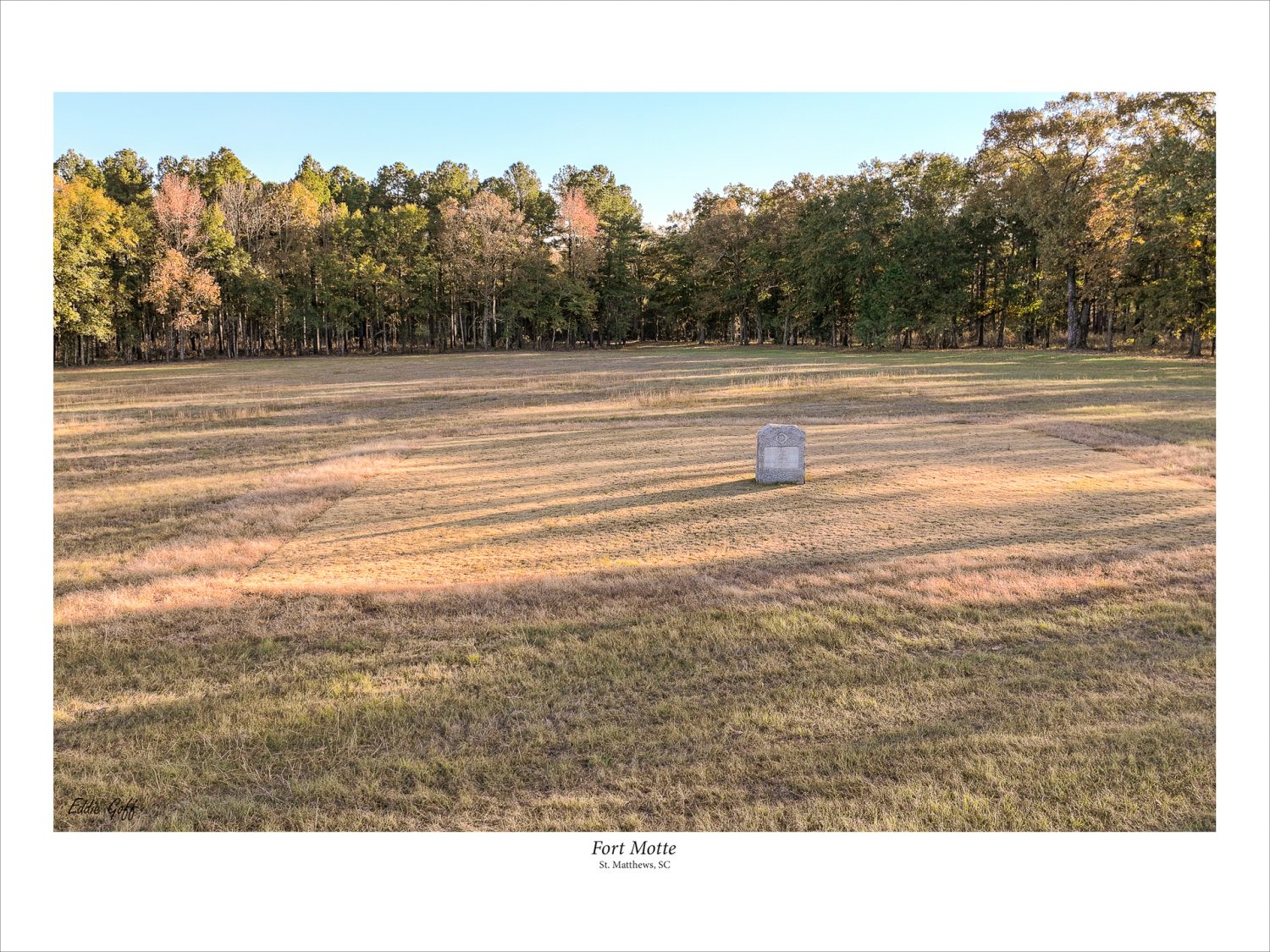
The house, now long gone, stood at a strategic confluence of the Congaree and Santee rivers. Our hosts—the current owners of the land—welcomed us and began the story they love to tell. The British seized Rebecca Motte’s elegant new home as a supply depot. On May 12, 1781, Generals Nathanael Green and Francis Marion arrived. Their goal was to force the British to surrender by setting the house ablaze. In an act of unselfish support and sacrifice, Mrs. Motte gave her permission. According to legend, she even provided the arrows. In an act of mutual chivalry, troops on both sides put out the fire and saved the house. Then, as a gracious host, Mrs. Motte provided dinner for the officers of both sides.
In the telling, I could almost see candlelight flickering over a long table, hear the uneasy laughter, the clink of glasses, as the acrid smoke of burning lingered in the air. It’S ONE OF MY FAVORITES AMONG SOUTH CAROLINA’s Revolutionary war sites.
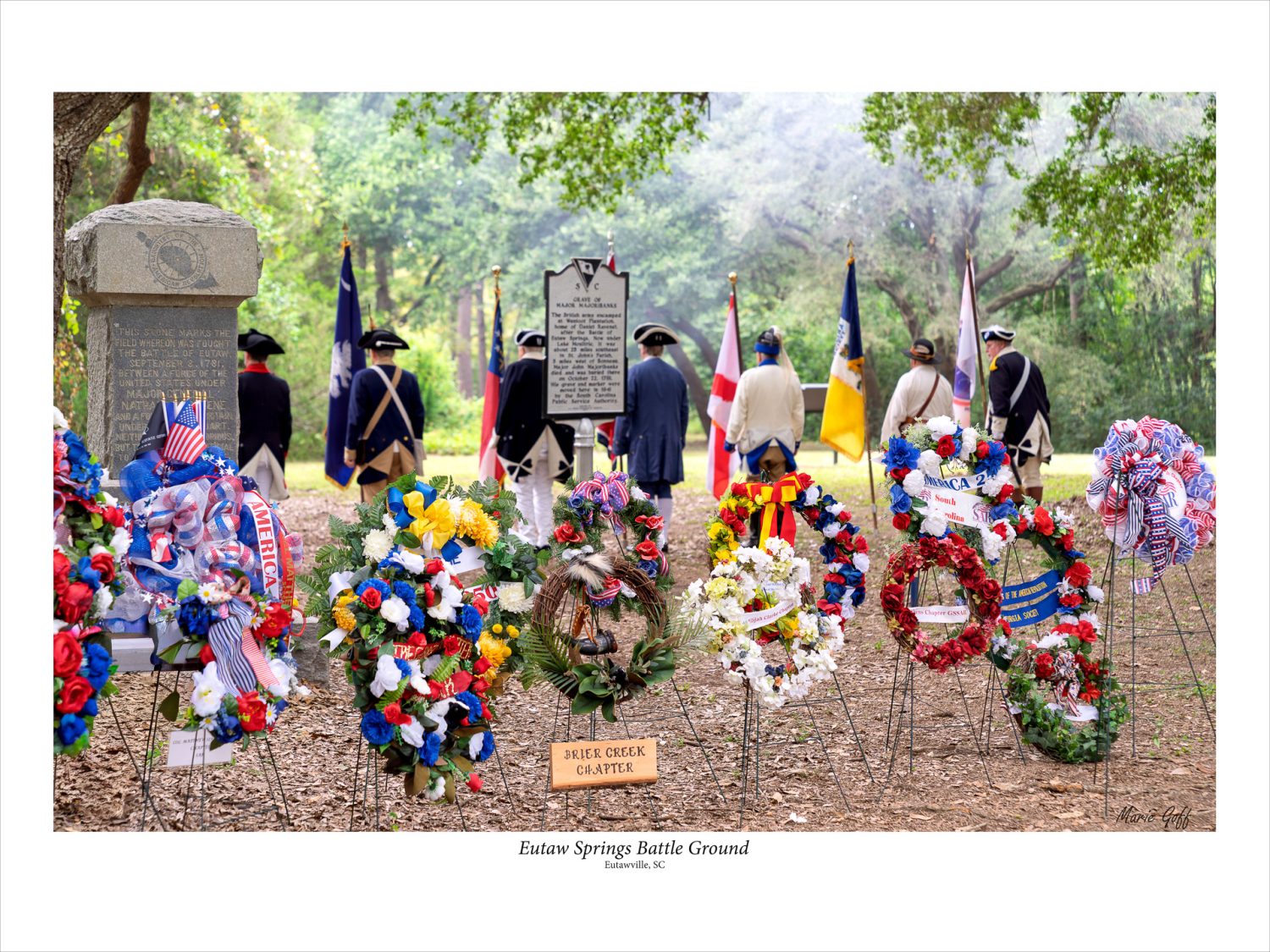
Our next stop was Eutaw Springs Battlefield Park, where fighting took place four months after the siege of Fort Motte. I stopped there alone and didn’t venture in too far. It felt isolated and quiet, hard to imagine as the site of the last large-scale battle in the Carolinas. Lake Marion was still, shaded by trees, and the air felt thick with everything I didn’t know.
My second visit was courtesy of Doug Doster, V.P., Battle of Eutaw Springs Chapter, SCSAR. It was a lively group on a bus, which included reenactors and storytelling by Raconteur David Paul Reuwer. Eddie met me at the site, and by that time, the days on the road had blurred together—long stretches of backroad, small towns flashing by the windows, the rhythm of unpacking and repacking camera gear. But on this visit, Eutaw Springs was as alive as only reenactors can convey.
On September 8, 1781, led by Greene, 2,200 Continental Regulars and Militia launched a surprise attack on the British forces commanded by British Lt. Col. Alexander Stewart, with 2,000 experienced regulars. Though the battle ended in a draw, events at Eutaw Springs foreshadowed the end. The British were losing their grip on the South, and one year and three months later, on December 14, 1782, they evacuated Charleston.
By the time we reached Eutaw Springs, the land itself felt as it was leaning toward a conclusion, the British hold weakening with each passing mile.
Eutaw Springs had the highest total casualties of South Carolina’s Revolutionary War Sites. An estimated 1,461 total soldiers died (579 American and 882 British), barely surpassing the total casualties of the Battle of Camden with 1,374 (1050 Patriot and 324 British).
Travel Notes
The sky burned orange over the treetops as we left the Santee area, the Santee River, during the battle at Eutaw Springs. On that last evening, I realized the journey had changed me. South Carolina’s Revolutionary War Sites were no longer a series of dates and names in a book, but places you could stand in, breathe in, walk through, and come to know through all your senses. I’d heard the echo of guns at Sullivan’s Island; felt the fragile importance of a small outpost at Ninety Six and the menacing carnage at Buford’s Massacre; tasted hunger and dread at Camden; sensed the electric jolt of unexpected victory at Musgrove Mill; the determination at Kings Mountain; and in my mind’s eye, witnessed sacrifice and grace at Fort Motte. The ending in the South was the beginning of the end, the unraveling of British power that would end at Yorktown.
To travel to South Carolina’s Revolutionary War Sites is to move through layers of time—through strategies and propaganda, triumphs and massacres, bravery and desperation. It’s the way to understand it and feel it.
By the time we turned toward home, the South’s Revolutionary past no longer felt distant. It felt as close as the dust on our shoes and the images on our cameras, written into the landscape we had just crossed from shore to foothills and back again.
On a personal note, Eddie’s ancestor, Yohan Daniel Little Jr. (c.1755-c.1807), surveyor and teacher from Rowan Co, NC, served under Gates at the Battle of Camden. We’d known that for a long time. Eddie’s Mother, Mary Goff Rose (née Jeffers), was recognized as the DAR Good Citizen in her graduating class of 1954 at what was then Blaney High School. Director Briggs also provided news we didn’t know. Yohan’s sibling, Pvt. William Henry Little also participated in the Battle of Camden and did not survive. He lies buried at the Camden Revolutionary War Cemetery in Camden, South Carolina. Yohan Daniel Little Jr. lies buried at Smyrna United Methodist Church Cemetery in Elgin, South Carolina.
read another of Marie’s stories about the Revolutionary War at this link:
FLASHBACK TO THE AMERICAN REVOLUTION – NINETY SIX, SOUTH CAROLINA
find More information about South Carolina’s Revolutionary War sites at the links below:
List of Revolutionary War sites within SC State Parks
About 803 Labs, Inc.
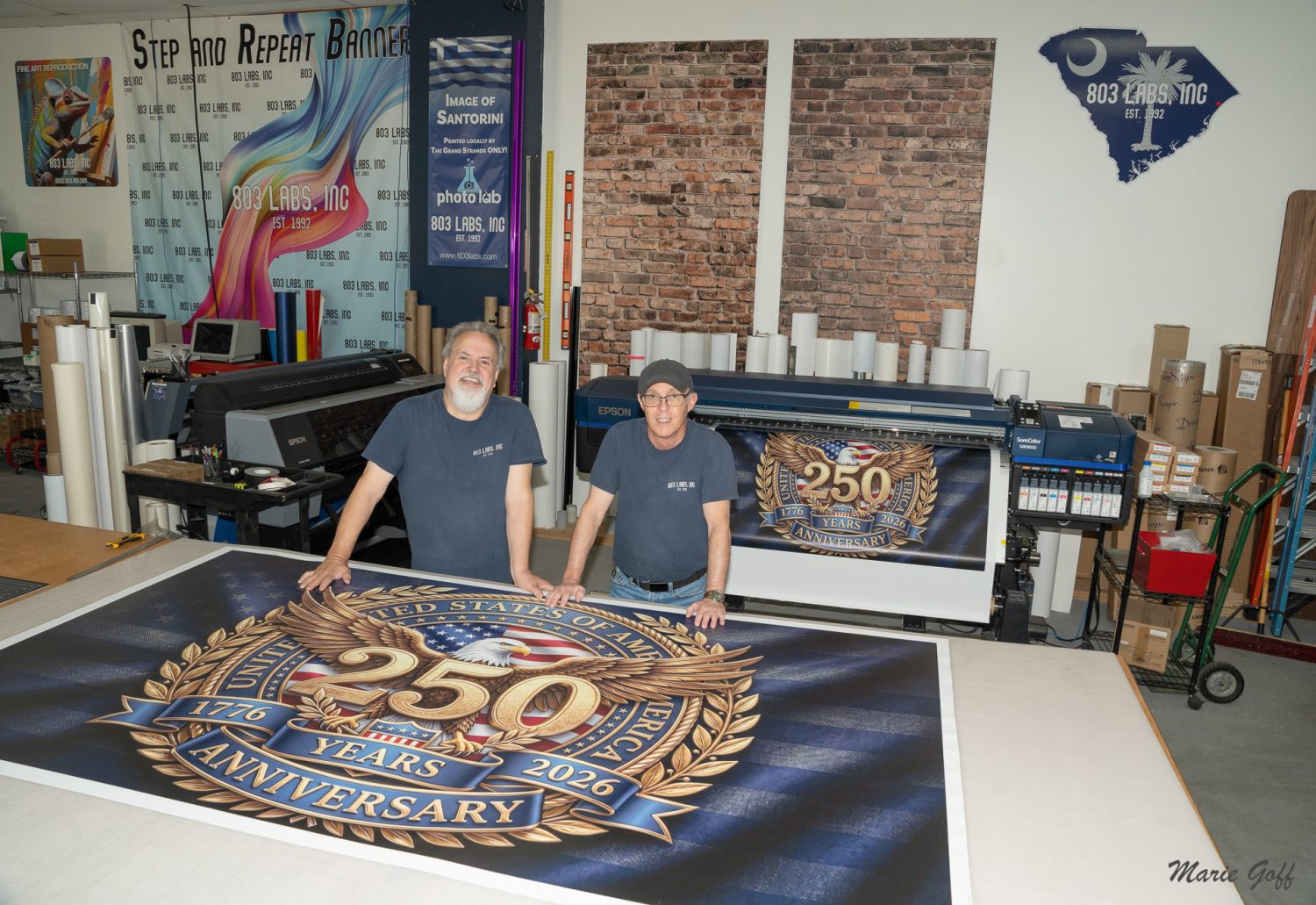
803 Labs, Inc. was established in 1992 as One Hour Photo in Myrtle Square Mall. Tony Wiggins, the current CEO, took over in 1994. He transformed the lab and began serving professional photographers while adopting the philosophy:
“If our customers succeed, we succeed; their success is our success.”
Today, 803 Labs, Inc. consists of two employees, Tony and Rich Gose. Tony has worked in the photography industry since 1984, primarily in the lab, serving professional photographers. He continues to work with film today, helping photographers of all ages embrace this distinctive visual art medium. Rich has been working with programs like Adobe Photoshop since 1997, and early in his career, became a Certified Expert. He helps artists create reproductions of their work for sale, known for his expert art reproduction and color matching.
With complementary expertise, Tony and Rich offer a wide range of services, including photo printing, film development, scanning, restoration, and large-scale printing for banners and murals. They handle both digital and film sources, providing in-house service for photo restoration, fine art reproduction, custom projects, and also sell cameras.
Eddie and I turned to 803 Labs, Inc., for our collection of prints exhibited at the South Carolina State Library. These include (32) 18×24-inch prints highlighting Revolutionary War sites across South Carolina, some of which are included in this story.
Don’t miss part two of South Carolina’s Revolutionary Landscapes, “Revolutionary War reenactments and Demonstrations,” coming soon at Travel Notes and Storytelling.
You must be logged in to post a comment.