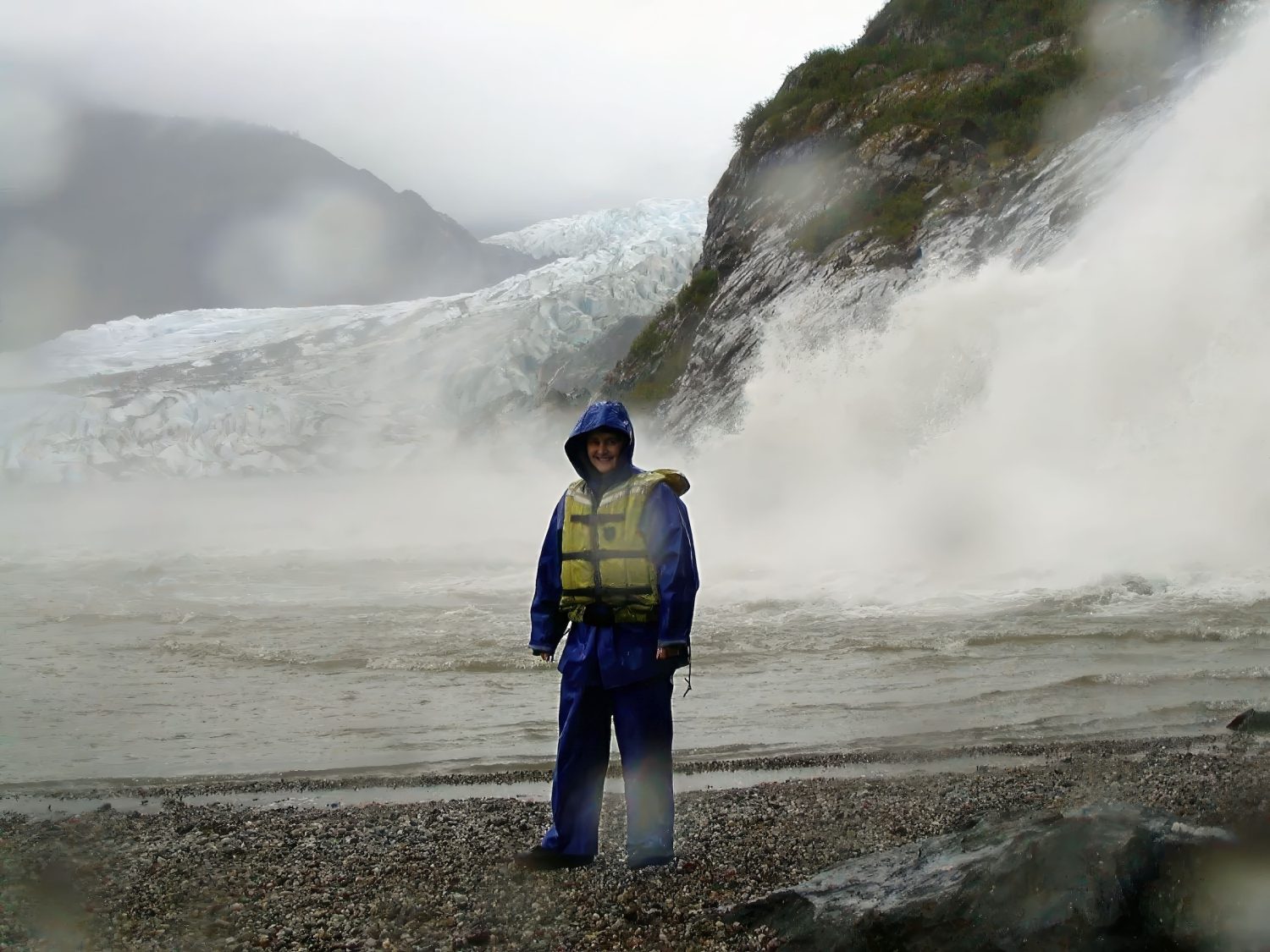
Rowing close to a glacier is tricky. The guide sat on one end of the rowboat, rowing massive oars. He soon got us as close as possible to the terminus (ending point) of Mendenhall Glacier. Eventually, we were surrounded on all sides by ice and water. It felt as if we were in the belly of the massive boulders of ice. We got to only 25 yards of it in some places. In others, we got out and stood on its small beaches of sediment, a thrilling experience!
Rowing close to a glacier is tricky, but this time we got out of our row boat and stood close.
Juneau, Alaska, provides the perfect entry point for icy exploration. It is nestled between Mount Juneau (3,576 ft.) and Mount Roberts (3,819 ft.). These mountains offer a scenic backdrop and protection from cold winds and permafrost. The weather was cool and comfortable at 60°F on an early July day. We headed out to row at Mendenhall Glacier. The skies were cloudy, and there was a slight but steady drizzle.
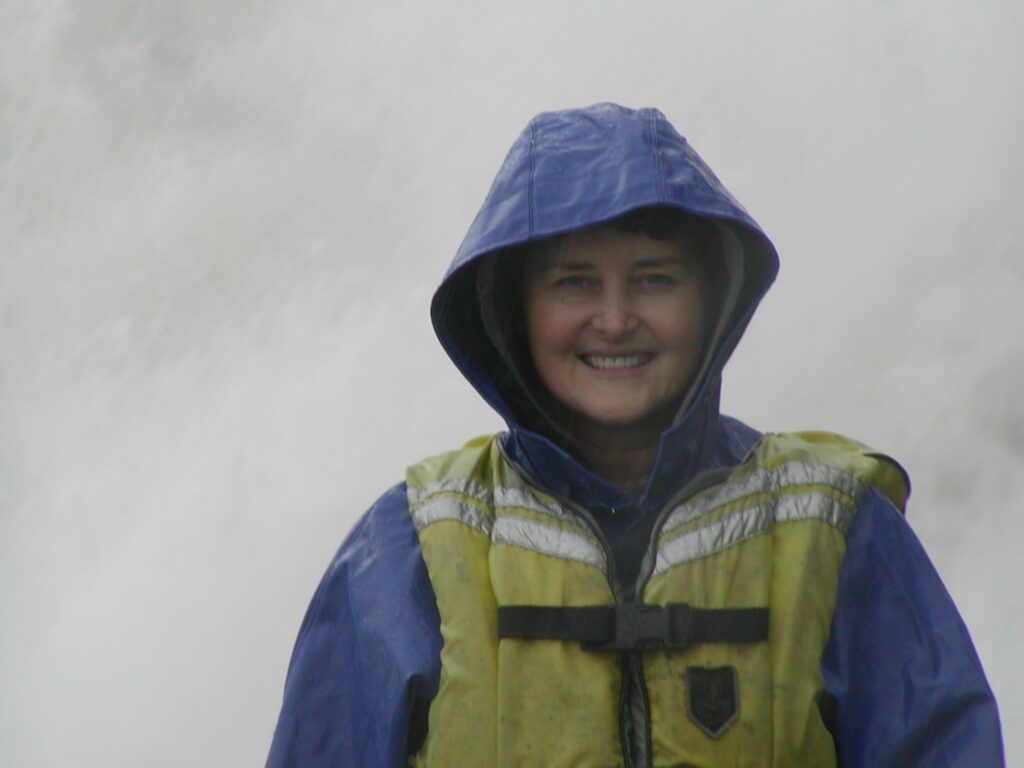
My husband, Eddie, and I were two of three brave adventurers in the boat with the guide, with no other people around. We put on rain gear at the edge of the bank. My heart was pounding as I heard the distant roar of the water. The ice field was at the terminus. I was anxious to get moving out into the water. We sallied forth soon enough and found ourselves surrounded by ice, water, and mist in a part of Mendenhall Lake. The vertical crevices at the edge of the glacier revealed brilliant blue ice. We were humbled by the roar of torrent glacial meltwater.
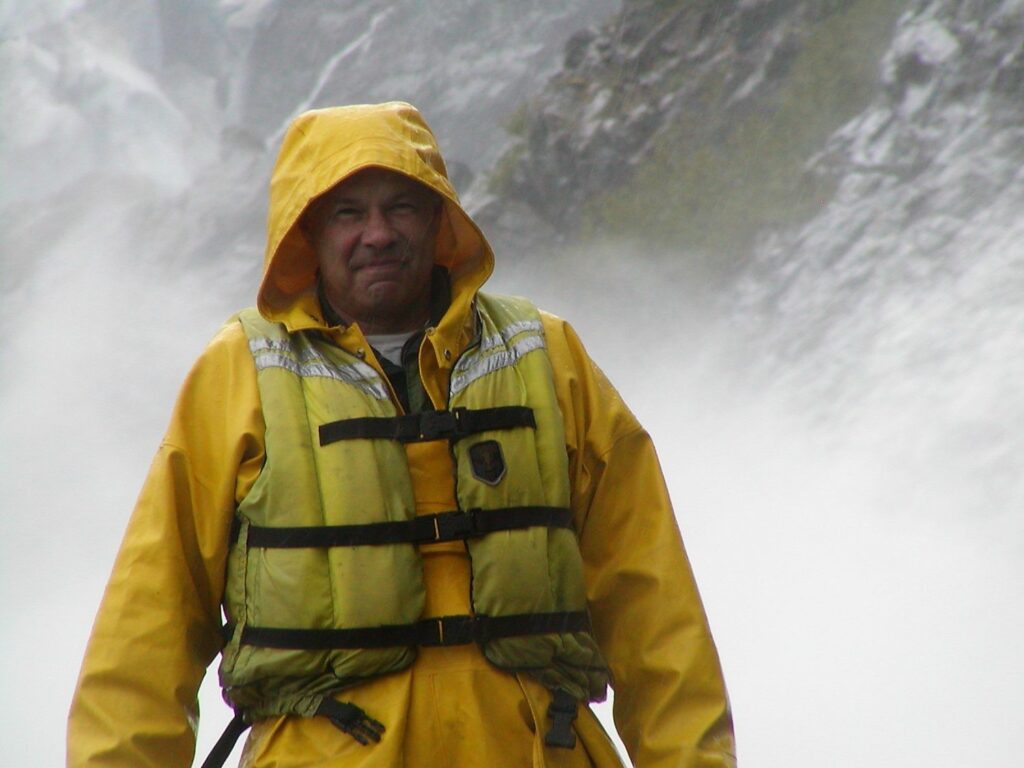
A small visible area of land indicated the glacier’s terminus. The surge of water represents a glacial-lake outburst flood, or jokulhlaup in Icelandic terms. When looking back toward the side of the lake where we entered, identifying the entry point was challenging. We thought that no one else was around, but then, while we were on the icy beach, a kayak came out of the foggy mist. He got close enough to exchange greetings over the roar of the water. He was rowing close to a glacier, alone.
The lone person in the kayak handed us his camera and asked us to take his photograph.
It was surreal to see him appear, have this brief exchange, and then see him disappear into the blue ice. I’m sure we must have looked that way when we entered and departed, a magical illusion.
Mendenhall Glacier, situated in Mendenhall Valley about 12 miles from Juneau, stretches roughly 13.6 miles with an elevation of 5,184 feet. Snowfall sustains the glacier’s ice, which takes approximately 200-250 years to move from the Juneau Icefield to its current position at Mendenhall Lake. The glacier and its surrounding landscape are federally protected as part of the Tongass National Forest. Juneau was founded in 1880. In the late 19th century, a Tlingit Chief named Kowee led two prospectors to a creek that emptied into the Gastineau Channel, the area now Juneau. The prospectors began panning. They found gold in a few hours, and that discovery set a new course for Alaska.
Although Juneau is the capital of Alaska, the glaciers Mendenhall, Taku, and Herbert isolate it from the rest of the state.
Travel Note
We arrived in Juneau aboard the Zaandam – Holland America cruise ship, a cruise of the Inside Passage of Alaska. See more about the Zaandam at https://www.hollandamerica.com.
Rowing close to a glacier was an optional excursion offered by the cruise line.
Go to Tongass National Forest and to the Mendenhall Glacier Visitor Center for lodging, trails, transportation, maps, and other information. Go to the Mendenhall Glacier Guide to Juneau, Alaska Glaciers hiking.
Various parts of Mendenhall pose a threat of flooding as reservoirs in the glacier fill with melting ice. Eventually, they break through (outburst flooding), as we saw on our rowing close to a glacier adventure. The most recent information was posted July 13, 2018, by reporter James Brooks: “Juneau scientists await unprecedented flood from Mendenhall Glacier’s Suicide Basin”.
Interactive maps, amazing photographs, and tour information for all of Alaska’s Parks.
A recent engaging article about Alaska’s Wrangell-St. Elias National Park and melting glaciers: “A Daring Journey Into the Big Unknown of America’s Largest National Park,” by Mark Jenkins.
You must be logged in to post a comment.