Cannon fire echoed across the site as we reached South Carolina’s Revolutionary War Reenactments. When Eddie and I stepped into the Carolinas Revolutionary War Weekend, we were immediately transported back to the late 1700s. Blacksmiths shaped iron at glowing forges, reenactors wore British red and American blue, and cavalry prepared their maneuvers. But behind the spectacle lies the raw stories of how South Carolina’s battlefields forged our nation’s independence.
We were in Kershaw County, South Carolina, at the annual Carolinas Revolutionary War Weekend, presented by the South Campaign 1780.
Reenactors in both British and American uniforms, regulars and militia, and women and children in period clothing were eager to share their vast knowledge and let us take photos. Later, we got close to the action as the reenactments of the battles of Camden and Cowpens heated up. Throughout the day, we learned more about how South Carolina and these key events led to our nation’s independence.
Seven months after the skirmishes at Lexington and Concord, the South saw its first major engagement in Ninety Six, South Carolina. At the time, standard military arms were a luxury. It would take two full years for French ships to arrive with thousands of standard Charleville flintlock muskets.
In those early days, local Patriots fought with whatever they owned. Sharpshooters relied on long Pennsylvania-Kentucky rifles, while local militia marched to the front lines carrying common hunting guns—their own smoothbore “fowlers.”
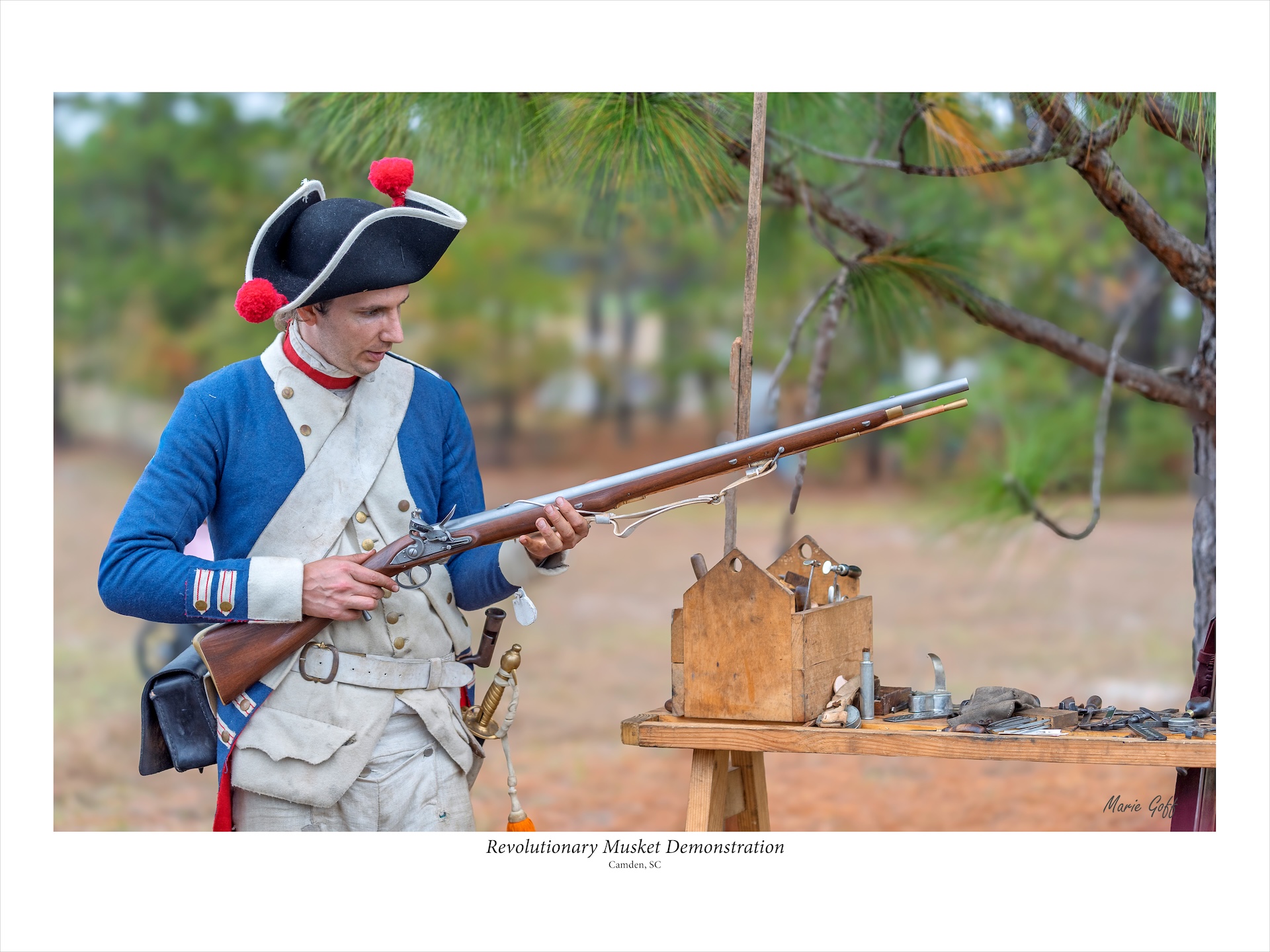
“The Americans purchased over 100,000 muskets from France during the American Revolution, considered superior to the British “Brown Bess.” – NRA National Firearms Museum
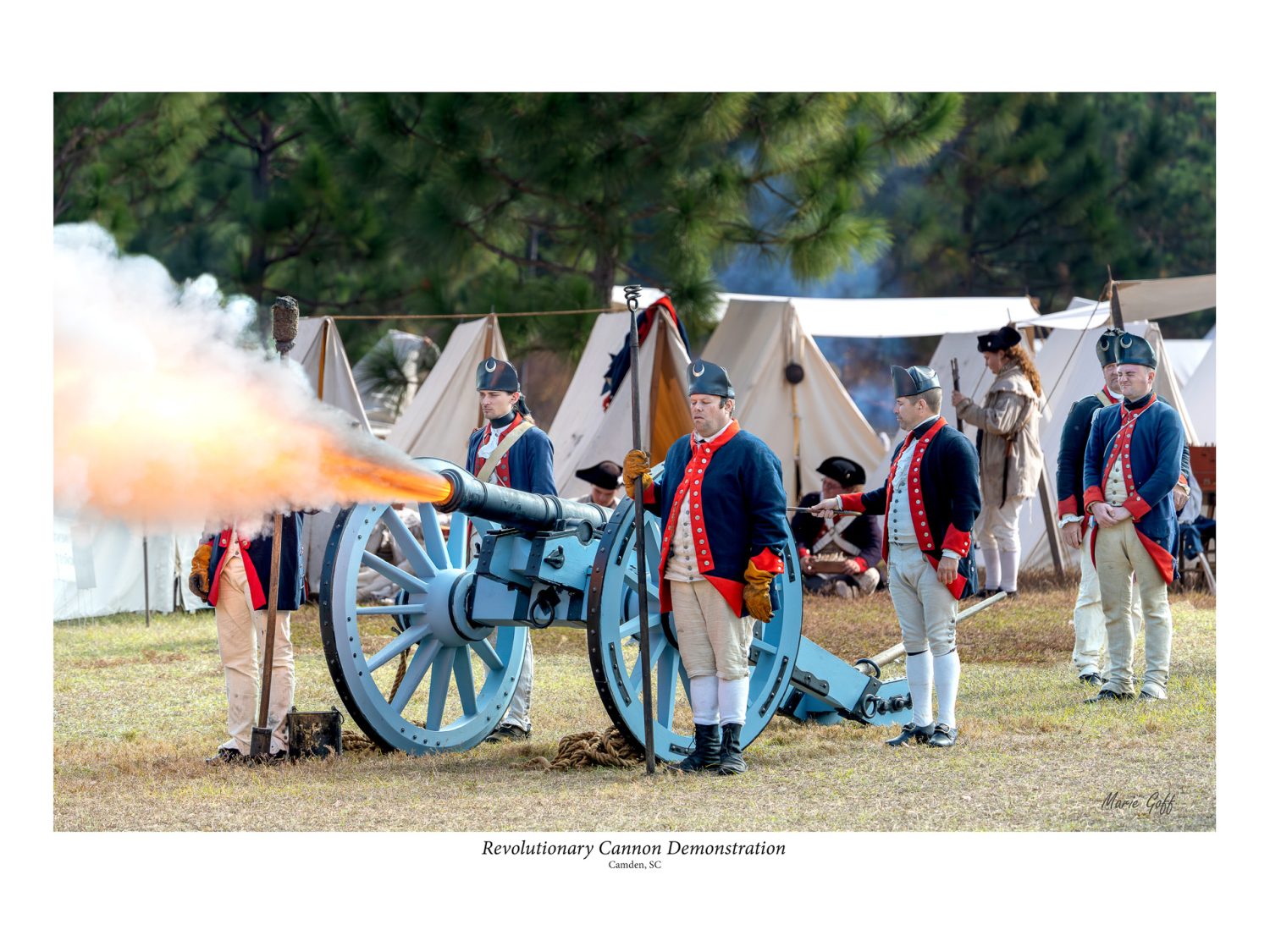
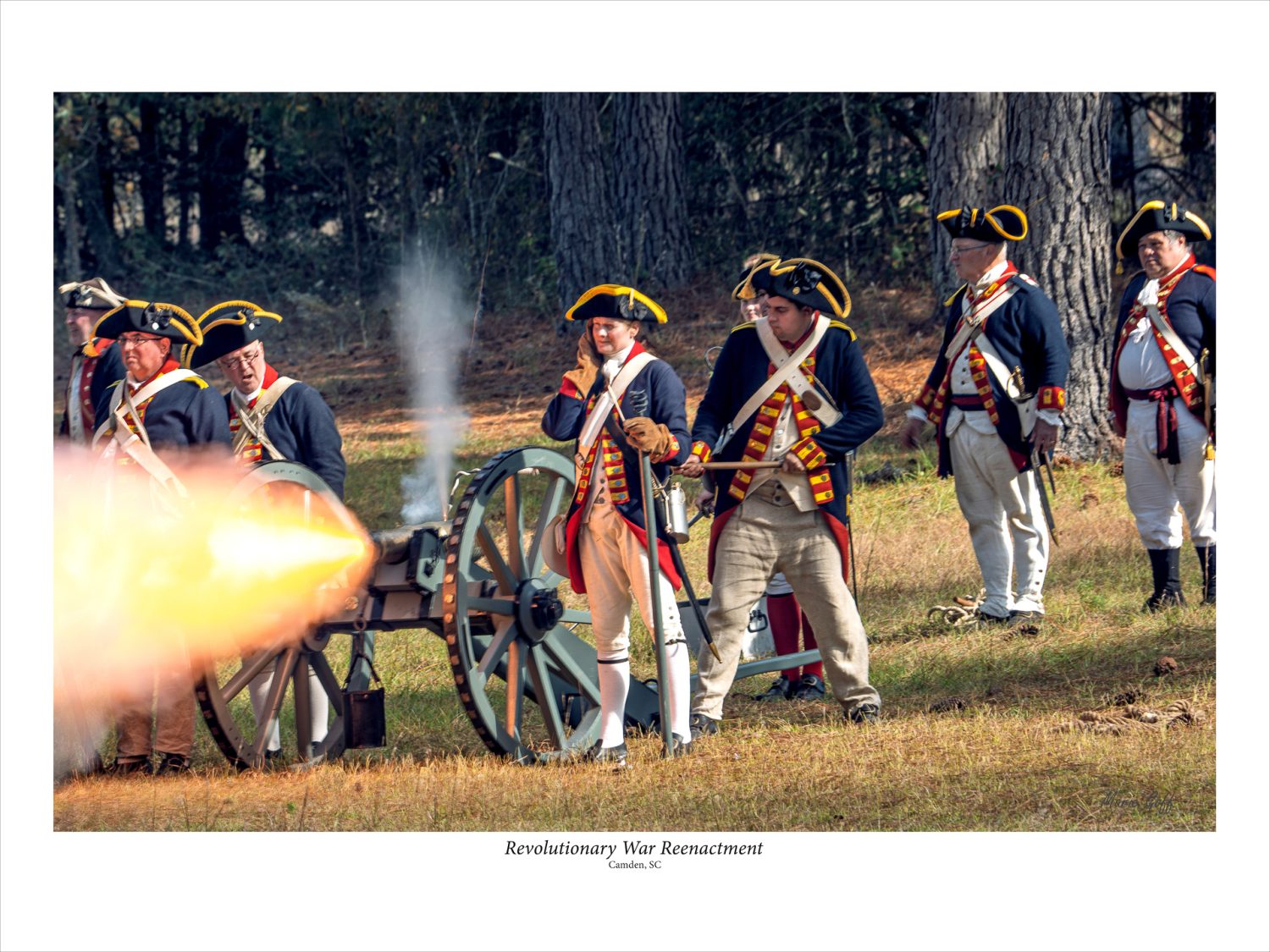
The Continental Army used cunning, negotiation, and know-how to acquire cannons for the cause.
They captured British weapons after land battles or seized them from ships at sea. The most valuable haul came after the capture of Fort Ticonderoga on May 10, 1775. According to The Gilder Lehrman Institute of American History, the Americans captured almost 200 cannons and other ordnance. They also imported cannons from foreign allies and cast them at colonial ironworks.
The famous “Noble Train of Artillery” hauled by Col. Henry Knox to Dorchester Heights consisted of cannons captured at Fort Ticonderoga in May 1775.
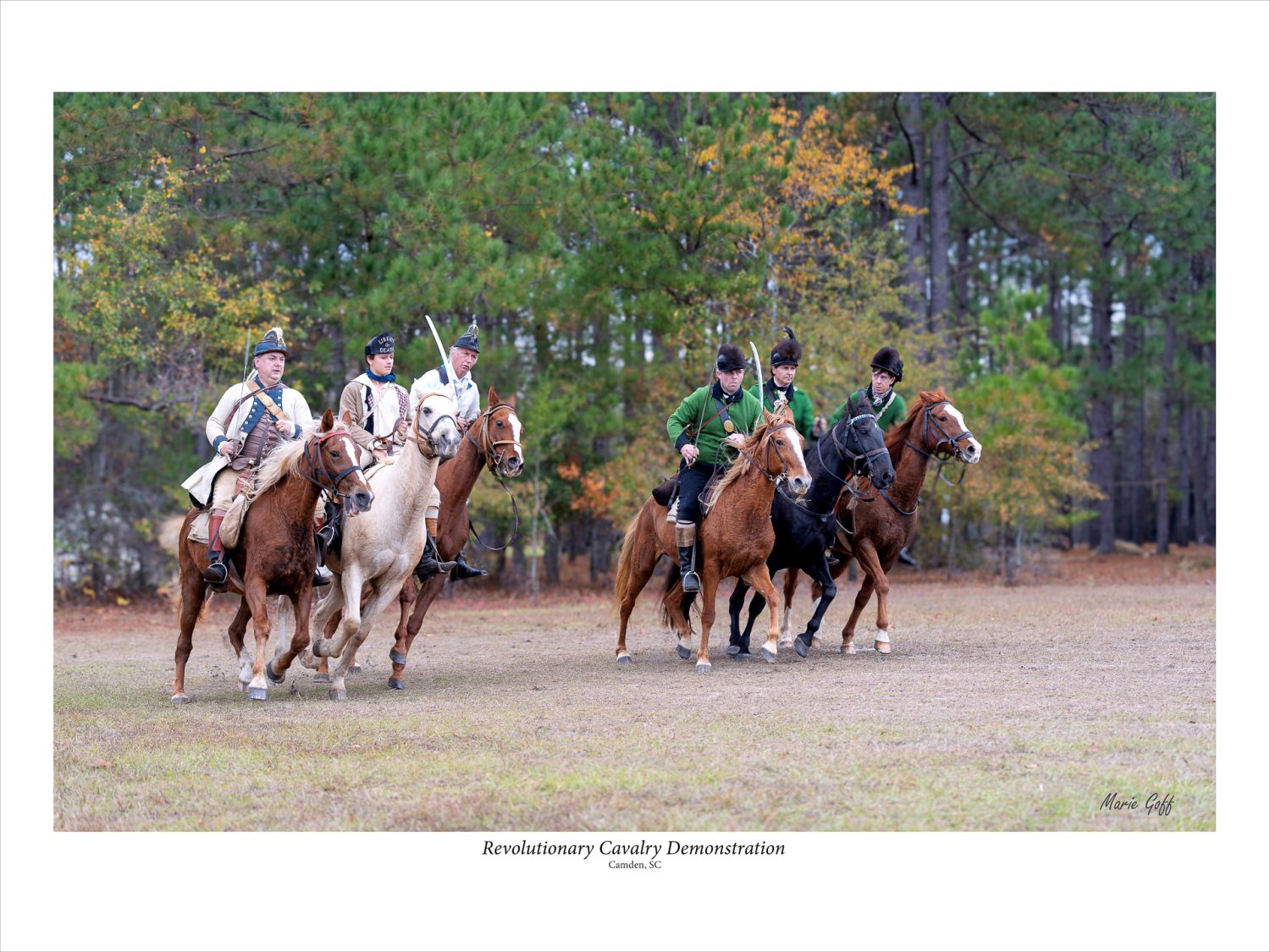
Standing before mounted cavalry in close formation, sabers held high, is sobering, even for a photographer. The sound of hooves and the sight of the sabers produce a psychological effect on the enemy. It brings an intensity and physical presence to the reenactment for the spectator. The horses responded to the battle drills in unison with precise execution.
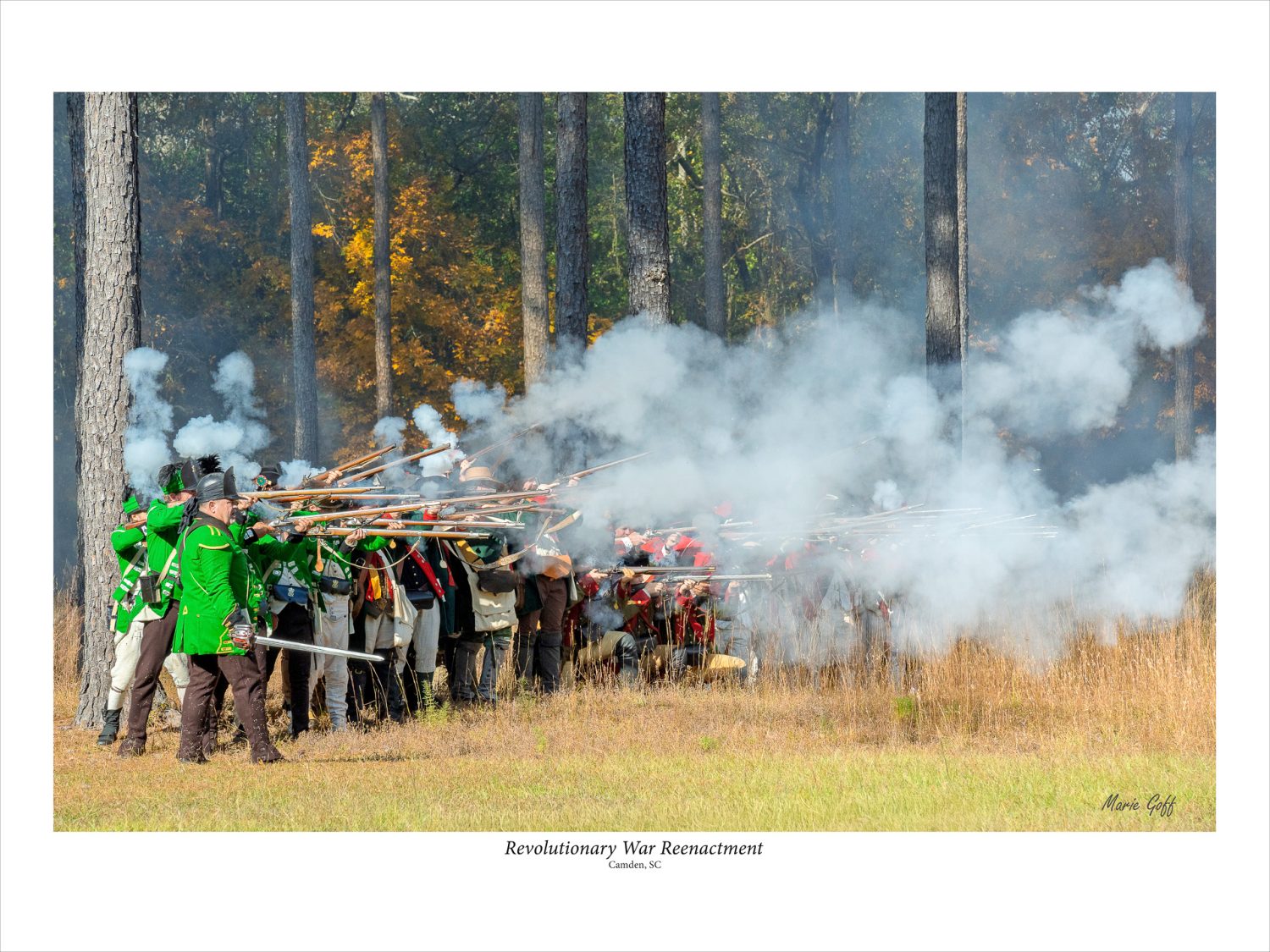
South Carolina’s Revolutionary War Reenactments – Battle of Camden: costly mistakes
That weapons gap proved fatal at the Battle of Camden. General Horatio Gates deployed militia against disciplined British regulars. The British carried the .75-caliber Brown Bess, complete with 18-inch steel bayonets. Under pressure, the American militia line quickly collapsed. The British soon surrounded and overwhelmed the Continental regulars under second-in-command Baron De Kalb.
Smoke and fire billowed into the air after each volley of muskets from both Patriots and Royals.
Flint on steel creates sparks that ignite the powder in the flash pan. A wall of red fire and dense white smoke erupts from the external flash pan. Seeing reenactors fire the weapons in line formation was spectacular!
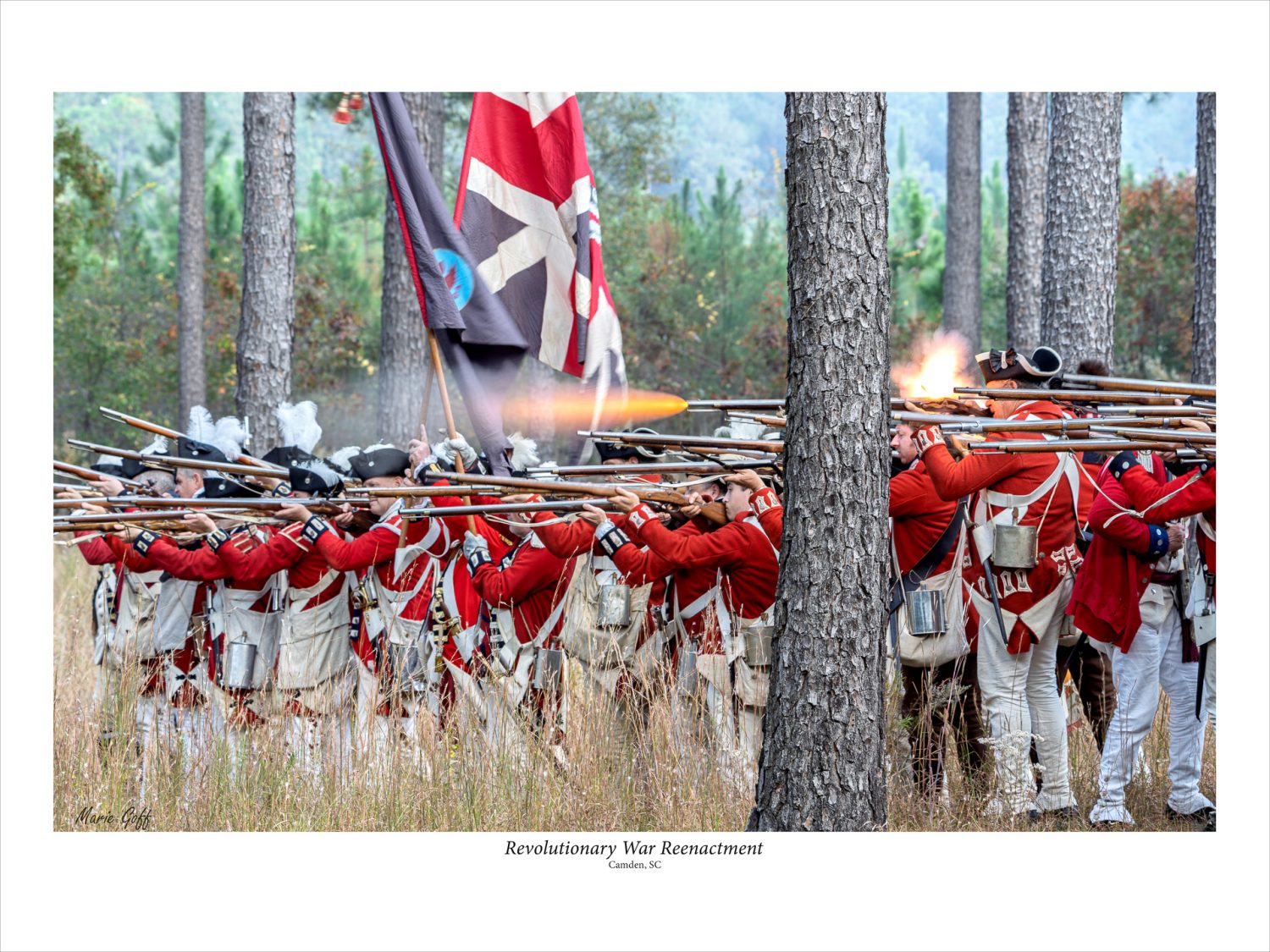
Battle of Cowpens: Strategic Adaptation
Five months after the Battle of Camden, at Cowpens, General Daniel Morgan adapted. Knowing the militia’s limits, Morgan turned their weapon style into an asset with legendary instructions that drew the British into a deadly trap—a strategic brilliance that reshaped the war.
“Give them two shots and fly.” — General Daniel Morgan
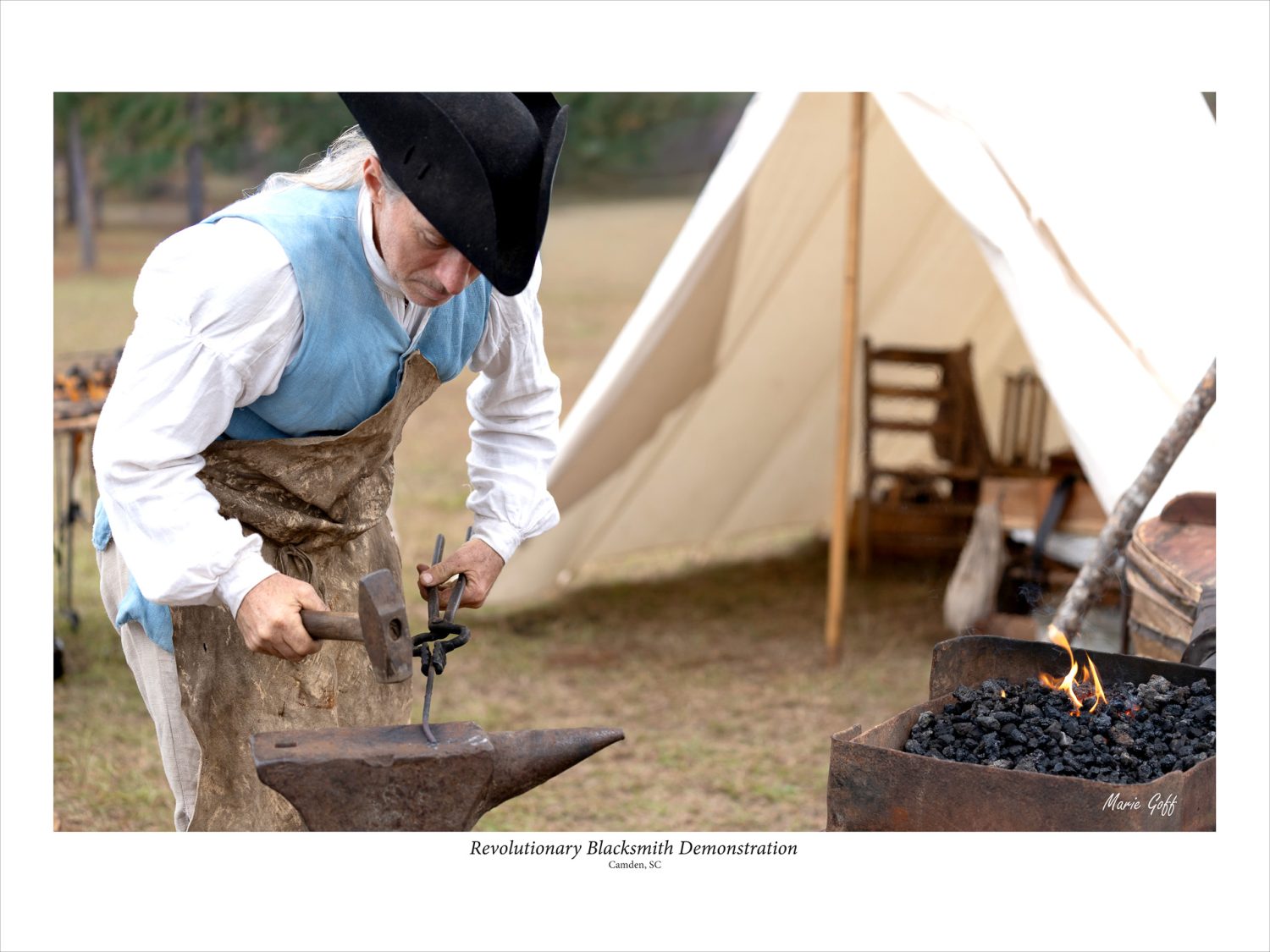
Blacksmithing was integral to the success of both the American and British forces. The blacksmith forged and repaired materials for weapons. They also aided in transportation by repairing wagon wheels and shoeing horses. The American blacksmiths reused materials captured from the British to forge and repair parts.
Travel Notes
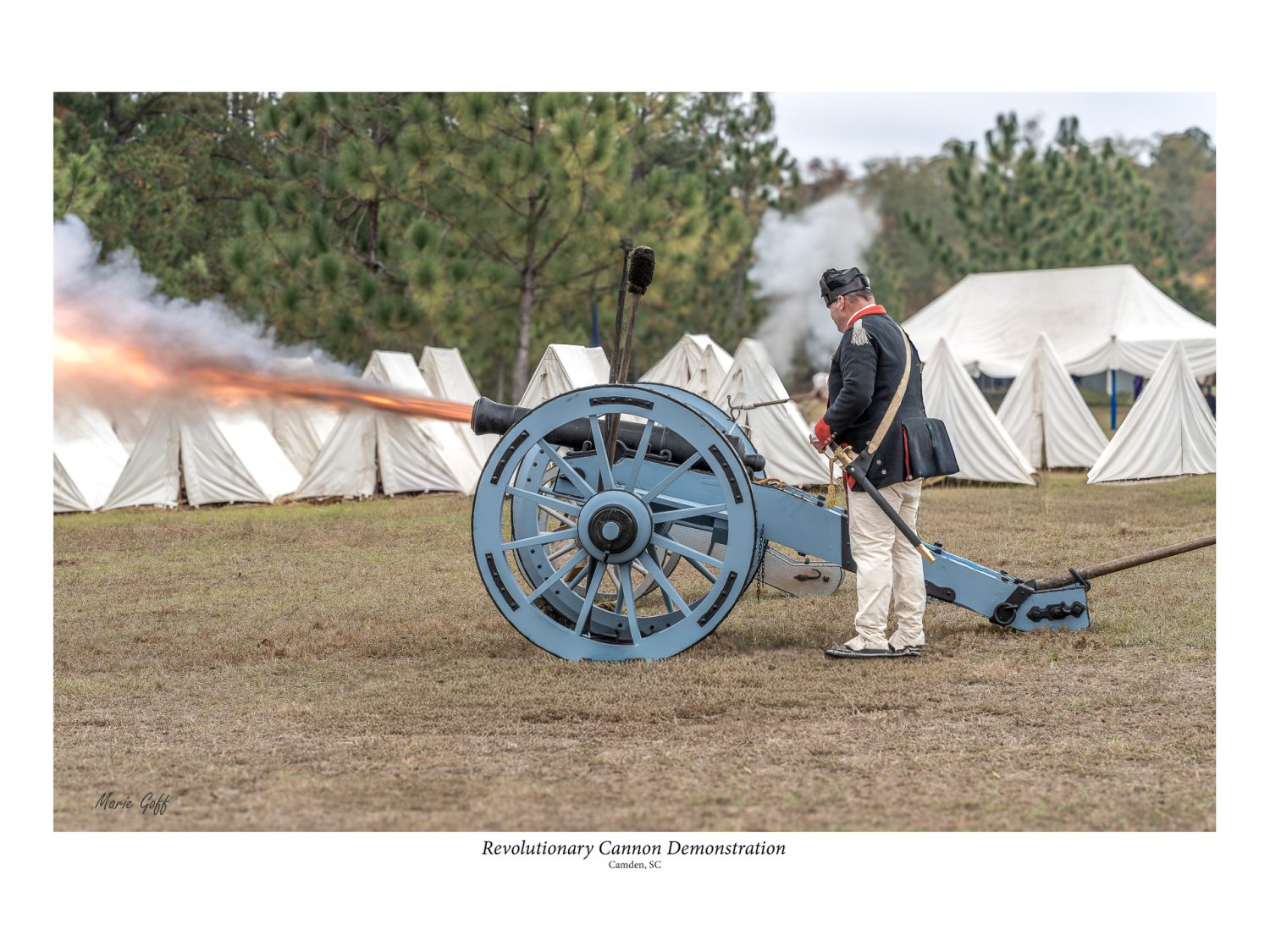
Behind every piece of artillery is an incredible story of preservation—like “Boots,” a 6-pounder field gun cast right in Columbia, South Carolina.
“Crafted from original English plans, this 6-pounder light field gun was cast in Columbia, SC, in 1975. They fired live cannonballs from a tube of double-rolled steel to prove the core, then cast three iron tubes around it. A carriage was built from quality white oak provided by a man named Mr. Boots and affixed to the first tube, christened “Boots”. The second tube was named “Major B” and set on a fortress carriage. Blacksmiths forged the bolts and ironwork for both guns. Both of these cannons have been on exhibit at the South Carolina Military Museum since 1982.
In 1976, Boots participated in her first event, the bicentennial for the Battle of Yorktown. Traveling with the 2nd Regiment, South Carolina Continental Line Establishment living history group, Boots continues to serve as a reminder of those who fought for liberty during the American Revolution.
Boots is quite a character. In the blink of an eye, she can bring history to life with a torrent of fire and smoke followed by a sharp crack- the sound of freedom.” – Heather McPherson, Senior Curator, South Carolina Military Museum
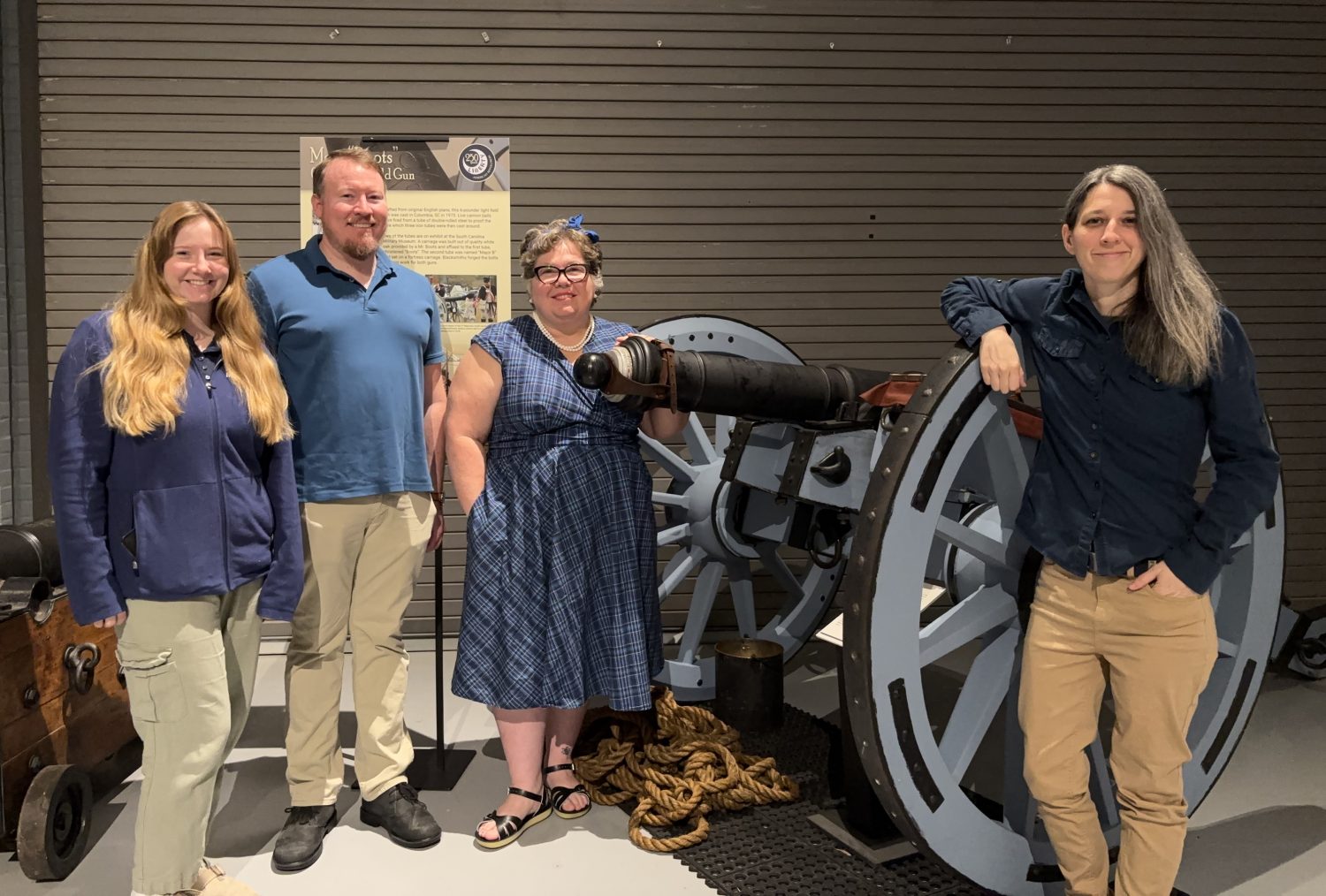
From the forge of the blacksmith to the roaring muzzle of Boots, South Carolina’s battlefields still echo with the true price of liberty.
Check out these links for more information:
You must be logged in to post a comment.